
It's March. You're two days out from Match Day. Your phone buzzes. A program director, or maybe a coordinator, or an attending you interviewed with, sends you a message. Something vague but unmistakable: "Great meeting you. Looking forward to what's next." Or maybe something less subtle: "We'd love to have you in our program."
Your stomach drops. Not in a bad way. In a what do I do with this way.
Do you respond? Do you ignore it? Does acknowledging it somehow violate a rule you're not aware of? Does not responding tank your chances? Are you even allowed to talk about this with anyone?
I've seen this exact scenario rattle otherwise composed, board-ready fourth-years into spirals of second-guessing. And the problem is that the guidance out there is either too vague to be useful or too rigid to match reality. The Match is regulated by NRMP rules, but informal communications live in a gray zone that makes people nervous, and for good reason. One wrong move could mean nothing. Or it could mean everything.
Here's the truth: most applicants overthink this. But a significant minority underthink it, and that's where problems arise. You need a framework, not a panic response. Let's break this down.
The Core Challenge
The Match is designed to be a blind process. Programs submit rank lists. Applicants submit rank lists. A computer algorithm sorts it out. Nobody's supposed to know where they stand until the results drop. That's the theory.
In practice, programs signal interest all the time. Emails, calls, "we'd love to rank you highly" messages. Some are genuine. Some are strategic. A few are borderline coercive. And some programs send these to dozens of applicants while only ranking a handful near the top.
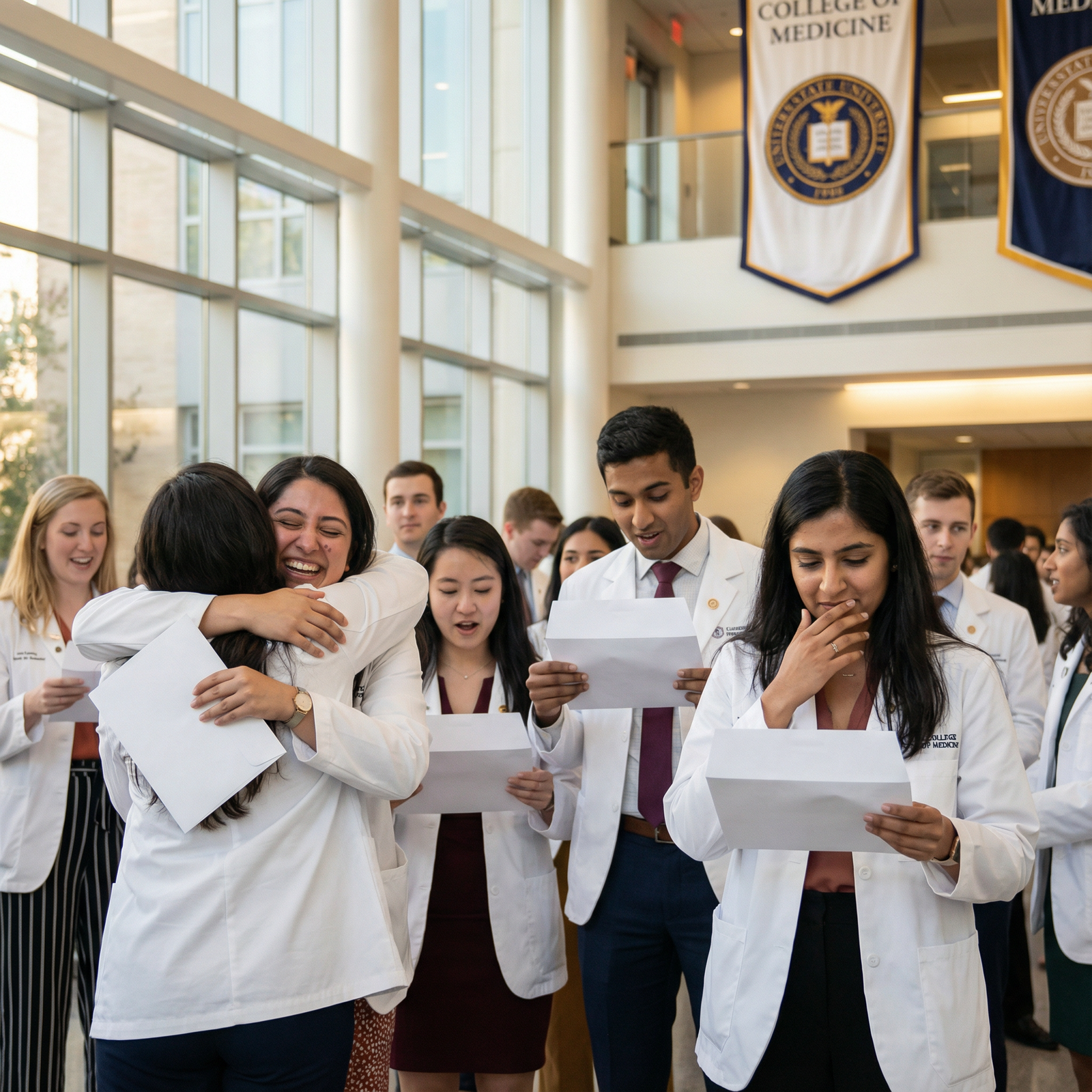
The NRMP has rules about this. Program directors can express interest. They can't ask you to commit to ranking them first. They can't request a "promise" or a "commitment to rank." That's a violation. Expressing genuine interest? That's allowed. The line between the two is sometimes thinner than it should be.
Here's where applicants get into trouble:
Before finalizing your plan, it is helpful to know the factors involved in how faculty really decide whom to call after a surprising match.
Pitfall 1: Responding with a commitment you shouldn't make. A program says they'd love to have you. You, flushed with excitement, reply: "I'm ranking you first!" Now you've made a verbal commitment. If you change your mind, and you should change your mind if another program is a better fit, you've put yourself in an awkward position. You haven't violated NRMP rules by doing this as an applicant, but you've created a relationship dynamic that's uncomfortable at best.
Pitfall 2: Ghosting. The opposite extreme. You get a message and you're so unsure of what to say that you say nothing. Days pass. The program assumes you're not interested. If they were genuinely on the fence about ranking you, silence can tip the scales against you.
Always ensure you are aware of common errors, such as 7 mistakes that can jeopardize your residency match after results.
Pitfall 3: Over-reading the signal. One "looking forward to what's next" email doesn't mean you're their top candidate. I've seen applicants receive these messages, assume they matched, stop preparing their backup plans, and then end up unmatched on Monday of Match Week. Brutal. Don't be that person.
Pitfall 4: Talking about it publicly. If you mention the message on Reddit, in a group chat, or, god forbid, on social media, you're creating a paper trail. Programs talk to each other. The Match community is smaller than you think. Keep your mouth shut.
The successful navigation comes down to this: respond professionally, express reciprocal interest without committing, and keep ranking based on your actual preferences. Not what someone told you in a late-night email.
A good response sounds something like: "Thank you so much for reaching out. I really enjoyed my interview with your program and remain very interested. I'm looking forward to Match Day." That's it. Warm, professional, non-committal. You haven't promised anything. You haven't closed any doors. You've acknowledged their interest and reflected it back without making a binding statement.
If they push harder, if they ask directly "Are you ranking us first?", that's when you need to be careful. A program asking that question is walking a fine NRMP line. Your best move: stay gracious but vague. "I found your program really compelling and I'm thoughtful about my rank list. I appreciate your interest in me." You haven't lied. You haven't committed. You've been polite.
For guidance on handling unexpected outreach, read how faculty really decide whom to call after a surprising match.
Actionable Next Steps
Here's your plan, step by step:
1. Respond within 24 hours. Not immediately, give yourself a beat to think. But don't sit on it. A prompt, measured reply looks professional. A delayed reply looks like you're unsure or uninterested.
2. Use the template, but personalize it. Reference something specific from your interview. A conversation, a rotation, a research interest they mentioned. This shows you're engaged and not just copy-pasting.
3. Do not commit. I'll say it again because it matters: do not tell a program you're ranking them first. Even if you are planning to. The whole point of the Match is that your rank list is private. Keep it that way. Rank what you actually want.
4. Don't change your rank list based on one message. If a program reaches out and you weren't planning to rank them highly, don't jump them up the list out of gratitude or pressure. Your rank order should reflect where you actually want to train. Programs do the same thing, they rank based on their preferences, not on who responded fastest to a feeler email.
5. Document the communication. Keep a record. If a program says something that feels like it crosses the line, asks you to commit, threatens to rank you lower if you don't respond a certain way, screenshot it. You probably won't need it. But if you do, you'll be glad you have it.
6. Use your advisor or mentor as a sounding board. This is what they're for. Show them the message. Get a second opinion. Especially if this is your first time through the Match, you need someone with experience to tell you whether something is normal or weird.
Resources to use: Your school's Dean of Students office. The NRMP's official communications policy (read it, it's short and clear). Your assigned faculty mentor. The AAMC's "Choosing Residency" resources. These are your ground truth. Reddit is not your ground truth.
Key Takeaways
- Be prepared. These messages happen. Have your response template ready before Match season, not after you're panicking in real time.
- Respond, but don't commit. Warm, professional, non-committal. That's the formula.
- Keep it private. No group chats. No Reddit posts. No social media. This is between you, the program, and maybe your advisor.
- Rank what you actually want. An informal message doesn't change your preferences. It's information, not a contract.
- Trust the system. The Match algorithm works. Your rank list is yours. Don't let informal pressure override your judgment.
Acknowledging a "good news" message isn't complicated, but it's easy to get wrong when you're stressed and sleep-deprived in March. Keep it simple. Be professional. Protect your interests. And when Match Day comes, you'll know you handled it the right way.
Ready to take control of your Match preparation? Download your free NRMP communications policy checklist, print your response template, and walk into Match Week with a plan, not a panic response.