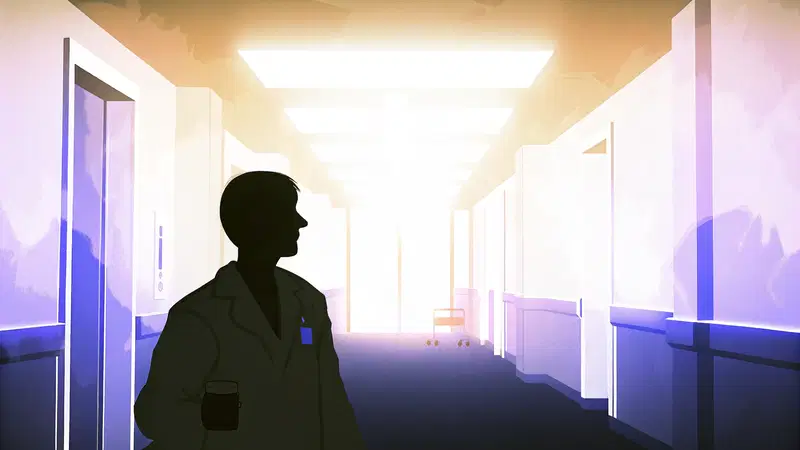
You've just signed out. The day team has vanished. The unit is quiet in that fake, waiting-to-explode way. Your first 12-hour night shift as a resident has officially started, and your brain is already lying to you.
It whispers: "You've got this. You're young. Coffee fixes everything. Sleep is for the weak."
None of that is true. I've watched too many brand-new residents crash hard between 3 and 5 a.m. because they believed the internal PR department. This isn't about toughness. It's about knowing the exact timeline of how your brain and body betray you, and what to do at each checkpoint so you don't hurt a patient or yourself.
Introduction
Picture this. It's 7:15 p.m. You're sitting at the workstation, still smelling like the coffee you mainlined during afternoon sign-out. The board looks manageable. Three stable post-ops, one possible floor transfer, a couple of soft admits hanging out in the ED. Your brain files this under "easy night."
Wrong.
That first night shift isn't a longer day. It's a different physiological event. Your circadian rhythm doesn't care that you matched into a competitive program. Melatonin is already climbing. Core body temperature is dropping. Decision speed slows by roughly 20% after midnight even if you feel "fine." I've seen sharp interns miss subtle ST changes at 4 a.m. that they would have caught in a heartbeat at 10 a.m. Not because they were dumb, because their brains stopped telling them the truth.
This matters to your medical career more than the Step score you obsessed over. Night float and call are where reputations get built or quietly destroyed. Attendings notice who still makes clean decisions at dawn. Co-residents notice who becomes a liability after 2 a.m. Patients notice when the person writing their insulin order is running on fumes and denial. Master this stretch and you buy yourself credibility, safety, and a slightly less brutal path through the rest of training. Ignore it and you'll spend years unlearning bad habits you picked up while half-conscious.
At this point you should stop treating the night like a test of willpower. Treat it like a timed protocol with known failure points.
The Core Challenge
The core challenge isn't the volume of work. It's the predictable collapse of your own hardware while the work keeps coming.
Common pitfalls hit on a schedule. Learn the clock.
Hours 0-3 (7 p.m.-10 p.m.): The False Confidence Window You feel sharp. You're still running on residual cortisol and whatever caffeine you front-loaded. Pitfall: overcommitting. You take every soft admit, promise the ED "I'll be right down," and start ambitious notes. Then the first real hit arrives, septic transfer, post-op bleed, rapid response, and you've already spent your buffer.
Before starting your block, it is essential to establish a 24-hour schedule template for surviving your first call shift to manage your recovery effectively.
Understanding the physiological reality of circadian shifts is crucial; see do you really adapt to night shift? what circadian data actually shows for deeper insights.
How to navigate: Ruthlessly triage. At this point you should batch low-acuity tasks and protect white space. Tell the ED you'll come after you finish the one unstable patient. They'll survive. Your future self won't if you start the night already behind.
Hours 4-6 (11 p.m.-1 a.m.): The Slow Bleed Hunger and boredom team up. You skip dinner because "it's quiet." Blood sugar drops. Attention fragments. You start doom-scrolling the board instead of doing proactive checks. Classic mistake: missing the subtle trend, creatinine creeping, urine output falling, new O2 requirement, because you're waiting for the dramatic page.
I've watched residents ignore a patient whose lactate went from 1.8 to 3.1 over three hours simply because no one called. At this point you should force a full systems sweep of every patient on your list. Stand up. Walk the halls. Look at the actual human, not just the numbers.
Hours 7-9 (2 a.m.-4 a.m.): The Danger Zone This is where your brain flat-out lies. You feel a second wind that is pure illusion. Reaction time tanks. Working memory shrinks. Emotional regulation vanishes, you get either snippy or weirdly euphoric. The worst clinical errors of the night cluster here: wrong-dose meds, missed allergies, incomplete handoffs to the morning team.
Navigation is non-negotiable. At 2 a.m. you should eat real food (protein + complex carb, not vending machine garbage), hydrate, and do a forced 10-minute eyes-closed reset in a dark call room if the unit is stable. No phone. No "just one more note." Your prefrontal cortex is offline. Stop pretending otherwise.
Hours 10-12 (5 a.m.-7 a.m.): The Betrayal Finish Dawn light starts leaking in and your body screams for sleep while the census explodes with morning labs, new fevers, and the day team's early questions. Pitfall: rushing sign-out and omitting the overnight nuance that actually matters. Or worse, pushing through to "finish strong" and making a last-minute order you'll regret.
At this point you should already have your sign-out drafted in skeleton form by 5:30. Protect the last 45 minutes for only true emergencies and clean transfer of care. Leave the non-urgent scut for the fresh brains walking in.
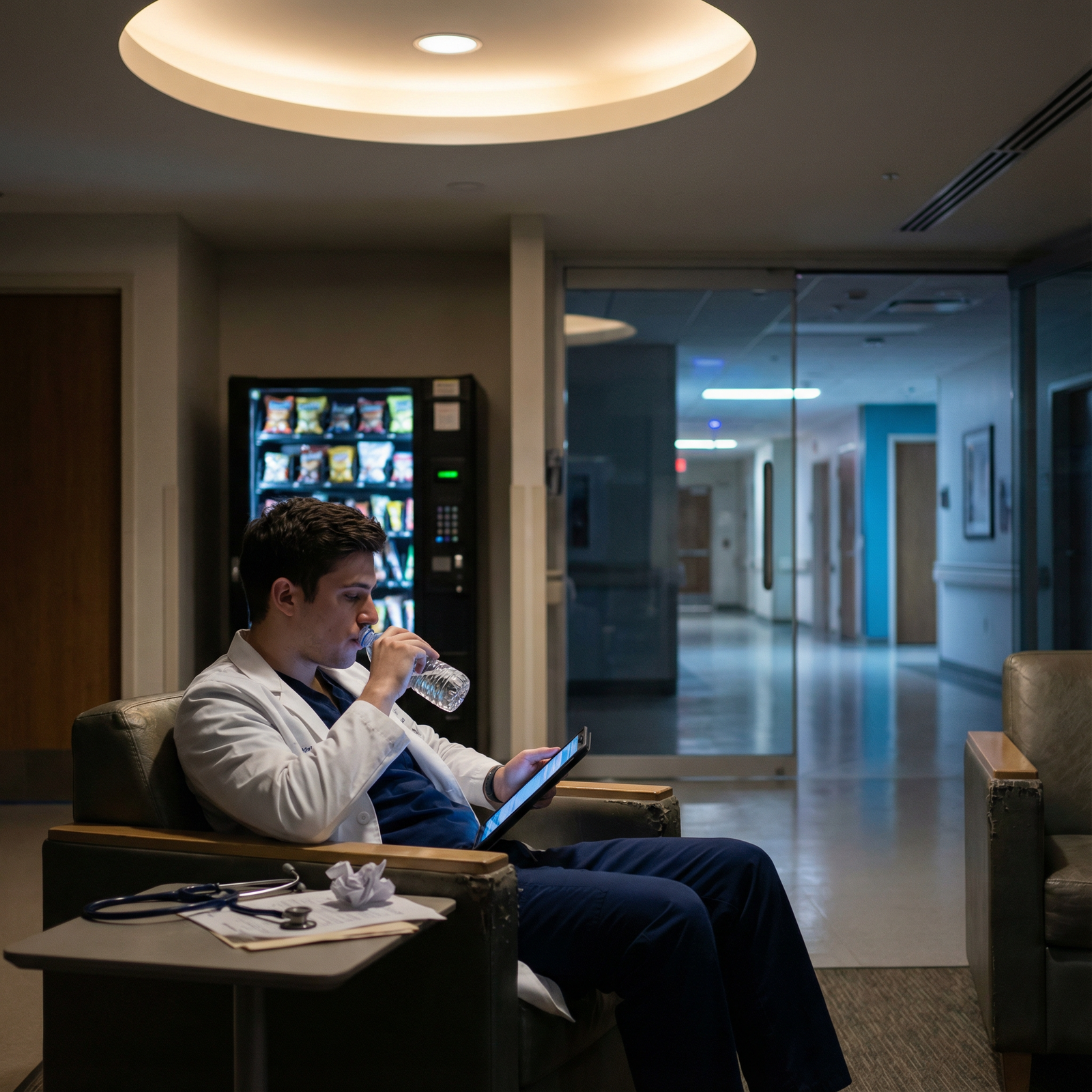
The successful residents aren't the ones who never feel tired. They're the ones who treat fatigue like a lab value, they measure it, respect it, and act on it before it crashes the system.
Actionable Next Steps
Here's the exact protocol I wish someone had handed me before my first night float block. Follow it like a checklist, not a suggestion.
T-minus 24 hours (the day before) Sleep as late as possible. No heroics. Eat a real lunch and dinner. Pack your night bag: protein bars that don't taste like cardboard, electrolyte packets, toothbrush, dry shampoo, phone charger that actually reaches the call room outlet, and a light sweater, the hospital is always freezing at 3 a.m.
T-minus 2 hours (pre-shift) Eat a solid meal with fat and protein. Front-load 100-150 mg caffeine if you use it, then stop. Hydrate. Do a quick mental rehearsal of the sickest patients from sign-out. At this point you should already know who can tank overnight.
Hour 0 arrival ritual Sit down with the outgoing resident and run the list out loud. Write three things on a sticky note: (1) who is most likely to declare, (2) pending results that change management, (3) any social landmines (family meetings, AMA risks). Stick it to the bottom of your monitor.
Scheduled body checks
- 10 p.m.: full board sweep + eat
- 1 a.m.: walk the unit, reassess every patient, second small meal
- 3:30 a.m.: mandatory 8-10 min dark rest or power nap if acuity allows
- 5:30 a.m.: lock sign-out draft, only touch true fires
Post-shift shutdown Blackout curtains or eye mask already in place at home. No "just checking one more result." Melatonin 1-3 mg if you use it. Cool room. You're off the clock, act like it.
Resources that actually work:
- The free "Night Shift Survival" one-pager from the ACGME well-being site (print it, tape it inside your locker).
- A simple shared note template in your phone's notes app with timed checkboxes.
- One trusted senior or co-resident you can text at 4 a.m. when you're unsure, pre-arrange this. Ego kills.
Key Takeaways
- Be prepared. The night has a script. Learn your lines before the curtain goes up.
- Focus on high-yield areas: the 2-4 a.m. danger window, proactive rather than reactive care, and ruthless protection of your final sign-out.
Your brain will keep lying. That's its job at 3 a.m. Your job is to stop listening and follow the timeline instead.
Do this on your first night and you'll walk out at 7 a.m. tired but intact, with patients safer and your reputation already a little stronger than the residents still pretending caffeine is a personality. Now go set your alarms and pack the damn protein bars.