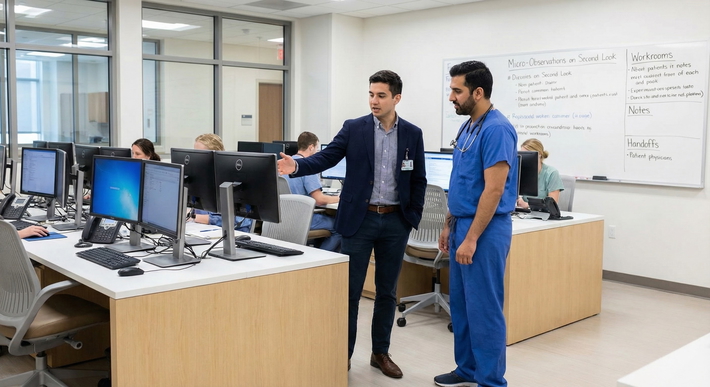
A weekend second look can feel fantastic. Nobody's getting paged every 90 seconds. People are smiling. The senior resident has time to explain the neighborhood coffee scene. Someone's partner tells you the city is surprisingly livable. You leave thinking, these are my people.
Then there's the weekday version. Different movie entirely. The intern is trying to finish notes before rounds. A chief gets interrupted mid-sentence by a consultant call. The attending is either calm under pressure or quietly corrosive. Nurses either trust the residents or work around them. You see how the place breathes when it's busy. Or how it wheezes.
Educational note: discussions of resident salary, affordability, and budget fit are for general educational purposes only and are not financial, legal, or tax advice. Compensation, benefits, and contract details vary by program and location; review official program materials and consult qualified professionals for personal advice.
(See also: virtual vs in-person second looks for more.)
Here's the myth: any second look gives you roughly equal insight into a residency program. Wrong. Not even close.
The useful question isn't, “Did they host me well?” Programs are usually very good at that. The useful question is, “What kind of evidence did this visit actually give me?” If you want to know whether residents are warm, socially connected, and happy to spend voluntary time together, a weekend event can help. If you want to know how the program functions when the list is long, the OR is backed up, clinic is overbooked, and everyone is a little tired, weekday wins almost every time.
That doesn't make one universally better. It depends on what you're trying to learn: culture, workload, faculty accessibility, city fit, spouse or partner experience, resident wellness. But don't confuse hospitality with truth. Both formats are curated. Neither is a lie detector. They're snapshots. Useful ones, if you read them correctly.
The biggest thing applicants miss is that “authentic” and “relaxed” are not synonyms. A weekend second look often feels more personal because residents aren't buried in task work. That's real, in one sense. You may get better stories, better small talk, and cleaner access to people's honest impressions of the city, friend group, and whether they actually like each other.
But weekday reality is where the hidden curriculum lives. How do people talk to the intern when the service is slammed? What happens when a discharge falls apart at 4:45 p.m.? Does teaching survive a busy day, or does it disappear the second the census climbs? That's the stuff you'll actually live with.
I've seen applicants overinterpret a well-run social event as proof of a humane program. Bad move. A brunch can be lovely because the program selected lovely people to host it. Monday can still be chaos, with weak backup, endless clerical burden, and attendings who call “autonomy” what is really abandonment.
(See also: resident socials at second look for the full take.)
So yes, the best format depends on your question. If you're unsure whether you'd belong in that city, whether residents have lives outside the hospital, or whether partners are included, weekend may be more useful. If you're torn between two programs that both seem friendly, and you want to know how training actually feels, go on a weekday. That's where the mask slips. Not because people are dishonest on weekends, but because systems reveal themselves under strain.
Myth: Weekend Visits Show the "Real" People Better
(See also: how program directors interpret your second-look behavior for insight.)
This is the favorite argument for weekend second looks, and it sounds smart until you examine it. “You see the real residents because they're off-service, less filtered, more relaxed.” Sure. You may see the real social selves better. That's not the same as seeing the real program.
Weekend visits are excellent at revealing a few things. First, interpersonal warmth. Do residents talk like friends or like coworkers forced into a group chat? Second, social cohesion. If people voluntarily show up, stay, and keep talking after the official event ends, that's useful. Third, city livability. You can actually see neighborhoods, commuting patterns, where people eat, where couples live, whether the place feels sterile or human. And if you're bringing a spouse, partner, or family into this decision, weekend events can be disproportionately valuable. They answer questions weekday shadowing can't.
But here's what they usually hide: the quality of sign-out, the number of pages residents field per hour, whether faculty are respectful when things get messy, whether clinic staff support residents or dump on them, whether OR turnover is efficient or absurd, whether consults are educational or combative, and whether the whole operation runs on goodwill because the infrastructure is thin. Those aren't side details. That's residency.
And no, relaxed residents at brunch do not prove humane training. That's lazy thinking. I've watched incredibly charming residents sell a program socially while privately surviving a system with poor backup, heavy scut, and chronic late stays. They weren't lying. They genuinely liked each other. The program was still operationally rough.
Selection bias matters too. Programs don't randomly assign residents to represent them at weekend second looks. They send the people who are engaged, articulate, welcoming, and unlikely to torpedo recruitment over omelets. That's sensible. It's also incomplete. You're seeing ambassadors, not a random sample.
So let's be precise. Weekend second looks are strongest for testing belonging. Weakest for testing operational reality. That's not a criticism. It's just what the format is built for.
What Weekday Visits Reveal That Weekend Events Can't
If your question is, “What is training here actually like?” a weekday second look usually gives better evidence. Full stop.
Why? Because real culture isn't what people say when they're comfortable. Real culture is what they do when they're interrupted, behind, tired, and mildly irritated. That's when the truth leaks out.
On a weekday, you can watch the pace of rounds. Are they brisk but coherent, or theatrical and bloated? You can see resident autonomy in action. Does the senior make decisions and teach, or just relay attending preferences? You can watch nurse-resident interactions, which are often a better indicator of local culture than any polished panel. In healthy systems, communication is direct and respectful. In bad ones, everybody looks like they're managing avoidable friction.
You also get access to structure. How are handoffs done? Is there an actual system, or is sign-out a ritualized shrug? Does teaching survive workload, even in brief bursts, or vanish the moment the list gets long? What does the attending's tone sound like at 11:30 a.m. when three things are late? That's not trivial. That's your future emotional climate.
(See also: second looks on the wrong day for timing tips.)
Then there are the hidden variables applicants pretend not to care about until July. Commute reality. Workroom crowding. Whether the call rooms are humane or medieval. Whether food is accessible after hours. How much charting happens after the official work is “done.” Whether residents still look like functioning mammals after noon. These details matter more than one especially friendly brunch conversation.
That said, don't romanticize the weekday either. One shadow day can be weird. Flu season distorts everything. A post-call team isn't the same as a fresh one. One surgical service may look polished while another is held together with caffeine and denial. Seasonality, rotation type, attending style, and random bad luck all matter.
So don't treat one weekday visit as gospel. Better approach: gather multiple touchpoints. Different PGY levels. Different settings. Ask the same question twice in different rooms. Patterns beat moments.
The Data Problem: Why Applicants Overrate Vibes and Underrate Systems
Applicants make rank decisions with astonishingly low-quality data. I don't say that to be mean. It's just true. A few short conversations. One interview day. A dinner where everyone is on decent behavior. Maybe one second look where the program is trying, very reasonably, to impress you.
Then we act like a strong “gut feeling” is enough. It isn't.
Your gut matters, but it needs supervision. Otherwise you fall into the same traps every year. Halo effect: one charismatic resident colors your entire view of the place. Confirmation bias: you liked the interview day, so now every later interaction gets interpreted generously. Scarcity thinking: this program feels prestigious or hard to get, so flaws become easier to excuse. And my personal favorite, mistaking hospitality for mentorship. They remembered your name and bought lunch. Nice. That doesn't tell you how they handle sick calls, struggling interns, or parental leave.
Systems are less emotionally exciting than vibes, but they predict daily satisfaction far better. Call burden. Backup coverage. Rotation design. Ancillary support. Schedule flexibility. Whether residents are constantly doing work that someone else should be doing. Whether wellness is a slogan or a staffing plan.
This is the myth-buster question to ask yourself after any visit: not “Did they make me feel wanted?” but “What evidence did I gather about how trainees are supported when things go wrong?” Weekend visits are emotionally persuasive. Weekday visits are operationally informative. Ignore that difference, and you'll rank on theater.
How to Use Both Without Getting Played by Either
Don't turn this into a fake binary. The smart move is to match the visit format to the uncertainty you're actually trying to resolve.
If you're deciding between programs that all seem kind, collegial, and academically solid, choose a weekday second look. That's where differences emerge. One place will reveal thoughtful workflow, respectful supervision, and teaching that persists even on a busy service. Another will reveal residents patching over structural nonsense with good attitudes. Applicants miss this all the time because they overvalue chemistry and undervalue architecture.
If your biggest uncertainty is whether you can imagine living there, whether residents have real off-hours lives, or whether your spouse or partner can see a future in that city, then weekend can be decisive. That's not fluff. Geographic fit and social belonging matter. A lot. Burnout isn't only caused by workload. It's also caused by isolation and the feeling that your whole life exists inside a badge swipe.
On a weekday, ask boring questions. Boring is where the truth hides. Who writes notes? Who fields pages? How often do residents stay late, really? What triggers backup? When the service gets slammed, what gets sacrificed first: teaching, lunch, or getting out on time? Who helps with discharges, prior auth nonsense, transport delays, or clinic overbooking? Ask where the friction lives.
On a weekend, ask different questions. Do residents socialize voluntarily or only at official events? What neighborhoods are actually realistic on a resident salary and schedule? Do partners feel included? What do people do when they're truly off? Do they recover, disappear, commute forever, or just sleep and reset? You are trying to learn whether a life exists outside the hospital. That's a real question.

Compare answers across PGY levels. Always. Interns often know where the daily friction is. Seniors know where autonomy is real versus fake. Chiefs know how often the program's backup promises actually hold. If all three tell the same story, believe it. If they don't, that's interesting too.
And here's the hard truth: one red flag on a weekday can matter more than one glowing brunch conversation. Especially if multiple residents independently point to the same structural issue. “We stay late a lot because sign-out is messy.” “Clinic always runs over.” “Backup exists, but nobody wants to use it.” That's actionable information. That's the stuff that determines your Tuesday in October.
If you can only do one second look and your goal is to see real program life, weekday usually wins. If your main uncertainty is culture or city fit, weekend can absolutely add the missing context. Just don't ask one format to answer the wrong question.
Bottom Line: Ask Which Visit Produces Better Evidence, Not Better Hospitality
Weekend second looks are useful. They're also flattering by design. They show you social fit, city feel, and whether residents seem like people you'd want to know outside the hospital. That's valuable.
But if you want the mechanics of training, weekday second looks are usually better. They expose workflow, hierarchy, stress responses, backup reality, and whether teaching survives real life. That's where programs tell on themselves.
So stop asking which visit feels more authentic. Relaxation isn't authenticity. Pressure is often more revealing. Ask which setting best answers your biggest unresolved question, then verify what you heard with direct observation and repeated resident perspectives.
Build your rank list from patterns, not performances.