
Last spring, I watched a resident on a second look stare at the floor during lunch while a med student tried to make small talk about the city. He nodded twice, mumbled something about “long week,” and went back to his phone. The student messaged me that night: “I think they hate their lives here. Should I cross this program off my list?”
You know that sinking feeling when you’ve built up a program in your head… and then everyone you meet looks exhausted, checked out, or borderline annoyed you’re even there? Yeah. That.
Let’s walk through what that might actually mean — and what it doesn’t — without sugarcoating it.
First: No, You’re Not “Overreacting”
You’re reading people for a living now. This is your future we’re talking about. So when you see:
- Residents with dark circles not making eye contact
- Awkward silences in the resident lounge
- Someone answering your question with “Honestly I’m just tired” and nothing else
Your brain jumps straight to: “Toxic program. Overworked. Everyone is miserable. Abort mission.”
And then the spiral starts:
- Did they act like this for everyone or just me?
- Did I annoy them?
- Did I already blow my chances with this program?
- Are they secretly telling the PD I’m awkward or needy?
You’re not crazy for thinking any of that. I’ve seen strong applicants cross programs off their list based on one weird half-day second look. I’ve also seen people match at those same programs and love it.
So let’s dissect this before you set your rank list on fire.
7 Reasons Residents Might Seem Tired or Distant (That Aren’t Automatically Red Flags)
I’m not going to do the “it’s all fine, don’t worry” thing. Sometimes it is a red flag. But a lot of the time, it’s… context.
1. You’re Seeing Them at Their Worst Time of Year
Second looks are often late winter / early spring. Translation: residents are:
- Deep into a brutal block
- Fighting off end-of-winter burnout
- Studying for in-training exams/Step 3
- Prepping fellowship apps or interviews
If they’re on nights, ICU, ED, or a malignant consult service, they may be in pure survival mode.
Imagine you, on day 6 of a 6-day stretch, post-call, after three codes, and then someone says: “Can you be super enthusiastic for the applicants?”
Yeah. Exactly.
2. They Might Be Afraid to Oversell the Program
Some residents are painfully honest. Borderline too honest. They don’t want to be the person who says, “It’s great here!” while they know q4 call is wrecking everyone.
So they err on the side of… emotionally flat. Non-committal.
You ask, “How’s the work-life balance?”
They pause. Look like they’re doing the math. Then say something like, “Uh, it’s residency.”
You walk away thinking, “They’re miserable.”
Sometimes it’s actually, “I don’t want to lie to you, but I also don’t want to trash my program in front of strangers.”
3. You’re the 15th Applicant Group They’ve Seen This Season
They’ve done:
- Pre-interview dinners
- Zoom socials
- Interview lunches
- Second look dinners
- “Coffee chats” that weren’t actually coffee and weren’t actually chats
They’ve answered:
- “Why did you choose this program?” 47 times
- “Can you afford to live here on a resident salary?” 22 times
- “Do you feel supported?” until the word “support” no longer has meaning
By the time you show up, their “enthusiastic, polished, talkative version” is gone. The default version is what you’re seeing: tired, introverted, maybe a little done with the whole dog-and-pony show.
4. They Might Be Anxious About Saying the Wrong Thing
Residents know — or think — that anything they say can get back to the PD. So they’re constantly editing themselves in real time.
You ask:
- “Do you feel comfortable calling attendings overnight?”
- “Are people nice?”
They’re thinking:
- If I say something negative, will that be repeated out of context?
- If I say something “too” positive, will I sound fake?
So they choose… safety:
- Short answers
- Neutral tone
- Avoiding specifics
It reads as “distant.” Internally, they’re probably screaming, “Please don’t make me Reddit fodder.”
5. Some Residents Just Don’t Like Second Looks
Not all residents are social. Not all residents are “recruitment people.” Programs often throw whoever’s “available” into these events.
So your “representative” resident might:
- Be extremely introverted
- Hate networking
- Be bad at small talk
- Be someone who just had a rough attending interaction 30 minutes ago
They might love the program but absolutely hate this part of it. And you’re catching that clash.
6. They’re Literally on the Clock While You’re There
Second looks are weird because sometimes you’re hanging out with people who are actively working:
- Pager going off every 3 minutes
- Being pulled into the ED
- Getting hammered with Epic messages
- Trying not to miss something patient-related while they talk to you about “resident wellness initiatives”
So yeah, they look distracted. Because they are. And they should be. Their first obligation is their patients, not your comfort.
7. Sometimes… It Is a Bad Sign
I won’t gaslight you. There are situations that should make you pause:
- Multiple residents openly saying “Run” or “Don’t come here” (I’ve heard this. It happens.)
- Everyone looks burnt out and no one says one specific positive thing
- Residents subtly (or not subtly) warn you about certain attendings, services, or systemic issues
- They laugh bitterly when someone mentions “support” or “wellness”
If the vibe is consistently heavy and negative across multiple people and settings, that’s data you shouldn’t ignore.
How to Tell If It’s “Normal Tired” or “Systemically Awful”
Here’s where your brain is probably going: “How do I know which one I’m seeing?”
Use patterns, not one-off moments.
| Situation Type | More Likely Meaning |
|---|---|
| One tired, distant resident, others are fine | Normal fluctuation, probably just a bad day |
| Everyone quiet but answers direct questions honestly | Probably just exhausted but not hiding toxicity |
| Mixed group: some happy, some neutral, one negative | Realistic program, different personalities |
| Multiple residents say they feel unsafe or unsupported | Serious red flag |
| Residents contradict each other about schedule or culture | Miscommunication or mid-change chaos |
If you see one tired, distant resident while three others are laughing, joking, and talking about hiking together on their golden weekend… that’s very different from a whole group staring blankly at the wall.
Look for:
- Do they joke with each other at all? Even subtle inside jokes?
- Does anyone volunteer positive stories without being prompted?
- When they complain (they will), do they balance it with “but I like X/Y/Z here”?
Residents who are truly dead inside about their program don’t bother balancing anything. It’s just: “The schedule sucks, the leadership sucks, we’re not heard, I’m trying to get out.”
What You Can Actually Do During the Second Look
You’re not powerless here. You can ask better questions and read the answers in context.
Ask Specific, Grounded Questions
Instead of:
- “Do you like it here?”
- “Is the culture good?”
Try:
- “What rotation is the hardest, and what makes it feel manageable or not?”
- “When you’re really struggling, who do you go to — chief, co-residents, PD?”
- “What’s one thing this program does better than others your friends are at?”
- “If you had to repeat intern year, would you choose this place again?”
Even tired residents can usually muster:
- A real example
- A concrete story
- A moment where they felt supported… or didn’t
The content matters more than their energy level.
Watch How They Talk About Leadership
Residents being tired is normal. Residents being terrified of leadership is not.
Pay attention when you ask about PD/APDs/chiefs:
- Do they roll their eyes?
- Get cagey and instantly change topics?
- Or say something like, “They try, but they’re pretty disconnected”? (That’s yellow-flag territory, not instant deal-breaker, but note it.)
Huge green flag: “Our PD has an open-door policy, and I’ve actually gone to them about X.” Even if they say it while half-yawning.
What to Do After the Second Look When You’re Spiraling
You go home, shower off the hospital smell, sit down with your rank list… and suddenly this program feels radioactive because one senior resident looked like they hadn’t slept in a week.
Here’s how to re-ground yourself.
1. Compare to Your Interview Day Impressions
Did the vibe completely change, or was it consistent?
If:
- Interview day residents were warm, engaged, honest
- Second look residents were just tired but not actively negative
That’s probably normal season fatigue.
If both days felt:
- Off
- Guarded
- Vaguely unhappy
That’s more concerning.
2. Talk to Current Residents Outside of Official Events
If the program allows, email the coordinator and ask to talk 1:1 with:
- A PGY-1
- A PGY-3+
- Someone in your specific interest (hospitalist, fellowship path, etc.)
Say something like:
“I really liked many aspects of your program but wanted to get a better sense of resident life on a regular, non-recruitment day. Would anyone be willing to chat honestly for 15 minutes?”
Most will be real with you when they’re not “on show.”
3. Reality-Check with People Who Know You
You are biased toward your anxiety. Ask:
- A mentor
- An advisor
- A resident you trust at another place
Explain what you saw specifically — not just “they seemed off,” but:
- “Three of four residents answered my questions but none volunteered anything.”
- “One openly said they wouldn’t choose the program again.”
- “No one talked about anything outside the hospital.”
Then ask: “On a spectrum from normal residency fatigue to deal-breaker, where does that fall for you?”
Outside brains can help you calibrate.
Second Look Reality: You’re Seeing a Slice, Not the Whole Movie
Here’s the hard pill: you’re trying to predict 3+ years of your life from:
- One interview day
- Maybe a 4-hour second look
- A couple emails and website blurbs
So your brain grabs onto anything it can: a resident’s tone, a look, a joke, a sigh.
Yes, those are clues. But they’re not the whole story.
Residents should look tired sometimes. It’s residency.
Residents shouldn’t look broken, bitter, and hopeless all the time.
Your job is to separate “this was a rough shift” from “this place routinely destroys people.”
The truth is usually in the patterns:
- Across days
- Across people
- Across conversations
Not in one awkward lunch.
Quick Checklist: Before You Drop a Program Down Your Rank List
Use this as a gut-check. If more of the left column applies, you’re probably seeing normal fatigue, not a disaster.
| If you noticed... | Likely Meaning |
|---|---|
| Tired faces but specific positive stories | Normal tired, still engaged |
| Residents joked with each other, even if low energy | Underlying camaraderie |
| Mixed answers: some love it, some “it’s fine” | Realistic, not curated |
| Clear examples of support after bad rotations | Functional culture |
| Multiple people say they would choose program again | Core satisfaction is there |
On the other hand, if you saw:
- No humor, no warmth, no positive stories
- Explicit or implied “get out if you can” messages
- Residents who look scared when leadership is mentioned
Then yeah, you’re not “too sensitive.” That’s your brain doing its job.
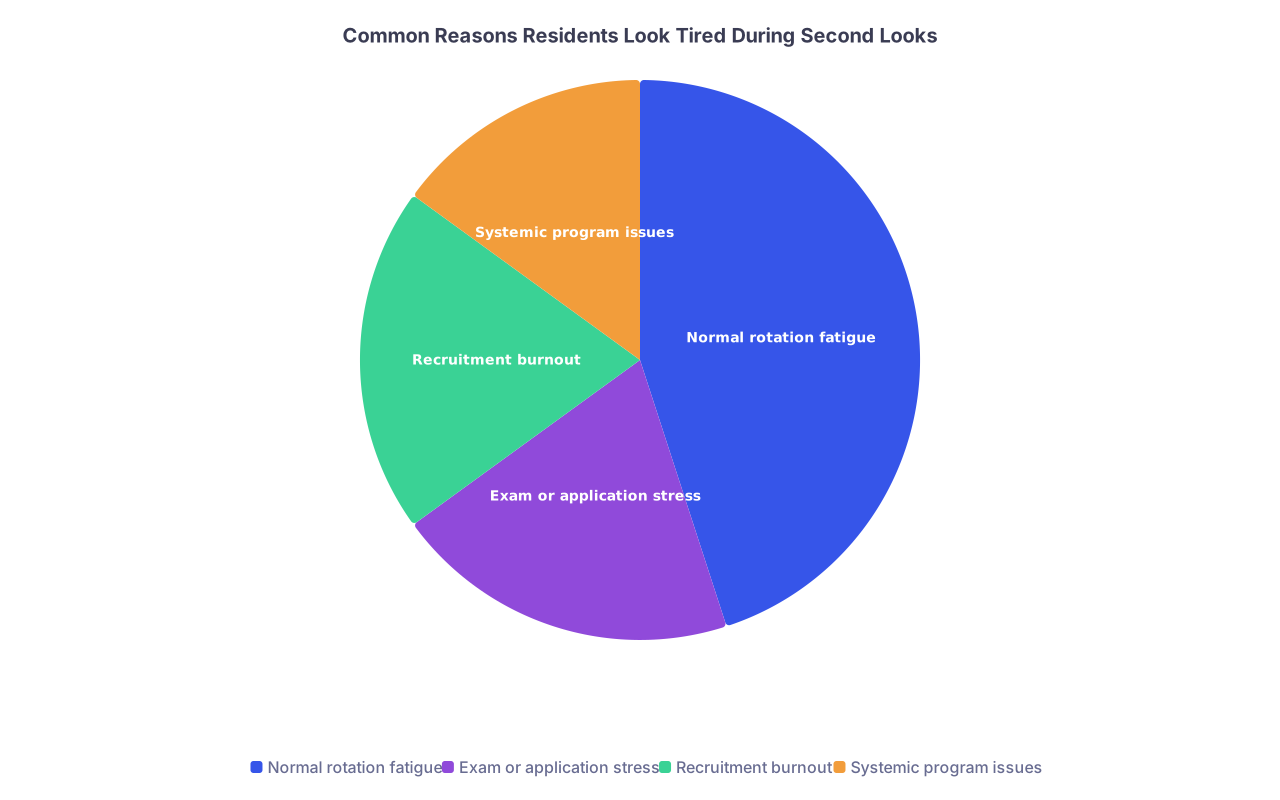
| Category | Value |
|---|---|
| Normal rotation fatigue | 45 |
| Exam or application stress | 20 |
| Recruitment burnout | 20 |
| Systemic program issues | 15 |
The Ugly Truth: Every Program Has Tired Residents
I don’t care if it’s “top 5” or community, urban or rural — somewhere in that hospital, right now, there is:
- A PGY-2 on hour 26 of a “24-hr” call
- A PGY-3 who just got wrecked by a malignant attending
- An intern who hasn’t figured out time management yet and is drowning
If your bar is “I want to see only radiant, perfectly balanced, maximally present residents at all times,” you will never rank anywhere.
What you want to see is:
- Tired residents who still like each other
- Tired residents who can name people who have their back
- Tired residents who can say, “This week sucks, but I’m glad I’m here overall”
That’s the difference between a hard program and a toxic one.

| Step | Description |
|---|---|
| Step 1 | Notice tired or distant residents |
| Step 2 | Probably personal bad day |
| Step 3 | Ask more specific questions |
| Step 4 | Normal residency fatigue |
| Step 5 | Possible systemic issue |
| Step 6 | Seek 1-1 follow up with residents |
| Step 7 | Discuss with mentor and reconsider rank |
| Step 8 | One person or many? |
| Step 9 | Any positive stories at all? |
FAQ – The Stuff You’re Probably Still Worried About
1. What if a resident actually told me, “Don’t come here”?
Take that seriously, but don’t treat it as the only data point. Ask yourself:
- Were they alone or did others echo it?
- Did they sound burned out personally (divorce, kids, money, etc.), or was it clearly about the program?
If more than one resident independently says this, I’d drop that program unless you have a very compelling reason not to.
2. What if I rank a program highly and then show up and find out everyone’s miserable?
This is the nightmare scenario we all imagine. Reality: you’ll figure it out fast if a place is chronically toxic, and you still have options — transfer, switching specialties, adjusting your path. Is it ideal? No. Is your career over? Also no. Don’t let fear of a worst-case scenario paralyze your entire rank list.
3. Could residents acting distant hurt my chances if the program thinks I “didn’t fit in”?
No. Second looks generally don’t carry the same evaluative weight as interview day, and residents being low-energy or distracted is not about you. You’d have to do something actively problematic for it to hurt you: be rude, violate patient boundaries, trash other programs loudly. Quietly feeling awkward around tired residents is not a red flag on you.
4. I can’t stop replaying one awkward interaction. How do I move on?
Write down, in bullet form, exactly what happened — just the facts, not the feelings. Then ask: “If my friend told me this story, would I think their career was doomed?” You already know the answer. Then, do one concrete thing that moves you forward: email a resident with a question, adjust your rank list one step, or schedule a 10-minute talk with an advisor. Forward motion kills rumination.
Open your rank list right now and look at the program that’s freaking you out because the residents seemed tired or distant. Next to that program’s name, write two columns: “Actual evidence” and “Anxiety stories.” Force yourself to sort what you saw from what you’re imagining. Then make one small change: move it up, down, or leave it — but decide based on evidence, not just the look on one resident’s face at 2 p.m. on a post-call Tuesday.