
The fear that you’re “not doing enough” after second looks is poisoning people’s rank lists.
Is One Second Look Enough… Or Am I Screwed?
Let me say the quiet thing out loud: almost everyone doing second looks is low‑key terrified that someone else is doing more.
More visits. More emails. More “showing interest.”
And that somehow, that invisible “more” is going to be the difference between matching and opening a rejection email.
You do one second look. You have a solid day. People are nice. You ask questions. You go home.
Then your brain starts:
- “What if other applicants did two second looks?”
- “What if they stayed late and rounded again?”
- “What if I should’ve visited once before interview day, then second look, then a ‘final’ visit?”
- “What if program directors think one visit means I’m not serious?”
That is the loop. I’ve watched people tear themselves apart with it.
So let’s walk through this like actual adults and not brain‑eating anxiety goblins.
What Second Looks Actually Do (And Don’t Do)
Second looks are massively overrated as some kind of magic ranking lever.
They’re mainly for you. Not them.
You’re trying to answer: “Can I actually survive being here for four years?”
The program, on their side, is doing one of three things:
- They’re not tracking second looks in any meaningful way.
- They’re vaguely aware you came, but it’s a soft, minor plus at best.
- They actually have a rule that second looks do not affect rank list decisions (a lot of programs emphasize this now because of equity issues and travel costs).
And that third category is getting bigger.
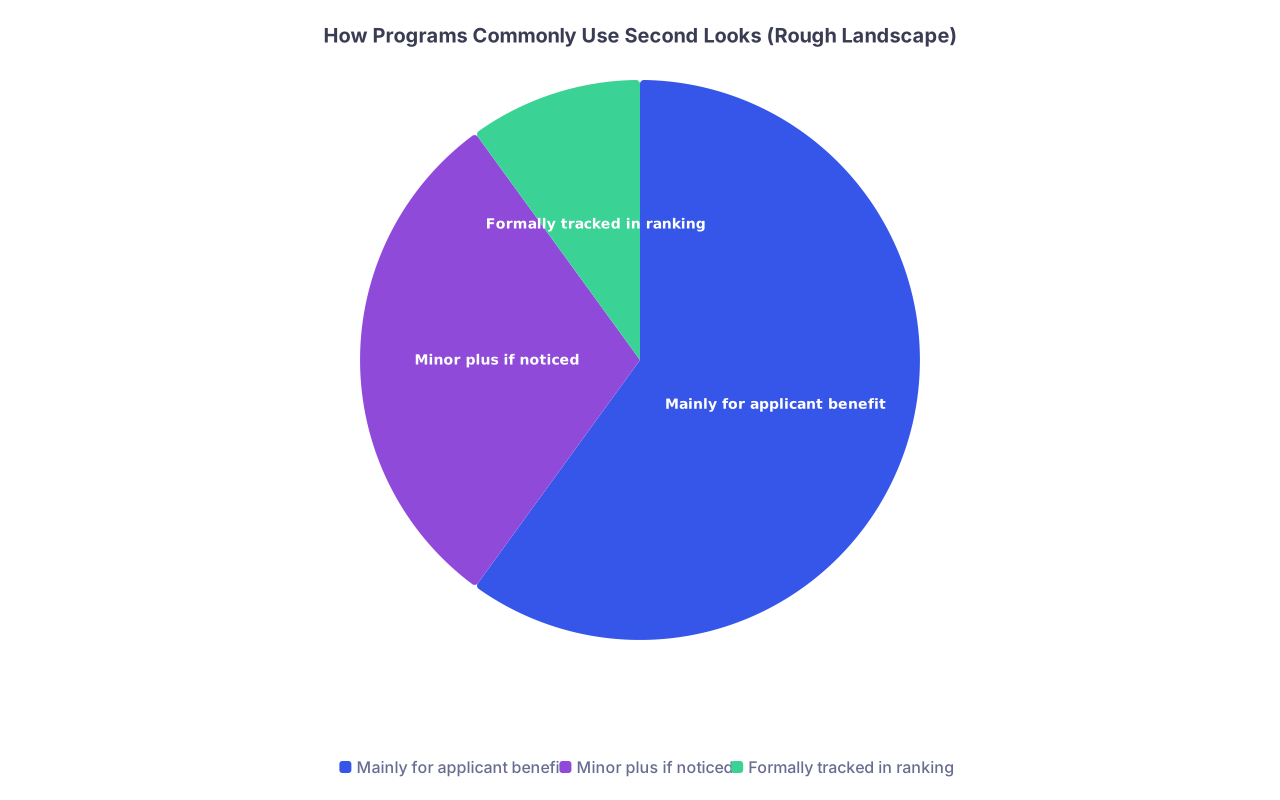
| Category | Value |
|---|---|
| Mainly for applicant benefit | 60 |
| Minor plus if noticed | 30 |
| Formally tracked in ranking | 10 |
Are there still programs (especially in competitive specialties) where a strong second look with a faculty champion can help? Yes. I’m not going to lie to you.
But this idea that:
- zero second looks = automatic red flag
- one second look = “meh, not serious”
- two or more = “now we’ll rank you to match”
…is fantasy. That’s anxiety building a fake formula because uncertainty feels unbearable.
The brutal truth
Most programs are overwhelmed, understaffed, and barely keeping up with clinical work. You are not the center of their universe, no matter how it feels in your head.
You came once. You were normal. You didn’t set anything on fire. That’s often enough.
Is One Second Look Enough For Them?
Let’s answer your core fear directly:
If you did one second look at a program you’re genuinely interested in, and:
- you were on time
- you were engaged
- you asked at least a few real questions
- you weren’t creepy, arrogant, or clearly not a fit
Then yes — for almost every program, that’s “enough.”
Programs are not sitting in a conference room saying:
“Applicant A came for one second look; applicant B came twice. Rank B higher.”
They’re talking about:
- Clinical performance (sub‑I, away rotation, letters)
- How you came off on interview day
- Your file: scores, grades, red flags, leadership, research
- Whether faculty or residents specifically advocate for you
Does interest help at the margins? Sometimes. But that interest shows in a lot of ways: how you interviewed, how you talked about that city, how you asked follow‑up questions, how you fit their culture. Not just body count of visits.
If you’re a normal applicant (not some catastrophic red-flag case) and you matched the vibe of the program reasonably well, one second look is plenty to signal interest.
Could two second looks matter at some tiny corner of the rank meeting? Rarely, maybe.
Is it the difference between matching and not matching at 99% of places? No.
Is One Second Look Enough For You?
This is the part nobody really prepares you for.
Sometimes “one” is enough.
Sometimes one is actually too much because you overanalyze every second.
Second looks can:
- Clarify: “Wow, these are my people.”
- Horrify: “I didn’t realize how malignant this felt.”
- Confuse you more: “Half the residents love it, half look dead inside.”
The real question underneath your “is one enough?” is usually this:
“What if I didn’t gather enough information and I rank wrong and ruin my life?”
That’s the fear, right? That with just one visit you’ve missed some massive red flag, or that some other program you visited less is secretly better, but you’ll only know after it’s too late.
Let me be blunt: there is no amount of visits that will give you certainty.
I’ve seen people:
- Do zero second looks, match somewhere, and be perfectly happy.
- Do three visits to the same program (pre‑interview, interview, second look) and still feel blindsided by workload or culture once they start.
- Do one second look, feel a good vibe, match, and be exactly where they should be.
Residency is not a restaurant where you can sample every dish three times before you commit. You get snapshots. Carefully curated snapshots.
One second look is usually enough to get directional truth:
- Do they treat residents like humans?
- Do people laugh? Ever?
- Does the PD seem like someone you could be honest with?
- Do residents openly admit the downsides, or does it feel like scripted propaganda?
If you could answer those with some confidence, you probably got what you needed.
When One Second Look Might Not Be Enough
Let’s talk about the edge cases. Because of course you’re worrying you’re exactly the exception.
Here are moments when you might reasonably consider doing more than one visit or reaching out again:
You were sick, exhausted, or mentally not present that day.
You barely remember anything, you were just trying not to throw up or fall asleep. In that case, your “data” from that second look is shaky. You might want another interaction with them — which does not have to be another physical visit. A targeted email with follow‑up questions to residents or chief can go a long way.Major structural questions weren’t answered.
New leadership coming in? Big changes to call structure? Losing a major hospital site? If huge parts of your decision hinge on those unknowns, you might do a second conversation with someone there.You’re trying to decide between two nearly identical top choices.
Not “these ten are all fine,” but “my #1 and #2 are killing me.” In that rare case, a bit more contact can help you emotionally commit to your list. That might be one more visit, or a Zoom call, or a phone conversation with a resident you trusted.
Notice something: none of this is about “proving” your interest enough. It’s about calming your own uncertainty enough that you can hit “certify list” without spiraling.
“But Other People Are Doing More…”
Yeah. Some are.
There are always going to be people who:
- Fly back twice “just to show my face again.”
- Send three follow‑up emails.
- Ask a PD for a phone call.
- Do pre‑interview visits, second looks, “informal” dinners, everything.
Does that sometimes create an extra little nudge for them? Yes. Especially in very small programs that deeply value “fit” and remember every name.
But here’s the part you don’t see:
I’ve watched applicants try to “over‑show” interest and end up coming off weird, desperate, or boundary‑blind. Programs talk about that. Not in a good way.
There’s a real point where extra visits and messages stop signaling enthusiasm and start signaling anxiety and poor judgment. No PD is thinking, “Wow, they flew here three times, let’s reward that.” They’re thinking, “Will this person need this much hand‑holding as a resident?”
Your job is not to out‑travel or out‑perform everyone in the interest Olympics. Your job is to show you’re serious, mature, and actually ready to be a resident. One thoughtful second look does that just fine.
How To Make One Second Look Actually Count
Let’s be honest — some second looks are a blur. You walk, you nod, you forget everything.
If you only did one, you can still squeeze more value out of it in hindsight.
Think back and write down:
- One resident who felt like “your person.”
- One candid moment (good or bad) you observed.
- One thing that surprised you.
- One concrete reason you’d be happy there.
- One potential concern.
You’re not writing a novel. Just anchor a few actual memories instead of vague impressions like “good vibes” or “seemed nice.”
That way, when you’re building your rank list and your brain starts screaming, “You didn’t do enough! You don’t remember anything!” you’ve got real details to push back with.
If something specific is still eating at you — like night float coverage, fellow vs resident case distribution, research support, childcare options — email. Short, direct, respectful. Programs would rather you ask clear questions than silently panic and rank them weirdly.
You do not need another in‑person visit every time you have a question.
What Programs Are Quietly Worrying About
It might help to flip this for a second. You’re worried they’ll think you didn’t do enough. Here’s what they’re worried about:
- “Will this resident show up, do the work, and not implode?”
- “Will they be a toxic presence or a team player?”
- “Will they pass their boards and not disappear halfway through PGY‑2?”
- “Will they treat nurses and staff with respect?”
No one is saying, “We like them, but they only came for one second look, so never mind.” That’s not a real conversation.
What might come up is:
- “Did we get a real sense of who they are?”
- “Did anyone connect with them?”
- “Any red or yellow flags from rotation, interview, or interactions?”
Second looks can help with that a little, but your main snapshot for them is the interview and your overall file. Not how many times your face walked through the lobby.
A Quick Reality Check On “Not Doing Enough”
You know what I’ve seen actually hurt people more than the number of second looks?
- Ranking based on perceived prestige instead of fit and then burning out.
- Ignoring red flags about culture because they were scared to move a “top‑tier” place down.
- Letting fear drive them to over‑signal to one program, then under‑ranking backups and getting crushed on Match Day.
One second look is enough if:
- You can honestly say you showed up as your real self.
- You asked real questions.
- You’re basing your rank on the total picture — interview day, second look, gut, life priorities — not just clout.
Is it perfect? No. Nothing about this process is. But it’s enough.
And if your brain keeps saying, “But what if it’s not?” that’s anxiety talking, not data.
| Situation | One Visit Enough? |
|---|---|
| You felt good connection and got core questions answered | Yes |
| You have mild questions that could be answered by email | Yes |
| You were sick or mentally checked out during visit | Maybe not |
| You are truly torn between two nearly identical #1/#2 | Maybe another contact |
| You’re thinking of flying back just to ‘prove’ interest | Usually unnecessary |

| Step | Description |
|---|---|
| Step 1 | Did one second look |
| Step 2 | One visit is enough |
| Step 3 | Send targeted questions |
| Step 4 | Consider extra visit if realistic |
| Step 5 | Build rank list |
| Step 6 | Do you still lack key info? |
| Step 7 | Can email or call solve it? |
FAQ – Exactly What Your Brain Is Probably Asking
1. Will a program rank someone higher just because they did more second looks than me?
Occasionally, at tiny programs that obsess over “fit,” a powerful in‑person impression can help at the margins. But it’s not a straight “more visits = higher rank” formula. For most places, one solid second look is enough to show interest. They’re weighing your whole application, not your travel schedule.
2. I only did a second look at my top one or two programs. Did I mess up with the rest?
No. Tons of people do zero second looks and match just fine. Doing second looks only at your top choices is completely normal. Programs below that generally aren’t sitting there tracking who did a second look and who didn’t. Your interview day impression and file matter far more.
3. I didn’t do any second looks at all. Am I at a disadvantage compared to people who did one?
In most fields and most programs? Not meaningfully. Second looks have become less central over time, especially with virtual interviewing, cost concerns, and fairness. If you interviewed well, wrote a coherent application, and made a sane rank list, you’re not doomed because you skipped second looks.
4. My second look felt awkward and I overthought everything. Did I hurt myself?
Almost certainly not. Residents and faculty know you’re nervous. Unless you said or did something clearly unprofessional, one slightly awkward day isn’t tanking your rank position. They’ve seen worse. A lot worse. You remember every weird pause; they barely register it.
5. Should I email the program after my second look to ‘reaffirm interest’?
If it’s genuine and short, yes, that can be fine. A simple “Thank you for having me, I really enjoyed meeting X and seeing Y, I remain very interested in your program” is normal. What’s overkill is serial emailing, asking for reassurance, or clearly fishing for your exact rank position. That can backfire.
6. Bottom line: is one second look enough, or do I need to do more?
For almost everyone, one is enough. Enough for them to know you exist and you care. Enough for you to get a real sense of the place. If you walked away with a decent feel for the culture and you didn’t commit some social disaster, you’ve done your part. The rest is acceptance of the fact that this process is imperfect and still, somehow, moves people where they’re meant to go.
Years from now, you won’t remember how many second looks you did. You’ll remember the people you trained with, the nights you survived, and the kind of doctor you became in spite of — not because of — this anxiety.