
What if every other program flies people out, shows them the ORs, feeds them fancy catered lunches… and your absolute top choice just sends a Zoom link?
First: Are You Secretly at a Disadvantage?
Let me rip the Band-Aid off: no, you’re not automatically screwed because your top program only has a virtual second look.
But I get why it feels that way.
You imagine this:
People going in person to other programs, shaking hands, getting “remembered,” being charming in 3D. Meanwhile you’re sitting in your apartment with a glitchy camera, hoping your roommate doesn’t microwave fish halfway through the PD’s Q&A.
Here’s what’s actually going on behind the scenes:
- A lot of programs can’t justify the cost or logistics of in-person second looks anymore.
- Legal/compliance offices are increasingly nervous about equity and access.
- Some departments have literally been told “no in-person second looks” by GME or legal.
So a virtual second look doesn’t mean they like you less. It usually means:
- They care about equity optics and are avoiding any perceived advantage for people who can afford to fly.
- They’re overworked and understaffed and barely got the interview season done, much less a polished in-person encore.
- Their hospital or institution put a hard stop on in-person recruitment extras.
You’re reading this as a personal rejection. They’re experiencing it as, “This is the only scalable thing we can pull off without getting emails from legal.”
What a Virtual Second Look Can and Can’t Do
Let’s be brutally honest so you can stop spiraling.
A virtual second look CAN:
- Give you more data about culture, residents, and leadership
- Clarify things you were too stressed to ask during interviews
- Let you see how residents talk when the PD exits the Zoom (this is huge)
- Help you feel more or less “at home” with the vibe
- Give you a real sense of how organized (or chaotic) the program is
A virtual second look CAN’T:
- Magically transform a toxic program into a good one
- Show you the true workload at 3 a.m. on a trauma call
- Guarantee anyone remembers your name come rank list time
- Replicate that gut feeling you sometimes get walking the halls
Here’s the key: second looks—virtual or in-person—rarely move you up or down on a rank list. They’re almost always for your benefit, not theirs.
Program rank lists are usually:
- Built right after interview season ends
- Reviewed/edited early
- Locked by a committee, not one star faculty member who “really liked that person on the second look”
Do some PDs remember a really impressive follow-up interaction? Sure. But that’s the exception. You’re imagining a high-stakes live audition; they’re trying to offer information and not screw anything up legally.
“But Other Programs Invited Me In-Person…”
This is where the comparison spiral really kicks in.
You’re thinking:
- “If Program A flew me out and showed me the city, doesn’t that mean they’re more interested?”
- “If my top program only does Zoom, are they less invested in recruitment?”
- “If I go in person to another program and love it, will I regret ranking my virtual-only top choice higher?”
Reality check:
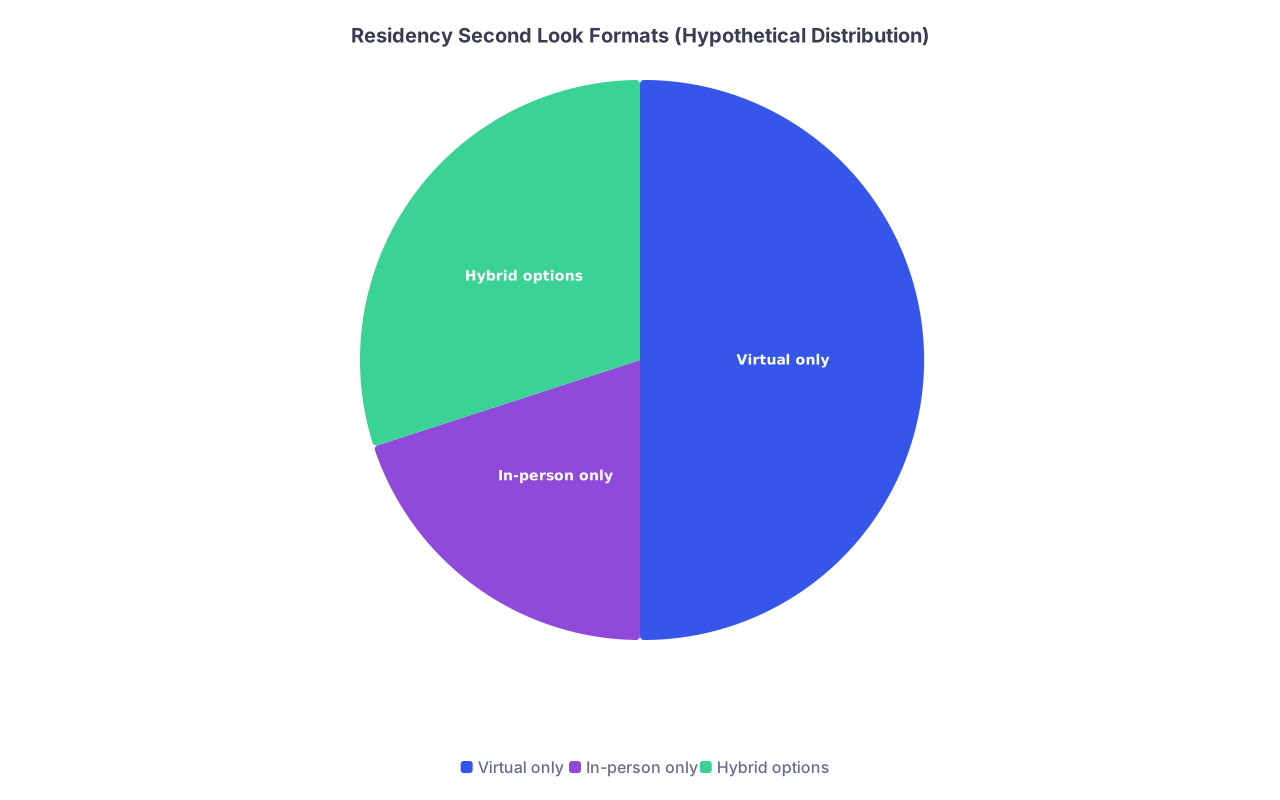
| Category | Value |
|---|---|
| Virtual only | 50 |
| In-person only | 20 |
| Hybrid options | 30 |
Programs have totally different philosophies:
- Some think in-person second looks create inequities and potential match violations.
- Some think they’re essential to sell a weaker location or a grueling workload (“Look, we have free snacks and a nice resident lounge, please come anyway”).
- Some just do what they’ve always done and hope it’s fine.
You are not “less wanted” because of the format. It’s about policy, money, and institutional risk tolerance more than your personal desirability.
If anything, you should be more suspicious of the over-the-top, we’ll-reimburse-everything second looks from very malignant programs with shiny veneers. I’ve watched people fall for it. Gorgeous lounge. Great dinner. Then as interns they’re telling me, “They never showed us how bad the call rooms were or that we’d be pre-rounding at 4.”
Your top program doing a straightforward virtual session might actually be… more honest.
How to Extract Real Value from a Virtual Second Look
You’re worried a Zoom meeting can’t show you what you need to know. It can. If you treat it like a surgical strike instead of a passive YouTube livestream.
Step 1: Decide What You Actually Need to Know
Sit down and write your real fears. Not the polished version. The ugly version.
Stuff like:
- “Am I going to be crushed with scut work?”
- “Are the seniors burned out and bitter?”
- “Will I be supported if I have kids or need time off?”
- “Is this place secretly malignant but good at marketing?”
Now convert those fears into pointed questions.
Not: “What’s the culture like?”
Instead: “What time do interns realistically leave on a normal non-call day?”
Or: “Give me a recent example of a resident struggling and how the program responded.”
You want specific. Concrete. Behavior-level.
Step 2: Target the Right People
A generic Q&A with the PD is great for big picture stuff. But you need residents. Especially:
- PGY-2s (fresh trauma scars, still honest)
- Someone who has a life circumstance like yours (partner, kids, distance from family, visa, etc.)
- A chief or senior who isn’t dead behind the eyes
If they don’t automatically break out by level, politely ask beforehand if you can have a small-group resident-only room or if they’ll share a list of residents you can email.
A lot of real talk happens after the official event, in one-on-one follow-ups.
Step 3: Pay Attention to the Weird Little Signals
You can’t walk the halls. But you can absolutely read the room—yes, even over Zoom.
Watch for:
- Do residents turn their cameras on and actually talk?
- Is there unforced laughter, or does everything feel scripted?
- Do they speak about leadership with trust or with vague, careful language?
- When someone asks a hard question, do they answer it or dance around it?
I’ve been in sessions where a single comment changed everything for applicants. A senior casually saying, “Yeah, nights are hard, but leadership listened when we asked to change the schedule,” versus, “We’re working on wellness” with dead silence behind them.
Those moments matter more than seeing the ICU hallway.
What You Should Do Before the Second Look
If your brain is chewing on the “virtual only” thing, give it something productive to work on.

| Step | Description |
|---|---|
| Step 1 | List Fears |
| Step 2 | Turn into Questions |
| Step 3 | Review Interview Notes |
| Step 4 | Research Program Online |
| Step 5 | Email Residents for 1-1 Chats |
| Step 6 | Prioritize Top 5 Questions |
Concrete prep helps shut up the “I’m powerless” feeling.
Things that actually help:
- Re-read your interview notes for this program
- Look up any schedule, case logs, curriculum PDFs they have online
- Stalk (yes) resident bios—see where they came from, what they matched into
- DM or email 1–2 current residents for a brief chat separate from the second look
You’re not trying to cross-examine anyone. You’re trying to see if your future self survives here.
Ranking a Program You’ve Only Seen Virtually
This is the part that keeps you up at 2 a.m.:
“How do I put this place #1 if I’ve never walked inside it?”
Fair question. Let’s strip this down.
What actually determines if you’re happy (or at least functional) in residency?
| Factor | Impact on Your Life | Can You Judge Virtually? |
|---|---|---|
| Resident culture | Huge | Yes, with good questions |
| Schedule/workload | Huge | Yes, if they’re honest |
| Leadership responsiveness | Huge | Partly |
| Fellowship placement | Big | Yes, via data and alumni |
| City/Cost of living | Big | Yes, with your own research |
| Hospital buildings | Medium | Not really |
Notice what’s missing? “Got a fancy catered lunch and campus tour.”
You can get:
- Resident culture → from resident-only Zooms + follow-ups
- Workload → from honest questions like “How many patients on a typical call?”
- Leadership responsiveness → from how they talk about past problems
- Fellowship placement → from actual match lists, not vibes
- City/cost of living → from your own deep dive, not a guided bus tour
You still might not feel ready to rank without having been there. But intellectually, you often have enough data.
One more hard truth: even people who did “amazing” in-person second looks have ended up miserable because they trusted the tour more than the underlying numbers and stories. You’re not actually worse off.
How to Stop Obsessing About What You’re “Missing”
You’re fixated on what you can’t have: the feel of the wards, hallway energy, random staff interactions. Fair. That stuff does matter.
So, compensate, instead of just stewing.
Concrete things you can do:
- Ask residents, “If I visited in person, what would you want me to notice?”
- Ask, “What surprised you about this place after you started that you didn’t see on interview day?”
- Ask, “If you had to be brutally honest with an applicant, what’s the hardest thing about training here?”
Then shut up and listen.
You’re borrowing their on-the-ground experience to replace your missing hallway walk. That’s honestly more valuable than a polished half-day tour.
Red Flags in a Virtual Second Look
If your brain needs something to latch onto, focus it here: what would actually be concerning?
Things that should make you pause:
- Residents never given space to talk without faculty present
- Every answer is “we’re working on that” or “it depends” with no examples
- No one can give you rough ranges for patient load, duty hours, or call frequency
- Residents look visibly exhausted and flat, and no one acknowledges it
- Dodging any question about recent accreditation issues, bad outcomes, or major changes
On the flip side, green flags:
- Residents acknowledge hard stuff but also talk about specific improvements
- Multiple residents echo each other on key points (not verbatim scripts, but consistent themes)
- PD or APD gives transparent answers without getting defensive
- They’re willing to let you talk to whoever you want, whenever you want
Virtual format doesn’t hide these patterns. It often makes them more obvious because people can’t choreograph eye contact and body language in the same way.
Dealing with the Emotional Side (Because This Is the Actual Problem)
Let’s be real: the worst part isn’t the logistics. It’s the fear that you’ll make the wrong call and regret it for years.
The voice in your head says:
- “If I rank them #1 and hate it, I’ll blame this virtual thing forever.”
- “If I drop them because I didn’t ‘feel’ it virtually and they were actually amazing, I’ll kick myself.”
- “Everyone else seems so confident, why am I this paralyzed?”
Here’s what I’ve seen over and over with applicants and residents:
What you remember three months into intern year is not “virtual vs in-person second look.” It’s:
- “Are my seniors decent humans?”
- “Am I learning or just surviving?”
- “Can I go a day without crying in the bathroom?”
Those things are not determined by the second look format. They’re determined by the actual program.
So instead of asking, “Am I missing the magic of the in-person second look?” ask:
“Given the data I have—interviews, second look, resident conversations, curriculum, location—would I be okay waking up here for three years?”
Not “ecstatic.” Not “Instagram-perfect.” Just: “Can I live with this choice?”
If the answer is honestly “yes,” you’re fine ranking them highly even if everything was virtual.
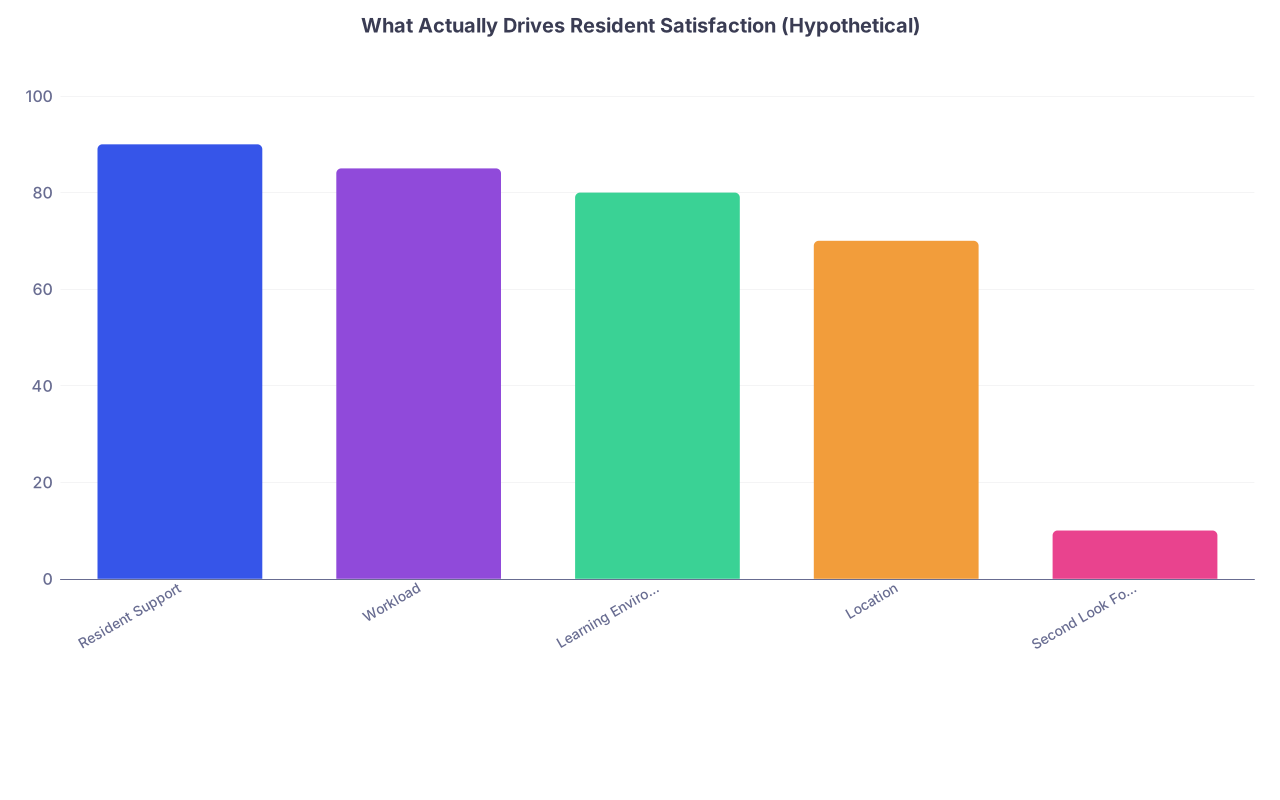
| Category | Value |
|---|---|
| Resident Support | 90 |
| Workload | 85 |
| Learning Environment | 80 |
| Location | 70 |
| Second Look Format | 10 |
Spoiler: nobody sits in conference complaining, “If only the second look had been in-person…”
Quick Scripted Moves You Can Make After the Virtual Second Look
If you’re the type who worries you’re not “doing enough,” here are specific, low-drama things that actually matter:
- Send a short, specific thank-you email to a resident or faculty member who answered your real questions.
- If you’re still unsure, request a 15–20 minute follow-up with a resident at your intended track or similar background.
- Re-write your rank list based on priorities, not vibes about format. Literally rank your priorities on paper and see where this program lands.

| Step | Description |
|---|---|
| Step 1 | Finished Virtual Second Look |
| Step 2 | Reconsider Ranking |
| Step 3 | Clarify Remaining Questions |
| Step 4 | Optional 1-1 Resident Chat |
| Step 5 | Align With Priority List |
| Step 6 | Finalize Rank Position |
| Step 7 | Major Red Flags? |
That’s it. You don’t need to “perform” anything else.

FAQ (Exactly 6 Questions)
1. Will a virtual second look hurt my chances of matching at that program?
No. For almost all programs, your rank position is based on your interview performance and file, not the second look. Second looks—virtual or in-person—are primarily for you. Programs know they have to be fair and avoid preferential treatment based on who can show up more.
2. Should I tell them they’re my top choice during the virtual second look?
Not during the group session. That can be awkward and borderline unprofessional. If you genuinely know they’re your top choice, you can send a concise, sincere email afterward to the PD or coordinator. One paragraph. No drama. Just: “After interviews and second look, I’ve decided your program is my top choice” plus one or two specific reasons.
3. Is it sketchy if residents seem too positive on Zoom?
It can be. Watch for whether they ever acknowledge anything hard. A real program will have residents who say things like, “The hours can be tough on X rotation, but leadership changed Y when we brought it up.” Pure sunshine with no specifics is often worse than a mix of positives and honest pain points.
4. Can I ask for an in-person visit on my own?
You can ask, but many programs will say no because of policy, not because they dislike you. If they say no, don’t push. It won’t help and may backfire. If they’re okay with informal visits, they’ll usually tell you that explicitly in communication to all applicants.
5. How do I compare an in-person second look at one program vs a virtual one at another?
Strip away the format and compare substance: resident happiness, workload, educational quality, fellowship match, location, support systems. Make a priority list and rate each program on those items. Format is aesthetics. Substance is survivability.
6. What if I still feel uncertain about ranking my virtual-only top program #1?
Uncertainty is normal. Most people hit “submit” on their rank list while mildly nauseated. Go back to this: if you match there, will you be okay, even if it’s hard? If the answer is yes and they’re truly your strongest fit on paper and from conversations, you can safely rank them #1—even if your only second look was a glitchy Zoom in your messy bedroom.
Key points:
- Virtual second look ≠ lower interest or worse program; it’s usually policy, logistics, or equity-driven.
- You can still get the information that actually matters—resident culture, workload, leadership behavior—if you ask targeted questions and follow up with residents.
- Rank based on real priorities and data, not format anxiety; your future self will care about the training, not whether you got a catered lunch and a hospital tour.