
The idea that you have to do second-look visits to match well is wildly overblown.
Let me just say that outright, because I wish someone had said it to me when I was staring at airfare prices and my bank account like they were enemies.
If you can’t afford any second-look visits, you are not automatically doomed. You’re not secretly disqualified. Programs are not running a secret tally of “who flew back to see us again” and ranking only those people higher. That’s not how this works.
Do second looks help sometimes? Sure. But they’re a luxury, not an entry ticket.
Let’s pick this apart the way your anxiety is actually asking it.
What Second-Look Visits Actually Are (Not What Reddit Says They Are)
Second-look visits sound so official and loaded, like some clandestine final exam. Most of the time, they’re… not.
They’re usually informal, optional chances to:
- See the city and housing options
- Get a better sense of program culture “on a normal day”
- Meet residents again in a more casual way
Sometimes there’s a structured schedule. Sometimes it’s literally “come hang out, shadow a bit, maybe attend noon conference, then leave.”
Here’s what they are not for most programs:
- A second secret interview
- A requirement
- A backdoor way to “prove commitment” that only the rich can use
Yes, some people will say, “We like when people do a second look—it shows interest.” But there’s a huge difference between “this is nice” and “if you don’t, you’re done.”
Programs know this costs money. They know most students are broke. They also know some students have kids, family obligations, chronic illness, or visa issues that make travel brutal.
If a program is actually penalizing people for not doing second looks, they’re basically selecting for money and free time. And honestly, that’s a red flag about their priorities.
Are Second Looks Quietly Used Against You?
Here’s the fear:
“If I don’t go back, they’ll think I don’t care, and I’ll drop on their list, and then I won’t match.”
I’ve heard versions of this so many times:
- A chief resident saying, “Oh yeah, we could tell who was really interested by second looks.”
- A faculty member saying, “People who came back were often the ones we saw high on the list.”
So your brain goes: correlation = causation = I’m screwed.
But think about what’s actually happening:
People who are already very interested in a program are:
- More likely to spend money on a second look
- More likely to send a strong signal, emails, letters
- More likely to talk enthusiastically about that program elsewhere
So of course there’s a correlation between “people who did a second look” and “people ranked highly.” But it doesn’t mean the second look was the magic ingredient. It’s usually just one visible symptom of overall strong interest and fit.
And then there’s the other piece no one likes to say out loud:
A lot of programs are terrified of being “burned” by people ranking them low. Second looks feel like reassurance to them. That’s emotional, not scientific.
But the NRMP has been very clear for years:
The safest, most optimal strategy for you is to rank programs in your true order of preference. Programs generally do the same for applicants. The match algorithm doesn’t care who flew where. It cares how people ranked each other.
If a program literally told you “we rank people higher if they do a second look,” I’d question their judgment. Also, many institutions are actively shying away from anything that smells like “pay to play.”
The Money Reality: You’re Not the Only One Who Can’t Afford This
You’re not the only one staring at Google Flights and wanting to scream.
Between ERAS fees, exam fees, suit costs, and interview travel (if in-person), most students are already in the red. Throwing in another $300–$700 per second look? It’s not realistic for a lot of people.
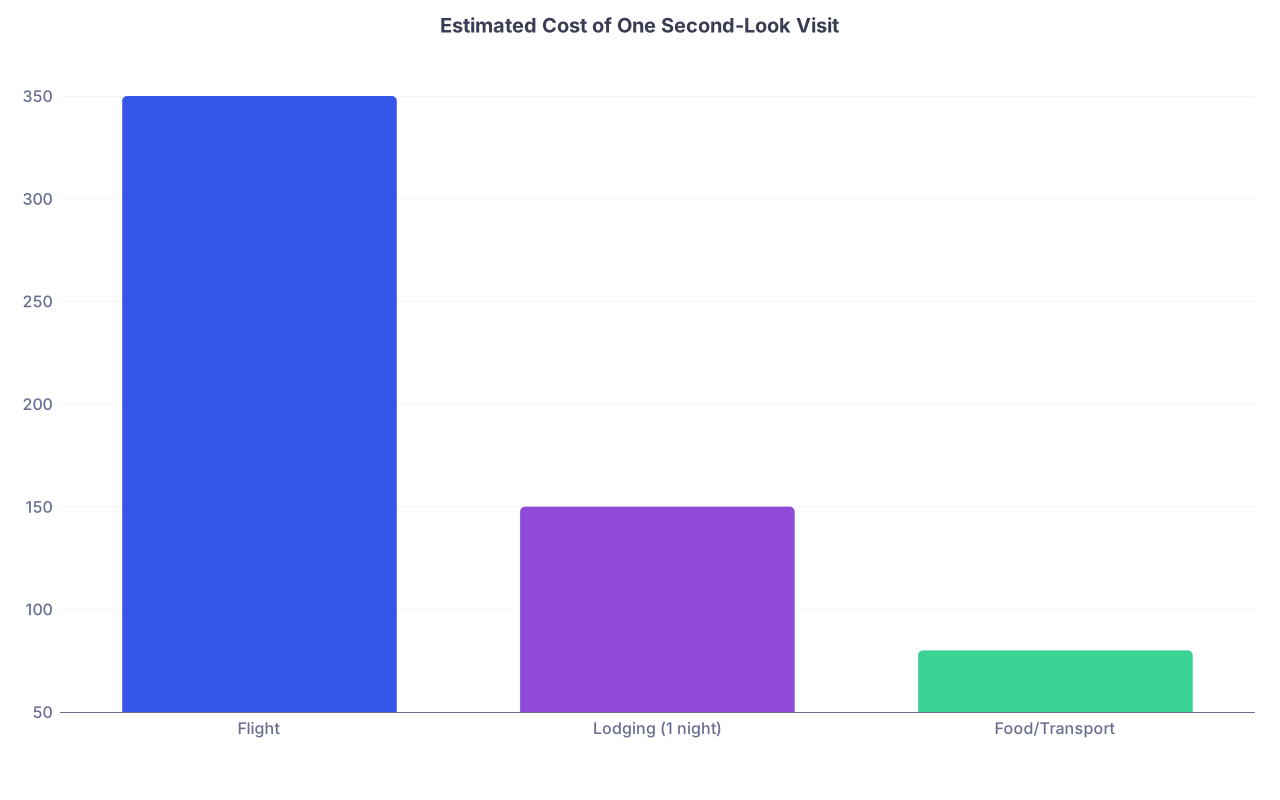
| Category | Value |
|---|---|
| Flight | 350 |
| Lodging (1 night) | 150 |
| Food/Transport | 80 |
I’ve watched people:
- Put second looks on high-interest credit cards
- Sleep on floors of residents-of-friends-of-friends
- Pick one second look and feel guilty for not doing five
And I’ve also seen this:
- Plenty of applicants do zero second looks and match perfectly well
- Some applicants do multiple second looks and still don’t end up at those programs
The emotional trap is thinking: “I care a lot, but I can’t afford to show I care, so I’ll look like I don’t care, so I’m doomed.”
That’s not the full picture. You can show interest without physically showing up again. And programs know economic disparity exists—even if they don’t always handle it well.
What Programs Actually Have to Go On When They Rank You
Let me be blunt: on rank list day, most programs are not pulling up a spreadsheet column that says “SECOND LOOK: YES/NO.”
They’re pulling up:
- Interview performance
- Application strength (letters, personal statement, experiences)
- Any red flags or big positives
- Signals (if your specialty uses them: preference signals, geographic ties, etc.)
- Sometimes: emails, vibes, how residents felt about you
Second looks, if anything, are usually a tiny side note in the “interest” bucket. And even then, virtual expressions of interest are often enough.
To make this more concrete:
| Factor | Relative Impact vs Second Look |
|---|---|
| Interview performance | Much higher |
| Strong letters of rec | Much higher |
| Program signals/interest | Higher |
| Personal statement fit | Higher |
| Second-look visit | Lower |
If your interview went well, your letters are solid, and you seemed like a good fit, you’re already in the serious consideration pile. A second look might bump you from “probably rank” to “yeah, definitely,” at some places. But it’s not moving you from “no chance” to “top choice” out of nowhere.
How to Show Strong Interest Without Spending Hundreds of Dollars
This is the part your anxiety actually needs: alternatives.
If you can’t afford a second look, you can still do a lot to show a program you care about them specifically, not just generically.
Here’s what I’d focus on instead of buying plane tickets:
A concise, specific “thank you + interest” email
Not a novel. Not groveling. Just something like:- Thank them for the interview
- Mention one or two concrete things you liked
- If true, tell them they’re near the top of your list or your top choice
Use official preference signals (if your specialty has them)
EM, IM, some surgical specialties, etc., now use signals. Use them strategically. Programs actually pay attention to those, because they’re standardized. That’s way more defensible than “who could afford a second look.”Attend any virtual second looks / Q&As / town halls
A lot of places now offer virtual revisit sessions because they finally realized money and geography are real barriers. Show up. Ask a real question. Chat with residents.If they explicitly say second looks don’t affect ranking—believe them
I know, your brain will say, “They’re lying.” But many programs are under pressure to avoid bias and financial inequity. Some have written policies: second looks are post-rank only or don’t influence ranking. Take that seriously.If you’re truly constrained, you can actually say so
Not in a pity way. In a straightforward, adult way:- “I would’ve loved to do a second look, but financially it’s not feasible for me this year. I remain very interested in your program for reasons X, Y, Z.”
Reasonable people will understand. If they don’t? Again, red flag.
- “I would’ve loved to do a second look, but financially it’s not feasible for me this year. I remain very interested in your program for reasons X, Y, Z.”
The Hidden Risk of Second Looks No One Talks About
Here’s a fun twist: second looks can backfire.
I’ve watched this play out:
- Student loves a program after interview day.
- Scrapes together money for a second look.
- Comes back on an “ordinary” day. Residents seem exhausted, someone makes a snarky comment about admin, clinic is chaos.
- Student’s gut flips: “Oh. Oh no. I don’t think this is what I thought it was.”
Sometimes that’s a blessing, because it saves you from ranking a place you actually wouldn’t like. But imagine if you empty your savings, miss shifts, burn out traveling, and come away either neutral or more confused. That happens a lot.
Second looks are not guaranteed confirmation. They’re another data point, and sometimes a very noisy one. You are not missing some perfect, magical glimpse that everyone else is getting.
And again, some programs formally only offer second looks after rank lists are certified for exactly this reason—they don’t want it to become another inequity factor.
The Worst-Case Scenario Your Brain Is Spinning Out
Let’s entertain it, because that’s what your anxiety is doing anyway:
“I can’t afford second looks. Everyone else will go. Programs will think I don’t care. They’ll rank me low. I won’t match. I’ll be unmatched and tens of thousands in debt and my career will be over.”
Here’s what reality tends to look like instead:
- Many applicants do zero second looks.
- Many programs don’t expect them and don’t care.
- Programs are mainly moved by your application as a whole and your interview.
- You rank based on where you’d actually be happy training.
- You match at a place you had enough information about from interview day, their website, and talking to people.
Could you fail to match even if you did a bunch of second looks? Yes. That happens every year. Could you match at your #1 without doing a single second look? Also yes. That happens every year too.
The presence or absence of second looks is not the central plot point of your match story. It feels huge right now because it’s a concrete thing you can see yourself “failing” at. But most of the important work—your grades, your exams, your letters, your interview performance—already happened.
If You Truly Can’t Afford It, Here’s the Line You Hold
Draw this line in your head and hold it:
“I will not go into high-risk debt for an optional, low-yield, optics-based visit.”
If it requires taking on more credit card debt you realistically can’t pay, or borrowing from family who are also stretched, or skipping rent? No. That’s not smart. That’s not “dedicated.” That’s you being punished by a broken system.
Some people will still choose to go. Some will feel better emotionally for having done it. Fine. That doesn’t mean you are less committed or less deserving because you looked at your finances and made a responsible decision.
If a program only wants people who can afford that kind of flex spending, that’s about them, not you.

| Step | Description |
|---|---|
| Step 1 | Invited or allowed for second look |
| Step 2 | Skip second look |
| Step 3 | Probably skip |
| Step 4 | Consider going |
| Step 5 | Rank programs by true preference |
| Step 6 | Can you afford travel without hardship |
| Step 7 | Will it change your rank list |
Quick Reality Check: The Future of Second Looks
There’s a quiet shift happening already:
- More virtual second-look or “revisit” days
- More explicit program policies that second looks don’t influence rank
- More awareness of equity, cost, and disability issues
Second looks are slowly moving toward what they always should’ve been: optional and not a financial gatekeeper. You’re just applying in the awkward transition moment where expectations are inconsistent and rumors are loud.
Ten years from now, I wouldn’t be surprised if second looks are mostly virtual or clearly post-rank activities. You’re not behind; you’re just stuck in the messy middle of a culture shift.

FAQs
1. If I don’t do any second looks, can I still match at a top program?
Yes. People match at “top” and very competitive programs every year without doing a single second look. Your interview, letters, CV, and overall fit matter far more. A strong, genuine interest email or signal is usually more than enough to show you care.
2. Should I put a second look on a credit card if it’s my dream program?
If it’s truly high-risk debt or you’re already stretched thin, I’d say no. One optional visit is almost never worth serious financial strain. If you genuinely can afford it and you think it might meaningfully change your rank list, then maybe—but do it because you need the information, not because you’re scared they’ll hate you without it.
3. Will programs think I’m less interested if I only attend virtual events?
Reasonable programs won’t. Many have switched to or added virtual revisits precisely to reduce cost barriers. If you show up, ask thoughtful questions, and communicate your interest clearly, that signals more than just physically flying in for a day.
4. Should I tell a program I can’t afford a second look?
You can, and it’s totally legitimate. A simple line like, “I would’ve loved to visit again, but due to financial constraints I’m not able to travel for second looks this year. I remain very interested in your program because…” is enough. If they hold that against you, that says more about them than about you.
Bottom line:
- You are not doomed if you can’t afford second looks.
- Second looks are optional, low-yield compared to your interview and application.
- You can show genuine interest virtually and through clear communication—without lighting your bank account on fire.