
It’s late January. Your friends are in the group chat comparing second-look dates and hotel prices. Someone just texted, “OMG, ___ sent a special second-look invite to all the people they’re ‘really interested’ in!!”
You check your inbox. Refresh. Nothing.
You check your spam. Nothing.
You search your email for “second look,” “revisit,” “open house,” “thank you for your interest.” Still nothing from the programs you actually care about.
And now your brain is off to the races:
“So that’s it, right? They’re not inviting me back because they’re not ranking me. Or they’re ranking me so low it doesn’t matter. Did I say something weird? Did I bomb that interview more than I thought? Should I send an email? Would that be desperate? It’s over, isn’t it?”
Let me be very direct:
No second-look invite does not equal “we won’t rank you.”
Not even close.
Let’s untangle this before your cortisol burns a hole in your stomach.
What Second Looks Actually Are (Not What People Say They Are)
There’s a myth that’s spread mostly by terrified applicants and occasionally by over-excited residents:
“Second look = we love you, you’re near the top of our rank list.”
That sounds nice. It’s also mostly wrong.
Second looks are a weird mix of:
- Logistics
- Culture signaling
- Applicant reassurance
- Sometimes…pure theater
Most programs are doing second looks for you more than for them. They already interviewed you. They already have your file, faculty notes, and whatever cryptic comment the PD typed in after your Zoom (“quiet but solid” / “very enthusiastic” / “likes cats”). They’re not suddenly discovering some new magical data point on a second look.
For the majority of programs, second looks:
- Are optional
- Don’t change their rank list materially
- Are mostly about you getting a better feel for them
And crucially: a lot of places have decided they’re not worth the hassle or they’re ethically questionable, so they limit them, keep them informal, or kill them entirely.
So if you’re sitting there with zero second-look invites and a pit in your stomach, remember: several very good programs simply don’t use second looks as a selection tool at all.
The Ugly Truth: What Programs Actually Use Second Looks For
This is the part nobody admits out loud on interview day. I’ve heard PDs and chiefs talk about this in the workroom in that half-whispered, “this should probably not be on a recording” tone.
Second looks are used for:
Recruitment / Sales “We really want good applicants to see that our call schedule isn’t as horrifying as it sounds on paper.”
“We’re in a less popular city. Second look helps applicants see they won’t be miserable here.”Damage Control “Our interview day felt flat this year.”
“The Zoom vibes were weird.”
“We had some scheduling chaos. Let’s redeem ourselves.”Resident Morale / Culture Showcase They want you to see the residents not on their absolute best behavior, staged for interview day, but just doing normal stuff. Hanging out on rounds. In the workroom. Eating whatever sad food is in the lounge.
Edge Cases Every now and then:
“We’re between this person and that person. Let’s see who shows more genuine interest.”
This happens, but it’s more rare than you think. Most rank lists are essentially done based on interview and file.
Notice what’s not on that list:
“Decide whether we will rank this person at all.”
If you were toxic, wildly inappropriate, clearly unsafe, or totally not a fit, you’re not getting a second look or a ranked position. You’re just done. Quietly. No invite. No explanation.
So if you did interview there and they seemed fine with you, no second look doesn’t automatically signal doom.
Why You Didn’t Get a Second-Look Invite (The Boring, Non-Doom Versions)
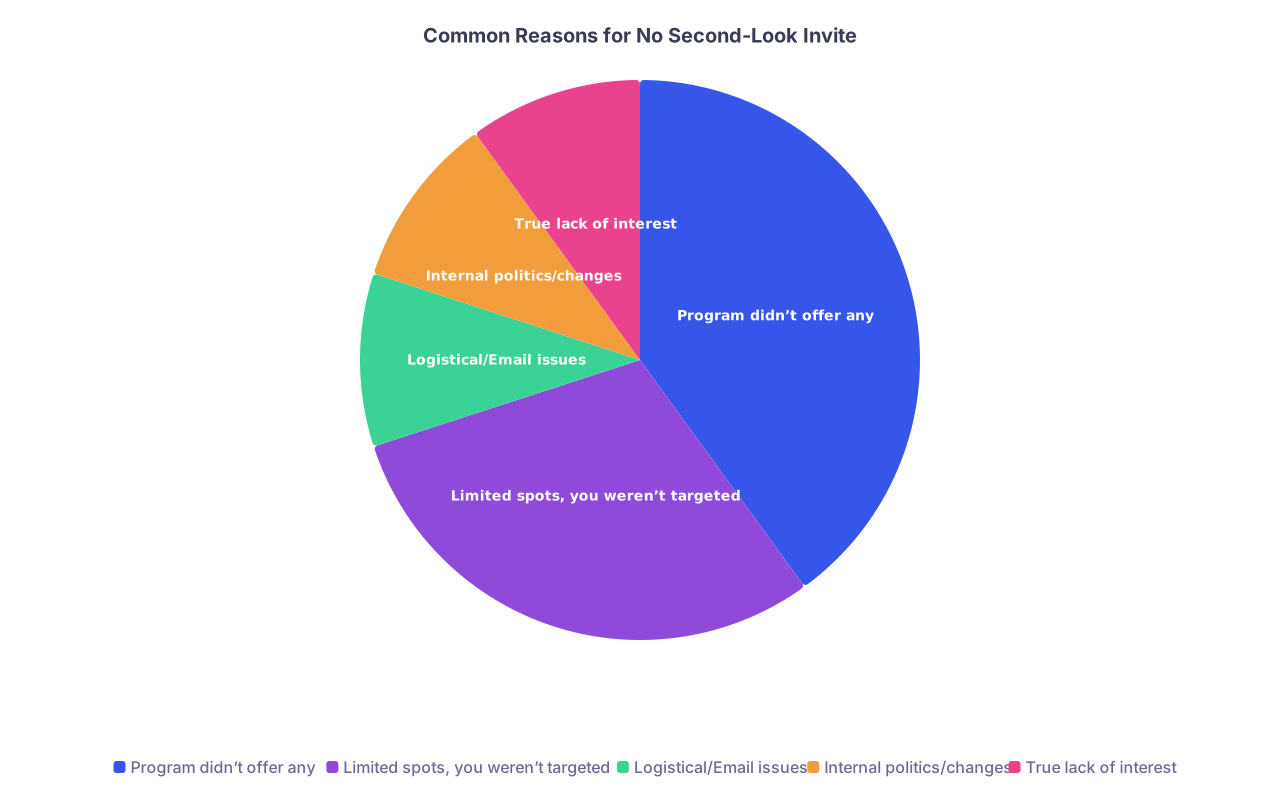
Your brain tends to fill in gaps with worst-case scenarios. “They hate me” is your default explanation. But let’s walk through much more common reasons:
| Category | Value |
|---|---|
| Program didn’t offer any | 40 |
| Limited spots, you weren’t targeted | 30 |
| Logistical/Email issues | 10 |
| Internal politics/changes | 10 |
| True lack of interest | 10 |
They didn’t hold second looks for anyone
Some programs quietly stopped second looks, especially post-COVID and with virtual interviews. Or they did a general “optional open house” months ago and called that their “second look.”
You don’t get a personalized invite because… there isn’t one.They limited it to a small subset — not because you’re “bad”
A program might invite only:- People who live far away
- Couples match applicants
- People whose interviews were glitchy or truncated
- Applicants they think are on the fence about them
You might be in the “we think they’ll rank us fine without extra effort” bucket. That doesn’t feel great, but it also doesn’t mean “we won’t rank them.”
Admin chaos or tech garbage
I’ve watched offices copy the wrong list, send emails to last year’s applicants, mis-type addresses, or let something sit in drafts forever.
Did you get the generic “thanks for interviewing” and “we enjoyed meeting you” emails? Good. Then at least your email isn’t totally lost to the void. But yes, admin mistakes happen constantly.Internal drama
- Faculty fighting about whether second looks are ethical
- PD changes mid-season
- GME or hospital rules changing about contact with applicants
You’re reading silence as a personal rejection. Sometimes it’s just institutional disorganization.
Yes, sometimes: they like other people more than you
Not necessarily “won’t rank you,” but maybe you’re lower down than their core “must-get” group. That still doesn’t mean you won’t match there. Rank lists and match outcomes are way messier and less predictable than people admit.
Match Mechanics: Why Second Looks Don’t Matter as Much as Your Brain Thinks
The Match algorithm cares about one thing:
How you rank them, and how they rank you. That’s it. Not whether you showed up for their pizza day in February.
A few key points that get lost in the panic:
Programs mostly have their rank lists roughly formed very soon after interviews end. Second looks rarely blow that up. They might tweak a spot or two. They’re not rebuilding from scratch because someone showed up for 2 extra hours.
Evaluations that actually matter are from:
- Your interviewers
- PD/APDs
- Maybe a resident or chief who formally evaluated you
Casual second-look “vibes” rarely make it into the scoring grid in a meaningful way.
Even if second looks are mentioned in some spreadsheet (yes, some places have a little checkbox for “second look attended”), that’s usually a tiebreaker at best. Not a primary driver.

| Step | Description |
|---|---|
| Step 1 | Interview File |
| Step 2 | Core Rank Score |
| Step 3 | Faculty Interview Impressions |
| Step 4 | Resident Feedback |
| Step 5 | Second Look Attendance |
| Step 6 | Tiebreaker Only |
| Step 7 | Final Rank Position |
So when your brain screams, “No second look = no rank,” it’s ignoring that your main “grade” was already given. Probably weeks ago.
But What If Everyone Else Got One and I Didn’t?
This is the scenario that haunts people: a co-applicant you met on the trail says, “Yeah, XYZ invited me to a second look yesterday,” and you check your inbox… empty.
That stings. A lot.
Here’s the uncomfortable but honest breakdown of what that could mean:
They’re targeting a group they’re worried about losing
Maybe:- People with super strong stats who also interviewed at powerhouse places
- Couples-match pairs
- Applicants from specific regions
Basically: “flight risks.” If they think you’re more likely to rank them decently without extra courting, they might not burn a second-look slot on you. Annoying? Yes. Fatal? No.
They’re guessing about your preferences and might be wrong
Programs are surprisingly bad at predicting where applicants will actually go. They look at your med school, your research, where else you interviewed, your comments, and they guess. Sometimes badly.Somebody made a list. You didn’t land on it.
Lists aren’t always fair. Maybe your interviewer:- Wrote a vague note that didn’t scream “top tier.”
- Was more excited about someone else.
- Barely remembered you by the time second-look planning happened.
Again, this leans more toward “maybe they don’t see you as a top-10 person” than “they’ll never rank you.”
Yes, occasionally: they’re less interested
It is possible you’re lower on their list. That’s not a death sentence. People match at programs that didn’t give them any “courtship” signs every single year.
Here’s the part everyone forgets: you only need one line on their list above the number of spots they have to match. You don’t need to be at the very top. You don’t need them to be obsessed with you. You just need to be high enough, and for other people above you to land somewhere else.
Should You Ask About It? Email Them? Go Rogue?
You’re probably wondering if you should “fix” this with some kind of grand gesture.
Should you email the coordinator and say, “Hey, I heard there’s a second look?”
Should you tell the PD it’s your top choice?
Should you show up in the lobby with donuts? (Please don’t.)
Here’s my honest take:
If the program sent out a general invite to everyone for a second look and you somehow missed it, then yes, reach out to the coordinator politely:
“I heard there was a second-look opportunity. I didn’t receive the information and remain very interested in the program. Is it possible to attend?”If you only heard through the grapevine that some people got “special” invites, I’d be cautious. You can still email, but keep it low-key and not accusatory. Something like:
“I remain very interested in [Program]. If there are any upcoming opportunities to learn more about the program or meet residents again before I certify my rank list, I’d be grateful to hear about them.”Do not demand explanations or try to emotionally pressure them:
“I’m worried you’re not ranking me.”
“I heard others got invited and I didn’t.”
That doesn’t help you. It just makes things awkward.A polite, brief expression of genuine interest can help a tiny bit. Overdoing it can hurt.
How You Should Let This Affect Your Rank List (Short Answer: You Shouldn’t, Much)
You’re tempted to read a lack of second look as some kind of tea leaf for how a program feels about you. That’s shaky logic.
Here’s the reality:
You should rank programs in the true order you want them, not the order you think wants you back. The Match algorithm is literally built for that.
If a program:
- Treated you respectfully
- Has training, location, and vibes you liked on interview day
- Still seems like a good fit on paper
Don’t tank them on your list because you didn’t get invited to walk their hallways one more time.
If you genuinely feel like:
“Actually, the fact that they didn’t communicate well, plus some mild weirdness on interview day, plus no second look makes me question the culture” — that’s different. Then you’re making a holistic judgment, not a single-event panic response.
But don’t catastrophize off one missing email.
What You Can Do Tonight So Your Brain Stops Spiraling
You’re not going to stop worrying just because I said, “it’s fine.” So give your anxiety something concrete to do.
Make a list (yes, an actual list) of:
- Programs you interviewed at
- Whether they even offer second looks
- Whether you got invited
- How you felt on interview day
Mark which ones you liked the most independent of this second-look chaos.
For the 1–2 programs you really care about but feel shaky on, consider a brief, respectful interest email if you haven’t already sent one. Not begging. Just clarity:
“You’re very high on my list; here’s why.”Then, start sketching your rank list based on where you’d actually want to wake up on July 1. Not on who did or didn’t send you one more Zoom link.

Quick Comparison: Second Look vs No Second Look
| Situation | What It Usually Means (Reality) |
|---|---|
| Got second-look invite | They want to recruit you / keep you warm |
| No second look, program never holds it | Completely neutral |
| No invite, but others got one | You’re not in their “we’re worried we’ll lose them” group |
| Attended second look | Mild bonus or tiebreaker at best |
| Skipped second look entirely | Usually no penalty |

FAQ: No Second-Look Invite Panic Edition
1. If I don’t go to a second look, will a program rank me lower?
Usually not in any meaningful way. Most places have their core rank list built on interview and file. Second looks might get a tiny checkbox or comment, but skipping them rarely sinks you. Lots of matched residents never went to second looks at all.
2. Does getting a second-look invite mean I’m high on their rank list?
Not reliably. Sometimes yes, often no. It can just mean they’re nervous you’ll go somewhere else and want to convince you they’re better than they looked on Zoom. Or they’re inviting almost everyone because they want to look applicant-friendly.
3. Should I email a program that didn’t invite me to a second look?
If you’re genuinely very interested, a short, professional email expressing that interest is fine. Don’t make it about the second look (“Why wasn’t I invited?”). Make it about your enthusiasm for the program and ask if there are any opportunities to learn more before ranking.
4. Could no second-look invite be a sign they’re not ranking me at all?
If they truly had serious concerns about you, that usually comes from interview day, and you’re probably already off their list. That’s independent of second looks. No invite is much more often about logistics, targeting, or misjudged priorities than an outright “we’re not ranking you” signal.
5. How should I handle second looks when building my rank list?
Use them as extra data, not the main driver. If a second look genuinely changed your sense of the culture or fit, let that influence you. But don’t upgrade or downgrade a program purely based on who invited you or how “courted” you felt. Rank by where you actually want to train.
Open your draft rank list right now and pick one program you were about to move down just because they didn’t invite you to a second look. Ask yourself, “If I’d never heard the words ‘second look’ this season, where would I put them?” Then put them there.