
It’s late January. You’ve finished most of your interviews. Your rank list is this half-solid, half-jello thing in your brain. And now programs are mentioning “second look visits.” Your group chats are exploding:
“Are you going back to Midwest Med?”
“My advisor says second looks don’t matter.”
“Someone in last year’s class did three and matched at their top choice.”
You’re sitting there thinking:
If I don’t go, will they think I’m not interested?
If I do go, will I look desperate?
And how many is too many before I just look unhinged?
Let me say this bluntly: this anxiety? Completely normal. The whole “second look” game is confusing, poorly standardized, and full of half-truths and rumor-level advice.
Let’s untangle it.
What a Second Look Really Is (And What It’s Not)
A second look is basically: you visit a program again after the interview day. Sometimes it’s structured (they call it a formal second look). Sometimes it’s more casual (you email the coordinator and say you’d like to visit again, attend conference, shadow a bit, meet more residents).
Here’s what it usually is:
- A chance for you to get more data about the program.
- A way to see real workflow instead of the polished interview-day version.
- A reality check: “Can I actually picture myself walking these halls at 3 a.m.?”
And here’s what it is not, in almost every specialty and almost every program:
- A magic “rank me higher” button.
- A way to erase weaker stats or an awkward interview.
- A formal expectation you must meet to match there.
Do programs sometimes notice who comes back? Yes.
Do some PDs casually remember: “Oh yeah, she did a second look”? Yes.
Does that automatically bump you 10 spots up their rank list? No.
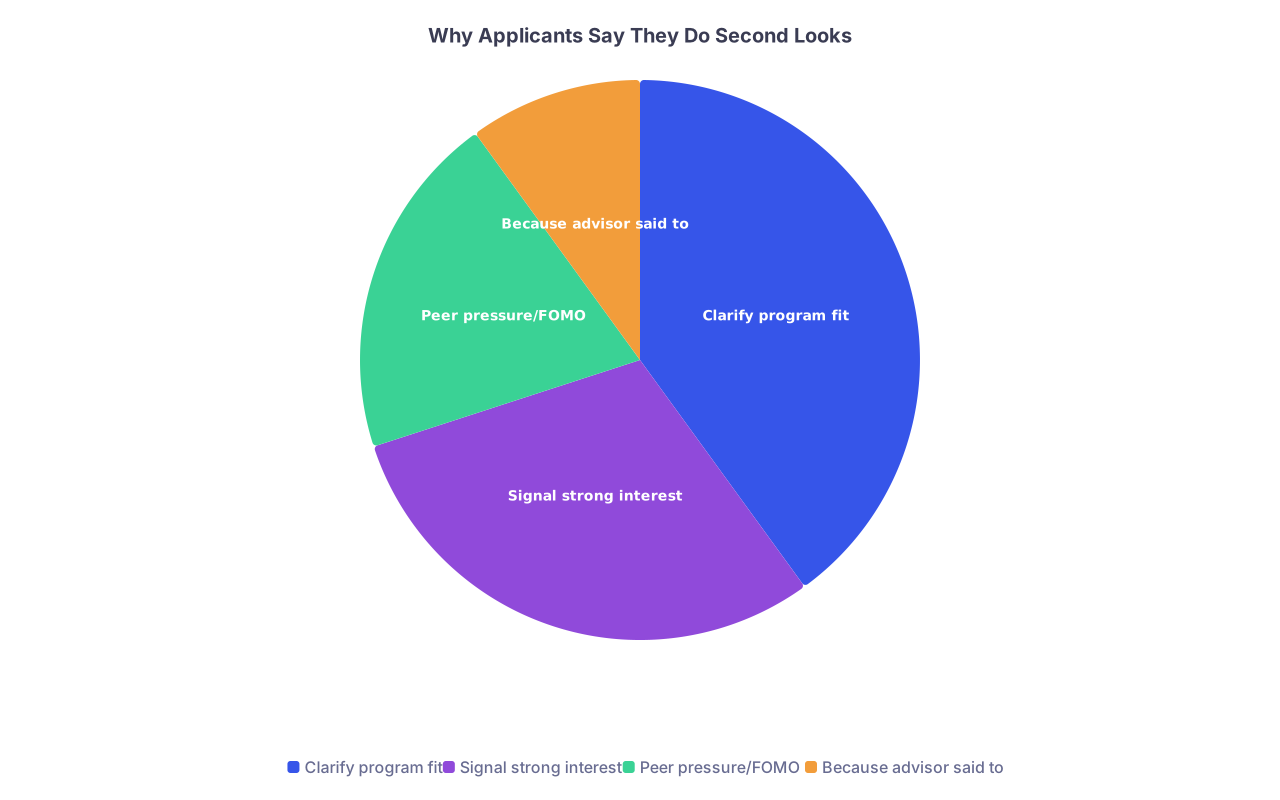
| Category | Value |
|---|---|
| Clarify program fit | 40 |
| Signal strong interest | 30 |
| Peer pressure/FOMO | 20 |
| Because advisor said to | 10 |
The Fear: “If I Do Too Many, I’ll Look Desperate… Right?”
This is the main nightmare running in the background:
“If I’m doing four second looks, and everyone else is doing one, they’ll think I’m needy, clingy, desperate, over-the-top, trying too hard. They’ll roll their eyes and say, ‘This applicant is doing way too much.’”
Here’s the uncomfortable truth:
Most programs barely talk to each other about your second looks. They don’t sit in some secret PD group chat listing who visited where and how many times. They barely have time to finish notes, service, and admin work, let alone track your travel schedule.
At an individual program, what they might notice:
- You came back once → “Seems genuinely interested.”
- You came back twice to the same place → “Okay, very, very interested.”
- You keep emailing to come back a third time, asking for faculty X, Y, Z → That can start to feel like… a bit much.
What they don’t see:
- That you also visited five other places.
- That your anxiety brain is comparing yourself to everyone on Reddit.
- That you’re just trying to not screw up your future.
If you’re worried about “looking desperate” across multiple programs, remember: they only see their little slice of your behavior. Not the whole montage.
So How Many Second Looks Is “Normal”?
Let me give you a real, grounded framework instead of vague “it depends” nonsense.
For a typical categorical applicant in a moderately competitive specialty:
- 0 second looks
Very common. Totally fine. Most people match with zero. - 1–3 second looks total
Common. Reasonable. This is the “I had 12–15 interviews, but there are a few programs I really want to see again” range. - 4–5 second looks
This is where it starts to feel like a lot logistically, not necessarily reputationally. Travel fatigue, cost, and time start to add up. - >5 second looks
Logistically heavy and honestly unnecessary for the vast majority. This is usually driven by anxiety and FOMO, not strategy.
| Total Second Looks | How It Generally Comes Across |
|---|---|
| 0 | Totally fine, not a red flag |
| 1–2 | Mild, focused interest |
| 3 | Strongly comparing top choices |
| 4–5 | Overkill for most applicants |
| >5 | Anxiety-driven, not strategic |
Key point: the number doesn’t magically make you look desperate. The pattern and tone do.
If your communication is respectful, limited, and you’re not repeatedly asking for “just one more visit” to the same place, you’re not going to be the story people tell as “that desperate applicant.”
The Part No One Says Out Loud: Who Actually Benefits From a Second Look?
This is where it gets tricky and a little annoying.
Second looks help you more than they help them. But they help some types of you more:
- You had genuine concerns: malignant vibes, weird resident energy, questionable call schedule → second look can clarify.
- You interviewed early (like October) and barely remember the place → a revisit can refresh your memory so your rank list isn’t based on vibes from 4 months ago.
- You’re choosing between 2–3 programs you actually would rank #1–3 and you can’t tell which feels more like “your people.”
Where second looks don’t do much:
- You’re going to rank the program at #9 no matter what. You just feel guilty or FOMO so you’re going back “just in case.”
- You think a second look will turn a place that was lukewarm on you into a guaranteed top-5 rank for you.
- You’re doing it to “prove” interest because you’re scared your scores/grades aren’t strong enough.
If you’re asking, “Will they rank me higher just because I showed up again?” the answer is: not in any reliable, predictable, you-can-bank-on-it way.
What Programs Actually Think When You Do a Second Look
Let’s be honest about how this lands from their side.
Common reactions:
- “Nice, they’re interested.”
- “Okay, they had some questions about X, we answered them.”
- “They got to see a more normal day.”
Less common, but possible if your behavior is intense:
- “They emailed three times asking to come back again even after we said we’re full.”
- “They seemed like they wanted us to promise something about ranking, which we can’t.”
- “They’re borderline demanding access to specific rotations or resident meetings.”
The line between “interested” and “desperate” from a PD’s point of view isn’t the count of second looks. It’s:
- Are you respectful of their time and structure?
- Are you asking for reasonable things?
- Are you trying to game the match or fish for rank intel?
Second looks that feel chill:
- “I really appreciated the interview day, and this is one of my top choices. Would it be possible to come for a second look, maybe attend morning report and meet a few residents on service?”
Second looks that feel clingy/desperate:
- “This is my #1 and I want to make sure you know that. I’d like to come back again; also could I meet with the PD and the APD separately to talk about my rank and my chances of matching there?”
You can probably feel the difference in your gut.
How to Decide: Should You Do a Second Look at This Program?
Here’s a simple decision tree, because your brain is already overloaded.

| Step | Description |
|---|---|
| Step 1 | Considering second look |
| Step 2 | Probably skip |
| Step 3 | Optional, but not needed |
| Step 4 | Try to ask questions virtually |
| Step 5 | Schedule one focused second look |
| Step 6 | Program in your realistic top 3-5? |
| Step 7 | Major unanswered questions about fit? |
| Step 8 | Travel cost and time reasonable? |
If a program won’t realistically be in your top 3–5, I’d be very cautious about spending money, time, and emotional bandwidth on a second look there.
Doing a second look at a place you’re going to rank #10 is like re-reading your least favorite chapter the night before an exam. It might make you feel productive, but it doesn’t move the needle.
The “Too Many” Question: Where’s the Red Line?
Let’s answer your actual fear: “How many second looks is too many before I look desperate?”
My honest, opinionated take:
- Total across all programs:
More than 3–4 second looks is usually more about anxiety than strategy. Not always. But often. - Per single program:
More than 1 in-person second look at the same program starts to feel like a lot. One visit is fine. Two visits (interview + second look) is already sufficient data. - Across distance and time:
Flying cross-country multiple times for brief visits can look less “dedicated” and more “not thinking about burnout or priorities.” Not because they’ll judge your plane tickets, but because your own mental health and finances matter.
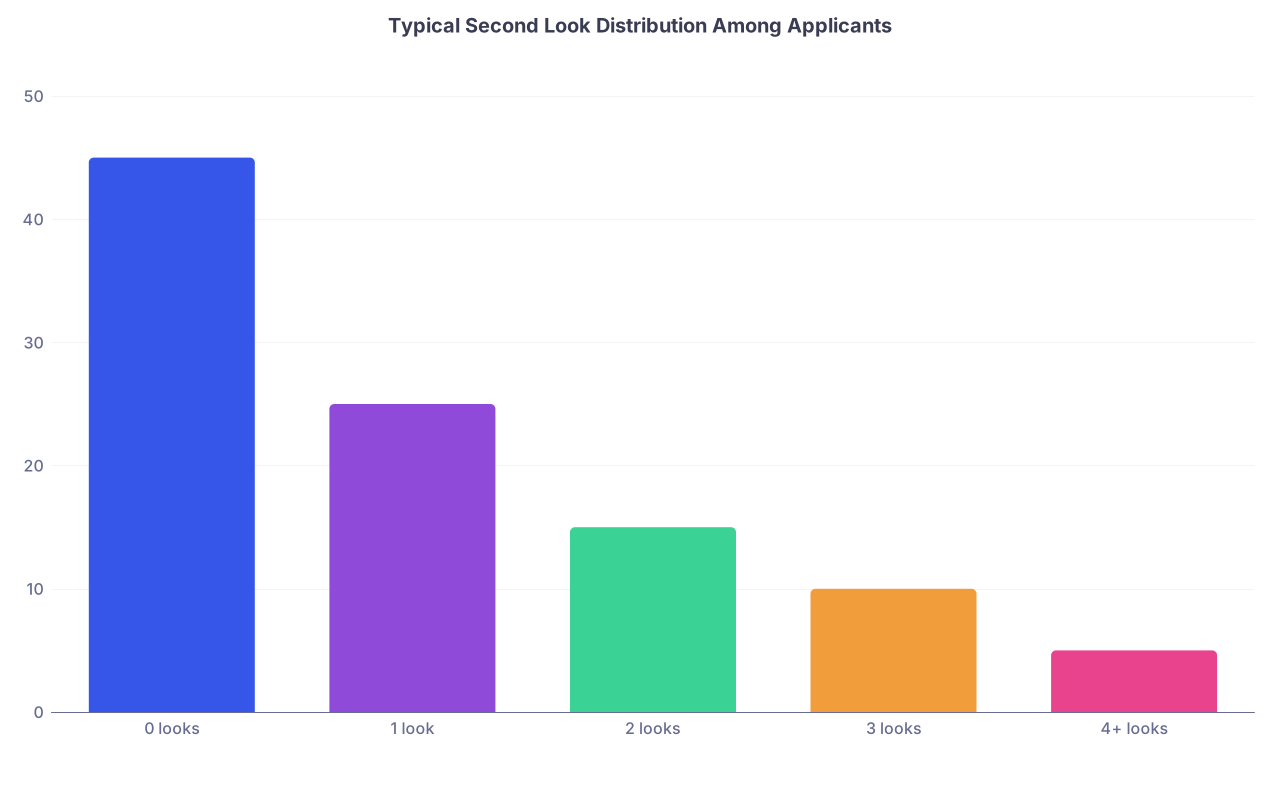
| Category | Value |
|---|---|
| 0 looks | 45 |
| 1 look | 25 |
| 2 looks | 15 |
| 3 looks | 10 |
| 4+ looks | 5 |
What will actually make you look desperate is not the raw number. It’s behavior like:
- Repeatedly emailing the same program to “check in” or “reaffirm interest.”
- Pushing for special accommodations that stretch staff and residents.
- Hinting or fishing for information about where you stand on their rank list.
Do 2–3 well-chosen, purposeful second looks. That’s it. That’s plenty.
How to Do a Second Look Without Sending “Desperate” Vibes
Stick to a simple playbook.
Email once. Be clear, short, respectful.
Example:
Dear [Coordinator Name],
Thank you again for the opportunity to interview at [Program]. After reflecting on my interviews, [Program] remains one of my top choices.
If feasible, I would be very interested in scheduling a second look day to better understand resident life and the inpatient workflow. Even a half-day visit to attend morning report and briefly speak with a few residents would be extremely helpful.
I understand how busy everyone is, so I completely understand if a visit isn’t possible.
Best regards,
[Your Name], [AAMC ID]
Then stop. If they say yes, great. If they say no or don’t offer anything formal, let it go. Don’t chase.
During the second look itself:
- Be curious but not performative. You’re not auditioning again.
- Ask questions that signal you’re thinking long-term: schedules, wellness, mentorship, how senior residents feel now vs intern year.
- Don’t corner the PD to declare they’re #1 on your list unless you’re 100% sure and okay with that.
And when you leave, that’s it. You don’t need a follow-up essay. A short “thank you for letting me visit again” is enough.
The Invisible Cost: Time, Money, and Emotional Bandwidth
Anxiety makes it easy to ignore the price tag.
Second looks cost:
- Travel money (flights, gas, hotel, food).
- Time away from rotations or away electives.
- Emotional energy—you’re “on” again, you’re analyzing everything, you’re comparing.
If each second look drains you and gives you only a tiny bit of new information, it’s not worth it. Especially when:
- You’ve already got enough data to put programs into rough tiers.
- You’re mostly chasing reassurance, not clarity.
Honestly? For a lot of people, that money is better spent on moving costs or a slightly less miserable apartment when you start residency.

Virtual Alternatives When You’re Second-Look-Tired
- Email the chief resident with 3–4 targeted questions about culture, schedule, or fellowship outcomes.
- Ask for contact with a resident who shares some part of your identity (parent, IMG, non-trad, LGBTQ+, etc.).
- Look up local housing, cost of living, commute times on your own.
- Ask if you can join morning report virtually if they offer that (some places still do).

These give you 70–80% of the information at 10% of the cost and zero TSA lines.
The Future: Are Second Looks Going Away?
Programs are slowly realizing:
- Second looks can widen equity gaps. People with money and flexible schedules can fly around. Others can’t.
- It creates this weird unofficial expectation even when they say it’s “optional.”
- It adds work for coordinators and residents who are already stretched.
Some specialties and institutions have already tried to limit or outright discourage second looks being used as “signals” of interest. You’ll see more:
- Formal statements: “Second looks are not used in ranking decisions.”
- Virtual Q&A sessions instead of individual visits.
- Stronger pushback when people try to treat second looks like a second interview.
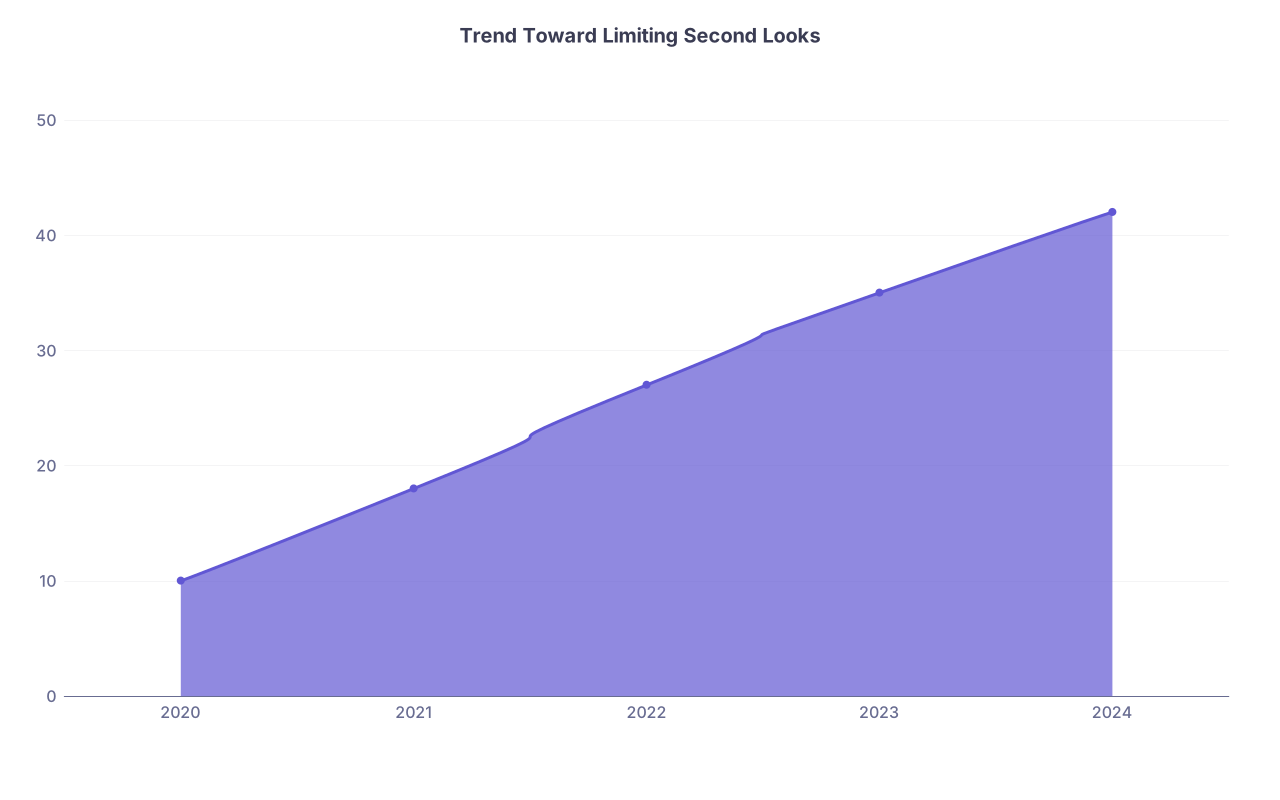
| Category | Value |
|---|---|
| 2020 | 10 |
| 2021 | 18 |
| 2022 | 27 |
| 2023 | 35 |
| 2024 | 42 |
(Those numbers are hypothetical, but the direction is real: more programs are explicitly clarifying their stance.)
So you panicking about not doing “enough second looks”? That’s going to be less and less rational over the next few years.
Quick Reality Check Before You Book Anything
Ask yourself three blunt questions:
- If I didn’t do this second look, would my rank list actually change? Or am I just scared of making a decision with incomplete certainty?
- Am I doing this because I want more information, or because I want reassurance and control in a process where I have almost none?
- Could I get 80% of what I need with an email or a 20-minute Zoom with a resident instead?
If you still feel, in your gut, “No, I really need to see this place again,” then go. Once. Thoughtfully. And then stop.

FAQ (Exactly 6 Questions)
1. Will not doing any second looks hurt my chances of matching?
No. Most applicants match without doing a single second look. Programs know not everyone has the time, money, or mental energy to travel again. If a program expects a second look to rank you highly, that’s a red flag about their awareness of equity and reality.
2. Is doing a second look basically a “love letter” signal to the program?
It’s a mild interest signal at best, not a contract. It tells them you care enough to show up again, but it doesn’t bind you to rank them #1 and doesn’t guarantee they rank you higher. If you want to signal #1, one clear, honest email after you’ve made that decision is more straightforward than flying back.
3. Should I do a second look at a program I know is not in my top 3?
Usually no. If you’re not realistically putting them in your top tier, a second look rarely changes that. You’re more likely to just confirm what you already know and lose money and time that could be used elsewhere (or honestly, just to rest).
4. Could doing multiple second looks actually backfire?
Across multiple programs? Almost never, because they don’t see the total. At a single program, if you keep pushing for more access, more visits, more time, or rank intel, yes, that can come off as needy or boundary-blurring. The visit itself doesn’t backfire. The way you handle it can.
5. Should I tell a program during a second look that they’re my #1?
Only if you’re absolutely sure and ready to back that up with your rank list. Don’t say it as a bargaining chip. If you’re still debating between a few programs, you can say: “You’re very high on my list,” or “I’m strongly considering ranking [Program] at the top,” without lying or locking yourself in.
6. Bottom line: How many second looks is “too many”?
Across all programs, more than 3–4 is usually excessive for most people. For any single program, more than 1 in-person second look is rarely helpful. If you’re going beyond that, be honest with yourself: are you gathering information, or just trying to quiet an anxiety that won’t be satisfied no matter how many hospital tours you do?
Key takeaways:
You don’t need second looks to match, and you absolutely don’t need five of them. One to three, targeted at true top-choice programs, is plenty. Focus on getting clear about what you want, use second looks as a tool—not a lifeline—and don’t let fear of “looking desperate” run your schedule or your bank account.