
It’s 10:47 pm. You’re in bed, staring at the ceiling, replaying the second look from earlier today like a crime scene video.
The resident’s face when you made that joke.
The program director’s slight pause after your answer about research.
That one awkward silence at lunch you’re now convinced was “the moment” they dropped you 20 spots on the list.
And now you’re here, wondering:
“Did I say something that hurt my rank? Did I just ruin this?”
Let’s walk through this like two people who both overthink everything. Because you’re not crazy for obsessing over this. But your brain is also not exactly…reliable right now.
First: What Second Looks Actually Are (And Are Not)
Most people misunderstand second looks. Programs included.
Second looks feel like a secret second interview. Like there’s some hidden score sheet and one weird comment will tank you. In reality, second looks are usually messy, informal, and nowhere near as high stakes as your anxiety wants them to be.

| Step | Description |
|---|---|
| Step 1 | Interview Day |
| Step 2 | Rank Committee Discussion |
| Step 3 | Preliminary Rank List |
| Step 4 | Final Rank List |
| Step 5 | Optional Adjustments |
| Step 6 | Second Look? |
Here’s how it usually goes behind the scenes (I’ve seen this pattern over and over):
- Program ranks you off your interview day. Faculty evals. Resident feedback. Application file. That’s the backbone.
- The rank list is often mostly built before most second looks even happen.
- Second looks are primarily for you to see:
- What the call room actually looks like.
- Whether the residents seem dead inside or just tired.
- If you can picture yourself surviving there.
What second looks might do on their side:
- Confirm: “Yeah, they really are as nice/normal/enthusiastic as we thought.”
- Rarely: “Oof, that was weird, maybe we over-ranked them.”
But that second one? That’s the exception. And when it happens, it’s usually because someone was truly inappropriate, not mildly awkward or nervous.
The Horrifying Question: Can One Comment Tank My Rank?
You want the blunt answer: Yes, technically. But it almost never does.
You’re scared that:
- That joke you made came off wrong.
- Your answer about work-life balance sounded “lazy.”
- You didn’t gush enough about research.
- You accidentally sounded like you hate the city.
- You talked too much. Or too little. Or just wrong.
Let me separate real problems from anxiety-fueled fiction.
Things that actually raise red flags
Here’s the honest list of stuff that can legitimately hurt you:
- Saying something clearly disrespectful (about patients, other specialties, nurses, etc.).
- Making inappropriate jokes or comments (sexual, racist, anything like that).
- Acting arrogant or entitled (“I’m basically guaranteed derm, so…”).
- Trashing other programs or your med school in a harsh or unprofessional way.
- Saying outright you’re not really interested in the program or specialty.
If you did any of that, yeah, you might’ve dropped. Not because you were “awkward,” but because that hits professionalism and culture issues.
Now contrast that with what people usually spiral about:
- “I said I like having time outside of work. They’ll think I’m lazy.”
- “I admitted I’m scared about nights and ICU. They’ll think I’m weak.”
- “I stumbled over a sentence. They’ll think I’m not confident.”
- “I made a weird small talk comment about the cafeteria food.”
- “I didn’t ask any deep, impressive questions.”
Residency people are not sitting in a conference room saying:
“She said she likes running and time with friends. Absolutely not. Drop her 30 spots.”
That’s not how this works.
What Program Folks Actually Remember From a Second Look
This part hurts a little: you are way more memorable to yourself than to them.
At big programs, second looks blur together. At smaller programs, they might remember you, but usually in vague terms:
- “That student who really loved ICU and asked good questions.”
- “The one from [X med school] who seemed genuinely excited.”
- “The quiet but nice applicant who shadowed on rounds.”
What they’re looking for at a second look is basically:
- Are you normal to be around at 2 am on call?
- Do you seem like you’d fit the resident group?
- Anything huge we missed? (Red flags, major personality clashes, etc.)
They’re not replaying your slightly awkward joke or your 3-second pause before answering a question. That’s your brain’s hobby, not theirs.

The Cognitive Spiral: Why Everything Feels Disastrous
Right now, your brain is doing what it always does when there’s uncertainty and no control:
- Zoom in on one moment.
- Magnify it a thousand times.
- Decide it’s catastrophic.
- Re-run it on loop.
You’re not remembering the whole day. You’re remembering the 8 seconds where:
- You mispronounced an attending’s name.
- You over-shared about being burned out on surgery.
- You gave a rambling answer about why this program is a “great fit.”
I’ve watched applicants walk out of what everyone else thought was a perfectly fine day and then later say, “I completely ruined it when I said X.” Residents who were there will shrug and say, “I…don’t remember that at all?”
Your anxieties have a spotlight. Their memory does not.
How Second Looks Actually Influence Rank Lists
Let’s be concrete. Here’s what usually happens structurally.
| Scenario | Likely Impact |
|---|---|
| Strong interview, solid second look | Small positive nudge or no change |
| Strong interview, awkward but normal second look | Usually no change |
| Middling interview, great second look | Minor bump up |
| Middling interview, clear red flag at second look | Drop down or off list |
| No second look at all | Neutral; very common |
And here’s the key:
Most of the movement is minor. A “you were top 5, now top 25” kind of thing is rare, and usually tied to real concerns, not “you were a bit quiet during lunch.”
Programs are obsessed with one thing:
“Will this person be a safe, dependable, non-disastrous resident we can stand to see every day?”
Your little “I’m worried about burnout” comment? That usually signals self-awareness, not weakness. Your “I like having a life outside the hospital”? Most sane programs see that as healthy.
The Specific “Did I Mess Up?” Scenarios You’re Obsessed With
Let’s go through the greatest hits, because I know at least one of these is stuck in your head.
“I said I was ranking another program highly”
Yeah, that stings when you replay it. But context matters.
If you said something like, “I’m looking at a few places, including here and [Other Program], and trying to figure out the best fit” — that’s normal. They know you’re applying widely.
The time it’s bad is if you basically say:
- “Oh I’m definitely ranking [Big Name Program] #1, but I still wanted to see here.”
Then they may think: we’re a backup, we shouldn’t waste a top spot. So yes, that can hurt. But most people don’t say it that bluntly. They just think they did.
If you’re not sure which one you were? You probably weren’t that blunt.
“I joked about work hours / being lazy”
If you made a light joke like, “Wow, I hope I survive those q4 calls,” they’ve heard that a thousand times. If you said, “I’m really not into working too hard,” then yeah…not great.
Most anxiety spirals start from a totally normal comment plus your internal shame machine.
“I was really honest about burnout, mental health, or family stuff”
Residency leadership is split on this. Some love honesty and vulnerability. Some are old-school and view it skeptically.
But your brief, honest comment is not the dramatic bomb you think. They’re not building an entire psych profile off one sentence over coffee. They’re looking at the whole file: letters, Dean’s letter/MSPE, interview day, how you’ve functioned during med school.
“I didn’t seem excited enough”
You don’t need to be bouncing off the walls screaming “THIS IS MY DREAM PROGRAM.” That actually comes off fake half the time.
If you:
- Showed up.
- Asked a few normal questions.
- Tried to engage.
- Thanked people for their time.
You cleared the bar.
The Ethics/Reality: How Much Should You Read Into Their Behavior?
You’re probably also over-reading them:
- “The PD seemed a little cold at the end.”
- “The chief resident didn’t say ‘Nice to meet you’ enthusiastically.”
- “They said they enjoyed meeting me but didn’t say ‘We’ll rank you highly.’”
Here’s the thing: they’re tired. They’re burned out. They’ve done this 20 times already. Some are also trying not to violate NRMP rules by sounding like they’re making promises.
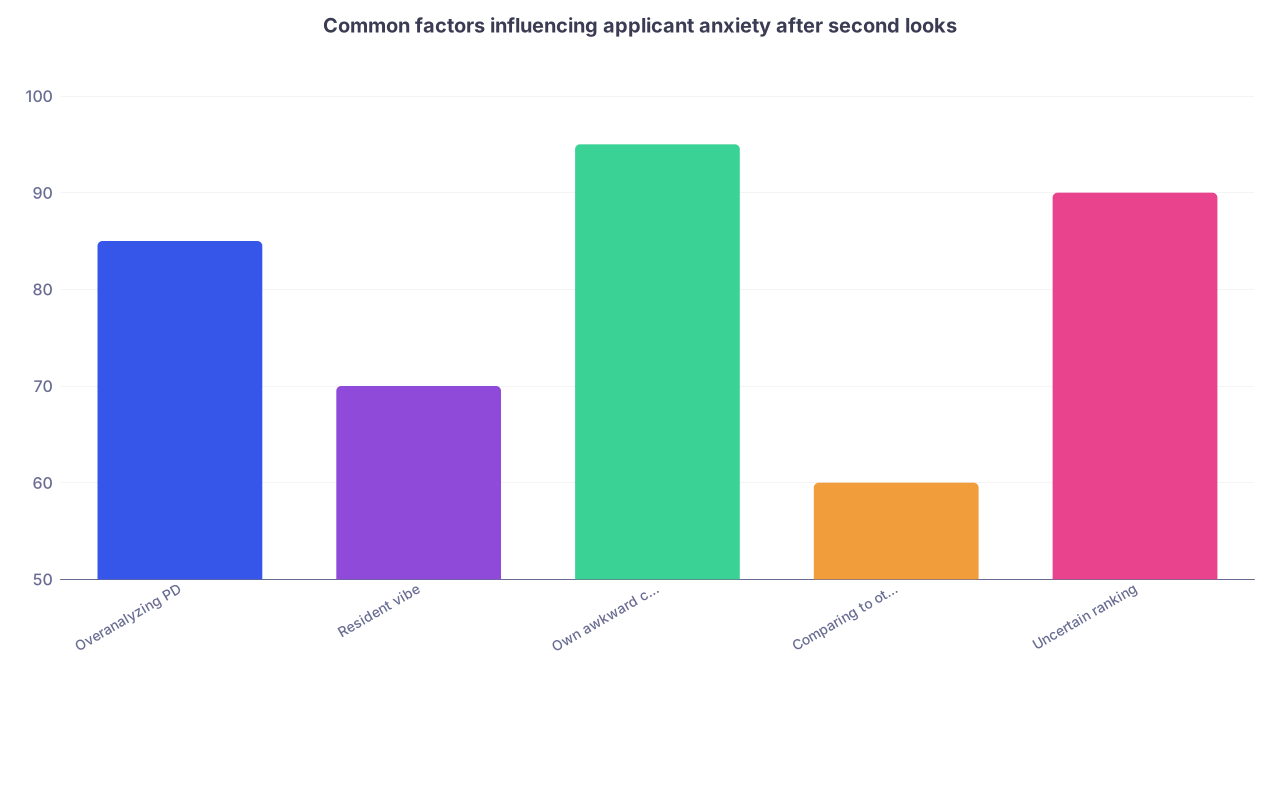
| Category | Value |
|---|---|
| Overanalyzing PD | 85 |
| Resident vibe | 70 |
| Own awkward comments | 95 |
| Comparing to others | 60 |
| Uncertain ranking | 90 |
Weak “energy” from them does not equal “we hated you.” It often equals “we’re on hour 13 of the day.”
What You Can Do Now (When You’re Already Spiraling)
You can’t go back in time and edit what you said. I know your brain keeps trying to do that. But here’s what is actually within your control.
1. Rank based on your true preference, not your paranoia
This is the part people screw up. They assume:
“I think I messed up there, so I shouldn’t waste my #1 on them.”
Don’t do that.
You don’t know your position on their list. You do know how much you want to go there.
Rank in your true order of preference, full stop. The Match algorithm actually favors the applicant’s preferences. Torching your own #1 because of a maybe-awkward comment is self-sabotage.
2. If the vibe was still good, trust the whole picture
Think about the entire visit:
- Did residents seem engaged with you overall?
- Did anyone seem clearly uncomfortable or turned off?
- Did you get pulled aside for a “talk”? (Almost never.)
If the general vibe felt fine except for three seconds you’re obsessing over, that’s your anxiety talking, not reality.
3. If you truly crossed a line (and you know it), learn from it
If you’re reading this and thinking, “No, I said something genuinely unprofessional,” then yeah, that might affect things. But that’s also data for you:
- How do you handle stress and small talk?
- Where do you overshare?
- How can you tighten up your filter in a professional setting?
You can’t fix this cycle, but you can prevent the next one.
Very Blunt Truth: They’re Not Thinking About You As Much As You Are
I say this with love: they’re not lying awake replaying your comment. They’re:
- Admitting patients.
- Studying for boards.
- Dealing with program politics.
- Trying to get through the week.
You are main-charactering yourself in their story. But to them, you are one of dozens of reasonably competent, slightly anxious med students who passed through.
Your small awkward cracks are background noise to them.

The Weird Part: Sometimes Second Looks Actually Help You
You’re so focused on “Did I hurt my rank?” that you’re ignoring the opposite possibility:
- Maybe you seemed more personable in real life than on Zoom interview.
- Maybe residents went back and told the PD, “They’d fit really well with us.”
- Maybe your questions showed genuine thoughtfulness they didn’t catch before.
I’ve seen programs say, “You know, I wasn’t sure about them from the interview, but after they came back and hung with the team, I feel a lot better.”
You don’t spiral about those possibilities because your brain prefers horror films over rom-coms. But they’re just as plausible.
Visualizing The Reality vs The Spiral
Let’s put your experience next to what’s probably happening.
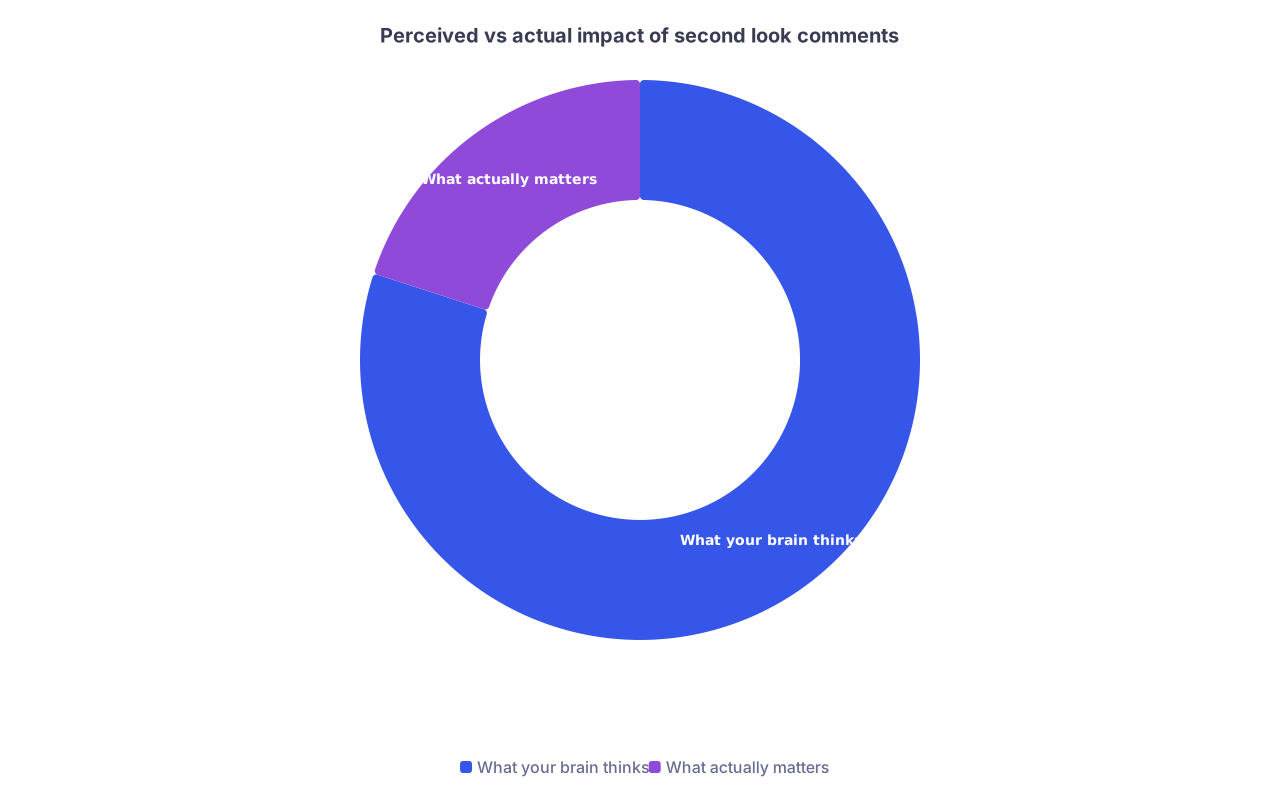
| Category | Value |
|---|---|
| What your brain thinks | 80 |
| What actually matters | 20 |
Your brain:
“Every comment is a test. I failed three of them. Catastrophe.”
Reality:
“They seemed fine. Either way, they were already roughly slotted where they’re going to end up.”
Quick Gut Check: Did You Actually Hurt Your Rank?
If all of these are true, you’re probably fine:
- You didn’t say anything blatantly unprofessional or offensive.
- No one visibly recoiled, shut down, or cut the day short.
- You weren’t pulled aside or emailed about anything concerning.
- Residents kept talking to you and seemed normal around you.
If you can honestly say that, your rank is probably exactly where it was predicted to be after interview day.
FAQ: Second-Look Regret Edition
1. Should I email the program to “clarify” or apologize for something I said?
Almost always, no. Sending a panicked clarification email about a small, probably unnoticed comment just draws attention to it. Unless you said something truly inappropriate or factually wrong that you need to correct (which you’d know), let it go.
2. Will not doing a second look hurt my rank compared to people who did?
Usually not. Tons of matched residents never did second looks. Many programs explicitly say second looks don’t affect rank. Some places might give a small bump for demonstrated interest, but it’s not a deal-breaker if your interview and file were solid.
3. I was really quiet during my second look. Can that hurt me?
Being quiet is not a red flag. Being rude, dismissive, or clearly uninterested is. Plenty of residents are introverts; they’re not penalizing you for not running the conversation like a game show host. If you listened, responded when spoken to, and weren’t closed off, you’re okay.
4. The PD/resident said, “We really enjoyed meeting you.” Does that mean anything?
Honestly? Not much. It’s polite and standard. Some people mean it, some are just being courteous. It doesn’t predict rank. No polite phrase—good or bad—should change how you rank them. Go by how much you want to be there and the fit you felt.
5. I think I messed up at my top choice. Should I move them down on my rank list?
No. Rank them where you truly want to go. You are terrible at guessing how they’ll rank you. The Match algorithm works in your favor if you rank by preference, not prediction. Don’t let one over-analyzed moment talk you out of shooting your real shot.
If you remember nothing else, remember this:
- Second looks rarely cause dramatic rank drops unless there’s a real professionalism problem.
- Your brain is exaggerating the impact of small awkward moments no one else fixated on.
- Rank programs in the order you actually want them, not the order your anxiety thinks you “deserve.”