
The residency culture around second looks and pregnancy is broken. You are not the problem—how you handle it strategically is.
You’re pregnant or close to your due date, and programs are hinting (or outright saying) “We’d love to see you on a second look.” You’re exhausted, maybe contracting here and there, your feet hurt in 20 minutes of standing, and you’re trying to decide: do I go, do I skip, do I tell them why, and is any of this going to tank my rank list?
Let’s walk through this like you’re sitting across from me with your calendar, your OB visit schedule, and your ERAS account open. This is about tactics, not theory.
Step 1: Decide If a Second Look Is Actually Worth It For You
Start here. Not with guilt. Not with “but everyone else is going.” With value.
Ask yourself three blunt questions for each program:
- Will a second look materially change where I rank this program?
- Do I already know enough to rank them accurately?
- Does my body realistically tolerate this travel/effort right now?
If the answer to #1 and #3 are both no, you skip. Full stop.
Second looks are mainly for you, not for them. Most programs will tell you this off the record:
- They’ve already ranked you or have a very good idea where you fall.
- Second looks do not rescue a weak interview performance.
- They often do not significantly boost already-strong applicants.
Where they can help:
- You’re torn between 2–3 programs and need to see workflow, culture, or geography again.
- You have specific questions about maternity policies, call schedules, or childcare you didn’t get answered.
- You’re switching a categorical vs prelim decision (surgery prelim vs medicine categorical, etc.).
If you’re 36 weeks, having Braxton-Hicks every time you walk across the room, and your decision is basically set for 80% of your list, dragging yourself to three hospitals in three states is just punishing yourself for no measurable gain.
Let yourself say no when the ROI is garbage.
Step 2: Understand How Pregnancy Interacts With Second Looks (Legally vs Reality)
Legally:
- Programs cannot discriminate against you for being pregnant.
- They are not supposed to ask about pregnancy, future children, or maternity leave plans.
- Whether you attend a second look should not affect your rank.
Reality:
- Humans run programs.
- Bias exists. Sometimes unconscious, sometimes not.
- Some PDs are phenomenal and will move mountains to support a pregnant resident. Others… will complain at faculty meeting about “coverage issues.”
So your strategy needs to accept both:
- Use the protections you have.
- Also play the human side smartly.
You don’t owe anyone your medical details. You do owe yourself a plan that reduces risk and stress.
Step 3: Decide Your Disclosure Strategy
This is the piece everyone agonizes over: “Do I tell them I’m pregnant? Do I explain why I’m not coming? What if I’m visibly pregnant and there’s no hiding it?”
Here’s how I’d think about it.
Scenario A: You’re visibly pregnant and going in person
The secret is out the moment you walk in. So you control the frame.
You do not start your introduction with “Hi, I’m 34 weeks pregnant.” You act like any other candidate, but when it comes up (and it will, at least in your head):
You keep it short, confident, and neutral:
- “Yes, I’m expecting, due in [month]. I’ve discussed timing and leave planning with my OB and mentors, and I’m excited to start training on schedule.”
- “Baby’s due in [month], and I’ve already thought through logistics for the start of residency.”
You’re sending one message: “I am a normal applicant who also happens to be pregnant. I’m not a problem you need to solve.”
Do not over-explain. Do not apologize.
Scenario B: You’re pregnant but not showing much / early pregnancy
If you’re early or can reasonably pass for “maybe, maybe not,” this is optional disclosure territory.
Ask yourself:
- Will this pregnancy overlap with PGY-1 start?
- Is there a realistic chance I will need adjusted start, extended leave, or scheduling changes early in residency?
If no, you’re not obligated to bring it up on a second look.
If yes, some applicants prefer to disclose after the Match when coordinating onboarding, which is allowed and often safer. Some want to see how programs respond beforehand.
What I would not do: disclose pregnancy only to one or two programs in a way that could skew your ranking based on their reaction, unless you’re intentionally using that to filter out bad fits. If a negative response would dramatically change your decision, that’s a reason to test it. Just be aware of the risk.
Scenario C: You’re near term and not going to a second look
Here’s the exact kind of email you can send that protects your privacy but gives enough context:
Dear Dr. Smith,
Thank you again for the opportunity to interview at [Program]. I really enjoyed meeting the residents and faculty and remain very interested in the program.
I had hoped to attend the upcoming second look. Unfortunately, due to a medical situation that limits my travel this month, I’m not able to come in person. If there are any virtual options or if I could speak with a current resident about a few remaining questions, I’d be very grateful.
Best regards,
[Your Name]
“Medical situation” covers pregnancy, near-term restrictions, preterm labor concerns, preeclampsia watch—whatever. You don’t need to spell it out to every PD on email.
If you’re comfortable saying you’re pregnant, you can change that line to:
“Unfortunately, my OB has recommended I avoid travel this close to my due date…”
That’s it. No apology tour.
Step 4: Triage Your Second Looks If You’re Going To Do Any
You’re not running a second interview season while nine months pregnant. You’re doing surgical triage.
Create three buckets:
Must-see (max 1–3 programs)
- Programs you might rank #1–3 and genuinely feel torn about.
- Places where maternity policies/coverage and culture feel ambiguous.
Nice-to-see-but-not-essential
- You liked them, but they’re likely mid-list.
- You already have enough information to compare them.
No-need-to-see
- Bad vibe, poor support, location deal-breaker, or they’re already low on your list.
You only physically attend Bucket #1. Maybe #2 virtually if they offer it.
Then you layer on your body’s limits:
- How much travel can you realistically do in a week?
- Are you allowed to fly?
- Do you have complications that make long car rides miserable?
If the idea of two flights in a week makes you want to cry, you’re done. Be ruthless. Your health and your baby win.
Step 5: Logistics If You Attend In Person While Pregnant
If you do go, you’re now in “treat second look like an OR day with back pain” mode.
Practical stuff that I’ve watched pregnant applicants and residents do:
- Footwear: Wear shoes you can stand in for hours. Not what you think you “should” wear. Low, wide heels or nice flats. No program worth anything cares if your heels are 2 inches instead of 3.
- Clothing: Professional but forgiving. Maternity dress + blazer, or black maternity slacks + blouse + blazer. You do not need a bespoke maternity suit.
- Hydration and food: You’ll be pushed from room to room. Bring a large water bottle and quick snacks (protein bar, nuts). You won’t always get breaks when your body wants them.
- Plan for sitting: It’s fine to say, “Do you mind if we sit for a bit?” during Q&A with residents. Frame it casually: “I’ve been on my feet all morning and would love to sit while we talk.”
- Know your OB’s boundaries: If you’re 36+ weeks, have your OB spell out: car vs plane, max distance, what symptoms should send you to L&D instead of the airport.
Step 6: Using Virtual Second Looks (And Asking For One)
More programs are open to virtual second looks, especially post-COVID. If you’re late pregnancy or high risk, this is your best friend.
How to ask without oversharing:
“I’m very interested in learning more about [Program], but due to a medical restriction this month I’m not able to travel. Do you have any virtual second look options, or could I schedule a brief Zoom call with residents or the chief to ask a few follow-up questions?”
Most reasonable PDs will say yes or at least set up resident Zoom chats. And frankly, those resident-only conversations often give you better intel than a choreographed second look day.

| Step | Description |
|---|---|
| Step 1 | Invited to second look |
| Step 2 | Skip - send polite email |
| Step 3 | Request virtual option |
| Step 4 | Attend select in person |
| Step 5 | Will visit change rank? |
| Step 6 | Safe to travel? |
| Step 7 | Near due date or complications |
Step 7: Evaluating Programs Specifically Through the “Pregnancy Lens”
Second looks while pregnant actually give you a huge advantage: you see who they are when faced with real-life issues.
Here’s what to quietly assess:
How do people react to your pregnancy?
Residents: Do they smile, ask normal human questions, act supportive?
Faculty/PD: Do they look worried, make coverage jokes, or immediately pivot to “this could be hard”?Maternity/parental leave specifics
Don’t just accept “we’re supportive.” Ask:- “How many weeks of paid leave did recent residents actually take?”
- “Did people have to extend training?”
- “Who covers call when someone is on maternity leave?”
- “Any recent examples of residents who had babies during intern year?”
Schedule flexibility
- How do they handle prenatal visits for pregnant residents?
- Are there remote/telehealth clinic blocks?
- Are elective blocks flexible for late pregnancy or postpartum?
Childcare culture
Residents with kids: Are they surviving or actually doing okay? Ask them directly:- “If you could do it over, would you still come here with a young child?”
- “Where do people usually live? Any nearby childcare options that actually open early enough?”
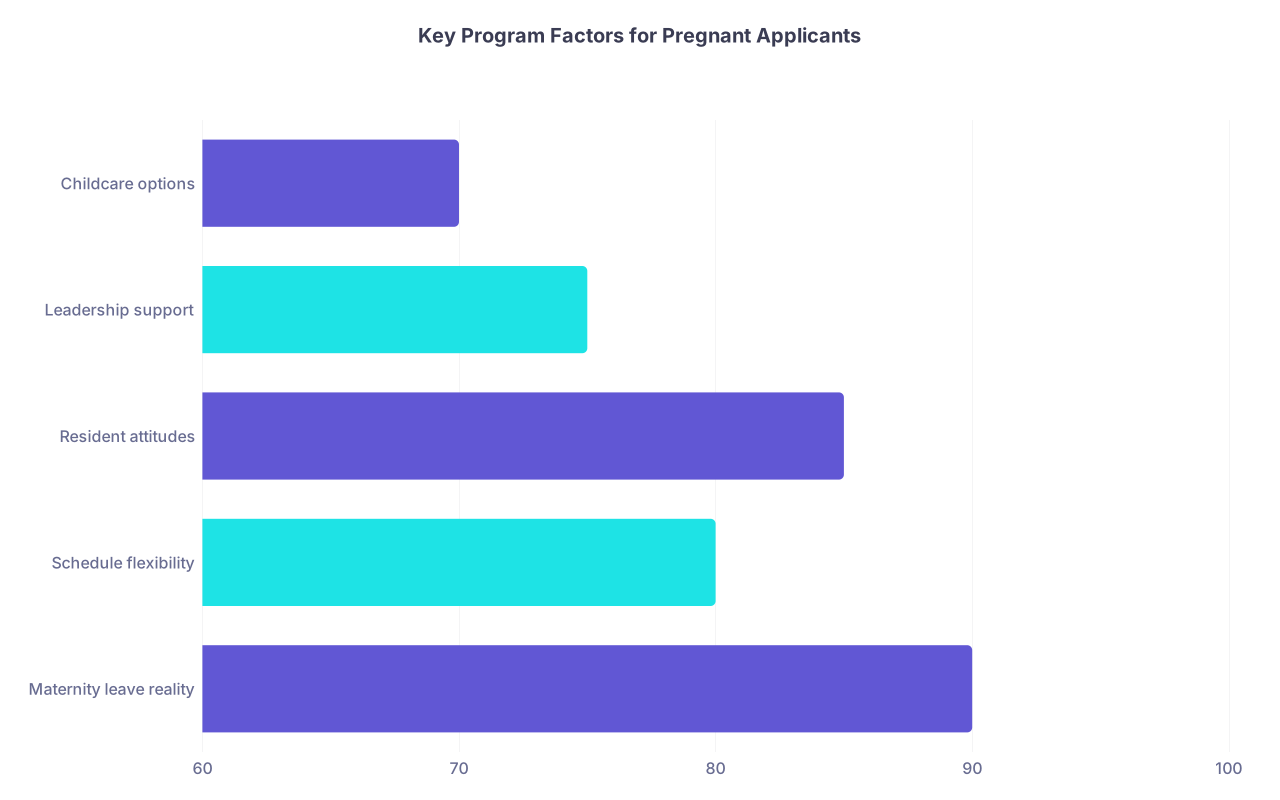
| Category | Value |
|---|---|
| Maternity leave reality | 90 |
| Schedule flexibility | 80 |
| Resident attitudes | 85 |
| Leadership support | 75 |
| Childcare options | 70 |
Numbers here are illustrative, but your mental weighting should look like this: leave and schedule trump shiny research labs when you’re about to have a newborn.
Step 8: If You’re Actually Close to Labor
Let’s talk about the “I could go into labor during this second look” zone.
This is not theoretical. I’ve watched someone’s contractions kick in after walking a giant hospital campus at 38 weeks. It’s not fun, and no program is worth delivering in a city where you know no one.
My threshold is blunt: if your OB would be uncomfortable with you being 2–3 hours away from your hospital, you cancel all in-person second looks. Period.
If you choose to attend one last local second look:
- Know where the nearest hospital is.
- Have your OB’s on-call number saved and your hospital bag mostly ready.
- Drive yourself or go with someone who could drive you to L&D if needed.
And remember: skipping second looks in that window is normal and rational. Anyone judging you for it is broadcasting that they’d be terrible to you as a pregnant resident.
Step 9: How Much Does Skipping Second Looks Actually Hurt You?
You’re worried that not going means:
- “They’ll think I’m not interested.”
- “I’ll slide down their rank list.”
- “Everyone else is going, and I’m the only one not showing up.”
Here’s the actual impact pattern I’ve seen:
(See also: If you’re on an away rotation and can’t travel for second looks for guidance.)
- Programs that care about you as a pregnant applicant will understand when you say you can’t travel for medical reasons. Many will say, “Please take care of yourself; we totally get it.”
- Some programs literally do not adjust rank based on second looks at all. The list is done or nearly done.
- A small minority may unconsciously value second look attendance. Those are often the same programs that will be stiff about leave and coverage.
The honest question: Do you want to match at a place that subtly penalizes an obviously reasonable pregnancy-related boundary? Probably not.
Step 10: After the Second Look (or Non-Look) – How to Follow Up
Whether you went in person, did it virtually, or skipped entirely, your post-second-look communication is the same playbook as everyone else—with one nuance.
Basic follow-up email structure:
Dear Dr. Smith,
Thank you again for the opportunity to learn more about [Program] through the [second look day / Zoom conversation / resident chats]. I especially appreciated [specific detail: resident camaraderie on wards, clear approach to parental leave, exposure to X subspecialty].
I remain very interested in [Program] and could see myself training there.
Best regards,
[Your Name]
If maternity support was a key factor and they did well, you can add:
“It was reassuring to hear how the program has supported residents during pregnancy and early parenthood.”
That lightly signals: “I’m paying attention to this; you passed the test.”
When To Ignore All This And Just Stay Home
If:
- You’re contracting regularly with activity
- You’re on modified bedrest or restricted activity
- You’re anxious to the point of not sleeping about travel
- Your OB hesitates even a little when you ask “Is it okay if I go?”
You’re done. You don’t go.
Send the email. Ask for virtual. Trust that the right programs will still want you—and that your final rank list should punish any program that doesn’t.
| Situation | Recommended Approach |
|---|---|
| 28 weeks, uncomplicated, local | Attend 1–3 key second looks in person |
| 34 weeks, flying required | Skip or request virtual |
| 36+ weeks, any complications | Skip all in-person, virtual only |
| Early pregnancy, not showing | Second looks optional, disclose later |
| Due within 2 weeks | No travel, prioritize health |