The obsession with in‑person second looks is outdated—and if you’re stuck on an away rotation, you are not screwed.
You’re in a very common, very under-discussed bind: you’re on an away/sub‑I at one program, interview season or second-look events are happening at another, and your schedule, geography, or finances make travel basically impossible.
Here’s the blunt truth: programs know this. The good ones do not punish you for it. But you cannot just shrug and hope they figure it out. You have to handle it deliberately.
This is your playbook.
1. Get Crystal Clear on Whether a Second Look Even Matters
First, stop assuming all “second looks” are essential. They aren’t.
There are three main types of “second looks”:
| Type | What It Really Is | How Much It Usually Matters |
|---|---|---|
| Official, structured 2nd look | Scheduled day, set agenda | Low–moderate |
| Informal drop-in visit | You touring, maybe meeting residents | Low |
| Purely social “re-visit” | Dinners, bar night, casual | Very low |
No program is required to offer them. Many don’t. Many PDs openly say they try not to let second looks influence rank lists much, if at all, because it’s inequitable.
What second looks actually do:
- Help you compare vibes between programs
- Help them confirm your professionalism and interest (sometimes)
- Let borderline applicants move from “we liked them” to “we know them”
What they don’t do:
- Rescue a weak application
- Turn you from mid-tier to superstar overnight
- Automatically bump you up if everything else was lukewarm
So if you’re on an away rotation and can’t travel, your priority is not “How do I replicate this mythical magical second look?” It’s:
“How do I (1) show serious interest and (2) get the info I need to rank them intelligently—without physically showing up again?”
2. Tell the Program You Can’t Travel—Before They Have To Guess
Do not go silent and hope they infer your situation from your ERAS calendar. They won’t.
Here’s roughly what you’re up against: coordinators are drowning in logistics, PDs are sprinting between clinic, OR, and meetings, and your individual travel struggles are invisible unless you surface them.
You fix that with one clear, professional email.
Who to email
- Primary: Program Coordinator
- CC: Program Director and/or Associate PD (if it’s a small program)
Subject line examples:
- “Second Look Availability – [Your Name], [Specialty] Applicant”
- “Unable to Travel for Second Look – Alternative Options?”
Sample email script you can modify
Do not overthink this. Something like:
Dear [Coordinator Name] and [Dr. PD Last Name],
Thank you again for the opportunity to interview at [Program Name] on [date]. I really enjoyed meeting the residents and faculty and remain very interested in the program.
I saw information about second look opportunities on [date(s)]. I’m currently scheduled on an away rotation at [Institution, Specialty] from [date–date], and due to clinical responsibilities and travel distance I’m unfortunately not able to return in person during that timeframe.
I would still appreciate the chance to learn more about the program and demonstrate my continued interest. If there are any virtual second look options, additional resident meet-and-greets, or brief Zoom meetings with faculty that you’d recommend, I’d be grateful to participate.
Thank you for your time and consideration.
Sincerely,
[Your Name], MS4
[Home Institution]
That’s it. No drama. No apology tour. Just: here’s the conflict, here’s my interest, here’s what I’m asking.
3. Build a Virtual “Second Look” That Actually Works
If you can’t go there, you bring as much of the program to you as possible.
Think of it as a “DIY second look”: not one event, but a set of touchpoints you assemble over 1–2 weeks.
Core components of a solid virtual second look
- At least one faculty/PD interaction
- At least one resident-only conversation
- Some way to see the environment (even partial)
- A chance for them to see you as more than a 20‑minute Zoom box from interview day
Let’s break each down.
1. PD/APD or faculty touchpoint
If they offer virtual follow-ups, use them. If they don’t, you can gently ask for a short meeting:
“…If there is an opportunity for a brief 15-minute virtual check-in with you or a faculty member, I’d truly appreciate it, though I understand schedules are tight this time of year.”
Treat this like a post‑interview follow-up, not a re‑interview. Your goals:
- Reinforce your interest
- Ask 2–3 targeted questions that show you understand their program
- Briefly update them on any new, relevant info (sub‑I grade, new project, leadership role)
Do not turn this into a 45-minute cross‑examination. Respect their time. Have your questions written down.
2. Resident-only time (critical)
This is where you often learn the most and where they often remember you best.
If the program doesn’t automatically set this up:
Email the coordinator:
“If there are any residents who would be open to a brief Zoom or phone call to share their perspective, I’d be very grateful. I want to make sure I understand day-to-day life in your program as I build my rank list.”
If they say yes, great. If they say “feel free to reach out to residents you met on interview day,” use that permission and DM/email one or two.
What you do on that call:
- Ask real questions (schedule, autonomy, culture, what surprised them)
- Listen more than you talk
- Be normal, not rehearsed—this isn’t a formal interview but it will shape how they think of you
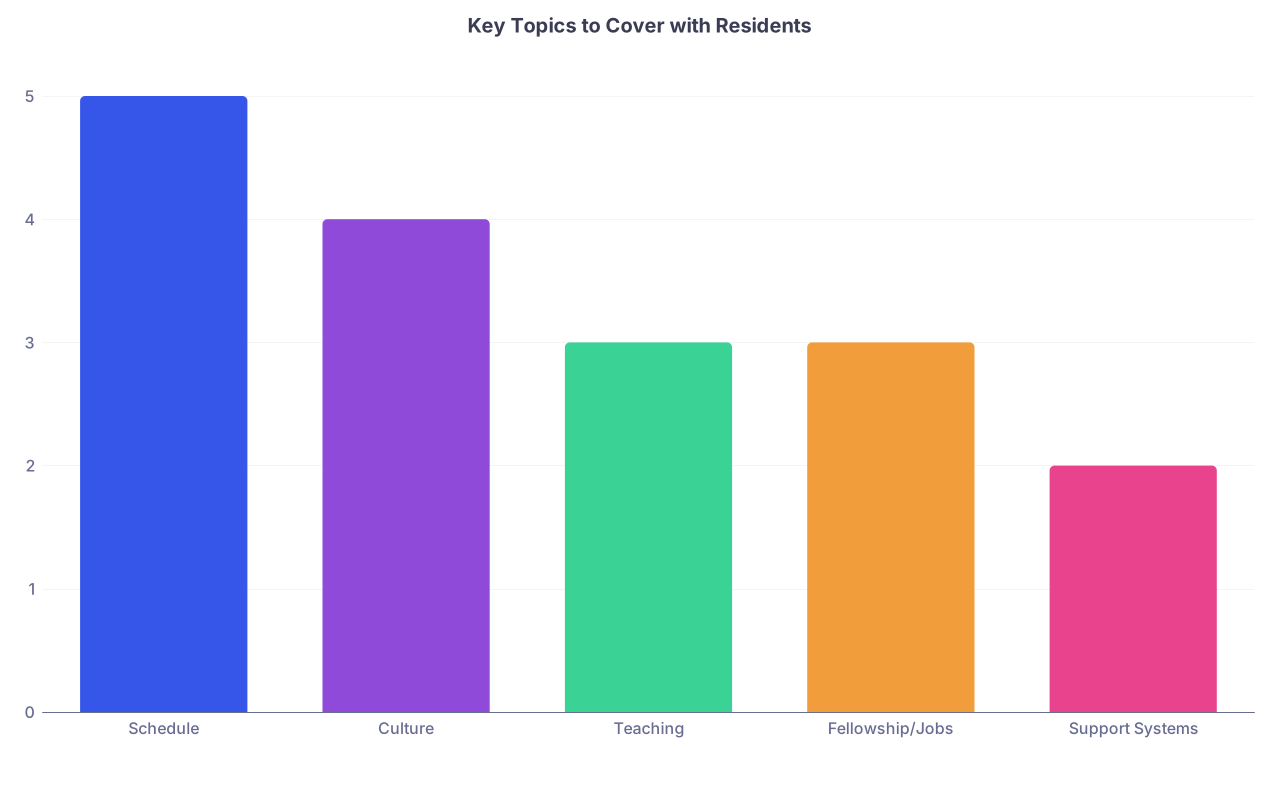
| Category | Value |
|---|---|
| Schedule | 5 |
| Culture | 4 |
| Teaching | 3 |
| Fellowship/Jobs | 3 |
| Support Systems | 2 |
3. Seeing the environment
No, a video tour isn’t the same as walking the halls. But it’s better than guessing.
Options to ask about:
- Pre-existing virtual tour (a ton of programs made these during COVID and still have them)
- Short, informal phone-video walk-through with a resident (hallway, call room, team room) if they’re game
- At minimum: photos or website sections showing clinics, hospital layout, and call spaces
You’re not inspecting the paint color; you’re checking:
- Are the residents all shoved into one tiny windowless workroom?
- Is this a community hospital with limited subspecialty presence or a huge tertiary center?
- How far is clinic from wards? Are you driving across town daily?
4. Letting them see you
Use every one of these virtual opportunities to reinforce a few specific traits:
- You’re reliable (show up on time, camera on, decent audio)
- You’re engaged (questions ready, taking notes, you remember people’s names)
- You’re actually interested in their program, not just “any program in [specialty]”
You do not need to perform enthusiasm. But showing you care about specific things at this program matters.
4. Make Your Away Rotation Work For You, Not Against You
The irony: the exact thing that’s blocking you from traveling—the away/sub‑I—can actually make you more attractive if you use it right.
Be explicit about your conflict and your priorities
On calls or emails, you can matter‑of‑factly say something like:
“I’m on an away rotation at [Place] this month and we’re on a pretty intense call schedule, which is why I can’t travel back in person, but I didn’t want that to be mistaken for lack of interest.”
No whining. No “I’m so sorry, I feel terrible.” Just facts + clarification.
Leverage what you’re doing right now
In any updated communication (PD email, faculty chat), drop one or two specific, relevant things you’re doing on this away:
- “On this rotation I’ve gotten a lot more hands-on with [X]…”
- “We’re seeing a ton of [condition] which has really reinforced my interest in [subspecialty]…”
- “Working with a new healthcare system has made me think a lot about [training style/culture]…”
You’re making it clear that:
- You’re still actively engaged clinically
- You’re reflective about where and how you want to train
- You’re not just floating through your final months
5. Rank List Strategy When You Haven’t Seen a Program Twice
Here’s the anxiety: “If I don’t second look, will I mis-rank them and ruin my life?”
No.
You base your rank list on what you do know, not what you couldn’t physically do.
Use a structured sanity check. Something like:
| Factor | Program A | Program B | Program C |
|---|---|---|---|
| Training quality | 4 | 5 | 3 |
| Resident culture | 3 | 4 | 5 |
| Location/life fit | 5 | 2 | 3 |
| Support/wellness | 3 | 4 | 4 |
| Career outcomes | 4 | 4 | 3 |
Then ask:
- Did I have any major red flags on interview day?
- Did any resident I spoke with say anything that made me seriously uneasy?
- Does anything about the call schedule, case mix, or geography make this realistically unlivable for me?
If the answer to those is “no,” and your main issue is “I just didn’t get to go back,” don’t punish the program artificially. Rank it where it belongs based on your values and the info you have.
PDs know not everyone can second look
Some PDs will quietly discount the “I flew in twice, please love me” vibe because they know it favors applicants with more money and flexible schedules. Your lack of second look doesn’t automatically drop you.
What absolutely can hurt you: ghosting. No outreach, no follow‑up, no explanation, especially if they invited you to a second look and you just never responded.
6. How to Handle Programs That Clearly Overvalue Second Looks
You’ll see them. The programs that say, sometimes out loud:
- “We really like to see people again if they’re serious.”
- “Most people we rank highly come to our second look.”
This is where you have to be direct.
On email or Zoom:
“I want to be transparent that I’m not able to attend in person second looks because of my rotation schedule and travel distance, but I’m very interested in your program and want to make that clear despite the limitation.”
If they can’t hear that and still choose to rank you fairly? That’s data about their culture and values.
Some applicants I’ve worked with have literally said: “If me not being able to pay for another flight drops me on your list, that’s probably not the program for me anyway.” And they’re right.
7. Time Management: Balancing Away Duties with Virtual Second Looks
You’re not just busy. You’re on someone else’s turf, trying to impress them too. You can’t be that student constantly asking to leave for calls.
So you plan like an adult.
Protect specific windows
As soon as you know about possible second-look events or PD/resident calls:
- Identify 2–3 half-hour blocks per week where you can reliably escape (pre‑rounds done, no clinic, call handoff time, etc.)
- Tell your away senior or chief once, clearly:
“I’m in interview/second-look season and may need a couple of short Zoom calls over the next two weeks. I’ll schedule them outside of peak workflow and will make sure my clinical responsibilities are covered. Just wanted to give you a heads-up.”
Most seniors respect that. The ones who don’t? Take the call anyway—just not in the middle of a code.
Hard rule: clinical care first, but not “everything else never”
Do not skip admissions, procedures, or key learning opportunities purely for a social resident meet-up. But also do not go to the other extreme where you say yes to everything on the away and no to anything related to your actual future residency.
If there’s a conflict you cannot avoid, email the program:
“I have a direct patient care responsibility during that time on my current rotation and am unable to step away, but I’d be grateful for any alternative small-group or 1:1 time if that’s possible.”
You just signaled your priorities are correct (patients > optics) without disappearing.
8. Documenting Interest Without Being Annoying
Overcommunication is real. You don’t want to become “that applicant” with five follow-up emails and 14 DMs.
A reasonable pattern looks like:
- Post-interview thank you within 24–48 hours
- One “unable to travel, interested in alternatives” email when second looks are announced
- One resident call (maybe two if organic)
- Optional: one brief update/interest email closer to rank list certification if something changed (honors, new project, you’ve decided they’re top choice)
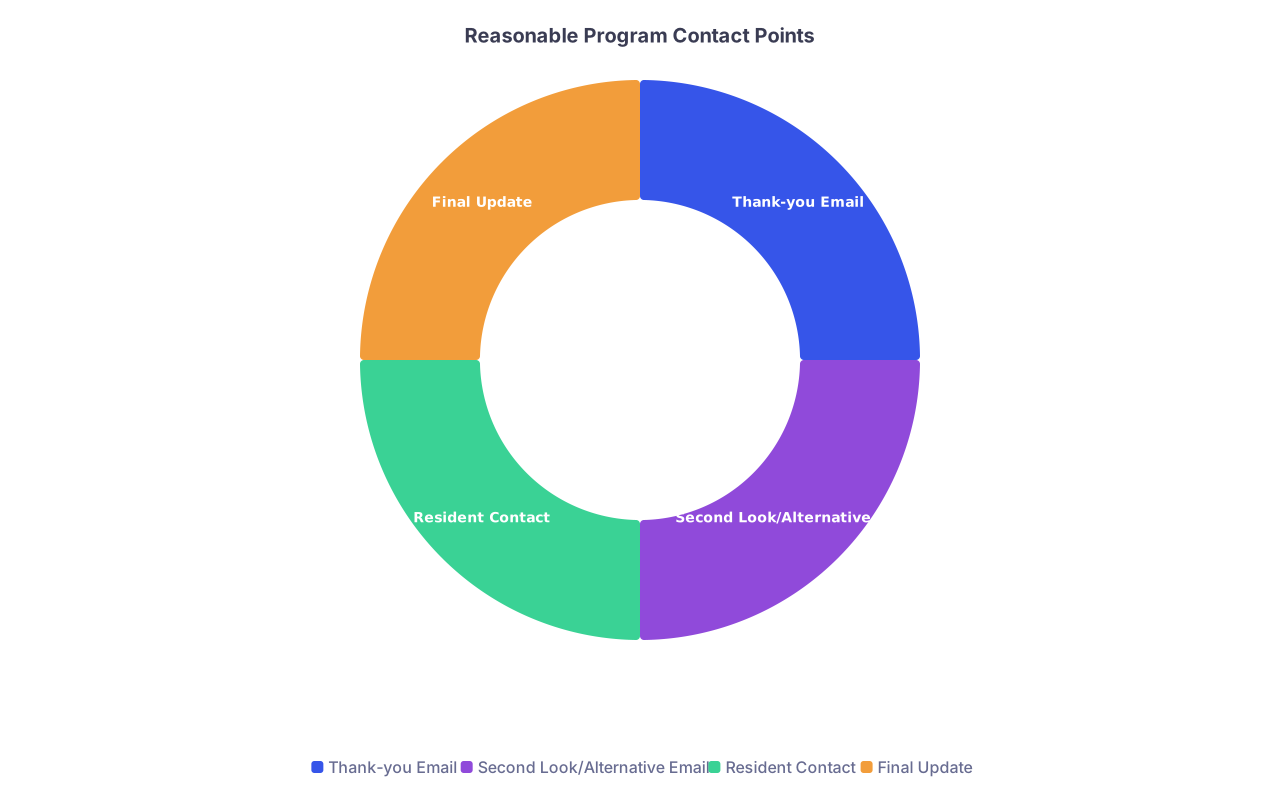
| Category | Value |
|---|---|
| Thank-you Email | 1 |
| Second Look/Alternative Email | 1 |
| Resident Contact | 1 |
| Final Update | 1 |
If they host a big virtual second-look night? You attend. Camera on if you can. Participate in chat or small groups once or twice. You do not have to be the star.
9. Mindset: Stop Punishing Yourself for Logistics You Can’t Control
I’ve seen this spiral: “X program offered a second look, I couldn’t go, so they’ll hate me, so it’s hopeless.” That’s not strategy. That’s catastrophizing.
Reality check:
- Plenty of matched residents never set foot on campus more than once.
- Matches happen every year between students who literally never saw the city in daylight.
- PDs remember your interview, your letters, your reputation, not whether you came back for a pizza night.
Your job is simple:
- Communicate clearly why you can’t travel
- Show interest through the channels you do have
- Do your current rotation well
- Build a rank list that reflects your authentic priorities
The rest is noise.

| Step | Description |
|---|---|
| Step 1 | Second look invite |
| Step 2 | Consider in person visit |
| Step 3 | Email program about limitations |
| Step 4 | Request virtual options |
| Step 5 | Meet residents virtually |
| Step 6 | Optional PD or faculty call |
| Step 7 | Gather program info |
| Step 8 | Build rank list based on data |
| Step 9 | Can you travel without compromising rotation or finances |

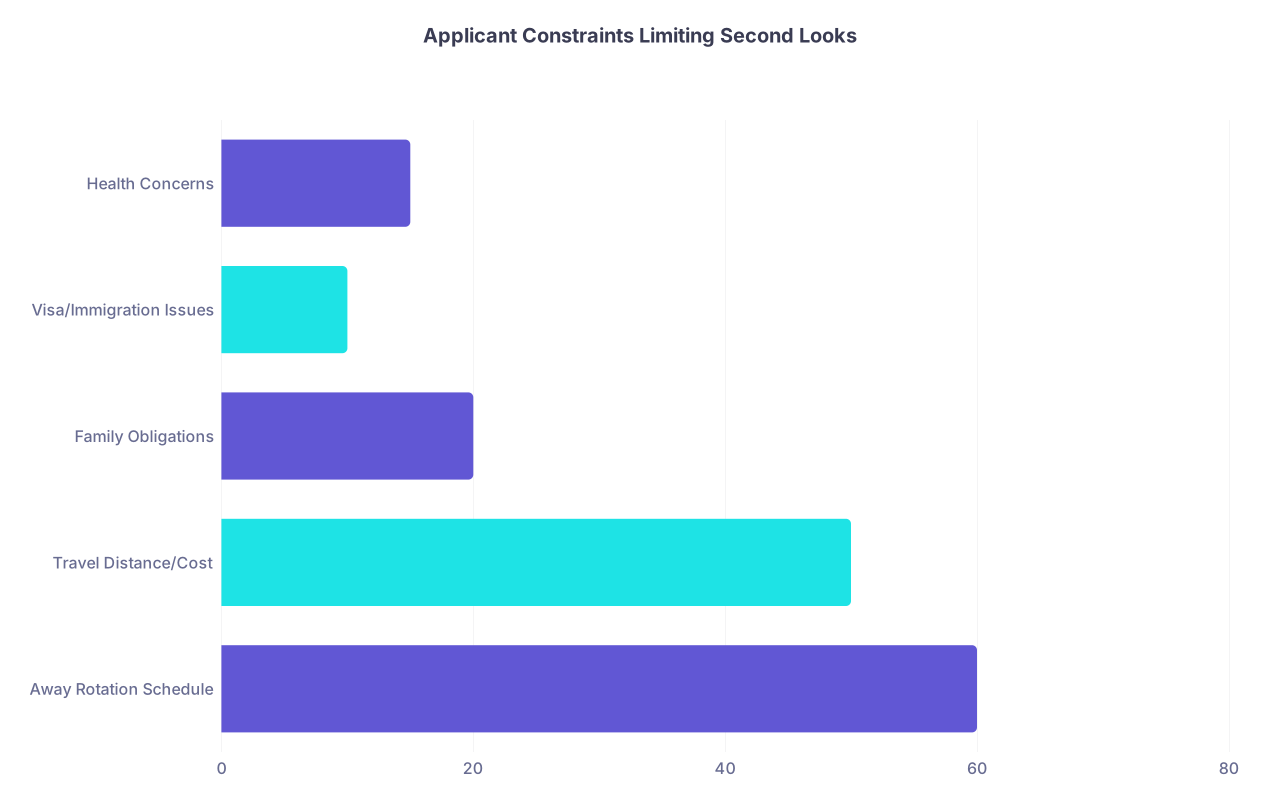
| Category | Value |
|---|---|
| Away Rotation Schedule | 60 |
| Travel Distance/Cost | 50 |
| Family Obligations | 20 |
| Visa/Immigration Issues | 10 |
| Health Concerns | 15 |

FAQs
1. Will not attending a second look significantly hurt my chances of matching at that program?
Usually no. For most programs, second looks are optional and have minimal influence on rank lists compared with your interview, letters, and application strength. The key is that you communicate your inability to travel and show interest through virtual or alternative options. The only time it really hurts is if the program heavily (and explicitly) weights second looks and you never explain your situation.
2. Should I rank a program lower just because I was never able to visit for a second look?
Not automatically. Rank based on the best information you do have: your interview experience, resident conversations (even virtual), training quality, location, and personal fit. Lack of a second look should be a minor factor, not a major penalty, unless there are genuine unanswered concerns you couldn’t clarify remotely.
3. How many times is it reasonable to contact a program if I cannot attend in person?
For most applicants, 2–4 touchpoints total is reasonable: a post‑interview thank‑you, one email explaining your inability to attend second look and asking about alternatives, one resident interaction, and possibly one brief update/interest email near rank list deadlines. If you attend a virtual second-look event, that counts as engagement; you don’t need extra emails just to say you came.
4. What if my away rotation attendings aren’t sympathetic about me needing time for second looks?
You prioritize patient care and your core responsibilities, but you still protect a few short, non‑disruptive time blocks if possible. Frame it to your team as: “I’ll schedule any calls outside of high-volume times and make sure my work is covered.” If an attending is still unsupportive, do not pick a fight over a virtual mixer—skip that one and look for other ways to engage the program later.
5. Should I tell a program they’re my top choice if I couldn’t attend their second look?
Only if it’s true. And if you do, be specific and concise: why they’re your top choice (training style, culture, geographic reason, career goals) and that your inability to attend a second look was purely logistical. Do not use “top choice” language for multiple programs. PDs talk, and insincere signaling can backfire worse than saying nothing at all.
Key points: lack of travel does not equal lack of interest, but you must say that out loud; build a deliberate virtual second look instead of chasing impossible flights; and rank programs based on solid information, not guilt over what you physically couldn’t do.