
You’re sitting in your apartment five minutes from the hospital. You’ve done two core rotations and at least one sub-I at your home program. You know where to park, which elevators are fast, which attendings are chill, which ones pimp for sport. And now there’s this email in your inbox:
“Optional second look day for interested applicants.”
For a place you’ve literally lived in for the past few years.
You’re thinking:
Is this a trap?
Am I supposed to go?
What am I even going to “second look” at when I already know where the bathrooms are?
You’re not alone. The “second look at your home program” is one of those weird gray-zone situations no one bothers to explain, because everyone assumes you’ll just “figure it out.” You shouldn’t wing this. Done right, it can help lock in your rank list and leave a very specific impression. Done wrong, it’s a wasted day—or worse, it subtly signals the wrong thing.
Let’s go through what actually makes sense to do.
1. First Question: Should You Even Go?
Start here: what’s your real situation with this home program?

Case 1: You already rotated there… and you loved it
You did your sub-I or away-equivalent at your home program. You clicked with the residents. You like the patient population. You can see yourself here.
In that case:
If it’s convenient and not financially painful, I’d go.
Why?
Not to “show interest” (they already have you on the radar), but to:
- See the program through residency eyes, not through “student getting graded” eyes.
- Fill in the big life questions: lifestyle, culture after 5 pm, realistic fellowship support, how chiefs are chosen, etc.
- Confirm that your rose-colored “this is home” feeling holds up under scrutiny.
Case 2: You rotated there… and you’re on the fence
You know the faculty. You know the chaos. You’re ambivalent. Maybe you feel some obligation to rank them highly because it’s home. Maybe your school pushes you subtly: “Our graduates match here a lot…”
Here, a second look can be very useful if you do it with the explicit goal of pressure testing your doubts. You go to:
- Ask the questions you were afraid to ask as a student being evaluated.
- Talk to residents who are not directly involved with your grade or letter.
- Check if the parts that bothered you on rotation are “acute” (this month was bad) or “chronic” (this is how it is every month).
If you go, you go as a skeptic, not a tourist.
Case 3: You barely rotated there or only saw one slice
Maybe you saw just one service (e.g., consults in IM, outpatient-heavy month in psych, elective in derm) that doesn’t reflect the residency as a whole.
Then a second look is almost a no-brainer—this is your chance to see:
- A different site (VA vs main hospital, community vs university).
- A different level of training (PGY-1 vs PGY-3+).
- The call rooms, night float, and actual “resident life” ecosystem, not just the student corner.
Case 4: Reasons not to go
You don’t need a second look if:
- You’re absolutely certain the home program will be low or off your rank list, and you’re not reconsidering.
- The second look conflicts with a rare away rotation opportunity or critical life event.
- You’d be purely going out of guilt or because “everyone else is going.”
Programs know home applicants already have tons of data. You’re not going to get blacklisted for not showing up to an optional second look.
2. What a Second Look at Home Is Actually For
Home second looks are not about seeing the building or “meeting the program” for the first time. You’ve done that. So what’s the actual purpose?
Three things.
1. Seeing the resident version of the program
As a med student, your view is filtered: you get the official tour, the canned noon conferences, the “best behavior” month. During a second look, you want to see:
- How residents speak to each other when no one senior is hovering.
- How they talk about the program in the hallway, not the conference room.
- What the vibe is at 3 pm on a random weekday—not just on interview day.
2. Answering life questions, not just CV questions
You’re deciding on the next 3–7 years of your life. That’s jobs, family, sleep, mental health. You’re here to ask:
- “What does an average weekday look like for you?”
- “How often do you actually get your golden weekends?”
- “Where do most residents live, and how much are they paying in rent?”
- “How supported do you feel when something in your personal life blows up?”
Residency fit is 70% about this stuff, not just case logs and board pass rates.
3. Clarifying rank list order
For many students, the home program is one of the top 3 choices. The second look lets you directly compare:
- Home vs your best away rotation
- Home vs a “prestige” program that felt distant
- Home vs a smaller or more lifestyle-focused program
Second look is essentially your tie-breaker lab.
3. How to Prepare (Yes, You Need a Plan)
Walking in and just “seeing what happens” is how you waste the day. You need an agenda—even if you never show anyone that you have one.
Step 1: Write down what you actually don’t know
Force yourself to list 10 questions that really matter to you. Not the brochure stuff. Your stuff.
Examples:
- “How miserable are nights, truly?”
- “If I want fellowship X, what is the track record here for people like me (no PhD, average Step, etc.)?”
- “What happens to the residents who struggle? Who fails boards? Are they abandoned or coached?”
- “How are schedules made—transparent or mysterious?”
- “Do residents actually use all their vacation days?”
If you can’t think of anything and your honest feeling is “I know this place inside and out and I like it,” fine—your goal then is validation, not discovery. Still go with 3–5 questions.
Step 2: Identify who you need to talk to
At a home second look, who you talk to matters more than what you see.
Aim to speak with:
- A PGY-1: for current transition-to-residency realities.
- A mid-level (PGY-2/3): for workload, learning curve, and early autonomy.
- A senior or chief: for big-picture satisfaction and post-residency outcomes.
- Someone from a demographic or life situation similar to yours (parent, partner, IMG, non-trad, etc.)
If there’s a specific niche you care about (global health, QI, medical education, sports, etc.), see if there’s someone known for that and try to catch them.
Step 3: Decide your “on the record” vs “off the record” questions
Some questions are fine to ask in a group or with faculty around:
“Could you talk about how mentorship works here?”
Some are better 1:1, away from faculty:
“Do you feel safe pushing back when the service is unsafe?”
“Who is the toxic attending everyone warns each other about?”
You’re not being paranoid. Residents are not going to trash their program in front of the PD’s admin.
4. What to Actually Do During the Second Look Day
Now the day itself. Here’s how to approach it so you don’t just drift through.

| Step | Description |
|---|---|
| Step 1 | Arrive early |
| Step 2 | Group welcome |
| Step 3 | Resident-only time |
| Step 4 | Observe rounds or conference |
| Step 5 | Targeted 1 on 1 talks |
| Step 6 | Walk physical spaces |
| Step 7 | Debrief and notes after |
Arrive early, act like a future colleague
You’re not a wide-eyed interviewee anymore. You know where to go. Show up 10–15 minutes early, dressed like you did for interviews, and mentally put yourself in “resident mode.”
You’re evaluating them as much as they’re (very subtly) still evaluating you.
During group sessions: watch the subtext
If there’s a formal presentation or panel:
- Notice who talks: Is it always the same loud resident, or do others chime in?
- Look at body language when someone mentions call, wellness, EMR, or new leadership. Tiny eye rolls or glances tell you more than the words.
- When the PD speaks, do residents look engaged, indifferent, or anxious?
These little dynamics matter. I’ve seen programs where every time the PD walks in, the room goes stiff. That’s not nothing.
Resident-only time: this is the gold
If the day has a residents-only Q&A or lunch, this is where you should use your real questions. Not softballs. Real ones.
Smart ways to ask sharp questions:
- “What surprised you most about this program once you started as an intern?”
- “If your best friend was ranking this program, what would you tell them to think hard about?”
- “What are the top 2 things you’d change if you were PD tomorrow?”
- “Who actually has your back when you’re drowning on a bad call night?”
Watch for patterns. One person venting is one thing. Four different residents hinting at the same issue? That’s signal.
One-on-one or small side conversations
During transitions, walking between sites, or after lunch, pick one or two residents you clicked with and ask a few deeper questions:
- “How did this program treat you the worst day you’ve had here?”
- “Do you see grads from here landing in the jobs or fellowships they really wanted, or do a lot of people compromise?”
- “If you had to do Match again, would you rank this place first?”
You want unguarded answers, not rehearsed ones.
Walk the physical spaces with new eyes
You’ve seen the wards. But now notice:
- Call rooms: Are they real, usable, and safe?
- Resident work rooms: Chaos? Clean? Enough computers?
- Lounge or “wellness” spaces: Decorative or actually used?
- Parking, night access, the walk from the hospital at 11 pm in winter.
Imagine doing these routes half-asleep, in February, after five admits in three hours. Still okay?
5. How the Home Factor Changes the Social Dynamics
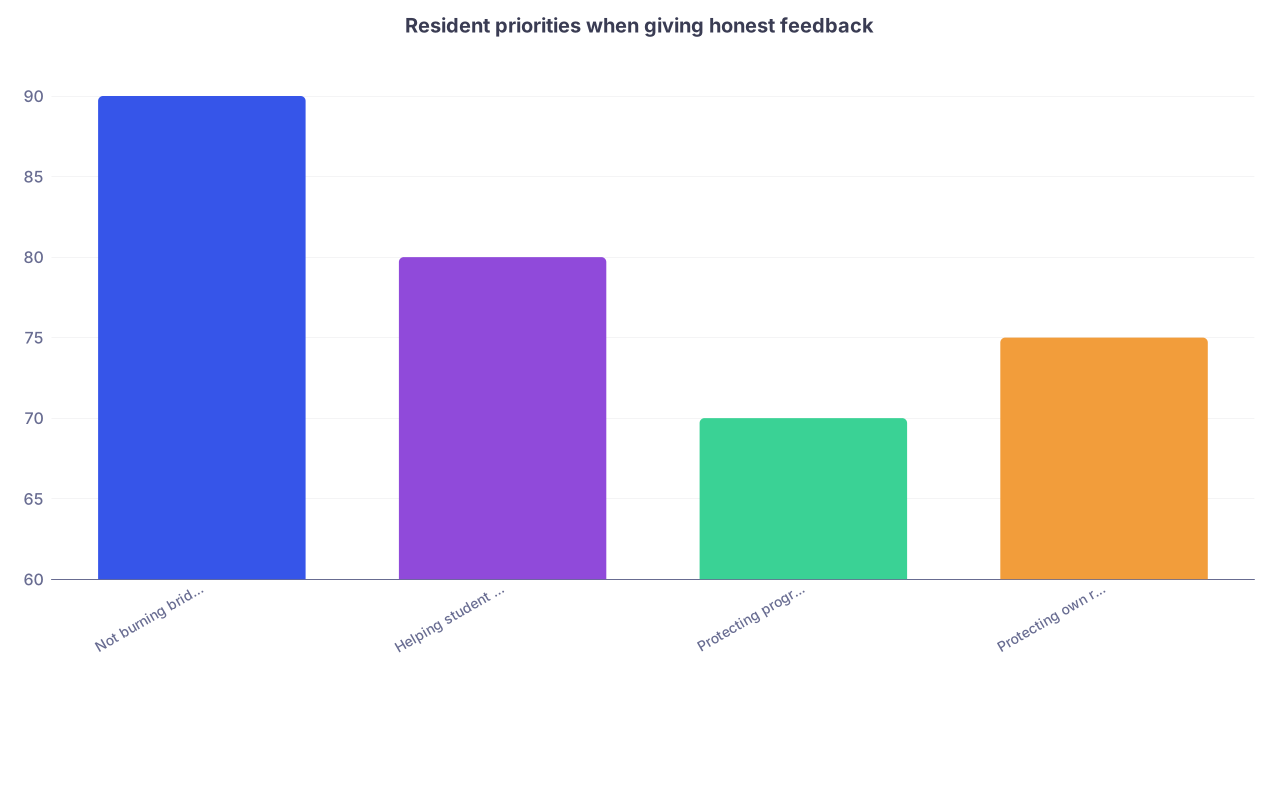
Second look at a home program is politically different from an away.
You are not a stranger. People have memories, good and bad.
| Category | Value |
|---|---|
| Not burning bridges | 90 |
| Helping student decide | 80 |
| Protecting program reputation | 70 |
| Protecting own reputation | 75 |
You’re not starting from zero
If you:
- Worked hard on your rotations
- Didn’t make enemies
- Were generally reliable
You already have a baseline positive impression. Second look is not usually going to swing you from “ranked low” to “ranked to match.” It’s more likely to move you from “middle” to “we’d be happy to have them.”
If you had a rough rotation, second look won’t erase that, but showing up, being professional, and asking thoughtful questions does remind them you’re engaged and maturing.
Don’t act like a superfan
Even if this is your dream program, do not perform obsession.
Avoid things like:
- “This is definitely my #1, no question” said loudly to 3 different people.
- Over-familiar jokes about attendings or residents you barely know.
- Acting like you already matched there.
It makes people uncomfortable and it boxes you in if your feelings change later.
But do show genuine engagement
Instead, you:
- Ask smart, specific questions that only someone who’s been here could ask.
- Reference real experiences: “When I was on cards here, it felt like X—do you think that’s typical?”
- Engage as a future colleague, not a transient student: “I’m curious what PGY-2 clinic responsibility looks like.”
This is how you signal “I care, I’m serious, I know this place” without being weird.
6. Using the Second Look to Finalize Your Rank List
The real value of a home second look is what you do after you leave.
| Factor | Home Program | Away Program |
|---|---|---|
| Resident vibe | ||
| Call schedule realism | ||
| Fellowship outcomes | ||
| Geographic fit | ||
| Gut feeling after visit |
Right after the day: write, don’t scroll
Before you open Instagram or get sucked back into life, take 15–20 minutes and write down:
- 3 things that impressed you
- 3 things that bothered you or felt “off”
- 3 resident comments that stuck with you (good or bad)
- A one-line gut summary: “Today made me feel more likely / less likely to rank them highly because…”
Do not overthink it. Just dump.
Then compare to your other top programs
Ask yourself:
- “If I got into both [Home] and [Top Away], which one would I be slightly relieved to see on Match Day?” That little feeling of relief is telling you something.
- “Where do I see myself at 2 am on a terrible night and still being glad I’m here and not elsewhere?”
- “Who seemed happiest among the residents I met? Which program had more people like that?”
Your brain loves to overvalue prestige and underweight day-to-day lived experience. Second look gives you a clear, recent lived snapshot. Use it.
Be honest about the sunk cost and guilt
Home programs carry baggage:
- Pressure from mentors: “We’d love to keep you here.”
- Family expectations: “Why would you leave?”
- Your own inertia: “I already know how everything works here…”
Second look should either:
- Confirm: “Yes, staying makes sense. I’m not just defaulting to home; I actively prefer this.”
- Or clarify: “I like them, I’m grateful for them, but my career and happiness are likely better served elsewhere.”
Ranking a different program above home is not disloyalty. It’s adulthood.
7. Things You Should Not Do at a Home Second Look
Let me be blunt about a few traps.

Do not:
- Treat it like a social hangout with your med school buddies. You’re there as an applicant, not just a local.
- Overshare your entire rank list strategy with residents. They gossip (not maliciously, but they talk).
- Ask residents to advocate for you directly with the PD. It’s awkward and makes everyone uncomfortable.
- Use the time to complain about specific attendings or prior rotations. Bad look.
- Vanish halfway through the day because “I already know this program.” If you show up, do the full day unless there’s a pre-discussed reason.
You’re there to get clarity and show you’re a serious, functional adult. Everything else is noise.
8. What If You Leave More Confused?
Sometimes second look backfires in a good way: it shakes your certainty.
Maybe you thought home would be #1, but the residents looked exhausted and bitter on your second look. Or the PD made some offhand comment that felt wrong. Or your away program suddenly looks better in comparison.
That’s not a failure. That’s the point.
If you’re genuinely stuck:
- Call or meet with someone you trust who is not tied to your home program—like a mentor at another institution, a former resident from your school, or a neutral advisor.
- Lay out facts, not vibes: schedule, outcomes, support, geography, your long-term goals.
- Pay attention to how you argue for one or the other. Where your energy goes is revealing.
9. The Quiet Match-Impact Question
Last piece: does going (or not going) to a home program second look affect your chances?
Reality:
- If you’re a home student with solid evals and a decent interview, you’re already strongly considered. Second look attendance alone is not going to swing it massively.
- Showing up and behaving like a normal, thoughtful adult can nudge you in the right direction if they were on the fence.
- Not coming does not equal “not interested,” especially if you rotated there; they know you already have deep exposure.
Where it can hurt is if you show up and behave badly—disengaged, unprofessional, weirdly intense, or disrespectful. That can absolutely downgrade you.
Second look is a small lever, not a magic switch. Treat it as a tool for you first, and as a professional appearance second.
Your next step today
Open a blank note on your phone or laptop. At the top, write:
“Home Program Second Look – What I Actually Need to Know”
Force yourself to list 10 concrete questions or uncertainties you still have about training there—lifestyle, culture, outcomes, support, anything.
If you can’t write at least 5 real questions, you probably either don’t need to go, or you already know your answer about where this program belongs on your rank list.