Educational note: This article discusses travel costs and return on investment in a general educational sense for residency applicants. It is not financial, legal, or tax advice; individual circumstances vary, and applicants should use their own judgment and consult qualified professionals when needed.
Here’s the myth: you interviewed virtually, you show up in person later, shake a few hands, smile at residents over coffee, and somehow your rank position levitates.
That’s the fantasy. It’s also mostly wrong.
Applicants love the idea of the “game-changing” second look because it feels actionable. You can book a flight. You can walk the halls. You can tell yourself you’re doing something while the Match process drags on. I get the appeal. I’ve watched plenty of applicants convince themselves that an optional visit is the hidden lever nobody talks about openly. It usually isn’t.
The real question is simpler and less glamorous: what can an in-person second look actually do after a virtual interview, and what can’t it do? The evidence we have, plus how programs actually behave, points to a pretty unromantic answer. Second looks are usually much better at helping you decide than helping a program suddenly decide you’re their missing piece.
That’s the contrarian truth. Applicants tend to overestimate the signaling power of showing up and underestimate how constrained programs are in how they interpret optional visits. A second look can matter. Just not in the magical way people want it to.
What Second Looks Actually Are: Relationship-Building, Not a Secret Ranking Hack
Let’s strip away the folklore.
A second look is usually about three things:
- seeing the place with your own eyes
- checking whether the culture feels real or staged
- building a little more mutual familiarity after interview day
That’s it. Not nothing. But not a covert re-audition either.
Most programs are not running a shadow ranking system where applicants who appear in person get quietly boosted five spots. That’s the story applicants tell each other in group chats. It survives because anxiety is contagious and because nobody likes uncertainty. But the structure of residency recruitment doesn’t support this fantasy very well. Many programs have formal rules, equity concerns, and practical limits around post-interview contact. Plenty are careful not to give extra weight to optional visits precisely because not everyone can afford to travel.
And that’s the key misunderstanding: a program welcoming second looks does not mean attendance materially changes rank position.
I’ve seen this play out repeatedly. A program says, “You’re welcome to visit if you’d like.” Applicants hear: “We’re secretly testing commitment.” What the program often means is: “If seeing the hospital or city helps you decide, come by. We’re happy to be nice humans about it.”
What can a second look influence indirectly?
- Your comfort level
- Your confidence in ranking the program
- The quality of your follow-up communication
- Your ability to catch mismatch or red flags before Match Day
What can it usually not do?
- guarantee movement up a rank list
- erase a weak interview
- create interest that wasn’t there
- function as a backdoor audition
That distinction matters. If you treat a second look like reconnaissance, great. If you treat it like a secret ranking hack, you’re probably wasting money.
What the Evidence Suggests: Limited Measurable Effect, Real Perception Effects
Here’s what the data actually shows: there is little strong evidence that second looks independently and consistently change match outcomes on a large scale.
That doesn’t mean they never matter. It means applicants routinely exaggerate their impact.
The research on post-interview visits and match behavior is limited, specialty-specific, and messy. Policies differ. Cultures differ. Some specialties are more old-school about demonstrated interest. Others are much more standardized and wary of inequity. Since the virtual interview era expanded, the logic for second looks has become even less clear as a ranking tool. If a program already interviewed you thoroughly, reviewed your file, and discussed you in committee, an optional hallway tour is rarely the decisive factor.
But perception effects? Those are real.
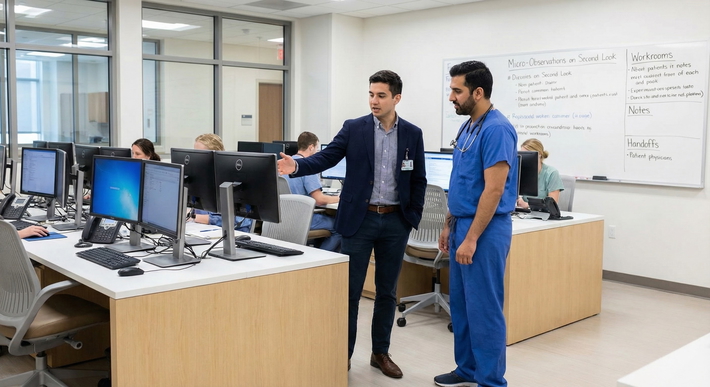
A second look can absolutely help you assess fit in ways Zoom cannot. You notice whether residents look exhausted or genuinely relaxed. You see whether the commute is miserable. You figure out whether “supportive culture” means people actually know each other or just repeat the phrase on interview day because everyone has learned the script. That’s useful. Very useful.
It can also sharpen your follow-up. Instead of sending generic thank-yous, you can reference something real: the ICU workflow, how the residents described backup on hard call nights, what the neighborhood feels like after dark, whether faculty actually seemed accessible. That kind of specificity is better than empty enthusiasm.
Still, let’s not confuse “better informed” with “dramatically favored.”
The biggest disconnect is this: applicants obsess over whether the program reads the visit as interest, while the bigger value is often whether you learn enough to reorder your own rank list.
That’s not small. One accurate rank-list decision is worth more than a lot of performative signaling.
Who Benefits Most: When an In-Person Second Look Is Worth It
Second looks are not useless. They’re just not universally smart.
They make the most sense when you need information a virtual interview cannot give you. Real examples:
- You’ve never lived in that city and need to know whether daily life there is tolerable.
- The commute between the main hospital, VA, and children’s site sounds suspiciously awful.
- You want to observe how residents interact when they’re not in polished interview mode.
- You’re trying to understand call culture, neighborhood safety, parking, housing, or partner logistics.
- Two programs look identical on paper and you need a tiebreaker.
There are also special cases where visiting may carry a bit more value. Highly competitive specialties sometimes put more weight on visible engagement, even if nobody says that out loud. Some programs explicitly invite or organize second looks, which changes the equation. And if you have strong geographic ties, an in-person visit can reinforce a coherent story you already built in your application. Reinforce. Not invent.
Here’s the contrarian part applicants need to hear: going because “everyone else is going” is dumb.
That’s not strategy. That’s panic in business casual.
If the trip costs a lot, wrecks your schedule, or adds no meaningful information, skip it. I’ve seen applicants drag themselves across the country for a second look, come back with nothing except airport fatigue and a vague sense that the cafeteria was decent. That is not a return on investment. That is Match-season superstition dressed up as professionalism.
How to Decide: A Practical Framework for Applicants
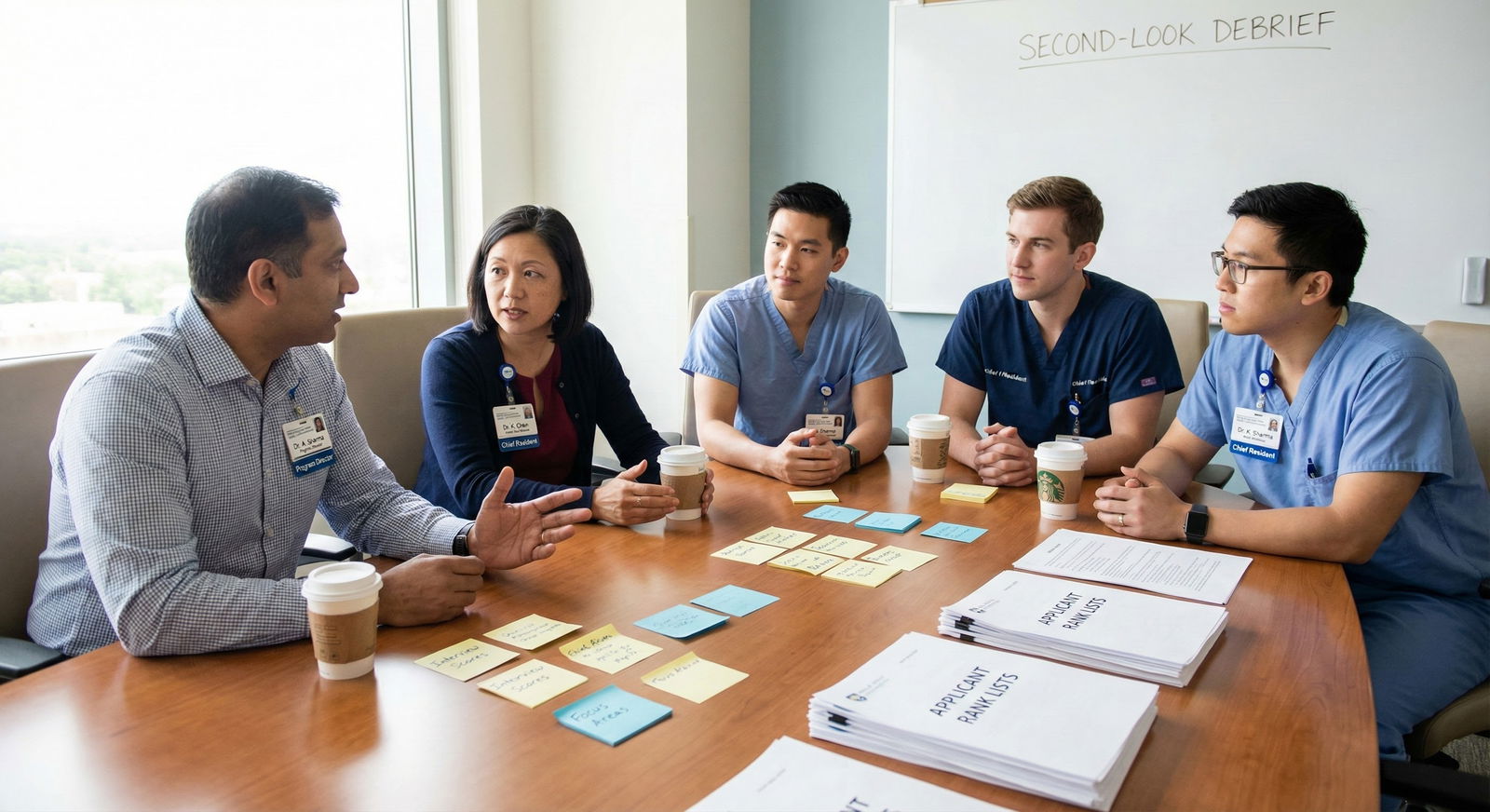
If you’re debating a second look, use five questions. Not vibes. Not rumors. Questions.
1. What will this cost me?
Money, time, missed rotations, stress. If the price is high, the visit needs to deliver real information.
2. Is the timing awkward or meaningful?
A well-structured second look invitation is different from you trying to wedge yourself into a random weekday and hoping someone notices.
3. Will I learn something genuinely new?
This is the most important question. If the answer is no, don’t go.
4. Did the program explicitly invite or encourage visits?
If yes, good. If not, be careful. You don’t want to create work for a program or put yourself in a weird gray zone.
5. Can I attend professionally without turning it into an audition fantasy?
If you’re going to overinterpret every smile, every delayed email, every casual comment from a PGY-2, you are not going for information. You are going to feed your anxiety.
Common mistakes are painfully predictable:
- treating the visit like a second interview
- oversharing your rank intentions
- cornering faculty for reassurance
- assuming silence afterward means the visit hurt you
- sending long, needy follow-up emails fishing for validation
Don’t do any of that.
Better approach:
- show up prepared and on time
- ask specific, practical questions
- observe more than you perform
- be pleasant to everyone
- send a short thank-you after
Short means short. “Thank you for the opportunity to visit. Seeing the clinical environment and speaking with residents helped me better understand the program.” Done. No melodrama. No pressure. No “I hope this improves my standing.” That kind of message never sounds strategic. It sounds insecure.
Bottom Line: Second Looks Are Usually About Fit, Not Fate
Here’s the clean answer.
An in-person second look after a virtual interview can help you make a better decision. It can clarify culture, geography, logistics, and resident morale. It can strengthen your own rank list. It can give you sharper, more credible follow-up.
What it usually does not do is radically change your match odds.
That’s the myth worth killing.
So go if the visit gives you information you truly need, especially if the program invites it and the cost is reasonable. Skip it if you’re chasing reassurance, copying other applicants, or hoping a hallway appearance will magically rewrite a rank meeting that already happened.
Use second looks for fit. For facts. For sanity.
Not for fate.