
The way most applicants schedule second looks is backwards—and programs can see it.
You’re treating pre‑match and post‑interview second looks like social visits when they’re actually time-sensitive signals in a screamingly chronological process. If you do them in the wrong order, at the wrong time, or with the wrong intent, you either waste your time or quietly hurt yourself.
Let’s fix the sequence.
Big Picture: Where Second Looks Fit in the Timeline
At this point you should understand the skeleton of the residency cycle, because second looks hang off very specific joints.
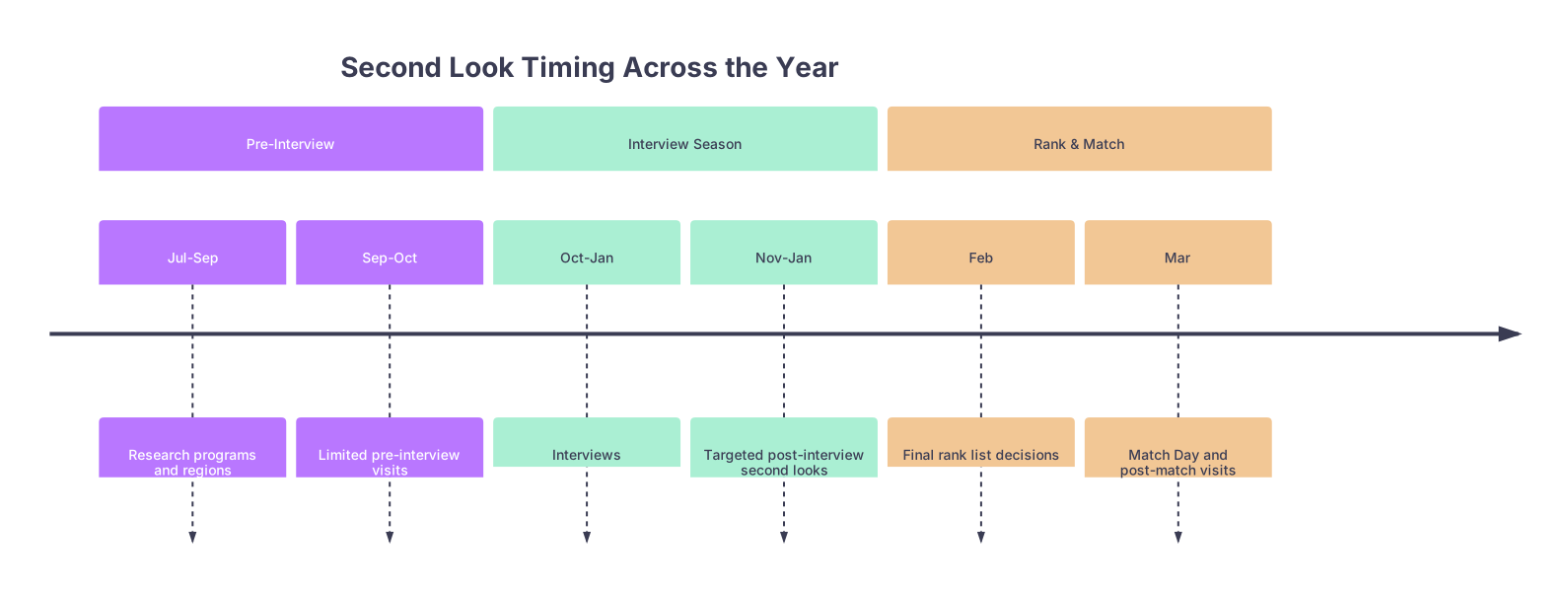
| Period | Event |
|---|---|
| Pre-Interview - Jul-Sep | Research programs and regions |
| Pre-Interview - Sep-Oct | Limited pre-interview visits |
| Interview Season - Oct-Jan | Interviews |
| Interview Season - Nov-Jan | Targeted post-interview second looks |
| Rank & Match - Feb | Final rank list decisions |
| Rank & Match - Mar | Match Day and post-match visits |
Here’s the rough yearly flow:
July–September
- ERAS opens and you’re still piecing together a reasonable list.
- Second looks here are rare and should be surgical if you do them at all.
October–January (Interview Season)
- Programs interview, then build rank lists as they go.
- This is prime time for post‑interview second looks—but only in very specific niches.
February (Rank List Lock‑In)
- Programs are finalizing. You are too.
- Last‑minute “I’m here again, notice me” visits are mostly useless unless you have a pre‑existing, strong relationship.
March (Post‑Match)
- Now second looks turn into pre‑residency site visits—very different purpose.
So the key question is not “Should I second look this program?” but:
“Given where we are in the calendar and how this program makes decisions, does this specific second look change anything for either of us?”
Pre‑Match Second Looks: When (and When Not) to Go Before Interviews
Pre‑match here = before the rank lists are even a twinkle in anyone’s eye—basically before or early in interview season.
At this point you should be crystal clear about why you’re even considering a pre‑interview or early‑season visit, because most people do this for the wrong reason: anxiety.
Months 0–3 Before Interview Season (July–September)
You’re:
- Finalizing your list
- Reading 200 identical program descriptions
- Wondering if you actually want to live in that city you just applied to 20 times
This is the one window where a “pre‑interview” second look sometimes makes sense.
Use it for:
Region and lifestyle scouting
- You’re from the East Coast, thinking of moving to Denver, Salt Lake City, or Seattle.
- You think you know what winters or cost of living are like. You don’t.
- A day or weekend visit—hospitals + neighborhoods + commute—can prevent you from wasting 5 interview slots in a region you’ll hate.
Deeply specialized interests
- Example: You’re an anesthesia applicant obsessed with cardiac, debating between two places heavily branded as “cardiac powerhouses.”
- Visiting early to meet one or two faculty, see volumes, and understand the call structure can make the difference between ranking those programs #1 vs #8.
Home vs away vs fellowship pipeline questions
- You want to know how this program really treats outside residents, home applicants, or fellows.
- Short, targeted visit with 1–2 trusted residents > scrolling Reddit.
Do NOT use pre‑match second looks to:
- “Show interest” in the hope of getting an interview
- Try to “make up” for a weaker application
- Drop hints about ranking them highly (it’s way too early; everyone knows it)
Programs don’t like being used as emotional security blankets. They can tell when you’re there because you’re panicking, not because you have a clear question.
How to Structure a Smart Pre‑Match Visit
At this point you should keep it tight and cheap:
1 half‑day maximum at the hospital
- Tour with a resident (even informal coffee and a walk through key areas)
- Maybe sit in morning report or grand rounds, if offered
1–2 focused questions you can’t answer online
For example:- “How realistic is it to do a critical care fellowship from here?”
- “How often do night float residents work with attendings vs independently?”
No “I’ll rank you high” nonsense
It’s July–September. That’s not credible. It just sounds immature.
Pre‑match second looks should mainly change your rank list strategy and interview list, not theirs.
Post‑Interview Second Looks: What They Actually Signal
Now we’re in November–January. You’ve already interviewed.
At this point you should understand what your visit actually communicates to programs:
- It rarely moves you from the middle of the rank list to the very top.
- It often confirms or clarifies their existing impression of you.
- It always burns time and money on your end, so it needs a return on investment.
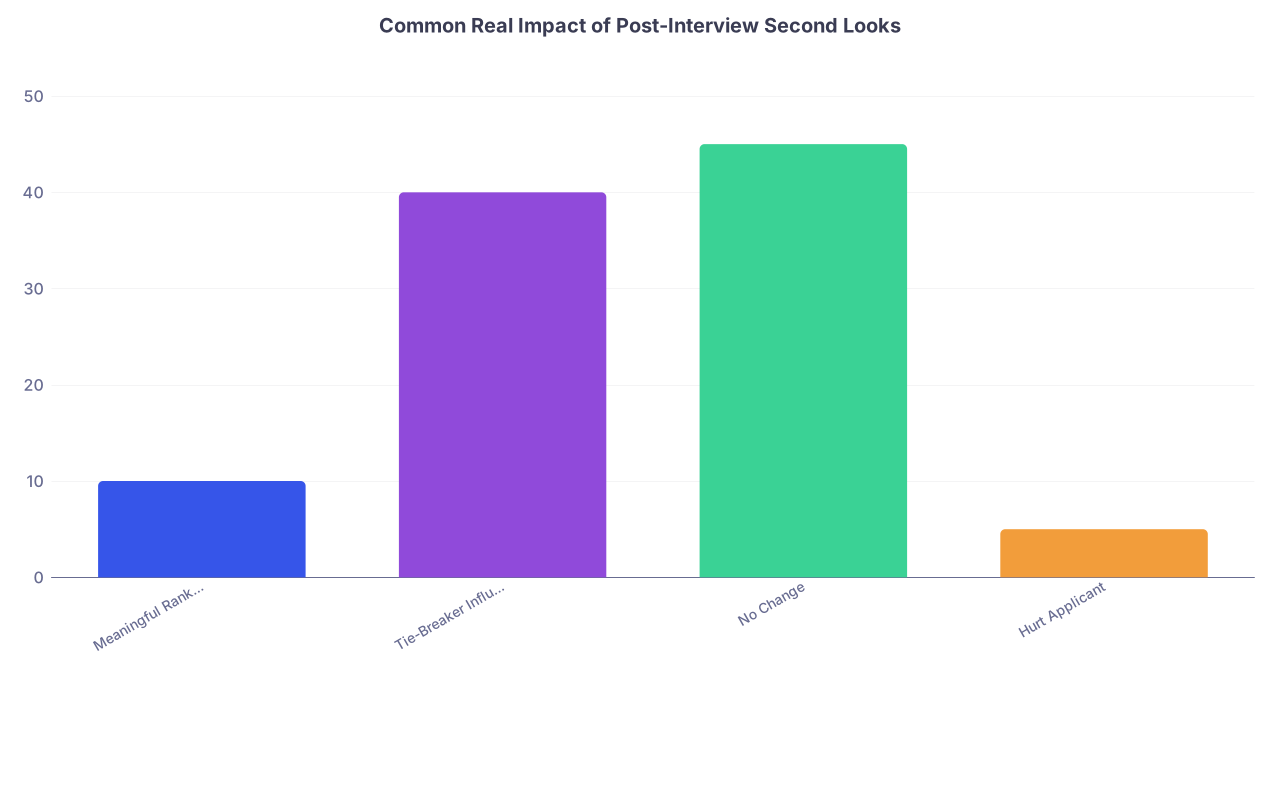
| Category | Value |
|---|---|
| Meaningful Rank Movement | 10 |
| Tie-Breaker Influence | 40 |
| No Change | 45 |
| Hurt Applicant | 5 |
When Post‑Interview Second Looks Make Sense
Use them when you need decisional clarity, not validation.
You’re stuck between 2–3 top programs
- You’ve interviewed broadly.
- You can’t differentiate between #1 and #2.
- A second look can help you see:
- Call room vs real workrooms
- Actual pace on wards
- Culture when cameras (Zoom) are off
You had a short, virtual, or awkward interview day
- Common in psychiatry, prelim years, or very large programs using half‑day virtual formats.
- You met 2 people and a PowerPoint. That’s not enough to bet 3–7 years of your life on.
You’re changing your life for this city
- Moving spouse, kids, or dependents.
- You must confirm commute, neighborhood, schools, and actual feel.
- Program visit + city scouting in one trip can be worth it.
You want to explore a specific niche track
- Example: research track, global health pathway, rural track.
- A second look to meet the track director and a current resident in that track makes sense.
When Post‑Interview Second Looks Are A Bad Idea
At this point you should say no to a second look if:
You’re doing it only because:
- “My classmate is doing one everywhere.”
- “Reddit said it shows interest.”
- “I’m afraid they’ll think I don’t care.”
You’re hoping to rescue:
- A disastrous interview
- A red‑flag vibe you both clearly felt
If the program was cold, dismissive, or blatantly toxic the first time, a second look usually just reconfirms that. You don’t need another round of that.
Sequencing: Pre‑Match vs Post‑Interview Second Looks, Step-by-Step
Let’s walk through how to sequence this wisely across the year.
Step 1: July–September – Decide If You Need Any Pre‑Match Visits
At this point you should:
Look at your geographic spread
- If you’re applying to 3+ cities you’ve never set foot in, pick 1–2 regions for brief pre‑season scouting.
- No more. You’re not a travel blogger.
Identify critical decision points you can’t solve remotely:
- Kids in school? Spouse’s job market?
- Need to know hospital proximity to certain communities (e.g., VA, underserved)?
Plan short, deliberate visits
- 1–2 days max per city, combining:
- Neighborhood walks
- Commute tests at rush hour
- One arranged meet‑up with a resident or Chief if appropriate
- 1–2 days max per city, combining:
Skip any program‑specific visit that doesn’t answer a concrete question. If it doesn’t change your application behavior, it’s fluff.
Step 2: October–December – Wait Until After a “Full” Look First
During interview season, the interview day is your first look. Treat it like one.
At this point you should:
- Keep a running log right after each interview:
- Resident morale: 1–10
- Transparency about call and workload
- Faculty engagement
- City/living situation

Only consider a post‑interview second look if, after that log:
- The program is realistically Top 3–5 for you
- You still have unanswered, high‑stakes questions
- The visit falls before either:
- The program’s internal rank committee meeting
- Your own personal “I’m locking this rank list” date
Step 3: Mid‑December–January – Time the Second Look, Don’t Wing It
Now the calendar matters a lot.
At this point you should:
Ask the coordinator, clearly and politely, about timing
- “I’m strongly considering your program and had a few follow‑up questions. Would there be any value in visiting again, and if so, is there a time window before your rank list is finalized when that would be most appropriate?”
If they say:
- “We don’t consider second looks for ranking” → Believe them. Go only if you need clarity.
- “If you come, try to do it before [date]” → That’s a hint their committee meets soon after.
Aim for 2–4 weeks after your interview
- Close enough that people remember you
- Far enough that you’ve digested your impressions and aren’t just riding the interview high
Avoid stacking 4 second looks in 2 weeks
- You’ll blur programs together
- You’ll be exhausted and less observant
What To Actually Do During Each Type of Visit
Let me be blunt: wandering around the hospital, smiling, and saying “I love it here” is useless. You need a tactical plan.
| Aspect | Pre‑Match Focus | Post‑Interview Focus |
|---|---|---|
| Primary Goal | Clarify where to apply/rank | Clarify final rank ordering |
| Main Beneficiary | You | Mostly you, rarely program |
| Duration at Hospital | 2–4 hours | 3–6 hours |
| People to Prioritize | Residents, maybe 1 faculty | Residents, PD/APD, track leads |
| Key Output | Change in apply/rank list | Change in rank position |
During a Pre‑Match Visit
At this point you should:
- Spend most time with residents, not attendings
- Ask blunt but respectful questions:
- “What surprised you in a bad way when you started here?”
- “Would you choose this program again?”
- Walk:
- ED, wards, ICUs
- Workrooms and call rooms
- Cafeteria during peak hours (culture snapshot)
During a Post‑Interview Second Look
You’re no longer trying to “sell yourself.” You’re trying to see if your life fits here.
At this point you should:
Prioritize:
- Shadowing on a ward team for an hour
- Sitting in morning sign‑out or noon conference
- Casual time with residents without leadership hovering
Pay attention to:
- How residents talk about patients and each other
- How overworked everyone looks at 10am or 3pm
- Whether seniors shield interns or dump on them
Ask specific, rank‑deciding questions:
- “How flexible are they about schedule changes when life happens?”
- “How often do residents moonlight, and is it because they want experience or need money?”
- “What percentage of your class would have ranked here #1 again?”
When Second Looks Can Hurt You
Yes, they can backfire. I’ve watched it.
At this point you should avoid these mistakes:
Acting entitled or transactional
- “If I rank you first, what can you do for me on fellowship?”
- Programs hate this vibe. You’re not negotiating a contract yet.
Overstaying
- Hanging around all day without structure
- Jumping into patient spaces without invitation
- Shadowing like a bored student: standing in the corner, silent, awkward
Being inconsistent
- Telling three different programs they’re your “top choice” in writing.
- Residents talk. PDs compare notes. It gets around more than you think.
Post‑Match “Second Looks”: Very Different Game
Once you’ve matched, the whole calculus flips.
Now second looks are about logistics and transition, not influence.
At this point—March to June—you should:
Visit if:
- You matched in a city you barely know
- You need to secure housing, childcare, or partner jobs
- You want to meet your future co‑interns and see where you’ll actually work
Use the visit to:
- Test commutes at real times
- Walk from resident parking to actual work areas
- See grocery stores, parks, gyms, daycare options

No one is ranking you anymore. You can relax. This is about designing a livable life.
FAQ: Pre‑Match vs Post‑Interview Second Looks
1. Do programs expect me to do a second look if I’m really interested?
No. Most PDs I know do not expect second looks at all. Many are suspicious of them because they can advantage wealthy applicants. Your interview performance, letters, and overall application carry far more weight.
2. Should I tell a program I’m coming for an independent second look?
If you want any chance of it affecting their perception, yes—email the coordinator or PD to set up a structured visit. Randomly wandering through the hospital on your own is just tourism, not a second look.
3. Can a bad second look drop me on a rank list?
Yes, though it’s not super common. If you come across as unprofessional, dismissive of staff, disrespectful of boundaries, or clearly uninterested, it can absolutely nudge you down, especially in small programs where every impression counts.
4. If I can afford only one second look, when should I schedule it?
Most of the time: post‑interview, mid‑season, at a program already in your realistic Top 3–5. Use it to break a tie in your own mind, not to try to jump 20 spots on their list.
Open your spreadsheet or notes app right now and mark three columns next to your program list: “No visit,” “Maybe pre‑match visit,” and “Maybe post‑interview second look.” Force every program into one of those buckets today—and delete any second look that doesn’t clearly change your eventual rank list.