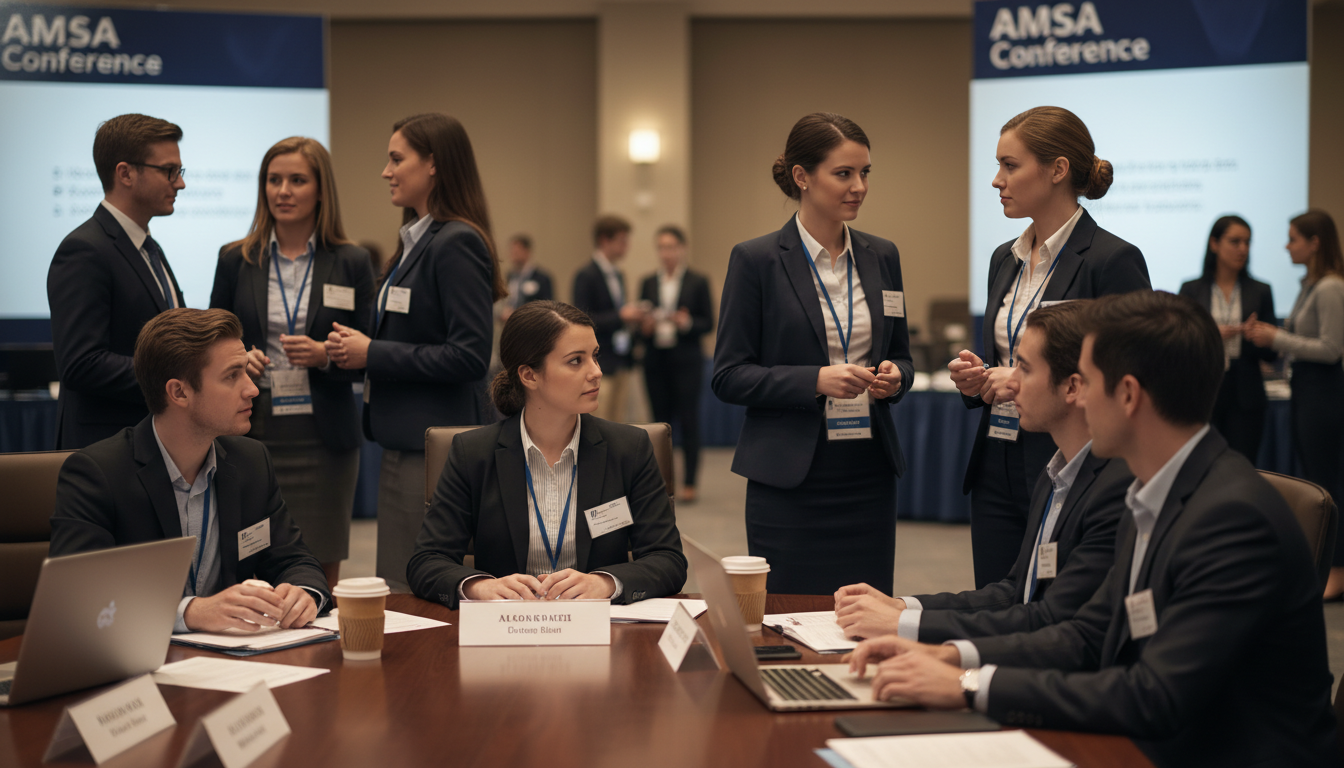
Two floors above the main AMSA exhibit hall, while you’re rushing between breakout sessions and collecting free pens, a very different conference is happening. Doors marked “Closed Session” and “By Invitation Only” are where the real decisions get made—about policy, leadership positions, and, yes, which students end up on the radar of people who control research spots, letters, and pipeline programs.
You see the Instagram photos and the keynote talks. You do not see the room where a handful of students and a few physicians quietly decide who gets access to opportunities the rest of the attendees will never even hear about.
Let me walk you into those rooms.
The First Divide: Hallway Conference vs. Backroom Conference
AMSA markets itself as open, democratic, student‑run. And mostly, that’s true on paper. But at every national and regional AMSA conference, there are actually two events running in parallel:
- The public conference that’s on the schedule.
- The off‑schedule, semi‑closed, invite‑only layer where leverage and relationships are built.
You experience the first as a badge‑wearing attendee. The second is harder to see unless someone brings you in.
Here’s how that invisible structure usually breaks down:
- Public: keynotes, skills workshops, advocacy sessions, exhibitor hall, social events.
- Semi‑closed: “leadership briefings,” “committee working sessions,” “advisory roundtables,” “special luncheon,” “meet‑and‑greet with X.”
- Closed: national leadership strategy meetings, candidate vetting, internal faculty/advisor huddles, high‑level partner discussions.
Most students assume invite‑only means “not important” or “political drama.” The truth: a significant portion of what shapes AMSA’s external impact, its advocacy agenda, and—relevant to you—who gets fast‑tracked into serious opportunities, happens there.
The students in those rooms get remembered. The students in the main ballroom blend into the audience.
Room Type #1: National Leadership Closed Sessions
This is the core you never see unless you’re in national or regional leadership—or very deliberately brought in as “new talent.”
Typically labeled something vague like “National Leadership Council Session – Closed,” this is where the elected AMSA officers, a handful of appointed leaders, and key staff sit around a U‑shaped table and map the organization’s direction.
What actually happens behind that door
In those rooms you’ll see:
- A printed agenda with pre‑circulated documents—budget allocations, policy resolutions, sponsor proposals.
- The “inner circle” of student leaders who’ve been on Zoom calls together all year and already know each other’s politics, strengths, and weak spots.
- One or two physician advisors or staff quietly steering, steering, steering.
On the surface, they’re discussing where AMSA should put its energy: more advocacy on prior authorization? Step 1 changes? Physician unionization? Diversity pipeline programs?
Underneath, a few other things are happening:
Gatekeeping of pipeline opportunities
National officers review which external orgs want “student reps”: AAMC task forces, state medical society committees, hospital system boards, NIH advisory groups. They rarely send a mass email to all members asking who’s interested. They ask:“Who do we have who can handle this and won’t embarrass the organization?”
Names come up—people who’ve spoken up in smaller rooms, written compelling emails, or impressed someone in last year’s conference hallway. Those names then end up on resume‑gold opportunities that are never advertised to the rank‑and‑file attendee.
Soft vetting of future national leaders
If you think national AMSA elections are about what’s in a candidate’s public platform, you’re missing half the game. In these rooms, officers and staff talk—bluntly—about who is “ready,” who is “difficult to work with,” who “still needs mentoring,” who “comes on too strong,” who “isn’t reliable on deadlines.”Your reputation gets created here long before you ever consider running for national office.
Signal amplification to faculty and attendings
Sometimes an attending advisor will say:
“This student impressed me yesterday in the AI ethics panel. Keep an eye on her.”
Or a staff member will say:
“That M1 from Michigan has been emailing me all year, always follows through; we should bring him into the advocacy core.”Those comments matter. They’re the difference between “just another premed/med student” and “someone we’re going to plug into bigger things.”
The takeaway: if your name is never mentioned in that room, you do not exist to the people who control AMSA’s top‑tier opportunities.
Room Type #2: Policy & Advocacy Working Groups (The Real Engine)
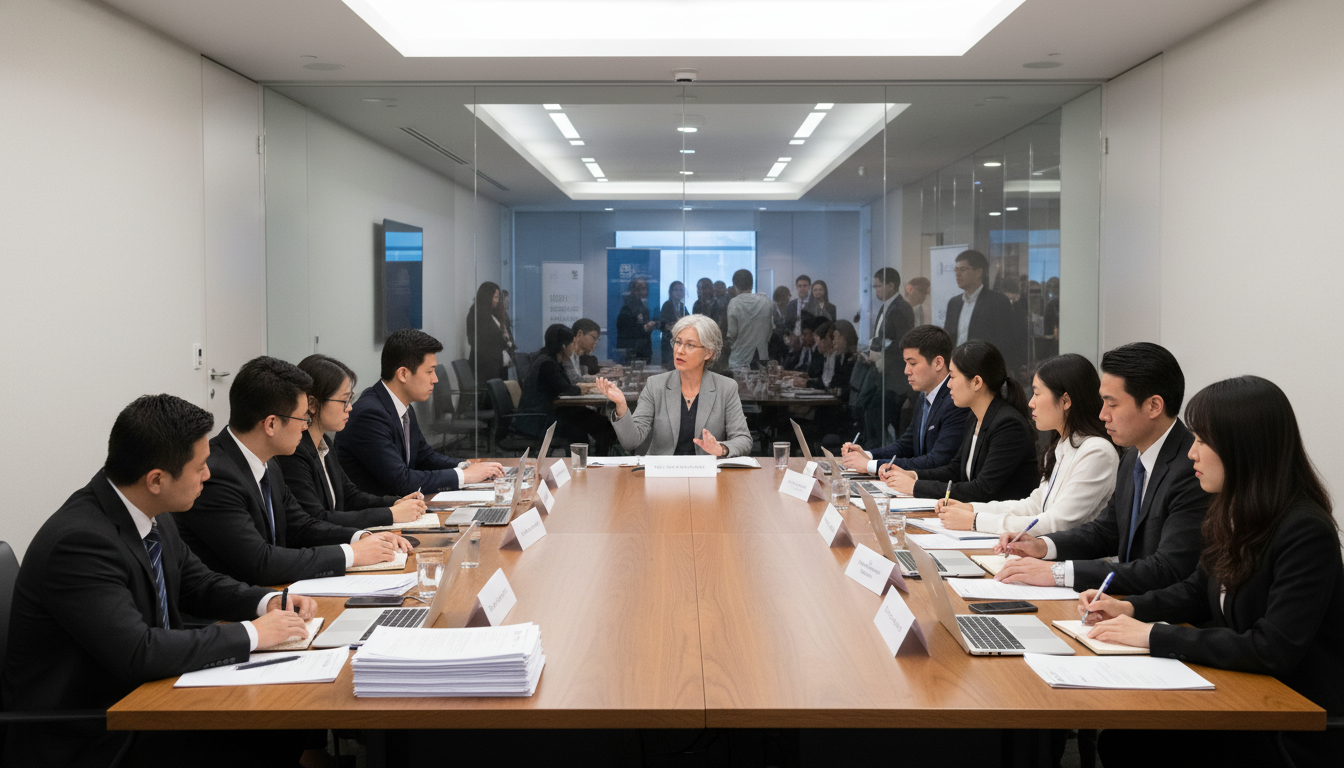
You’ll see big public advocacy sessions—“How to Lobby Congress,” “Physician Activism 101.” Those are entry points. But the real work happens in smaller, half‑hidden rooms with labels like:
- “Health Policy Action Group – Working Session (Limited Space)”
- “Gun Violence Task Force – Strategy (Pre‑registration Required)”
- “Reproductive Justice Caucus – Planning Meeting”
These are not just extra workshops. They’re internal control rooms where AMSA’s policy voice is actually written.
What really gets decided in those rooms
Here’s the part almost no attendee understands:
- National policy positions get shaped there before they ever hit a vote.
- The talking points AMSA uses with legislators get drafted there.
- Names of “go‑to” students for media quotes, op‑eds, or legislative testimony are generated there.
When a journalist asks AMSA, “Can we speak with a student leader about X?” they almost never blast an email to all conference attendees. They turn to the organizer of one of these working groups and say, “Who do we have?”
If you’re sitting in that room and you’ve already spoken up intelligently a few times, your name ends up in an email like:
“We have a brilliant M2 from New Mexico who can speak on rural health equity; she was instrumental in shaping our advocacy letter.”
You didn’t apply for that spotlight. You put yourself in the room where spotlights are chosen.
A concrete example from an AMSA national I attended as faculty:
- Public session: 300+ students at a plenary on “The Future of USMLE Step 1.”
- Closed‑door working group afterward: 12 students and 2 faculty in a tiny room finalizing AMSA’s official stance on the pass/fail transition and writing the framework for an open letter.
- Six months later: only 3 names were on that final letter as primary student leads. All three had been in that small room, had spoken up, and had followed through on edits.
Hundreds listened. A dozen wrote the policy. Three got the credit.
Room Type #3: Invite‑Only Dinners, Breakfasts, and “Roundtables”
The program calls them “Leadership Dinner,” “Dean’s Roundtable,” or “Partner Breakfast.” A few attendees get special invitations slipped into their schedules; everyone else sees only a mysterious “private event” room on the marquee.
These are pure leverage plays.
Who’s in the room and why it matters
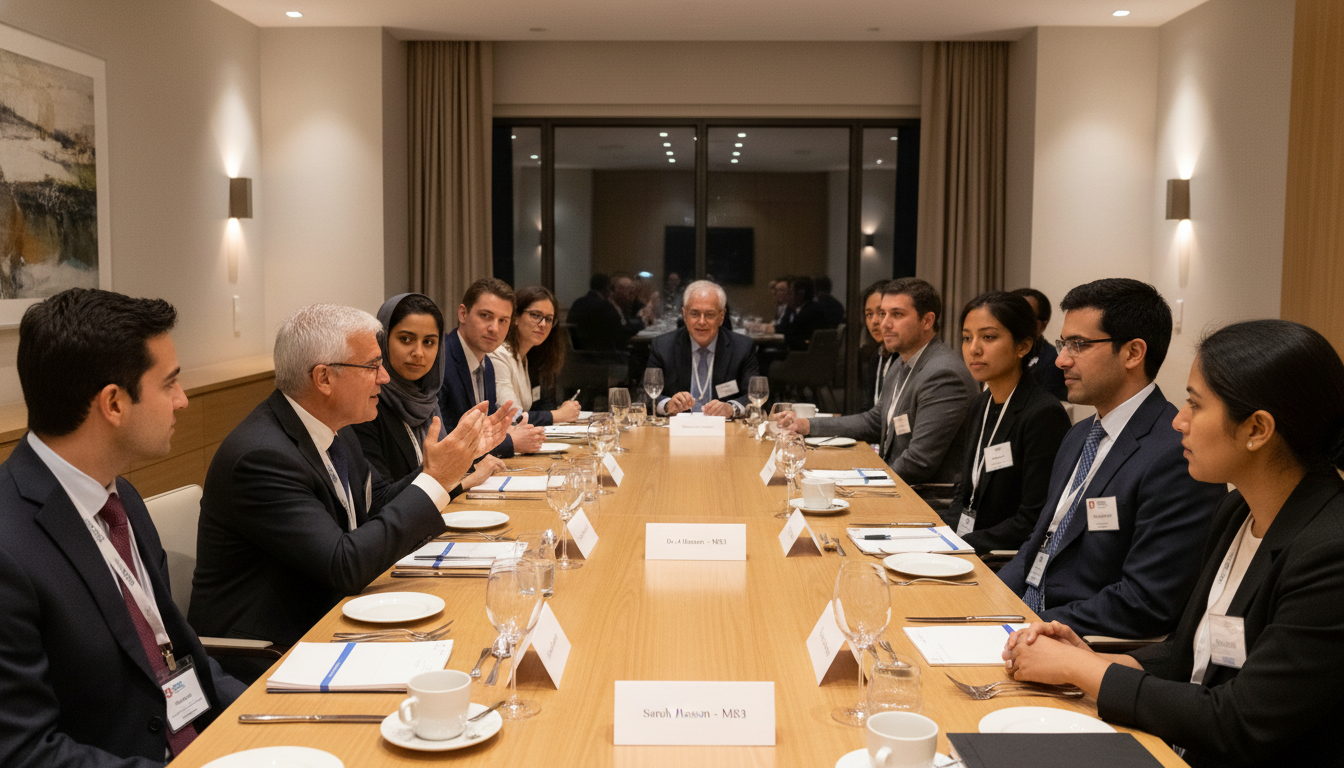
At those tables you’ll typically find:
- A small number of hand‑picked students (usually 8–20).
- One or more deans, residency program directors, or C‑suite level executives from partner organizations.
- Senior AMSA national leaders and staff.
The public narrative: “We’re fostering dialogue between students and leaders.”
The actual dynamics: It’s a screening and recruiting ground.
Program directors, institutional reps, and senior physicians are watching for:
- Who can speak clearly but not dominate.
- Who can disagree without being inflammatory.
- Who understands health policy or ethics beyond buzzwords.
- Who has a story that makes them memorable.
They’re mentally categorizing:
- “This is someone I’d trust on an institutional committee.”
- “This is someone I’d consider for a research year.”
- “This is someone I’d pass along to our diversity office / pipeline program.”
I’ve sat at those tables. Let me be blunt: people absolutely say things like:
“That M3 from UCSF? I want her on our quality improvement team next summer.”
“The DO student from Ohio—sharp kid, we should connect him with our advocacy office.”
Those opportunities never hit a listserv. They start as, “Send me an email after the conference; here’s my card.”
And here’s the uncomfortable truth: the student who gets invited to that dinner instead of you is often not “better” than you. They’re just better placed.
Who gets chosen?
- Students already in leadership positions (chapter or national).
- Students known personally to someone in AMSA staff or faculty.
- Occasionally, a standout from an earlier session who impressed a speaker enough that they said, “Can we squeeze her into tonight’s dinner?”
If you stay anonymous all weekend, no one fights to squeeze you into that room.
Room Type #4: “Student‑Only” Strategy and Gossip Rooms
Not every invite‑only space is faculty‑run. Some are very deliberately student‑only:
- National officer huddles
- Chapter president strategy meetings
- Candidate vetting rooms during elections
- Identity‑based caucus leadership sessions (LGBTQ+, IMG, URM, etc.)
These are the places where you see how student organizations really function beneath the mission statements.
What really happens among the “in crowd”
Let me strip away the politeness. Inside those rooms, you’ll see:
Raw political calculation
“If we support this candidate for national president, we’ll probably get better committee assignments next year.”
“We like her policies, but he’s better connected; which alliance gives us more leverage?”Informal blacklisting
Students who have been difficult, unreliable, or abrasive (sometimes for good reasons, sometimes not) get quietly sidelined. Phrases like “maybe we don’t put him as the face of this” or “she tends to go off‑message” end up shaping who gets high‑visibility roles.Narrative‑building
National leaders coordinate messaging: “Here’s how we’re going to talk about this to the general membership.” The big speeches you hear on the main stage? Often pre‑aligned in these smaller spaces so that nobody goes rogue.
For you, the premed or early medical student, this is crucial:
Your chapter president or regional director is sometimes deciding—for you—what AMSA will “mean” on your campus. They’re choosing a handful of initiatives and dropping others. They’re controlling which opportunities get forwarded to your inbox and which they quietly keep within a core group.
If you’re not in the room, you’re downstream from their strategy.
What All These Rooms Have in Common: Reputation Scoring
Across every type of invite‑only room at an AMSA conference, there’s a consistent undercurrent: quiet, ongoing reputation scoring.
People are watching, consciously or not, for the same few things:
Signal of seriousness
Not “are you perfect” but “are you actually doing the work?” Students who show up prepared, reference specific data, or ask pointed questions stand out fast.Reliability
Everyone in leadership has been burned by flakey volunteers. When you follow through on small tasks, your name goes into the mental “can trust” bucket.Temperament
Passion is good. Being combative, dismissive, or chronically negative? Not good. Especially in front of external partners.Story
A compelling personal story—rural background, non‑traditional path, lived experience with inequity—sticks in people’s heads. Those students are remembered later when someone asks, “Who should we showcase for this panel/op‑ed/media request?”
This isn’t formalized. There’s no spreadsheet. But ask any former national officer or long‑time faculty advisor privately and they’ll admit: within 24–48 hours of a conference starting, there’s already a short list of names people bring up when an opportunity pops up.
Your job is to get onto that list without being obnoxious.
How Students Actually Get Pulled Into These Rooms
Here’s the part you really care about: how do you move from the public conference to the invite‑only layer?
You do not wait for some mythical meritocracy to notice you. You make it almost irresponsible for them not to.
Step 1: Be very intentional with which public sessions you attend
Most attendees choose sessions based on topic curiosity. Insiders choose sessions partly based on who’s running them.
- Look for sessions led by national officers, long‑time AMSA advisors, or high‑level external partners.
- Show up early. Sit near the front. Ask one well‑thought‑out question that shows you did your homework.
You’re not trying to dominate. You’re trying to ping the radar of the person at the front of the room as “engaged, informed, and articulate.”
Step 2: Follow the speakers out of the room
After a session ends, watch who lingers. That’s where the real networking happens.
- Walk up.
- Introduce yourself with something concrete: “I’m a premed from X, I’ve been working on Y related to what you mentioned about Z.”
- Ask a targeted question or offer to help with something specific: “Do you need student reviewers for that advocacy toolkit you mentioned?”
If you handle this like a human being and not a scripted robot, you’ll be shocked how often you hear:
“Actually, we’re having a smaller follow‑up discussion later this afternoon; I can see if there’s room for you.”
That’s your entry into the next room.
Step 3: Volunteer for unsexy work on the spot
The surest way into the inner circle isn’t asking for a leadership title. It’s volunteering for real, concrete, mildly boring tasks.
In a policy working group you might say:
“I’m comfortable editing documents. If you need someone to clean up the draft or check references, I’m happy to help this evening.”
From the faculty/leader side, that’s catnip. They desperately need reliable hands.
Students who do these three things at their first AMSA conference often find themselves, within a year, sitting in:
- National committee Zoom calls
- Invite‑only strategy sessions
- Those partner dinners you didn’t know existed
The leap from attendee to insider is shorter than you think. Most people just never take the first step.

What This Means for Your Premed/Med School Trajectory
Let’s talk about why this matters for you beyond AMSA itself.
You’re in the “premed and medical school preparation” phase. You’re trying to stack your file with more than just grades and MCAT scores. Here’s how access to those invite‑only rooms can quietly tilt the playing field.
For Premeds
Letters that actually say something
A generic “This student attended our conference and was enthusiastic” letter is worthless.
A letter from an AMSA national leader or advisor who can write, “This student co‑led our national working group on X and consistently delivered under deadline” reads very differently at an admissions table.Concrete leadership narratives
Med schools read “President of AMSA chapter” thousands of times. They rarely see, “Selected by national AMSA leadership to sit on [named] advisory group that helped draft national policy positions on [hot button issue].”Early exposure to policy and systems‑level thinking
When you can talk, in an interview, about being in the room where a national student organization decided how to respond to Step 1 going pass/fail or reproductive rights legislation, you stop sounding like a template applicant.
For Medical Students
Residency application differentiation
PDs have seen “member of AMSA” forever. They perk up at “National chair for [topic] within AMSA” or “Student representative to [external organization] selected via AMSA leadership.”
Especially in competitive specialties, these roles can be the difference between “solid file” and “this one stands out.”Protected time with power brokers
That dean or PD at the invite‑only dinner? You’re not just networking. You’re doing a 90‑minute audition in a small group. Many of them will remember your name, especially if your background aligns with their institutional priorities (rural pipeline, URM recruitment, research focus, etc.).Real projects that produce outputs
Policy briefs, white papers, advocacy toolkits, published position statements—these often come out of those working groups. Getting your name on them requires being in the pipeline early.
The Dark Side: What You Need to Watch Out For
I’d be lying to you if I painted all invite‑only AMSA rooms as noble and fair.
You will see:
- Cliques that protect their own regardless of merit.
- Tokenism—URM or LGBTQ+ students invited just for optics, then sidelined in actual decision‑making.
- Emotional labor dumped disproportionately on certain students while others collect titles.
- Power posturing by students who like the politics more than the mission.
As you move closer to the inner circles, you need two parallel skills:
- Use the system strategically for your growth.
- Refuse to let the worst parts of the system turn you into something you’d dislike.
You’re allowed to walk out of a room that feels toxic. You’re allowed to say no to roles that are all work, no mentorship. You’re allowed to seek out people—faculty or peers—whose integrity matches their influence.
There are leaders within AMSA who care deeply about doing this right. They’re often the quieter ones, watching carefully, helping the right students into the right rooms without making a spectacle of it. Find them.
If You’re Going to an AMSA Conference Soon: Tactical Blueprint
If you’ve got an AMSA national or regional conference on your calendar, here’s a focused play you can run without turning into a political animal.
Before you go, identify 3–5 sessions where:
- the speaker is a national leader, long‑time advisor, or external big name; and
- the topic actually matters to you beyond a buzzword.
At those sessions:
- Sit toward the front.
- Ask one thoughtful question that references something specific (a paper, a policy, a prior AMSA action).
- Immediately afterward, introduce yourself to the speaker and exchange contact info.
Before the end of day 1:
- Attend at least one working group / caucus / task force session.
- Volunteer for a concrete task with a clear timeline.
In the evenings:
- Skip at least one generic social event.
- Use that block to follow up by email with any key person you met: “You mentioned X; I’d love to help with Y. I’m free [times] tomorrow if you’re doing any small-group follow‑up.”
You’re not trying to meet everyone. You’re trying to put yourself in the path of the few people who actually have the keys to those other rooms.
Years from now, you won’t remember which ballroom hosted the opening plenary or how many tote bags you collected. What will stick is whether you stayed in the audience or stepped into the spaces where decisions—and opportunities—were quietly being shaped.
The doors aren’t as locked as they look from the hallway. But you do have to walk up, knock once, and show you’re ready to be in the room.