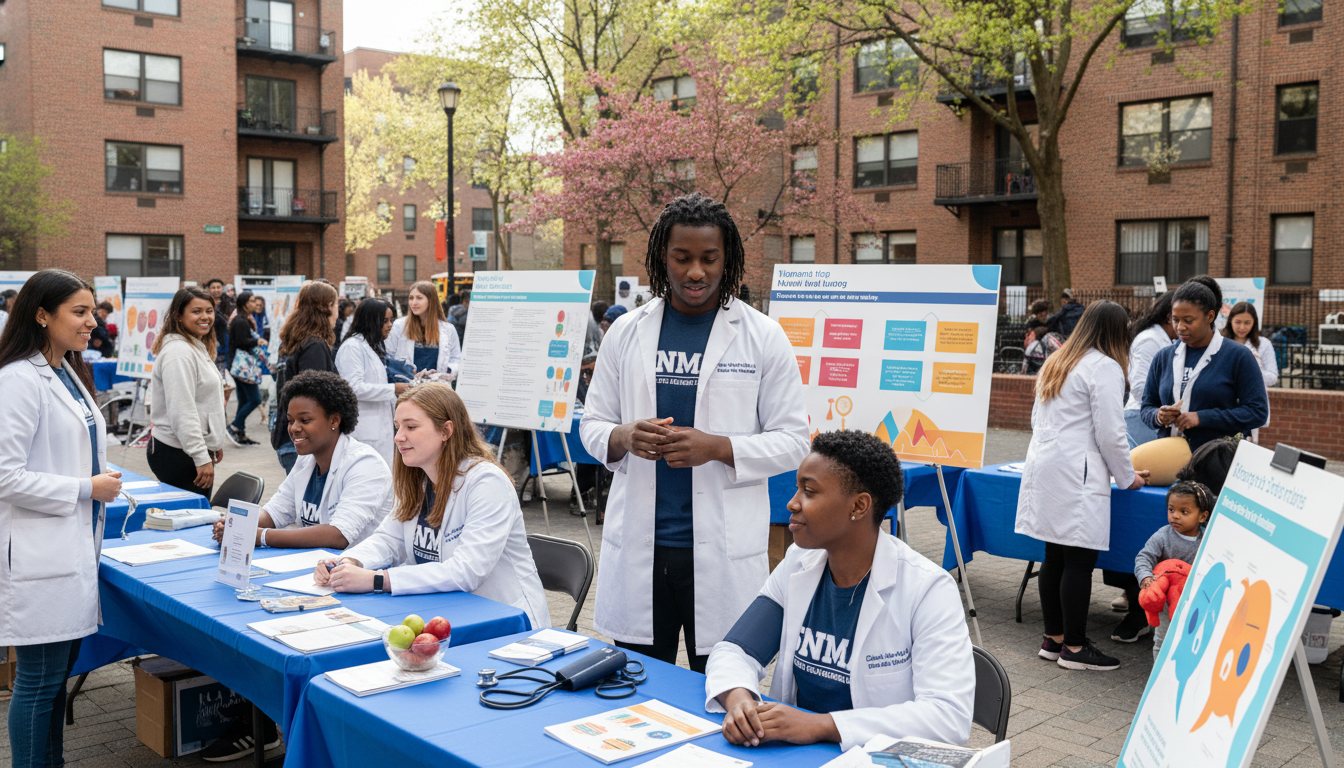
The biggest mistake premeds and early medical students make is trying to “fix” a weak service profile alone instead of plugging into powerful existing pipelines like SNMA.
If your service record is thin, scattered, or late-starting, you do not need a miracle. You need structure. SNMA pipeline and outreach programs provide exactly that structure—if you use them strategically.
This is not about padding a CV with random volunteering hours. It is about building a focused, credible service story that admissions committees recognize, respect, and remember.
(See also: How to Turn Basic SNMA Membership Into High‑Impact Leadership in 6 Months for more details.)
Below is a step-by-step repair plan: how to use SNMA and related pipeline programs to transform a weak service profile into a coherent, mission-driven narrative.
Step 1: Diagnose Your Actual Service Problem
Before you start signing up for every event, you must know what is broken.
Most “weak” service profiles fall into one or more of these categories:
Low total hours
- Less than:
- 50–75 hours of community service, and
- 50–100 hours of clinical exposure
- Very common in career changers, late-deciders, or heavy-research applicants.
- Less than:
Scattered and unfocused
- 10 different one-off events.
- No clear population served.
- Nothing that lasted more than a month or two.
Late engagement
- Almost no meaningful service before junior year of college.
- Everything crammed into the last 12–18 months before application.
No leadership or initiative
- You participated but never organized, led, or improved anything.
- Zero evidence that you can move a project from idea to execution.
No clear tie to your stated mission
- Your personal statement says you care about underserved communities, but:
- You have no outreach in those communities.
- No pipeline or mentoring.
- No social justice or health equity work.
- Your personal statement says you care about underserved communities, but:
Take 20 minutes and write this down:
- Current service hours (clinical, non-clinical, outreach).
- Activities with duration > 6 months.
- Any times you trained, organized, or supervised others.
- Populations you have actually served (by age, geography, or identity).
Then circle the weak spots. Your SNMA strategy will target those, not everything at once.
Step 2: Understand What SNMA Actually Offers (Pipeline + Outreach)
You cannot leverage a tool you do not understand.
SNMA (Student National Medical Association) is not just a “student club.” It is a national organization with:
Pipeline programs
Focused on exposing and guiding underrepresented and disadvantaged students into medical careers.Typical examples:
- MAPS (Minority Association of Pre-Medical Students) – the undergraduate / post-bacc arm.
- High school pipeline initiatives:
- HPREP (Health Professions Recruitment and Exposure Program)
- Youth science and medicine days
- Shadowing pipeline experiences
- College and post-bacc mentorship:
- Pre-med advising, MCAT panels, application workshops
-
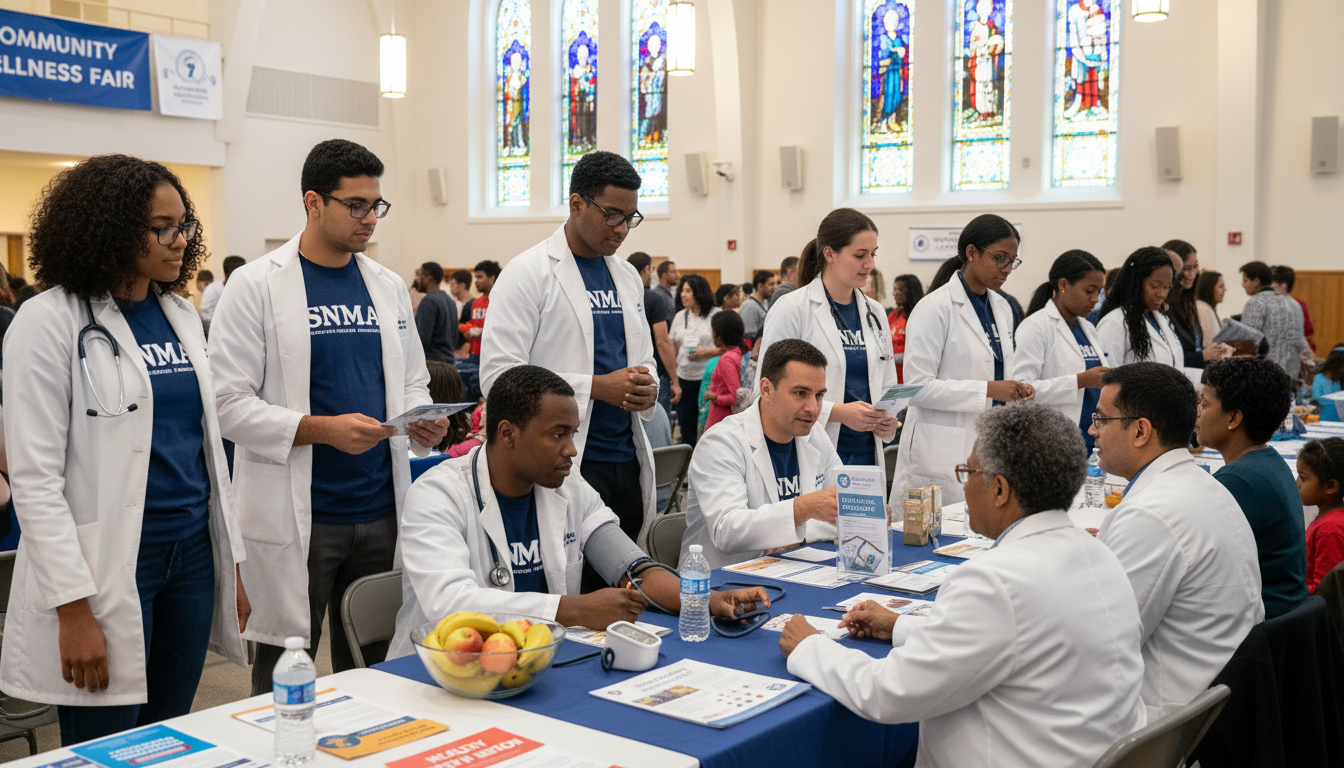
- Health fairs in underserved communities
- Blood pressure / glucose screenings
- Mental health awareness events
- Vaccine education drives
- School visits on nutrition, wellness, careers
National and regional structure
- Chapters (local)
- Regional leadership (officers, committees)
- National committees, task forces, and conference roles
Each of these is a service platform you are allowed to plug into. You can:
- Show up as a volunteer.
- Take on defined leadership roles.
- Create or strengthen a local program under an SNMA umbrella.
That is exactly how you repair a weak service record: by using existing infrastructure that already has credibility with admissions committees.
Step 3: Choose Your Service “Angle” Instead of Doing Everything
A strong service profile looks focused. Admissions readers should be able to sum it up in one short sentence:
- “She has a clear track record working with underserved Black youth through SNMA pipeline programs.”
- “He consistently helped run SNMA community health screenings in low-income neighborhoods and then moved into leadership.”
- “They built and sustained a mentorship bridge from their SNMA chapter to first-generation premeds on campus.”
To build that kind of clarity, pick one main angle and at most one secondary angle:
Pipeline & Mentoring Focus
- SNMA/MAPS activities involving:
- High school mentorship
- College student panels
- Application workshops
- Good if:
- You enjoy teaching and coaching.
- You are considering academic medicine or medical education.
- Your own story involves lack of guidance or role models.
- SNMA/MAPS activities involving:
Community Health Outreach Focus
- SNMA health fairs, screening events, vaccination drives.
- Good if:
- You like direct patient or community contact.
- You are drawn to primary care, emergency, or community medicine.
Equity & Advocacy Focus
- SNMA-led:
- Health disparities events
- Policy/advocacy campaigns
- Social justice town halls
- Good if:
- You care deeply about health equity, policy, structural issues.
- SNMA-led:
Academic & Pipeline Integration
- Mentoring plus academic support:
- MCAT prep groups
- Study skills workshops
- NBME/USMLE study mentorship for medical students
- Good if:
- You are strong academically and want to help others navigate.
- Mentoring plus academic support:
Select your main focus and use SNMA pipeline/outreach programs as the primary vehicle. That is how you avoid the “scattershot” problem.
Step 4: If You Are Premed – Use MAPS as Your Home Base
If you are premed, MAPS is your most powerful lever.
A. Join MAPS and Show Up Strategically
Do this in the next 2 weeks:
Find the MAPS chapter
- Check your school’s student organizations listing.
- If none exists, search the SNMA site for nearby MAPS chapters, or reach out to the regional SNMA director.
Attend the next 3 meetings or events
- Do not just drop in once and disappear.
- Introduce yourself to:
- MAPS president / VP
- SNMA liaison (if they have one)
- Faculty advisor if present
Ask one direct question:
“What are your current pipeline and outreach projects that need more hands or leadership?”
You are not looking for random volunteer hours. You are looking for ongoing programs that you can commit to for at least 6–12 months.
B. Embed Yourself in a Pipeline or Outreach Program
Examples of how this looks in practice:
High school pipeline program
- Weekly or biweekly visits to a local high school.
- Activities:
- Career talks, anatomy demos, health education, Q&A sessions.
- Your role:
- Consistent volunteer → session planner → site coordinator.
Campus-based premed mentoring
- Peer mentoring of first- and second-year premeds.
- Activities:
- Application workshops, study strategy nights, MCAT planning panels.
- Your role:
- Mentor → co-lead for mentorship committee.
Community health fairs with SNMA partners
- Joint events with local SNMA medical students.
- Activities:
- Vitals screening, health education booths, referrals.
- Your role:
- Volunteer → logistics coordinator for MAPS volunteers.
The key: pick one or two and show up regularly. Your profile improves not from the number of different projects, but from duration + impact.
C. Get to a Concrete Leadership Role Within 6–12 Months
Here is the leadership ladder you can intentionally climb:
Months 1–3: Reliable Volunteer
- Attend most events.
- Show up on time.
- Communicate clearly with organizers.
Months 3–6: Point Person for a Specific Task
- Example: manage sign-up sheets and follow-up emails for pipeline visits.
- Example: run reminder texts for outreach events.
Months 6–12: Official Position
- MAPS Outreach Chair, Pipeline Coordinator, Event Coordinator, or Vice President.
- Responsible for:
- Maintaining a recurring pipeline program.
- Leading a specific outreach initiative.
- Coordinating with the medical school SNMA chapter (if present).
Leadership roles through MAPS → SNMA are extremely valuable in application review because they show:
- Ownership.
- Longitudinal commitment.
- Ability to coordinate peers and influence a program, not just attend.
Step 5: If You Are a Medical Student – Plug into SNMA Chapter Infrastructure
If you are already in medical school and realize your premed service was weak or unfocused, you have not missed your chance. For MD/DO residency applications, your medical school record matters heavily.
A. Join SNMA Early (M1 or M2)
Within your first month/semester:
Identify the SNMA chapter
- Most US med schools have one.
- If not, you can:
- Help start one with faculty support.
- Join nearby regional events.
Attend the first 2–3 general body meetings
- Listen for:
- Pipeline programs with local high schools / colleges.
- Community service and health fairs.
- Mentorship programs (UG → med, or med → med).
- Listen for:
Introduce yourself to key officers
- Chapter president
- Community service chair
- Pipeline chair
- Parliamentarian or regional liaison
Ask the same question as a premed:
“What current pipeline or outreach efforts could use consistent help or new leadership?”
B. Choose One Pipeline and One Outreach Role
A strong med school SNMA-based service profile might look like:
Pipeline role
- Help run an HPREP or similar program:
- M1: Volunteer small-group leader.
- M2: Curriculum coordinator or co-director.
- Responsibilities:
- Designing sessions on anatomy, vital signs, careers.
- Recruiting and training other medical student volunteers.
- Coordinating with local schools or community centers.
- Help run an HPREP or similar program:
Outreach role
- Join SNMA health committee:
- M1: Health fair volunteer (do vitals, counsel under faculty supervision).
- M2: Site lead or logistics coordinator for one outreach event per semester.
- Responsibilities:
- Partnering with local churches, community centers, shelters.
- Building educational materials (hypertension, diabetes, vaccines).
- Join SNMA health committee:
If your premed service history was weak, aim for 1–2 years of visible, high-commitment SNMA work in medical school. This will significantly strengthen:
- Your residency applications.
- Scholarship applications.
- Leadership and service awards.
Step 6: Converting “Participation” into Real Impact
Simply attending SNMA events will not fix a weak profile. You must turn activity into impact.
Here is a concrete framework:
A. Think in Terms of “Before → After”
For each SNMA or MAPS initiative you join, ask:
- What did this program look like before I got involved?
- What problems did it have?
- Low attendance?
- Poor communication?
- No evaluation of outcomes?
- What does it look like after my contributions?
Then choose one area to improve.
Examples:
Problem: Low attendance at pipeline events
- Your intervention:
- Created a text reminder system.
- Partnered with school counselors/teachers.
- Result:
- Average weekly attendance increased from 8 to 20 students.
- Your intervention:
Problem: Disorganized community health fair workflow
- Your intervention:
- Implemented a station-based flow with check-in, vitals, education, and exit.
- Created laminated step-by-step guidances for volunteers.
- Result:
- Number of residents fully screened per event increased by 40%.
- Your intervention:
Problem: Volunteers felt unprepared
- Your intervention:
- Developed a 30-minute pre-event training on cultural humility and communication.
- Result:
- Qualitative feedback from community partners improved; more returning volunteers.
- Your intervention:
Those are impact stories that can be described clearly in your application.
B. Track Your Work Like Data
Keep a simple running log for each SNMA/MAPS activity:
- Event name / program name
- Date and hours
- Your role (volunteer, coordinator, chair)
- Approximate number of people served
- One key outcome or improvement
This accomplishes three things:
- Accurate hours for AMCAS/AACOMAS/ERAS.
- Specific stories for interviews.
- Evidence of growth from volunteer → leader → change agent.
Step 7: Fixing Specific Weaknesses with Targeted SNMA Strategies
Match your earlier diagnosis to targeted actions.
Problem 1: Low Total Service Hours
Goal: Build 100–150+ hours over 12–18 months, with clear themes.
SNMA Strategy:
- Commit to:
- 1 recurring pipeline program (weekly or biweekly) → 40–80 hours in a year.
- 1 recurring outreach event (monthly or quarterly) → 20–40 hours.
- Conference planning or committee work if available → 20–40 hours.
Schedule example for a premed starting late (3 semesters before applying):
Semester 1:
- Join MAPS.
- Begin weekly high school pipeline program (2 hours/week × 10 weeks = 20 hours).
- Volunteer at 2 health fairs (4 hours each = 8 hours).
Semester 2:
- Continue pipeline program (25–30 hours).
- Take small leadership role (co-lead planning for 2 sessions).
- 1–2 outreach events (8 hours).
Summer:
- Increase involvement:
- Help coordinate a summer health careers camp (40–60 hours).
- Shadowing or clinical volunteering on off days.
- Increase involvement:
Within 12 months, you have >100 hours that are coherent and impactful.
Problem 2: Scattered, Random Volunteering
Goal: Build a unified story around one core population or mission.
SNMA Strategy:
Pick one focal population that SNMA heavily serves:
- Black and other underrepresented minority youth.
- Residents of underserved urban or rural neighborhoods.
- First-generation and low-income premeds.
Use SNMA or MAPS programs that match:
- HPREP or high school outreach → URM youth.
- Church/community center health fairs → underserved neighborhoods.
- Premed mentorship programs → first-generation college students.
Over 1–2 years, concentrate 70–80% of your service on that lane.
Then when you write your application:
- Activities, personal statement, and interview answers becomes aligned:
- “Through my work with SNMA pipeline programs, I have spent the last two years engaging Black and Latinx high school students in exploring medicine and understanding health disparities.”
Problem 3: No Leadership or Initiative
Goal: Demonstrate ownership and leadership through SNMA roles.
SNMA Strategy:
Year 1: High-performing volunteer
- Document reliability and initiative.
- Ask explicit feedback from current officers:
- “How can I be more helpful to this program?”
End of Year 1: Apply for a position
- Specific offices that show leadership without consuming your life:
- Pipeline Chair / Co-chair
- Community Service Chair
- MAPS Liaison (if premed)
- Event Coordinator
- Specific offices that show leadership without consuming your life:
Year 2: Lead one program start-to-finish
- Plan timeline, logistics, outreach, evaluation.
- Train younger volunteers.
- Pass the program on with a binder or detailed handoff.
Residents and admissions committee members recognize SNMA leadership. It signals that you were trusted by peers and faculty.
Problem 4: Late Start in Service
Goal: Show rapid, credible growth and deep commitment despite starting late.
SNMA Strategy:
Be transparent with yourself:
- You cannot rewrite freshman or sophomore year.
- You can demonstrate maturity + urgency in the last 1–2 years before application.
Go all-in on 1–2 SNMA/MAPS programs:
- Minimum of 6–12 months duration.
- Avoid one-off service days that do not build a narrative.
Pair your efforts with reflection:
- Keep short monthly notes:
- “What surprised me this month?”
- “What did I learn about barriers to care?”
- “What did I change in my approach?”
- Keep short monthly notes:
In essays and interviews, you frame the late start as:
- Awareness → course correction → sustained action through SNMA channels.
Step 8: Use Conferences and Regional Events Strategically
SNMA and MAPS regional and national conferences are not just networking parties. They are accelerators for your service profile.
Here is how to extract real value:
Attend at least one regional or national SNMA conference (or MAPS regional conference if premed)
- Before you go:
- Identify sessions on pipeline, outreach, and leadership.
- Make a list of 3–5 people or chapters you want to learn from.
- Before you go:
In sessions about pipeline/outreach, take practical notes
- Program structures that work.
- Funding models.
- Curriculum ideas.
- Evaluation strategies.
After the conference, implement one concrete improvement
- Add a new session type to your pipeline program.
- Adopt a sign-in tracking strategy from another chapter.
- Start a small pilot event based on another chapter’s model.
Optional but powerful: Present your work
- Submit a poster or short talk on:
- “Outcomes of our SNMA high school pipeline program.”
- “Lessons learned from building a premed mentorship bridge.”
- This shows deeper engagement and gives you measurable outcomes for your CV.
- Submit a poster or short talk on:
Step 9: Translate SNMA Work Into Application Language
All this service only matters if you describe it well.
A. Activity Descriptions (AMCAS / AACOMAS / ERAS)
For a major SNMA/MAPS activity, your description should include:
Scope
- Number of events.
- Frequency (weekly, monthly).
- Number of participants/people served.
Your role
- Titles, but also specific responsibilities:
- “Coordinated 20 volunteers.”
- “Designed curriculum for 6-session pipeline series.”
- Titles, but also specific responsibilities:
Impact
- “Increased attendance by X%.”
- “Expanded program from one to two schools.”
- “Served ~150 community members annually.”
Reflection (1–2 sentences)
- What you learned about:
- Access to care.
- Structural barriers.
- Communication across cultures or ages.
- What you learned about:
Example (for a “Most Meaningful” activity):
As SNMA Pipeline Chair, I led a 10-session health careers program for 25 Black and Latinx high school students at an under-resourced urban school. I coordinated 18 medical student volunteers, developed interactive lessons on blood pressure, diabetes, and college preparation, and partnered with school counselors to ensure consistent student attendance. Over two years, we expanded from one to two schools and maintained an 80% retention rate. Working with students who had never previously met a physician forced me to confront how deeply access, representation, and structural inequities shape who believes medicine is “for them.”
B. Personal Statement and Secondary Essays
If you are using SNMA pipeline/outreach to fix a weak profile, do not hide that growth. Instead:
- Acknowledge where you started.
- Highlight the turning point.
- Show sustained, SNMA-based action.
Example angle:
- You realized your previous volunteering was superficial.
- SNMA pipelines exposed you to real structural barriers.
- You committed to a multi-year program and took leadership.
- That experience reshaped your view of medicine and your career goals.
Admissions committees are not looking for perfection. They are looking for trajectory. SNMA gives you the structure to demonstrate that trajectory authentically.

Step 10: Concrete 6–12 Month Action Plan
To make this truly actionable, here is a sample 12-month turnaround plan for a premed with a weak service profile who has 1.5 years before application:
Months 1–2
- Join MAPS and attend 3 meetings.
- Volunteer at 2 SNMA/MAPS-supported outreach events (health fairs, workshops).
- Identify one pipeline program and commit to attending every session.
Months 3–6
- Become a reliable weekly or biweekly volunteer in that pipeline program.
- Start tracking hours and outcomes.
- Ask leadership how you can help with planning or communication.
- Attend a regional SNMA/MAPS conference if possible.
Months 7–9
- Take on a defined role:
- Session planner.
- Volunteer coordinator.
- Communication lead with community partners.
- Co-lead an outreach event with SNMA partners.
- Begin drafting activity descriptions as you go (do not wait until the end).
Months 10–12
- Run at least one session or event as primary lead under supervision.
- Apply for an official MAPS officer role for next academic year.
- Identify one measurable improvement you have implemented and document it.
At the end of 12 months, your profile will show:
- 80–150+ hours of coherent service.
- Longitudinal commitment to a specific community.
- Growing leadership and impact.
- Integration into a respected national organization.
That is a very different picture than “weak, late, random volunteering.”
Common Pitfalls When Using SNMA to Fix Your Profile (and How to Avoid Them)
Overcommitting to too many roles
- Fix: Cap yourself at:
- 1 pipeline program, and
- 1 outreach focus, and
- At most 1 leadership role at a time.
- Depth wins over breadth.
- Fix: Cap yourself at:
Treating SNMA like a social club
- SNMA has a social component, but do not let that be your primary engagement.
- Fix: Prioritize project meetings, pipeline sessions, and outreach planning.
Not aligning SNMA work with your story
- Example: You claim interest in rural health but only do urban pipelines.
- Fix: Seek out events and partnerships that match your stated interests.
Waiting for someone to invite you into leadership
- Fix: After several months of consistent volunteering, explicitly ask:
- “I would like to take on more responsibility. Where is there a gap I can help fill?”
- Fix: After several months of consistent volunteering, explicitly ask:
Failing to hand programs off
- Fix: If you start or transform something, write:
- A clear set of documents.
- A simple handbook for the next person.
- Passing on sustainable work shows real leadership maturity.
- Fix: If you start or transform something, write:

The Bottom Line
Three key points:
You do not need perfect early service; you need a clear trajectory. SNMA pipeline and outreach programs give you a ready-made structure to demonstrate growth, commitment, and leadership.
Depth beats breadth every time. One or two long-term SNMA or MAPS initiatives—especially with leadership and measurable impact—will repair a scattered or thin service profile far more effectively than 15 unrelated activities.
Translate the work into language admissions committees understand. Track your hours, roles, and outcomes; then write about them as coherent stories of impact, reflection, and alignment with your mission in medicine.
Use SNMA not as a checkbox, but as your primary vehicle for meaningful, sustained service. That is how you actually fix a weak service profile.