
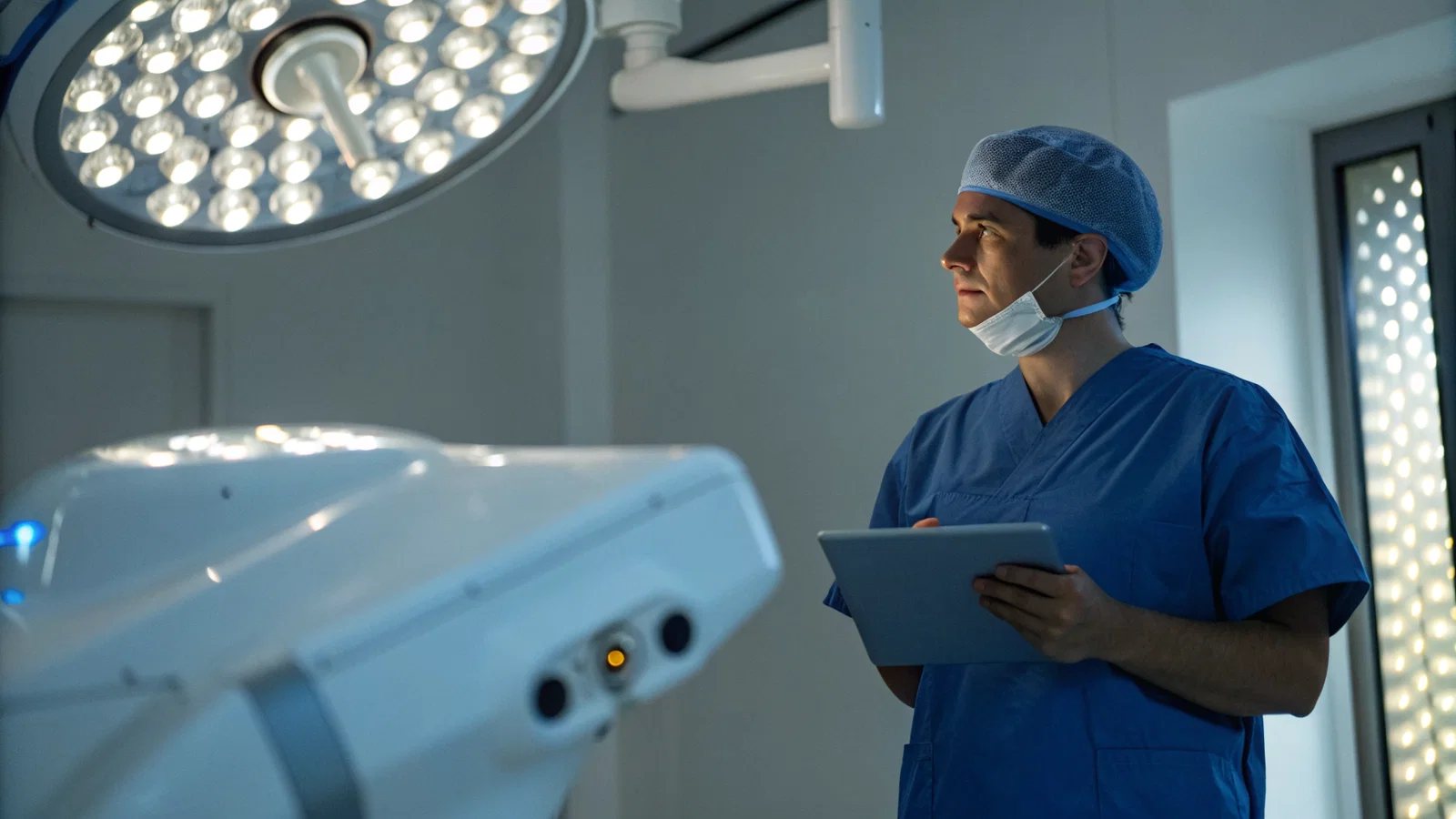
You looked at your robotic log and felt your stomach drop. Too many bedside assists. Not enough console. That feeling is useful. It means you noticed the problem early enough to fix it.
I've seen this exact mid-residency moment. The resident who thought, "I'm around the robot all the time, so I must be progressing," then finally separates the numbers and realizes they've been the world's most reliable trocar placer, camera defogger, and arm untangler, but not the primary console surgeon often enough. That's not a harmless bookkeeping issue. If you let it drift, it turns into a credibility issue by fellowship interview season and a confidence issue by chief year.
The good news: bedside assisting is not wasted time. Far from it. But if your case log is lopsided, you need to act like it's a clinical problem. Assess it. Escalate it. Build a plan. Then execute.
This article is for educational purposes only. It is not financial advice, not legal advice, and not tax advice. Figures vary by individual circumstances, so consult a qualified professional before acting.
The Mid-Residency Reality Check: When Your Console Time Falls Short
First, stop speaking in vague feelings. "I think I'm behind" is useless. Pull the data.
Break your robotic experience into three separate buckets:
- Console surgeon time
- Bedside assisting
- Observation or non-primary participation
Do not lump them together. Programs sometimes do this casually in conversation, and residents do it even more. Bad habit. Fellowship directors and employers care about what you actually did, not your proximity to a robot.
Start with a clean spreadsheet. By service, attending, procedure type, and role. If your program tracks surgeon console segments or percentage of key steps performed, include that too. You want to know:
- How many total robotic cases you've been in
- How many of those included any console time
- How many had meaningful console time versus token time
- Which attendings actually let residents drive
- Which rotations are dead ends for console access
Then compare your numbers against reality, not wishful thinking:
- Your program's internal expectations
- Senior residents' case trajectories
- Specialty board minimums or graduation standards
- What recent fellowship matches from your program looked like
This is the part where people get sloppy. They say, "Well, I've done 60 robotic cases." Fine. But if 48 were bedside, 8 were partial-console, and 4 were mostly observation, that's a different story than "60 robotic cases" suggests. Don't oversell it to yourself. That's how people stay stuck.
Also, learn how your audience reads these numbers. Fellowship directors are not idiots. They know bedside assisting matters. They also know bedside-heavy logs can mean one of three things:
- your program protects attending efficiency over resident autonomy,
- you haven't earned trust yet,
- nobody noticed the imbalance and corrected it.
Only one of those reflects well on you, and even then, you need to show you responded intelligently.
Bedside ratios matter because they hint at readiness. A resident with substantial bedside experience often understands setup, docking, troubleshooting, emergency undocking, and flow better than someone who only touched the console in cherry-picked moments. That's real value. But if your console numbers stay weak, nobody is going to pretend bedside skill alone equals independent operative judgment. It doesn't.
Be honest about where you are. If you're mid-residency and light on console, that's a warning. If you're late in training and still mostly bedside, that's a systems problem you must force into the open.
Immediate Triage: Mapping a Conversation with Your Program Director
This is not the time to vent in the resident lounge. Go to the person who can change the schedule.
Before you schedule the meeting, prepare your logbook data so it's impossible to ignore. One page if you can manage it. Clean. Simple. Useful. Include:
- Total robotic cases to date
- Console cases to date
- Bedside cases to date
- Percentage of robotic exposure that is console versus bedside
- Comparison to expected trajectory for your PGY level
- Specific rotations or faculty where console opportunities are limited or stronger
Don't bring a mess of screenshots from your case logger. That's amateur hour.
Then schedule a real meeting with your Program Director, not a hallway ambush after M&M. Subject line can be simple: "Review of robotic operative progression and plan to meet milestones." That framing matters. You are not asking for favors. You are asking for training.
In the meeting, don't complain. Complaint language sounds like this:
- "I never get a chance."
- "Other people get better cases."
- "That attending won't let residents do anything."
Even if all of that is true, it lands badly.
Use milestone language instead:
- "I reviewed my robotic log and my console progression is behind where it should be for independent readiness."
- "I'd like to build a targeted plan for the next quarter."
- "I'm looking for structured opportunities to complete key steps and increase console responsibility."
That gets respect.
Then ask for measurable changes. Not vague reassurance. Not "we'll keep an eye on it." That phrase kills careers slowly.
Ask for specifics such as:
- assignment to attending surgeons with a track record of graduated autonomy,
- planned participation in defined case types where you can do certain portions consistently,
- protected simulator access with faculty review,
- rotation adjustments if you're trapped on a service with low resident console use.
And set actual targets for the next 8 to 12 weeks. For example:
- perform docking plus at least one key console portion in X number of cases,
- complete specific procedural steps in recurrent cases,
- increase console participation from, say, 20% of robotic exposure to 40%.
You need benchmarks that can be checked later. Otherwise everyone leaves the meeting feeling supportive and nothing changes. I've watched that movie. Bad ending.
After the meeting, send a short follow-up email summarizing the plan. Not because you're being bureaucratic. Because memory gets fuzzy and schedules get political. A written plan protects you.
Maximizing Bedside Assisting: Turning Retraction into Console Prep
Here's the truth residents don't like hearing: if you're mediocre at the bedside, many attendings will never trust you at the console. They shouldn't.
The bedside assistant is not a warm body standing near the patient. It's the person preventing chaos. If you're slow with exchanges, weak on exposure, late to recognize arm collision risk, or casual about tension on tissue, the attending's brain is busy babysitting. Nobody hands the console to a babysitting project.
So if bedside is your current role, dominate it.
That means:
- ports placed thoughtfully, not mechanically,
- docking efficient and calm,
- instrument exchanges crisp,
- camera issues fixed before anyone has to ask twice,
- smoke evacuation, suction, clip passing, stapler coordination all predictable,
- emergency undocking steps memorized cold.
I've seen residents earn console time because they made the entire robotic room smoother. I've also seen residents lose console time because they treated bedside work like punishment. Attendings can feel that attitude immediately.
Learn the failure points before they happen. For example:
- If the camera fogs repeatedly, know whether it's temperature, condensation, smearing, or poor handling.
- If the robotic arms are clashing, understand whether the problem is port spacing, targeting, external arm angle, or sloppy bedside positioning.
- If exposure is poor, don't just retract harder. Figure out the plane the console surgeon is trying to create.
That last point matters. Bedside assisting can teach operative judgment if you use it correctly. Don't watch the screen passively. Study the dissection planes. Ask yourself:
- Where is the attending entering the tissue?
- What tension are they relying on?
- Which structure are they protecting before the next move?
- Why did they switch instruments there?
That mental rehearsal translates directly to the console.
A resident who has seen 40 bedside dissections with active analysis is often better prepared than the resident who got random, low-value console minutes without understanding the operation. Bedside can become elite preparation if you stop treating it like a consolation prize.
Also, build trust intentionally. Before the case, ask focused questions:
- "If exposure is good and docking goes smoothly, is there a step you'd like me to do at the console today?"
- "Would it help if I reviewed the posterior plane and key landmarks before we start?"
That sounds prepared, not entitled. Big difference.
And when you do get a few console minutes, don't waste them showing off. Be controlled. Safe. Efficient. Attendings extend autonomy to residents who make them less nervous, not residents trying to prove they're secretly a superstar.
Advanced Tactics: Securing Off-Hours Simulation and Proctoring
If live console time is limited, the sim lab is not optional. It's your patch cable. Use it.
Most institutions with a robotic platform have underused dry labs or console simulators sitting idle in the evenings. The problem is not availability. The problem is resident inertia. People say they're desperate for console experience, then somehow disappear when the lab is open at 7 p.m. Don't be that resident.
Book recurring sessions. Weekly. Put them on your calendar like clinic or call. Practice:
- camera control,
- clutching and economy of motion,
- fourth arm coordination,
- needle driving,
- energy control,
- task switching under time pressure.
Simulation won't replace live tissue handling, but it absolutely sharpens the mechanics that make attendings comfortable letting you do more in real cases.
Also, know your board and program rules. Simulator hours usually do not count toward primary live case minimums. Fine. Log them anyway where permitted by your institution. They still matter for internal evaluations, remediation plans, and evidence that you took the deficit seriously instead of whining about it.
One of the smartest moves I've seen is partnering with senior residents or co-residents strategically. If you're efficient and trustworthy, people will trade with you. You cover bedside tasks smoothly, help the room run on time, and in return they flag you for a console portion in the next suitable case or help get you into sim sessions with feedback. This has to be ethical and transparent within program norms. No weird backroom deals. Just professional reciprocity.
Better yet, find faculty or a chief who will actually proctor you. Not generic "good job" feedback. Real feedback:
- your wrist articulation is excessive,
- your camera horizon drifts,
- your left hand is lazy,
- your movements are safe but inefficient,
- your traction is inconsistent.
That kind of critique accelerates learning fast.
And yes, self-study still matters. Review procedure videos, annotate steps, and learn the anatomy from the console view, not just the textbook open view. A surprising number of residents know the operation conceptually but freeze when the perspective rotates and landmarks look unfamiliar. That's fixable.
Reframing Your CV: How to Highlight Bedside Expertise Without Hiding Deficits
Do not lie. Do not blur categories. Do not make your robotic experience sound more console-heavy than it is. That's a dumb short-term play, and it collapses the minute someone asks detailed questions.
What you should do is present bedside-heavy experience as what it actually is: serious robotic team expertise with a growth trajectory that you actively corrected.
On a CV or fellowship application, emphasize:
- robotic case volume by official role categories,
- patient-side cart setup and troubleshooting,
- docking and emergency undocking competence,
- management of instrument exchanges, camera issues, and workflow,
- participation in a structured console progression plan,
- simulator curriculum completion or proficiency milestones.
That's honest and strong.
A good application bullet sounds like:
- Extensive robotic patient-side experience including docking, port optimization, instrument exchange coordination, camera troubleshooting, and emergency undocking across high-volume pelvic and foregut cases.
Another:
- Developed targeted console progression plan with program leadership; increased resident console participation through simulation practice and stepwise operative autonomy.
That tells the truth while showing maturity. You recognized a gap and fixed it. That plays well.
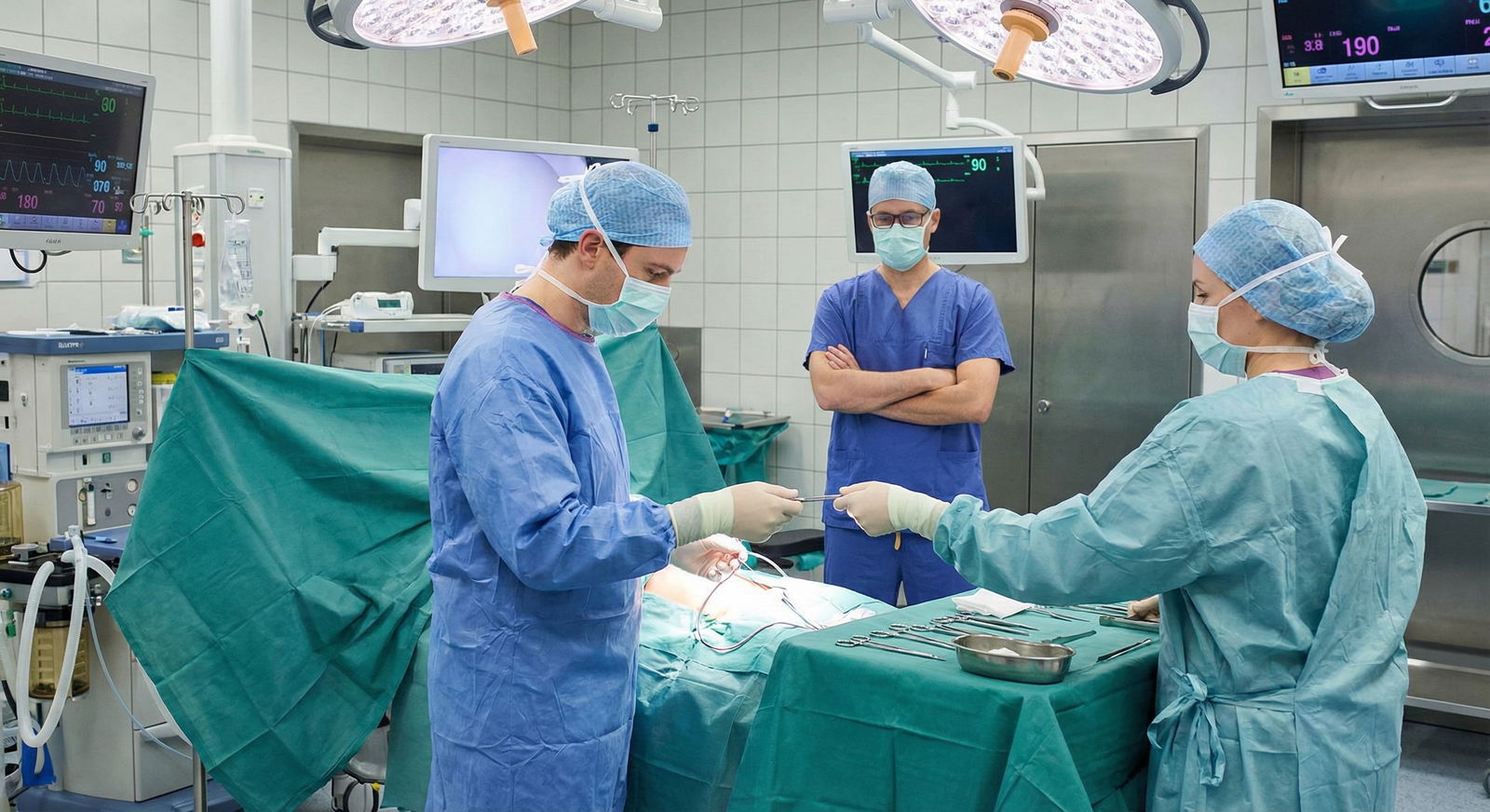
For interviews, prepare a clean narrative. You want about 30 to 45 seconds, not a rambling apology.
Try this structure:
- state the early imbalance,
- explain what you did,
- show the result.
For example: "Early in residency, my robotic exposure skewed heavily toward bedside assisting, which gave me strong experience in docking, troubleshooting, and understanding case flow. Midway through training I audited my logs, recognized I needed more structured console progression, and worked with my PD and key faculty on specific goals. Since then I've increased my console participation in defined steps of recurrent cases and built my skills through scheduled simulator practice."
That answer works because it sounds adult. No blame. No self-pity. Just assessment and action.
And if somebody presses on whether bedside-heavy experience is a weakness? Say yes, but finish the sentence. "It was a weakness in my operative distribution, so I addressed it directly." That's strong. Owning a fixable problem is far better than pretending it wasn't one.
The bigger point: your story is not "I got stuck at the bedside." Your story is "I learned the robotic platform from the ground up and then deliberately built console readiness." That's believable. Because it's true.
If your log is robotic in name but mostly bedside in reality, don't sulk and don't spin. Audit it this week. Meet with your PD. Ask for measurable goals. Crush the bedside role while you earn trust. Use the sim lab hard. Then tell the story honestly.
That's how you course-correct. Start now, before your case log becomes your excuse.


