Understanding Case Volume in Interventional Radiology for US Citizen IMGs
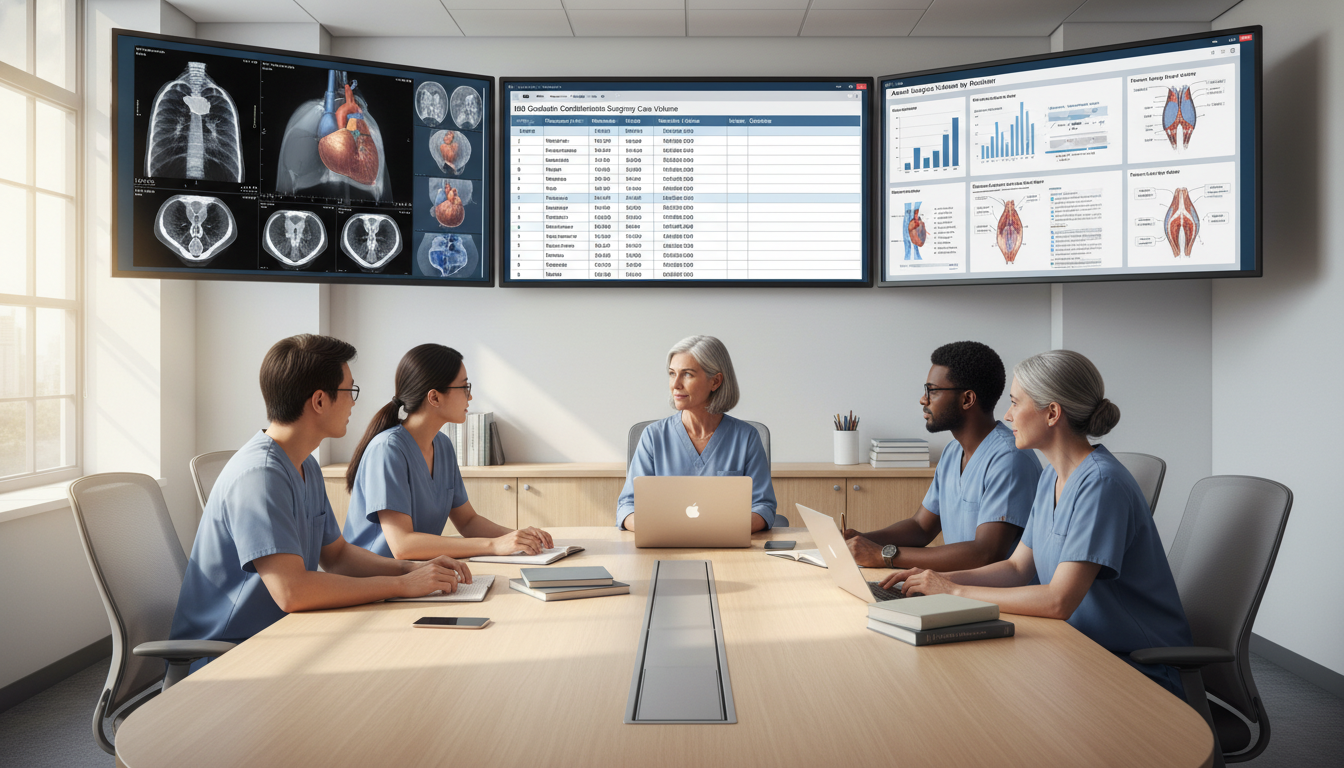
For a US citizen IMG or an American studying abroad, interventional radiology (IR) can feel like a “black box” compared to other specialties. You know it’s competitive, procedural, and rapidly evolving—but what does “enough case volume” actually mean for an interventional radiology residency? How do programs think about surgical volume, procedure numbers, and case mix when they evaluate applicants and build their training environments?
This article breaks down interventional radiology case volume from two angles that matter most to you as a US citizen IMG:
- How programs evaluate and structure case volume (what they’re proud to show off to you)
- How you should evaluate case volume as you build your IR application strategy and rank list
Throughout, the focus is on practical guidance tailored to US citizen IMGs trying to navigate an already competitive IR match.
1. Why Case Volume Matters So Much in Interventional Radiology
Interventional radiology is a procedural and image-guided surgical specialty. While IR isn’t “surgery” in the traditional open-surgery sense, it parallels other surgical fields in how much the residency case volume, procedure diversity, and hands-on autonomy shape your competence and your career.
1.1 Case Volume as the Core of IR Training
In IR, you do not become independent just by reading about procedures. You must:
- Perform hundreds to thousands of procedures
- See complications and how to manage them
- Gain pattern recognition for anatomy and pathology under fluoroscopy, ultrasound, and CT guidance
- Build the physical skills: wire and catheter manipulation, needle targeting, device deployment
Residency case volume directly feeds all of these.
Program directors know this. They are held accountable by:
- ABR (American Board of Radiology) training requirements
- ACGME procedural and curriculum standards
- The expectations of employers and fellowship directors who will assess whether their graduates are “safe and ready”
So when you see a strong IR residency program, there is almost always robust procedural volume underneath the surface.
1.2 Why Case Volume is Especially Critical for US Citizen IMGs
As a US citizen IMG (or American studying abroad), you face two extra layers of scrutiny in the IR match:
- Competitiveness of IR: Integrated interventional radiology residencies are among the most competitive specialties. Many programs receive hundreds of applications for just a few spots.
- Bias and risk perception: Some programs—consciously or not—view IMGs as a “riskier” choice. When they do choose an IMG, they want clear evidence of:
- Academic excellence
- Strong clinical skills
- Demonstrated interest and commitment
- Ability to handle procedural training and high workload
Case volume comes into play in several ways:
- Your own exposure and experience:
Programs want to see that you understand what the day-to-day of IR looks like and have some meaningful exposure to procedures. - Program environment you choose:
As an IMG, you cannot afford to land in a low-volume, low-autonomy setting and then “just hope” you’ll be competitive as a graduate. You must be strategic about where you train.
Instead of asking “Is this a big-name program?”, start asking:
“Will this program give me the case volume and case mix I need to become an independent IR, and to overcome initial IMG bias in the job market?”
2. What “Good” IR Case Volume Looks Like in Residency
There is no single magic number (like “exactly 1,000 procedures”) that defines the perfect IR residency case volume, but there are realistic ranges and benchmarks you should understand.
2.1 Minimum Benchmarks vs. Competitive Benchmarks
Minimum benchmarks are essentially floor requirements—if a program doesn’t meet them, it risks accreditation issues. Competitive benchmarks are what serious IR trainees and educators aim for.
Some reference points commonly discussed in the field:
- Total IR procedures by graduation (PGY-2 to PGY-6)
- Minimum “reasonable” exposure: ~1,000 procedures
- Strong training environments: 1,500–2,500+ total cases
- Annual IR volume per resident on IR rotations (upper years)
- 250–400+ procedures per core IR year is common in busy centers
- Often more when you include call cases and after-hours emergencies
Remember:
- These are ballpark ranges, not official quotas.
- Programs sometimes quote service volume (total cases done in the department) rather than resident case volume (what residents actually perform). Learn to distinguish the two.
2.2 Case Mix: Not Just “How Many,” but “What Kinds”
A resident who logs 2,000+ procedures but mostly simple ports and basic drainages will not be as well prepared as a resident who sees:
- Arterial interventions
- Peripheral angioplasty and stenting
- Embolization for GI bleeding, trauma, uterine fibroids
- TIPS and portal vein interventions
- Oncologic IR
- Chemoembolization (TACE), radioembolization (Y90)
- Ablations (microwave, radiofrequency, cryoablation)
- Biopsies and tumor-directed therapies
- Venous interventions
- DVT thrombectomy/lysis
- IVC filter placements and complex removals
- Venous stenting for obstruction
- Advanced drainage and biliary interventions
- Complex percutaneous biliary drainage
- Nephrostomy placements, complex abscess drains
- Dialysis access procedures
- Tunneled dialysis catheter insertion
- Fistulograms, angioplasty, thrombectomy
- Non-vascular and MSK
- Vertebral augmentation
- Joint injections, nerve blocks in IR practices that include pain
- Spine and bone interventions
When evaluating interventional radiology residency case volume, always think in two dimensions:
- Quantity – total procedure numbers
- Diversity – range and complexity of procedures
You want a program that can train you in both breadth and depth.
3. How Programs Evaluate and Present Case Volume
Understanding how programs think about their own surgical/procedural volume helps you decode what you see on websites, at open houses, and during interviews.
3.1 Departmental vs. Resident-Level Volume
Programs may highlight:
- Annual departmental procedure numbers
Example: “Our IR division performs over 10,000 procedures per year.” - Resident-level exposure
Example: “Graduates average 2,000+ logged IR procedures by the end of training.”
As an applicant, focus on:
- Resident-level numbers (ideally broken down by PGY year)
- How those numbers are distributed (Do seniors get the bulk? Are juniors shut out?)
Questions to clarify this during interviews or virtual info sessions:
- “What is the average IR case volume per resident by graduation?”
- “What proportion of total departmental IR cases are typically performed by residents vs. fellows or APPs?”
- “How is autonomy structured—for example, when does a resident progress to being primary operator on complex embolizations or ablations?”
3.2 Impact of Fellowship and APPs on Resident Case Volume
Some high-volume academic centers have:
- Multiple IR fellows (Independent IR, ESIR, or other advanced fellows)
- Many advanced practice providers (Nurse Practitioners, PAs) performing routine procedures
These can:
- Help by offloading routine low-yield cases, freeing residents for more complex work
- Or hurt if residents are pushed aside and lose hands-on opportunities
Ask targeted questions:
- “How do independent IR fellows and ESIR residents affect case allocation to integrated IR residents?”
- “Are residents primary operators on cases, or mostly assisting?”
- “Do APPs perform procedures independently that residents could otherwise perform?”
As a US citizen IMG, your goal is to not just be present in the angio suite, but to have enough hands-on surgical volume to be independently competent after graduation.
3.3 Case Logs, ACGME Milestones, and Competency
Programs must document that residents:
- Meet ACGME radiology and IR training requirements
- Achieve ABR competency
- Progress through milestones (procedural skills, clinical consultation, peri-procedural care)
Behind the scenes, programs track:
- Individual resident procedure numbers
- Distribution of case types
- Milestone achievements (e.g., can the resident independently consent, plan, perform, and manage complications for specific interventions?)
You can ask:
- “Does the program routinely review resident case logs to ensure everyone meets or exceeds targets?”
- “Has any resident in recent years struggled to meet required procedure numbers?”
You’re not just seeking reassurance—it’s a proxy for how organized and committed the program is to high-quality training.
4. How a US Citizen IMG Should Evaluate IR Case Volume When Choosing Programs
You cannot change your medical school background, but you can be very strategic in how you evaluate and select programs based on case volume and training environment. This is where you have leverage.
4.1 Step 1: Pre-Screening Programs Using Public Data
Before you apply or finalize your rank list:
Program Websites & Brochures
- Look for:
- Annual IR departmental case volume
- Statements like “high-volume tertiary referral center”
- Descriptions of trauma, transplant, cancer centers, or regional referral roles
- Check if they mention:
- Integrated IR plus ESIR pathways
- Independent IR fellowship and how long the program has existed
- Look for:
Institutional Context
- Level I trauma centers usually have:
- Higher emergency IR volumes (bleeding control, trauma embolizations)
- NCI-designated cancer centers:
- Rich oncologic IR case mix (TACE, Y90, ablations)
- Transplant centers:
- More portal hypertension, TIPS, and liver interventions
- Level I trauma centers usually have:
Presence of Competing Learners
- Multiple trainees (residents, fellows) and large APP staff can dilute resident case volume if not managed intentionally.
As a US citizen IMG, you may not get dozens of interview invites, so pre-screen programs that are realistically IMG-friendly while still offering solid case volume.
4.2 Step 2: Questions to Ask During Interviews and Open Houses
Prepare a targeted list of questions on residency case volume and surgical exposure:
- “What is the average number of IR procedures your graduates log by the end of training?”
- “Can you comment on residents’ exposure to advanced interventions like TACE/Y90, complex embolizations, TIPS, and ablations?”
- “How is procedural autonomy structured as residents progress from PGY-2 to PGY-6?”
- “On a typical IR rotation, how many procedures per day does a resident perform as primary operator vs. assistant?”
- “Have there been any issues with residents not meeting procedural requirements in recent years?”
Also listen for attitude:
- Do faculty seem proud and specific about their case volume?
- Or are they vague and evasive? Vague answers often signal weaker volume or poor resident involvement.
4.3 Step 3: Evaluate Resident Perspectives (Especially Upper Levels)
Current residents can tell you things faculty may not highlight:
- “Do you feel you get enough hands-on cases?”
- “Are there procedures you wish you had more exposure to?”
- “Is there competition for cases between residents and fellows?”
- “Do you feel comfortable managing complications and taking independent call by the end of training?”
Red flags for an IMG worried about training robustness:
- Residents say they only “assist” on advanced cases
- Residents regularly leave without logging high volumes of complex embolizations, ablations, or TIPS
- Reports of consistently slow IR clinics or OR days with few cases
A US citizen IMG should prioritize training quality and real procedural exposure over name recognition alone, especially if they envision practicing IR clinically rather than primarily doing research or industry work.

5. Building Your Own Case Volume and Experience as a US Citizen IMG
You can also influence your personal case volume and exposure before and during residency, which can both strengthen your IR match application and improve your skills.
5.1 During Medical School (Especially for Americans Studying Abroad)
If you are an American studying abroad as a US citizen IMG:
Find IR Exposure Early
- Electives at home-country hospitals may have limited IR.
- Seek:
- Observerships at US IR departments during breaks
- Research projects with IR faculty (even if remote)
- Virtual IR lectures and case conferences (many societies share these)
US Clinical Rotations with IR Access
- When you arrange US clinical experiences, ask whether:
- The hospital has an active IR service
- You can observe cases in the angio suite
- Even observation in high-volume centers gives you:
- Vocabulary, understanding of workflow, exposure to case complexity
- When you arrange US clinical experiences, ask whether:
Highlighting Exposure in Your Application
- In your personal statement and interviews:
- Describe specific types of procedures you observed
- Reflect on patient care before and after IR procedures
- Show you understand IR as a clinical specialty, not just a technical one
- In your personal statement and interviews:
Programs know that IMGs often have less direct procedural involvement as students. What they want to see is initiative and informed interest, not necessarily high personal procedure numbers at this stage.
5.2 During Residency: Maximizing Your Case Volume
Once you secure a position (whether integrated IR/DR or diagnostic radiology with ESIR or Independent IR plans), be proactive:
Own Your Rotations
- Show up early, stay late when needed
- Volunteer to handle cases, not just passively watch
- Take responsibility for:
- Pre-procedure workup
- Consents
- Post-procedure care and notes
Case Log Discipline
- Log every procedure accurately and promptly
- Track not just the total number, but also categories (vascular, non-vascular, oncologic, venous, etc.)
- Regularly review your case distribution with a mentor or program director
Fill Gaps in Case Mix
- If you notice you’re light on certain procedures:
- Ask to rotate with specific attendings
- Volunteer for off-hours call when those cases are more likely
- See if short focused rotations at affiliated sites are possible
- If you notice you’re light on certain procedures:
Use Your IMG Mindset as an Advantage
- Many IMGs are already used to:
- Working harder to prove themselves
- Dealing with ambiguity and resource limitations
- Channel this into:
- Being the most reliable person in the angio suite
- Asking high-yield questions
- Becoming the resident attendings trust with complex cases
- Many IMGs are already used to:
The more you actively shape your residency case volume and procedural skillset, the more you can mitigate any lingering bias from your US citizen IMG background.
6. Balancing Case Volume with Education, Wellness, and Career Goals
More is not always better if it comes at the expense of teaching, feedback, or safety. When evaluating programs as a US citizen IMG, consider how case volume interacts with the broader environment.
6.1 High Volume vs. High-Quality Volume
Warning signs of “unhealthy” high-volume environments:
- Residents feel like technicians rather than learners
- Minimal teaching; attendings just push to “get through the list”
- Limited time for:
- Didactics
- Board prep
- Research or academic projects
Better environments combine:
- Strong case volume
- Structured teaching
- Feedback after cases (what went well, what could be improved)
- Opportunities for scholarly activity, especially in procedural innovation, devices, or outcomes
6.2 Matching Volume to Your Career Plans
Consider your long-term goals:
- Community IR practice
- Emphasis on:
- Bread-and-butter procedures with high repetition
- Autonomy, independent call, managing complications
- Emphasis on:
- Academic IR
- Need:
- Exposure to complex, rare cases
- Tertiary/quaternary referral procedures
- Research involvement and mentorship
- Need:
For many US citizen IMGs, a strong community or hybrid academic-community program with:
- High procedural volume
- Good resident autonomy
- Supportive attendings
can be more beneficial than a “famous” name with lower hands-on exposure.
FAQ: Case Volume Evaluation for US Citizen IMG in Interventional Radiology
1. What is a “good” number of procedures to complete in an interventional radiology residency?
There is no strict universal number, but many robust interventional radiology residency programs graduate residents with 1,500–2,500+ logged procedures over training. More important than just the total number is a balanced case mix that includes vascular interventions, embolizations, oncologic procedures (TACE, Y90, ablations), venous work, and advanced drainages. When evaluating programs, try to learn the average per-resident case volume and how autonomous residents are on those procedures.
2. As a US citizen IMG, will my medical school’s low procedural exposure hurt my IR match chances?
Your medical school’s limited IR exposure does not automatically exclude you from an IR match. Programs know that many IMGs have less access to IR. You can compensate by:
- Doing US-based clinical experiences where IR is visible, even as an observer
- Engaging in IR research, QI projects, or case reports
- Attending IR-focused conferences or virtual sessions
- Clearly articulating in your application how you understand IR’s clinical role What matters most is your demonstrated commitment, academic performance, and fit for a demanding procedural residency—not how many procedures you personally did in medical school.
3. How can I tell if a program’s advertised “high volume” really benefits residents?
Look beyond slogans like “high volume” or “busy tertiary center.” Focus on:
- Resident-level procedure numbers, not just departmental totals
- How cases are split between residents, fellows, and APPs
- Resident reports about autonomy and whether they regularly act as primary operators
- Distribution of complex vs. simple procedures (e.g., do you get real experience with embolizations, TIPS, and ablations, or mostly lines and drains?) Ask both faculty and residents specific questions about residency case volume, surgical volume, and procedure numbers. Consistent, detailed answers usually indicate a strong training environment.
4. Should I prioritize name recognition or case volume when ranking IR programs as a US citizen IMG?
For most US citizen IMGs, training quality and hands-on case volume should be a higher priority than pure brand prestige—especially if you plan to practice clinical IR. A moderate-name program with:
- Strong procedural volume
- Diverse case mix
- High resident autonomy
- Supportive mentorship
will often prepare you better than a marquee institution where you mostly observe or assist and leave with lower procedure numbers. The ideal is a program that combines solid reputation with robust case volume, but if forced to choose, focus on where you will truly become a competent, confident, and independent interventional radiologist.