
Understanding Why Case Volume Matters in Neurosurgery Residency
When you evaluate a neurosurgery residency, case volume is one of the most critical—and most misunderstood—metrics. Applicants often hear phrases like “busy program” or “high operative volume” without clear guidance on what those terms really mean, how to verify them, or how to compare programs realistically.
In a brain surgery residency, you’re training for one of the most technically demanding fields in medicine. Skill acquisition in neurosurgery is fundamentally experience‑driven. That experience is shaped not just by how many cases you log, but which cases, at what level of responsibility, and under what supervision and educational structure.
This guide will walk you through:
- How neurosurgery case volume is tracked and reported
- What typical residency case volume looks like (with benchmarks and ranges)
- How to evaluate surgical volume and procedure numbers during interviews and away rotations
- Red flags and misleading claims to watch for
- How to match your career goals to a program’s operative profile
The goal is not to tell you there is a single “magic number” for residency case volume. Instead, you’ll learn how to interpret the numbers within the real-world context of neurosurgery training.
How Case Volume Is Measured in Neurosurgery
Before you can compare programs, you need to understand how neurosurgery residency case volume is defined, logged, and audited.
Case Logs: The Core Tracking System
Every neurosurgery resident in the U.S. is required to maintain a detailed operative case log. This is used for:
- ACGME and ABNS (American Board of Neurological Surgery) compliance
- Program accreditation
- Individual resident board eligibility
Key elements of a case log entry include:
- Procedure type (e.g., aneurysm clipping, glioma resection, lumbar microdiscectomy)
- Location (cranial, spine, peripheral nerve, functional, pediatrics, trauma, etc.)
- Role (primary surgeon vs. assistant vs. observer)
- Patient demographics (adult vs. pediatric)
- Elective vs. emergency
- Date and institution
Case logs are cumulative from PGY-1 through graduation, but the density and complexity of cases typically escalate from PGY-3 onward.
“Primary Surgeon” vs. Assistant Roles
Not all logged procedures carry the same educational weight. When comparing residency case volume, differentiate between:
- Primary surgeon cases – You are the main operating resident, performing the critical portions of the case under appropriate supervision.
- Assistant cases – You are actively involved but not the main operator (e.g., retraction, suction, closure, or secondary steps).
- Observer or limited participation cases – You are present but minimally involved.
Programs often advertise total case numbers, but what you really want to know is:
“How many cases will I graduate with as primary surgeon, and in what categories?”
A program that yields 2,000 total cases but only 500 as primary surgeon in key categories can be very different from one with 1,400 total cases and 900 primary surgeon cases.
Categories of Neurosurgical Case Volume
For a brain surgery residency, consider both the breadth and depth of exposure across neurosurgical subspecialties. Major categories include:
- Cranial tumor surgery (e.g., gliomas, metastases, meningiomas, skull base)
- Vascular neurosurgery (aneurysms, AVMs, bypasses, carotid endarterectomy in some programs)
- Spine surgery (degenerative, deformity, trauma, tumor)
- Functional and epilepsy surgery (DBS, RNS, VNS, resections, ablative procedures)
- Pediatric neurosurgery (congenital anomalies, pediatric tumors, pediatric hydrocephalus)
- Trauma and critical care procedures (craniotomies, ICP monitoring, EVDs, decompressive craniectomies)
- Peripheral nerve (carpal tunnel release, ulnar nerve decompression, brachial plexus work)
You should evaluate both the total residency case volume and the distribution within these categories. A robust neurosurgery residency balances exposure across them while aligning with the institution’s strengths.
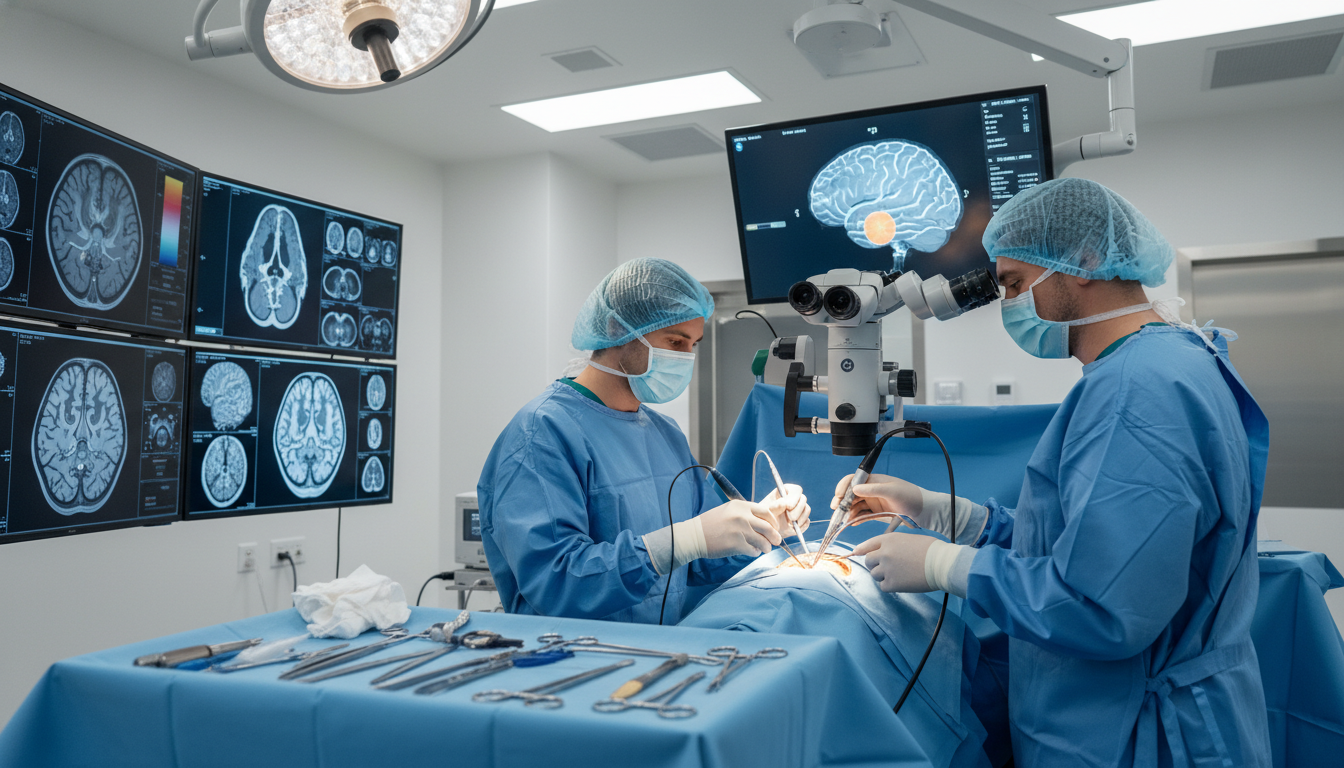
Typical Neurosurgery Residency Case Volume: Benchmarks and Ranges
Exact numbers vary by country and institution, but there are reliable patterns and benchmarks that applicants can use.
Overall Operative Volume Across Training
In a U.S.-style seven-year neurosurgery residency, an approximate total residency surgical volume might fall into these ranges:
- Low-to-moderate volume: ~1,200–1,500 total cases
- Moderate-to-high volume: ~1,500–1,800 total cases
- High volume: ~1,800–2,200+ total cases
These are approximate; some high-volume academic centers, especially large trauma or spine centers, may exceed 2,200 total cases across training, while smaller or more specialty-focused centers may cluster closer to 1,400–1,600.
What matters more than the raw total is:
- Year-by-year progression (increasing autonomy over time)
- Mix of elective vs. emergency
- Mix of cranial vs. spine vs. functional/peds
- Proportion as primary surgeon in senior years
Subspecialty-Specific Procedure Numbers
Here are broad, illustrative ranges of procedure numbers a graduating resident might see in each category. These are conceptual ranges to help you frame questions, not official quotas.
Cranial Tumor Surgery (Adult)
- Typical: 150–300+ cases
- Includes: supratentorial and infratentorial tumors, gliomas, metastases, meningiomas, skull base lesions (often shared with ENT/otology).
- What to ask: “By PGY-6/7, how many craniotomies for tumor am I usually primary on?”
Spine Surgery
- Typical: 300–600+ cases
- Ranges widely based on whether there is an orthopedic spine service and institutional emphasis on complex deformity.
- Content: cervical and lumbar decompressions, fusions, instrumentation, deformity corrections, trauma.
- For spine‑heavy programs, spine procedure numbers can exceed 700–800.
Vascular Neurosurgery
- Typical: 50–150+ open vascular cases (plus endovascular exposure, if available)
- Includes: aneurysm clippings, AVM resections, bypasses.
- Endovascular volume is highly center-dependent—some programs offer robust dual training; others offer mainly observational exposure.
Functional and Epilepsy Surgery
- Typical: 50–150+ cases (DBS, RNS, VNS, epilepsy resections, ablative procedures, stereotactic biopsies)
- Programs with strong movement disorders or epilepsy centers can dramatically exceed this range.
Pediatric Neurosurgery
- Typical: 100–250+ pediatric cases
- Includes shunts, craniosynostosis repair, pediatric tumors, tethered cord, Chiari decompressions.
- Range depends on whether you have a free-standing children’s hospital and whether cases are shared with pediatric surgery.
Trauma and Critical Care Procedures
- Typical: 150–300+ trauma-related procedures
- Includes craniotomies for hematoma/contusions, decompressive craniectomies, EVDs, ICP monitoring, spine fractures.
- Programs that are Level I trauma centers often generate very high trauma numbers, particularly early in training.
These ranges help frame realistic expectations and guide your questions. You don’t need precise numbers for every program you apply to, but you do need to know whether a program’s surgical volume and distribution will make you competent and confident as an attending.
Balancing Quality, Complexity, and Quantity
A key nuance: more is not always better. A resident doing 2,200 cases that are mostly low‑complexity lumbar decompressions is not necessarily better trained than one doing 1,600 cases that include:
- A balanced mix of cranial, spine, peds, and vascular
- Substantial primary surgeon responsibility on complex cases
- Structured pre‑op planning and post‑op follow‑up
You should ask not only “How many?” but also:
- “How often am I performing the critical portions of surgery?”
- “What is the level of case complexity, and how does it grow over time?”
- “Do I see longitudinal outcomes for the cases I operate on?”
Evaluating Case Volume During the Application and Interview Process
The challenge for residency applicants is that official numbers are rarely prominently published, and marketing language can be vague or inflated. You need a strategy to evaluate neurosurgery residency case volume realistically.
Step 1: Use Publicly Available Data as a Starting Point
Begin with:
- Program websites – Look for phrases like “X,000 neurosurgical procedures annually” or “Our residents graduate with over X,000 cases.” Recognize these typically refer to institutional—not resident-level—volume.
- Institution type and catchment area – Large quaternary centers, Level I trauma centers, and major cancer centers tend to have higher volumes and more complex cases.
- Subspecialty branding – “Comprehensive spine center,” “nationally recognized brain tumor program,” “high-volume epilepsy surgery program,” etc., often signal robust volume in those domains.
Use these clues to generate hypotheses that you will later confirm with residents and faculty.
Step 2: Ask Smart, Specific Questions on Interview Day
Vague questions generate vague answers. Instead of asking “Is your program high volume?” consider these targeted questions:
“How many total cases do graduating residents typically log?”
- Follow-up: “What is the average range over the last few years?”
“Approximately how many cases am I first surgeon on by graduation, and what proportion of those are cranial vs. spine?”
“What is the typical year-by-year progression in the OR?”
Examples to ask about:- When do juniors start as primary on basic spine decompressions?
- When do mid-levels start primary roles on routine craniotomies?
- When do seniors become primary on complex cranial or spine cases?
“For complex cases (e.g., aneurysms, large skull base tumors, complex deformity), how is primary responsibility divided between fellows and senior residents?”
“How are cases distributed among residents? Is there ever competition for operative experience?”
You’re looking for consistent, transparent, and specific answers across residents and faculty.
Step 3: Talk to Residents at Different Levels
During a neurosurgery residency interview, junior and senior residents will give different perspectives:
Junior residents (PGY-1–3)
- Ask: “How much OR time do you get now? What kinds of cases are you primary on at your level?”
- Ask: “Do you ever feel like you’re just retracting and closing, or are you being taught core steps?”
Senior residents (PGY-4–7)
- Ask: “How many craniotomies and spine cases have you done as primary?”
- Ask: “Do you feel ready for independent practice?”
- Ask: “Are there any areas where you feel underexposed (e.g., pediatrics, vascular, functional)?”
Pay attention to their comfort level and confidence describing their operative experience and procedure numbers. Hesitation or vagueness can be a red flag.
Step 4: Use Away Rotations to Observe Reality
If you complete an away rotation:
- Track your own exposure: How many days are you in the OR vs. clinic vs. floor/ICU?
- Watch for resident-to-resident dynamics: Do seniors let juniors operate? Do attendings largely operate with fellows instead of residents?
- Notice throughput and complexity: Are OR lists busy with multi-level complex cases or dominated by minor add-ons?
You can also discreetly ask rotating medical students from the home institution or other visitors about their perceptions of surgical volume and autonomy.
Interpreting Case Volume in the Context of Program Culture and Structure
Case volume cannot be evaluated in isolation. The same residency case volume can feel completely different depending on how the program is structured.
Autonomy vs. Oversight
A neurosurgery residency must balance resident autonomy with patient safety and structured teaching.
Consider asking:
- “At what point do residents run their own cases with the attending unscrubbed but present?”
- “Are there resident-run services, clinics, or call operations where senior residents act with substantial independence?”
- “How does the program decide when a resident is ready to perform critical steps independently?”
High surgical volume with minimal autonomy can leave you technically underprepared. Conversely, too much autonomy without structured teaching can be unsafe and educationally shallow. You want a graduated responsibility model where:
- PGY-1–2: Basic skills, simple cases, ICU and floor management
- PGY-3–4: Core cranial and spine procedures, increasing primary roles
- PGY-5–6: Complex cases with substantial autonomy
- PGY-7 (Chief): OR leadership, operating as near-independent surgeon under attending oversight
Impact of Fellows on Resident Case Volume
Fellowships in skull base, vascular, spine, or functional neurosurgery can enrich the educational environment—but they can also compete with residents for cases.
Ask:
- “How are cases divided between fellows and senior residents?”
- “Do graduating residents still meet or exceed required case numbers in fellow-heavy subspecialties?”
- “Are there particular types of cases that almost always go to fellows rather than residents?”
Well-run programs with fellows often:
- Reserve complex or unusual portions for fellows
- Still ensure residents log robust primary surgeon experience in core cases
- Use fellows as additional teachers and co-surgeons to enhance resident training
Poorly structured programs can inadvertently sideline residents, especially for high-value cranial and skull base procedures.
Call Structure and Trauma Volume
Call and trauma exposure significantly influence your residency case volume, especially early in training:
- High trauma centers – More emergency craniotomies, EVDs, and ICP monitor placements; often high resident autonomy at odd hours.
- Lighter trauma centers – Fewer emergency cases, more elective cranial or spine focus.
Ask:
- “How often does the on-call resident go to the OR at night?”
- “Do juniors scrub into emergent cases as primary operator or primarily assist seniors?”
- “Are trauma cases concentrated at one site or distributed across multiple hospitals?”
Remember: While high trauma volume boosts your emergency case numbers and resilience, an overwhelmingly trauma-heavy experience without adequate elective complexity can leave gaps in certain subspecialties.
Matching Case Volume Profiles to Your Career Goals
No single program is perfect for everyone. You should consider how a program’s case volume and distribution align with your long-term neurosurgical interests.
If You’re Interested in Academic Cranial Neurosurgery
You’ll want:
- Strong brain tumor and skull base volume
- Exposure to functional and epilepsy surgery
- Adequate vascular experience, even if you plan to do endovascular or open vascular fellowship
- Research infrastructure and clinical trials exposure
Questions to emphasize:
- “How many tumor craniotomies do seniors perform as primary surgeon annually?”
- “What is the typical exposure to skull base approaches for residents vs. fellows?”
- “Are residents involved in clinical or translational research related to cranial neurosurgery?”
If You’re Leaning Toward Spine Surgery
You’ll want:
- High spine surgical volume with a mix of cervical, thoracic, lumbar, and deformity cases
- Clear policies if ortho-spine and neurosurgery share cases
- Opportunities for primary surgeon roles in complex instrumentation and deformity corrections
Ask:
- “Approximately how many spine cases do your graduates log?”
- “How many of those are instrumentation or multi-level fusion cases?”
- “Do residents get meaningful experience in deformity, or is that largely fellow-driven?”
If You Foresee a Community or General Neurosurgery Career
You’ll want:
- Balanced exposure across cranial, spine, trauma, and basic pediatric neurosurgery
- Enough case variety to handle “everything that walks in” at a community hospital: emergencies, common tumors, degenerative spine, shunts
- Strong training in perioperative management and ICU care
Ask:
- “Do graduates feel comfortable going directly into community practice without fellowship?”
- “What percentage of your graduates enter fellowships vs. general practice, and why?”
- “Are there gaps in case exposure that community-bound graduates need to fill with additional training?”
Red Flags and Misleading Signals in Case Volume Evaluation
While most programs are genuinely committed to resident education, be alert to certain patterns.
Red Flags in Reported Surgical Volume
- Vague answers about numbers: “We’re very busy, trust us” without approximate ranges.
- Inconsistent answers: Different residents give markedly different descriptions of volume or case distribution.
- Overemphasis on attendings’ or fellows’ volume: Impressive institutional stats, but difficulty translating that into resident case numbers.
Structural Red Flags
- Chronic resident competition for OR time: Multiple residents expressing that they “fight for cases” or feel underutilized.
- Frequent cross-coverage across multiple sites that leads to residents missing cases because they’re pulled away to staff other services.
- Case saturation without organization: Many cases, but poor assignment, leading to “random” operative exposure and burned-out residents with limited learning.
If you encounter these red flags, probe further. Sometimes they signal solvable issues; other times, they point to deeper structural problems affecting residency case volume and educational quality.
FAQs: Case Volume Evaluation in Neurosurgery Residency
1. Is higher case volume always better when choosing a neurosurgery residency?
Not necessarily. Higher surgical volume can provide more practice and a broader range of pathology, but quality and structure are equally important. You should prioritize:
- Graduated autonomy (you operate more, and on more complex cases, as you progress)
- Balanced exposure across cranial, spine, peds, functional, and trauma
- Clear evidence that graduating residents are comfortable and competent in managing the full spectrum of cases expected in their anticipated practice
A moderately high-volume program with excellent teaching, well-distributed cases, and strong primary surgeon opportunities can outperform an ultra-high-volume program with poor organization and limited resident autonomy.
2. How can I verify a program’s claims about residency case volume?
You likely won’t see raw case logs, but you can cross-check through:
- Asking multiple residents (junior and senior) for approximate ranges of total cases and key subspecialty counts
- Asking about case assignments and whether anyone feels underexposed
- Using away rotations (when possible) to observe how OR time is distributed
- Comparing program descriptions and reputation (e.g., known trauma center, specialized cancer center) to what residents report
Consistency, transparency, and specific (even if approximate) numbers are reassuring.
3. What minimum number of cases should I look for to feel confident about my training?
There is no universal “cutoff,” and board requirements change over time. That said, in a typical seven-year neurosurgery residency, you would generally expect:
- Total cases: >1,400–1,500, with many programs in the 1,600–2,000+ range
- Robust exposure across cranial tumor, spine, trauma, and at least some pediatric, vascular, and functional cases
- Clear evidence that seniors have performed a substantial number of cases as primary surgeon, especially in the final two years
Focus less on hitting one specific number and more on whether the case mix and level of responsibility will get you ready for your intended practice.
4. How important is subspecialty volume if I already know I want a specific fellowship (e.g., vascular, functional, or pediatrics)?
Even if you plan fellowship training, residency should provide:
- A solid foundation in your intended subspecialty (so you’re not starting from zero)
- Broad general neurosurgery competence, since most subspecialists still manage general cases
- Enough volume to meet board expectations and to understand where your chosen subspecialty fits within the wider field
If you’re already leaning strongly toward a subspecialty, pay close attention to:
- The surgical volume and procedure numbers in that area
- Whether fellows overshadow residents in those cases
- Interview responses about how residents pursuing that subspecialty have fared in terms of volume and fellowship placements
Evaluating case volume in neurosurgery residency is more complex than reading one number on a website. By understanding how residency case volume is measured, asking precise questions, and interpreting responses in the context of program structure and culture, you can make a truly informed decision about where you will grow into a safe, skilled, and confident neurosurgeon.