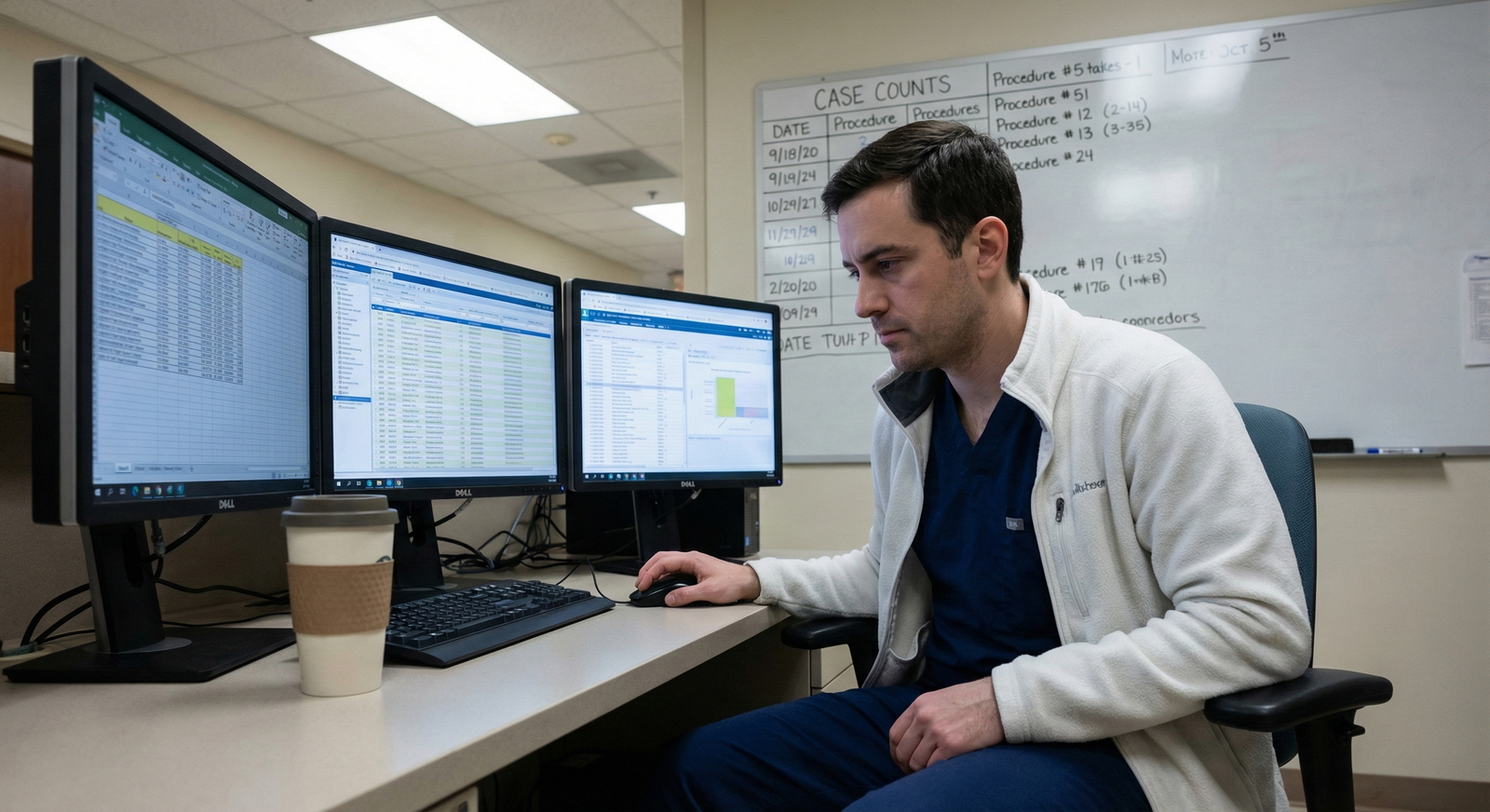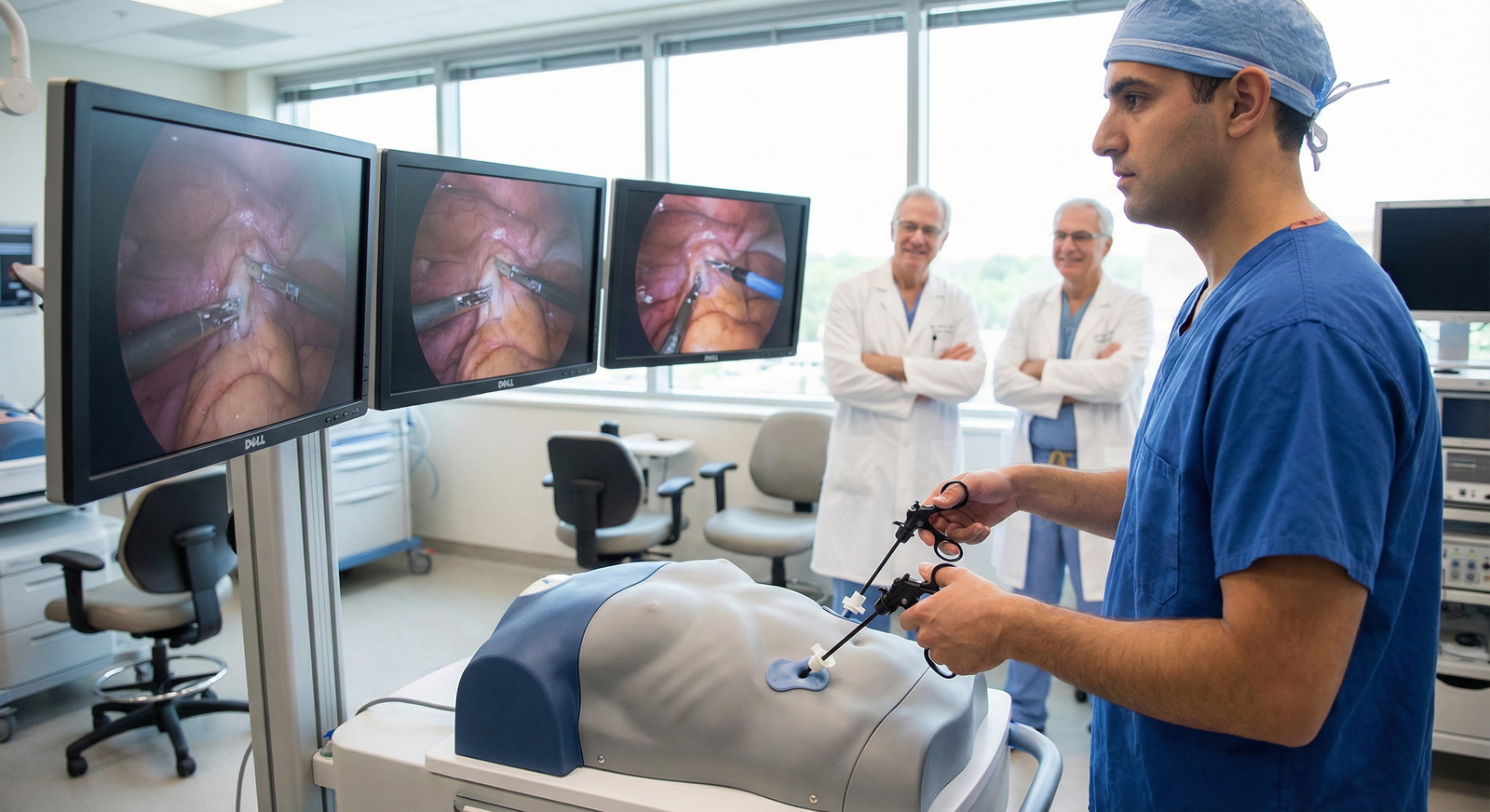
Evaluating residency case volume is one of the most critical—and often misunderstood—steps in choosing where to train as a DO graduate. For surgical and procedure-heavy specialties, your future competence, confidence, and fellowship competitiveness will be shaped by how many patients you see and how many procedures you perform, not just by the name of the institution on your diploma.
This guide walks you through a structured, evidence-informed strategy to evaluate case volume as a DO graduate, with special attention to the unique considerations osteopathic applicants often face in the single accreditation era.
Why Case Volume Matters So Much for DO Graduates
Residency case volume is more than just a number in your logbook. It directly impacts your:
- Technical skill development – Repetition refines technique and reduces error.
- Clinical judgment – Seeing many variations of the same problem builds pattern recognition.
- Comfort with complexity – Higher surgical volume and procedure numbers at tertiary centers can expose you to rarer pathologies and complex re-operations.
- Board readiness – Many board exams (and ACGME milestones) assume a minimum breadth of exposure.
- Fellowship applications – Programs may informally favor residents with robust operative and procedural experience.
- Practice-readiness – When you graduate, you will be expected to function independently, especially in community settings.
For a DO graduate residency applicant, case volume carries additional weight because:
- Historical osteopathic/MD separation affected access to some high-volume academic centers. Although accreditation is unified, program cultures and expectations still differ.
- Osteopathic emphasis on hands-on training aligns naturally with seeking robust procedural exposure.
- Implicit bias can still exist; a strong case log and demonstrable competence help you overcome assumptions and stand out.
Your goal is to ensure that your osteopathic residency match not only places you in a supportive environment, but in one where your eventual procedural numbers will be competitive with peers nationwide.
Understanding Case Volume: Beyond “High” vs. “Low”
Before you can compare programs, you need to understand what “volume” actually means and how it’s measured.
Key Dimensions of Case Volume
Total case numbers
- Overall number of patients or procedures during residency.
- Example: “Average graduating general surgery resident logs 1,200–1,400 major cases.”
Category-specific volume
- Different procedures are grouped into categories: e.g., laparoscopic, endoscopic, vascular, OB deliveries, spine, arthroscopy, etc.
- A program may be high-volume overall but weak in critical categories.
Case mix and complexity
- Distribution of:
- Common routine cases (e.g., laparoscopic cholecystectomy, C-sections)
- Complex cases (e.g., redo surgeries, oncologic resections, advanced spine)
- Complexity determines how prepared you feel for independent practice in various settings.
- Distribution of:
Resident role in procedures
- Being listed in the case log doesn’t tell you:
- Were you the primary surgeon or a first assist?
- Did you manage the critical steps or only minor portions?
- Primary-surgeon exposure is crucial for real mastery.
- Being listed in the case log doesn’t tell you:
Progression over time
- Do junior residents gradually get more responsibility and cases?
- Is there a clear pathway from observer → assistant → primary surgeon?
Continuity of experience
- Rotations that let you follow patients from clinic to OR to postoperative care deepen learning.
- Fragmented experiences may inflate raw numbers but weaken clinical reasoning.
Minimum Requirements vs. Competitive Benchmarks
Each specialty has ACGME case minimums and often board-defined requirements. But meeting minimums is not the same as being well-trained.
Examples (approximate; always verify current standards for your specialty):
General Surgery
- ACGME requires minimum major cases (historically ~850+).
- Competitive graduates often exceed 1,000–1,200 major cases, including robust endoscopy and laparoscopy numbers.
OB/GYN
- Minimum vaginal and cesarean deliveries, hysterectomies, and operative deliveries.
- Strong programs significantly exceed these, offering more advanced laparoscopy and urogynecology.
Orthopaedic Surgery
- Numbers in trauma, arthroplasty, sports, hand, spine; a program may be high-volume in trauma but weak in spine or tumor.
Anesthesiology
- Variety of cases (cardiac, neuro, OB, pediatrics) matter as much as total anesthetics.
Emergency Medicine
- Total ED encounters and procedure numbers (intubations, central lines, sedations, reductions) are critical.
As a DO graduate, aim for programs where average graduates exceed the minimums in both total cases and key categories relevant to your career or fellowship goals.

How to Research Case Volume Before You Apply
Evaluating residency case volume requires a mix of public data, structured questions, and informal intelligence. Here’s a step-by-step strategy.
1. Use Publicly Available Data and Tools
Start broad, then drill down.
a. Program websites and manuals
Look for:
- “For Applicants” or “Educational Curriculum” sections
- Sample rotation schedules
- Mentions of “our graduates exceed ACGME minimums by X%”
- Highlighted surgical volume or procedure numbers in marketing materials
Red flag: A procedure-heavy specialty with no mention of case volume or categories anywhere.
b. ACGME and specialty organizations
- Some specialties publish national case log summaries (average and 90th percentile).
- Compare any numbers programs share against these national benchmarks.
- Check for:
- Recent citations or warnings for case volume deficiencies
- Newsletters from your specialty’s board or society discussing national trends in operative numbers
c. Hospital and system quality metrics
High-volume hospitals often list:
- Annual procedure counts (e.g., “Perform over 1,000 joint replacements annually”)
- Designations (Level I trauma center, comprehensive cancer center, stroke/MI centers)
- These institutional volumes don’t always translate directly to resident cases, but higher institutional numbers usually increase opportunities.
d. DO-specific and match forums
Be cautious with anonymous forums, but look for:
- Repeated patterns across multiple posts (e.g., “Strong trauma exposure but limited elective cases”).
- Comments from DO graduates about:
- Access to primary-surgeon roles
- Equitable case distribution vs. competition with fellows
2. Assess Training Environment Characteristics That Influence Volume
Even without exact numbers, certain features reliably correlate with stronger residency case volume.
Key factors to examine:
Hospital type and setting
- Academic tertiary center: Often high complexity, many fellows, sometimes more competition for cases.
- Large community hospital: Often excellent bread-and-butter volume, fewer fellows, more attending–resident direct teaching.
- Hybrid systems: May offer the best of both worlds with balanced case mix.
Presence of fellows
- Advantages:
- Exposure to cutting-edge techniques and complex cases.
- Mentorship for research and fellowship pathways.
- Disadvantages:
- Potential competition for prime operative cases, especially complex ones.
- As a DO graduate, ask how often residents vs. fellows are primary on specialty-defining procedures.
- Advantages:
Resident complement size
- Too many residents for limited surgical volume can dilute individual case numbers.
- Example: A program with 8 residents/year at a small hospital may see lower per-resident procedural numbers than a 3–4 resident/year program at a similar site.
Number and variety of clinical sites
- Trauma center, VA, county hospital, private hospital, ambulatory surgery centers, specialty clinics.
- Breadth of sites often increases diversity of cases and procedural exposure.
Call structure and scheduling
- Night float vs. 24-hour call affects continuity and case capture.
- Residents heavily burdened with floor work and scut may miss OR time and procedures.
3. Ask Targeted Questions on Interview Day and Virtual Sessions
Your most powerful tools are the questions you ask current residents and program leadership. For DO graduates, being precise and data-driven in your questions shows sophistication and seriousness.
Questions to Ask Program Leadership (PD/APD)
Focus on structure, expectations, and documented outcomes:
“Can you share the average case logs for your most recent graduating class, especially in key index categories for our specialty?”
- Pay attention to whether they can present approximate numbers confidently.
- Vague answers without ranges may indicate poor tracking or suboptimal volume.
“How do your graduates’ case logs compare to national averages and ACGME minimums?”
- Look for responses like “We aim for 120–150% of minimums in most categories.”
“Have you made any recent changes to improve resident access to cases?”
- Signals responsiveness: added community sites, adjusted block schedules, restructured fellow/resident roles.
“How do you ensure case distribution is fair among residents?”
- Structured systems (case assignment, tracking dashboards, regular reviews) are better than informal “we just work it out.”
“For DO residents, have there been any challenges around case access, and how have you addressed them?”
- Look for transparency vs. defensiveness.
Questions to Ask Current Residents
Residents will give you the real story about surgical volume and day-to-day experience.
- “At your current level, how many cases do you log per week on average, and how does that change as you advance?”
- “What percentage of your OR time are you acting as primary surgeon vs. first assist or observer?”
- “Do you ever feel like you’re competing with fellows or senior residents for key cases? How is that managed?”
- “Have any residents struggled to meet case minimums recently?”
- If yes, ask why; sometimes it’s an individual issue, sometimes systemic.
- “When you talk to friends in other programs, do you feel your case volume and complexity are comparable, higher, or lower?”
- “Are DO residents integrated fully into all rotations and sites, or are there any unofficial limitations?”
- Essential for evaluating osteopathic residency match environments.

Interpreting Case Volume for Different Career Goals
Not all DO graduates have the same end goals. How you evaluate surgical volume and procedure numbers should align with your intended career path.
1. Community Practice vs. Academic/Fellowship Track
If you want to work in community practice:
Emphasize:
- High volume of bread-and-butter cases you’ll do frequently in practice.
- Strong autonomy and primary-surgeon experience.
- Exposure to efficiency and workflow typical of community hospitals and surgery centers.
Example metrics:
- General surgery: Many laparoscopic cholecystectomies, hernias, colon resections, appendectomies, endoscopies.
- OB/GYN: Consistent deliveries, hysterectomies, basic urogynecologic procedures.
- Ortho: Lots of fractures, arthroscopies, joint replacements.
If you’re fellowship-focused or academically inclined:
Emphasize:
- Exposure to complex and rare cases.
- Access to case types specific to your prospective fellowship (e.g., advanced GI, gyn-onc, spine, pediatric subspecialties).
- Research opportunities linked to high-volume subspecialty services.
Example: A DO graduate aiming for cardiothoracic fellowship in surgery might prioritize a program with:
- Robust cardiac case volume, even if general bread-and-butter numbers are slightly lower.
- Plenty of opportunities to assist and eventually lead complex thoracic or congenital cases.
2. Specialty-Specific Considerations
Even within SURGICAL_CASE_VOLUME discussions, each specialty has nuances.
General Surgery (DO Graduate Residency)
- Look for:
- Balanced exposure to: trauma, oncology, colorectal, minimally invasive, hepatobiliary, breast, vascular (if applicable).
- High endoscopy numbers (EGD and colonoscopy) if you hope to scope independently in practice.
- Clear pathway where chiefs do the complex cases, not just juniors or fellows.
OB/GYN
- Assess:
- Number of spontaneous vaginal deliveries and C-sections per resident.
- Volume of operative gynecology: hysterectomies (open, laparoscopic, vaginal), adnexal surgery, urogynecology.
- Availability of advanced laparoscopy and MIGS exposure for fellowship-minded DO applicants.
Orthopaedic Surgery
- Examine:
- Trauma vs. elective case balance.
- Access to arthroplasty, sports, spine, hand, foot/ankle.
- Whether fellows monopolize complex cases or if senior residents still get robust hands-on experience.
Anesthesiology
- Focus on:
- Breadth of cases: cardiac, neuro, OB, pediatrics, regional blocks.
- Procedure numbers: intubations, central lines, arterial lines, neuraxial blocks.
- Whether DO graduates rotate through all high-acuity sites (cardiac OR, neuro, trauma, transplant).
Emergency Medicine
- Consider:
- ED patient volume (annual visits) and acuity.
- Procedural exposure: intubations, central lines, chest tubes, sedations, reductions, ultrasound.
- Access to trauma bays and resuscitations vs. primarily fast-track/low-acuity areas.
For each specialty, ask programs to contextualize:
“How do our residents’ procedure numbers compare to national benchmarks and to graduates from other programs you know?”
Practical Framework: A Step-by-Step Strategy for DO Graduates
To systematically evaluate case volume across your rank list, use this framework.
Step 1: Define Your Targets
Before interview season:
Identify:
- Your top 1–2 potential specialty niches or fellowship interests.
- Type of practice you think you want (community vs. academic).
From specialty and board resources, note:
- ACGME minimums.
- National average case numbers for key procedures if available.
- Rough “comfort thresholds” (often discussed in specialty forums, textbooks, or webinars).
Step 2: Build a Case Volume Comparison Sheet
Create a simple spreadsheet with rows for each program and columns for:
- Reported average total cases at graduation.
- Key category numbers relevant to your goals.
- Percentage above ACGME minimums (if known).
- Hospital type and trauma level (if applicable).
- Presence of fellows (yes/no; subspecialties).
- Resident-per-year count and main sites.
- Notes from resident conversations (autonomy, fairness, “feel” of the OR culture).
This lets you compare programs side-by-side rather than relying on vague impressions.
Step 3: Score Programs on Three Axes
For each program, give a 1–5 score for:
Quantity
- 1 = Just meeting minimums with occasional shortfalls.
- 3 = Clearly above minimums, solid but not exceptional.
- 5 = Substantially above national norms in most categories.
Quality and Complexity
- 1 = Mostly basic cases, limited exposure to complex pathology.
- 3 = Some complex cases in at least 1–2 areas.
- 5 = Regular exposure to complex, multidisciplinary cases and advanced techniques.
Access and Autonomy
- 1 = Heavy competition with fellows; residents feel sidelined.
- 3 = Mixed; some rotation/fellow conflicts but generally reasonable.
- 5 = Well-structured progression, strong senior autonomy, residents consistently first in line for cases.
You don’t need perfect numerical accuracy; the act of scoring forces structured thinking and comparison.
Step 4: Overlay DO-Specific Factors
As a DO graduate, add another lens:
- Integration of DOs:
- Are DO graduates present among current residents and recent alumni?
- Have DO residents matched into competitive fellowships from this program?
- Cultural attitudes:
- Residents and faculty comfortable with osteopathic backgrounds?
- Any subtle red flags in how they discuss “our MDs and DOs”?
- Support for OMM/OMT (if important to you):
- Opportunities to integrate OMT into inpatient care or clinics.
- Optional OMT clinics or electives.
DO-friendly environments that also provide strong operative and procedural volume are ideal.
Common Pitfalls and Red Flags When Evaluating Case Volume
Even strong applicants can misinterpret or overvalue certain metrics. Watch for these pitfalls:
Being dazzled by institutional reputation alone
- Some big-name academic centers have lower per-resident surgical volume due to many fellows and heavy research focus.
- The best “name” is not always the best hands-on training environment for you.
Relying solely on one resident’s opinion
- One resident may have an unusually strong or weak experience.
- Seek consensus across multiple classes and ask, “Is this typical or unique?”
Ignoring documentation
- If a program cannot provide even approximate typical case volumes or show representative logs, consider why.
- Transparent programs usually have at least internal summary data.
Overvaluing a single metric
- Example: Choosing a program solely because it has the highest trauma volume, even though elective and subspecialty cases are limited.
- Balance is key, especially if you don’t plan to be a trauma-only surgeon.
Not accounting for personal learning style
- High volume in a chaotic environment with limited teaching may not be optimal.
- You need both repetition and thoughtful supervision.
Frequently Asked Questions (FAQ)
1. What is a “good” case volume for residency, and how much above minimums should I aim for?
There is no universal cutoff, but as a guideline:
- Programs where average graduates meet only the bare minimums may leave you underprepared or less competitive for fellowships.
- A reasonable target is for graduates to exceed minimums by 20–50% in most core categories, with some variation by specialty.
- Look for:
- Consistently strong numbers across classes, not one exceptional year.
- Balanced exposure rather than a few inflated categories that don’t match your goals.
2. Is it better to choose a high-volume community program or a lower-volume academic program as a DO graduate?
It depends on your priorities:
High-volume community program:
- Often excellent for bread-and-butter skills, autonomy, and independent practice readiness.
- May be less research-oriented but still can produce competitive fellows if case logs are impressive and mentorship is strong.
Lower-volume academic program:
- May provide exceptional complex cases and academic opportunities but require you to be more proactive to reach desired procedure numbers.
- Competition with fellows can be a limiting factor.
As a DO graduate, a high-volume program that values teaching and offers genuine operative responsibility—whether community or academic—often provides the most robust training foundation.
3. How can I objectively compare case volume if programs won’t share specific numbers?
If you can’t get exact case logs:
Ask for relative statements:
- “Do your residents ever struggle to meet ACGME minimums?”
- “Do your graduates typically exceed national averages?”
Use proxy indicators:
- Hospital procedural statistics, trauma designation, annual ED volume, number of ORs.
- Number of residents vs. scope of clinical sites (more sites and fewer residents → generally more per-resident exposure).
Rely on resident narratives:
- Ask multiple residents across different PGY levels:
- “Do you feel you’re on track to exceed your case requirements?”
- “Do you have to fight for cases, or are there more than enough?”
- Ask multiple residents across different PGY levels:
Aggregate these answers across programs into your comparison sheet; patterns will emerge.
4. As a DO graduate, should I worry about being given fewer cases than MD residents?
Most programs under the single accreditation system strive to treat DO and MD residents equitably, but experiences can vary.
To assess this risk:
Ask directly (but tactfully):
- “How integrated are DO residents in all rotations and procedural opportunities?”
- “Have there been any differences in case access or expectations between DO and MD residents?”
Speak specifically with current DO residents if present:
- “Have you ever felt disadvantaged for cases compared to MD colleagues?”
Look at alumni outcomes:
- DO graduates from the program matching into competitive fellowships or strong jobs is a reassuring sign.
If responses are defensive, vague, or dismissive, consider that a potential red flag.
Evaluating case volume as a DO graduate is both an art and a science. By understanding how residency case volume, surgical volume, and procedure numbers truly affect your training—and by asking precise, informed questions—you can build a rank list that aligns with your skills, values, and long-term goals. Your osteopathic residency match should position you not just to graduate, but to practice with confidence, competence, and real-world readiness.