The biggest myth in surgical training is that “academic means better training.” The numbers tell a much messier story.
If you actually look at surgical case volume data, community and academic residencies trade blows. Community programs often win on raw operative volume and early hands-on time. Academic programs tend to win on complex pathology, subspecialty exposure, and research. The right answer is not “academic vs community.” The right answer is: “Which program type gives you the specific case mix and autonomy that match your career plan?”
Let me walk through the data like I would for a resident trying to decide between a busy community general surgery program and a big-name university hospital. This is not about vibes. It is about case logs, service structures, and where the skin-to-skin time actually goes.
1. The baseline: what “enough cases” actually looks like
Start with something objective: minimum requirements and typical graduation numbers. The ACGME sets minimum case thresholds; actual graduates often exceed those by 30–200%, depending on program type.
For general surgery residents in the United States, recent national data cluster roughly like this (numbers are approximate but directionally accurate):
| Program Type | Total Cases at Graduation | Chief Year Cases | % as Primary Surgeon |
|---|---|---|---|
| Academic – High | 1100–1350 | 350–450 | 60–70% |
| Academic – Moderate | 900–1100 | 300–380 | 55–65% |
| Community – High | 1200–1500 | 400–500 | 70–80% |
| Hybrid Academic-Comm | 1000–1300 | 350–450 | 60–75% |
The first uncomfortable point: community-heavy programs are not “second tier” for operative volume. If anything, they are often the top of the distribution.
You see it in individual logs. A chief at a busy community program might log:
- 1,400 total cases
- 220 cholecystectomies
- 150 hernia repairs
- 120 colorectal cases
- 70 laparoscopic colectomies
Compare that to a chief at a pure academic quaternary center:
- 1,050 total cases
- 130 cholecystectomies
- 90 hernias
- 160 complex GI oncology/HPB cases
- 40 laparoscopic colectomies, 30 open multivisceral resections
Same specialty. Totally different training emphasis.
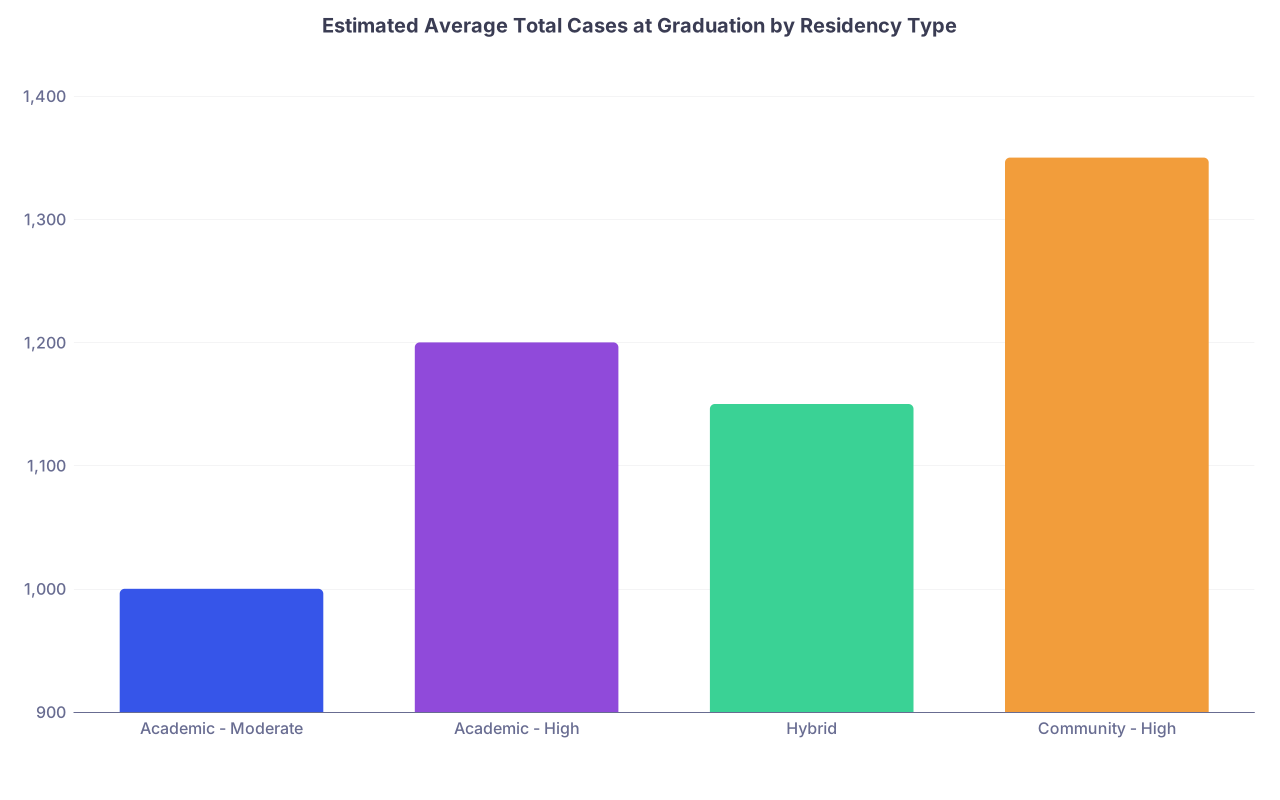
To visualize total case trends by program type:
| Category | Value |
|---|---|
| Academic - Moderate | 1000 |
| Academic - High | 1200 |
| Hybrid | 1150 |
| Community - High | 1350 |
The data show a clear pattern: community and hybrid programs are at least competitive, and often dominant, on sheer quantity.
2. Case mix: bread-and-butter vs complex tertiary care
Raw totals are meaningless without context. Doing 1,500 cases of skin lesions is not the same as 1,200 with a strong mix of colorectal, HPB, thoracic, vascular, and emergency general surgery.
The key differences between community and academic:
- Community programs: higher volume of bread-and-butter, emergent, and short-stay surgery.
- Academic programs: higher volume of complex oncologic, transplant, reoperative, and rare pathology.
Breakdown for a hypothetical graduating chief in general surgery:
| Category | Community-Heavy Program | Academic-Heavy Program |
|---|---|---|
| Hernia (all types) | 170–220 | 110–150 |
| Cholecystectomy | 180–240 | 110–160 |
| Colectomy (all) | 70–100 | 80–120 |
| Complex HPB/Onc cases | 20–30 | 60–90 |
| Emergency laparotomy | 80–120 | 60–90 |
| Minimally invasive cases | 500–650 | 450–600 |
You can argue all day about which mix is “better.” The honest answer: it depends what you plan to do.
- Planning community general surgery after residency? A high-volume community program with huge numbers of cholecystectomies, hernias, appendectomies, and emergency general surgery is extremely relevant.
- Planning a complex surgical oncology or HPB fellowship? You will want repeated exposure to Whipples, liver resections, perigastric lymphadenectomies, and complex reoperative abdomens that mostly live at academic centers.
Residents often complain that at big academic centers, attendings scrub multiple complex cases and the junior resident retracts in all of them. The exposure is amazing, but the hands-on time may lag. At community sites, you may not see the rare tumor, but you might be the one actually doing 90% of a standard colectomy by PGY-3.
3. Autonomy and early operative experience
If you care about becoming technically competent and efficient, the timing of your first 100–200 independent-ish cases matters more than you think. Skill acquisition is cumulative and nonlinear. Earlier case ownership accelerates the entire curve.
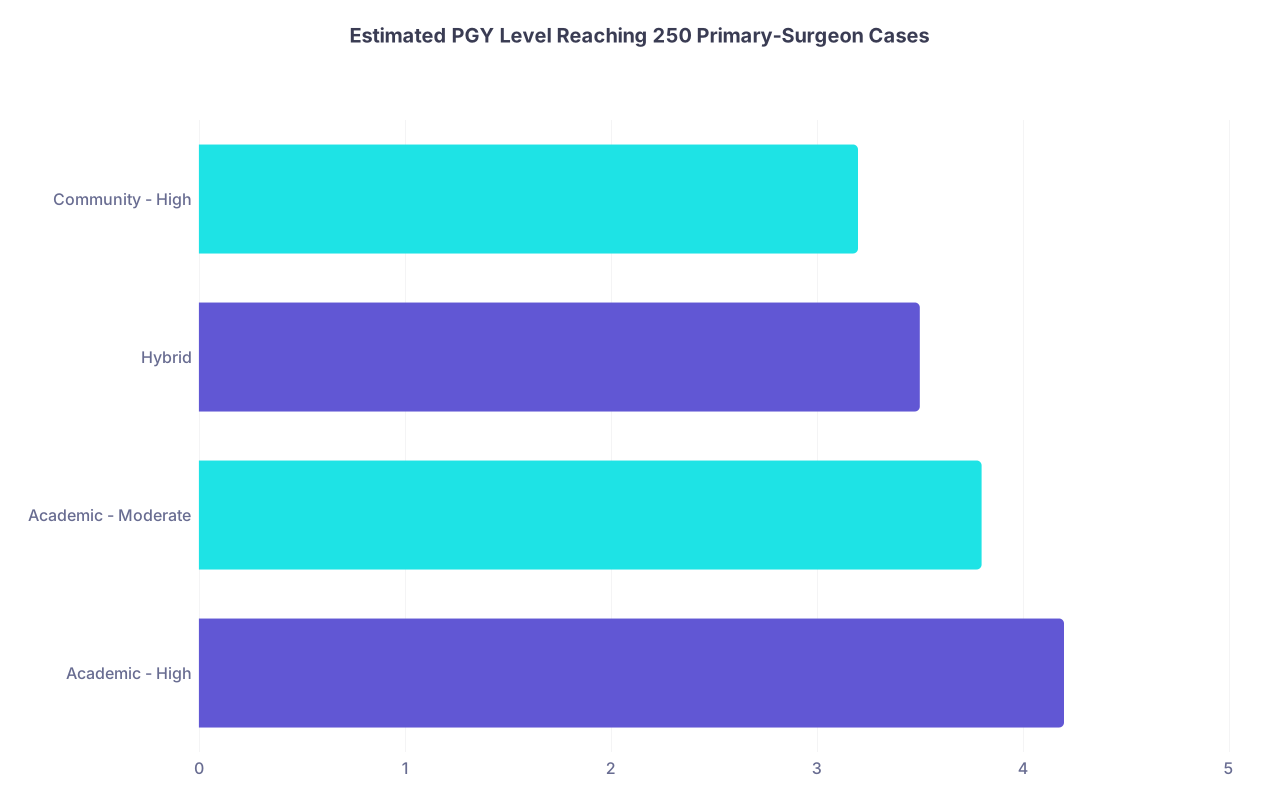
In practice, the data look something like this for when residents typically cross 250 primary-surgeon cases:
| Category | Value |
|---|---|
| Academic - High | 4.2 |
| Academic - Moderate | 3.8 |
| Hybrid | 3.5 |
| Community - High | 3.2 |
Translated:
- Community-heavy programs often push residents into primary-surgeon roles earlier, with PGY-3s leading a large share of bread-and-butter operations.
- Academic-heavy programs may protect complex cases for senior residents or fellows, delaying primary-surgeon autonomy, especially on big cases.
I have seen schedules where a community PGY-2 runs a room doing laparoscopic cholecystectomies all week, while a PGY-2 at a major academic center holds retractors on foregut cases and maybe closes skin.
That does not mean academic equals bad training. It means you need to understand that autonomy is a function of:
- Presence or absence of fellows
- Case complexity
- Institutional culture around graduated responsibility
- Volume relative to the number of residents
If you want more autonomy and less competition with fellows, community or hybrid programs usually win. If you want repeated exposure to complex cases even if you are initially second assist, academic programs dominate.
4. Subspecialty differences: not all surgical residencies follow the same pattern
“Community vs academic” looks different in orthopedics, OB/GYN, ENT, and neurosurgery. The trends are similar, but the magnitude varies.
Orthopedic surgery
Orthopedic case volume is heavily influenced by arthroplasty and trauma load.
Rough ballpark for total cases per graduate:
| Program Type | Total Cases | Trauma Share | Arthroplasty Share |
|---|---|---|---|
| Academic | 1,800–2,100 | 30–40% | 20–30% |
| Community | 1,900–2,300 | 35–45% | 25–40% |
Community ortho programs attached to level II trauma centers with strong private arthroplasty surgeons often produce residents with extremely high joint, trauma, and sports numbers. Academic programs associated with level I trauma centers may dominate in pelvic/acetabular trauma, pediatric orthopedics, and complex tumor reconstruction.
OB/GYN and other core specialties
OB/GYN is a classic example where:
- Community-heavy: more vaginal deliveries, more basic gynecologic surgery, more continuity in prenatal care.
- Academic-heavy: more high-risk OB, oncology, and complex minimally invasive gynecologic surgery.
ENT and neurosurgery follow the same broad pattern: academic centers win on skull base, complex tumor, and rare pathologies. Community and hybrid programs win on raw volume of bread-and-butter cases.
If you are serious about a niche like cranial base, complex spine, or MIS thoracic, the volume and concentration of cases in academic centers is simply higher. The numbers reflect referral patterns, not “program quality.”
5. Geographic and structural factors: why the same “academic” label can mean very different realities
Labels are lazy. Two “academic” programs can have totally different case profiles depending on:
- Catchment area
- Presence of competing subspecialty fellowships
- How much volume is siphoned into private practice
- Degree of community hospital integration
I have reviewed case logs where:
- Academic Program A: 100% of major hepatobiliary and pancreatic surgeries go to the HPB fellowship service. General surgery residents log relatively few Whipples.
- Academic Program B: No HPB fellowship, high-volume regional cancer center. Residents log robust numbers of complex HPB as primary or first assistant.
The data spread is wide. A simple mental trap: “academic = fewer cases” or “community = low complexity” is just wrong.
Hybrid models are common now:
- University flagship: transplant, complex oncology, rare pathologies
- Affiliated community hospitals: gallbladders, hernias, appys, bariatric, bread-and-butter colorectal, emergency general surgery
Residents rotate across both. Their aggregate logs often look excellent on both volume and complexity.
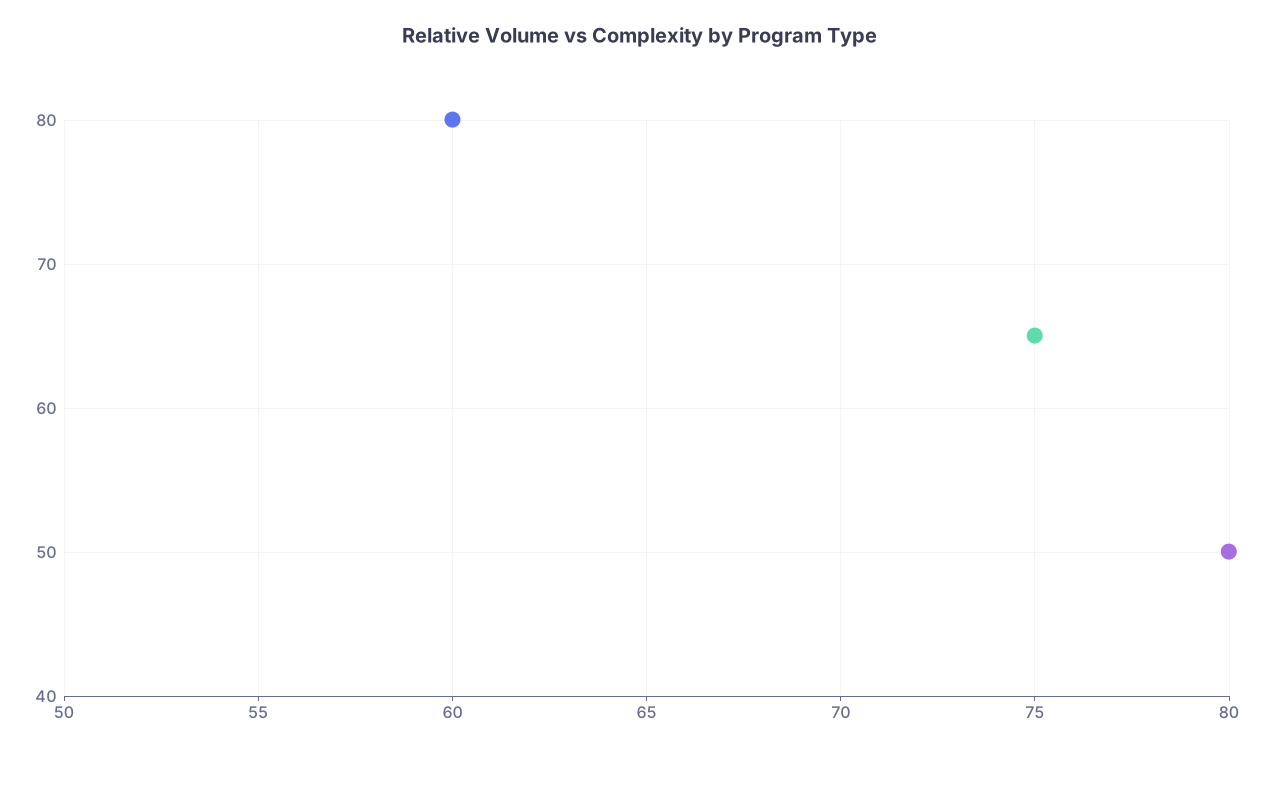
To visualize complexity vs volume as a trade-off:
| Category | Value |
|---|---|
| Academic - High | 60,80 |
| Community - High | 80,50 |
| Hybrid | 75,65 |
Where x = volume index, y = complexity index (arbitrary but consistent scale).
Interpretation:
- Academic-high: slightly lower overall volume, very high complexity.
- Community-high: very high volume, moderate complexity.
- Hybrid: strong volume and moderately high complexity.
If I had to bet on which structure becomes dominant, it is the hybrid model. It simply uses the system’s resources more efficiently.
6. The future: simulation, robotics, and rebalancing of case volume
Here is where things get interesting. The surgical training landscape is shifting, and it will not be kind to programs that rely purely on “we do a lot of cases” as their selling point.
Three big trends:
Robotics and technology filtering cases
As robotic platforms expand, case distribution can skew. At some centers, senior attendings or fellowship-trained surgeons monopolize robotic time. Residents, especially at academic centers flooded with robotics fellowships, can find their index laparoscopic or open cases shrinking.A typical pattern I have seen:
- Pre-robotic era: resident does 100+ laparoscopic cholecystectomies.
- Post-robotic dominance: many straightforward gallbladders move to robotic platform, done by a smaller group of surgeons; resident participation becomes variable.
Community programs that adopt robotics but lack fellows may paradoxically give residents better robotic case volume than flashy academic flagships.
Simulation partially substituting early low-complexity cases
You can already see ACGME and specialty boards warming to the idea that simulation can cover some of the early technical learning curve. Virtual reality and high-fidelity simulations can standardize training that previously depended on random call nights.Expect:
- Early PGY-1 and PGY-2 years becoming heavier in structured simulation.
- Accreditation bodies allowing partial substitution of certain low-risk, high-volume procedures with validated sim-lab milestones.
That will blur the importance of “who has more appys?” but will not touch the need for real, complex, in-person operations.
Consolidation of complex care into regional centers
Complex oncologic, vascular, and transplant cases are concentrating into fewer hospitals. Academic flagships and certain very large regional community centers will accumulate that volume. Smaller community hospitals may see their complex caseload shrink over the next decade.Practically:
- Complex case numbers at major academic or hybrid centers will likely increase.
- Some smaller community programs will become even more bread-and-butter heavy, which is excellent for community practice prep but weaker for certain fellowships.
To show one possible trajectory for total case volume over time by type:
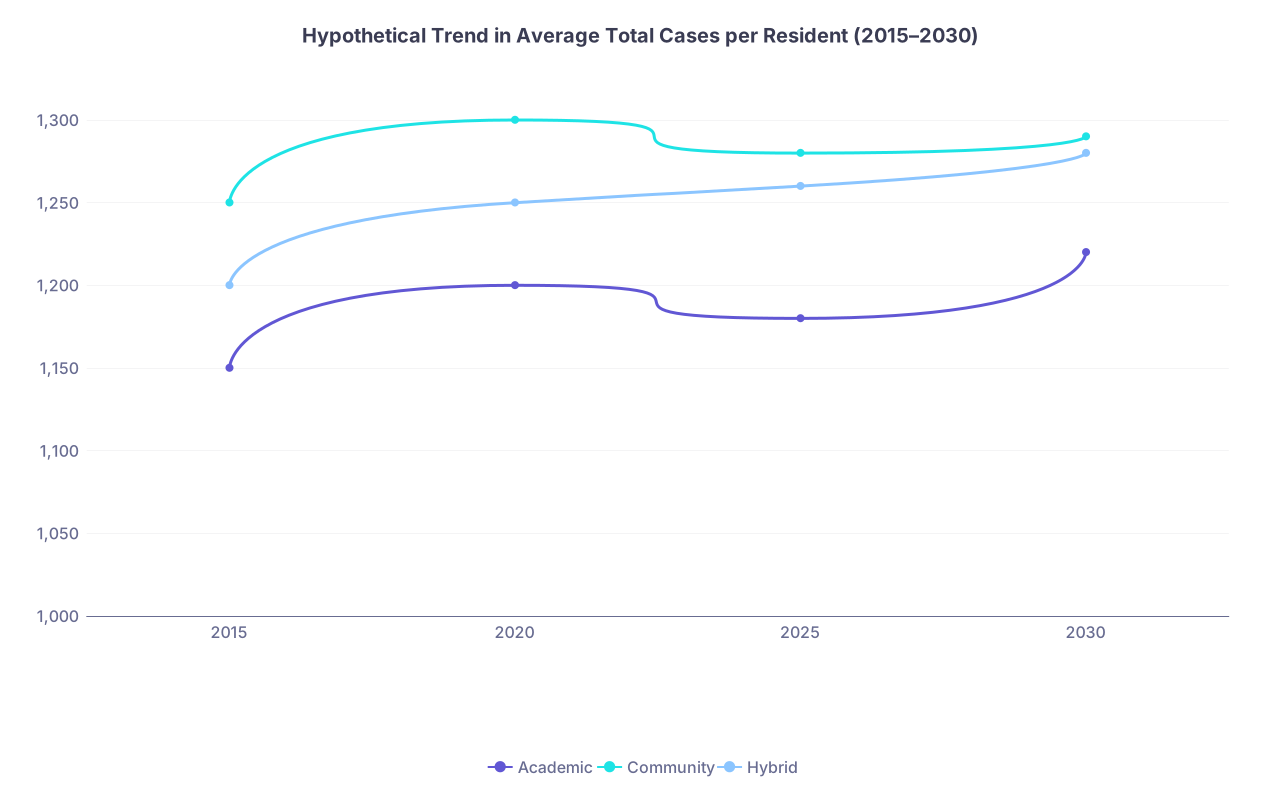
| Category | Academic | Community | Hybrid |
|---|---|---|---|
| 2015 | 1150 | 1250 | 1200 |
| 2020 | 1200 | 1300 | 1250 |
| 2025 | 1180 | 1280 | 1260 |
| 2030 | 1220 | 1290 | 1280 |
I do not expect dramatic total volume collapse. I do expect redistribution:
- More complex tertiary cases at academic and large hybrid centers.
- Bread-and-butter plus robotics-heavy workflows at community and hybrid sites.
- More simulation for early technical skill acquisition.
The programs that win will be those that treat simulation, robotics, and community-academic integration as a coordinated system rather than as random add-ons.
7. How to actually use this data to choose between community and academic
Let me be blunt. Most applicants look at brand name, city, and “vibe.” Then they pretend they did some deep research. If you care about surgical skill, you should act like you are buying a business, not a sweatshirt.
Here is a data-focused way to compare a community vs academic residency:
Ask for anonymized case logs from recent graduates.
Not the cherry-picked star, but the median. Look at:- Total cases
- Chief year cases
- Laparoscopic vs open vs robotic breakdown
- Case counts in categories aligned with your goals (EGS, HPB, breast, vascular, etc.)
Quantify fellow competition.
How many fellows per resident in your intended OR environments? If there is a one-to-one fellow-to-resident ratio on multiple subspecialty services, resident case ownership usually suffers.Look for hybrid structure.
Top training environments often combine:- Academic flagship for complexity and subspecialty exposure.
- One or more high-volume community hospitals for bread-and-butter and autonomy.
Check chief year responsibility.
Ask residents, explicitly:- “How many days per week does a chief run their own room doing cases skin-to-skin?”
- “What did your last chief’s logs look like?”
- “When did you feel comfortable doing a laparotomy solo at 2 a.m.?”
Align with your intended career path.
If your goal is:
- Immediate community practice general surgery → Slight edge to community-heavy or hybrid programs with huge volume in common operations, robust emergency general surgery, and early autonomy.
- Highly competitive complex fellowship (HPB, surg onc, CT, vascular) → Slight edge to academic-heavy or hybrid programs with strong subspecialty services and high-complexity case numbers, plus research.
You are not picking “academic vs community.” You are picking: “volume vs complexity vs autonomy vs research,” and those axes line up differently at each program.
8. Quick reality check: what the data actually say, stripped of hype
Pulling everything together:
- Community and hybrid programs often win on sheer volume and earlier autonomy.
- Academic programs often win on rare pathology, complex tertiary/quaternary care, and subspecialty exposure.
- The highest-yield setup long term will likely be hybrid models that systematically link academic centers with high-volume community hospitals.
- Robotics, simulation, and care consolidation will shift where cases live, but will not change the fundamental need for large, well-distributed case exposure.
If someone tells you, “Academic programs are always better,” they are ignoring the numbers.
If someone tells you, “Community programs do not prepare you for complex surgery,” they are also ignoring the numbers.
The data show something more nuanced: your optimal choice depends heavily on your future practice model and how each program actually structures resident involvement in the OR.