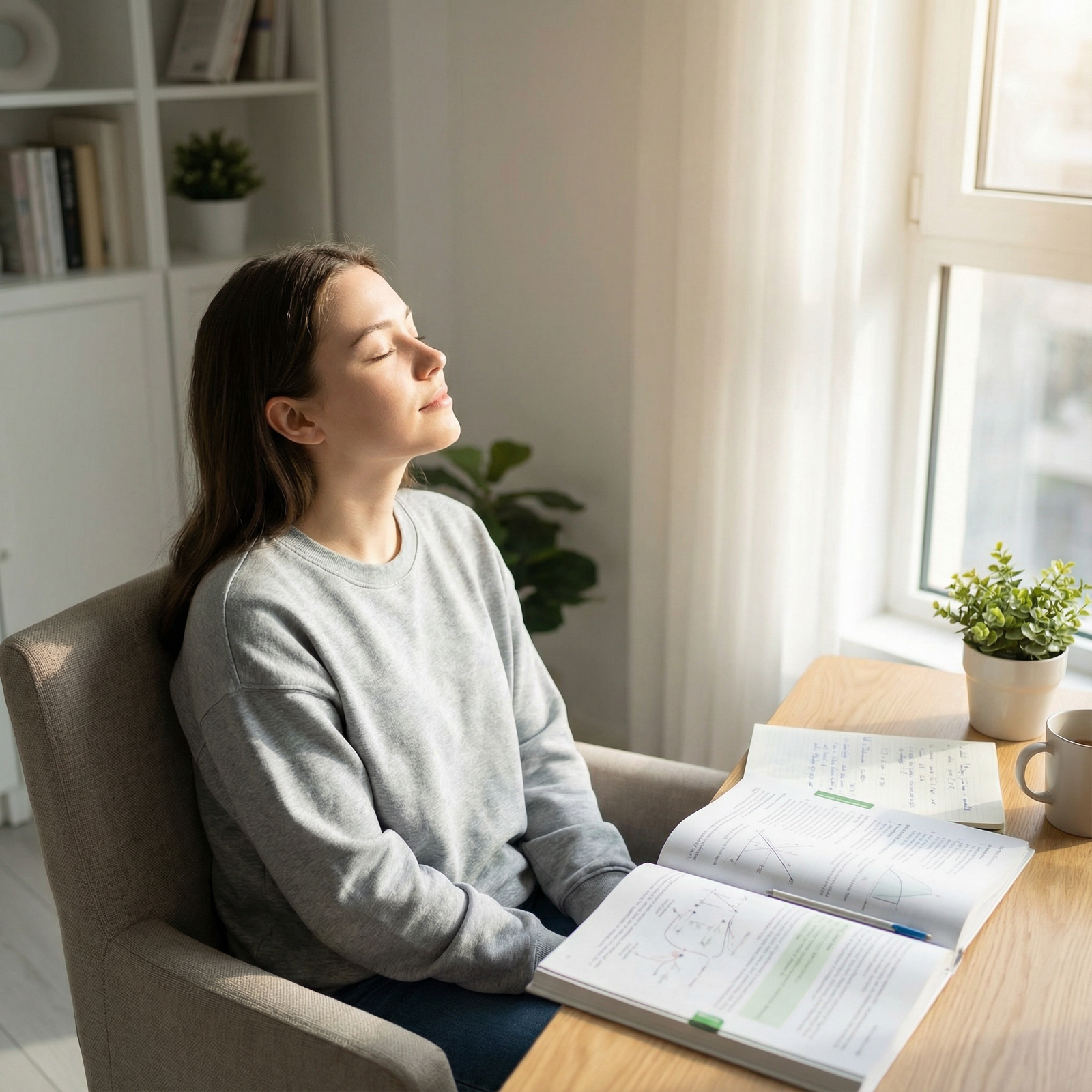
The plane ticket feels like a cure. A week in a different zip code, a beach, a hotel with white sheets and room service. You tell yourself the change of scenery will reset your brain. Here's the hard truth: your anxiety boards that plane with you. If you don't fix the internal state before departure, you're just dragging your test panic to a more expensive zip code.
This article is for educational purposes only. It is not financial advice, not legal advice, and not tax advice. Figures vary by individual circumstances, so consult a qualified professional before acting.
The Escape Hatch Illusion: Why Distance Doesn't Detox Stress
Let's kill this myth right now. Traveling far away to escape test anxiety is avoidance dressed up in a passport. It feels productive because you're doing something. But doing something is not the same as solving something.
Stress travels with you. I've watched M3 students fly home the week before Step 2, convinced their childhood bedroom was the only place they could study. They arrive exhausted from jet lag, realize their old desk is uncomfortable, their mom keeps offering snacks, and they've now added logistical anxiety on top of exam anxiety. The stress didn't go anywhere. It just got a layover.
Here's the phenomenon I call "Parasitic Anxiety." You think you'll finally review those high-yield cards on the beach. Instead, every time you glance at First Aid, a notification pings. A friend texts to hang out. The hotel Wi-Fi is spotty. Your brain is now splitting attention between studying and the novelty of the trip. Cognitive load doubles. Retention tanks. You come back behind where you started.
The practical reality? That quiet room at home, the one you keep wanting to escape, is neurologically superior for high-yield review. Your brain knows that desk. It knows that lighting. It knows how to focus there. Novel environments trigger orienting responses - your brain keeps asking "where am I?" instead of "what's the answer?"
Fix: Stop romanticizing escape. The destination isn't the problem. Your preparation architecture is.
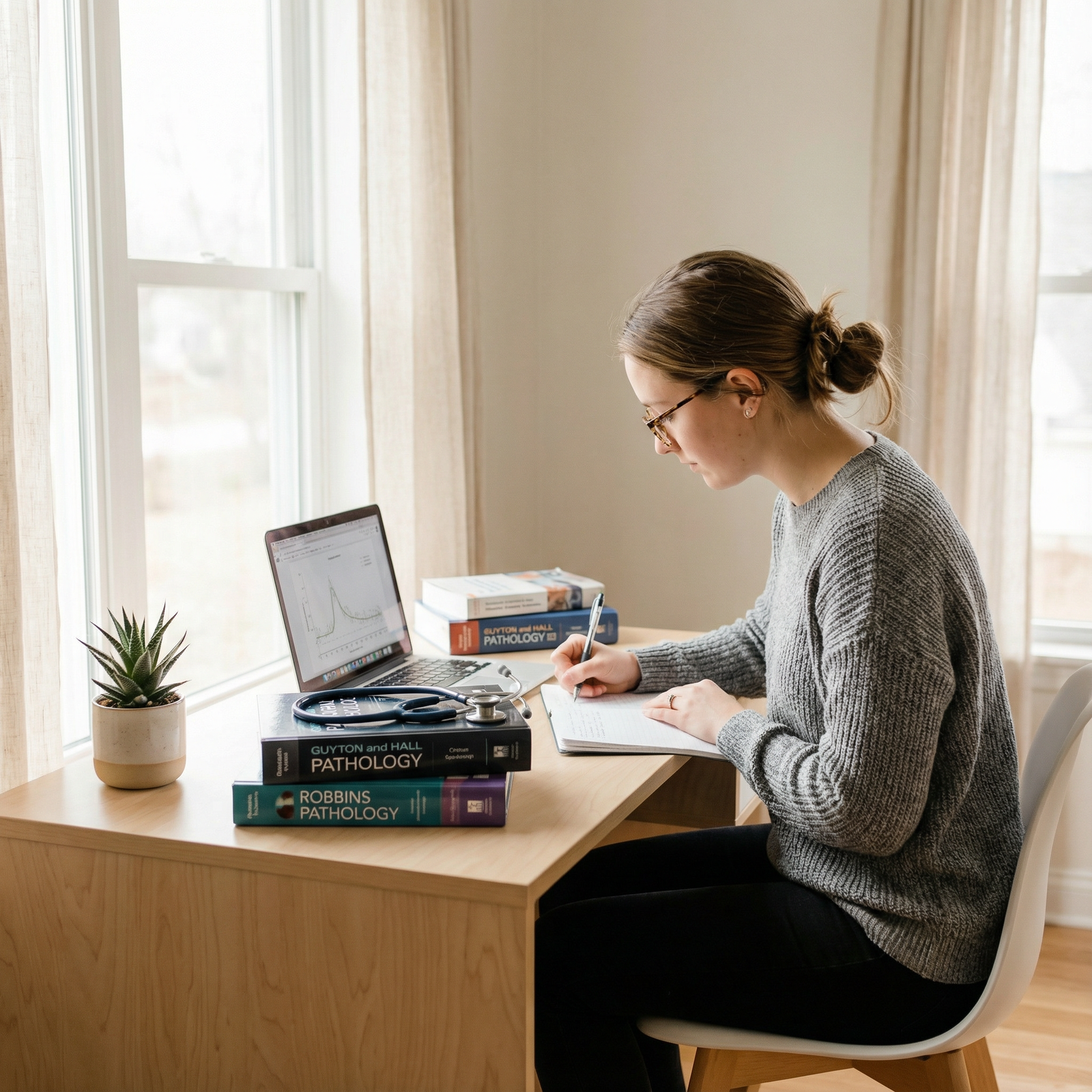
Protocol 1: The Controlled Environment Reset
You don't need a plane. You need a controlled environment. Here's the criteria your brain actually needs to consolidate information before a high-stakes exam:
- Consistent temperature (68-72°F - your brain burns glucose for memory formation, and overheating tanks cognitive performance)
- Controlled lighting (4500K cool light for active review, warm light 2700K for passive reading - circadian alignment matters)
- Zero social interruptions (your phone in another room, door closed, roommates or family briefed)
- Identical to exam day conditions (right-handed desk, similar chair height, quiet)
(See also: How Do I Know If My Test Anxiety Needs Professional Treatment? for guidance on severity.)
If your current space fails these criteria, the solution is not a flight to Bali. It's a dedicated library seat. Most medical school libraries have reservable study carrels. Some campuses even have exam simulation rooms with identical proctoring setups. Use them.
Changing your environment right before an exam is amateur hour. Cortisol spikes when routines break. Your body doesn't care that you "meant to relax." It registers the disruption. I've seen students ruin weeks of solid preparation by switching hotels three times in the final stretch. Stability reduces cortisol more reliably than novelty ever will.
Step-by-step "Deep Work Station" setup:
- Pick a location you'll use for every study session in the final two weeks
- Set it up exactly once - don't rearrange daily
- Bring the same water bottle, same snacks, same laptop
- Use the same chair height every session
- Practice mock exams in this chair
- On exam day, your body will recognize the conditions and skip the orienting response
If your home environment is genuinely toxic - a screaming roommate, a partner going through a breakup, a construction zone - then book a quiet Airbnb locally for two nights. Not two weeks. Two nights. And don't study there. Sleep there.
Protocol 2: Strategic Rest vs. Avoidance Running
This is where most students self-sabotage. They confuse running away with resting. They are not the same thing.
Restorative rest looks like:
- 7-9 hours of sleep on a consistent schedule
- 20-minute walks in natural light (no podcast, no flashcards)
- Meditation or breathwork
- A meal cooked slowly without your phone
- Lying on the floor staring at the ceiling doing nothing
Avoidant running looks like:
- Scrolling social media on a plane
- "Vacation" that's actually three hours of guilt-laden study between brunch and cocktails
- Booking flights instead of tackling the Anki deck
- Telling yourself you're "recharging" while your sympathetic nervous system screams
Here is the protocol that actually works, based on ultradian rhythms and adenosine clearance:
Micro-Break Protocol (every 90 minutes of study):
- Stand up. Move. Walk for 5-10 minutes.
- Drink water. Eat a small protein snack.
- Look at something farther than 20 feet away (window, wall, ceiling - not a screen)
- No social media. No news. No email.
- Then return to study.
Physical movement clears adenosine buildup in your prefrontal cortex. Scrolling social media doesn't - it just floods your dopamine system with cheap hits while keeping you cognitively engaged. That's the opposite of rest.
The Two-Day Rule: If you absolutely must travel for mental health reasons - and yes, sometimes that's legitimate - cap it at 48 hours. Book the return ticket before you leave. Do not leave it open. Set a calendar reminder called "RETURN OR RUIN EVERYTHING." The logistical panic of missing a flight or arriving jet-lagged the night before USMLE Step 1 will crush any therapeutic benefit the trip offered.
Protocol 3: The Pre-Exam Simulation Strategy
The only proven way to desensitize test anxiety is repeated exposure under controlled conditions. That means you need to simulate the exam - not escape from it.
Here's the move that separates anxious students from confident ones: simulate the entire exam day, including the morning of.
What time will you wake up? What will you eat? How long is the commute? What music do you listen to? What does your bag contain? Run this simulation at home, on a weekend, in the same clothes you'd wear to the exam center. Practice the transitions - walking into a testing facility, sitting down, the silence before "begin."
Traveling somewhere far away the week before your exam breaks this simulation. You now have to figure out jet lag, a new breakfast, a different commute, unfamiliar breakfast options. Every variable you add is a variable that can trigger cortisol on game day.
The Jet Lag Problem: Circadian rhythm disruption impairs executive function for 3-7 days after transmeridian travel. Your exam is in 7 days. You will be testing while your suprachiasmatic nucleus is still confused about what time zone it's in. This is not a fringe concern - it's why airlines warn against important decisions immediately after long-haul flights.
Actionable fix: Use local mock exams to build confidence in your ability to perform anywhere. Take your practice tests at 8 AM in a quiet library with a timer. Wear the same outfit. Bring the same snacks. After three or four of these, your brain stops registering the exam as novel. Novelty is what triggers anxiety. Predictability is what kills it.
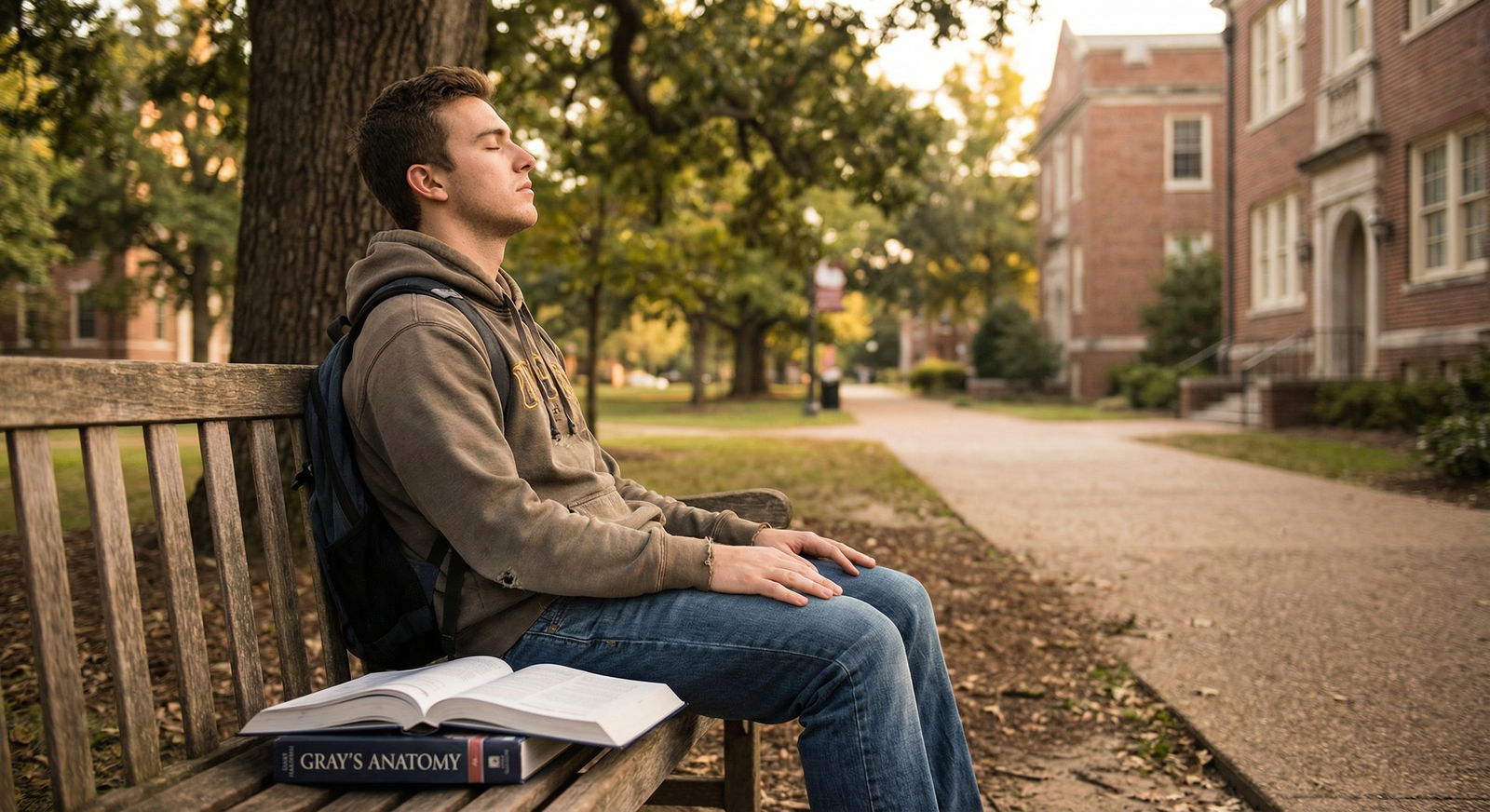
Final Checklist: Stabilize Before You Depart
Here's everything in one place. Run this list the week before your exam.
The Stabilization Protocol:
- Sleep: 7-9 hours nightly, same bedtime and wake time for the final 7 days
- Nutrition: Three meals daily, no new supplements or stimulants
- Hydration: Half your body weight in ounces daily
- Logistics confirmed: ID, admission ticket, location, parking, transit time
- Materials ready: Pencils, snacks, water, earplugs if needed - packed tonight
- No new study material: Stop buying resources. Trust what you've reviewed.
- Environment locked: Same desk, same chair, same routine through exam morning
- Mock exam completed in target conditions within the last 48 hours
The Go/No-Go Travel Decision:
- GO (only if): You have a genuine mental health emergency AND you can return 48+ hours before the exam AND you will not bring study materials
- NO-GO (default): You're "tired." You're "stressed." You want a "change of scenery." None of these justify the risk.
Confidence comes from preparation. Not from geography. I've never seen a student bomb an exam because they were in the wrong city. I've seen plenty bomb because they swapped preparation for travel.
If you do travel, come home early. Returning to your stable environment is worth more than a few extra hours of vacation. Show up rested, fed, and boringly prepared. That's the move.