Conquer Test Anxiety: Evidence-Based Strategies for Stress-Free Exam Preparation
Test anxiety is more than just “being nervous” before a big exam. For many medical students and premeds, it can feel like a physical and psychological wall between them and the scores they’re capable of achieving. Heart racing during an NBME shelf exam, mind going blank during an OSCE, or hands trembling while starting the MCAT—these are all recognizable experiences.
The good news: Test anxiety is highly manageable. With the right study strategies, mindfulness techniques, and stress management tools, you can lower anxiety, protect your performance, and even turn exams into an opportunity to demonstrate how far you’ve come.
This guide breaks down practical, evidence-informed techniques tailored to students in rigorous training programs—including premed, medical school, PA, and nursing students—so you can approach exams with more calm, clarity, and confidence.
Understanding Test Anxiety in High-Stakes Medical Training
Test anxiety is a specific form of performance anxiety that shows up in testing situations. In medicine, where exams often determine progression, ranking, or specialty options, the stakes can intensify these feelings.
Common Symptoms of Test Anxiety
Test anxiety typically shows up in three domains:
1. Psychological/Emotional Symptoms
- Sense of dread or panic before or during the exam
- Fear of failure and catastrophizing (“If I fail this, I’ll never match”)
- Irritability or feeling on edge
- Excessive worry about others’ performance or expectations
2. Physical Symptoms
- Rapid heartbeat or chest tightness
- Sweaty palms, shaky hands
- Nausea, stomach discomfort, or headache
- Shortness of breath or feeling “wired”
- Muscle tension, especially in neck, shoulders, and jaw
3. Cognitive Symptoms
- Difficulty focusing or sustaining attention on questions
- Racing thoughts or mental “static”
- Blanking out on information you know you’ve studied
- Overthinking choices and second-guessing answers
- Difficulty organizing thoughts for essays or oral exams
Recognizing which symptoms you experience most strongly is the first step in tailoring your stress management and exam preparation strategies.
Why Test Anxiety Happens (Especially in Medicine)
Several common factors drive test anxiety, particularly in demanding academic and clinical environments:
- High stakes and uncertain outcomes: MCAT, Step exams, OSCEs, and high-value block exams often feel like gatekeepers to your future.
- Perfectionism and imposter syndrome: Many high-achieving students hold themselves to unrealistic standards and struggle to internalize success.
- Insufficient or inefficient preparation: Last-minute cramming, disorganized notes, and passive studying can create a real basis for insecurity.
- Past negative experiences: A bad exam outcome, public embarrassment during pimping, or harsh feedback can reinforce fear around testing.
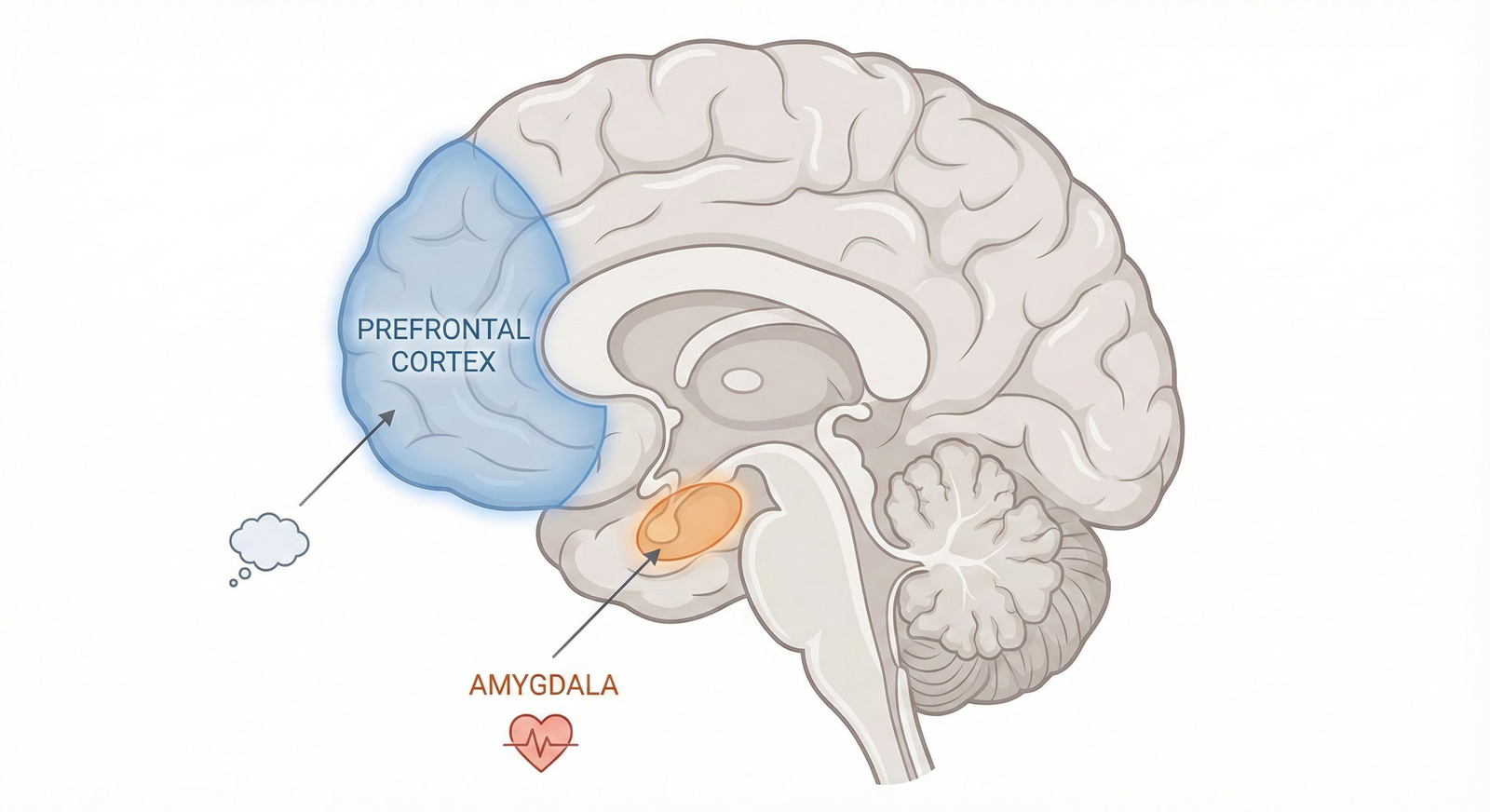
- Chronic stress and burnout: Long hours, sleep deprivation, and limited recovery time keep your nervous system in “fight-or-flight” mode.
Understanding that your reaction is normal and explainable—not a personal failing—can itself reduce anxiety. From there, you can intentionally address each driver with targeted tools.
Build a Solid Foundation: Smart Study Strategies to Reduce Anxiety
Preparation doesn’t just improve knowledge—it is one of the most powerful forms of stress management. When your study strategies are efficient and evidence-based, confidence naturally follows.
1. Design a Realistic, Structured Study Plan
A vague intention to “study more” fuels anxiety; a concrete plan calms it.
Key steps to building a plan:
Start with the exam blueprint
- For MCAT, USMLE, COMLEX, shelf exams, or course finals, review the official content outline or objectives.
- Break content into manageable chunks (e.g., systems, disciplines, topics).
Work backward from the exam date
- Map weekly goals (e.g., “Finish GI + Endocrine + 3 practice blocks”).
- Then break those into daily tasks (e.g., “50 Anki cards, 20 UWorld questions, 30 min review”).
Use time blocking instead of vague to-do lists
- Assign specific tasks to specific time blocks:
- 8:00–10:00: UWorld block + review
- 10:15–11:00: Anki
- 11:00–12:00: Pathoma video + notes
- Assign specific tasks to specific time blocks:
Protect buffer time
- Build in catch-up blocks each week for when life (or call schedules) get in the way.
A well-structured plan signals to your brain: “This is under control,” which directly reduces test anxiety.
2. Use Active, Not Passive, Learning
Passive reading or endless highlighting may feel productive, but it rarely sticks—fueling the sense that “I studied, but I still don’t know anything.”
More effective study strategies include:
Retrieval practice:
- Use flashcards (e.g., Anki), question banks (UWorld, AMBOSS, NBME-style), and self-quizzing.
- Focus on pulling information from memory, not just re-reading.
Spaced repetition:
- Space your review over days and weeks rather than relearning from scratch.
- Anki and similar tools automate this, reducing cognitive load and improving retention.
Interleaving:
- Mix topics (e.g., integrate cardiology questions with renal, or pharmacology with pathophysiology) to build flexibility and deep understanding.
Teaching others or teaching a “future you”:
- Explain a concept to a study partner, or record a short voice memo as if teaching a junior colleague.
- Teaching reveals gaps you can address before test day.
3. Practice Under Realistic Exam Conditions
Nothing spikes anxiety like an environment you’ve never rehearsed.
To desensitize your brain:
Simulate test conditions regularly
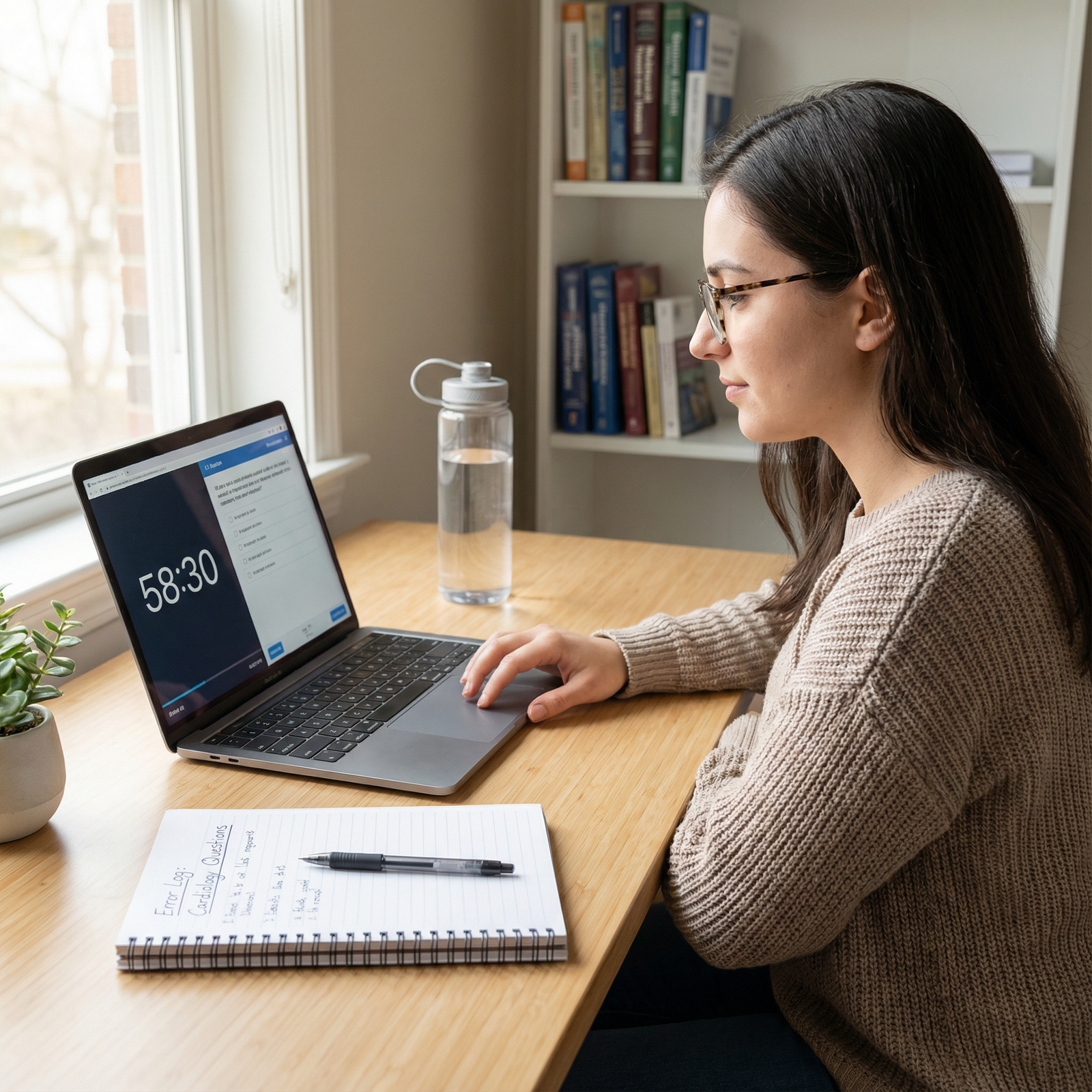
- Do full timed blocks (e.g., 40 questions in 60 minutes, or longer sections for MCAT/Step).
- Sit upright at a desk, no phone, no notes, minimal breaks.
Use the same tools you’ll see on exam day
- Familiarize yourself with the exam interface, highlighting tools, strikeout features, and calculator if applicable.
Treat practice tests like “dress rehearsals”
- Mimic exam timing (start time, length, break structure).
- Wear similar clothing layers, use similar snacks or hydration pattern.
Over time, your brain learns that “this environment is familiar,” lowering automatic stress responses.
4. Debrief Your Practice, Don’t Just Check Scores
Simply checking your percentage reinforces anxiety: “I’m not good enough.” Instead, make review a learning ritual:
For each missed or guessed question, ask:
- What concept did this test?
- Was my error due to knowledge, misreading, rushing, anxiety, or fatigue?
- What specific action will prevent this in the future (flashcard, notes, rule of thumb)?
Keep a “high-yield mistakes” log
- A simple document or notebook listing recurring patterns (e.g., misreading STEM, forgetting side effects of certain medications) with your correction plans.
When you see yourself improving patterns, anxiety often drops—even before your raw scores climb.
Mindfulness Techniques and Relaxation Skills for Test Anxiety
Strong preparation addresses the cognitive side of test anxiety; mindfulness techniques and relaxation skills address the physiological and emotional side. Both are essential.
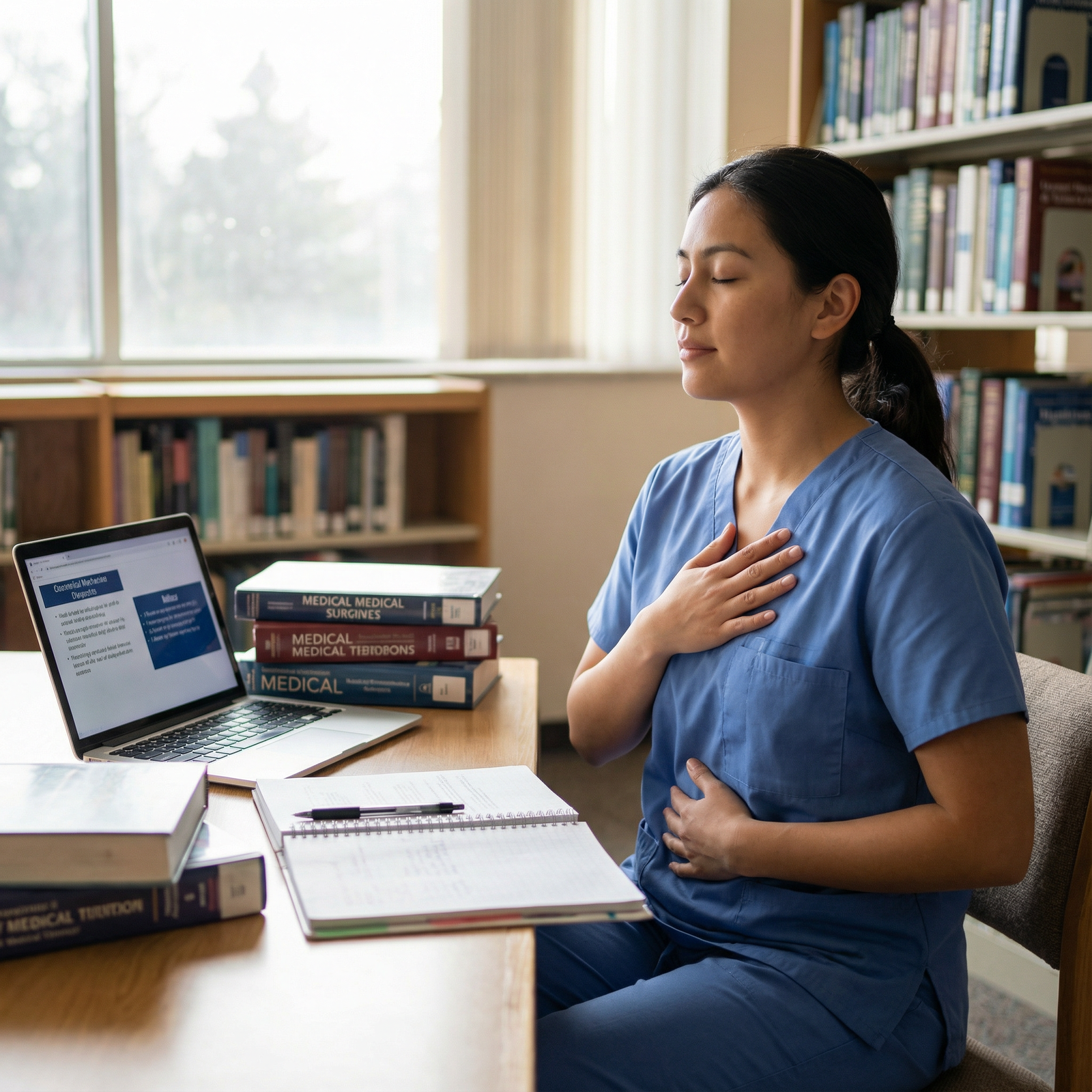
1. Breathing Exercises to Calm Your Nervous System
Your breathing pattern directly influences your autonomic nervous system. Short, shallow breaths tell your body you’re in danger; slow, controlled breaths signal safety.
Box breathing (4–4–4–4 method)
- Inhale quietly through your nose for a count of 4.
- Hold gently for a count of 4.
- Exhale slowly through your mouth for a count of 4.
- Pause with empty lungs for a count of 4.
- Repeat for 1–3 minutes.
How and when to use it:
- Before opening a practice exam block
- In the car or bus on the way to the test center
- Between sections or during a moment of panic in the exam
2. Mindfulness Techniques to Stay Present
Mindfulness helps you anchor attention to the present moment instead of spiraling into “what if” thoughts.
Simple mindfulness practices for students:
5–4–3–2–1 Grounding Exercise (great for acute anxiety):
- Name 5 things you can see
- 4 things you can feel
- 3 things you can hear
- 2 things you can smell
- 1 thing you can taste
- This can be done discretely at your desk if anxiety spikes mid-exam.
2-minute breath awareness:
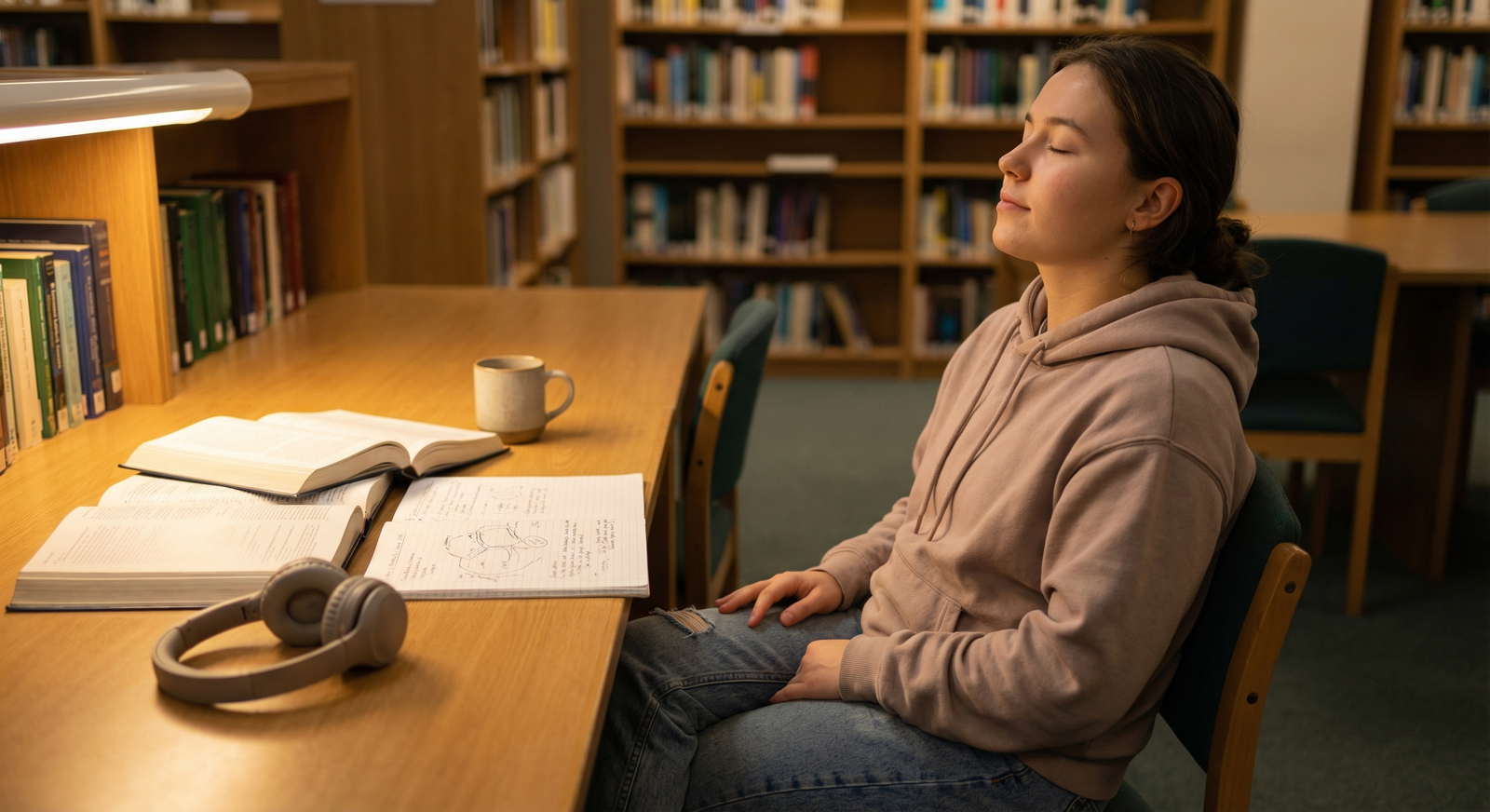
- Sit comfortably, close your eyes or soften your gaze.
- Gently focus on the sensation of air moving in and out of your nose or chest.
- When your mind wanders (it will), notice it without judgment and return to the breath.
Helpful tools:
Apps like Headspace, Calm, Insight Timer, or Ten Percent Happier offer short, evidence-informed meditations designed specifically for stress and performance.
3. Progressive Muscle Relaxation (PMR)
PMR helps release the muscle tension that often accompanies test anxiety.
How to practice PMR (5–10 minutes):
- Start at your feet:
- Tense your toes and feet for 5 seconds, then release completely for 10–15 seconds.
- Move upward:
- Calves → thighs → glutes → abdomen → hands → arms → shoulders → jaw → forehead.
- Focus on the contrast between tension and relaxation.
Use PMR:
- The night before exams to improve sleep quality
- During intense study days to reset your body between blocks
4. Visualization for Confidence and Performance
Visualization is a practical performance psychology tool used by elite athletes and high performers.
Try this short exercise:
- Sit comfortably, close your eyes.
- Picture yourself walking into the exam room feeling calm and grounded.
- Imagine reading questions clearly, staying focused, and making deliberate choices.
- Visualize finishing the exam and feeling satisfied that you did your best.
Repeat this imagery for 3–5 minutes several times in the week before your test; it trains your brain to expect a calm, controlled experience.
Rewiring Your Inner Dialogue: Positive Self-Talk and Cognitive Strategies
Your internal narrative about exams powerfully shapes anxiety. Many driven students carry harsh, critical inner voices—useful for motivation short-term, but devastating under stress.
1. Identify Common Negative Thoughts
Start by noticing patterns, such as:
- “I’m going to fail. Everyone else is more prepared.”
- “If I don’t crush this exam, my career is over.”
- “I always mess up under pressure.”
- “I’m not smart enough for this field.”
Write these down. Seeing them on paper helps you challenge them.
2. Challenge and Reframe Your Thoughts
Use a structured approach:
- Ask: Is this 100% true? What actual evidence supports or contradicts this thought?
- Consider alternate explanations:
- “I struggled on one exam, but I’ve improved my study strategies since then.”
- “My past performance has often been strong, even when I felt unprepared.”
- Create balanced, realistic statements, for example:
- Instead of: “I’m going to fail this exam.”
Say: “This exam will be challenging, but I have a plan and I’ve improved over time.” - Instead of: “If I don’t get a top score, I’m doomed.”
Say: “My score matters, but it’s one data point in a much longer career.”
- Instead of: “I’m going to fail this exam.”
3. Use Targeted Positive Affirmations
Affirmations work best when they’re specific, believable, and grounded in action.
Examples for exam preparation:
- “I am consistently building my knowledge each day.”
- “I’ve prepared thoughtfully and I’m capable of handling challenging questions.”
- “Anxiety is uncomfortable, but I can still perform well with it present.”
- “I don’t need to be perfect; I just need to do my best on this exam.”
Write 3–5 that resonate with you and:
- Place them on your desk or as your phone background
- Repeat them before starting study sessions and before practice exams
- Use them silently during moments of self-doubt on test day
Healthy Daily Habits That Support Stress Management and Exam Performance
Your brain is part of your body. Lifestyle choices directly impact your memory, focus, and resilience to stress.
1. Protect Your Sleep as a Non-Negotiable
Chronic sleep loss magnifies test anxiety and impairs performance—even if you study more hours.
Aim for: 7–9 hours per night in the weeks before the exam.
Specific tips:
- Keep a consistent bedtime and wake time, even on weekends.
- Avoid high-stimulation studying (like intense question banks) in the final 60–90 minutes before bed.
- Limit caffeine after mid-afternoon.
- Use a wind-down ritual: dim lights, short reading, light stretching, or a brief meditation.
- Avoid the “all-nighter trap”: sacrificing sleep the night before an exam reliably worsens recall, focus, and anxiety.
2. Eat for Stable Energy and Focus
What you eat in the days and hours before an exam affects how you feel.
General guidelines:
- Emphasize whole foods: lean proteins, whole grains, fruits, vegetables, and healthy fats.
- Avoid heavy, greasy, or very high-sugar meals right before studying or before the exam; they can cause sluggishness or energy crashes.
- Hydrate regularly but modestly before the exam so bathroom breaks don’t become a distraction.
- Manage caffeine:
- If you regularly drink coffee or tea, keep your usual amount—don’t significantly increase on test day.
- If you’re sensitive to caffeine, consider cutting off intake 6–8 hours before bedtime.
3. Use Physical Activity as a Built-In Stress Valve
Regular movement is one of the most powerful, underused anxiety management tools.
- Aim for at least 30 minutes of moderate exercise most days:
- Brisk walking, jogging, cycling, swimming, or yoga.
- During intense study blocks:
- Take 5–10 minute movement breaks between sessions—walk the hallway, stretch, or do a brief mobility routine.
- Consider a short walk or light stretching the morning of the exam to release nervous energy.
4. Protect Social Connection and Support
Isolation can amplify anxiety and distort perspective.
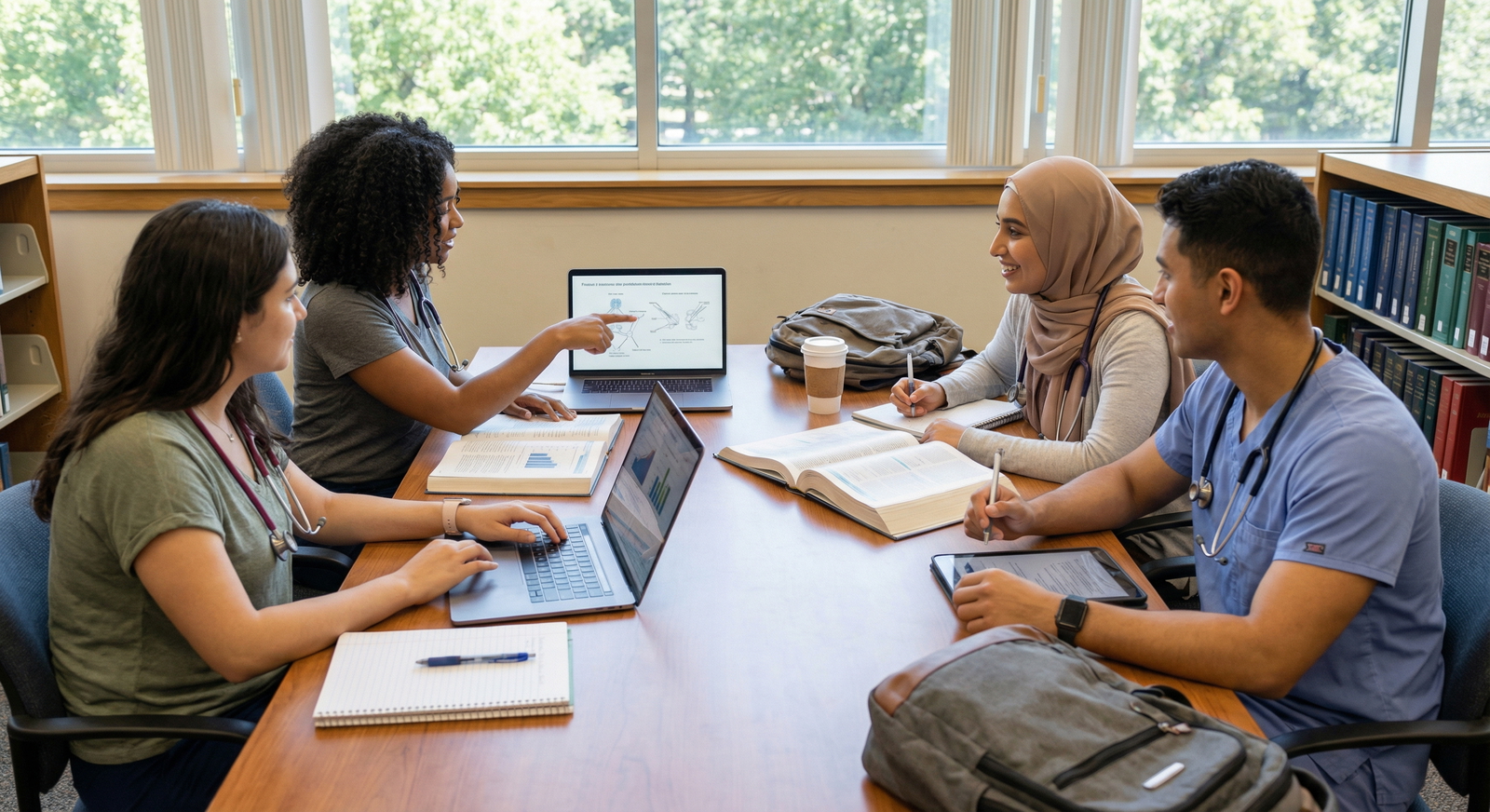
- Study with peers periodically (but choose those who are collaborative, not competitive or panic-driven).
- Share your concerns with a trusted friend, mentor, resident, or advisor.
- If your anxiety feels overwhelming or unmanageable, consider speaking with a mental health professional—especially one familiar with the demands of medical training.
Test Day Strategies: Managing Anxiety When It Counts Most
Even with great preparation, it’s normal to feel some pre-exam jitters. The goal isn’t to have zero anxiety—it’s to keep it in a manageable range so you can think clearly and perform at your best.
1. The Night Before the Exam
- Stop heavy studying at a preset time (e.g., 6–8 PM).
- Spend 30–60 minutes on light review only:
- Key formulas, summary sheets, or high-yield cards.
- Prepare logistics:
- Admission ticket, ID, directions to the test center, allowed snacks, earplugs if permitted.
- Plan transport and timing so unexpected delays don’t spike stress.
- Use a relaxing wind-down:
- Light reading, stretching, warm shower, or a brief guided meditation.
- Aim for a full night of sleep, not last-minute cramming.
2. The Morning of the Exam
- Eat a balanced, familiar breakfast (not the time to try something new).
- Use 5–10 minutes of breathing exercises or a short mindfulness practice to center yourself.
- Arrive early:
- Build in extra time for transit, parking, check-in, and bathroom use.
- Avoid last-minute panic conversations:
- If peers are catastrophizing or quizzing each other aggressively, step away and protect your mental state.
3. During the Exam: Practical Anxiety Management
Use structured test-taking strategies:
- First pass, then refine:
- Answer straightforward questions first to build momentum.
- Mark harder questions and return later to avoid getting stuck and panicked.
- Apply time checkpoints:
- Divide total questions by time and check every so often that you’re on track (e.g., after every 10–15 questions).
- If your mind blanks or anxiety spikes:
- Pause for 3–4 cycles of slow, deep breathing.
- Use a grounding technique: feel your feet on the floor, your back on the chair, notice your pen in hand.
- Re-read the question stem slowly, and try to eliminate obviously wrong answers.
Talk to yourself like a calm attending:
- “Slow is smooth, and smooth is fast.”
- “One question at a time.”
- “I don’t need to know everything; I need to reason through what I know.”
4. After the Exam: Healthy Decompression
- Give yourself permission to not autopsy every question immediately.
- Do something unrelated and restorative: walk, meal with friends, music, light exercise, or rest.
- When ready, reflect on the process, not just the outcome:
- What strategies worked well?
- Where did anxiety show up, and how did you handle it?
- What will you adjust for the next exam?
This approach reinforces growth and resilience instead of rumination.

Frequently Asked Questions About Test Anxiety and Exam Preparation
1. Is test anxiety normal for medical and premed students?
Yes. Test anxiety is extremely common among high-achieving students, especially in competitive fields like medicine. Many peers who appear calm externally still experience internal worry or physical symptoms. The key is not whether you feel anxiety, but how you manage it. With structured study strategies, mindfulness techniques, and healthy lifestyle habits, most students can significantly reduce the impact of test anxiety on performance.
2. How do I know when my test anxiety is severe enough to seek professional help?
Consider seeking help from a mental health professional (e.g., psychologist, counselor, psychiatrist) if:
- Your anxiety is so intense that you repeatedly avoid exams or can’t complete them.
- You have panic attacks or severe physical symptoms around tests.
- Your daily functioning, sleep, or relationships are being disrupted.
- Self-guided strategies (breathing, study planning, mindfulness) haven’t helped after consistent practice.
Many medical schools, universities, and hospitals offer confidential counseling specifically for trainees—taking advantage of these resources is a sign of professionalism, not weakness.
3. Can mindfulness techniques really improve my exam performance?
Mindfulness doesn’t replace studying, but it can enhance how well your preparation is expressed under pressure. Research shows that mindfulness techniques can:
- Reduce perceived stress and anxiety
- Improve attention, working memory, and emotional regulation
- Decrease rumination and negative self-talk
For exams, this translates into:
- Less time lost to panic or blanking out
- Better focus on question stems and key details
- More resilience when encountering unfamiliar or challenging questions
Consistent practice—even 5–10 minutes a day—has cumulative benefits.
4. What are the most effective study strategies to reduce test anxiety?
The strategies that most reliably lower test anxiety are those that make your preparation visible and trackable:
- A structured, realistic study plan aligned with exam content
- Active learning (question banks, flashcards, teaching others) instead of passive reading
- Spaced repetition to reinforce learning over time
- Regular timed practice under exam-like conditions
- Systematic error review and tracking of patterns
These methods build evidence you can point to when anxiety says, “You’re not ready.”
5. What should I do if I feel anxious during the exam and my mind goes blank?
When your mind goes blank, it’s usually your fight-or-flight system hijacking your working memory. You can often reset it with a brief, deliberate sequence:
- Pause and take 3–5 slow, deep breaths (e.g., in for 4, out for 6).
- Ground yourself: feel the chair, your feet, the pen in your hand.
- Re-read the question slowly, focusing on the last sentence and key details.
- Eliminate clearly wrong answers first; often you can narrow it down even without full recall.
- Make your best reasoned choice, mark the question if allowed, and move on.
Remind yourself: “Temporary blanking is a stress response, not proof I don’t know this.” Often, as your body calms down, previously studied information becomes accessible again.
Managing test anxiety is a skill set—one that you can build just like clinical reasoning or physical exam technique. By combining smart exam preparation, mindfulness techniques, and practical stress management habits, you can transform your experience of exams from panic-driven to purposeful and controlled. Over time, this not only boosts your scores, but also builds the emotional resilience you’ll rely on throughout your medical career.