
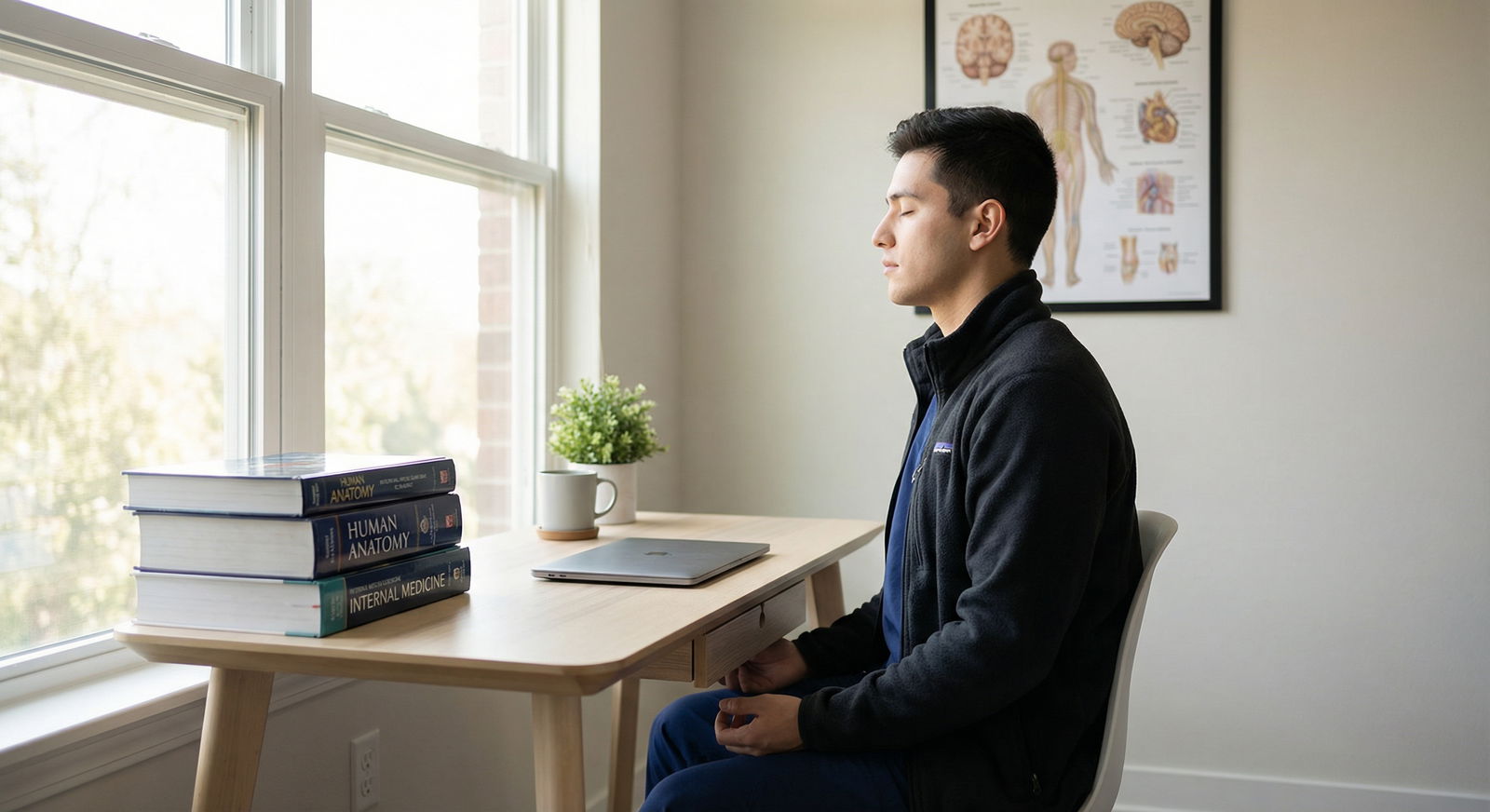
Exams in medical school and other high-stakes programs can feel like make‑or‑break moments. Even when you’ve studied diligently, your heart may race, your hands may shake, and your mind may go blank as soon as you sit down to begin. This isn’t a character flaw—it’s a predictable stress response. But it’s also something you can train.
Mental Imagery—also called Visualization Techniques or mental rehearsal—is a simple, evidence-informed tool that can lower Exam Anxiety, improve Student Performance, and provide a meaningful Confidence Boost in the days and weeks leading up to a major test. Used consistently, it can become as fundamental to your exam prep as Anki, practice questions, or review sessions.
This guide walks you through what mental imagery is, why it works, and exactly how to use it strategically before and during exams, with a special focus on medical students and other high-pressure training environments.
Understanding Mental Imagery and Why It Works
What is Mental Imagery?
Mental imagery is the deliberate process of creating vivid, controlled experiences in your mind without external sensory input. It’s not random daydreaming—it’s purposeful mental practice.
For exam preparation, this can include:
- Visualizing yourself walking into the exam room feeling calm and prepared
- Imagining reading questions clearly and answering with confidence
- Rehearsing how you’ll respond to difficult questions without panicking
- Envisioning yourself finishing the exam with time to review and feeling satisfied
- Mentally walking through productive study sessions—sitting down, focusing, and understanding material deeply
Although it’s called “visualization,” effective mental imagery can engage all your senses:
- Sight: The exam room, your desk, the computer interface, your notes
- Sound: The quiet hum of the room, the ticking clock, your own steady breathing
- Touch: The feel of the chair, the keyboard, the pen in your hand
- Body sensations: Relaxed shoulders, steady heartbeat, grounded feet
- Emotions: Calm focus, curiosity, determination, and confidence
You don’t need to see perfect, movie-like images in your mind. The key is clear intention and consistent rehearsal, not cinematic quality.
The Science Behind Visualization Techniques
Research in sports psychology and cognitive neuroscience shows that mental rehearsal and physical performance share overlapping brain pathways. When you visualize an action, your brain activates many of the same regions it uses to perform that action in real life.
Some key points:
- Motor and sensory areas of the brain fire during vivid imagery, even without movement.
- Emotion and stress centers, such as the amygdala and autonomic nervous system, respond to imagined scenarios.
- Repeated mental rehearsal creates neural pathways similar to physical practice, strengthening patterns of calm, focused behavior and successful performance.
- Cognitive-behavioral therapy (CBT) for anxiety often uses imaginal exposure and positive imagery to retrain how the brain responds to stressful situations.
For exams, this means:
- When you repeatedly imagine yourself handling an exam calmly, your brain begins to treat that response as “normal.”
- When you rehearse an adaptive script (e.g., “If I see a tough question, I breathe, skip it, and return later”), you’re training yourself to execute that script automatically.
- Visualization can interrupt the “what if I fail?” worry loop and replace it with specific, constructive mental habits.
Mental imagery does not replace content mastery—but it can greatly improve how well you access what you know under pressure.
Key Benefits of Mental Imagery for Exams and Clinical Assessments
1. Reducing Exam Anxiety and Panic Responses
Exam Anxiety often shows up as:
- Racing heart, sweaty palms, shallow breathing
- Catastrophic thoughts: “I’m going to fail,” “Everyone else is more prepared”
- Mind going blank in front of questions you actually studied
Intentional mental imagery helps by:
- Shifting attention away from worry and toward a structured, calming scenario
- Pairing exam situations with relaxed breathing and grounded body sensations
- Rehearsing healthy responses to stress (breath, re-focus, move on) instead of panic
Over time, this can recondition how your body responds to exam cues—desk, computer screen, proctor, test booklet—so they trigger focus rather than fear.
2. Improving Performance Under Pressure
You may know the material, but performance depends on:
- How efficiently you read and interpret questions
- How quickly you recover from difficult items
- How effectively you manage time and emotional surges
Visualization Techniques let you mentally rehearse:
- Your question strategy (read stem, summarize in your own words, identify key clues, eliminate options)
- The timeline of the exam (when you’ll check the clock, when you’ll take brief mental breaks)
- Your response to problems (“If I get stuck, I will flag the question, breathe once, and move on.”)
This kind of consistent rehearsal builds a robust mental script that can run automatically under stress, which supports better Student Performance even when uncertainty is high.
3. Providing a Genuine Confidence Boost
Confidence is not pretending you’re perfect; it’s trusting you can handle what comes.
Mental Imagery supports a realistic Confidence Boost by:
- Reminding you of the work you’ve already done (practice questions, spaced repetition, review sessions)
- Repeatedly seeing yourself navigating difficulties successfully, not just “acing everything”
- Replacing vague fears (“I’ll freeze”) with concrete, rehearsed responses (“I’ll take a slow breath and re-read the stem.”)
Over days and weeks, this gradually shifts your self-talk from “I always choke on exams” to “I’m learning to respond differently, and I’ve practiced how I want to show up.”
4. Enhancing Retention and Understanding
For highly conceptual or spatial material—like anatomy, physiology, or legal structures—imagery can also strengthen memory:
- Visualize anatomical pathways as 3D structures in your mind.
- Picture a disease process as a short mental animation—for example, how a clot forms and leads to a stroke.
- Imagine yourself explaining a concept to a patient or colleague, using clear, simple language.
Linking content to vivid imagery can make recall more efficient on exam day, especially for complex systems or processes.
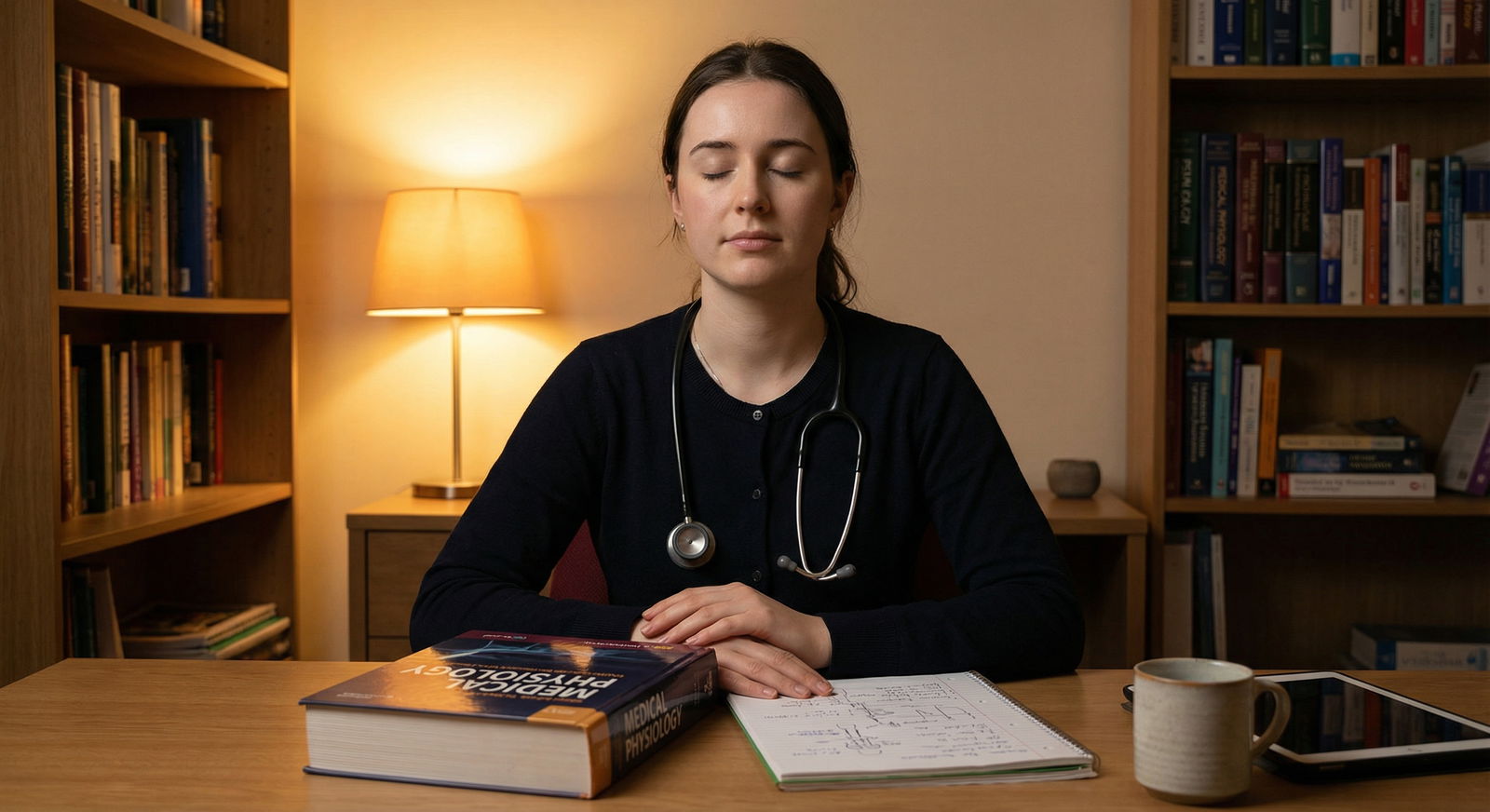
How to Implement Mental Imagery Step‑by‑Step
You don’t need special equipment or hours of free time. A structured routine of 5–15 minutes a day can make a difference over a few weeks.
Step 1: Set Your Intention and Choose a Target Scenario
Decide what you want your mental imagery session to focus on. Some examples:
- Walking through the entire exam experience (from leaving your house to finishing the test)
- Practicing how you respond to a surge of anxiety halfway through
- Visualizing a focused, efficient study block the night before
- Rehearsing oral exams, OSCE stations, or viva voce interactions
Make your goal specific:
- “I want to feel calm and focused during my Step exam.”
- “I want to respond constructively if I see unfamiliar content.”
- “I want to stay composed and systematic during OSCE stations.”
Step 2: Find a Quiet, Comfortable Space
Choose a location where you’re unlikely to be interrupted:
- A quiet corner of the library
- Your bedroom or study room
- A bench in a calm park
Turn off notifications and set a gentle timer for 5–15 minutes so you’re not checking the clock.
Step 3: Ground Your Body and Breathe
Before visualizing, calm your nervous system:
- Sit or lie down comfortably with your back supported.
- Place your feet flat on the floor or rest comfortably on a surface.
- Try a simple breathing pattern:
- Inhale through your nose for a count of 4
- Hold for a count of 2
- Exhale slowly through your mouth for a count of 6
- Repeat for 5–8 cycles
As you breathe, notice:
- Your shoulders dropping slightly
- Your jaw unclenching
- The feeling of the chair or bed supporting you
This step tells your brain: It’s safe to practice. We’re not in danger.
Step 4: Build a Clear Mental Script
Now, start your Mental Imagery session with a structured sequence. Go slowly and deliberately.
4.1. Begin Before the Exam
Imagine:
- Waking up on exam day feeling steady and prepared
- Eating a light, familiar breakfast
- Packing your ID, stethoscope (if OSCE/clinical), water, and snacks calmly
- Traveling to the test center or logging on for an online exam
- Noticing mild nerves—then centering your breath and posture
Your goal is not to imagine a completely anxiety-free experience; it’s to see yourself managing normal nerves well.
4.2. Entering the Exam Environment
Picture the details:
- The exam building or room, doors, signage, check-in desk
- The proctor, other students, ambient noise
- Sitting down, arranging your materials, adjusting the chair
- Taking one slow, steady breath before reading the first question
Anchor yourself in all senses:
- Sight: The monitor, the question book, the clock
- Sound: Soft footsteps, chairs moving, quiet room sounds
- Touch: Your hands on the keyboard or pen, feet on the floor
4.3. Answering Questions Calmly and Efficiently
Now, move into the heart of the exam:
- See yourself reading the first question carefully, summarizing the stem in your mind.
- Imagine recognizing the topic and beginning to generate possible answers.
- Watch yourself eliminate wrong options calmly, even if you’re uncertain.
- When you hit a difficult question, rehearse your coping script:
- Notice your tension (“My heart sped up.”)
- Take one slow breath
- Decide: “I will choose the best answer I can, flag it if allowed, and move on.”
Practice the feeling of staying in motion—you keep progressing, even through challenges.
4.4. Handling Anxiety Surges Constructively
Deliberately rehearse a moment of stress:
- Imagine reaching a block of tougher questions.
- You feel a spike in anxiety: tight chest, faster breathing, negative thoughts.
- Now visualize yourself:
- Pausing for one long, slow exhale
- Relaxing your shoulders and unclenching your jaw
- Silently telling yourself: “This is just anxiety. I know what to do. One question at a time.”
- Continuing with your planned strategy
You’re training your brain to expect and handle stress, rather than be blindsided by it.
4.5. Finishing Strong
Visualize the final stretch:
- You notice there are 15 minutes left and roughly the right number of questions remaining.
- You stay steady, resist the urge to rush frantically.
- You review flagged questions calmly where possible.
- When time is called or you submit, imagine:
- Taking a relieved, deep breath
- Acknowledging, “I did my best with the tools I had today.”
- Walking out of the exam tired but proud of how you handled yourself.
This trains you to judge success by your process, not just your score—a healthier and often more effective mindset.
Step 5: Add Positive, Evidence-Based Affirmations
Integrate realistic, grounded affirmations into your imagery. Avoid empty platitudes; aim for statements rooted in your actual effort:
- “I have prepared steadily, and I can access what I know.”
- “Feeling anxious does not mean I am unprepared; it means I care.”
- “I can take a breath, refocus, and move to the next question.”
- “I don’t need to be perfect to perform well.”
- “One question at a time—I can handle this.”
Repeat these silently during visualization and, later, during the real exam as context cues.
Step 6: Practice Regularly and Briefly
Consistency is more important than duration. For high-stakes exams, try:
- 4–8 weeks before:
- 5–10 minutes of imagery, 3–5 times per week
- 1–2 weeks before:
- 10–15 minutes daily (shorter sessions are fine if that’s all you can do)
- Day before and day of exam:
- 5–10 minutes focused on calm, confident process, not outcome
You can also do micro-rehearsals:
- A 60-second mental check-in and visualization right before starting a practice block
- Quick imagery of handling a tough question before you begin a practice exam
Real‑World Applications: Case Scenarios from High-Stakes Training
Case Scenario 1: First-Year Medical Student Facing Finals
Amira, a first-year medical student, consistently felt overwhelmed before major exams. Despite solid practice question scores, she experienced:
- Palpitations and nausea on exam mornings
- Racing thoughts about failing out
- Difficulty reading questions carefully
Her approach:
- She scheduled 10 minutes of Mental Imagery right after breakfast, Monday–Friday, for four weeks before finals.
- Her script included:
- Walking into the exam room, noticing mild nerves, then taking two slow breaths
- Seeing herself reading each question fully, underlining key details in her mind
- Rehearsing how she would pause and breathe when panic arose
Outcome:
- On exam day, Amira still felt anxious, but she recognized the sensations as familiar and manageable.
- She used her rehearsed breathing strategy several times and reported less mind blanking.
- Her scores improved modestly, but she noted a dramatic improvement in her experience and sense of control.
Case Scenario 2: Law Student Preparing for Oral Arguments
James, a law student, struggled with confidence during oral arguments and viva-style examinations. He knew the content but froze when questioned directly.
His Mental Imagery plan:
- Visualized walking to the podium, feeling his heart rate rise, and choosing to stand tall and breathe slowly.
- Imagined the examiner asking a challenging question, then saw himself:
- Pausing briefly rather than rushing to answer
- Reframing the question in his own words
- Delivering a structured, composed response
After several weeks of daily 5–10 minute sessions, James reported:
- Feeling less dread leading up to oral exams
- More ability to recover mid-answer instead of spiraling when he stumbled
- Improved verbal fluency and clarity under pressure
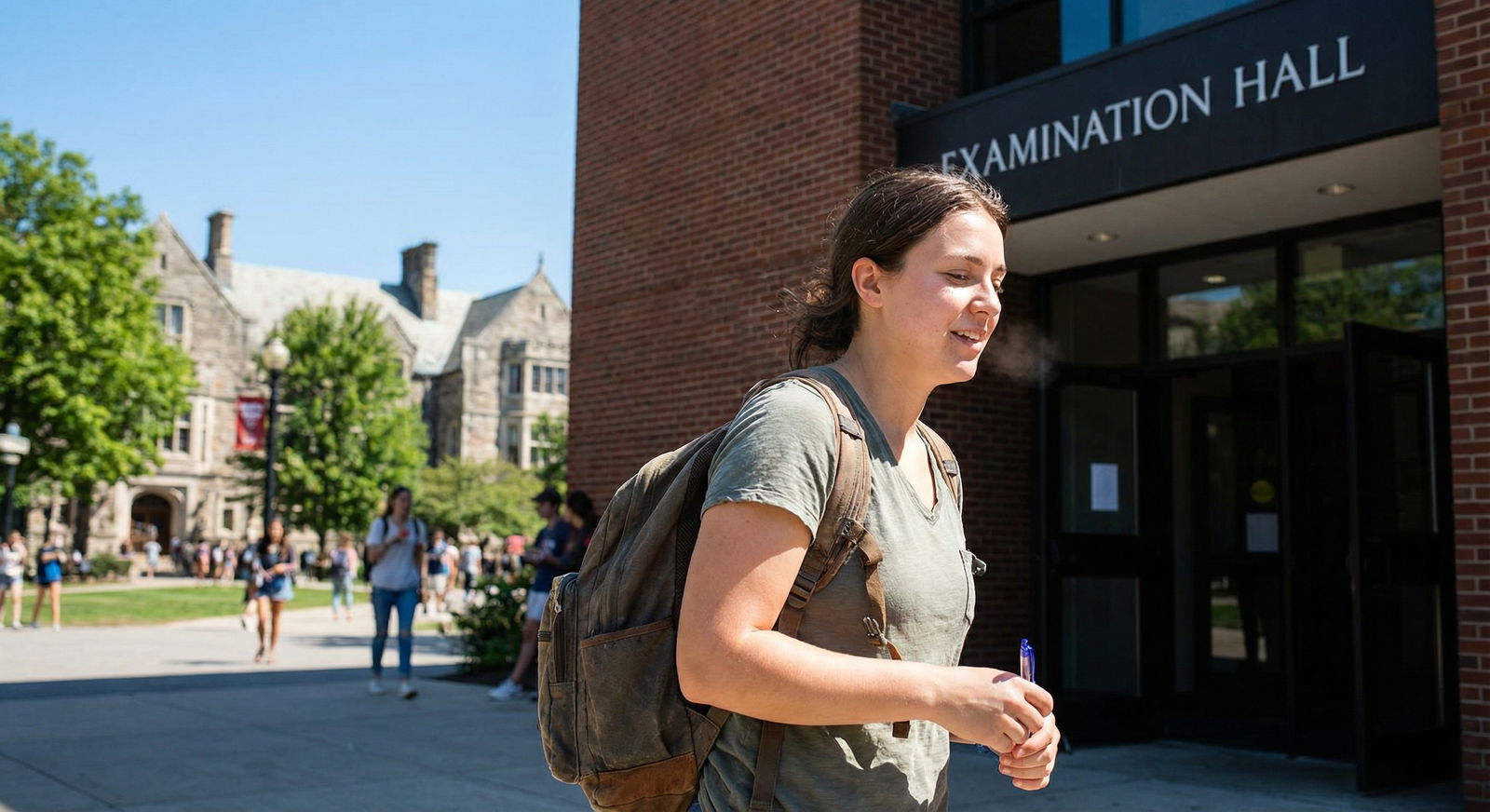
Practical Tips, Common Pitfalls, and Integrating Imagery into Medical School Life
Making Mental Imagery Work for You
Pair it with existing routines:
Attach short visualization sessions to habits you already have:- After brushing your teeth at night
- Right after your first coffee
- Immediately following a short stretching break
Use brief recordings:
Record yourself describing a calm, successful exam experience and play it back while you sit with eyes closed. This can help if your mind tends to wander.Combine with practice questions:
Before timed practice blocks, spend 60–90 seconds visualizing:- Starting the block calmly
- Handling the first difficult question
- Finishing the set with steady effort
Common Pitfalls and How to Handle Them
“My mind keeps drifting.”
That’s normal. Each time you notice, gently bring your attention back to the script. Treat it like reps at the gym.“I only imagine worst-case scenarios.”
Acknowledge those images, then consciously shift to a more adaptive version:- Worst case: “I see myself panicking and failing.”
- Adaptive version: “Okay, imagine I feel panic—and then I pause, breathe, and restart my strategy.”
“I can’t see images clearly.”
Focus on sensations, words, and emotions instead:- Imagine the feeling of your breath slowing
- Hear the sound of your internal voice saying, “One question at a time”
- Picture key words (“Calm,” “Steady,” “Prepared”) rather than full scenes
“I feel like I’m lying to myself.”
Keep your imagery and affirmations realistic:- Instead of “I will get a perfect score,” use “I’m prepared to do my best with what I’ve learned.”
Integrating Imagery into a Comprehensive Exam Strategy
Mental Imagery is not a magic fix—it works best when paired with:
- Sound study strategies: spaced repetition, active recall, practice questions
- Healthy basics: sleep, hydration, regular meals, limited last‑minute cramming
- Test-taking skills: time management, systematic question analysis
Think of it as a performance enhancer for the skills you already have, especially under stress.
FAQ: Mental Imagery, Exam Anxiety, and Performance
Q1: Can anyone use Mental Imagery effectively, even if I’m “not visual”?
Yes. Mental imagery isn’t limited to people who see vivid pictures in their mind. You can focus on:
- Internal dialogue (what you’d say to yourself)
- Bodily sensations (breathing, posture)
- Emotions (calm focus, determination) Effectiveness comes from consistent, intentional rehearsal, not from having perfect mental pictures.
Q2: How long and how often should I practice for real impact on Exam Anxiety?
Most students benefit from:
- 5–15 minutes per session
- 3–7 days per week
- For at least 2–4 weeks before a major exam
Even short, 1–2 minute “imagery bursts” before practice blocks or on the morning of the exam can reinforce your mental script.
Q3: Is Mental Imagery just positive thinking or toxic positivity?
No. Effective visualization is realistic and process-focused, not wishful thinking. It includes:
- Acknowledging that anxiety will show up
- Practicing how you’ll respond when it does
- Emphasizing effort, strategy, and composure rather than guaranteeing a certain score
It’s compatible with honest self-assessment and rigorous preparation.
Q4: Can these Visualization Techniques help beyond written exams (e.g., OSCEs, interviews, presentations)?
Absolutely. Mental Imagery is widely used in:
- OSCEs/clinical skills exams: rehearsing patient introductions, history-taking structure, and physical exam flow
- Residency interviews: mentally practicing entering the room, greeting interviewers, and answering common questions calmly
- Presentations and teaching: visualizing standing in front of an audience, handling questions, and maintaining poise
The same principles apply: rehearse the setting, your body language, your voice, and your coping strategies for nerves.
Q5: What if Mental Imagery alone isn’t enough to control my Exam Anxiety?
If anxiety is:
- Causing repeated panic attacks
- Severely disrupting sleep or appetite
- Preventing you from attending exams or studying effectively
then Mental Imagery should be one tool among others, including:
- Speaking with your school’s counseling or wellness services
- Considering cognitive-behavioral therapy (CBT), which has strong evidence for anxiety
- Consulting a healthcare professional about whether additional treatment (e.g., medications) might help
Seeking support is a sign of professionalism and self-awareness, not weakness.
By integrating Mental Imagery into your regular exam preparation, you can intentionally train not just what you know, but how you show up under pressure. Over time, this can transform exam day from something that happens to you into a challenge you are genuinely prepared to meet—one steady breath, and one question, at a time.


