Self-Care Strategies to Mitigate Test Anxiety: A Comprehensive, Evidence-Informed Approach
Test Anxiety is common across all levels of training, but it can feel especially intense in medical school, residency, and during high-stakes board exams. When unmanaged, anxiety can impair recall, cloud judgment, and undermine months of preparation. When managed well, it can be channeled into focused energy and improved performance.
This expanded guide takes a comprehensive, practical look at Self-Care, Mental Health, Stress Management, and Study Strategies that specifically target test anxiety. While examples draw heavily from medical training, the principles apply to anyone facing important exams.
Understanding Test Anxiety in Medical Education
What Is Test Anxiety?
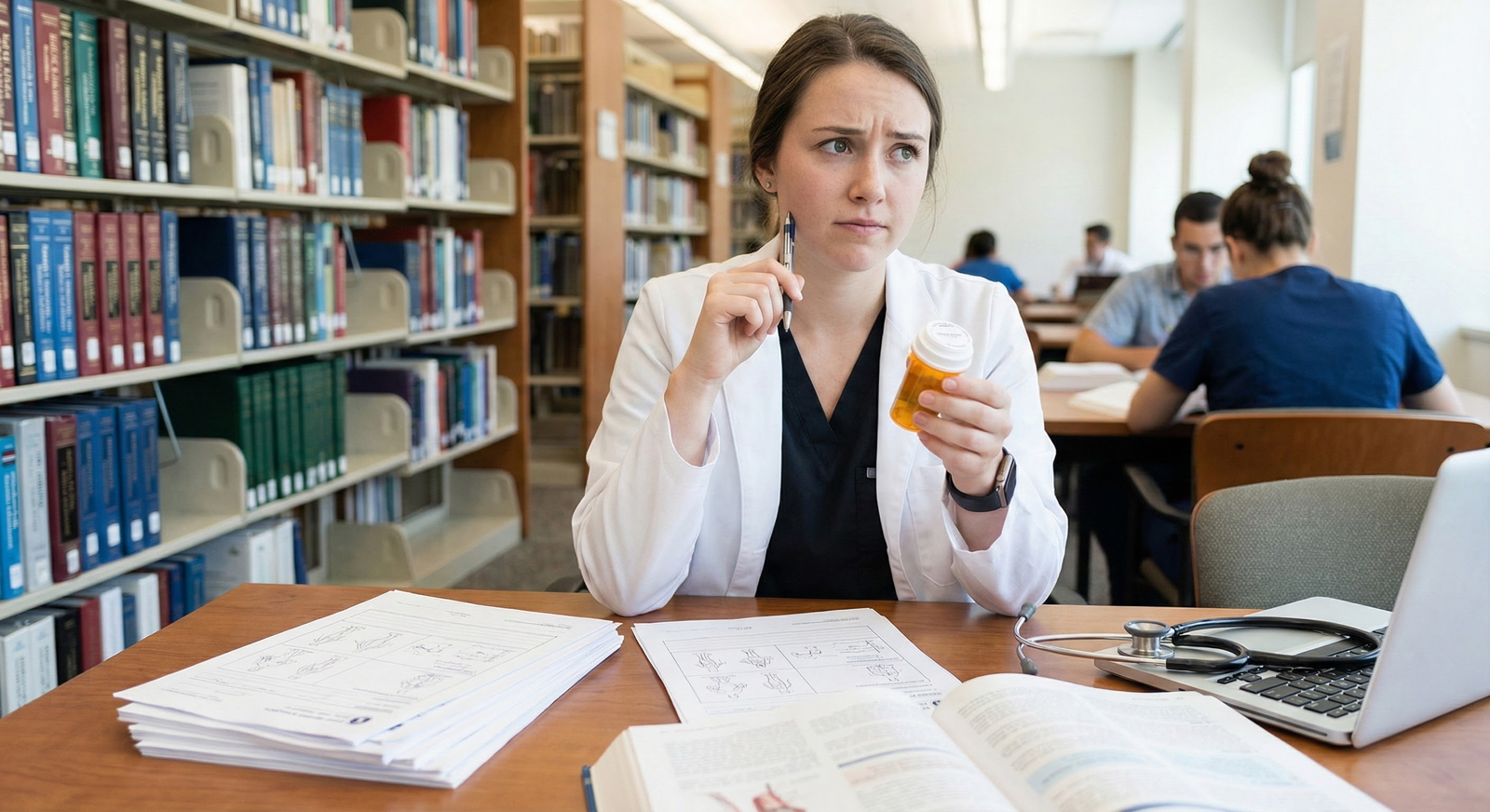
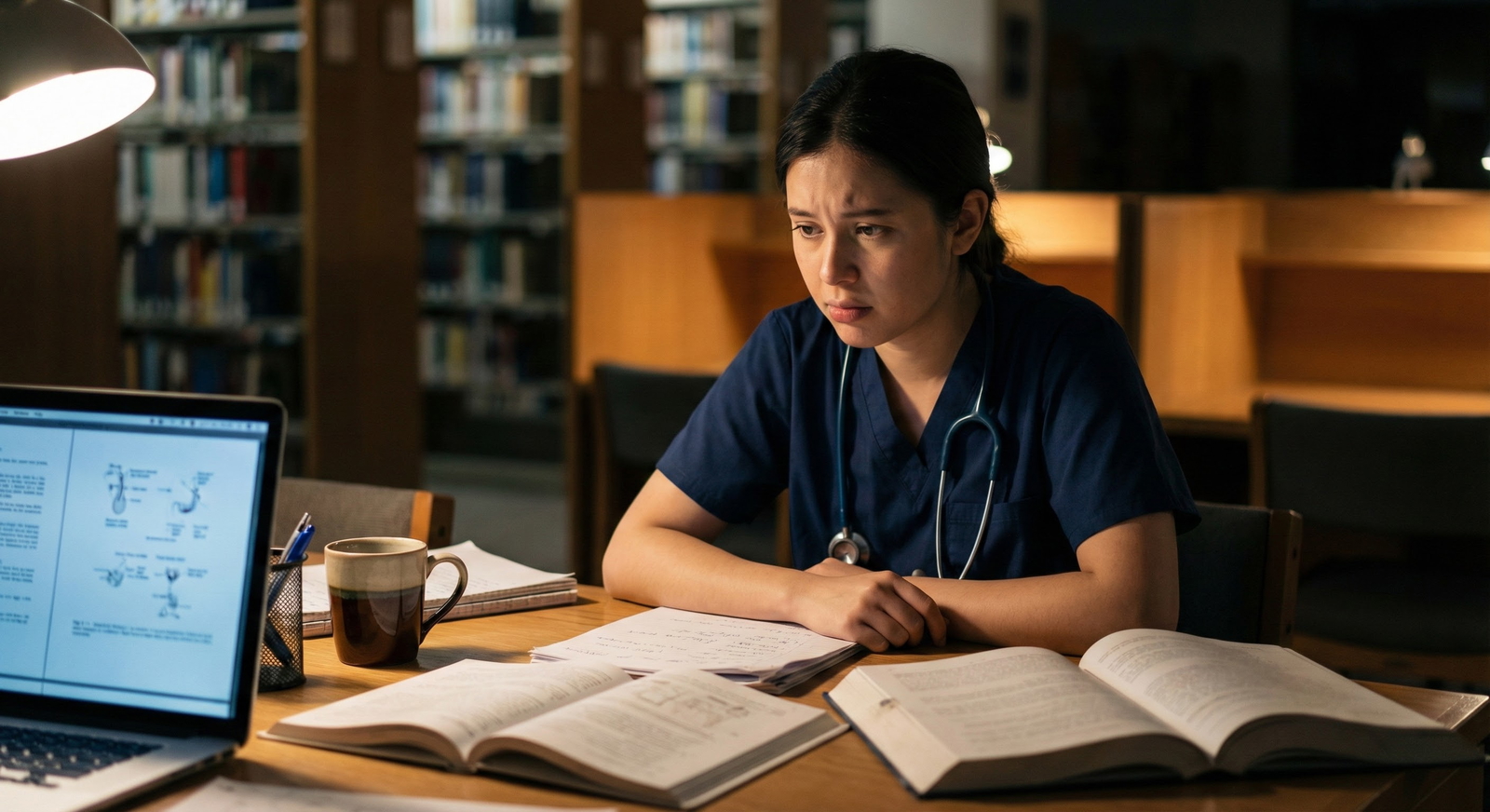
Test anxiety is a specific form of performance anxiety that shows up in the context of exams, OSCEs, shelf exams, and board tests. It’s more than just “being nervous”—it’s a cluster of physical, cognitive, and emotional symptoms that interfere with your ability to perform at your true level.
Common symptoms include:
- Physical: Rapid heart rate, sweating, nausea, headache, muscle tension, shortness of breath, stomach discomfort, trouble sleeping before the exam
- Cognitive: Racing thoughts, difficulty focusing, mind going blank, catastrophizing (“If I fail this, I’ll never match”), perfectionistic thinking
- Emotional: Fear, irritability, dread, shame, feeling overwhelmed or “on edge”
- Behavioral: Procrastination, overstudying without breaks, avoidance of practice exams, excessive reassurance seeking
In the medical training environment—where performance feels tied to identity, future career, and financial stability—these symptoms can be intense.
Why Self-Care Is a Core Part of Test Preparation
In medical culture, “grind mode” is often glorified: long hours, little sleep, skipped meals, no days off. Over time, this erodes resilience and amplifies anxiety.
Self-Care is not indulgent or optional; it is a performance strategy and a mental health necessity. When integrated into your exam preparation, effective self-care:
- Reduces baseline stress and autonomic arousal
- Improves concentration, memory, and decision-making
- Increases emotional bandwidth to handle setbacks (e.g., low practice scores)
- Builds confidence and a sense of control over your preparation
- Decreases risk of burnout, depression, and chronic anxiety
The rest of this guide walks through physical, emotional, mental, and holistic self-care strategies—each with concrete, exam-focused examples.
Physical Self-Care Strategies: Building a Foundation for Cognitive Performance
Physical health strongly influences cognitive performance and Stress Management. Think of these strategies as the “infrastructure” supporting your study plan.

1. Regular Exercise as a Natural Anxiolytic
Regular exercise is one of the most effective non-pharmacologic interventions for anxiety. It increases endorphins, supports sleep, and reduces muscle tension.
Guidelines:
- Aim for 150 minutes per week of moderate-intensity exercise (e.g., brisk walking, light jogging, cycling, swimming) or 75 minutes of vigorous activity.
- Even 10–20 minutes of movement between study blocks can reset your nervous system.
Practical ways to integrate exercise into a busy study schedule:
- Pomodoro walk breaks: After each 50–60-minute study session, take a 5–10-minute brisk walk, stretch, or do light bodyweight exercises.
- Structured movement blocks: Schedule three 30-minute workouts per week (e.g., Monday, Wednesday, Saturday). Treat them like mandatory study sessions.
- Low-barrier options on intense days: If you’re deep into board review, do a 10-minute yoga video, a short walk around the block, or light stretching instead of skipping movement entirely.
Medical student example:
During a 6-week dedicated Step study period, you might walk for 20 minutes each morning listening to lightly educational content (e.g., pharm mnemonics) and do 5 minutes of stretching after each 2-hour study block. Over time, this rhythm both boosts retention and blunts test anxiety.
2. Balanced Nutrition for Brain and Mood
Nutrition is tightly linked to Mental Health. Blood sugar swings, dehydration, and excessive caffeine can all fuel anxiety.
Key principles:
- Aim for balanced meals with:
- Complex carbohydrates (e.g., oats, brown rice, quinoa, whole grain bread)
- Lean proteins (e.g., eggs, chicken, beans, Greek yogurt, tofu)
- Healthy fats (e.g., nuts, seeds, avocado, olive oil)
- Fiber-rich fruits and vegetables
- Limit high-sugar foods that cause rapid spikes and crashes.
- Use caffeine strategically, not continuously.
Examples of test-prep friendly meals and snacks:
- Breakfast before a long study block:
Oatmeal with berries, chia seeds, and a spoon of nut butter; or scrambled eggs with whole grain toast and fruit. - Study snacks:
Mixed nuts, apple slices with peanut butter, hummus with carrots, Greek yogurt, or cheese with whole-grain crackers. - Before exam day:
Choose something familiar, balanced, and easy to digest (e.g., toast with eggs and fruit). Avoid trying new foods or heavy/fried meals.
Caffeine and anxiety:
- Caffeine in moderation can improve alertness, but high doses may worsen Test Anxiety (palpitations, jitteriness).
- Try to cap intake at 1–2 cups of coffee equivalents per day, and avoid caffeine after mid-afternoon to protect sleep.
3. Hydration to Support Cognitive Function
Even mild dehydration can worsen concentration, headaches, and fatigue—making anxiety feel worse.
Simple strategies:
- Keep a reusable water bottle at your desk and in clinic.
- Aim for 2–3 liters per day, more if you’re physically active or in a hot environment.
- Pair hydration with routine tasks:
- Drink a glass of water after waking, with each meal, and at the start of each study session.
On exam day, hydrate normally but avoid over-drinking right before the test to prevent frequent bathroom breaks that might spike anxiety.
4. Adequate Sleep as a Non-Negotiable Study Tool
Sleep is where consolidation of learning happens. Chronic sleep deprivation increases cortisol, worsens mood, slows recall, and boosts anxiety.
For most adults, 7–9 hours of sleep per night is ideal.
Sleep hygiene strategies for exam periods:
- Consistent schedule: Go to bed and wake up at roughly the same times every day, even on weekends.
- Wind-down routine (20–60 minutes):
- Dim lights, stop studying, avoid emotionally activating content.
- Try reading something non-medical, stretching, or practicing breathing exercises.
- Screen management: Avoid intense screen use at least 30–60 minutes before bed, or use blue-light filters and night mode.
- Protect exam-eve sleep:
Do not cram until 2 a.m. the night before a high-stakes test. Your recall and decision-making will suffer more from lost sleep than from missing a few extra questions of review.
If anxiety makes it hard to fall asleep, practicing relaxation techniques (see below) or using a consistent bedtime routine can reduce pre-sleep arousal.
Emotional Self-Care Strategies: Managing Your Inner Experience
While physical self-care lowers physiological arousal, emotional self-care addresses fear, self-criticism, and the narrative you hold about performance and failure.
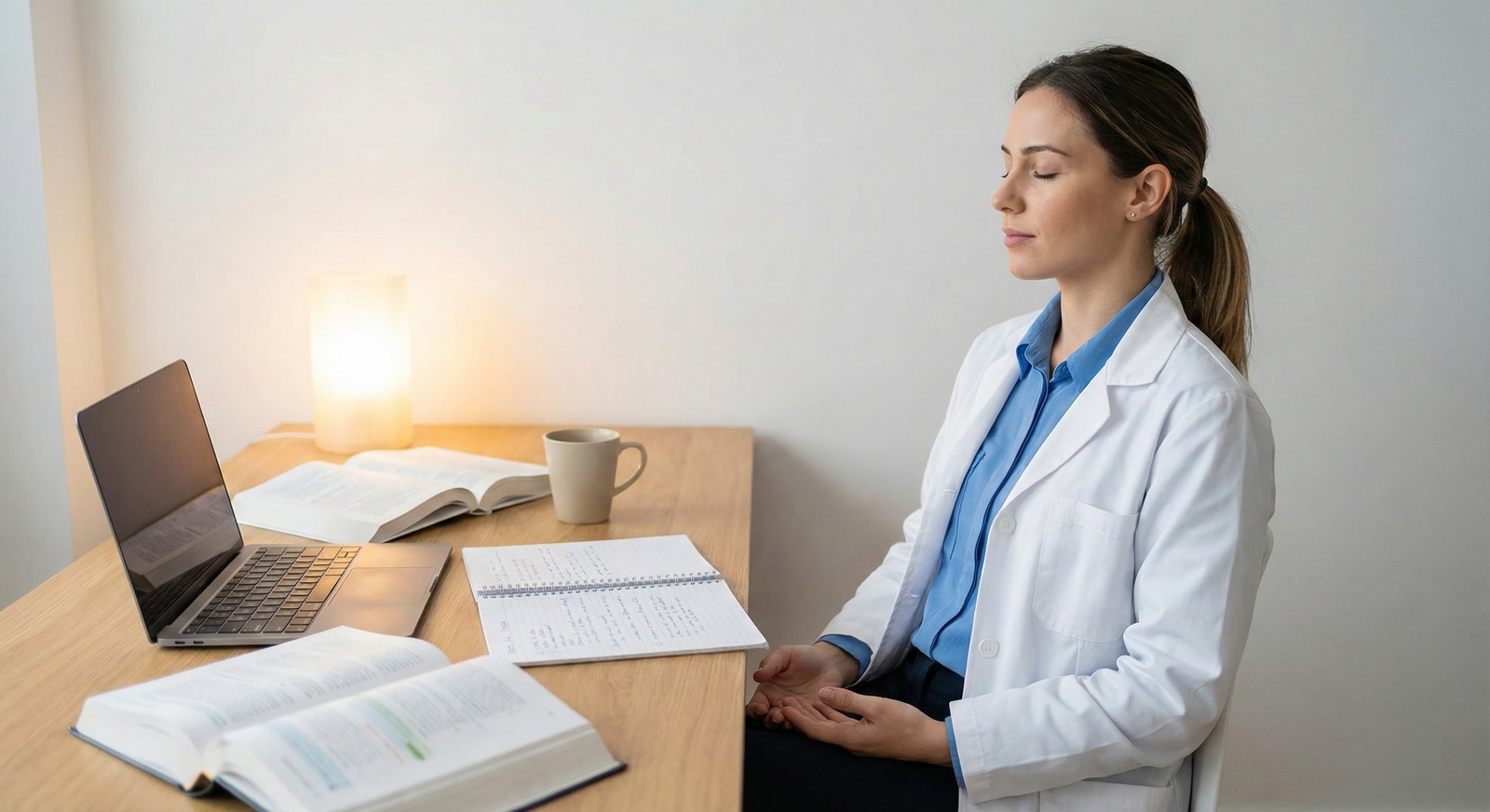
5. Mindfulness and Meditation for Test Anxiety
Mindfulness—paying attention to the present moment with curiosity and non-judgment—has strong evidence for reducing anxiety and improving Stress Management.
Simple daily practices:
- 5-minute breathing meditation:
Sit comfortably, focus on your breath, and gently return your attention whenever your mind wanders. - Body scan:
Spend 5–10 minutes bringing awareness to each part of your body, noticing sensations without trying to change them. - Mindful transitions:
Before starting a practice exam or question block, take 3–5 slow breaths and intentionally shift your attention from distractions to the task.
Over time, mindfulness helps you:
- Notice anxious thoughts without automatically believing them
- Interrupt spirals of catastrophizing
- Return your focus to the question in front of you
6. Journaling to Process Anxiety and Track Progress
Journaling externalizes your thoughts, helping you untangle fears and identify patterns that contribute to Test Anxiety.
Types of journaling that help with exams:
- Anxiety dump:
Write freely for 5–10 minutes about everything you’re worried about relating to the exam. Then, categorize worries into:- Things you can control (study habits, sleep, nutrition)
- Things you can’t control (specific question content, curve, other students)
- Evidence log:
At the end of each day or week, write:- What went well in studying or practice questions
- Concrete improvements you’ve noticed
- Times you handled anxiety effectively
- Reframing exercise:
After a bad practice score, write down the first, automatic thoughts (“I’m going to fail.”), then intentionally generate balanced alternatives (“This score reflects today’s performance, not my potential. I can use this as data to adjust my strategy.”).
This process reduces emotional intensity and replaces vague dread with specific, actionable insights.
7. Positive Affirmations and Compassionate Self-Talk
The way you talk to yourself under stress affects your performance. Self-criticism increases anxiety and decreases working memory, while self-compassion improves resilience.
Instead of “toxic positivity,” use realistic, grounded affirmations such as:
- “I have prepared consistently, and I am capable of thinking through unfamiliar questions.”
- “Feeling anxious does not mean I’m unprepared; it means this exam is important to me.”
- “My worth is not defined by one test score.”
How to use affirmations effectively:
- Write 3–5 statements that genuinely feel believable (even if they push you slightly out of your comfort zone).
- Repeat them:
- In the morning
- Before starting a study block
- During practice exams when anxiety spikes
Over time, these become an internal “counter-voice” to catastrophic thinking.
Mental Self-Care Strategies: Study Strategies That Reduce Anxiety
Mental self-care involves organizing your study life in ways that reduce cognitive overload and create a sense of control. Solid Study Strategies are, in themselves, powerful anxiety management tools.
8. Strategic Time Management and Study Planning
Unstructured studying fuels anxiety: you never feel like you’re doing enough, and you don’t know where your time is going.
Steps to build an exam-focused study plan:
Map the timeline:
- How many days/weeks until the exam?
- What content areas must you cover?
- How many practice questions and full-length tests will you do?
Chunk the material:
- Divide content into manageable sections (e.g., systems for Step 1, rotations for shelf exams).
- Assign topics to specific days and weeks.
Block your time:
- Use time-blocking (e.g., 8–10 a.m. questions, 10:30–12 content review, 1–3 p.m. practice or flashcards).
- Schedule breaks, meals, exercise, and wind-down time like you schedule study.
Review and adjust weekly:
- At the end of each week, review what worked and what didn’t.
- Adjust your plan rather than silently feeling behind.
This structure converts vague anxiety (“I’ll never be ready”) into a concrete, trackable process (“I’ve completed 60% of my planned questions and content; this week I’ll prioritize X and Y”).
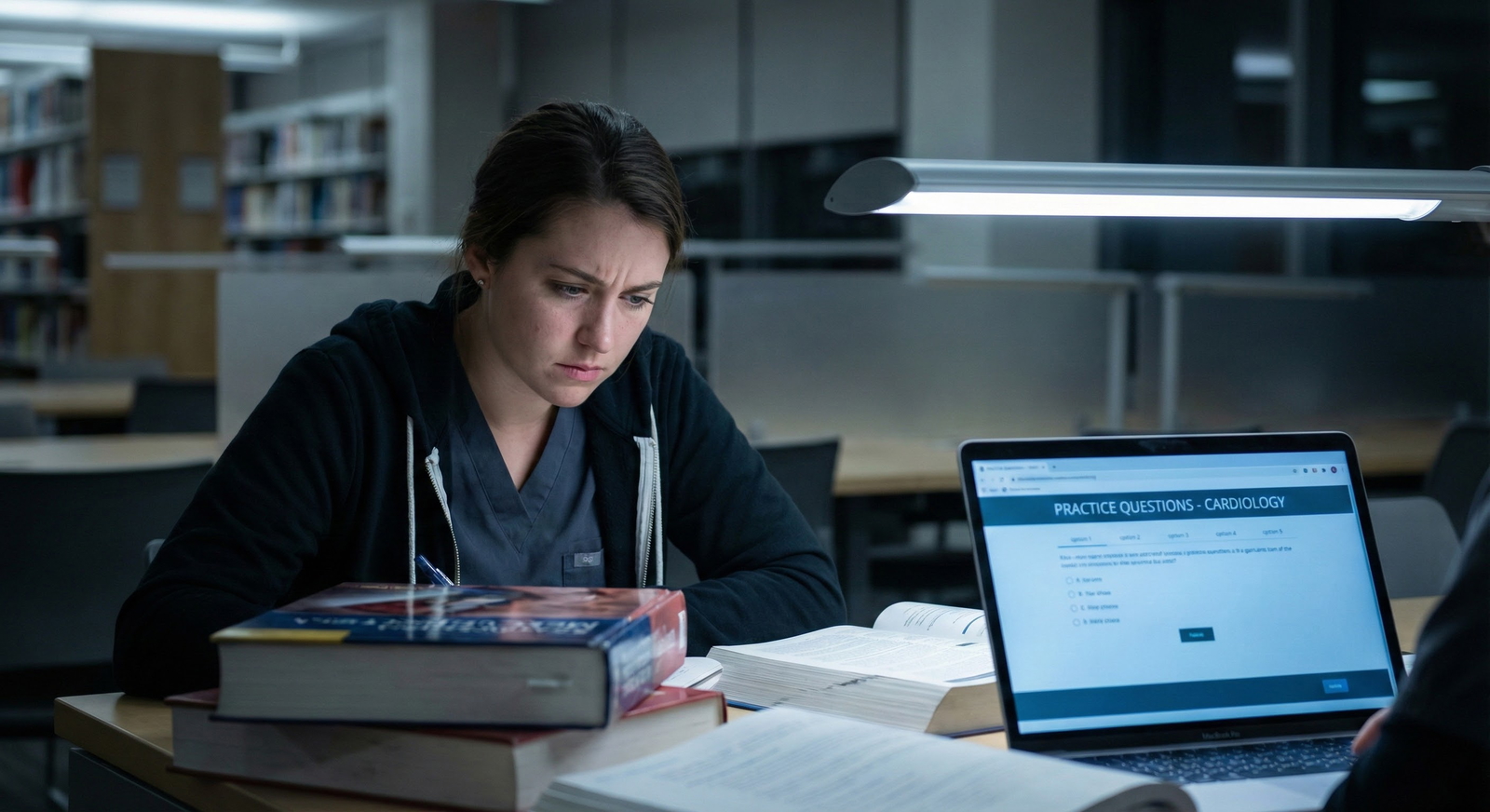
9. Using Practice Exams and Question Banks to Desensitize Anxiety
Avoidance of practice tests often worsens Test Anxiety. Repeated exposure to exam-like conditions—paired with effective debriefing—can significantly reduce fear.
How to use practice effectively:
- Start early:
Don’t wait until you feel “ready” to start question banks. Doing questions teaches you what “ready” actually means. - Simulate the real exam:
- Use timed blocks.
- Minimize distractions.
- Sit at a desk, not in bed.
- Debrief constructively:
- Focus first on understanding why each correct answer was correct and why others were wrong.
- Log patterns of errors (content gaps vs. test-taking errors vs. rushing due to anxiety).
- Normalize fluctuating scores: View each score as data, not a verdict. This mindset lowers the emotional “temperature” around testing.
Over several weeks, repeated exposure to exam-like conditions teaches your nervous system: “I can tolerate this. I know what this feels like. It is manageable.”
10. Seeking Support and Community
Test Anxiety often feels isolating, especially in competitive environments. Support—both academic and emotional—buffers stress.
Support avenues to consider:
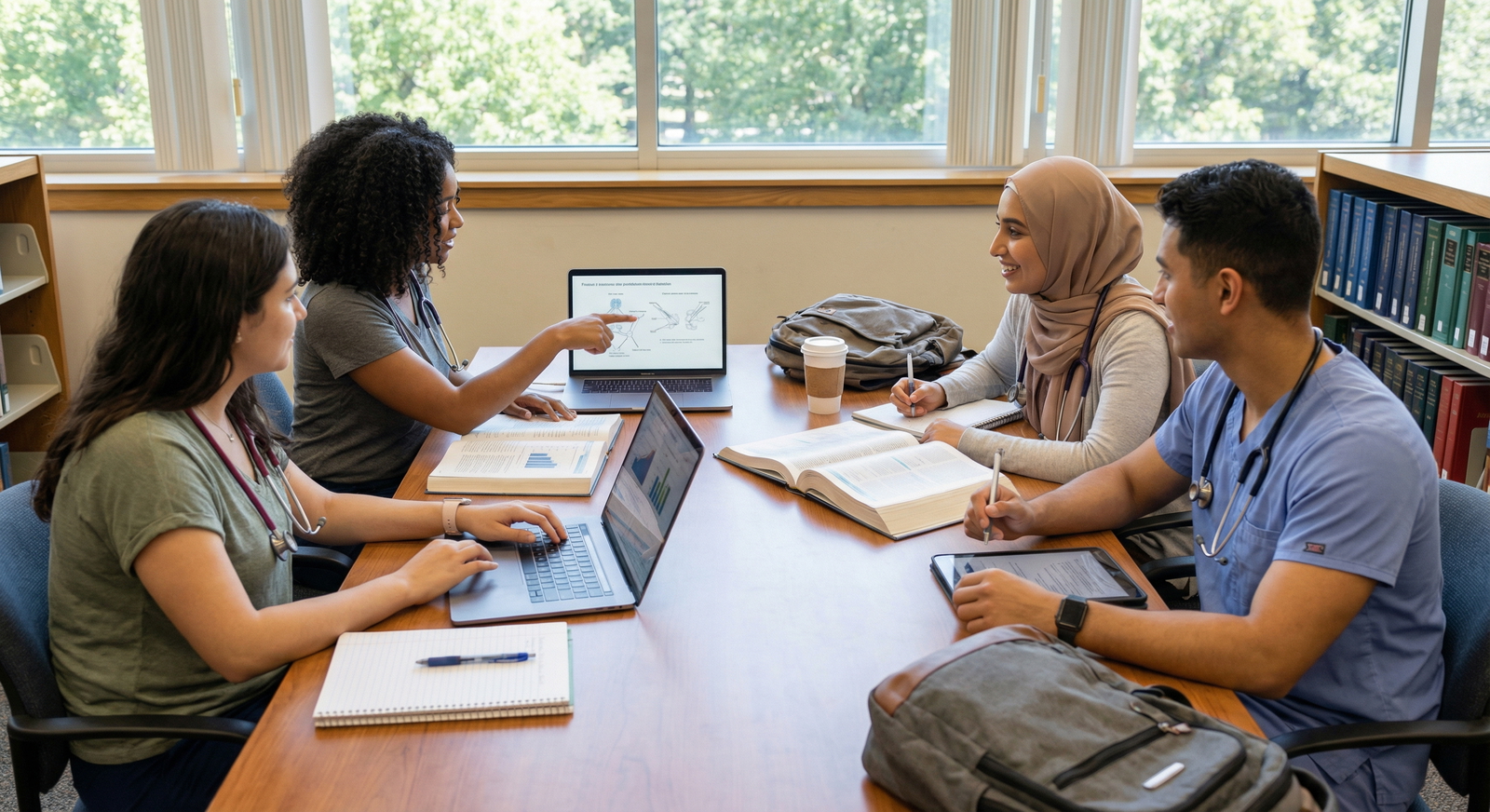
- Study groups:
Small, focused groups (2–4 people) can:- Share resources
- Explain concepts
- Normalize anxiety (“I feel that way too before practice tests”)
- Mentors and near-peers:
Residents, upperclass students, or recent test-takers can:- Share realistic timelines and study strategies
- Offer perspective on scores
- Reassure you that anxiety is common and survivable
- Family/friends:
Share when you need emotional support, space, or practical help (e.g., less household responsibility during peak exam prep). - Professional help:
If Test Anxiety significantly impairs function or persists despite self-care, consider:- Campus counseling services
- A therapist or psychiatrist familiar with medical trainees
- Test accommodations if you meet criteria (extended time, quiet room)
Asking for help is not a sign of inadequacy; it is a sign that you are taking your mental health—and your career—seriously.
Holistic Self-Care Strategies: Integrating Mind and Body
Holistic strategies connect physical, emotional, and mental aspects of self-care, giving you in-the-moment tools for acute stress.
11. Breathing Techniques for Immediate Anxiety Relief
When anxiety spikes—especially before or during an exam—you need quick, discreet tools to reset your nervous system.
Evidence-informed breathing techniques:
- 4-7-8 breathing:
- Inhale quietly through your nose for 4 seconds.
- Hold your breath for 7 seconds.
- Exhale slowly through your mouth for 8 seconds.
- Repeat for 4 cycles.
- Box breathing (4-4-4-4):
- Inhale for 4 seconds.
- Hold for 4.
- Exhale for 4.
- Hold for 4.
- Repeat for 4–6 cycles.
Use these:
- In the car or on the bus before the exam
- During the tutorial period or breaks
- Between question blocks when you feel flooded or stuck
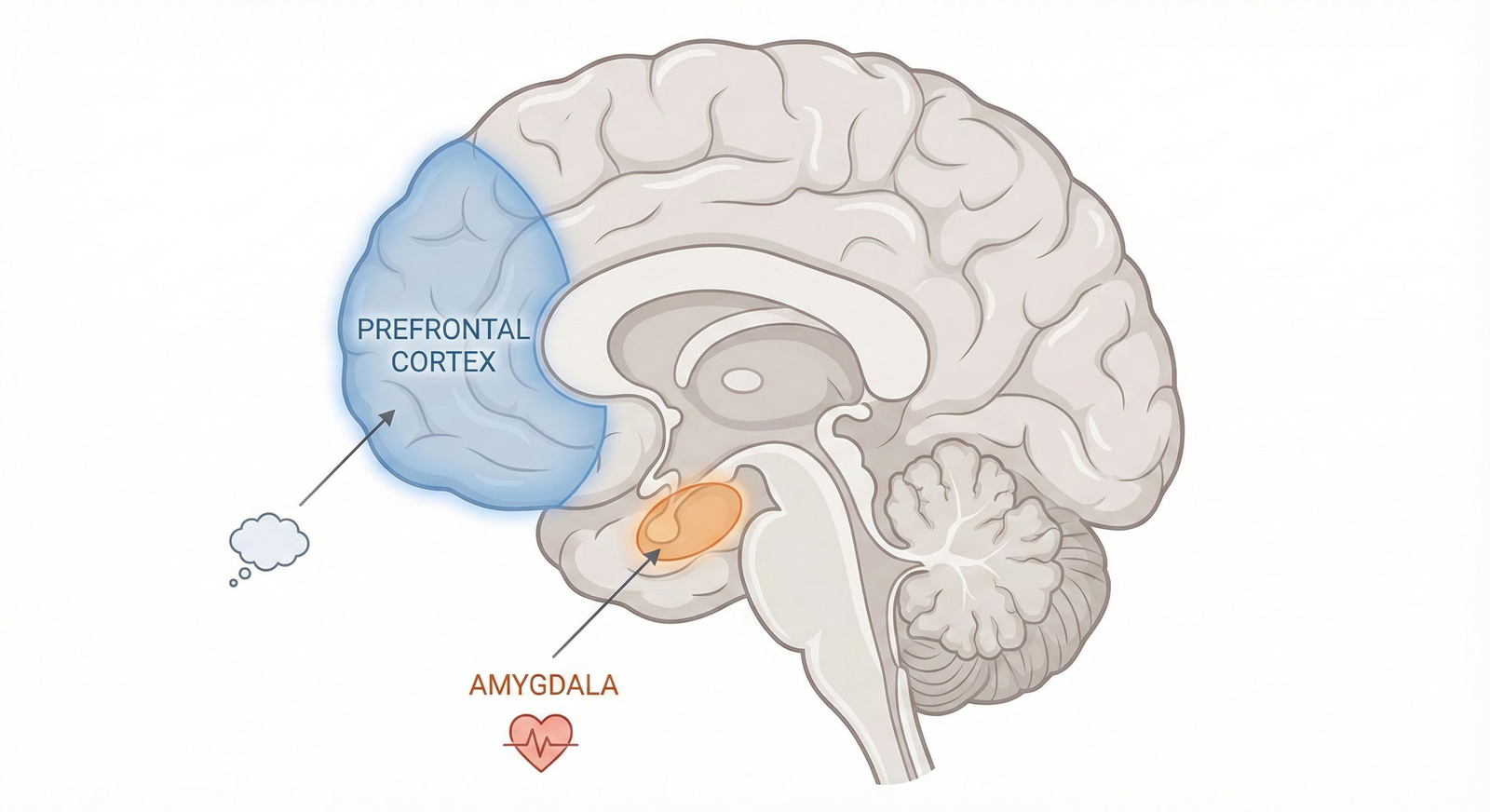
A few minutes of structured breathing can reduce heart rate, muscle tension, and the sense of panic, allowing your prefrontal cortex to re-engage.
12. Relaxation, Hobbies, and Scheduled “Off” Time
Constant studying without breaks paradoxically undermines performance and amplifies anxiety. The brain needs periods of rest to consolidate learning.
Intentional relaxation strategies:
- Hobbies:
Light, enjoyable activities that don’t deplete you (e.g., music, drawing, light reading, cooking, simple games). - Nature exposure:
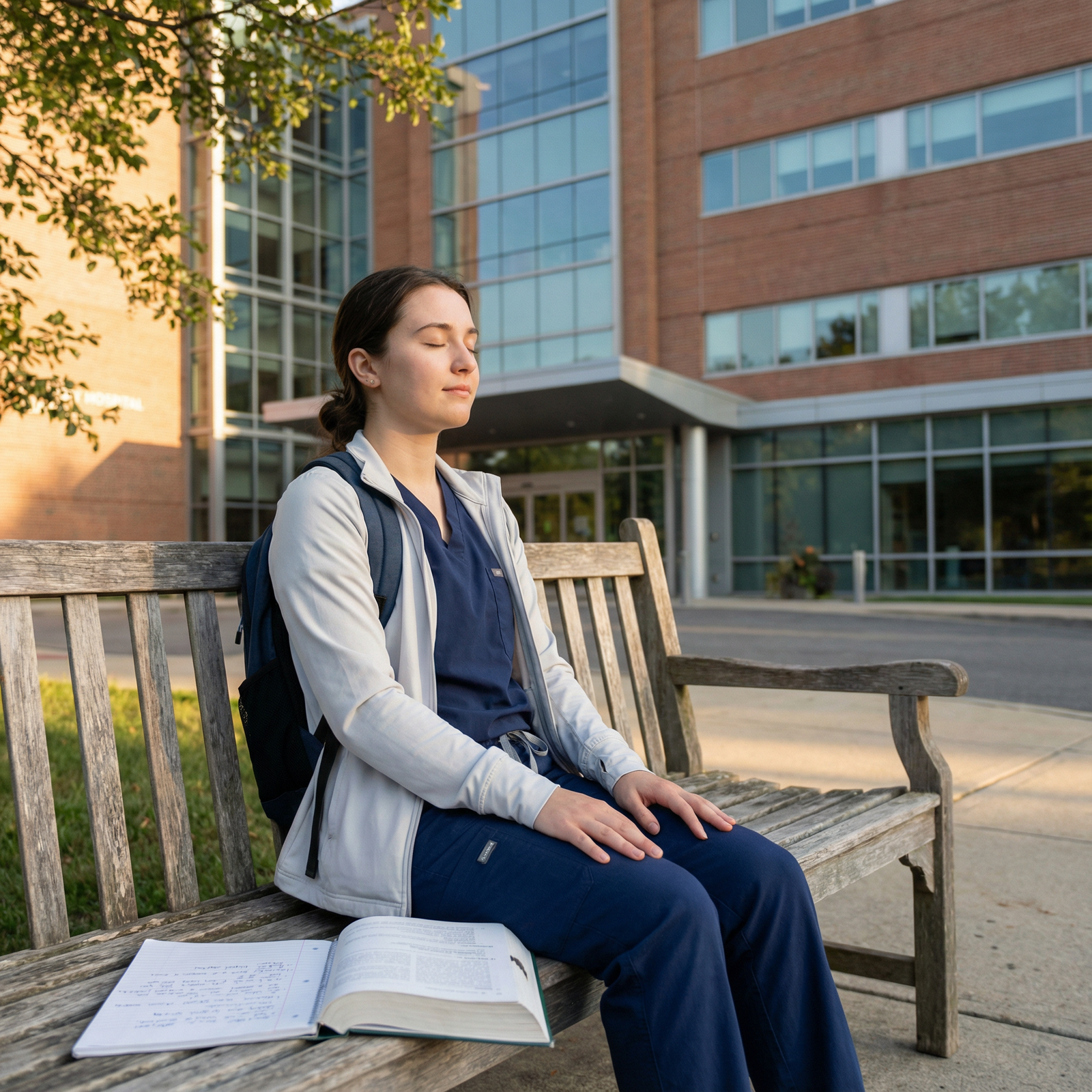
Short walks in a park or green space can reduce rumination and cortisol. - Social connection:
Low-stress time with supportive people can restore perspective and decrease isolation.
How to balance this with exam prep:
- Schedule at least 1–2 hours per week of completely protected non-study time.
- On heavy days, even 20–30 minutes of intentional relaxation can make the rest of your study time more efficient.
- View rest as a strategic component of your Study Strategies, not as a reward you have to earn.
Putting It All Together: A Sample Self-Care–Integrated Study Day
To illustrate how these elements can work in real life, here’s an example of a day during dedicated exam prep:
- 07:00 – Wake up, drink water, 5 minutes of breathing meditation
- 07:15 – Balanced breakfast (oatmeal with fruit + eggs)
- 07:45–09:45 – Timed question block + review (Mental Self-Care)
- 09:45–10:00 – Short walk + hydration (Physical Self-Care)
- 10:00–12:00 – Content review (videos, notes, Anki)
- 12:00–12:30 – Lunch away from desk, no exam talk
- 12:30–13:00 – Journaling + review of goals (Emotional Self-Care)
- 13:00–15:00 – Second study block (mixed questions/content)
- 15:00–15:15 – Stretching, 4-7-8 breathing (Holistic Self-Care)
- 15:15–17:00 – Light review (flashcards, summary sheets)
- Evening – 30 minutes of exercise; dinner; 30–60 minutes of hobby/relaxation
- Pre-bed (20–30 minutes) – Screen-free wind-down, brief mindfulness practice, consistent bedtime
This schedule is just an example; the key is that Self-Care, Mental Health, and Stress Management are integrated—not postponed until “after the exam.”
FAQs: Self-Care and Test Anxiety in Medical Training
1. How do I know if my test anxiety is “normal” or if I should seek professional help?
Some degree of nervousness before exams is normal and can even sharpen focus. Consider seeking professional support if:
- Anxiety causes panic attacks, insomnia, or physical symptoms that interfere with daily life
- You repeatedly avoid studying or practice tests because of fear
- Your performance is consistently far below your level of preparation
- Anxiety persists across multiple exams and spills into other areas of life
Campus counseling services, a primary care provider, or a mental health professional with experience in medical trainees can help evaluate and treat Test Anxiety.
2. Can self-care strategies really make a difference if my exam is only a few weeks away?
Yes. While deep habit change takes time, even 2–3 weeks of consistent self-care can:
- Improve sleep quality
- Reduce baseline stress
- Build familiarity with breathing and mindfulness tools for exam day
- Optimize energy and focus for remaining study time
Focus on small, high-yield changes:
- Regular sleep/wake times
- Short daily movement
- Hydration and balanced meals
- Brief breathing or mindfulness practice
3. How do I balance intensive studying with Self-Care without feeling guilty or “behind”?
Reframing is crucial: self-care is a performance enhancer, not a distraction. Try this approach:
- Plan self-care blocks (exercise, meals, breaks) into your schedule before filling in study tasks.
- Measure productivity by effective study hours and question quality, not just total time “at the desk.”
- Track practice scores and subjective focus; many students notice improvements after adding structured rest and exercise.
If your test scores and retention improve with a slightly lower total number of study hours plus better self-care, then the strategy is working.
4. What can I do during the exam if I feel a wave of panic or my mind goes blank?
Use a brief, in-the-moment protocol:
- Pause and breathe:
- 2–3 cycles of 4-7-8 or box breathing to lower physiological arousal.
- Ground yourself:
- Feel your feet on the floor, notice the chair supporting you. Name one thing you can see, hear, and feel.
- Talk to yourself compassionately:
- “This is anxiety, not danger. I have seen similar questions before. I can handle this one step at a time.”
- Refocus on the single question in front of you:
- Underline key information, eliminate obviously wrong options, and make the best decision with the information given.
Practicing this sequence during practice exams trains your brain to access it more easily during the real test.
5. What if I’m already using self-care strategies and still feel anxious about exams?
Residual anxiety is extremely common—even among well-prepared students. Consider:
- Adjusting your strategy:
- Are you getting enough sleep?
- Are you overusing caffeine?
- Are your study methods active (questions, recall) rather than passive (reading, highlighting)?
- Increasing support:
- Join a study group
- Talk openly with mentors or peers
- Seek professional help if anxiety is severe or persistent
- Accepting some anxiety as part of the process:
- The goal is not to eliminate anxiety completely but to make it manageable and non-impairing.
If anxiety is significantly interfering with your life or performance, a mental health professional can offer treatments such as CBT, exposure therapy, or, when appropriate, medication.
By integrating Self-Care into your daily routines and Study Strategies, you build a robust, sustainable approach to managing Test Anxiety. These skills serve you not only for a single exam, but throughout medical school, residency, and your future clinical practice—where high-stakes decisions will be part of daily life.