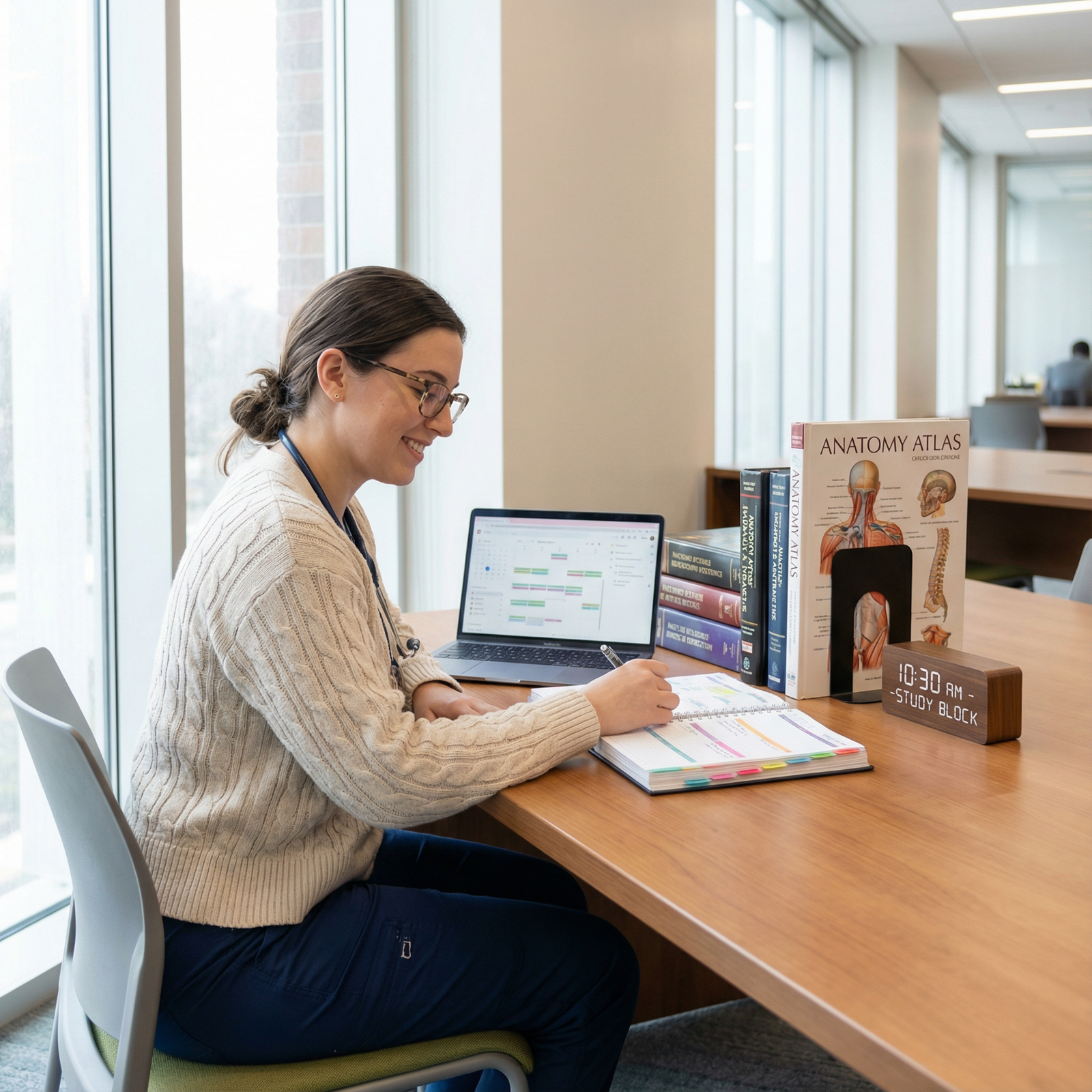
Introduction: Why Time Management Is a Powerful Antidote to Test Anxiety
Test Anxiety is an almost universal experience in medical school and residency. NBME exams, OSCEs, shelf exams, Step/Level exams, in‑training exams—your performance is continually measured and compared. Under this pressure, anxiety can escalate from mild nervousness to intrusive worry, insomnia, and even panic, directly impacting cognitive performance and well-being.
A certain level of anxiety can be activating: it pushes you to study, review, and take practice questions seriously. When anxiety becomes excessive, however, it impairs working memory, concentration, and recall. You may “blank out” on questions you know, misread stems, or run out of time—not because you lack knowledge, but because anxiety hijacks your mental bandwidth.
Effective Time Management is one of the most underused yet powerful tools for Stress Reduction and Academic Success. It doesn’t just help you “fit more into the day.” Done correctly, it reshapes how you experience exams by:
- Giving you a clear, realistic plan
- Reducing last‑minute cramming
- Building a track record of preparedness
- Increasing your sense of control
This guide explores how strategic Time Management and evidence‑based Study Techniques can directly alleviate Test Anxiety, particularly for medical students and residents, and provides concrete methods you can implement immediately.
Understanding Test Anxiety in Medical Training
What Is Test Anxiety?
Test anxiety is a specific form of performance anxiety centered on evaluations—written exams, OSCEs, oral boards, and practical assessments. It typically includes:
- Cognitive symptoms: Racing thoughts, catastrophizing (“If I fail this, I’ll never match”), difficulty concentrating, mental “blanking”
- Emotional symptoms: Fear, irritability, dread, feeling overwhelmed
- Physical symptoms: Palpitations, sweating, nausea, headaches, insomnia
- Behavioral symptoms: Procrastination, avoidance of studying, last‑minute all‑nighters, overchecking or compulsively rereviewing
In medical education, these symptoms are amplified by high stakes, long content lists, and constant comparison to peers.
Common Triggers in Medical School and Residency
Several factors commonly drive Test Anxiety in medical trainees:
Fear of failure and its consequences
Fear of remediation, delayed graduation, harming residency prospects, or disappointing mentors and family.Perfectionism and unrealistic standards
Belief that anything less than a top percentile score is “failure,” even when a passing or solid score is more than adequate for your goals.Lack of structured preparation
Vague goals like “I’ll just study as much as I can” often lead to fragmented studying, inefficient review, and an ongoing sense of “never enough.”Previous negative exam experiences
A failed or underperformed exam (e.g., a tough block exam or standardized test) can create anticipatory anxiety and self‑doubt for each subsequent test.Information overload
Massive syllabi, long question banks, and extensive resources can make it hard to know where to start, fueling procrastination and worry.
Understanding these triggers is essential. Time Management doesn’t remove these pressures, but it helps you respond strategically instead of reactively.
How Time Management Reduces Anxiety on Exams
Time Management is not just a productivity buzzword—it has a direct psychological effect on Test Anxiety and Stress Reduction.
1. Increased Preparedness and Mastery
A realistic, structured plan allows you to:
- Cover all high‑yield topics over time
- Build in spaced repetition and practice questions
- Avoid last‑minute marathons
This repeated, organized exposure leads to a genuine feeling of “I have seen and practiced this,” which reduces anxiety during the exam itself.
2. Sense of Control Over the Process
Anxiety thrives in uncertainty. A well‑designed study plan:
- Converts a giant, vague goal (“ace Step 1”) into concrete daily tasks
- Clarifies what you will do and when
- Provides objective markers of progress (pages read, questions done)
This sense of control is critical in medical training, where many other aspects feel outside your control (rotations, evaluations, schedules).
3. Reduced Procrastination and Avoidance
Procrastination is often a coping mechanism for anxiety. If studying feels overwhelming, you avoid starting. Effective Time Management breaks studying into manageable, scheduled tasks so that starting feels less threatening:
- “Do 40 cardio questions from UWorld and review”
is more approachable than
“Study cardiology.”
As you complete these smaller tasks, you experience frequent wins, which reduces anxiety and builds momentum.
4. Better Focus and Cognitive Efficiency
When you know exactly what your current block of time is for, your brain is free to focus on content rather than worrying about everything else you “should” be doing. This improves:
- Concentration
- Working memory
- Reading accuracy
- Ability to learn and retain
Over weeks, this leads to more efficient studying and improved performance.
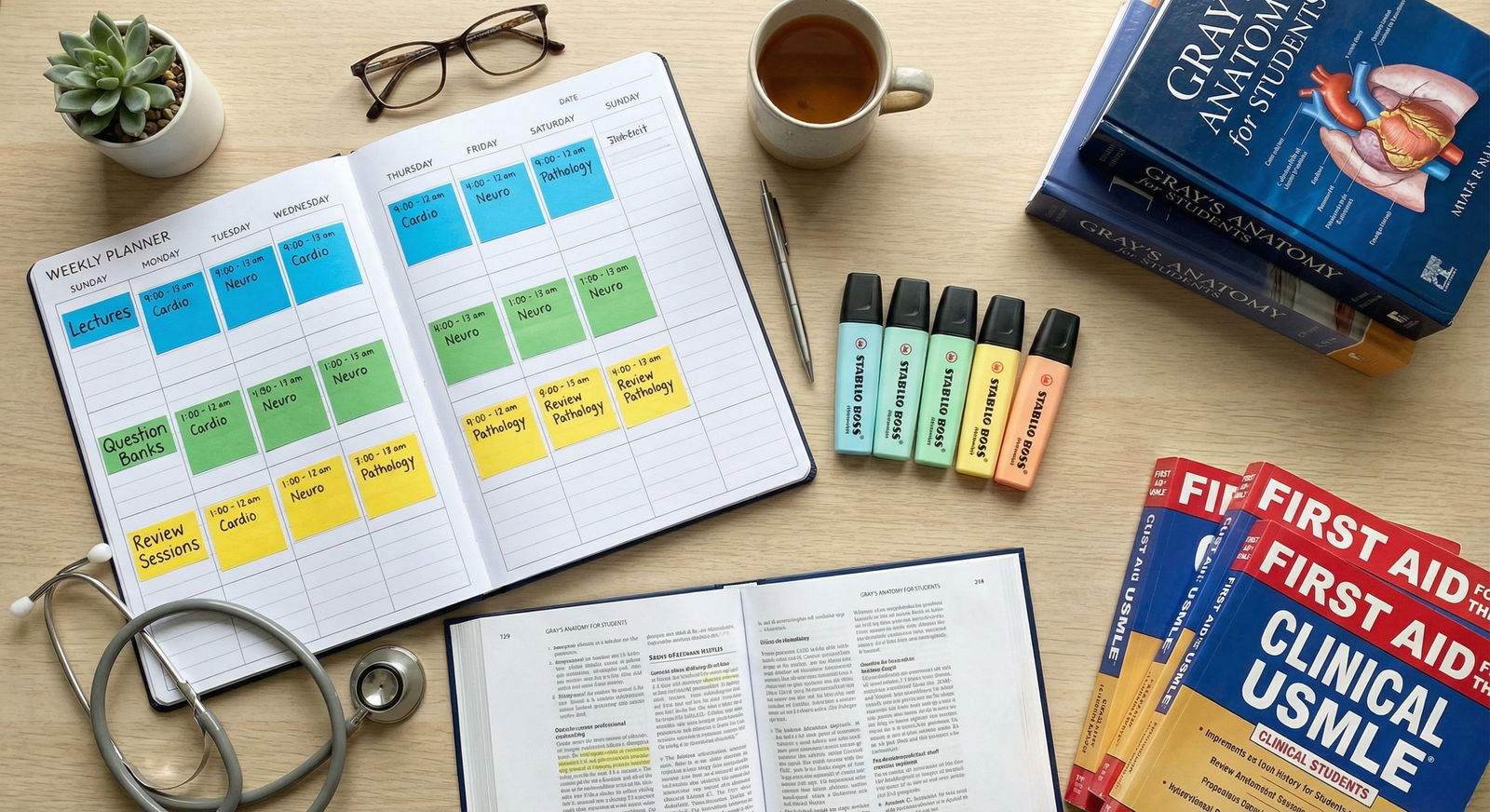
Core Time Management Techniques to Alleviate Test Anxiety
1. Build a Structured Study Schedule That Actually Works
A well-designed study schedule is the backbone of Anxiety‑Reducing Time Management.
Step 1: Clarify Your Exam Timeline and Demands
- When is your exam? (Date and exact time)
- How much content do you need to cover? (syllabus, question bank size, key resources)
- What are your other obligations? (rotations, call, clinic, family)
For a typical medical school exam, list:
- Required chapters or lecture sets
- Number of question bank items you plan to complete
- Practice exams you want to take and review
Step 2: Break Content into Manageable Units
Instead of “Study cardiology,” break it into units like:
- Ischemic heart disease
- Valvular disease
- Arrhythmias
- Heart failure
- Cardiac pharmacology
For each unit, specify tasks:
- Watch 1–2 key lectures
- Read core text/board review
- Do 20–40 targeted questions
- Review missed questions and make brief notes
Step 3: Create a Weekly and Daily Plan
A sample 3‑week plan for a major exam might look like:
- Week 1: Coverage
- Days 1–5: Systems A–D (e.g., cardio, pulm, renal, GI)
- Daily: 40–60 mixed questions + 1–2 hours targeted reading
- Week 2: Remaining content + early review
- Systems E–H + first review of Week 1 content
- Daily: 60–80 questions, including review of incorrects
- Week 3: Integration and practice exams
- 2–3 full‑length practice tests (space them)
- Dedicated review days for practice exam errors
- Light content review and high‑yield summaries
Translate this into daily blocks (e.g., morning questions, midday content, evening review).
2. Prioritize Tasks with the “Exam‑Focused” Eisenhower Matrix
The Eisenhower Matrix is especially helpful for busy trainees juggling clinical and academic responsibilities.
Adapt it to exam prep:
Urgent and Important
- Studying topics scheduled for today or tomorrow
- Reviewing missed questions within 24–48 hours
- Preparing for tomorrow’s quiz or shelf exam
Important but Not Urgent
- Long‑term Step/Level prep months in advance
- Maintaining an Anki/spaced repetition habit
- Building concise summary notes for future review
Urgent but Not Important
- Answering nonessential messages during study blocks
- Low‑yield administrative tasks that can wait
Not Urgent and Not Important
- Excessive scrolling/social media during dedicated time
- Random internet browsing “about medicine” that doesn’t support your current exam
Focusing on the top two quadrants ensures your limited time directly supports Academic Success, which in turn reduces anxiety.
3. Use Time Blocking to Make Your Schedule Real
Time blocking means assigning specific types of work to defined blocks of time, instead of a vague to‑do list.
Example Daily Time Blocks (Pre‑clinical student)
- 08:30–10:30 – Question bank (40 questions) + review
- 10:45–12:00 – Lecture catch‑up or reading
- 13:00–15:00 – System‑based study (e.g., renal physiology)
- 15:15–16:00 – Anki/spaced repetition
- 20:00–21:00 – Light review / summary / planning tomorrow
Example for a Busy Resident on Rotation
- Pre‑rounds (05:30–06:00) – 15–20 Anki cards or 5 quick questions
- Post‑work (18:30–20:00, 3–4 days/week) –
- 40–60 questions and review or focused reading
- Weekend – 3–4 hour block for deeper studying or practice exam review
During each block:
- Turn off notifications
- Keep only needed materials open
- Commit to one task type only (questions, reading, flashcards)
This eliminates decision fatigue (which fuels anxiety) and protects your mental focus.
4. Schedule Intentional Breaks and Downtime
Continuous studying without breaks leads to cognitive fatigue, poor retention, and higher anxiety. Strategic rest is a performance tool, not a luxury.
Try the Pomodoro Technique
- 25 minutes focused study
- 5 minutes short break
After 4 cycles, take a 15–30 minute longer break.
Use this for:
- Question review
- Active reading
- Flashcard sessions
During breaks:
- Stand, stretch, get water
- Do a short breathing exercise
- Avoid starting new digital distractions (e.g., social media rabbit holes)
Protect Non‑Study Time
Build in:
- Sleep: Aim for 7–8 hours whenever possible; chronic sleep deprivation worsens Test Anxiety.
- Movement: Short walks, yoga, or brief workouts 3–5 times/week.
- Non‑medical activities: Brief time with friends/family, hobbies, or mindfulness practices.
This balanced approach supports long‑term Academic Success and emotional resilience.
5. Leverage Technology and Study Techniques Strategically
Used wisely, digital tools can dramatically improve Time Management and reduce Test Anxiety.
Planning and Tracking
- Todoist, Notion, Trello, or Google Calendar
- Plan weekly study goals and assign them to specific days/time blocks
- Visually track what’s completed to reinforce a sense of progress
Focus and Distraction Control
Forest, Focus Keeper, Pomodoro apps
- Set work/break intervals
- Keep you accountable to your time blocks
Website blockers (Freedom, Cold Turkey, StayFocusd)
- Limit social media or other distracting sites during study blocks
Learning and Spaced Repetition
Anki or similar flashcard apps
- Implement spaced repetition for long‑term retention
- Reduces “I’ll forget everything” anxiety close to the exam
Question banks (UWorld, AMBOSS, etc.)
- Schedule a fixed number of questions per day
- Review incorrects in a structured way (e.g., error log or “missed question” notebook)
6. Set Realistic, Data‑Driven Goals
Overly ambitious or vague goals feed anxiety. Realistic, SMART goals (Specific, Measurable, Achievable, Relevant, Time‑bound) build confidence instead.
Examples of SMART Study Goals
- “Do 40 cardio questions and fully review incorrects by 3 PM today.”
- “Complete 250 questions this week and track my performance by system.”
- “Finish first pass of the renal section in my review book by next Sunday.”
Regularly review:
- Question bank performance (by system and subject)
- Practice exam scores and trends
- Topics you consistently miss
Use this data to:
- Adjust your time allocation to weaker areas
- Recognize genuine progress (which counters anxiety)
- Set targeted mini‑goals (“Improve endocrine questions by 5% over the next 2 weeks”)

Integrating Mindfulness, Self‑Care, and Time Management
Time Management is most effective when combined with intentional Stress Reduction strategies.
Mindfulness to Interrupt the Anxiety Cycle
Incorporate brief mindfulness practices into your study routine:
Pre‑study grounding (1–3 minutes)
- Close your eyes, take 5–10 slow breaths
- Notice physical sensations and let thoughts pass without judgment
- Set a simple intention: “For the next 25 minutes, I will focus on this task only.”
Exam‑day breathing
- Before starting: 3–5 slow breaths, double exhale to activate relaxation (inhale 4 seconds, exhale 6–8 seconds)
- During the exam: If you feel overwhelmed, pause for 10–20 seconds, breathe, then continue
These micro‑practices help prevent anxiety from spiraling into panic and keep your cognitive resources available.
Protecting Your Physical Health
Your brain is part of your body; neglecting your health increases Test Anxiety and decreases performance.
Sleep
- Prioritize consistent bed/wake times when possible
- Avoid all‑nighters; they severely impair reasoning and memory
Nutrition
- Regular meals and hydration
- Limit excessive caffeine and sugar, which can worsen jitteriness and anxiety
Movement
- Even 10–15 minutes of walking or stretching daily improves mood and concentration
- Consider brief exercise after long study blocks as a reset
When you schedule these into your week alongside studying, you’re practicing comprehensive Time Management—not just filling every minute with work.
Putting It All Together: A Sample Plan for Reducing Test Anxiety
Imagine you’re 4 weeks from a major exam (e.g., shelf or Step/Level). Here’s how you could integrate these strategies:
Week 4 planning session (30–45 minutes)
- Map out all systems/topics to review
- Set weekly and daily question and content targets
- Block time on your calendar, including breaks and self‑care
Daily structure
- Morning: 40–60 mixed questions + review (time blocked)
- Midday: 1–2 hours of focused system‑based content
- Late afternoon: Anki/spaced repetition, light review
- Evening (selected days): Practice-style questions or quick summary review
Weekly routines
- One longer block for a practice exam or large question set
- One block to analyze practice performance and adjust your plan
- Protected time for sleep, exercise, and non‑academic activities
Throughout the process
- Use Pomodoro or similar techniques to prevent burnout
- Apply mindfulness briefly at the start of each study block
- Regularly re‑evaluate goals and task priority (Eisenhower Matrix)
By exam week, you have:
- A complete, documented record of what you’ve done
- Multiple exposures to key content
- Practice dealing with time pressure during timed question sets
- A structured approach to exam day itself (sleep, meals, arrival time)
This systematic process is what lowers Test Anxiety—not generic reassurance, but clear evidence that your preparation has been thorough and intentional.
Frequently Asked Questions (FAQs) About Time Management and Test Anxiety
1. How can I figure out my most productive study times?
Track your energy, focus, and mood for 5–7 days:
- Note when you naturally feel most alert (morning, afternoon, evening).
- During those times, attempt focused tasks (e.g., questions or dense reading).
- Use lower‑energy periods for lighter tasks (flashcards, organizing notes).
Once you identify your peak periods, schedule your most demanding Study Techniques—question banks, practice exams, complex topics—during those blocks. This alignment greatly enhances efficiency and reduces frustration and anxiety.
2. What should I do if my schedule gets disrupted (e.g., call, illness, unexpected events)?
Disruptions are inevitable, especially during clinical years and residency. When they happen:
- Avoid all‑or‑nothing thinking (“My plan is ruined, so I might as well give up.”).
- Reassess: Look at what remains and how much time you still have.
- Reprioritize:
- Must‑cover high‑yield topics
- Practice questions and spaced repetition
- Compress or adjust:
- Reduce depth in low‑yield areas instead of cutting practice questions entirely.
- Shorten nonessential tasks.
A flexible, living schedule is more anxiety‑reducing than a rigid one you feel you’ve “failed” whenever life intervenes.
3. Can Time Management alone cure my Test Anxiety?
Time Management can significantly reduce Test Anxiety by improving perceived control, preparedness, and daily structure. For many students and residents, this alone leads to a major improvement.
However, if your anxiety:
- Causes frequent panic attacks
- Severely disrupts sleep or appetite
- Leads to persistent avoidance or functional impairment
then additional support may be necessary. Consider:
- Speaking with student health or an institutional counselor
- Exploring cognitive behavioral therapy (CBT) techniques
- Discussing options with a mental health professional
Time Management is a cornerstone strategy but is most effective when integrated with appropriate psychological and medical support when needed.
4. How often should I review material for it to stick long‑term?
Spaced repetition is key for long‑term retention:
- Initial learning → review within 24 hours
- Second review → within about 3–7 days
- Subsequent reviews → at progressively longer intervals (weeks to months)
Tools like Anki automate this. In practice:
- Aim to touch each major topic at least 3–4 times before a big exam.
- Use question banks as a form of active recall and spaced practice.
- Include cumulative review blocks in your weekly schedule, not just new content.
This systematic review reduces the panic that comes from feeling like you “forget everything” as exams approach.
5. How do I balance Time Management and self‑care without feeling guilty?
Reframe self‑care as a performance enhancer, not a break from “real work.” Poor sleep, no exercise, and zero downtime:
- Impair learning and recall
- Worsen Test Anxiety
- Increase the risk of burnout
Include self‑care elements in your weekly plan just like study blocks:
- 7–8 hours of sleep as a non‑negotiable goal most nights
- Brief movement or exercise several times per week
- Scheduled short breaks during study blocks
When these are explicitly on your calendar, you’re not “stealing time from studying”—you’re following a comprehensive, high‑performance plan that supports both Academic Success and your long‑term well‑being.
By designing and following a thoughtful Time Management system—complete with structured study schedules, strategic breaks, technology support, and realistic goals—you transform Test Anxiety from an overwhelming, amorphous threat into a manageable challenge. Over time, this consistent, organized approach not only raises exam scores but also builds enduring confidence in your ability to meet the demands of medical training.