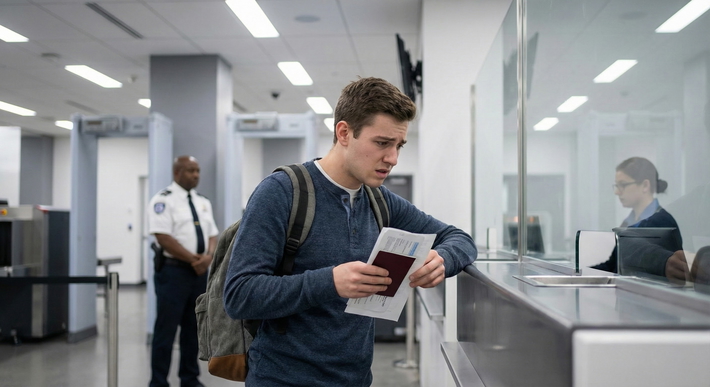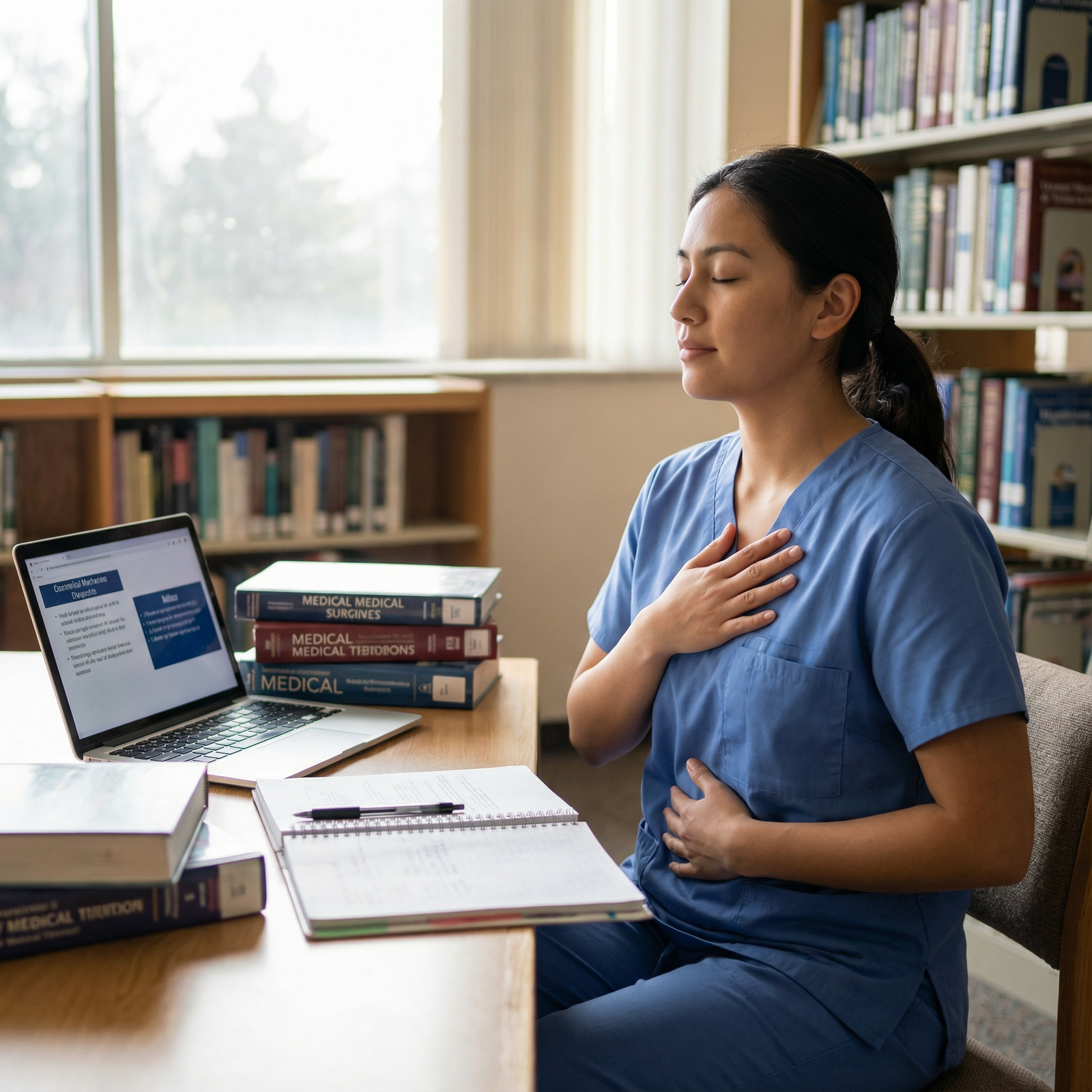
Discover effective breathing exercises to combat test anxiety and enhance performance. Master relaxation and mindfulness techniques for stress relief during exams and throughout medical school life.
Understanding Test Anxiety in Medical School and Beyond
Test anxiety is not just “nerves” or a lack of preparation. For many medical students, residents, and learners in other demanding programs, it is a genuine psychological and physiological response that can significantly reduce student performance, even when knowledge and preparation are strong.
What Is Test Anxiety?
Test anxiety is a form of performance anxiety that appears before, during, or after exams, OSCEs, shelf exams, standardized tests (like the MCAT, USMLE, or in-training exams), and high-stakes assessments.
It can include:
- Emotional symptoms: worry, dread, irritability, feelings of helplessness
- Physical symptoms: rapid heart rate, shortness of breath, sweating, tremors, nausea, dry mouth, dizziness
- Cognitive symptoms: racing thoughts, difficulty concentrating, mental “blanking out,” negative thinking
- Behavioral symptoms: avoidance of studying, procrastination, compulsive overstudying, or last-minute cramming
For medical trainees, the stakes feel especially high—grades, residency placement, letters of recommendation, and future career trajectory all seem tied to exam performance. That pressure amplifies test anxiety for many high-achieving students.
Why Do We Experience Test Anxiety?
Multiple factors can contribute, and for most students, it’s a combination rather than a single cause:
Fear of Failure and High Standards
- Perfectionistic expectations (“I must score in the top percentile”)
- Fear of letting down family, mentors, or peers
- Internalized belief that a single exam defines one’s competence as a future physician
External Pressure to Perform
- Competitive environments in medical school and residency
- Comparison with peers’ scores or match outcomes
- Institutional benchmarks (e.g., required scores to progress or sit for boards)
Past Negative Experiences
- Prior poor performance, particularly on high-stakes exams
- Experiences of blanking out or panicking during exams
- Feedback that focused solely on scores rather than growth
Negative Self-Talk and Cognitive Distortions
- Thoughts like “I’m going to fail,” “Everyone else is smarter than me,” or “If I don’t ace this, I’m not cut out for medicine”
- Catastrophizing (assuming worst-case scenarios)
- Overgeneralizing (“I struggled with one exam; I’m terrible at all tests”)
Physiological Stress and Burnout
- Sleep deprivation, long study hours, and poor nutrition
- Chronic stress from clinical duties, call schedules, and life responsibilities
- Limited time for recovery or hobbies, leading to baseline anxiety elevation
Breathing exercises and mindfulness techniques do not eliminate these pressures, but they directly target the body’s stress response—giving you a fast, portable way to lower anxiety and reclaim mental clarity when it matters most.
The Science of Breathing: How It Calms Test Anxiety
When you feel anxious before an exam, your body activates the sympathetic nervous system—the classic “fight-or-flight” response. Heart rate increases, breathing becomes rapid and shallow, muscles tense, and your brain shifts into survival mode rather than higher-order thinking.
How Stress Changes Breathing
Under stress, many students unconsciously:
- Breathe from the chest instead of the diaphragm
- Take rapid, shallow breaths
- Hold their breath while concentrating or reading questions
- Exhale more than they inhale, potentially leading to mild hyperventilation
These patterns can intensify physical symptoms of anxiety: dizziness, tingling, chest tightness, and sense of panic—further undermining student performance.
How Breathing Exercises Work in the Brain and Body
Intentional, controlled breathing exercises are a simple but powerful way to shift the body into a calmer state.
Key mechanisms include:
Activating the Parasympathetic Nervous System
Slow, diaphragmatic breathing stimulates the vagus nerve, which activates the parasympathetic “rest and digest” response. This helps:- Decrease heart rate and blood pressure
- Relax muscles
- Reduce circulating stress hormones
Restoring Oxygen–Carbon Dioxide Balance
Controlled breathing prevents over-breathing and helps maintain a healthy CO₂ level, reducing symptoms like lightheadedness and tingling that can mimic panic.Improving Focus and Executive Function
A calmer physiological state allows the prefrontal cortex—the brain’s executive center—to function more effectively. This improves:- Concentration
- Memory retrieval
- Problem-solving under time pressure
Interrupting the Anxiety Loop
Mindful breathing anchors your attention in the present moment. This interrupts negative thought spirals (“I’m failing,” “I can’t do this”) and replaces them with a neutral, steady focus on breath.
Evidence-Based Benefits for Student Performance
Research on breathing exercises and mindfulness techniques has shown:
- Reductions in anxiety and perceived stress levels
- Improvements in attention, working memory, and cognitive flexibility
- Better sleep quality, which in turn supports learning and consolidation
- Enhanced emotional regulation and resilience across exam periods
For medical trainees, integrating brief breathing exercises into daily routines and exam days can be a major performance-enhancing habit—without needing special equipment or large time commitments.
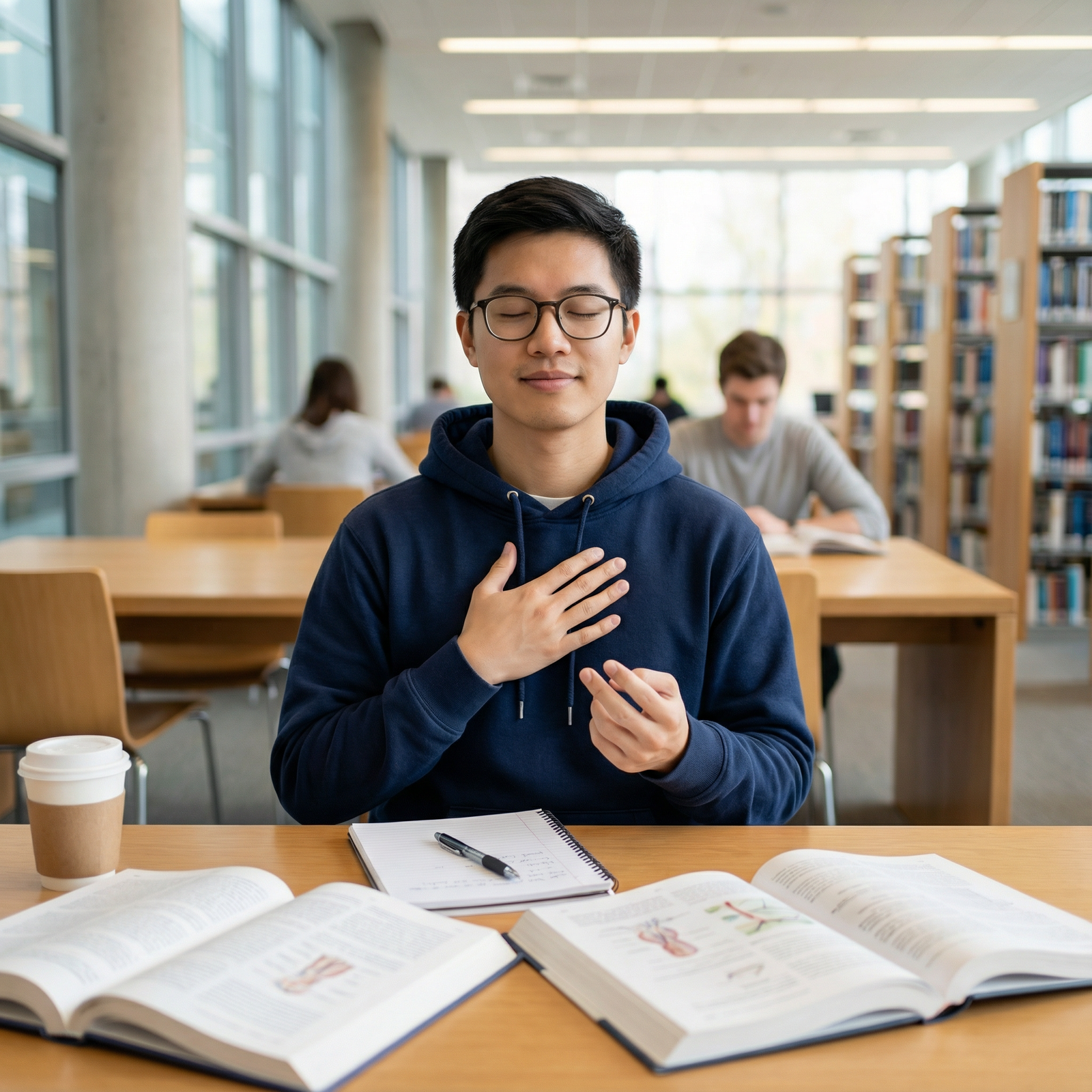
Core Breathing Exercises for Test Stress Relief
Below are practical, step-by-step breathing techniques specifically useful for managing test anxiety. You can use them during study sessions, the night before exams, in the waiting area, or even during the exam itself.
1. Diaphragmatic Breathing (Belly Breathing)
Best for: General stress relief, baseline anxiety management, and sleep improvement.
Diaphragmatic breathing trains you to use your diaphragm rather than shallow chest breathing. It’s a foundational skill that enhances all other breathing exercises.
How to Do It:
- Sit or lie down comfortably. Relax your shoulders.
- Place one hand on your chest and the other on your belly, just below your ribs.
- Inhale slowly through your nose for about 4 seconds, directing the air down so your belly rises under your hand. Your chest should move minimally.
- Pause gently for 1–2 seconds.
- Exhale slowly through your mouth or nose for about 6 seconds, letting your belly fall.
- Repeat for 5–10 minutes, focusing on the sensation of the belly rising and falling.
Tips for Medical Students and Residents:
- Use this before bed to transition out of study mode.
- Try 3–5 minutes in your car before walking into an exam or OSCE.
- Practice daily when you’re calm so it becomes automatic when anxious.
2. 4–7–8 Breathing Technique
Best for: Rapid calming, pre-sleep relaxation, and test-day jitters.
Popularized by Dr. Andrew Weil, this pattern emphasizes a long exhale, which boosts parasympathetic activation.
How to Do It:
- Sit upright with your back supported. Rest your hands in your lap.
- Close your eyes or soften your gaze.
- Inhale quietly through your nose for a count of 4.
- Hold your breath gently for a count of 7.
- Exhale completely through your mouth, making a soft “whoosh” sound, for a count of 8.
- Complete 4 cycles initially; you can gradually work up to 8 cycles.
Practical Uses:
- The night before an exam when your mind is racing
- When you feel a rush of panic while reviewing questions
- During short breaks in long exams or question blocks
3. Box Breathing (Square Breathing)
Best for: Grounding under pressure, on-the-spot test anxiety relief.
Box breathing is widely used by athletes, performers, and even military personnel to stay centered in high-stress environments.
How to Do It:
- Sit upright, feet flat on the floor.
- Inhale slowly through your nose for 4 seconds.
- Hold your breath for 4 seconds.
- Exhale slowly through your nose or mouth for 4 seconds.
- Hold again with your lungs empty for 4 seconds.
- Repeat for 3–5 minutes, or at least 4–6 cycles.
Exam Day Example:
You’re about to start a timed exam and feel your heart racing. Before opening the booklet or computer screen, close your eyes briefly and complete 4 cycles of box breathing. This quick reset can dramatically improve focus on the first set of questions.
4. Alternate Nostril Breathing (Nadi Shodhana)
Best for: Balancing energy and emotions; centering before high-stakes assessments.
Alternate nostril breathing is a traditional yogic technique associated with balancing the two hemispheres of the brain and fostering emotional stability.
How to Do It:
- Sit comfortably with your spine straight.
- Rest your left hand on your left knee, palm facing up.
- With your right hand, place your index and middle fingers lightly on your forehead between your eyebrows (optional for comfort).
- Use your right thumb to gently close your right nostril.
- Inhale slowly through your left nostril for about 4 seconds.
- Close your left nostril with your ring finger, then release your right nostril.
- Exhale through your right nostril for about 4–6 seconds.
- Inhale through your right nostril for 4 seconds.
- Close your right nostril and exhale through your left nostril for 4–6 seconds.
This is one full cycle. Repeat for 5–10 cycles.
When to Use It:
- Before OSCEs, oral exams, or presentations where composure is crucial
- After a long study session to de-clutter the mind
- During short breaks between blocks of questions on board exams (if allowed)
5. 5–5–5 Breathing (Simple Coherent Breathing)
Best for: Quick resets during exams, easy-to-remember breathing for beginners.
5–5–5 breathing is straightforward and ideal when you’re already under time pressure.
How to Do It:
- Inhale through your nose for a count of 5.
- Hold your breath gently for a count of 5.
- Exhale through your nose or mouth for a count of 5.
- Repeat for 5–10 minutes, or even just 1–2 minutes if you’re mid-exam.
Why It Works Well During Exams:
- The counts are simple, no special posture is required.
- You can do it discreetly while reading questions.
- It aligns with “coherent breathing,” promoting heart rate variability and calm focus.
Integrating Breathing and Mindfulness Into Your Study and Exam Routine
Breathing exercises are most effective when they become part of your broader test anxiety management strategy, not just a last-minute rescue technique.
Build a Daily Breathing Routine
Consistent practice changes your baseline stress reactivity over time.
Suggestions:
- Morning reset: 5 minutes of diaphragmatic breathing after waking
- Midday pause: 3 minutes of box breathing between lectures or during lunch
- Evening wind-down: 4–7–8 breathing before bed to improve sleep quality
Even a total of 10–15 minutes per day can significantly enhance stress relief and emotional resilience.
Pair Breathing with Mindfulness Techniques
Mindfulness techniques—paying deliberate, non-judgmental attention to the present moment—synergize powerfully with breathing.
You can enhance your practice by:
- Adding a mental anchor: Silently say “in” with each inhale and “out” with each exhale.
- Body scanning: While breathing, briefly scan for tension in your jaw, shoulders, or hands, and consciously release it.
- Labeling thoughts: When worried thoughts arise (“I’m not ready”), label them as “thinking” and gently return focus to breath.
Over time, this training helps you notice anxiety earlier and respond skillfully rather than spiraling.
Test-Day Breathing Strategy
Here’s a practical sequence you can use on exam day:
Morning (5–10 minutes):
- Diaphragmatic breathing to start the day calmly.
- Brief visualization of yourself staying composed during the exam, breathing steadily.
Arrival at the Testing Site (3–5 minutes):
- Box breathing or 5–5–5 breathing while waiting.
- Focus on the feeling of the chair, the floor under your feet—simple grounding cues.
Right Before Starting the Exam (1–2 minutes):
- 2–4 cycles of 4–7–8 breathing to release last-minute jitters.
During the Exam (as needed):
- If you feel panic or mental blanking, pause, lower your shoulders, and do 3–5 slow breaths (e.g., 5–5–5) while lightly resting your eyes on the screen or paper.
- Use breath as a reset between challenging questions or sections.
After the Exam (5 minutes):
- Gentle diaphragmatic breathing to help your nervous system downshift from high alert.
- Avoid immediately rehashing every question; allow your body and mind to settle first.
Enhancing Your Environment for Stress Relief
When you’re not in an exam room, you can further amplify the impact of breathing exercises by cultivating a calming environment:
- Reduce sensory overload: Lower lighting, silence unnecessary notifications.
- Use calming cues: Soft background music, white noise, or nature sounds can support relaxation.
- Incorporate movement: A brief walk or stretches before breathing can make your practice even more effective.
- Leverage digital tools: Apps like Headspace, Calm, Insight Timer, or even YouTube offer structured breathing and mindfulness sessions tailored for stress and anxiety.
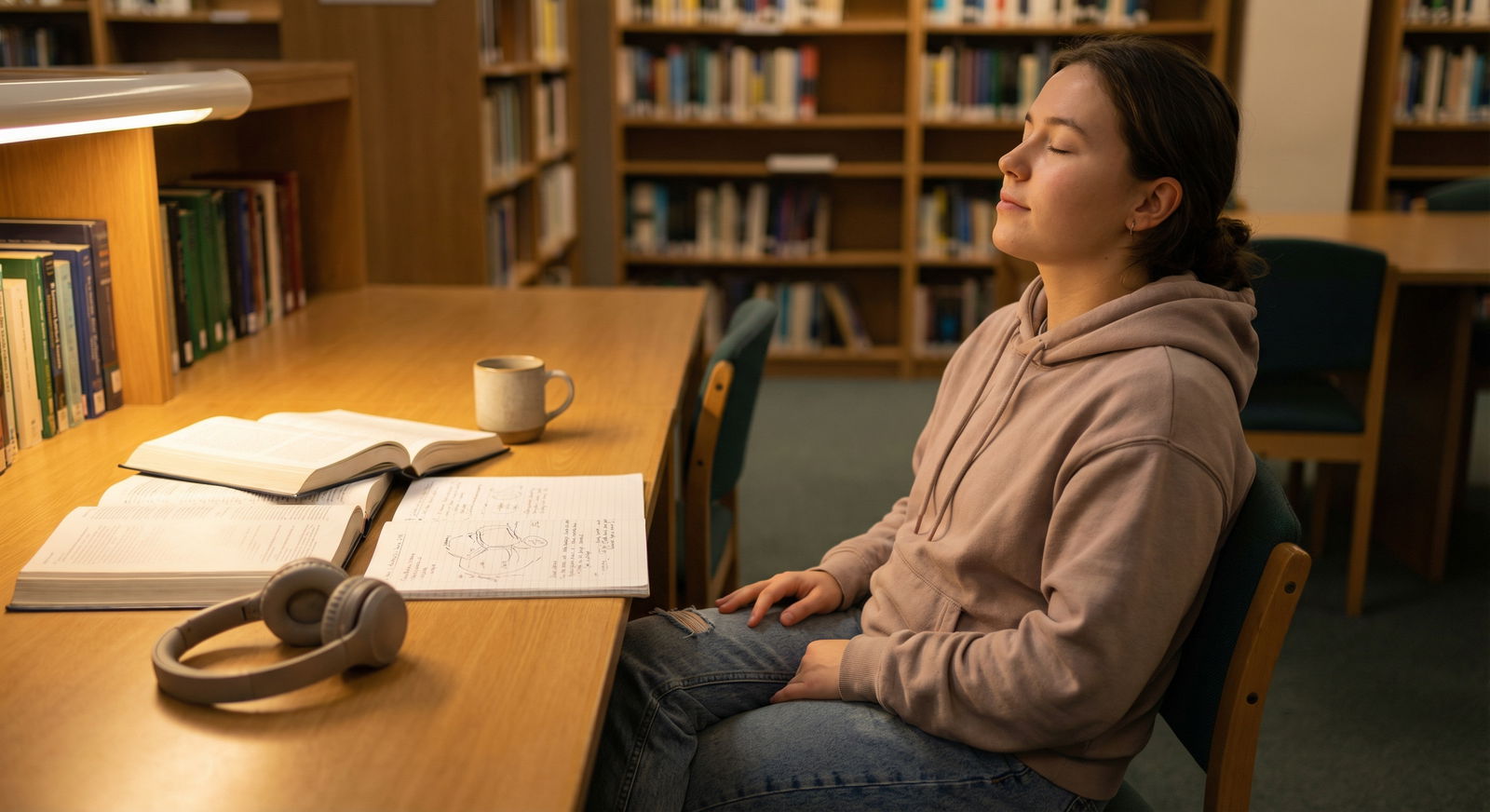
Common Challenges and How to Overcome Them
Breathing exercises are simple, but building a consistent habit can be challenging—especially with the demanding schedules of medical training.
“I Don’t Have Time”
You do not need a 30-minute meditation block to benefit. Instead:
- Attach breathing to existing routines: right after brushing your teeth, before opening Anki, or while waiting for the elevator.
- Use tiny “micro-practices”: 3 deep breaths between patients, 1 minute of 5–5–5 breathing before starting a practice question block.
“I Can’t Focus; My Mind Keeps Wandering”
This is normal. The goal is not a blank mind, but gently redirecting attention.
Try:
- Counting your breaths (inhale 1, exhale 1, up to 10, then restart).
- Using tactile cues (feeling your belly rise and fall under your hand).
- Guided audio tracks so you can follow instructions rather than self-direct.
“I Don’t Feel Any Difference at First”
Effects can be subtle initially, especially if baseline stress is high.
- Start with realistic expectations—this is a skill that strengthens over weeks.
- Track your mood and anxiety in a notebook or app to see trends.
- Combine breathing with other fundamentals: adequate sleep, movement, hydration, and supportive study strategies.
When to Seek Additional Support
While breathing exercises and mindfulness techniques are powerful tools, they are not a substitute for professional help when needed.
Consider consulting a mental health professional (counselor, psychologist, psychiatrist) if:
- Test anxiety regularly causes you to “freeze” or abandon exams
- You experience panic attacks or severe physical symptoms
- Anxiety interferes with daily functioning, relationships, or clinical performance
- You have coexisting depression, burnout, or other mental health concerns
Many medical schools and training programs offer confidential counseling services and performance coaching tailored to learner needs.
FAQ: Breathing Exercises, Test Anxiety, and Student Performance
Q1: How often should I practice breathing exercises to see real benefits?
Aim for daily practice, even if it’s just 5–10 minutes total split into shorter sessions. Consistency trains your nervous system to shift into a calmer state more quickly, so that on test day, the techniques feel familiar and reliable rather than new and awkward.
Q2: Can breathing exercises help with anxiety outside of exams and tests?
Yes. Breathing exercises are effective general stress relief tools. You can use them:
- Before presenting on rounds or giving a talk
- After difficult patient encounters
- When feeling overwhelmed by workload or life stressors
By regularly using these skills, you build overall resilience—not just exam-specific coping.
Q3: How quickly can I expect to feel calmer when I use these techniques?
Many people notice some relief within a few minutes—slower heart rate, less muscle tension, a clearer head. For more durable improvements in test anxiety and emotional regulation, consistent practice over 2–4 weeks is typically needed. Think of it like training any clinical skill: repetition matters.
Q4: Are breathing exercises and mindfulness techniques safe for everyone?
In general, yes, they are safe for most people and all ages. However:
- If you have certain cardiorespiratory conditions (e.g., severe asthma, COPD, cardiac arrhythmias), keep breath holds gentle and avoid straining.
- If you feel dizzy or lightheaded, return to normal breathing and try again later with shorter counts.
- Children and younger learners benefit from guided instruction to understand how and why to use the techniques.
If you have medical concerns, discuss them with your healthcare provider before adopting intensive breathwork practices.
Q5: What if I struggle to use breathing exercises during the actual exam, when I’m most anxious?
This is common and usually means the techniques haven’t yet become automatic. To make them usable under pressure:
- Practice in realistic conditions: timed question blocks, mock exams, or noisy environments.
- Start each study session with 1–2 minutes of breathing so it becomes associated with “study mode.”
- Before the exam, choose one simple technique (like 5–5–5 breathing) as your default so you don’t have to decide in the moment.
Over time, your brain will link intentional breathing with a sense of control and calm, making it easier to access when you need it most.
Intentional breathing is one of the simplest, fastest, and most portable tools you can use to manage test anxiety, improve focus, and protect your well-being throughout medical school and residency. By integrating these breathing exercises and mindfulness techniques into your daily life, you not only support better exam performance—you invest in long-term emotional resilience as a future clinician.