
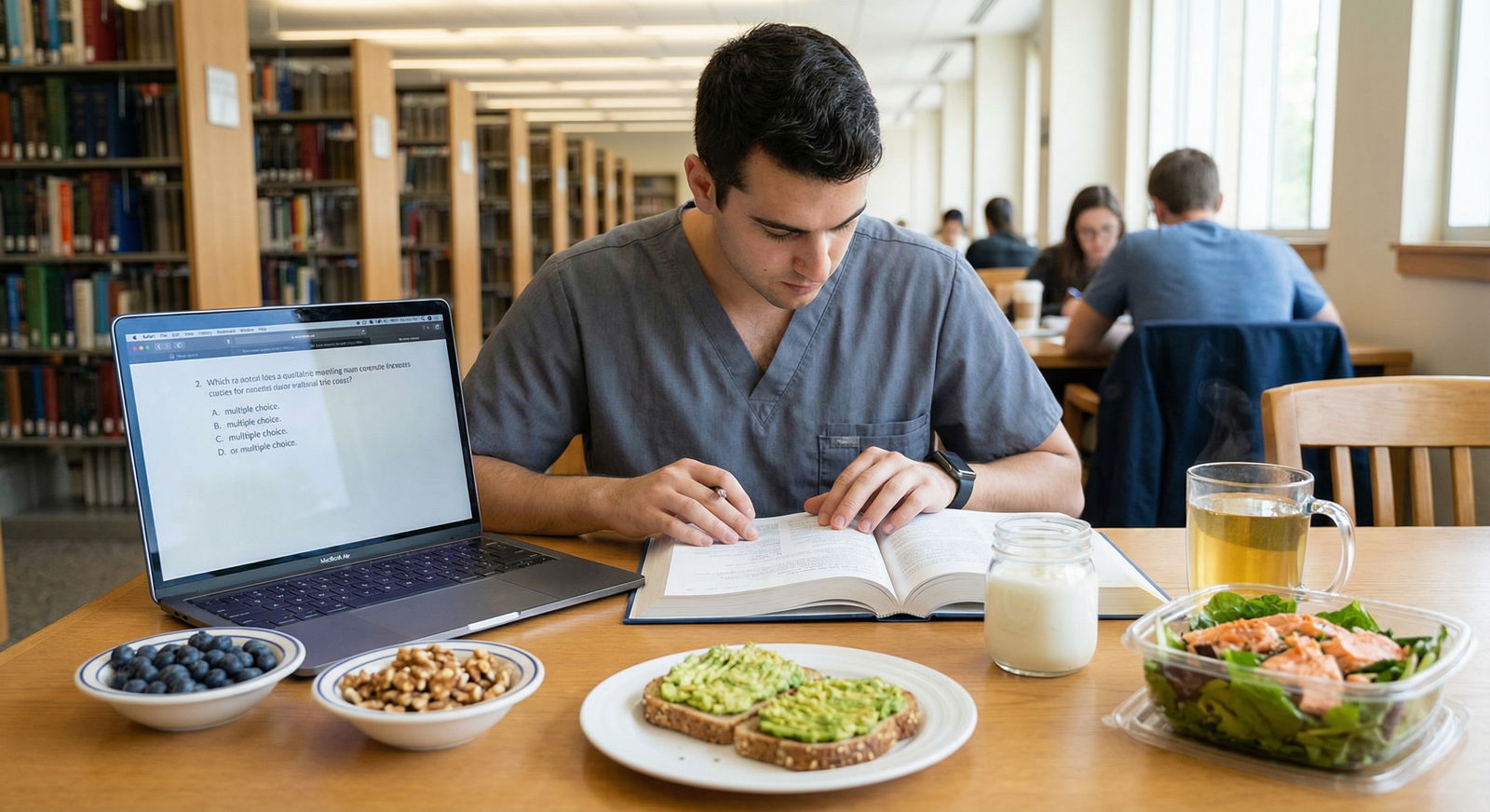
Test anxiety is common at every stage of training, but it can feel especially intense in medical school and residency, where so much hinges on exam performance. While Test Anxiety is often framed as purely psychological, it is tightly linked to physical health—especially Nutrition, sleep, and Stress Management habits. What and how you eat directly affects your mood, attention, memory, and resilience under pressure.
This expanded guide explains the science behind nutrition and anxiety, outlines specific foods and patterns of Healthy Eating that support Mental Health, and provides practical, time-efficient strategies tailored for busy medical students and residents.
Understanding Test Anxiety in Medical Training
Test anxiety is more than “being nervous before an exam.” It is a specific, stress-related response that can interfere with learning, recall, and performance—exactly what you don’t want during an OSCE, shelf exam, Step exam, or in‑training assessment.
What Test Anxiety Looks Like
Test anxiety typically shows up in three domains:
Physical symptoms
- Racing heart, sweating, trembling
- Nausea, stomach pain, or urgent bowel movements
- Headaches or muscle tension
- Insomnia the night(s) before exams
- Feeling “wired but tired”
Emotional symptoms
- Persistent worry or dread about the exam
- Irritability or feeling on edge
- Feeling overwhelmed, hopeless, or “not good enough”
- Sense of mental fog despite hours of studying
Cognitive and behavioral symptoms
- Difficulty focusing on questions or passages
- Going blank on content you know well
- Procrastination or avoidance of studying
- Over-studying with diminishing returns
- Overreliance on caffeine or energy drinks
In medical school and residency, this is often compounded by high workload, sleep deprivation, and irregular meals. That combination can amplify anxiety and blunt your ability to use coping skills.
Why Nutrition Matters for Test Anxiety
While cognitive-behavioral strategies, good study plans, and mindfulness are key, nutrition is a powerful—but often overlooked—lever. Food affects:
- The speed and stability of your blood sugar, which influences concentration and mood
- Production of neurotransmitters like serotonin, dopamine, GABA, and acetylcholine
- Inflammation and oxidative stress, which can impair brain function
- The gut-brain axis, including your microbiome and vagus nerve signaling
- Regulation of stress hormones like cortisol and adrenaline
For exam-heavy phases of medical training (e.g., Step 1/2/3, shelf exams, board exams), building exam-focused nutrition habits can directly improve your ability to stay calm, think clearly, and sustain long study days without crashing.
How Nutrition Shapes Mental Health and Stress Response
Brain Biochemistry: Fuel for Focus and Calm
Your brain is metabolically expensive—it uses about 20% of your daily energy. It needs:
- Glucose from complex carbohydrates for steady fuel
- Amino acids (from protein) for neurotransmitter synthesis
- Healthy fats (especially omega‑3s) for neuronal membranes and signaling
- Vitamins and minerals (B vitamins, magnesium, zinc, iron, etc.) as cofactors for hundreds of brain-related reactions
When you skip meals, live on takeout, or rely on sugar and caffeine, you create fluctuations in blood sugar and neurotransmitters that can mimic—or worsen—anxiety.
Hormonal Regulation and the Stress Response
Chronic high stress (like prolonged exam prep) keeps your hypothalamic–pituitary–adrenal (HPA) axis activated, raising cortisol and adrenaline. Nutrition impacts this in several ways:
- High-sugar, highly processed foods tend to spike insulin and can worsen cortisol dysregulation.
- Balanced meals with protein, fiber, and healthy fats help stabilize blood sugar and blunt stress responses.
- Certain nutrients—like magnesium, omega‑3 fatty acids, and B vitamins—support more balanced HPA axis activity and are associated with lower anxiety and depressive symptoms in research studies.
The Gut–Brain Axis and Your Microbiome
Your gut and brain communicate bidirectionally through:
- Vagus nerve signals
- Immune and inflammatory pathways
- Neurotransmitters and metabolites produced by gut bacteria
A healthy, diverse microbiome is associated with better mood and lower anxiety. Diets high in fiber, fermented foods, and plant diversity support this; diets heavy in ultra-processed foods and low in fiber are linked to worse mental health outcomes.
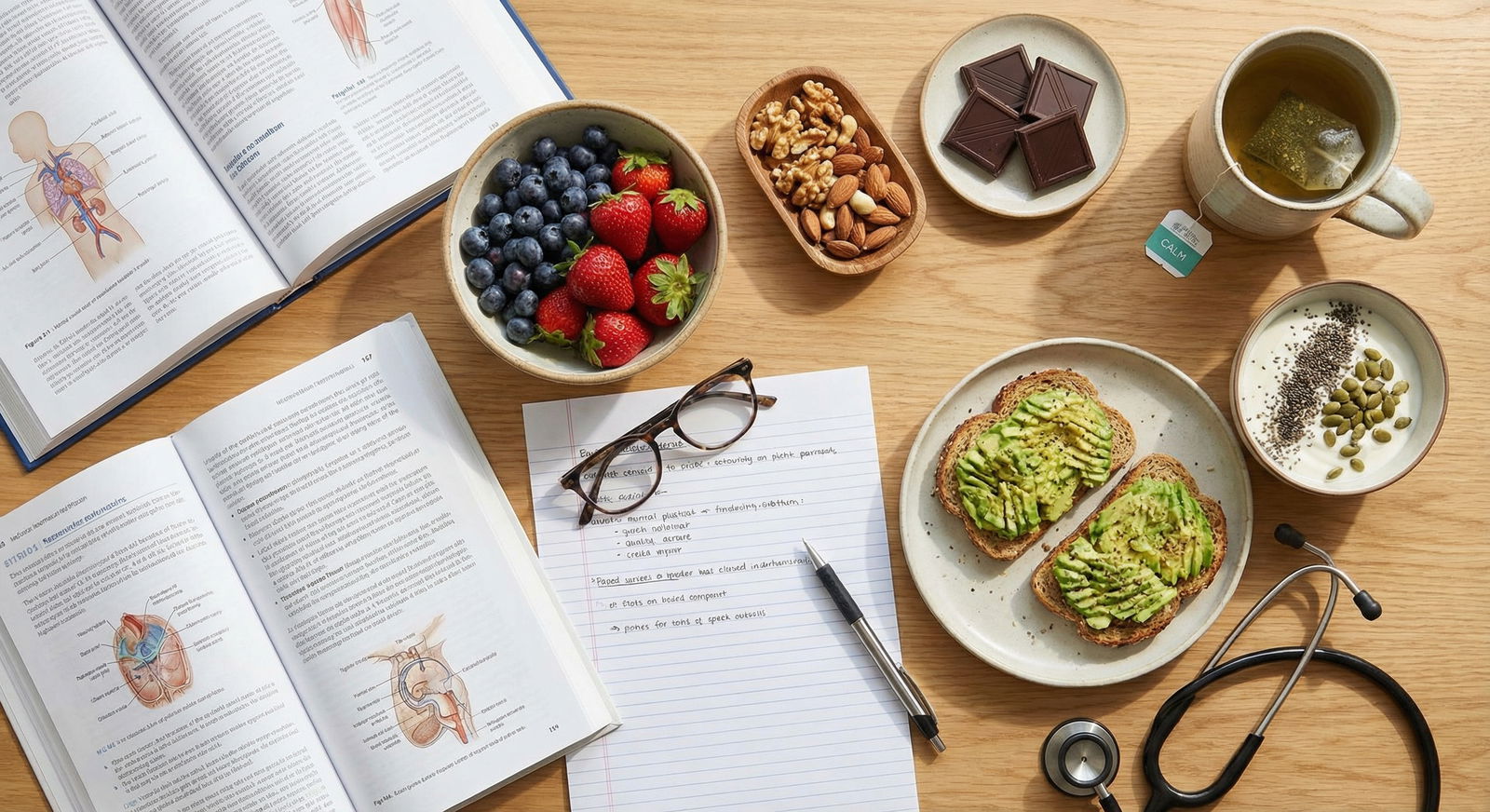
Key Foods and Nutrients That Help Manage Test Anxiety
Below is a deeper dive into specific foods and nutrient groups that can support Mental Health, cognitive performance, and stress resilience during intense exam periods.
1. Whole Grains: Stable Energy and Mood
Examples: Oats, quinoa, brown rice, barley, whole wheat bread and pasta, bulgur
Why they help:
- Provide complex carbohydrates that break down slowly, preventing rapid spikes and crashes in blood sugar that can worsen irritability and anxiety.
- Support gradual release of serotonin, a neurotransmitter that contributes to a sense of calm and well-being.
- Offer B vitamins (B1, B3, B6, folate), crucial for energy metabolism and brain function.
Practical exam-prep ideas:
- Oatmeal with berries and nuts before a long study block
- Whole grain toast with peanut butter or avocado between question sets
- Brown rice or quinoa bowls with beans, greens, and a protein source for dinner
2. Leafy Greens: Magnesium and Brain-Supportive Nutrients
Examples: Spinach, kale, Swiss chard, collard greens, arugula, romaine lettuce
Why they help:
- Rich in magnesium, a mineral that plays a central role in relaxation, GABA activity, and stress regulation. Low magnesium intake is associated with increased anxiety and sleep problems.
- Provide folate and other B vitamins, which are involved in neurotransmitter synthesis and methylation pathways linked to mood regulation.
- High in antioxidants that help reduce oxidative stress in brain tissue.
Ways to include them despite a busy schedule:
- Toss a handful of spinach or kale into omelets, scrambled eggs, or breakfast wraps.
- Add pre-washed salad greens to lunches with canned beans, tuna, or eggs for quick protein.
- Blend a handful of greens into smoothies (you’ll barely taste them with fruit and yogurt).
3. Fatty Fish: Omega‑3s for Mood and Cognitive Function
Examples: Salmon, mackerel, sardines, trout, herring
Why they help:
- High in EPA and DHA, omega‑3 fatty acids that support neuronal membrane fluidity, synaptic function, and anti-inflammatory pathways.
- Multiple studies link higher omega‑3 intake with reduced anxiety and depressive symptoms, better cognitive performance, and potentially improved stress resilience.
Practical options:
- Grilled or baked salmon 1–2 times per week
- Canned sardines or salmon on whole grain crackers during busy rotations
- If you don’t eat fish, discuss omega‑3 supplements (algae-based for vegetarians/vegans) with a healthcare provider.
4. Berries: Antioxidant Support for a Stressed Brain
Examples: Blueberries, strawberries, raspberries, blackberries
Why they help:
- Packed with flavonoids and antioxidants that protect brain cells from oxidative stress, which can be elevated during prolonged mental strain.
- May help modulate cortisol levels and improve cognitive function, including memory and processing speed.
How to use them efficiently:
- Keep frozen berries on hand for quick smoothies.
- Add them to oatmeal, yogurt, or overnight oats.
- Use as a natural sweet snack instead of candy during late-night study.
5. Nuts and Seeds: Healthy Fats, Magnesium, and Zinc
Examples: Walnuts, almonds, pistachios, pumpkin seeds, sunflower seeds, chia seeds, flaxseeds
Why they help:
- Provide healthy fats, including alpha-linolenic acid (ALA), a plant-based omega‑3.
- High in magnesium and zinc, both associated with better mood and anxiety reduction.
- Offer protein and fiber, which stabilize blood sugar and keep you fuller longer during long study sessions.
Smart exam snacks:
- A small handful of mixed nuts between practice blocks instead of chips or candy.
- Chia or flaxseeds stirred into yogurt or smoothies.
- Trail mix (nuts + seeds + a small amount of dark chocolate + dried fruit).
6. Dark Chocolate: Stress-Reducing Treat in Moderation
Why it helps:
- High-cocoa dark chocolate (70% or more) contains flavonoids that may improve blood flow to the brain and support cognitive performance.
- Small amounts are associated with reduced perceived stress and improved mood in some studies.
- Contains magnesium and compounds that may enhance serotonin.
How to use it wisely:
- 1–2 small squares (about 10–20 g) as a mindful treat during study breaks.
- Avoid high-sugar milk chocolate, which can cause blood sugar spikes and crashes.
7. Herbal Teas and Calming Beverages
Examples: Chamomile, peppermint, lemon balm, valerian root (often in sleep blends), and green tea (for L-theanine)
Why they help:
- Chamomile and valerian root can have mild sedative, calming effects; useful in the evening or when winding down before bed.
- Green tea contains L‑theanine, an amino acid shown to promote relaxed alertness—calm without drowsiness. This can be helpful during intense study without the jitters that come from high-dose coffee.
When to use:
- Herbal caffeine-free tea in the evening to transition from studying to sleep.
- Green tea early in the day as a lower-caffeine alternative to multiple espresso shots.
8. Eggs: High-Quality Protein and Choline
Why they help:
- Provide complete protein, helping stabilize blood sugar and sustain energy.
- Rich in choline, a precursor to acetylcholine, a neurotransmitter critical for attention, learning, and memory.
- Contain vitamin B12 and other B vitamins important for brain health.
Fast, realistic options:
- Hard-boiled eggs prepped on the weekend for grab-and-go breakfasts.
- Quick scramble with spinach and tomatoes between morning questions and afternoon lectures.
- Egg muffins (eggs, veggies, cheese baked in a muffin tin) stored in the fridge or freezer.
9. Yogurt and Fermented Foods: Support for the Gut–Brain Axis
Examples: Yogurt with live cultures, kefir, kimchi, sauerkraut, miso, tempeh, kombucha (low sugar)
Why they help:
- Contain probiotics that support a diverse, healthy gut microbiome, which is linked to reduced stress and better mood regulation.
- Fermented dairy like yogurt also provides protein and calcium, contributing to satiety and overall health.
How to incorporate:
- Plain Greek yogurt with berries and seeds as a high-protein, low-sugar breakfast or snack.
- Add a small serving of kimchi or sauerkraut to lunch or dinner.
- Choose low-sugar kefir as a drinkable snack on the go.
10. Avocado and Other Healthy Fats: Brain and Mood Support
Examples: Avocado, olive oil, olives, nuts, seeds
Why they help:
- Provide monounsaturated fats, which support healthy blood flow and brain cell membranes.
- Avocados also contain potassium, which supports blood pressure regulation and nervous system function.
- Healthy fats slow digestion, helping prevent rapid blood sugar swings that can worsen anxiety.
Easy ways to use them:
- Avocado toast on whole grain bread with an egg on top before a long study day.
- Olive oil–based dressings on salads instead of creamy, sugary options.
- Add avocado slices to sandwiches, bowls, and wraps for more staying power.
Practical Nutrition Strategies for Managing Test Anxiety
Knowing what to eat is only half the battle; implementing it in the context of 12‑hour rotations and last-minute cram sessions is the real challenge. Here are realistic strategies designed for medical students and residents.
Build a “Test Week” Eating Framework
Aim for meals and snacks that follow this pattern:
- Each meal:
- 1 source of protein (eggs, yogurt, poultry, fish, tofu, beans)
- 1 source of complex carbohydrates (whole grains, beans, starchy vegetables)
- 1 source of healthy fats (avocado, olive oil, nuts, seeds)
- At least 1 serving of fruits or vegetables
This combination helps:
- Stabilize blood sugar and energy
- Support neurotransmitter production
- Reduce the likelihood of mid-exam jitters or brain fog
Smart Snacking for Long Study Blocks
Plan snacks that are:
- Portable
- Non-messy
- Balanced (protein + fiber + some healthy fat)
Examples:
- Apple or banana with a handful of almonds
- Carrot sticks and hummus
- Greek yogurt with seeds and a small amount of granola
- Whole grain crackers with cheese or peanut butter
Avoid relying solely on:
- Energy drinks
- Candy and pastries
- Excessive coffee without food
These can lead to rapid energy spikes followed by fatigue, irritability, and increased Test Anxiety.
Hydration: Simple but Essential
Mild dehydration can cause headaches, fatigue, difficulty concentrating, and can be mistaken for anxiety. To support Stress Management:
- Aim for 2–3 liters (about 8–12 cups) of fluids daily, depending on body size, climate, and activity.
- Prioritize water, herbal teas, and seltzer.
- Limit sugar-sweetened beverages and energy drinks.
A practical approach:
- Keep a reusable water bottle with you; aim to finish and refill it 2–3 times daily.
- Sip water regularly during study instead of chugging large amounts at once.
Caffeine and Sugar: Use Strategically, Not Reflexively
Caffeine in moderate doses can enhance alertness and focus, but too much—especially on an empty stomach—can mimic or worsen anxiety:
- Try to stay under 300–400 mg/day (roughly 2–3 small cups of coffee), less if you’re sensitive.
- Avoid high-caffeine energy drinks and large doses late in the day, which can impair sleep.
Sugar provides quick energy but contributes to unstable blood sugar and mood swings:
- Replace frequent sugary snacks with fruit + protein/fat (e.g., apple + peanut butter).
- Check labels on “study snacks” and drinks; many have more sugar than you realize.
Meal Prep and “Batch Cooking” for Exam Periods
During dedicated study periods (e.g., Step prep), a few hours of planning and cooking can drastically reduce last-minute, unhealthy choices:
- Batch cook:
- A grain (brown rice, quinoa, farro)
- A protein (chicken, tofu, lentils, hard-boiled eggs)
- A pan of roasted vegetables
- Store in containers so you can mix and match bowls with minimal effort.
- Keep fast, healthy options stocked:
- Canned beans and fish
- Pre-washed salad greens
- Frozen vegetables and fruit
- Nuts, seeds, and plain yogurt
This structure supports Healthy Eating even when motivation and time are low.
Exam Day and Night-Before Nutrition Tips
The Night Before the Exam
- Avoid heavy, greasy, or very spicy meals that can cause GI discomfort or poor sleep.
- Aim for a balanced dinner: lean protein + whole grain + vegetables + healthy fat.
- Example: Baked salmon, quinoa, and roasted vegetables with olive oil.
- Limit caffeine after mid-afternoon to protect sleep.
- A light, calming beverage (chamomile tea, warm milk, or herbal blend) can support relaxation.
The Morning of the Exam
- Eat something, even if small. Skipping breakfast increases the risk of hypoglycemia, poor concentration, and heightened anxiety.
- Focus on complex carbs + protein + some fat:
- Oatmeal with nuts and berries
- Whole grain toast with egg and avocado
- Greek yogurt with fruit and seeds
If you normally drink coffee, have your usual moderate amount—but do not dramatically increase your caffeine intake on test day.
Snacks During Long Exams (If Allowed)
If the exam format allows breaks with snacks (e.g., USMLE Steps, many board exams):
- Choose simple, non-messy, familiar foods:
- Banana or apple
- Small handful of nuts
- Granola bar with minimal added sugar
- Dark chocolate square + mixed nuts
Avoid experimenting with new foods that could upset your stomach.
Integrating Nutrition with Broader Stress Management
Nutrition is one pillar of a holistic approach to Test Anxiety Management. You’ll get the best results when you combine it with:
- Sleep hygiene: consistent schedule, minimizing screens before bed, wind-down routines.
- Evidence-based anxiety strategies: CBT techniques, structured study schedules, practice exams under realistic conditions.
- Movement: short walks, stretching, or brief bodyweight workouts improve mood and cognitive performance.
- Mindfulness and breathing: even 5–10 minutes a day of calm breathing or meditation can reduce physiological arousal.
Think of nutrition as the physiologic foundation that allows your psychological strategies to work better.
FAQs on Nutrition, Test Anxiety, and Exam Performance
1. Can nutrition alone eliminate test anxiety?
No. Nutrition is a powerful supportive tool but not a complete solution. It can reduce the intensity of physical and emotional symptoms, improve focus, and stabilize mood. For best results, combine Healthy Eating with effective study planning, sleep, movement, and, when needed, professional Mental Health support such as counseling or CBT.
2. How long does it take for dietary changes to affect mood and anxiety?
Some benefits—like more stable energy and fewer sugar crashes—can appear within days of improving your diet. Changes related to inflammation, gut microbiome, and nutrient status may take several weeks. Consistency matters more than perfection; even small, sustained improvements can support better Stress Management over an exam block.
3. Are there specific foods I should avoid before or during exam prep?
Try to limit:
- Highly processed foods high in sugar and refined flour (candy, pastries, many snack foods)
- Excessive caffeine, especially from energy drinks or multiple large coffees
- Heavy, greasy, or very spicy meals close to bedtime or exam time, which can cause GI upset
- Large high-sugar meals that lead to energy crashes
You don’t need to be perfect; aim for better, not flawless choices most of the time.
4. Is it worth taking supplements like magnesium, omega‑3s, or B vitamins for test anxiety?
Supplements can be helpful in some cases, especially if you have a known deficiency or struggle to get enough nutrients from food due to time, dietary restrictions, or medical conditions. Evidence suggests:
- Omega‑3s may reduce anxiety symptoms in some individuals.
- Magnesium can support relaxation and sleep in those with low intake.
- B vitamins are crucial for brain health, especially if you restrict major food groups.
However, supplementation should be individualized. Always discuss new supplements with a healthcare provider, especially if you’re on medications or have medical conditions.
5. What if my schedule is too busy to eat well during clinical rotations?
This is a real challenge in medical training, but there are strategies:
- Keep portable, nutrient-dense snacks in your bag or white coat (nuts, bars with minimal sugar, fruit).
- Use batch cooking or prepared healthy options (rotisserie chicken, pre-cut vegetables, frozen vegetables, microwavable grain pouches).
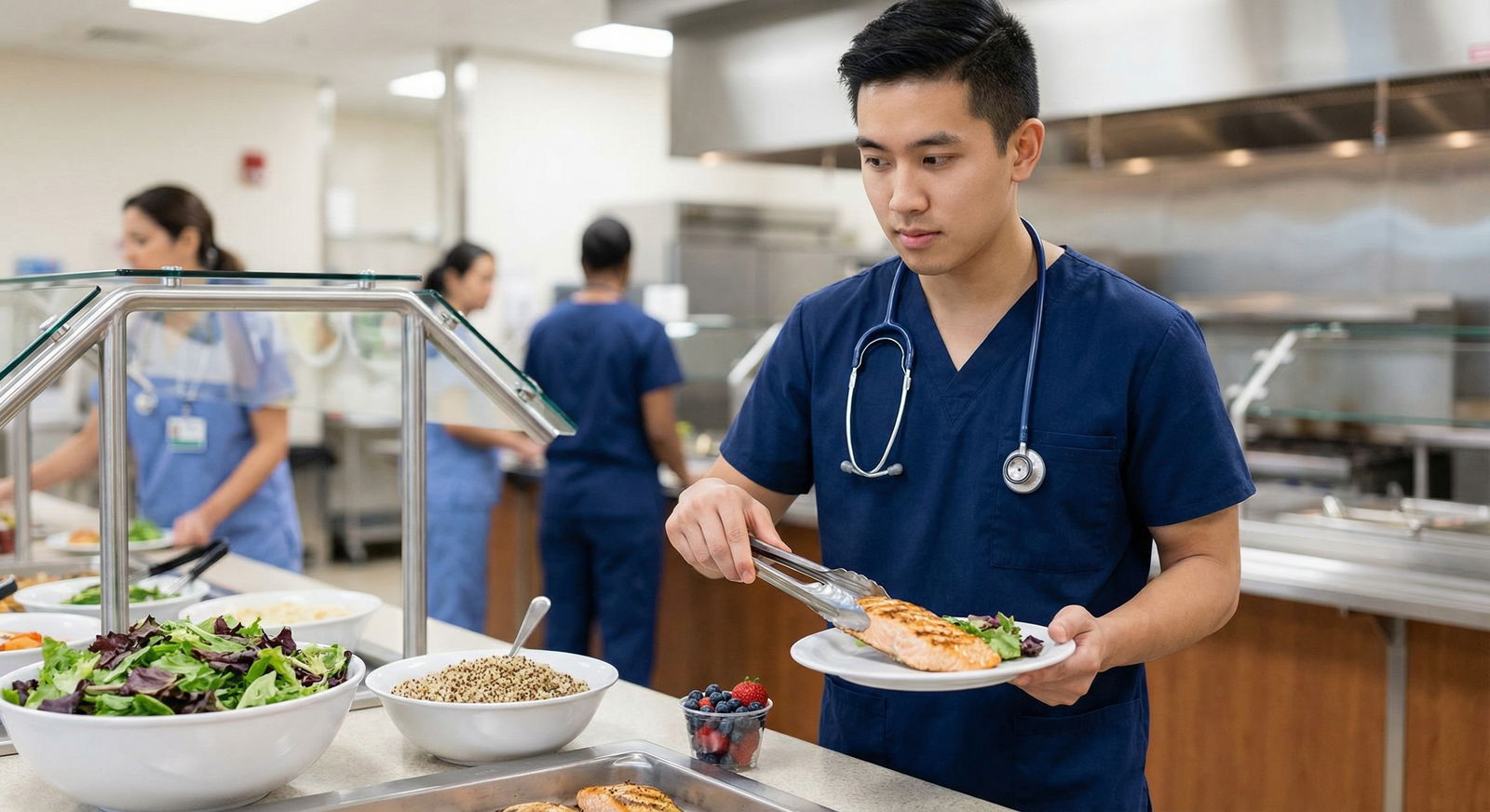
- Choose the best available option in cafeterias: look for a source of protein, a whole grain or starchy veg, and at least one vegetable.
- Remember that even one upgraded choice per day (e.g., nuts instead of chips, water instead of soda) can accumulate meaningful benefits over an exam block.
By aligning your nutrition with your exam schedule and stress levels, you build a more resilient brain and body—one that can handle heavy content loads, long hours, and high-stakes tests with greater calm and clarity. You don’t need a perfect diet; you need a consistent, realistic pattern that supports your Mental Health and performance when it matters most.


