
The way most students “treat” test anxiety is backwards. They wait until the night before the exam, have a panic attack, Google breathing exercises, then swear they will do better next block. That is not a plan. That is damage control.
You manage test anxiety across an exam block by treating it as a timeline problem, not a personality problem. Week by week, then day by day, then hour by hour on exam day.
Below is how I would walk you through an 8‑week preclinical exam block, from orientation to final, with specific checkpoints and actions.
Week 0: Orientation Week – Build the Anti-Anxiety Structure Before Anything Starts
At this point you should not be “studying harder.” You should be engineering the block so anxiety has fewer places to grow.
Day 1–2: Right After Orientation
Your job in the first 48 hours:
Map the block
Open your calendar and put in:- Lecture days and times
- Mandatory sessions (labs, small groups, OSCEs if relevant)
- Quiz dates
- Midterm and final exam dates
- Any big non‑school events you already know (weddings, travel, important appointments)
Then block off protected personal time:
- 1 evening per week off from school
- Sleep window (e.g., 11 pm–7 am) as recurring events
This makes your schedule feel finite and visible, which cuts the vague dread that feeds anxiety.
Define your realistic weekly study capacity
Ask yourself:
- How many hours on weekdays can you actually focus (not “aspire to”)?
- How many on weekends?
Put in a simple estimate and do not be heroic. Overpromising your future self is a guaranteed anxiety amplifier.
Choose one primary content strategy
Anxiety spikes when you have six half‑used resources. Decide now:
- Primary: e.g., lecture slides + Anki + Boards & Beyond for weak topics
- Secondary: question bank (Amboss, UWorld, or school bank)
At this point you should create:
- A single “Block Master List” document:
- Sections: Content / Questions / Admin / Self‑care
- This is where all tasks live. No 10 sticky notes on your desk.
Baseline mental health and support
If you:
- Have had panic attacks before exams
- Freeze on multiple choice questions
- Ruminate for hours after practice tests
Then during Week 0 you schedule:
- A meeting with student counseling or mental health
- Or at least talk to your PCP about sleep, anxiety, and meds if already prescribed
Waiting until crisis week is how students end up sobbing in the hallway outside the exam room. I have seen it more times than I would like.
Weeks 1–2: Early Block – Control the Daily Anxiety Input
At this point you should be building predictable routines, not chasing perfection.
Daily Routine Template (Mon–Fri)
Morning (first 2–3 hours of work):
- Short 3–5 minute grounding:
- Sit, feet on floor, 10 slow breaths, exhale longer than inhale
- Quick note in your Master List: “Today’s top 3 tasks”
- New content (lectures, reading, videos)
Afternoon:
- Application:
- Question blocks on that day’s material (10–20 questions)
- Immediate review of explanations
- Short walk or stretch between blocks to reset your nervous system
Evening:
- Spaced repetition (Anki or similar)
- 10–15 minutes to close the loop:
- Write: “What went well / What felt bad / One small tweak for tomorrow”
This last step sounds cheesy. It is not. You are training your brain to see progress, which directly reduces anxiety.
Weekly Checkpoint (End of Week 1 and Week 2)
At this point you should spend 20–30 minutes doing a block health check:
| Area | Green Flag Example | Red Flag Example |
|---|---|---|
| Sleep | 7–8 hours most nights | 4–5 hours, phone in bed until 2 am |
| Content load | Slightly behind but tracking | No idea what is on the exam |
| Questions done | 30–60 per week | “I’ll start questions later in the block” |
| Mood | Mild stress, generally functional | Daily dread, tears, or shutdown |
Any red flag = change the system, not your willpower.
- If sleep is a mess → hard cut‑off each night (no new content after 10 pm; only light review).
- If you are not doing questions → start with 5–10 per day, no matter how early it feels. Waiting “until you are ready” is code for “I will panic later.”
Weeks 3–4: Mid‑Block – Stop the “I Am Already Behind” Spiral
Middle of the block is where anxiety shifts from “Will I understand this?” to “There is too much, I am doomed.”
At this point you should refine and prune, not add more resources.
Week 3: Reality Audit
Do this on the first day of Week 3.
Quantify instead of catastrophize
Look at:
- Total lectures / modules in the block
- How many you have reasonably mastered
- Question bank total vs completed
Then make a numbers-based plan for the rest of the block.
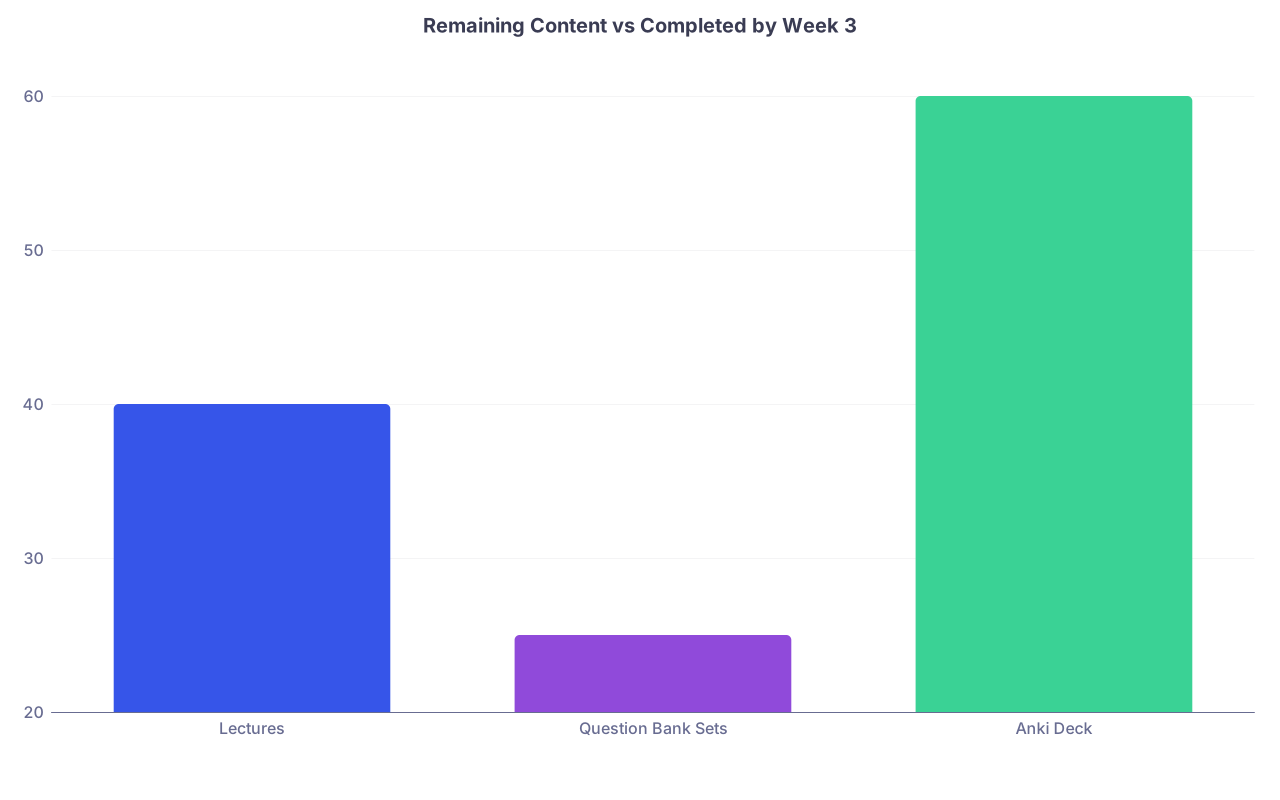
| Category | Value |
|---|---|
| Lectures | 40 |
| Question Bank Sets | 25 |
| Anki Deck | 60 |
If numbers look brutal (e.g., 70% of content untouched), you do not panic. You triage.
Triage content
Create three categories:
- Must‑know: high‑yield, exam‑confirmed topics (your course director often tells you these)
- Should‑know: common but not central
- Nice‑to‑know: tangents, deep details
At this point you should actively decide what will get only a skim or be skipped. Yes, skip. Medical school exam anxiety is often perfectionism pretending to be “good work ethic.”
Set mid‑block performance target
Decide what “success” is for this block:
- “Pass safely with reduced misery” or
- “Honor this course”
If you are barely holding things together mentally, chasing honors is often a bad trade.
Week 4: Anxiety Skills Under Mild Stress
This week, you practice anxiety‑management on purpose, not just in emergencies.
Pick one practice test or large quiz and use it as a simulation lab:
Before the test:
- 60–90 seconds of paced breathing: 4s inhale / 6s exhale
- Quick script:
- “Anxiety is a body response, not a verdict about my ability.”
- “My job is to follow the process I practiced.”
During the test:
- When you get a hard question:
- 1 deep breath
- Identify what you know (even one small detail)
- If still stuck after ~45 seconds, mark and move on
After the test:
- No immediate self‑attack. You do structured review:
- For each missed question:
- Was it knowledge gap, attention, or panic‑freeze?
- Log patterns: “I freeze on multi‑step cardio physiology,” etc.
- For each missed question:
You are teaching your brain that test conditions are familiar terrain, not a threat.
Weeks 5–6: Pre‑Final Build‑Up – Tighten Systems, Not Emotions
Anxiety often spikes here because the final is now a specific monster, not a future idea.
At this point you should shift from broad learning to sharpening.
Week 5: Turn the Ship Toward the Final
Consolidate all weak areas into a single list
From question banks, quizzes, and your notes, make a list:
- Not “Cardio” but “Pressure‑volume loops in aortic regurg,” “RAAS steps,” “Class III antiarrhythmics.”
Then schedule:
- 2–3 “weak topic” sessions per week, each focused on 3–5 items only. Narrow and deep.
Increase question volume, decrease new content
A typical pattern:
- Week 1–4: More content, fewer questions
- Week 5–6: More questions, only targeted content
For many students:
- 40–60 questions per day by Week 6 is ideal
- But even 20–30 done with serious review beats 80 rushed in a panic
Lock in a pre‑sleep ritual
Test anxiety often spikes at night. Ruminating in bed is almost standard. You can interrupt that.
At this point you should have a strict 20–30 minute shutdown routine:
- Close laptop
- Light review of flashcards or a written “tomorrow list”
- Non‑screen wind‑down: shower, stretching, brief meditation track
- Bed. No rewriting your life plan on Reddit at 1 am.
Week 7: Final Prep – Day‑by‑Day Taper Plan
This is where many students go wrong and try to sprint the entire week. Then they show up on exam day exhausted, over‑caffeinated, and fragile.
You want a taper, not a crash.
7 Days Before Final (Day –7)
At this point you should:
- Take a full‑length practice exam or the closest equivalent (large faculty practice exam, NBME‑style if Step‑related).
- Simulate test timing, breaks, and environment as closely as possible.
- Record:
- Score
- Question blocks where anxiety spiked
- Physical symptoms (heart racing, sweating, blanking)
Then that evening:
- Light review only
- Brief written reflection: “What did I do before and during that made anxiety worse or better?”
6–5 Days Before (Day –6, –5)
Focus blocks:
- Morning: Review practice exam in detail
- For each anxious moment, write one specific counter tactic next to it.
- Afternoon: Targeted review of weakest systems/topics from that exam
- Evening: Questions (smaller sets), then normal shutdown routine
Anxiety management here is about pattern correction, not volume.
4–3 Days Before (Day –4, –3)
At this point you should be in refinement mode:
- Shorter question sets (15–25 at a time) with high‑quality review
- Rapid‑cycle review of key summary resources (school high‑yield handouts, your own condensed notes)
- Decide your exam‑day logistics:
- Wake time
- Transport
- Food and caffeine plan
- What you will bring (ID, pens, water, light snack)
Write this down. Reduce variables. Any last‑minute scramble is pure anxiety fuel.
48 Hours Before Final: Stop Adding, Start Protecting
This is where high‑anxiety students sabotage themselves. They double their study hours and cut their sleep in half. Scores do not go up. Panic does.
At this point you should protect your brain, not flood it.
2 Days Before (Day –2)
Goal: Functional, not heroic.
- Content:
- 2–3 medium‑length study blocks (60–90 minutes) of focused review
- No new resources. Only things you have already used.
- Questions:
- Small sets for rhythm (10–15 questions each, 2–3 sets total), preferably on your historically weak topics
- Anxiety skills rehearsal:
- Morning: 5 minutes of breathing + short visualization of walking into the exam calm and prepared
- Afternoon: Practice your “stuck question” protocol on a real question set
- Evening: Write down a 3–4 sentence exam‑day script, e.g.:
- “I will feel anxious in the first 10 minutes; that is normal.”
- “If my heart races, I will take two slow breaths, then read the stem once more.”
- “My job is not perfection; my job is to execute my process.”
Then night:
- Aim for full sleep. You will not fix major gaps now. You can absolutely ruin your performance with 3 hours of sleep.
1 Day Before (Day –1)
This is a controlled day, not a crammable day.
Morning:
- 1–2 hours of very light, high‑yield review
- Favorite summary tables, algorithms, or self‑made cheat sheets
- Do not do brand‑new long videos or 100‑question marathons.
Midday:
- Physical movement: brisk walk, light workout, yoga. 20–40 minutes.
- Eat as you would on a normal study day. Do not decide to suddenly try fasting or double espresso.
Afternoon:
- Organize exam‑day items (bag, clothes, ID, water, snacks)
- Brief run‑through of logistics: travel time, parking, backup alarm.
Evening:
- Stop all academic work at a set time (for example, 7 pm).
- Do a relaxing non‑school activity for at least an hour.
- Review your exam‑day script once. Then bed.
Racing until midnight “because I am so behind” is textbook test‑anxiety behavior. It feels productive. It wrecks recall.
Exam Day: Hour‑By‑Hour Anti‑Anxiety Script
At this point you should stop being a student and start being an operator. Follow your plan.
2–3 Hours Before Exam
- Wake up on time (two alarms).
- Light meal you have eaten before. Nothing experimental.
- Caffeine: whatever you normally take. Not double.
- 5–10 minutes of calm breathing or guided meditation.
If you have a history of panic:
- Consider a short grounding exercise you can do discreetly:
- Press both feet into the floor, feel the chair, notice 5 things you can see / 4 you can touch / 3 you can hear.
60–30 Minutes Before
On site or at your desk (if remote):
- Do not join the panic circle.
- The group that is frantically quizzing obscure details in the hallway? Avoid.
- If you need something in hand:
- One short page of key reminders, max. Look at it calmly, then put it away.
Repeat to yourself:
- “I have a process. I will follow it.”
During the Exam
Your in‑exam anxiety protocol:
First 2–3 questions
- These often feel rough while your brain warms up. Expect that. Do not label it as failure.
- If the first one is terrible, mark and move on.
For any spike of panic
- Stop reading.
- One slow inhale (4s) and exhale (6–8s).
- Re‑read the stem once, looking for one solid fact or clue.
- If still blank, choose a reasonable guess, mark, and move on.
Between blocks or sections
- Leave the screen (if allowed).
- Stand, stretch your back and shoulders.
- A few slow breaths.
- Short hydration and snack if long exam.
Do not do:
- Post‑mortem in your head: “I definitely missed that one, I am failing.” That is a thought habit, not reality. Interrupt it each time.
Immediately After the Exam – Contain the Aftershock
Anxiety does not stop when you click “Submit.” Many students torture themselves for hours or days.
At this point you should limit the damage.
- No question‑by‑question replay.
- Do something non‑medical: walk, talk to a non‑med friend, shower, eat.
Later that day or the next:
- Very short debrief (10–15 minutes):
- What anxiety tactics actually helped?
- Where did you still freeze?
- Did sleep / food / caffeine feel right?
Write 3 bullets in your Master List for the next block:
- “Start questions earlier”
- “Avoid hallway panic group”
- “Practice breathing protocol weekly, not just night before”
Then you let the rest go. You will not out‑ruminate the grade into being higher.
Multi‑Block View: Training, Not Just Surviving
One exam block is practice for the next. Step exams, shelf exams, residency in‑service exams—this cycle repeats.
You are not just trying to get through this final. You are building a system that, block after block, does three things:
- Structures your time early so anxiety has fewer footholds.
- Introduces test‑like conditions gradually so exam day feels familiar, not hostile.
- Protects your brain in the final 72 hours instead of sacrificing sleep and stability in a misguided attempt to “catch up.”
If you remember nothing else:
- Treat test anxiety as a timeline problem, not a character flaw.
- Use each week of the block for a specific job: build structure, triage, sharpen, then taper.
- On exam day, stop improvising. Run the process you already practiced.
That is how you manage test anxiety from orientation to final without burning yourself down every eight weeks.
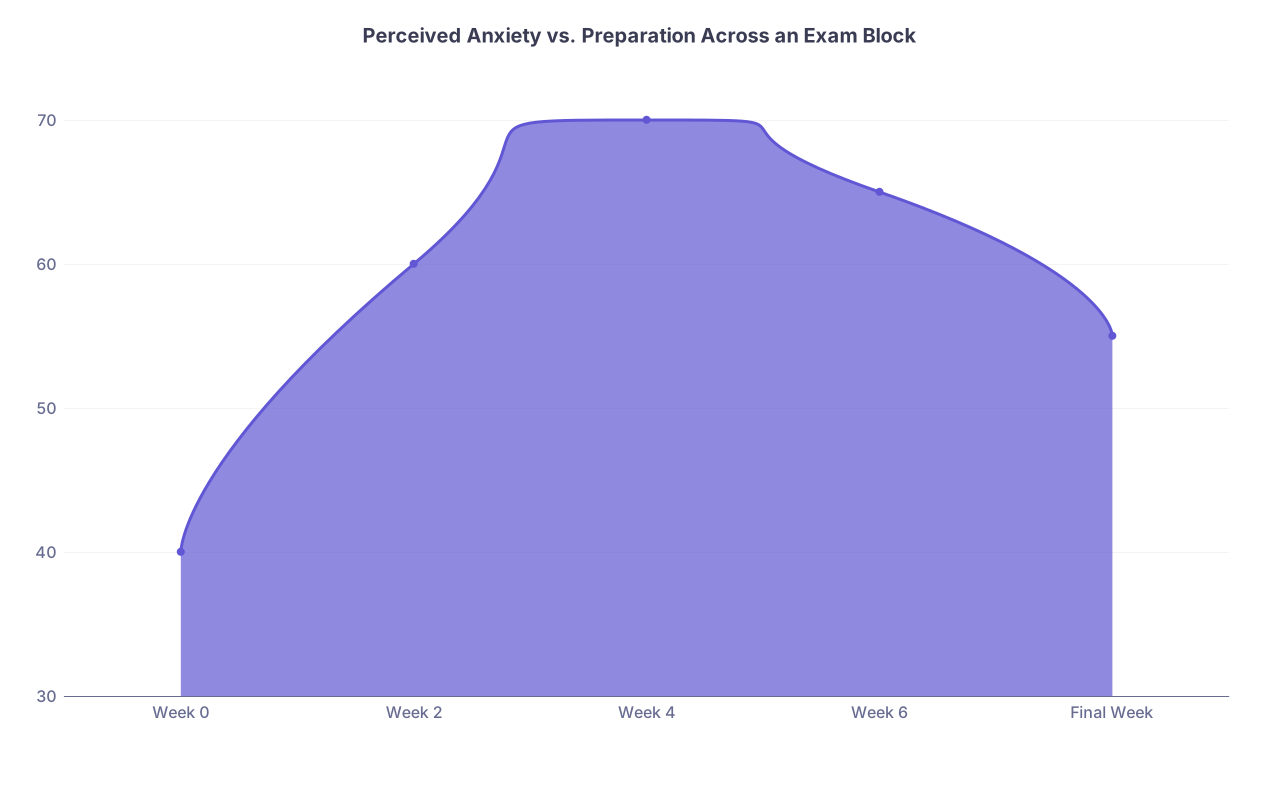
| Category | Value |
|---|---|
| Week 0 | 40 |
| Week 2 | 60 |
| Week 4 | 70 |
| Week 6 | 65 |
| Final Week | 55 |