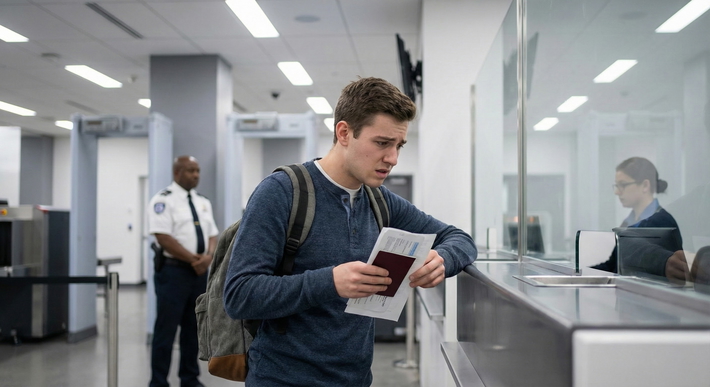
It is 1:17 a.m. Two days before your shelf.
Your Anki due count is screaming at you. UWorld blocks unfinished. NBME still not taken.
And what are you doing?
You are watching a 15‑second TikTok of someone “study-vlogging” their 16-hour day, aesthetic iPad notes, color-coded calendar, latte foam just right. Their caption: “Just a chill light review day before my 270 Step 2 score reveal 🧠✨”.
You do not feel inspired. You feel sick.
Let me be blunt: a lot of your exam panic is not coming from the exam. It is coming from the completely warped, performative study culture you are consuming on social media. And you are walking straight into the trap.
Let’s go through the biggest mistakes I keep seeing medical students make with social media and “study culture”—and how to stop letting that nonsense torch your nervous system.
Mistake #1: Treating Study Vlogs as Reality, Not Marketing
Those “Day in the Life – 14 Hour Study Day” videos?
They are not objective documentaries. They are edited marketing pieces.
I have watched students fall apart because they genuinely believe:
- “Everyone else studies 12–16 hours every day.”
- “Everyone else has perfectly annotated First Aid by mid-M2.”
- “Everyone else is calm and smiling during dedicated.”
That is not reality. That is content.
Here is what you do not see in a 30-second Reel:
- The 45 minutes they spent reshooting the “morning routine” angle.
- The meltdown that got cut from the vlog because it “messed up the vibe.”
- The days they did not study at all and therefore did not post.
The dangerous mistake:
You compare your unedited, behind-the-scenes exhaustion to somebody else’s highlight reel and then decide you are failing.
How to avoid this:
Assume curation, not transparency.
When you watch a study vlog, actively remind yourself:
“This is edited. This is selective. This is performance.”Subtract 30–50% from reported hours.
If someone claims “15-hour study day”, I mentally translate that to maybe 8–10 hours of actual focused work, maximum.
Because:- Filming interrupts
- Setup takes time
- “Study with me” timers are often paused off-camera
Treat it as entertainment, not data.
The instant you start “calibrating” your schedule based on strangers’ content (“they’re doing 3 blocks a day, I should too”), you are in dangerous territory.
If you need study guidance, you are better off listening to:
- Upperclassmen with good outcomes who know you personally.
- Your own performance on question banks and NBMEs.
- Evidence-based schedules, not aesthetic ones.
Mistake #2: Letting “Hour Count Flexing” Redefine What Productive Means
The most toxic trend I have seen recently:
Screenshots of screen-time apps and time trackers, captioned:
- “15 hr grind, no excuses”
- “If you really want it, you’ll put in the hours”
- “12 hours of Anki and UWorld, vibes only”
This creates a false equation in your head:
More hours = more dedicated = more deserving = more likely to score high
Wrong. More hours often = more inefficient, more burned out, more panicked.
Here is what actually matters:
- Focused, undistracted blocks
- Retrieval practice quality (questions, active recall)
- Review quality (understanding why, not copying explanations)
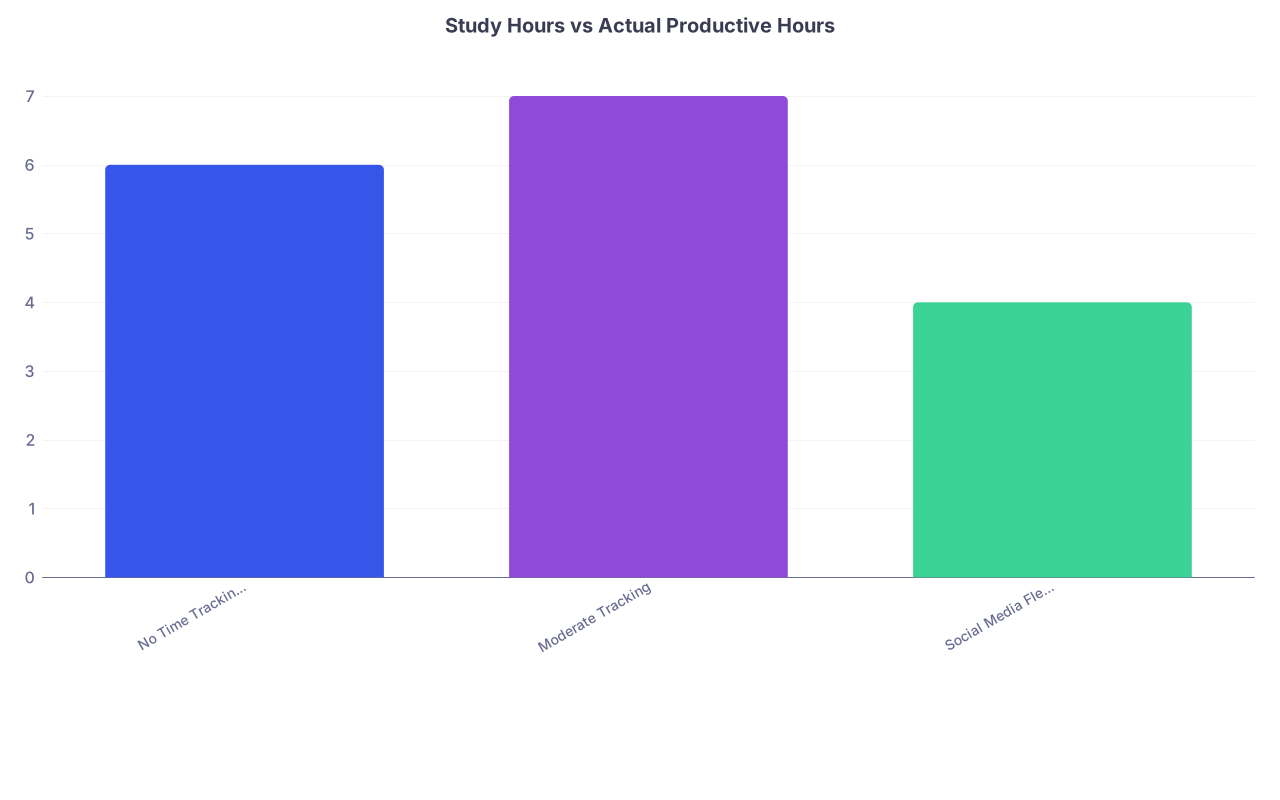
| Category | Value |
|---|---|
| No Time Tracking Flex | 6 |
| Moderate Tracking | 7 |
| Social Media Flex Crowd | 4 |
The “flex” crowd often has huge reported hours, but if you strip out:
- Filming
- Phone checking
- Passive highlighting
- Rewriting notes
You end up with embarrassingly low effective time.
Signs you are falling into the hour-count trap:
- You feel guilty ending at 8 hours of REAL focused work because someone online said they did 14.
- You extend your day just to hit a round number (“I have to get to 12 hours”) while your efficiency is garbage after hour 8.
- You post your own hour screenshots to Instagram or Discord and feel anxious if someone else beats your number.
How to stop this:
- Track tasks, not hours:
- X UWorld blocks with full review
- Y Anki cards
- Z pages or sections of structured resources
- Cap your study day:
- For most people, 8–10 high-quality hours is plenty in dedicated.
- Past that, marginal returns crash and anxiety spikes.
- Never, and I mean never, use strangers’ “hour logs” to judge your own worth or readiness.
If you are consistently hitting your question goals and review goals, you are doing enough. The app screenshot on someone else’s Story is not your metric.
Mistake #3: Consuming “Score Reveal” Content While You Are Still Preparing
This one is brutal.
You are 4 weeks from Step 2. You are already nervous. You’re doomscrolling and suddenly:
- “My STEP 2 CK Score Reveal – 270+!!”
- “How I got a 99th percentile COMLEX Level 1”
- “From 195 UWSA to 248 on Step – here’s how”
You watch “for motivation.”
It does not motivate you. It destabilizes you.
Because your brain immediately does this:
- Compare your current percentages to their stated practice scores.
- Create panic around any mismatch (“They were at 75% UWorld and I’m at 63%. I am doomed.”).
- Overhaul your study plan impulsively based on one person’s anecdote.
I have watched students nuke perfectly good (even excellent) study plans because they binge-watched 3 score reveal videos in a row and decided they were “behind.”
That is not strategy. That is self-sabotage.
Use this simple rule:
If you have not finished your exam and received your own score, you have no business binging score reveal content. None.

| Step | Description |
|---|---|
| Step 1 | Studying for Major Exam |
| Step 2 | Avoid score reveal videos |
| Step 3 | Optional: watch for curiosity |
| Step 4 | Focus on own metrics |
| Step 5 | Has exam score? |
What to focus on instead:
- Your own trends:
- UWorld percentages over time
- NBME/UWSA/COMSAE/COMLEX self-assessments
- Your own weak topics and targeted remediation
- Advice filtered through people who:
- Took the same exam version and
- Know your baseline
Stealing someone else’s story and smashing it onto your situation is how you end up panicking, overcorrecting, and burning out right before your exam.
Mistake #4: Turning Study Into a Performance for Others
The influencer trap is not just external. Some of you are accidentally becoming minor influencers yourself. And it is wrecking your anxiety.
You start by:
- Posting “accountability” stories: “Day 3 of dedicated, let’s go.”
- Sharing your desk setup, coffee, iPad notes.
- Live-updating your Anki count or “study with me” reels.
It feels harmless. Maybe even helpful.
Until:
- You have a bad day.
Did not finish your cards. Skipped a UWorld block.
Now you feel like you “owe” your followers an explanation. Or an excuse. - Your identity glues itself to being “the hardworking one” or “the productive one.”
- The thought of a low score is not just academic failure; it is now social humiliation.
That pressure cracks people.
I watched a student in my program basically implode during Step 1 dedicated because he had been documenting his “no days off” grind on TikTok. When he started getting low NBME scores, he could not handle the idea of “being exposed” after all his motivational content. His anxiety skyrocketed. His sleep got destroyed. His actual performance worsened precisely because he had turned the whole process into a public performance.
Questions you should ask yourself:
- If no one saw your daily study updates, would you study differently?
- If you bombed an NBME, would you feel more shame because of your followers than because of the result itself?
- Are you choosing study methods that look good on camera or ones that actually help you learn?
If your honest answer is uncomfortable, good. That is the point.
Study is not content. Exam prep is not reality TV.
Do not blur those lines.
Mistake #5: Joining “Study Discords” and Group Chats That Are Actually Anxiety Engines
On paper, Discord study servers, Telegram groups, and group chats sound supportive:
- Shared resources
- Question explanations
- Moral support
Sometimes that happens. Often, they quietly turn into:
- A constant comparison feed:
- “Just did 3 NBMEs back-to-back!”
- “Up to 10,000 UWorld questions now”
- “Just scored 260 on UWSA1, feeling mid tbh”
- Rumor mills:
- “Heard they made Step 2 much harder this month”
- “Everyone I know is failing the August exam”
- Score flex arenas:
- People posting high practice scores under the guise of “helping”
Common red flags in “study communities”:
- People casually dropping elite scores with zero context.
- Members shaming others’ schedules: “You’re only doing 1 block a day?”
- Vague flex posts: “Did something crazy today, can’t wait for my score 😉”
- Panic chains: one anxious message triggers twenty more.
Here is the mistake:
You treat these environments as mandatory. As if leaving means you are weak or anti-social.
Let me be clear:
If a group chat raises your heart rate more than it helps your comprehension, you leave. Mute, archive, exit. No goodbye announcement required.
Healthier social use:
- One or two small groups (2–5 people) who:
- Share similar goals
- Are reasonably stable emotionally
- Do not weaponize their scores
- Use text, not endless notifications.
Check at set times, not constantly between questions. - No NBME screenshots unless specifically requested and context is given.
Your nervous system cannot handle being plugged into 24/7 comparison feeds while trying to learn dense, high-stakes material. Stop pretending it can.
Mistake #6: Passive Scrolling as “Breaks” That Never Let Your Brain Power Down
You tell yourself you are taking a “break.”
You open Instagram, TikTok, YouTube Shorts.
Ten minutes later you have:
- Seen three people scoring 260+
- Watched a vlog of someone saying “just trust the process”
- Scrolled past comments arguing about which NBME is predictive
That is not a break. That is cortisol on demand.
A real break lowers arousal. It gives your mind distance from the exam. Social media, especially study content, does the opposite. It keeps your exam emotionally in-your-face every 15 seconds.
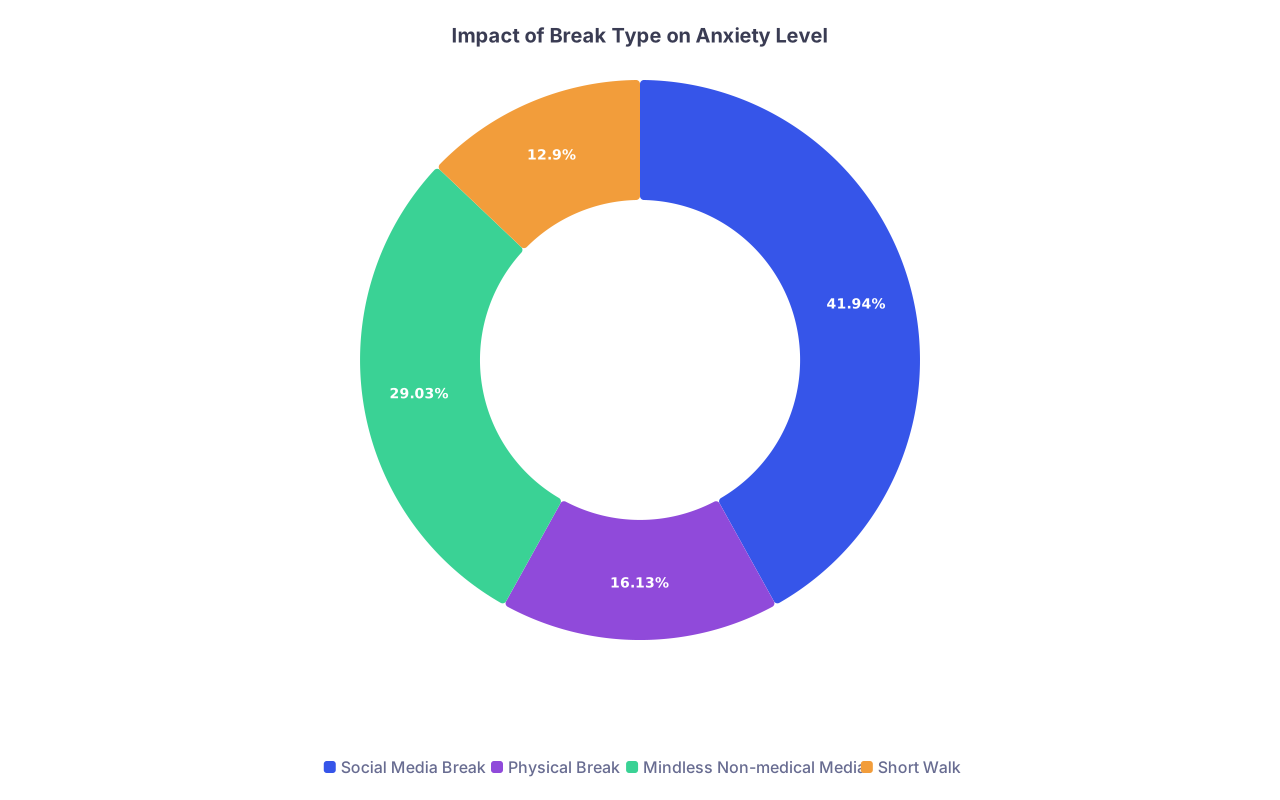
| Category | Value |
|---|---|
| Social Media Break | 65 |
| Physical Break | 25 |
| Mindless Non-medical Media | 45 |
| Short Walk | 20 |
The worst pattern I see:
- Do a few questions.
- Feel uncertain.
- Grab phone. Scroll study content.
- Anxiety spikes.
- Go back to questions with higher baseline panic.
You have trained your brain to associate every pause with external reminders of how “behind” you are. Then you wonder why your chest tightens every time you pick up your phone.
Fix this with simple constraints:
- Remove study-related accounts from your feed during dedicated:
- Mute, unfollow, or use a separate, clean account.
- Separate “brain off” and “brain on” activities:
- Brain off: quick walk, stretch, snack, shower, non-medical chat, mindless but non-comparative TV.
- Brain on: questions, notes, explanation review.
- Keep your phone physically away during study blocks:
- Different room.
- Or at least across the room, screen down, notifications off.
Your breaks should make you breathe easier, not faster.
Mistake #7: Believing There Is One “Correct” Study Method Because It Went Viral
A video with 500,000 views on “How I studied for Step 2” feels authoritative. It is not. It is just widely seen.
You will see aggressive claims like:
- “If you are not using XYZ app, you are throwing.”
- “Only doing Anki and UWorld is outdated.”
- “This is the only schedule you need.”
You internalize this as:
“If my plan looks different, I am doing it wrong.”
So every week you:
- See a new “perfect” strategy.
- Abandon your semi-working approach.
- Try to brute-force someone else’s technique onto your brain.
I have watched students make more changes to their study plan than they took NBMEs. That is insane.
| Approach Type | Characteristics | |
|---|---|---|
| Stable Plan | Same core resources, minor weekly tweaks, guided by self-assessments | |
| Social-Media-Driven | Frequent major overhauls, chasing trends, guided by influencer videos | |
| Result (Typical) | Lower anxiety, clearer progress tracking | Higher anxiety, fragmented knowledge |
What you should do instead:
- Choose 2–3 primary resources:
- Example: UWorld + Anki + a single textbook/video series.
- Give your plan at least 2 weeks before deciding it is not working—unless you see catastrophic results.
- Use self-assessment scores, not social media, to decide if you need changes.
Your brain has specific quirks. Your prior knowledge, speed, language comfort, and fatigue profile are not identical to some influencer’s. Copying their entire workflow is like wearing someone else’s prescription glasses because they say the world looks sharp.
Mistake #8: Letting Social Media Rewrite What “Normal” Performance Looks Like
You almost never see:
- “I got a 223 and I am okay with that.”
- “I failed my first NBME but passed the real deal, here’s the story.”
- “I scored average and still matched where I wanted.”
You constantly see:
- “From 210 to 260 in 3 weeks”
- “How I got 99th percentile on everything”
- “Anki-only, 270+ strategy”
Your brain quietly recalibrates:
- 240 becomes “low”
- 220 becomes “oh God, disaster”
- Pass/fail becomes “irrelevant, everyone is secretly gunning for 260”
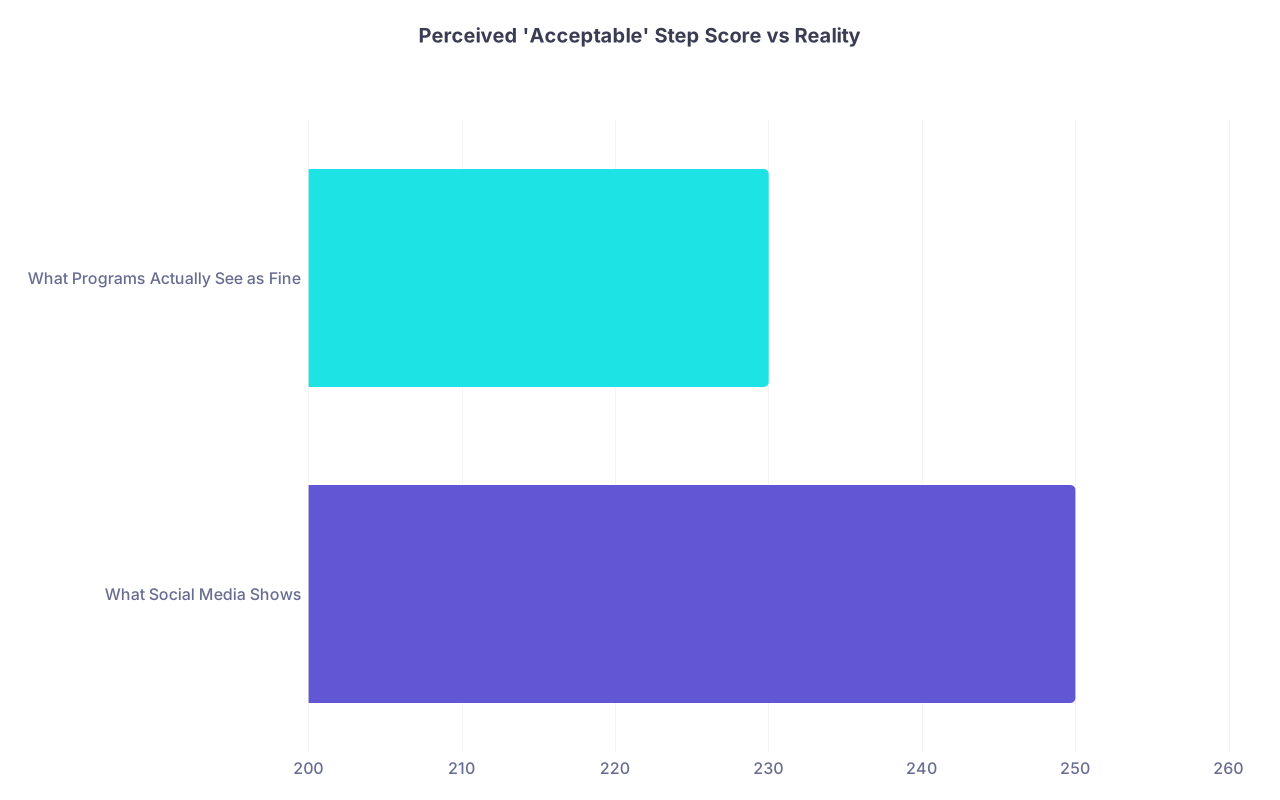
| Category | Value |
|---|---|
| What Social Media Shows | 250 |
| What Programs Actually See as Fine | 230 |
I have literally heard M3s describe a 240 as “embarrassing.” That is social-media poisoning, not reality.
You know who actually defines what is acceptable?
- Residency program directors
- Match rates
- Actual job performance down the line
Not some stranger with a ring light and a discount code.
If you never see the middle of the bell curve, you start thinking it no longer exists. It does. Most people are there. They are just not making aesthetic montages about it.
Mistake #9: Using Social Media as a Surrogate for Real Support
When you are scared, it is easier to watch a stranger talk about “trusting the process” than to:
- Tell your partner you are terrified of failing.
- Admit to a classmate your last NBME tanked.
- Email a faculty advisor saying, “I think I am in trouble. Can we talk?”
So you stay in this half-connected state:
- You feel “seen” by generic test anxiety videos.
- You feel “inspired” for 30 minutes after a motivational reel.
- You feel absolutely alone at 2 a.m. when your brain is still racing.
Social media gives you the illusion of community. Not the reality.
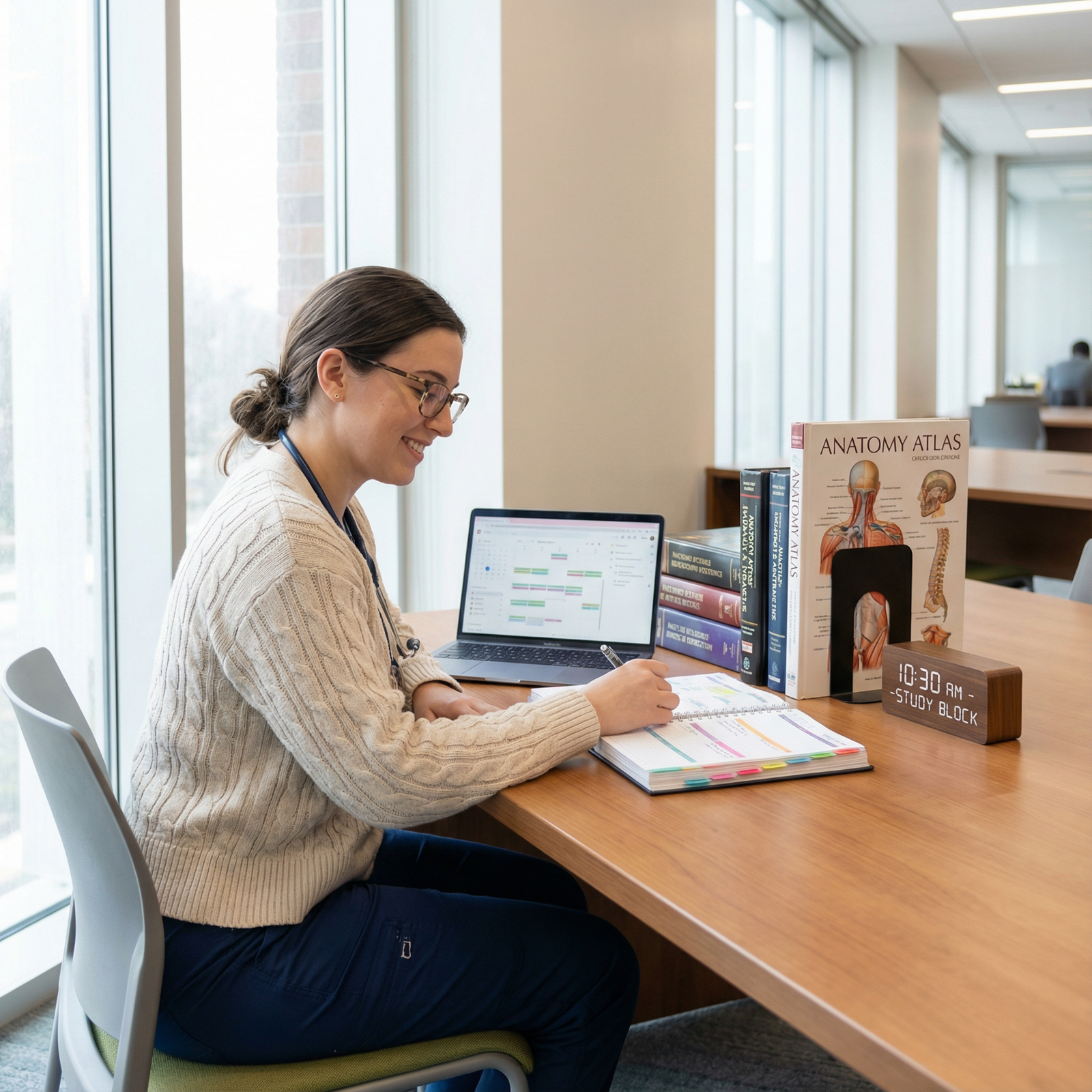
What real support looks like:
- Someone who knows your baseline and can say, “No, you are not behind,” or “Yes, you need to adjust, here is how.”
- A person you can text, “I am spiraling,” and they respond with more than a generic quote.
- Faculty or mental health support that can adjust your schedule, suggest accommodations, help strategize.
Relying on parasocial reassurance instead of real help is a mistake that keeps students stuck in chronic low-grade panic. You feel “kind of supported” but nothing actually changes.
You are allowed to need more than that.
How to Build a Social Media Plan That Does Not Ruin Your Exam Nerves
Let’s be practical. You do not have to go full hermit and delete every app. But you do need guardrails.
Try something like this for the months leading into a major exam:
Define allowed platforms and purposes:
- Example:
- WhatsApp / iMessage: Real friends & small study group
- Instagram: Non-medical accounts only, muted all “studygram” and residency flex content
- Discord: One tight-knit server, muted large public ones
- Example:
Time-box usage:
- 10–15 minutes after lunch
- 10–15 minutes after dinner
- Nothing during the first or last hour of your day
Hard rules:
- No score reveal or “how I got X score” content until after your exam.
- No posting daily productivity metrics or schedules.
- No joining massive anonymous study servers once you are within 8 weeks of an exam.
Emergency protocol:
- If you catch yourself:
- Doomscrolling for more than 5 minutes
- Feeling more anxious after checking your feed
- You:
- Close the app
- Stand up
- Do something physical (walk, stretch, get water) for 2–3 minutes
- If you catch yourself:

| Step | Description |
|---|---|
| Step 1 | Want to open social media |
| Step 2 | Delay until break |
| Step 3 | Choose offline activity |
| Step 4 | Open app with 10-min timer |
| Step 5 | Close app immediately |
| Step 6 | Finish timer, then close |
| Step 7 | Study block active? |
| Step 8 | Within time-box window? |
| Step 9 | Feeling calmer? |
This is not about moral purity. It is about not handing your already-fragile exam nerves to an algorithm whose only goal is to keep you hooked, not keep you sane.
The 3 Things You Should Remember
Most “study culture” content is performance, not reality. Treat it like advertising, not data. The more you compare, the worse your anxiety will be.
Your brain needs boundaries. Breaks must be real breaks. Communities must be actually supportive. Anything that consistently spikes your anxiety has to go.
Use your own metrics, not strangers’ highlight reels. Your practice scores, your trends, your advisors, and your actual life goals should drive your decisions—not a TikTok with a perfect playlist and a 270 thumbnail.
You have enough to manage with med school and exams. Do not make it harder by letting social media weaponize your study life against you.