
What if the one pill that calms you down before a shelf, Step, or boards exam quietly sabotages your performance or your future licensing?
Let me be direct: you should not start or self-adjust medications right before a high-stakes exam just to “take the edge off” without a careful, honest conversation with a qualified clinician who understands both test anxiety and your exam’s policies. That sounds conservative. It’s actually the safest and smartest path.
Now let’s unpack what that means in real life.
1. The Core Question: Is Taking Medication for Test Anxiety “Cheating” or Smart?
People rarely say this out loud, but it’s what you’re thinking:
“If I take propranolol or Xanax before Step 2, is that cheating? Is it unsafe? Will it show up somewhere and screw me later?”
Here’s the clean answer:
- Using prescribed medication, appropriately, under the care of a clinician = legitimate treatment, not cheating.
- Borrowing meds, using someone else’s benzos or beta-blockers, or lying on disability paperwork = ethically wrong and potentially career-damaging.
- Starting meds right before a major exam without testing them first = risky for your performance and side-effect profile.
So no, medications for test anxiety are not inherently wrong. But how you approach them can be very wrong.
2. The Main Medication Categories People Actually Use
Let’s walk through the real-world options students and residents commonly consider, what they help with, and what they can wreck.
A. Beta-blockers (e.g., propranolol)
These are the classic “performance anxiety” meds.
What they help:
Physical symptoms: pounding heart, tremor, sweating, shaky hands on the mouse. They can make your body feel less like it’s in a fire alarm.
What they don’t help:
Racing thoughts, worry loops, negative self-talk. They don’t fix perfectionism or fear of failure.
Major pros:
- Non-sedating in most people
- Short-acting options you can time with exams
- Commonly used by performers and public speakers
Major cons:
- Can lower blood pressure and heart rate too much (dizziness, fatigue)
- Dangerous for some conditions (e.g., asthma, certain heart blocks)
- Wrong dose or bad timing can make you feel sluggish or mentally dull
Bottom line:
Reasonable option for someone with strong physical anxiety, if prescribed and test-driven on a non-critical day well before the exam.
B. Benzodiazepines (e.g., Xanax/alprazolam, Ativan/lorazepam, Klonopin/clonazepam)
This is the “I just need something to calm me down so I can sleep and not freak out” category.
What they help:
Subjective anxiety, anticipatory dread, acute panic. They feel effective. That’s why people get hooked.
Real problems:
- Sedation, slowed thinking, memory issues
- Potential dependence and withdrawal
- Can absolutely blunt cognitive performance, especially at higher doses
- Boards, institutional policies, and future credentialing bodies take long-term or heavy benzo use seriously, especially for clinicians
If you’re thinking, “I’ll just take 0.5 mg Xanax before Step 1” – that’s risky. You might feel calmer but process information slower, miss details, or zone out near the end.
Where they can have a role:
- Short-term, low-dose, prescribed use for severe panic, often for sleep the night before, not during the exam
- In the context of broader treatment: therapy, lifestyle changes, not as a solo strategy
Bottom line:
I’m blunt here: benzos are usually a bad primary plan for test anxiety during high-stakes exams. If they’re used at all, it should be carefully, sparingly, and planned in advance with a psychiatrist—not borrowed from a friend at 11 PM.
C. SSRIs / SNRIs (e.g., sertraline, escitalopram, venlafaxine)
These are for ongoing anxiety disorders, not just “board day jitters.”
Good for:
- Generalized anxiety disorder
- Social anxiety
- Panic disorder
- Chronic, impairing test anxiety as part of a bigger anxiety picture
Key features:
- Take weeks to work
- Not “as needed” meds
- Can improve your baseline anxiety so that exams are less catastrophic, rather than targeting the exam day itself
Downsides:
- Early side effects: nausea, GI upset, insomnia or sedation, sexual side effects, emotional flattening in some people
- Starting 1–2 weeks before a major exam can actually destabilize you
Bottom line:
Excellent option if your anxiety is persistent and impairing your life. Terrible idea to start one 2 weeks before Step 1 without a plan and then hope for the best.
D. Stimulants (e.g., Adderall, Ritalin, Vyvanse)
Some of you have ADHD. Some of you just “borrow” friends’ meds. Very different situations.
If you have diagnosed ADHD and a legitimate prescription:
- Optimizing your dose before exams can absolutely help performance
- Wrong timing or overdose can cause jitters, tachycardia, insomnia, and rebound crashes
If you don’t have ADHD and are just trying to “focus better”:
- You’re basically self-experimenting with a Schedule II controlled substance on one of the most important days of your career
- Side effects: anxiety spikes, heart racing, over-focusing on details and losing time, impaired judgment
Bottom line:
Stimulants can be crucial and appropriate for treated ADHD when managed properly. Recreational or last-minute use for “performance enhancement” is a bad idea and an ethical and legal problem.
E. Sleep aids (e.g., low-dose trazodone, doxylamine, Z-drugs)
The night-before panic is real. Some students lean on “I just need something so I don’t stay up all night.”
Risks:
- Grogginess and hangover the next morning
- Paradoxical awakening or agitation
- Needing more the next time → creeping dependence
Reasonable use-case:
- You’ve already used a low dose occasionally before big events, know your response, and schedule your sleep so you’re fully awake by exam time.
Bottom line:
Use only if you and a prescribing clinician have already tested what works for you. Never first-time a sleep med the night before Step or a board exam.
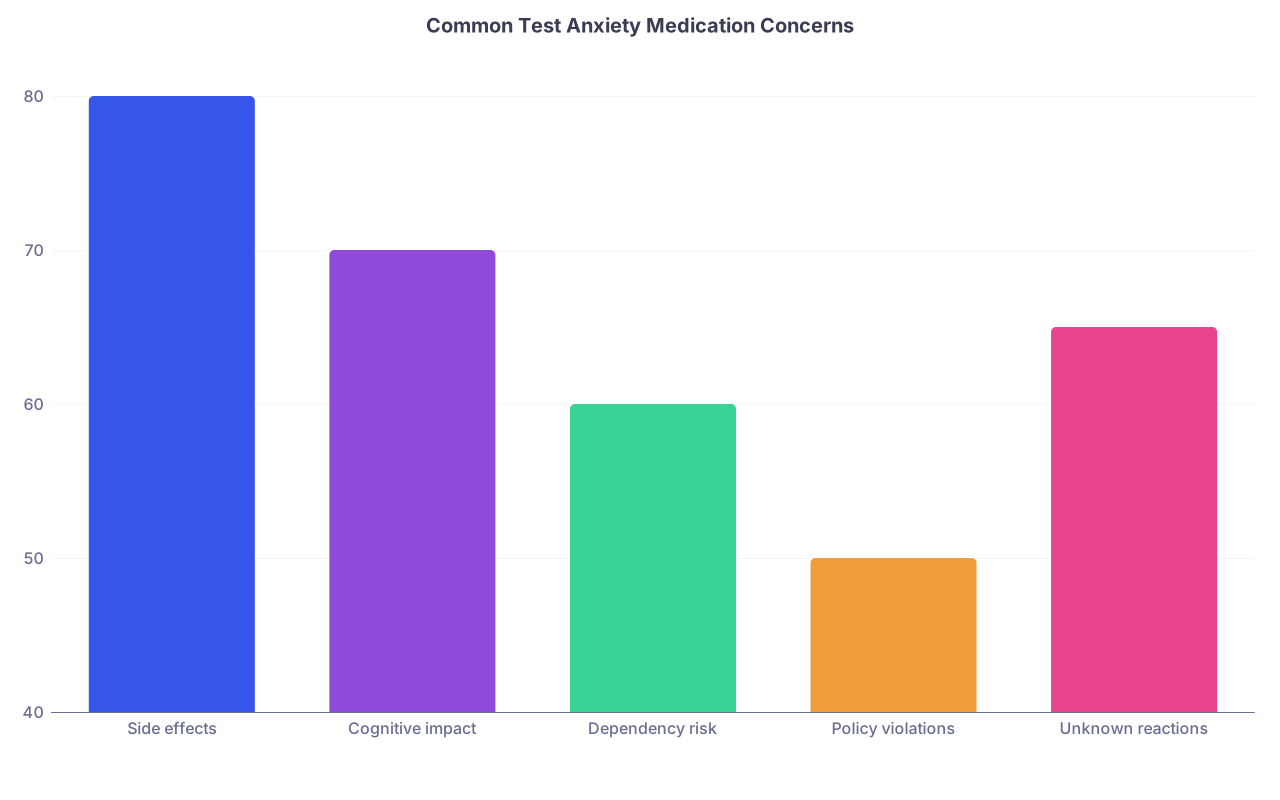
3. The Big Hidden Issues: Ethics, Safety, and Career Fallout
Here’s what most med students miss: how this all looks on paper over time.
| Category | Value |
|---|---|
| Side effects | 80 |
| Cognitive impact | 70 |
| Dependency risk | 60 |
| Policy violations | 50 |
| Unknown reactions | 65 |
A. Policy and disclosure risks
- Borrowing meds = illegal, unprofessional, and if documented, a huge professionalism red flag
- Falsifying disability forms for extra time or private rooms while also using unreported meds = academic dishonesty
- Chronic high-dose benzo or heavy controlled substance use can come up during:
- Occupational health screenings
- Licensing questions (e.g., “Do you have a condition or substance use issue that could impair your practice?”)
Is one calmer exam worth future licensing headaches? Probably not.
B. Safety issues that actually affect exam performance
This part is simple. If your strategy:
- Slows your thinking
- Makes you tired
- Gives you GI distress
- Drops your blood pressure so you’re lightheaded
…you’re sabotaging your score.
I’ve seen students bomb a shelf because they doubled their usual benzo dose “just for today.”
They didn’t panic. But they also didn’t think clearly.
Your goal: calm enough to think sharply, not sedated into “I don’t care.”
4. When Medication Does Make Sense for Test Anxiety
Let me flip to the other side: there are absolutely times when medication is appropriate and smart.

| Step | Description |
|---|---|
| Step 1 | Severe test anxiety? |
| Step 2 | See psychiatrist/PCP |
| Step 3 | Try behavioral strategies first |
| Step 4 | Consider SSRI/SNRI + therapy |
| Step 5 | Add beta-blocker PRN for exams |
| Step 6 | If still impaired, consult clinician |
| Step 7 | Discuss beta-blocker or short-term aid |
| Step 8 | Daily anxiety too? |
Appropriate scenarios
You have ongoing, impairing anxiety, not just one-off exam nerves
- Can’t sleep most nights
- Chronic worry, restlessness
- Physical anxiety throughout the week, not only test day
→ SSRIs/SNRIs, therapy, and maybe as-needed meds are appropriate.
You have clear, performance-specific physical symptoms
- Tremor, palpitations, sweating, tunnel vision, but your cognition is otherwise intact
→ A low-dose beta-blocker, trialed before, can be a strong tool.
- Tremor, palpitations, sweating, tunnel vision, but your cognition is otherwise intact
You’ve tried non-medication strategies consistently
- Timed practice exams
- Behavioral rehearsal of the exam day routine
- Breathing techniques, grounding strategies
- Addressing sleep, caffeine, and schedule
…and you’re still severely impaired.
In these situations, a thoughtful medication plan can unlock your actual potential rather than artificially boosting it.
5. How to Decide: A Simple Framework
Here’s a blunt decision framework you can actually use.
| Question | If Yes | If No |
|---|---|---|
| Anxiety impairs daily function? | See psychiatrist/PCP soon | Focus first on non-pharmacologic strategies |
| Tried non-medication tools consistently? | Consider medication adjunct | Implement strategies before adding meds |
| Have time to test med before exam? | Safe to consider with clinician | Do NOT start new med right before exam |
| Symptoms mostly physical? | Discuss beta-blocker | Consider broader anxiety treatment |
| Already on psych meds? | Coordinate with prescriber | Avoid self-starting new agents |
The key questions to ask yourself:
- Is this a chronic problem or a one-time panic about a huge exam?
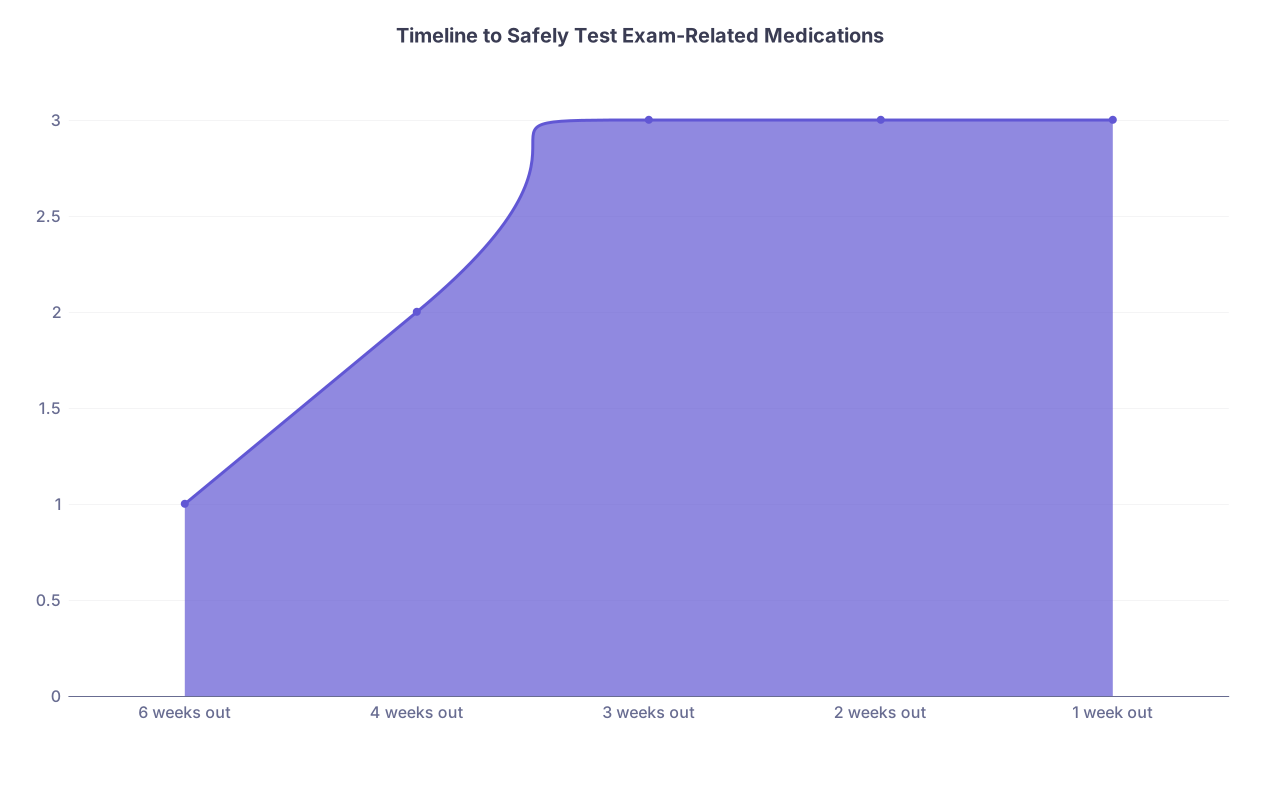
- Do I have enough runway (weeks, not days) to test a med safely?
- Am I doing this in partnership with a clinician who knows my full picture?
- Have I tested this specific dose, timing, and combination before a lower-stakes exam or practice block?
If you’re answering “no” to most of those and still thinking about taking something for the first time the night before a boards exam, you’re playing with fire.
6. Non-Medication Strategies You Should Use Regardless
Even if you and your clinician decide medication is appropriate, it’s not the whole answer. Medication without strategy is like caffeine without studying.

Core non-pharmacologic tools that actually move the needle:
Simulation of exam conditions
- Full-length timed practice tests
- Same start time as the real exam
- Same breaks, same snacks, same hydration
Nervous system regulation
- 1–2 simple, rehearsed breathing techniques (e.g., slow exhale, box breathing)
- Practiced during question blocks, not just before
Predictable day-of routine
- Wake time, breakfast, caffeine dose, commute dry run
- Pack everything the night before so you’re not running around
Sleep protection in the week before
- Consistent bedtime and wake time
- Cut late-night scrolling and “one more block” at midnight
Use these no matter what you decide about medications. They cost nothing and protect you from a ton of avoidable anxiety.
7. How to Talk to a Clinician About This (Without Sounding Sketchy)
You’re allowed to say “I’m terrified of failing Step” without being labeled “drug-seeking.”
What you should bring to that conversation:
- Specific examples: “During NBME practice tests, my hands shake and my heart races so much I lose the first 10 questions.”
- Data: “My practice scores are X–Y range at home, but in proctored settings they drop by Z points.”
- History: what you’ve already tried (timers, practice blocks, sleep changes, therapy, mindfulness apps)
What you should avoid:
- “I just need something strong.”
- “Can I get just a small prescription for Xanax?” without any context.
- Vague requests without describing your symptoms.
A good clinician will:
- Rule out red flags (cardiac issues if considering beta-blockers, substance use history for benzos, etc.)
- Discuss side effects honestly
- Insist you test any med on a normal day before using it for a career-defining exam
If they don’t, that’s a red flag about the prescriber, not just the med.
| Category | Value |
|---|---|
| 6 weeks out | 1 |
| 4 weeks out | 2 |
| 3 weeks out | 3 |
| 2 weeks out | 3 |
| 1 week out | 3 |
8. Hard No’s: Things You Should Absolutely Avoid
Just so there’s no confusion:
- Trying a new psych med (SSRI, SNRI, benzo, stimulant, sleep aid) for the first time within 7 days of a major exam.
- Using a higher-than-usual dose on exam day “just to be safe.”
- Taking someone else’s controlled substances (benzos, stimulants).
- Combining meds you’ve never combined before (e.g., beta-blocker + high caffeine + stimulant) on the big day.
- Hiding relevant information from your prescriber because you’re afraid they won’t give you what you’re hoping for.
You’re not just protecting a score. You’re protecting your safety, your license, and how you function as a future physician.
Quick Summary
2–3 key points and you’re done:
- Medications for test anxiety aren’t inherently wrong, but unsupervised, last-minute, or borrowed use is dangerous and can hurt both your score and your career.
- If anxiety is chronic or severely impairing, talk to a real clinician early; SSRIs/SNRIs, beta-blockers, and sometimes short-term aids can be helpful—but only if tested well before exam day and combined with solid non-medication strategies.
- Never first-time or up-dose a psych med right before a high-stakes exam. Your brain and your future are not worth the gamble.
FAQ (Exactly 5 Questions)
1. Is it okay to take propranolol before Step or shelf exams?
Yes, if it’s prescribed for you, medically safe (no contraindications like certain heart or lung conditions), and you’ve already tested the exact dose and timing on a normal or practice exam day. Don’t first-time propranolol on the morning of Step 1 or Step 2.
2. Can I use Xanax or Ativan to calm down for a big exam?
You technically can if it’s prescribed and your clinician agrees—but it’s usually a bad idea to rely on benzos for test performance. They can slow thinking, impair memory, and create dependence. If they’re used at all, it’s typically low dose, short term, and often for sleep the night before, not during the exam, and only after careful discussion and prior testing.
3. Will taking anxiety medication hurt my future licensing or residency chances?
Taking prescribed meds appropriately for an anxiety disorder does not automatically harm your career. What hurts you is misuse: diversion, dishonesty on forms, or uncontrolled substance use. Licensing boards care about impairment and safety, not punishing responsible treatment.
4. I only get anxious for tests, not in daily life. Should I still consider meds?
Probably not as a first-line move. For test-only anxiety, start with structured practice exams, behavioral strategies, and exam-day routines. If your physical symptoms are extreme and persistent despite that, then a clinician might discuss a targeted option like a beta-blocker—but again, tested well before any high-stakes exam.
5. How far in advance should I start or adjust anxiety meds before a big exam?
For SSRIs/SNRIs, think 4–8 weeks minimum to stabilize. For beta-blockers or similar as-needed meds, you want at least 1–2 test runs on non-critical days at the same time of day and under similar conditions. Anything new or adjusted within a week of the exam is generally too risky.