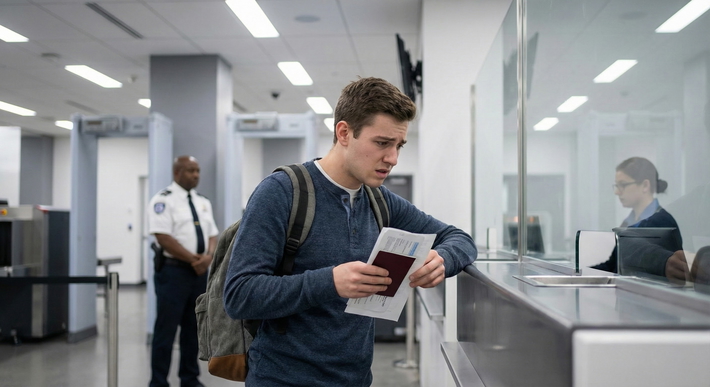
Most students destroy their post-exam week. They either crash so hard they lose all momentum, or they stay so keyed up they never actually decompress. Both are wrong.
You need a deliberate post-exam timeline just as much as a study schedule. The hours and days after an exam are where anxiety either drains out of your system…or cements itself as a permanent resident.
I’ll walk you through it chronologically: minute-by-minute right after the exam, then hour-by-hour, then day-by-day for the next week, and week-by-week for the rest of the block. At each point: “At this point you should…” is your anchor.
0–24 HOURS AFTER THE EXAM: CONTAIN THE DAMAGE
This is the danger zone. Your brain wants to obsess, autopsy every question, and spiral through “What if I failed?” fantasies. You’re not “processing.” You’re rehearsing anxiety.
Right after you submit (0–30 minutes)
At this point you should leave the testing environment and shut down the post-mortem.
What to do immediately:
- Walk out. Physically remove yourself from the exam room/building.
- When someone says, “What did you get for that cardiac murmur question?” your answer is:
“I’m not doing post-mortems today. Ask me next week.”
Say it once, say it calmly, then change the subject or walk away. - Turn off notifications from group chats with “Exam” and “WTF was that question” energy.
Your only actual tasks in the first 30 minutes:
- Hydrate.
- Eat something with actual calories.
- Move your body (walk around the block, up and down stairs, outside if possible).
That’s it. No “quick look” at Anki. No “I just want to estimate my score.”
The first decompression window (30 minutes–4 hours)
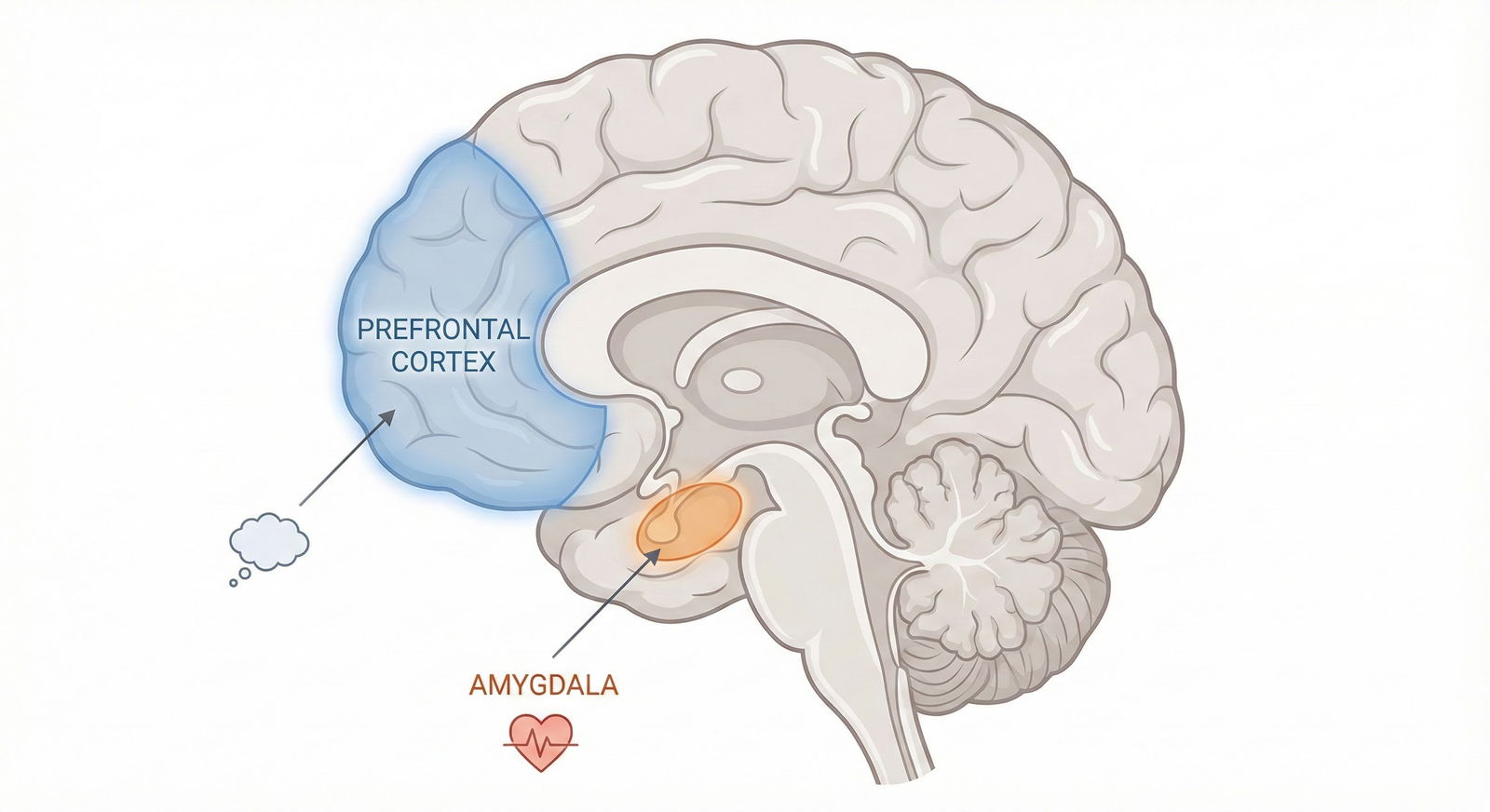
At this point you should let your nervous system downshift.
Your brain has been in fight-or-flight for hours. You will feel like you should “do something.” That’s adrenaline talking, not strategy.
Pick one primary decompression activity for 1–2 hours:
- Short workout (20–40 minutes, nothing heroic)
- Long shower and actual meal with friends (non-med talk)
- Walk + music / podcast that’s not med-ed
- Nap (set an alarm: 30–90 minutes max, not a 5-hour coma)
Then, somewhere between hour 2 and 4 post-exam, do a quick reality check reset (10–15 minutes):
- Write down:
- Exam: [Name/date]
- How I felt before: (1–10 stress)
- How I feel after: (1–10 stress)
- 3 things that went better than expected
- 1–2 things I want to adjust for next time (pure process, not self-insults)
This is not ruminating. It’s a controlled, time-boxed “lessons learned.” Then you close the notebook. Done.
The rest of Day 0 (4–24 hours)
At this point you should protect one full post-exam block of genuine rest.
Rule: After a major exam (course final, NBME, Step-level, OSCE), you get a protected 6–12 hour “no academics” window. That doesn’t mean you must party. It means you deliberately don’t study.
Your job here is to reset your baseline, not obliterate yourself.
Good options:
- Dinner with friends
- Movie, gaming, or hobby night
- Laundry, cleaning your room, setting your space back to functional
- Calling family (with clear boundaries: “Exam’s done. Don’t have the score yet. I’m taking today off.”)
Bad options that I see over and over:
- Drinking to the point you lose the next morning too
- All-night Netflix until 4 am
- All-night “post-mortem” disguised as hanging out
Before bed, do one momentum-preserving action (5–10 minutes):
- Open calendar and mark:
- Next exam date(s)
- Any big deadlines (projects, clerkship eval forms, Step dates, shelf dates)
- Circle one academic task for the next day. Just one. Example:
“Tomorrow: reorganize Anki deck for next block (20 minutes).”
That’s how you rest without falling off the map.
DAY 1–3: LIGHT RESTART WITHOUT RE-TRIGGERING ANXIETY
This is where most students screw up. They either:
- Continue the “I deserve a break” tour for 3–5 days
or - Panic and start grinding 8–10 hours again immediately
You’re going for a third path: light structure, low cognitive load, high reassurance.
Day 1: Gentle ramp-up
At this point you should re-engage with medicine at low intensity for 1–3 hours total.
Think maintenance mode, not full send.
Core pieces:
20–40 minutes of admin reset
- Clean up your desktop and downloads from exam materials
- Archive old slides/folders into a “Completed – [Course/Block]” folder
- Update to-do list: move anything you punted “until after the exam” into specific days
20–60 minutes of light academic touch
- Watch one low-stress lecture at 1–1.25x (not 2x)
- Do a small set of Anki (maybe 50–100 cards just to wake up the system)
- Read a short clinical case, no timer, no pressure
Exercise and sleep
- Get at least 20 minutes of some movement
- Aim for a consistent bedtime. Don’t ping-pong from 2 am to 10 pm.
If anxiety spikes on Day 1:
- Label it: “This is post-exam adrenaline + uncertainty. Not a sign of failure.”
- Use a 5–10 minute grounding exercise (box breathing, body scan, or just walking without your phone).
Day 2: Rebuild a real schedule (but not at 100%)
At this point you should run a “shortened normal day” at ~60–70% of your typical workload.
Example structure (adjust to your reality):
- 8:00–9:00 – Breakfast, email, plan the day
- 9:00–11:00 – Two focused blocks of school-related work
- 11:00–12:00 – Break / exercise
- 13:00–15:00 – Another 1–2 hours of moderate-intensity work
- Evenings – Free or low-effort tasks
Your academic tasks on Day 2 should prioritize:
- Previewing the next content (syllabus, objectives, big topics)
- Cleaning and reorganizing your study system (Anki tags, question bank settings)
- Doing a small, defined chunk of active work:
- 20–30 Anki cards per topic
- 10–15 practice questions with full review
- One short recorded lecture
The key: end the day thinking “I’m back in motion,” not “I’m as exhausted as before the exam.”
Day 3: Diagnostic and adjustment day
At this point you should review your last exam cycle and lock in specific changes.
This is your process audit day. Not therapy. Not self-flagellation. A tactical debrief.
Set aside 30–45 minutes with:
- Your calendar from the past 2–4 weeks
- Whatever you used to study (Anki stats, Qbank stats, notebooks)
- A simple document or page titled: “Next Exam – Adjustments”
Answer, briefly:
What actually worked?
- “Daily 40-question blocks in the morning kept me honest.”
- “Active recall sessions with Sam on Fridays helped.”
What failed or was unsustainable?
- “Trying to watch every lecture at 2x and ‘catch up later’ never happened.”
- “Daily 500+ Anki cards destroyed my sleep.”
Concrete changes for the next cycle (3–5 max):
- Ex: “Cap Anki at 250/day and suspend low-yield cards.”
- Ex: “One full rest day every 10–14 days, scheduled in advance.”
- Ex: “No study after 10 pm unless on call / clinical issue.”
Write them down and keep that list visible.
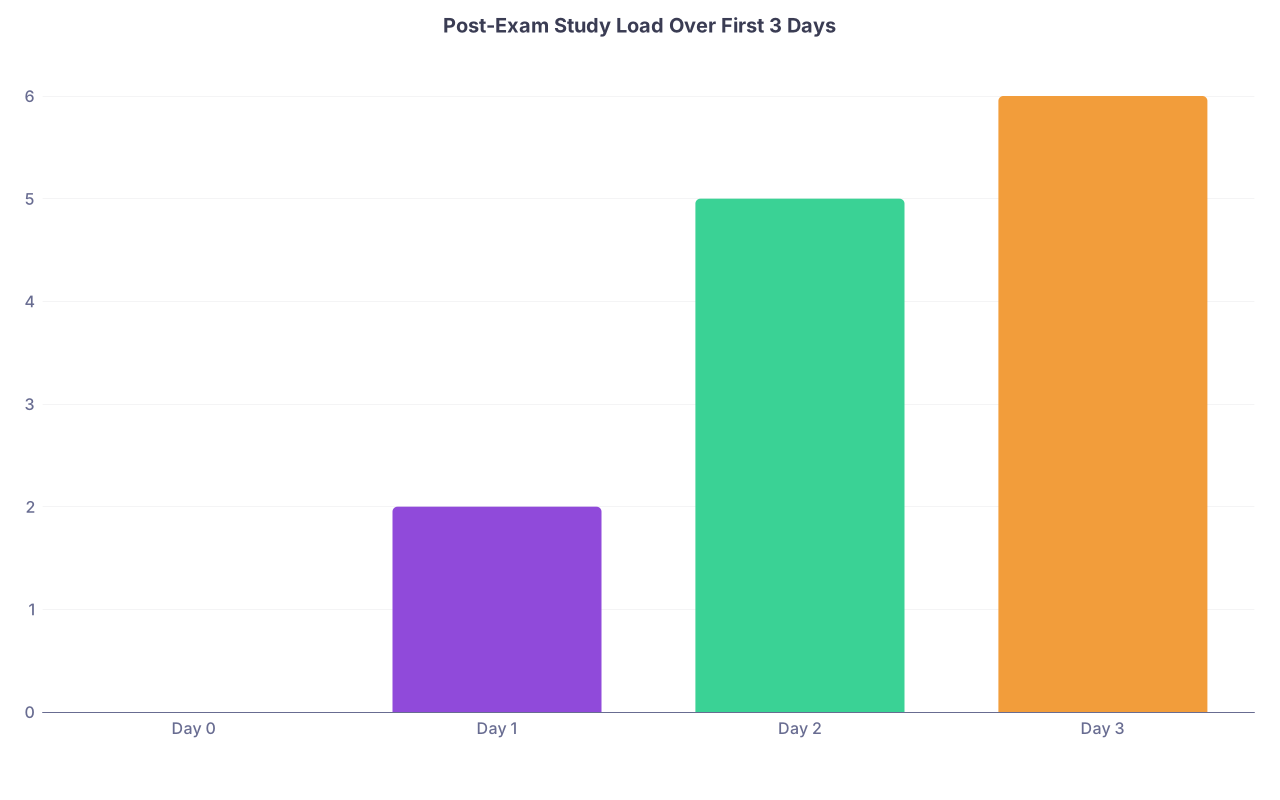
| Category | Value |
|---|---|
| Day 0 | 0 |
| Day 1 | 2 |
| Day 2 | 5 |
| Day 3 | 6 |
(Values = approximate academic hours. Notice: Zero, then 2, then gradual ramp.)
DAY 4–7: CONSOLIDATE ROUTINES & PREP THE NEXT EXAM CYCLE
By the end of Week 1 post-exam, you want two things:
- Anxiety back near baseline
- A clear, realistic plan for the next assessment
Day 4–5: Lock in your weekly rhythm
At this point you should establish your “non-negotiable” weekly pillars.
These are fixed events that protect your brain and your momentum. For most med students, this looks like:
- 2–4 exercise sessions per week (scheduled like appointments)
- 1–2 social blocks (dinner, call home, hobby)
- 1 admin/planning block per week (30–60 minutes)
- Sleep window you actually honor most nights
On Day 4 or 5, physically put these into your calendar through the next exam date. Don’t hope they’ll happen. Schedule them.
Academically, increase to ~70–85% of your pre-exam workload:
- Question blocks most days (but not necessarily daily at this point)
- Regular Anki or flashcards (but within your new caps)
- Reading/lectures in manageable chunks
If anxiety flares when you think about the last exam grade:
- Set a “results window” rule:
“I will think about my score and possible outcomes for 10 minutes after lunch, then I’m done until tomorrow.” - When the thoughts pop up outside that window, label them: “Scheduled for later.”
You’re training your brain that you control when we worry, not the other way around.
Day 6–7: Build the next exam timeline
At this point you should map the entire timeline from today to your next major exam.
This is the macro version of what we just did micro.
- Write the next exam date at the top of a page.
- Count backwards:
- 7 days before: final review week
- 14 days before: heavy Qbank period
- 21–28 days before: content consolidation
- Block out:
- High-intensity study weeks
- Built-in lighter days / rest days
- Any known disruptions (family events, call nights, travel)
Turn it into something like:
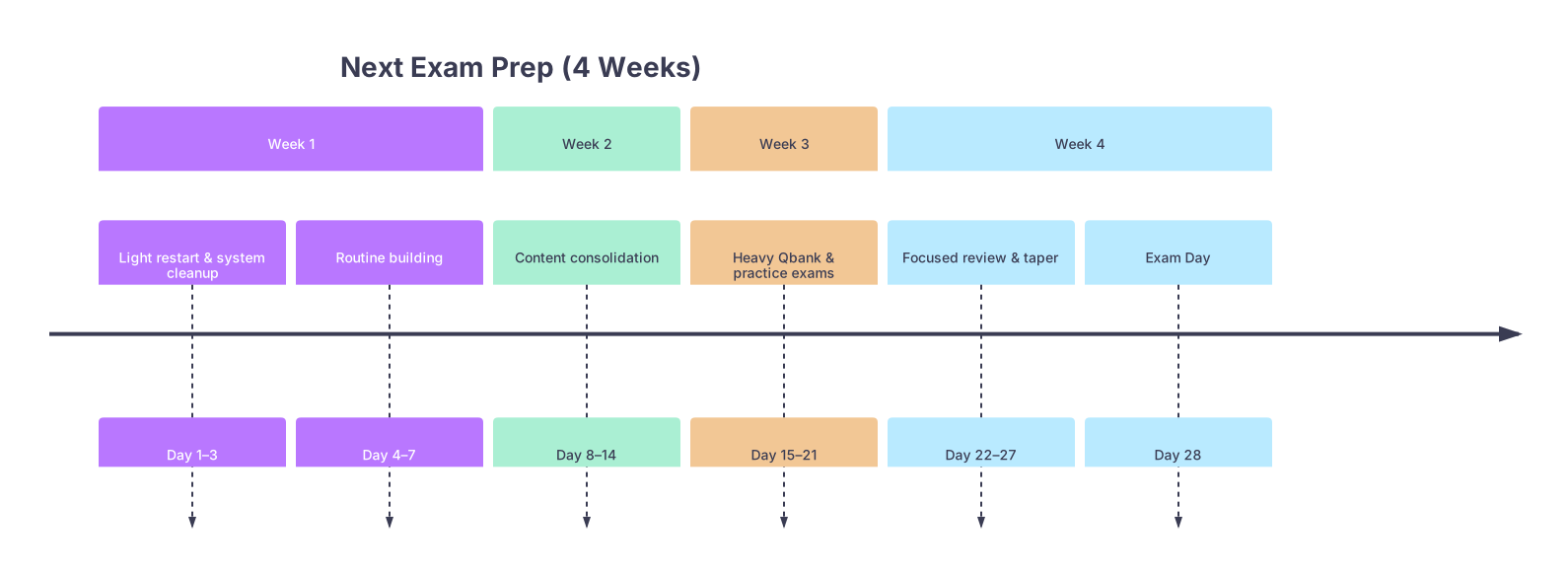
| Period | Event |
|---|---|
| Week 1 - Light restart & system cleanup | Day 1–3 |
| Week 1 - Routine building | Day 4–7 |
| Week 2 - Content consolidation | Day 8–14 |
| Week 3 - Heavy Qbank & practice exams | Day 15–21 |
| Week 4 - Focused review & taper | Day 22–27 |
| Week 4 - Exam Day | Day 28 |
Nothing fancy. But you should be able to look at your calendar and know: “Today I’m in the [phase] of my prep.” That alone chops anxiety down.
WEEK 2–4: LONGER-TERM ANXIETY CONTROL WHILE YOU PUSH FORWARD
By Week 2 and beyond, the exam itself fades…but the pattern can stick. Some students stay stuck in chronic “next exam dread.”
You break that by building anti-anxiety habits into your ongoing schedule, not just as emergency patches.
Week 2: Formalize your “anxiety circuit breakers”
At this point you should identify your early warning signs and default responses.
Write down your personal triggers:
- “I start doom-scrolling Reddit r/step1.”
- “I can’t stop redoing the same question block.”
- “I avoid opening my Qbank for 3+ days.”
Then assign each one a circuit breaker:
- Doom-scrolling → “Phone goes in another room for 25 minutes, I do 5 questions only.”
- Repeating same material compulsively → “Hard stop: no more than 2 passes before moving on.”
- Avoidance → “Do minimum viable action: 5 Anki cards + 1 question, then decide next step.”
Make this a one-page “If-Then” sheet you can actually see at your desk.
Week 3–4: Integrate reflection cycles
At this point you should run short, recurring reflection check-ins every 1–2 weeks.
Format (15–20 minutes, every other Sunday works well):
- What’s my current anxiety level about school (1–10)?
- What are 2 concrete things driving it?
- For each, what’s one small action I can take this week?
Examples:
- Driver: “I’m behind on cardio lectures.”
Action: “Schedule 2x 45-minute cardio blocks Tue/Thu at 7 pm.” - Driver: “I keep doubting every answer choice.”
Action: “For one question block this week, I must lock in answers in under 90 seconds.”
You’re teaching your brain: anxiety is data, not destiny.

SPECIAL CASES: BIG EXAMS (STEP 1/2, SHELVES, LICENSING)
For truly high-stakes exams (Step 1/2, COMLEX, major shelf), the post-exam period is sharper and longer. Scores take weeks. Rumination loves long gaps.
Here’s how to handle it.
Immediately after a high-stakes exam
At this point you should lock in a 24-hour hard stop on all exam-related thinking.
No:
- Reddit score predictor threads
- Question bank “I think I got 60–70% right” math
- Asking everyone else how they felt they did
Yes:
- Pre-planned activity that has nothing to do with medicine
(Traveler’s move: I’ve seen students book a same-day train to visit a friend for 24 hours. Works wonders.)
The waiting period (2–6 weeks)
At this point you should be in an active next-phase plan before the score comes out.
If you’re heading into:
- Clerkships: Use the first week post-exam to:
- Get your white coat, gear, apps (UpToDate, MDCalc) in order
- Set realistic learning goals for your first rotation
- Next dedicated block: Use the timeline we built above
And for the anxiety about the unknown score:
- Decide in advance: “On score release day, I’ll open the email at [time], with [person/activity] before and after.”
- Do not “check every 5 minutes” for 3 weeks. That’s how you train 24/7 tension.
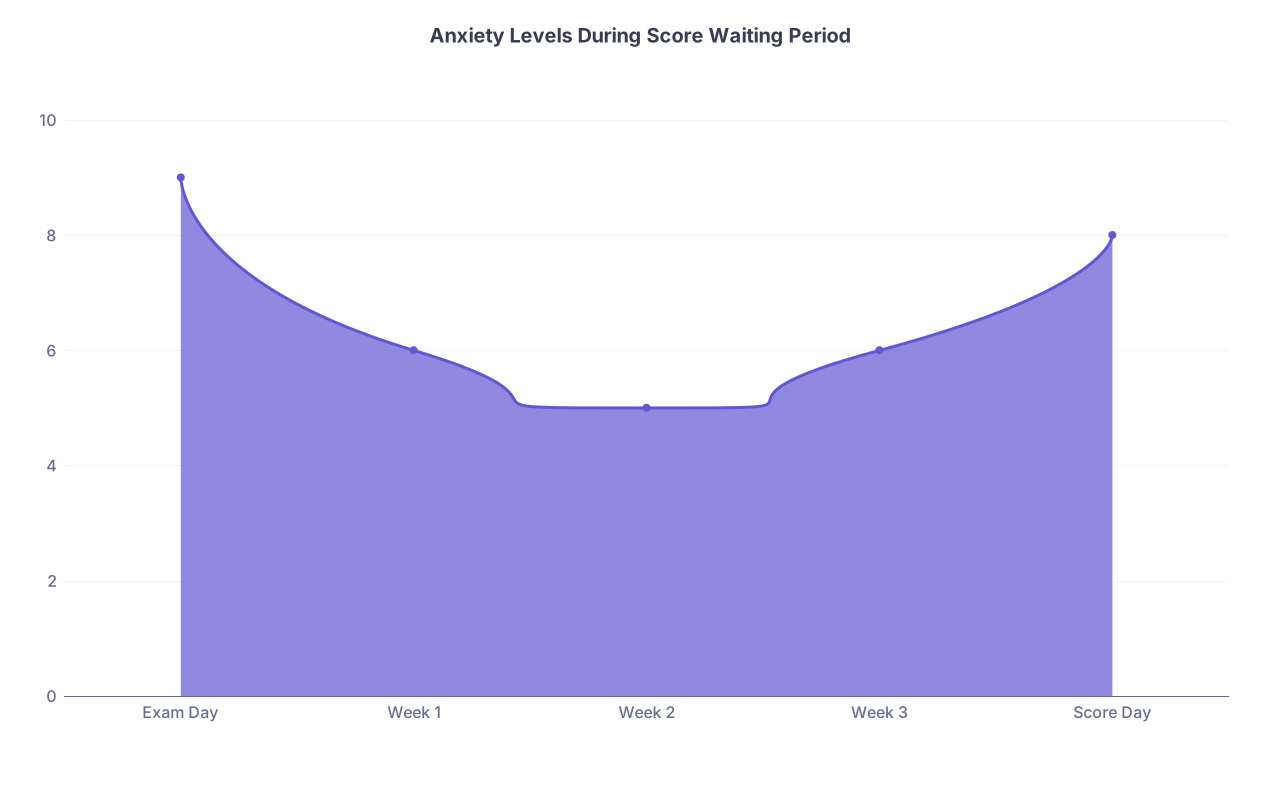
| Category | Value |
|---|---|
| Exam Day | 9 |
| Week 1 | 6 |
| Week 2 | 5 |
| Week 3 | 6 |
| Score Day | 8 |
Your strategy is to keep it oscillating in the middle (4–6), not spiking to 9 every night.
MINI CHECKLISTS BY TIMEFRAME
Here’s your quick reference. Tape this somewhere.
| Timeframe | At this point you should… |
|---|---|
| 0–4 hours | Decompress physically, no exam post-mortem |
| Day 0 evening | Protect rest block, pick 1 task for tomorrow |
| Day 1–3 | Light restart, process audit, adjust plan |
| Day 4–7 | Rebuild routine, map next exam timeline |
| Week 2–4 | Install circuit breakers & reflection cycles |
FAQs
1. What if I genuinely need to discuss questions right after the exam to feel better?
Give yourself a strict 15-minute cap with one trusted friend who won’t catastrophize. Set a timer. Once it’s done, no more question talk that day. In practice, I’ve seen those conversations raise anxiety more often than lower it, so test yourself: if you consistently feel worse after, you drop the habit. You’re not obligated to process out loud to manage your feelings.
2. How do I handle a bad score when it finally comes back without destroying my next block?
You treat it as data plus emotion, in that order. First 24 hours: allow the emotional hit, talk to someone, but do not rewrite your entire career path in one night. Then schedule a 30–45 minute meeting with a mentor, advisor, or upperclassman who scores/teaches in that area. Do a structured breakdown: exam style, timing, content gaps, test-taking errors. Then you write a 3–5 point “next attempt” plan. The mistake is using a bad score as a personality verdict instead of a performance report.
3. I feel guilty if I take any time off after an exam. Won’t my classmates get ahead of me?
Some will grind nonstop. Some will also burn out, plateau, or collapse before Step 2. Recovery time is not indulgence; it’s infrastructure. A 6–12 hour intentional break will not cost you a residency. Chronic sleep debt, constant anxiety, and zero off-switch might. The people who sustain high performance through an entire year are the ones who build in structured rest, not the ones who brag about “never taking a day off.”
Remember:
- The hours right after an exam are for containment and decompression, not score prediction.
- The first 3–7 days are for controlled re-entry: light structure, process audit, and a clear next-exam timeline.
- Long-term, you reduce anxiety by installing routines and circuit breakers, not by studying 24/7.