The night before your exam is not for heroics. It is for sleep. And if you are blowing that, you are sabotaging yourself more than any missed Anki card ever could.
I am going to walk you through exactly what to do when your sleep is melting down before a big test. Not theory. Not “sleep hygiene” platitudes. Actual protocols you can use at 9:47 p.m. the night before your exam when your heart is pounding and you are scrolling Reddit instead of sleeping.
The Hard Truth: Last-Minute Studying vs Sleep
Let’s start bluntly: sacrificing sleep the night before an exam is almost always a losing trade.
You think:
- “If I just review cardiology murmurs one more time…”
- “If I can cram a little more pharm, I will feel safer.”
- “I can push through on 3 hours; I have done it before on call.”
You are wrong. Here is why.
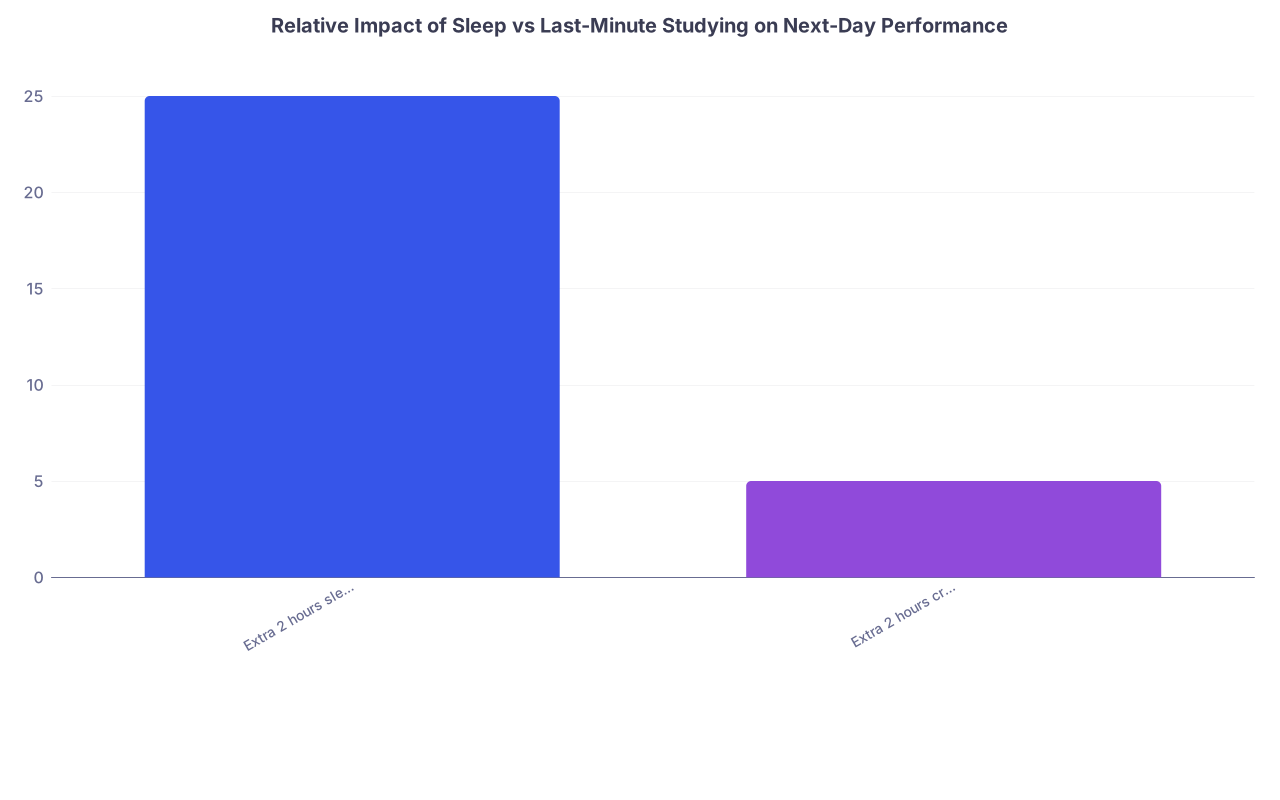
| Category | Value |
|---|---|
| Extra 2 hours sleep | 25 |
| Extra 2 hours cramming | 5 |
This is a simplification, but it is directionally accurate:
Extra 2 hours of sleep:
- Boosts attention, working memory, and decision speed
- Improves recall of what you already studied
- Lowers anxiety and reduces careless errors
Extra 2 hours of cramming:
- Adds a thin, fragile layer of new information
- Increases anxiety and cognitive overload
- Costs you sleep, which then tanks your performance on everything else
Your job before an exam is not to maximize total content exposure. Your job is to maximize functional brain power at 8 a.m.
So here is the rule you should tattoo on your frontal lobe:
12–14 hours before the exam, content is mostly done. After that, your main job is protecting sleep and calming your nervous system.
We will build everything around that.
Scenario 1: It Is the Night Before, You Are Wired, and Sleep Is Not Happening
You are in the disaster zone. Exam tomorrow morning. You are in bed. Heart racing. Thoughts looping:
- “What if there is a whole block on renal and I blank?”
- “I did badly on that last UWorld block; maybe I am not ready.”
- “If I do not honor this, my chances for derm/ortho/whatever are dead.”
You check the clock. Now you are also doing sleep math: “If I fall asleep in 30 minutes, I can still get 5 hours…” Now you are even more awake.
Here is the triage protocol.
Step 1: Stop Studying. Fully. No exceptions.
Once you have entered bed-disaster territory, opening Anki or notes is a trap.
You are teaching your brain: “Bed = content + panic.” Next time will be worse.
Protocol:
- Put physical textbooks and notes out of arm’s reach.
- Power down the laptop.
- Turn your phone to:
- Airplane mode or
- Do Not Disturb with only alarms allowed.
If you have digital-only tickets or exam info, verify the details once, then phone away.
Step 2: Get Out of Bed For 10–20 Minutes
If you have been in bed more than ~20 minutes and are not falling asleep, stop trying. Lying there and suffering reinforces insomnia.
- Get up. Leave the bed. Low light only.
- Go to another room or, if you are in a tiny studio, a different corner / specific chair. That becomes your “awake” zone.
- Do one of the following, quietly:
- Gentle stretching (neck, upper back, hamstrings)
- Very boring, low-stakes reading (non-medical, non-thriller)
- Guided breathing with eyes open (see Step 3)
Your goal: convince your nervous system you are safe, not failing, not under attack.
What you do not do:
- No review questions
- No email
- No texting group chats about “how screwed” you are
- No reading last year’s exam horror stories on Reddit
Step 3: Use a Specific Breathing Protocol That Actually Works
Skip vague “deep breathing.” Use something structured. Three options:
A. Physiological Sigh (fast, for acute panic)
Use this when your heart is pounding and your chest feels tight.
- Inhale through nose to about 70% full.
- Without exhaling, take a second short nasal inhale to “top off.”
- Exhale slowly through mouth like a long sigh until lungs are empty.
- Repeat 5–10 times.
This sequence is backed by respiratory physiology and actually downshifts your autonomic state.
B. 4–7–8 Breathing (for settling to sleep)
- Inhale quietly through nose for 4 seconds.
- Hold for 7 seconds.
- Exhale audibly through mouth for 8 seconds.
- Do 4 cycles. If still awake later, do up to 8.
Do not obsess about exact second counts; the ratio (shorter inhale, long hold, long exhale) matters more than perfection.
C. Box Breathing (for steady calm)
- Inhale 4 seconds
- Hold 4 seconds
- Exhale 4 seconds
- Hold 4 seconds
Repeat 5–10 times.
Pick one. Repeat. Your brain will start to associate that pattern with “we calm down now.”
Scenario 2: Racing Thoughts and Catastrophic Thinking
Your body might be still, but your brain is running disaster simulations.
The content is not the real problem. The story in your head is.
You need a rapid cognitive intervention. Two tools: a Brain Dump and a Containment Script.
Brain Dump: Empty the Mental Buffer
When thoughts loop, holding everything in your head is the issue.
Protocol (takes 5–10 minutes):
- Sit up at a desk or table (not in bed).
- Grab a scrap paper or notebook.
- Write three headings:
- “Stuff I am afraid of”
- “Stuff I cannot control tonight”
- “Stuff I can still do”
- Under each:
- “Stuff I am afraid of” → write the raw, ugly thoughts:
- “Failing this exam and needing to remediate”
- “Attending thinking I am stupid on rounds”
- “Stuff I cannot control tonight”:
- “Exact question topics”
- “Curve / class performance”
- “What my attending or dean thinks”
- “Stuff I can still do” (this should be SHORT):
- “Set two alarms”
- “Lay out clothes and ID”
- “Drink water, light snack”
- “Use breathing protocol”
- “Go to bed by [time]”
- “Stuff I am afraid of” → write the raw, ugly thoughts:
You are doing two things:
- Externalizing the chaos so it is not bouncing in your head.
- Sorting between controllable and uncontrollable. Med students are awful at this in their own lives.
After you write it, close the notebook. Do not reread. Bed.
Containment Script: Talk Yourself Down Like You Would a Patient
You would never talk to a patient the way you talk to yourself before exams.
Create a short script. Simple, factual, neutral. For example:
“I have studied for weeks. One night will not make or break my entire career. My job now is to protect the brain power I already earned. I can pass this exam even if tonight is not perfect. Tomorrow I will handle what shows up.”
You read or repeat this once or twice. Not 40 times. Then stop.
This is not positive affirmations fluff. It is a reminder of reality:
- Your cumulative work matters more than 6 extra Anki cards.
- Even a bad night of sleep does not automatically equal a failed exam.
Scenario 3: You Already Destroyed Your Sleep Window
It is 2:30 a.m. Exam at 8. You are still awake or only lightly dozed. You are exhausted, wired, and furious with yourself.
You cannot rewind. You can only optimize from here.

| Step | Description |
|---|---|
| Step 1 | Realize it is 2-3 a.m. and still awake |
| Step 2 | Stop all studying immediately |
| Step 3 | Limit to 30-45 more minutes awake |
| Step 4 | Set hard wake time |
| Step 5 | Use breathing + dark, cool room |
| Step 6 | Accept partial sleep, focus on calm rest |
| Step 7 | Sleep obtained, protect remaining hours |
| Step 8 | Exam before 10 a.m.? |
| Step 9 | Still awake at 4 a.m.? |
What To Do Between 2–4 a.m.
Stop all cognitive strain. No more reading, no more “quick reviews.”
Environmental control:
- Room cool (around 65–68°F / 18–20°C if possible)
- Very dim light only (lamp, not overhead)
- No screens near your face; melatonin is already wrecked, do not keep attacking it.
Commit to a non-negotiable wake time.
Example: exam 8 a.m., you must wake at 6 a.m. Set:- Primary alarm at 6:00
- Backup alarm at 6:05 (different device if possible)
Target: Even 2–3 hours of sleep is better than an all-nighter.
You will not feel good. But you can function. Medical students and residents do this on call constantly.Focus on “resting calmly” rather than “forcing sleep.”
Tell yourself: “If my body sleeps, good. If not, lying here calmly with eyes closed is still better than panicking.”
What If You Literally Do Not Sleep At All?
It happens. Rarely. But sometimes your nervous system is so revved that you ride straight into the exam on zero.
Salvage protocol for the morning:
- Hydrate. 8–12 oz water on waking.
- Light snack with protein + complex carb:
- Greek yogurt + fruit
- Peanut butter toast
- Not: energy drink and donut.
- Caffeine: moderate dose only.
- If you normally have 1 coffee, still have 1. Do not double up “for safety.”
- Big spikes will give you jitters and crash mid-exam.
And during the exam:
- Use micro-resets between blocks/questions:
- Every 10–15 questions, brief pause:
- Both feet flat on floor
- One slow deep breath in, long exhale out
- Relax your shoulders deliberately
This counters the “tunnel vision + panic blind spots” that lack of sleep amplifies.
- Every 10–15 questions, brief pause:
Key mindset:
You are not aiming to feel good. You are aiming to stay functional and avoid unforced errors.
Rapid Physical Interventions That Actually Help Sleep
Let us talk about the body. You cannot calm the mind in a revved-up body.
Temperature Control
This is boring, but powerful.
- Cool room = easier sleep onset.
Your core temperature needs to drop slightly to initiate sleep. - Hot room = more wakefulness, more tossing, more misery.
Fast fixes:
- Lower thermostat if you control it.
- Use a fan.
- Ditch heavy blankets. Use layers you can kick off.
- If you are freezing: warm feet + cool room often works best. Wear light socks and keep the room cooler rather than cranking heat.
Light Control
Your brain treats light as “time to be awake.”
Quick changes:
- Dim overheads; use a single desk or bedside lamp well before bed.
- No bright white LED in your face within 45–60 minutes of target sleep.
- If you must use your phone briefly:
- Lowest brightness
- Night mode on
- Hold it farther from your face
- Do not scroll endlessly
If you share a room:
- Cheap eye mask solves half the battle.
Movement: But Not Your 11 p.m. Workout
If you have been sitting all day, your body is jittery and stiff. Short, low-intensity movement helps.
Good options 1–2 hours before bed:
- 5–10 minutes of:
- Cat-cow spinal movements
- Gentle hamstring and hip flexor stretches
- Wall angels for upper back / shoulders
Bad options:
- Intense cardio or lifting within 2 hours of sleep.
You spike catecholamines and body temperature. That delays sleep.
Treat this like pre-op prep. You would not have your patient sprint the stairs 20 minutes before anesthesia and then wonder why their vitals are off.
What About Melatonin, Benadryl, or “Just a Little Xanax”?
You are a med student. You know the pharmacology. You also know how often people misuse “a little something” to sleep.
Here is the unvarnished version:
Emergency pharmacologic sleep aids the night before an exam are usually a bad idea unless you have already trialed them well in advance and know your exact response.
Let us break it down.
| Option | Potential Benefit | Major Risk for Exam Day |
|---|---|---|
| Melatonin | Mildly faster sleep onset | Grogginess, vivid dreams, no big effect if used last-minute |
| Diphenhydramine | Sedation | Anticholinergic fog, slowed thinking, residual drowsiness |
| Benzodiazepines | Strong anxiolysis, sedation | Impaired memory, slowed processing, dependence risk |
| Alcohol | Faster sleep onset | Fragmented sleep, dehydration, cognitive impairment |
| Z-drugs | Sedation | Weird behaviors, hangover, next-day impairment |
Melatonin
- Works best when taken consistently, 1–2 hours before desired bedtime.
- Typical low-dose: 0.5–3 mg. More is not better.
- Taking it for the first time the night before the exam is like trying a new pair of shoes on race day. Dumb risk.
If you already use it regularly and know you tolerate it well, fine. If not, do not experiment the night before a high-stakes exam.
Antihistamines (Diphenhydramine, Doxylamine)
Yes, they make you sleepy. They also make many people:
- Groggy and thick-headed
- Dehydrated
- Slower to think, recall, and react
You are sitting for an exam that punishes slow processing. Why would you handicap yourself?
Benzos / Z-drugs / “Just something from my friend’s prescription”
No. This is where I am not diplomatic.
- You do not know how you will react under exam stress.
- You can overshoot into heavy sedation, confusion, or paradoxical agitation.
- You risk your future for one night of slightly easier sleep.
If you already have a prescription and a plan with your physician for performance-related insomnia, that is a different conversation. That should be managed and tested long before the exam.
If this is a USMLE / COMLEX / NBME shelf / OSCE that significantly impacts your career trajectory:
Never try a new sleep medication for the first time the night before. Period.
3–7 Days Before the Exam: The Anti-Disaster Setup
The best rapid interventions work when you do some prep. Not huge lifestyle changes. Just basic scaffolding.
1. Lock In a Reasonable Sleep Window
Not perfect. Reasonable.
Target:
- Bedtime in a range, not an exact time. Example: between 10:30–11:30 p.m.
- Wake time roughly fixed (±30 minutes).
Your brain likes rhythm. If Monday–Thursday you sleep 1 a.m.–7 a.m. and the night before the exam you suddenly demand 10 p.m.–6 a.m., it will not comply.
So:
- Shift bedtime earlier by 20–30 minutes per day in the 3–4 nights before.
- Do not suddenly move it 2 hours earlier the night before.
2. Stop the “Last-Minute Mega-Cram” Fantasy
You know the day before the exam is coming. Plan it.
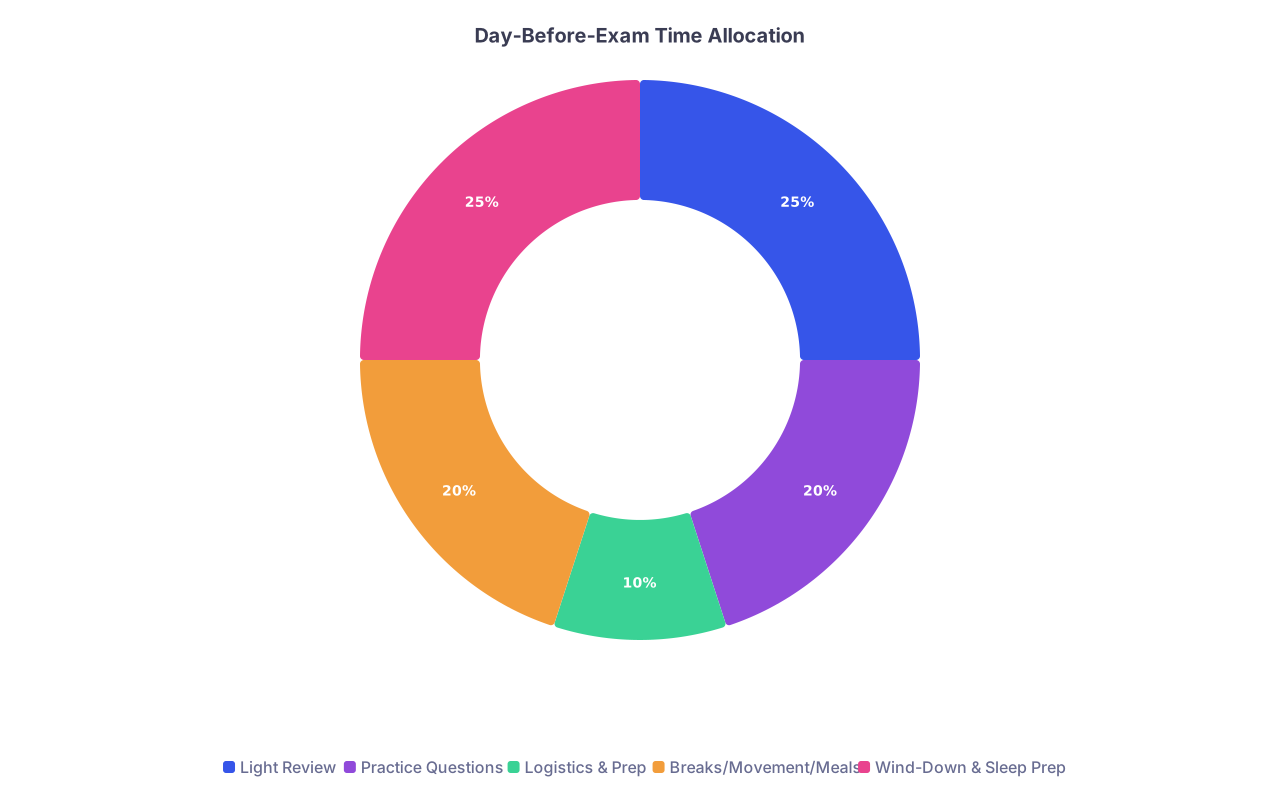
I tell students to structure their final day like this (adjust times as needed):
| Category | Value |
|---|---|
| Light Review | 25 |
| Practice Questions | 20 |
| Logistics & Prep | 10 |
| Breaks/Movement/Meals | 20 |
| Wind-Down & Sleep Prep | 25 |
Example schedule:
- Morning:
- 1–2 blocks of practice questions, then review
- Early afternoon:
- Targeted review of weak areas (flashcards, summary sheets)
- Late afternoon:
- Logistical prep: route to test center, ID, snacks, clothes, alarms
- Evening:
- Light skim of high-yield lists if you must
- Shut all studying down 2–3 hours before target bedtime
Write this down 3–4 days earlier so you are not negotiating with yourself at 8 p.m. the night before.
3. Protect the Evening Before Like It Is Part of the Exam
Because it is.
Hard rules:
- No “just one more block” of UWorld after dinner.
- No starting a new resource (new Anki deck, new review video series).
- No debriefing every possible exam topic in a panicked group chat.
If your friends want to talk about the exam that evening, set a boundary:
“I am done talking content after 7 p.m. I am protecting sleep. I will see you all on the other side.”
They might roll their eyes. They will remember when you crush the exam and are not shaking with panic at 7:45 a.m.
The Morning Of: Damage Control And Stability
Whether you slept 3 hours or 8, the morning routine is similar. You are now in execution mode.
Non-Negotiables
Wake up with enough buffer.
Do not compress your morning. Rushing spikes adrenaline and wipes out any calm you created overnight.Eat something.
Even if nerves kill your appetite, get some calories in. Aim for:- Protein + complex carb + maybe a little fat
- Avoid massive sugar bombs and heavy greasy foods
Caffeine: match your usual.
- If you normally drink one small coffee, have that.
- Do not add extra energy drinks or espresso shots “just in case.”
Arrive early.
You want 15–30 minutes of buffer before check-in. Rushing equals panic equals cognitive tax before you even see Question 1.
On-Site Calm Protocol
While waiting:
- Do not:
- Let classmates drag you into a panic-spiral of “did you review X?”
- Frantically flip through last-second notes.
- Instead:
- Bathroom break.
- 2–3 cycles of your chosen breathing protocol.
- Short mental reminder:
“I know more than enough to pass. I am here to do my best with the brain I have today, not the brain I wish I had.”
During breaks (for longer exams):
- Eat a snack you packed.
- Hydrate a little.
- One slow, deliberate breathing set.
- Reset posture. Move neck and shoulders. Do not doom-analyze the last block.
When This Becomes a Pattern, Not a One-Off
If you consistently:
- Lose most of the night before every exam
- Have physical symptoms like chest tightness, nausea, sweating
- Start worrying about specific exams weeks in advance in a way that disrupts your functioning
Then this is no longer “a bad night.” This is an anxiety pattern.
You are in med school. You have access to mental health resources. Use them. Not after you fail. Now.
Structured help can include:
- Brief CBT focused on test anxiety and sleep
- Performance coaching through student wellness
- Evaluation for underlying anxiety disorders
And you should be crystal clear with any clinician you see:
“I have repeated severe insomnia the night before exams. I want non-sedating, performance-compatible strategies first. I am not looking for a benzo bandaid.”
Because you know exactly how easy it is to slide into “I cannot sleep without a pill before every test.” And that will absolutely not serve you as a resident taking in-house call.
Quick Reference: Night-Before Sleep Rescue Checklist
Use this as a simple mental run-through when you feel the spiral starting.
- Have I stopped all studying at least 2 hours before bed?
- Are all devices away or on Do Not Disturb, alarms set?
- Is my room cool and dark enough?
- Have I:
- Done a Brain Dump if thoughts are racing?
- Chosen and used one breathing protocol?
- Have I left bed after ~20 minutes of failed sleep and done something calm in low light?
- Do I have:
- Clothes, ID, route to exam ready?
- Two alarms set with enough morning buffer?
- Am I reminding myself:
- One night does not define my career.
- Protecting brain function now beats cramming.
Tape your own condensed version of this inside your closet door or above your desk. Use it every exam cycle until this becomes automatic.
Core Takeaways
- The night before an exam is not for more content. It is for protecting the brain power you already earned through sleep and calm.
- When sleep starts to unravel, stop studying, change environments, and use structured tools: Brain Dump, breathing protocols, and realistic self-talk.
- Never experiment with new sedating medications right before a high-stakes exam. Build a stable pre-exam routine days ahead, and treat the evening before as part of the exam itself.
Do this consistently and “sleep disasters” stop being disasters. They become manageable bad nights that you can survive—and still perform.