
It’s late fall of your M4 year. You just got the “draft” version of your MSPE — your dean’s letter — in your inbox. You open the PDF expecting a bland summary of “hard‑working, compassionate, team player.”
Instead, your eyes go straight to one line:
“Standardized exam performance slightly below expectations but does not reflect her strong clinical abilities.”
And your stomach drops. Because you know exactly what that sentence is trying to tiptoe around: test anxiety that’s been stalking you since the MCAT.
Let me tell you what really happens behind the scenes — in the promotions committee meetings, in the dean’s office, and on the residency selection side — when your test anxiety becomes part of your narrative.
Not the sanitized version your school gives during “MSPE info sessions.” The real one.
How Test Anxiety Becomes “Part of Your File” Long Before the Dean’s Letter
Your dean’s letter doesn’t magically appear senior year. It’s the final aggregation of every moment your anxiety ever brushed up against a score report or evaluation.
Inside your school, here’s what actually gets remembered and pulled in when they sit down to write it.
The early “red flags” that get mentally bookmarked
Faculty and administrators keep a mental file on you long before there’s a literal letter.
These are the kinds of things that start the “test performance concern” narrative:
- You barely pass an early pre-clinical exam after doing fine on quizzes and in small groups.
- You crush SIM labs and standardized patient encounters, but your NBME shelf scores keep landing in the 20–30th percentile.
- You have a couple of “below expectations” or “borderline pass” notations on blocks that are heavily exam-weighted.
- You fail one high-stakes exam (course final, OSCE written component, or a shelf) and need remediation.
No one writes “this student has test anxiety” in your file. That’s not how it works.
What they actually write looks like this:
- “Performance on standardized exams remains an area for continued growth.”
- “Tends to underperform on high-stakes assessments relative to clinical performance.”
- “Required remediation for [course/shelf] but successfully completed requirements.”
Those phrases are code. They’re how test anxiety gets translated into “professional language” that will later trickle directly into your dean’s letter.
The Phrases in Dean’s Letters That Are Really About Test Anxiety
You want the translation guide? Here it is. Program directors have internal dictionaries for certain stock phrases in MSPEs. They’ve been reading these letters for decades. Patterns became obvious a long time ago.
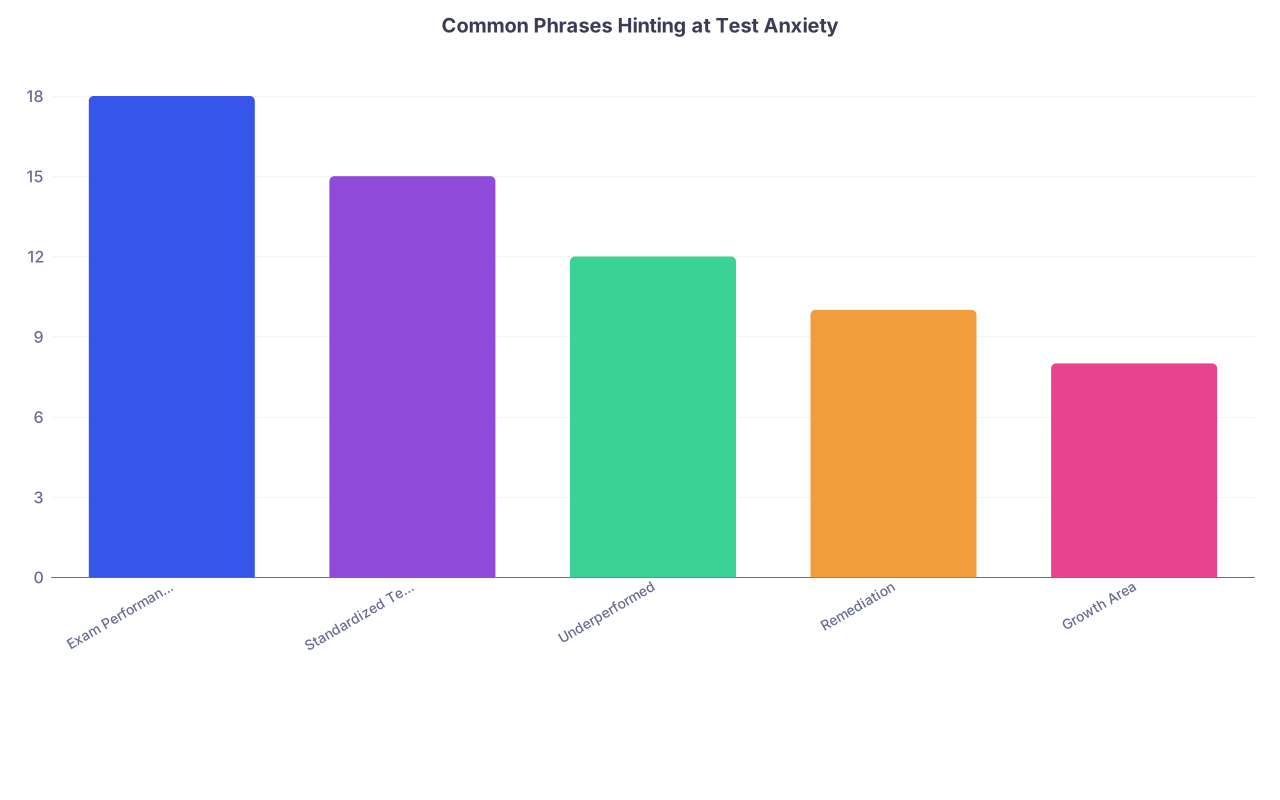
| Category | Value |
|---|---|
| Exam Performance | 18 |
| Standardized Testing | 15 |
| Underperformed | 12 |
| Remediation | 10 |
| Growth Area | 8 |
“Standardized exam performance does not fully reflect…”
You see:
“Standardized exam performance does not fully reflect his strong clinical abilities and work ethic.”
What they read:
“This student is fine on the wards but lower than peers on any test that counts. NBME shelves, Step 1/2, in‑house exams.”
That sentence almost never exists if your tests are mid-range for the class. They’re not writing that about someone with 240+ and 75th percentile shelves. It shows up when there’s a gap so obvious they feel compelled to explain it.
“Improved performance over time, particularly on standardized exams”
You see hope. They see trajectory.
Residency programs like “improvement arcs.” This phrase usually means:
- Pre-clinical exams: mediocre or barely passing.
- Early shelves: low percentiles.
- Later shelves/Step 2: better. Sometimes just from 20th to 50th percentile — which is still a win.
If your test anxiety was bad early and you got serious about it (therapy, coaching, accommodations, structured practice), that’s when this phrase shows up. It’s one of the better “anxiety-adjacent” comments to have.
“Requires additional time with high-stakes assessments”
This is the quiet way schools mention accommodations without broadcasting your diagnosis.
I’ve seen some versions like:
- “With appropriate support, she has demonstrated she can meet the demands of the curriculum.”
- “After receiving additional resources and support, his assessment performance stabilized.”
Everyone on the program side knows what “additional resources and support” likely means. They’re not idiots. They’ve read a thousand of these.
“Needed remediation for [course/shelf], successfully completed”
This one stings, I know. But it’s very common in test-anxious students who panic on one major exam, bomb it, and then do fine on the retake when the psychological stakes are somehow lower.
Here’s the unspoken truth: the fact that remediation exists in your letter is far less toxic than how you think it is. What residency folks care about is:
- Was it a pattern? Multiple failures?
- Or a one-off strike in an otherwise solid story?
A single remediation plus strong clerkship comments and a solid Step 2 doesn’t kill you. It just prompts a closer look.
“More reflective than confident at times”
This one is subtle. I’ve seen deans slip this into narratives about students who clearly knew the material but crumbled under direct questioning, OSCE pressure, or high-stakes situations.
Test anxiety doesn’t just live in written exams. It shows up in:
- OSCE checklists you forgot to complete because you blanked.
- Freeze responses during oral exams.
- Overthinking in real-time patient presentations.
That phrase — “more reflective than confident” — is the genteel way of saying: overthinks, second-guesses, slower in pressured situations.
Where Test Anxiety Quietly Alters What Gets Highlighted (and What Gets Left Out)
The most important thing in your dean’s letter is not just what’s written. It’s what’s missing that would have been there if your exams looked different.
When strong clinical performance gets used as a shield
If your test anxiety has dragged down exam performance, the dean’s office will usually over-index on your clinical praise to compensate.
You’ll see things like:
- “Consistently praised by residents and attendings for bedside manner and team contributions.”
- “Rapidly built trust with patients and staff.”
- “Excelled in patient care responsibilities.”
Sounds flattering. And it is. But on the residency side, the subtext is crystal clear:
“Clinical comments are great. So why are the exam-based metrics lagging? Is this a testing problem? A knowledge problem? An anxiety problem? A reliability problem?”
That’s the question you need to be ready to answer in your personal statement and interviews. Clearly and without spin.
When academic strengths mysteriously vanish
If your anxiety is performance-bound to high-stakes tests, usually your day-to-day, low-stakes work is actually fine:
- You ask sharp questions in small group.
- You contribute meaningfully on rounds.
- Your write-ups and notes are coherent.
But if you have multiple exam “dings,” the written narrative may lean away from describing you as “academically outstanding” even if you truly are, because the numbers contradict that.
You’ll see safe language instead:
- “Solid grasp of core concepts.”
- “Meets expectations for level of training.”
- “Demonstrated an adequate fund of knowledge.”
Those phrases are damning with faint praise. When a dean loves a student’s brain and the numbers match, the language is not “adequate.” It’s “exceptional,” “superb,” “among the top of her peers.”
How Deans Actually Talk About Your Anxiety Behind Closed Doors
Let me pull the curtain back a little further.
When deans and promotions committees sit down to discuss your file, they don’t speak in MSPE language. They speak plainly.
I’ve heard versions of these countless times:
- “She’s sharp as hell but freezes on NBME exams.”
- “If you talk to him on rounds, you’d assume he’d be in the top quartile; his tests just don’t show it.”
- “Her shelf scores were consistently low but clinically she’s one of the strongest in the class.”
- “He needed extra time after the Step 1 fail, but once anxiety was addressed, he’s been stable.”
That conversation is what gets translated into your letter. And it usually goes something like this:
- If they believe you’re fundamentally capable, hardworking, and safe, your letter is protective. They will frame anxiety-impacted performance as not representative of you.
- If they see you as disorganized, unreliable, and anxious, you get much less editorial kindness. The “concern” language creeps in.
You want them in the first camp.
Which means your job during med school is not just to survive examinations. It’s to make your professionalism, reliability, and day-to-day performance so solid that test anxiety is seen as a manageable quirk, not a red flag.
How This Plays on the Residency Side: What Program Directors Actually Infer
Residency programs will never see “anxiety disorder” in your official documents unless you volunteer it. But they absolutely infer test anxiety from patterns in your application.

Here’s what they quietly piece together:
The three-pattern test anxiety signature
The classic pattern they notice:
- Step 1: barely passed or low pass (when it was scored), or a late pass after a previous fail.
- Shelves: consistently lower than clerkship comments would predict.
- Step 2: better, but still not matching the clinical praise.
When they see enthusiastic clinical comments + guarded exam language, the working hypothesis on their side is:
“Test anxiety or poor test strategy. Not fundamental lack of intelligence.”
That’s actually not the worst narrative. They’d much rather that than:
“Coasts. Does great when watched. Doesn’t prepare for big exams.”
Your job is to clearly signal which story is true.
When test anxiety becomes a non-issue vs a deal-breaker
Here’s the unvarnished line:
- In most non-ultra-competitive specialties (IM, peds, FM, psych, PM&R, neurology, etc.), mild‑moderate test anxiety is annoying but not disqualifying. They care much more that you’re coachable and safe.
- In high-stakes, exam-heavy specialties (derm, radiology, anesthesia, some academic IM with fellowship focus), repeated exam underperformance raises concerns about future boards. They don’t want to fight to get you through.
No one will tell you this bluntly from your home institution because they don’t want the liability of “steering” you. But behind the scenes, I’ve watched advisors gently redirect anxious test-takers away from exam-dependent fields for this exact reason.
How to Influence the Story Before Your Dean’s Letter Is Written
You can’t control the scores you already have. You can absolutely influence how the narrative is constructed around them.
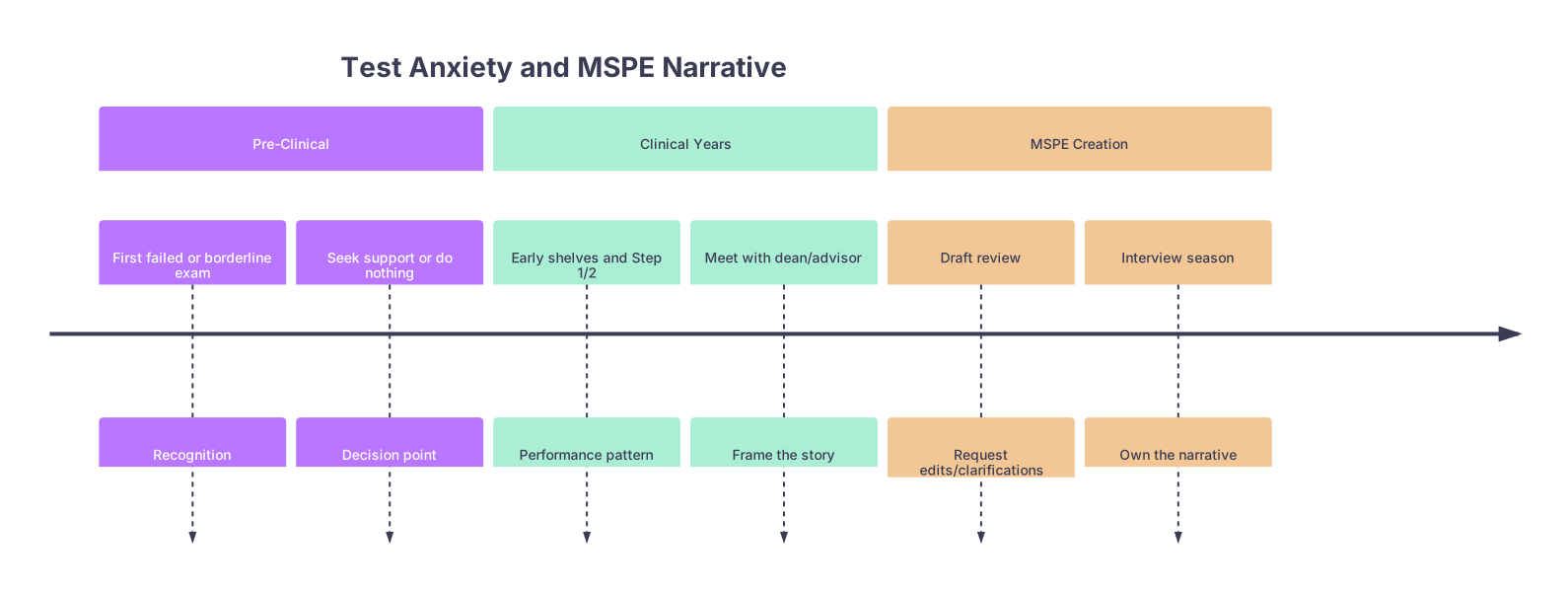
| Period | Event |
|---|---|
| Pre-Clinical - First failed or borderline exam | Recognition |
| Pre-Clinical - Seek support or do nothing | Decision point |
| Clinical Years - Early shelves and Step 1/2 | Performance pattern |
| Clinical Years - Meet with dean/advisor | Frame the story |
| MSPE Creation - Draft review | Request edits/clarifications |
| MSPE Creation - Interview season | Own the narrative |
Step 1: Get it documented — on your terms
If your test anxiety is significant enough to affect your Step 1/2 timing, shelf performance, or course outcomes, you actually want some traceable steps:
- A visit with student mental health or counseling.
- A documented evaluation if you qualify for accommodations.
- A brief paper trail of you proactively seeking help.
Why? Because when the dean’s office sits down to write your summary, a student who looked like a train wreck on exams but never sought support gets framed differently than the student who struggled, asked for help, and then improved.
One looks avoidant. The other looks responsible.
Step 2: Control the “why now?” instead of letting others guess
You absolutely should meet with whoever drafts your MSPE (often an associate dean or academic affairs person) and say something like:
“I want to put context around my exam performance so you understand what was going on and how it’s changed.”
You do not need to overshare diagnoses. You do want to frame a professional, tight narrative:
- “I came into med school with unrecognized test anxiety that really hit when exams became higher stakes.”
- “By M3, I was working with counseling and changed how I prepared. You can see that in my later shelves and Step 2.”
- “I want programs to know that I’ve addressed the underlying issue and that my clinical performance is a more accurate reflection of how I’ll function as a resident.”
Good deans will try to protect you without lying. You make their job easier if you give them a coherent, honest storyline instead of them guessing.
Step 3: Ask for clarifying edits — not fantasy rewrites
When you get the draft MSPE, you are allowed to push back. Strategically.
Lines you might question:
“Standardized exams have been challenging for him.”
You can ask: “Can we phrase this to reflect improvement over time? For example, noting that performance improved after I engaged support?”“Needed remediation for the internal medicine clerkship shelf exam.”
You can suggest: “Would you be willing to add that I subsequently passed and performed well clinically in the rotation?”
You’re not asking them to erase facts. You’re asking them to include the arc rather than the worst moment.
Test Anxiety Management That Actually Changes the Paper Trail
This is under the TEST ANXIETY MANAGEMENT category, so let’s talk about what actually moves the needle from the perspective of what ends up in writing.
| Pattern in File | What They Infer |
|---|---|
| Low exams, strong comments, no improvement | Chronic unmanaged anxiety or poor studying |
| Early failures, later improvement | Addressed anxiety, good trajectory |
| Accommodations + stable performance | Managed condition, likely reliable |
| Repeated failures, vague notes | Red flag for future board passage |
The stuff that only helps you emotionally
A lot of wellness advice is sold to students as “this will help your anxiety.” That’s fine. But some of it doesn’t ever show up on paper:
- Meditation apps you do at 2 am.
- Exercise you squeeze in when you can.
- Journaling, venting, late-night talks with classmates.
Good for your sanity. Doesn’t change your dean’s letter directly. I still recommend it, but let’s not pretend it updates your MSPE.
The stuff that changes how administrators talk about you
These do alter what gets written:
- Consistent follow-through after a setback: You fail a shelf, you show up early to remediation, you pass decisively, you perform strongly on the rotation.
- Visible professionalism under stress: You do not melt down on clerkships while waiting on a bad score; you stay engaged and stable.
- Demonstrable improvement: Step 2 CK better than expected from your shelf pattern. Later NBMEs uptrending.
When the dean sits down to summarize you, they remember:
“She struggled, but she was the one who always showed up prepared, didn’t make excuses, and kept improving.”
That’s when “test anxiety” in their mind becomes “resilient student who learned to manage performance anxiety.” Same facts. Different story.
How to Talk About Test Anxiety in Personal Statements and Interviews Without Sinking Yourself
You’re going to be tempted to hide it entirely. That backfires more often than people admit.
Residency folks are not new to this game. If the pattern screams test anxiety and you pretend it does not exist, you come off as lacking insight.
The sweet spot is this:
Acknowledgement, not confession.
“I struggled with performance on a few high-stakes exams early in medical school.”Link to concrete action.
“I worked with counseling and our academic support team to address both the anxiety and my test preparation approach.”Proof of change.
“You can see that in my later shelves and Step 2 scores, which better reflect my underlying knowledge and work ethic.”Tie back to residency.
“The process forced me to build systems for handling pressure that I now use on call and in critical clinical situations.”
Program directors do not want perfection. They want people who have already met adversity and learned something useful from it, not people encountering their first real challenge in intern year.
The Hard Truth: Some Things Will Stay in Your File — And You’ll Still Be Fine
You’re not going to erase a failed shelf from your official record. Or a barely passed Step 1. Or a clerkship comment that says “knowledge base somewhat below peers.”
But you don’t need a spotless record. You need a coherent, believable trajectory.
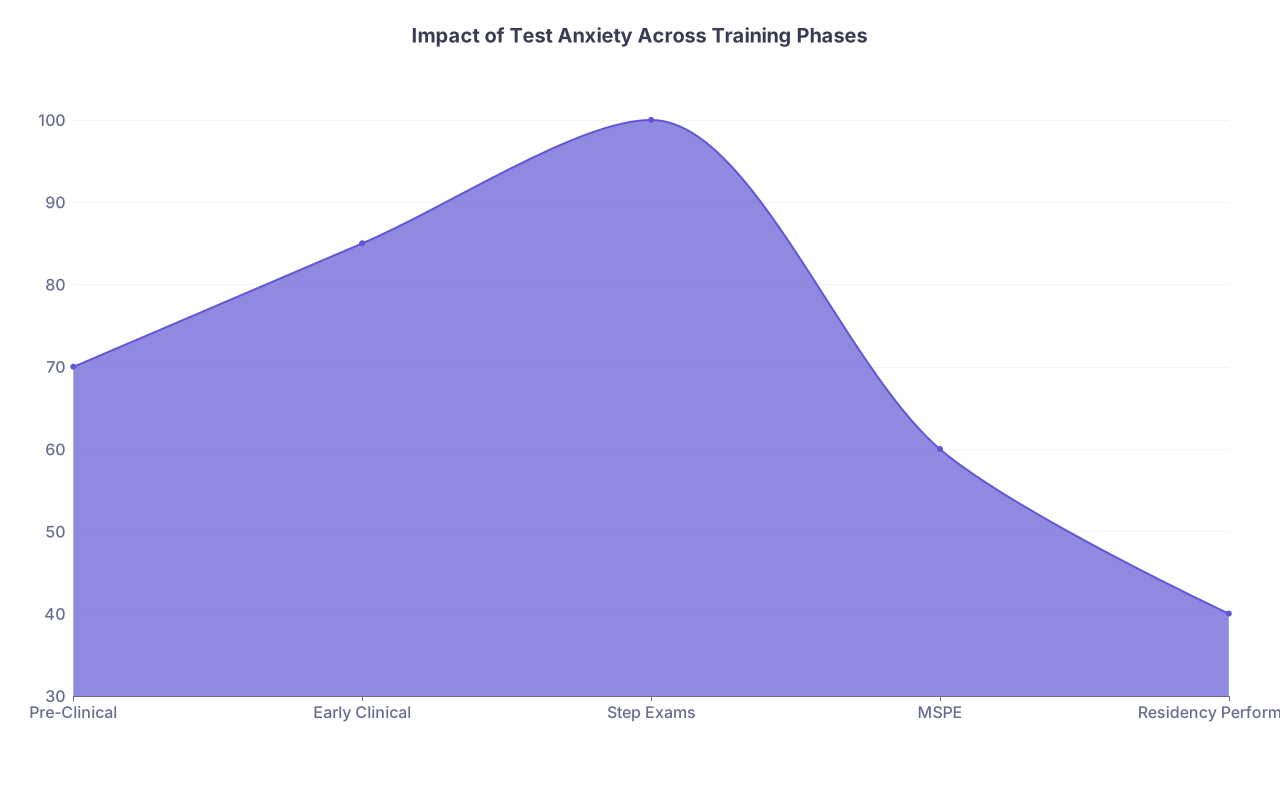
| Category | Value |
|---|---|
| Pre-Clinical | 70 |
| Early Clinical | 85 |
| Step Exams | 100 |
| MSPE | 60 |
| Residency Performance | 40 |
I’ve watched:
- Students who failed Step 1, remediated a shelf, and still matched into solid categorical IM and EM programs.
- Anxious test-takers who barely scraped through early exams but ended up some of the strongest residents in their class.
- People with miserable-looking test histories who became attendings that everyone trusts with the sickest patients.
Residency programs care a lot about board pass rates. Yes. But they don’t care about your exams in isolation. They care about whether your story makes sense and whether your dean’s letter and your own narrative match reality.
So if your dean’s letter quietly hints at test anxiety in all the classic ways?
Your job isn’t to pretend it isn’t there. Your job is to make sure anyone reading your file also sees:
- The work you did.
- The improvement you achieved.
- The clinician you are on the wards, not just on paper.
With that foundation, you’re not “the anxious test-taker who barely made it.” You’re “the resident who knows exactly what it takes to function under pressure because you’ve been through the fire once already.”
And that? Many PDs will take that over the flawless test-taker who’s never been punched in the mouth by an exam.
You’ve still got time to shape the narrative. Use it.
With these pieces in place, you’ll get through the dean’s letter phase with your story intact. What comes next is translating that into a compelling application and interview presence — how you sit across from a program director and own your history without letting it own you. But that’s a conversation for another day.