The biggest misconception students have is this: deans think you should “just get over” your USMLE test anxiety. They don’t. But they also don’t trust you to manage it on your own.
Let me tell you what really happens behind those closed doors.
What Deans Actually Care About (It’s Not What You Think)
Students walk into the dean’s office thinking the conversation is about feelings.
It isn’t.
When you start talking about USMLE test anxiety, here’s the silent checklist running in a dean’s head:
- Will this student pass on time?
- Is this going to become my problem with the promotions committee?
- Will this create accreditation or match statistics issues for the school?
- Is there any legal or disability angle I need to document?
You think you’re talking about panic attacks and racing thoughts.
They’re thinking: “Do I need to pull this student from the exam? Do I have to justify an extra attempt to the faculty? Will this show up in our Step pass rate report to LCME or ACGME partners?”
I’ve sat in those meetings where a dean closes the door after you leave and says to the student affairs director:
“Okay, what’s the risk profile on this one?”
That’s the real conversation.
How Deans Categorize Students With Test Anxiety
Most deans don’t say this out loud, but they mentally sort students with USMLE anxiety into buckets. You need to know which one they’ll likely put you in, because it decides everything that happens next.
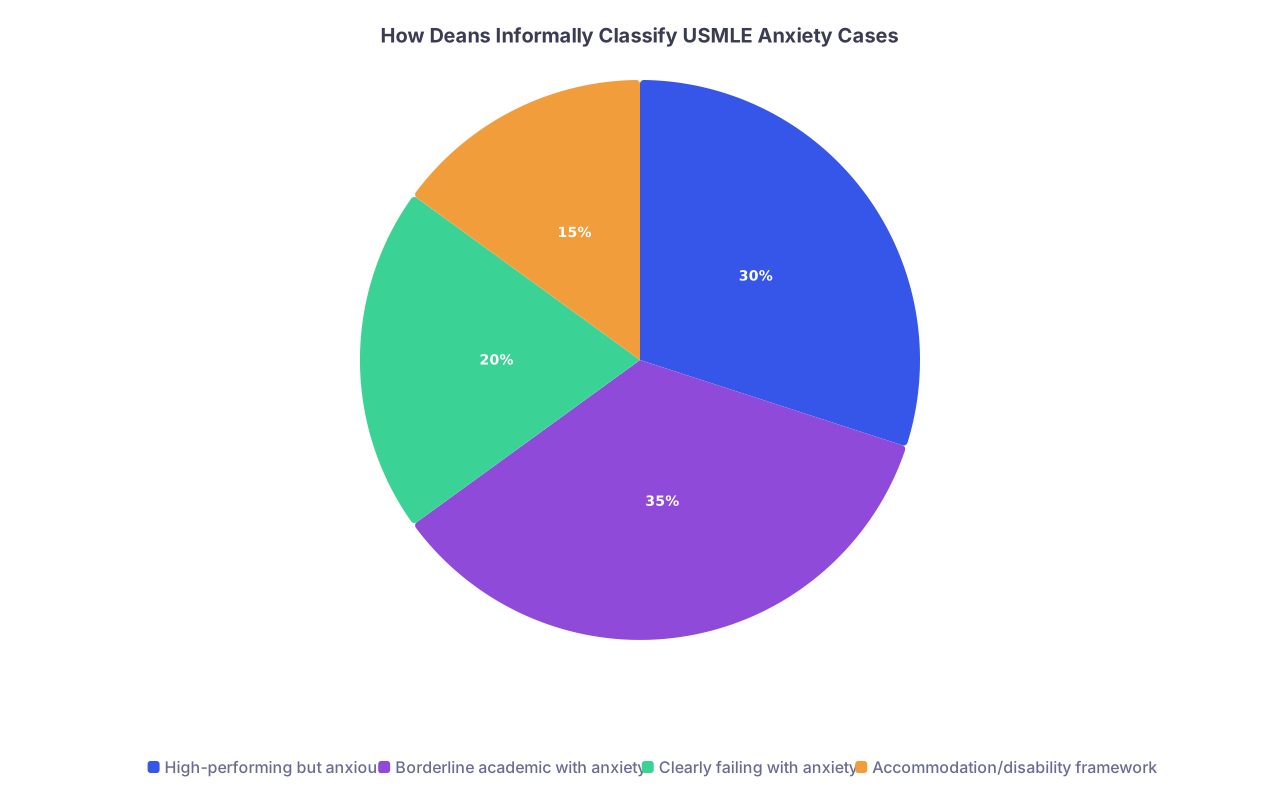
| Category | Value |
|---|---|
| High-performing but anxious | 30 |
| Borderline academic with anxiety | 35 |
| Clearly failing with anxiety | 20 |
| Accommodation/disability framework | 15 |
1. The High-Performer Who Melts Down
This is the student with strong preclinical grades, solid shelf scores, maybe a 245+ practice Step 2, now panicking about “ruining everything.”
Deans like this group. They feel “fixable.”
Behind the scenes, the dean will say something like: “She’s fine. She’s just catastrophizing. Let’s get her counseling and keep her moving toward the test.”
What they’ll do for you:
- Encourage you to test “on schedule”
- Offer referral to counseling, learning specialist, maybe group support
- Rarely push for formal leave unless you’re completely falling apart
From their perspective, anxiety is noise over a fundamentally stable signal. They’re not really afraid you’ll fail. They’re afraid you’ll delay and mess up progression timelines.
2. The Borderline Student With Real Risk
This is the tricky, high-effort group. Mid-tier preclinical performance, borderline shelf scores, NBME practice tests hovering just above or below passing.
The dean’s internal monologue here: “If we push too hard, they fail and burn an attempt. If we delay too much, they’ll fall out of sync with the class and become a long-term problem.”
This is where “test anxiety” becomes a political phrase. Faculty will whisper: “He doesn’t have test anxiety. He has a knowledge problem.”
The truth is usually both. You may have legitimate anxiety that destroys performance, and you may not have fully mastered the content. Deans know that, but they have to package it in language that looks clean on committee minutes.
3. The “We All Know They’re Going to Struggle” Group
Harsh, but real. Every school has a small subset of students everyone knows are skating on the edge of dismissal. Chronic low performance, remediated courses, failed shelves.
When those students say “I have test anxiety,” what the dean hears is: “This is going to be my next multi-year problem.”
You’re no longer just the student with anxiety. You’re a systems issue. They will:
- Over-document everything
- Involve multiple offices early (disability, counseling, academic support)
- Push for diagnostic labels when possible (because formal labels mean formal structures and less personal liability)
They’re not cruel. They’re defensive. Against the match statistics, the promotions committee, and the legal department.
4. The “Documented Disability” Framework
If you come in with a psychologist’s report, prior IEP, formal ADHD/anxiety diagnosis—now you’re in a different column.
This is where the dean starts thinking about:
- What documentation is “good enough” for NBME/USMLE accommodations
- How much they’re willing to endorse in a letter
- How it will look if you still fail even with extra time or quiet rooms
Some deans are very pro-accommodation. Others are quietly skeptical and worry about “overmedicalizing” every bad test day. But once you’re in the disability lane, the language changes:
From “This student is nervous”
To “This student has a recognized condition, and we need to follow process.”
You want to understand which lane you’re in before you walk into that office.
What Deans Say in the Room vs. What They Say After You Leave
The biggest disconnect is the double conversation: one with you, and one in private.
Here’s how it usually plays out.
In the Room With You
You’ll hear phrases like:
- “We see this a lot.”
- “You’re not the first student to struggle with this.”
- “We have resources.”
- “Let’s focus on building your confidence before the exam.”
This is the reassurance script. And it’s not fake; they do mean it. But it’s also about calming you enough that you don’t derail yourself further.

After You Leave the Office
Door closes. Tone shifts.
I’ve heard variations of:
- “What’s their NBME trajectory? Pull the last three.”
- “How strong is their basic science foundation? Are we masking a knowledge gap with ‘anxiety’?”
- “If they fail Step 1 twice, are we actually going to keep them?”
- “We need to get disability services involved now so this doesn’t blow up later.”
Deans don’t base decisions on how anxious you look. They base them on data + risk.
Your Step practice scores, your clerkship performance, the speed at which you respond to recommendations—those matter more than whether you cried in the office. Tears trigger empathy. Data drives action.
The Hidden Pressures Shaping How Deans Respond
If you think decisions about your USMLE anxiety are just about you, you’re missing half the picture.
Here’s the unspoken pressure cooker deans live in.

Board Pass Rates Are Currency
Every year, schools submit board pass rates. Step 1. Step 2. First-time pass.
Those numbers go into accreditation reports, recruitment pitches, and PowerPoints to the university president. If the Step 1 or Step 2 first-time pass rate dips, everyone up the chain asks: “What happened?”
So when you walk in saying, “I’m terrified I’m going to fail Step,” the dean hears: “We might lose our clean pass rate line if I mis-handle this.”
No dean wants the email from the LCME visit team that says, “Your board outcomes trend is concerning.” That single sentence can change how aggressive they are with leaves, deferrals, and repeats.
Promotions and Dismissals Are Politically Costly
If your anxiety leads to multiple fails, delayed exams, incomplete clerkships—eventually your name hits a promotions committee docket.
Those meetings are brutal in a quiet, civil way. There are PowerPoints with your scores, shelves, comments. Someone from student affairs says: “The student has expressed significant test anxiety and is in counseling.”
There are faculty who will roll their eyes at “test anxiety” unless they see numbers that suggest clear improvement under treatment. Others will advocate for you fiercely.
The dean is thinking: “If we retain this student and they still don’t make it, we’re going to have another problem next year. If we dismiss, are we opening ourselves to appeal or legal challenge?”
So yes, your anxiety story matters. But it’s sitting on top of institutional politics.
Legal and Liability Shadows
There’s another unspoken piece: risk of being accused of failing to accommodate, or of pushing a student to test when they weren’t ready.
This is why deans obsess about documentation. Why they keep emails. Why they loop in disability services the second you say “panic attacks” or “I think I need extra time.”
They’re not only protecting you. They’re protecting themselves and the school.
The Quiet Truth About Accommodations
Accommodations for USMLE are their own political landmine.
| Type of Support | Inside School Exams | USMLE Exams |
|---|---|---|
| Extra time | Often flexible | Strict, documentation-heavy |
| Separate/quiet room | Relatively easy | Possible, harder to obtain |
| Breaks between blocks | Sometimes allowed | Very limited, must be justified |
| Rescheduling for anxiety flare | Informal, case-by-case | Very restricted |
Here’s how deans quietly think about it.
If you’ve never had accommodations on school exams and then ask for USMLE accommodations, they know NBME is going to scrutinize that request hard. So they’ll often encourage you to formalize things in-house first: get evaluated, get documentation, start using extended time or quiet rooms on your own exams.
Some students resist this because they don’t want to “label” themselves. Then they’re surprised when USMLE denies their accommodation request.
The dean’s calculation:
- If you clearly need it and can be documented: support you, help you apply.
- If you “just feel stressed” but perform fine: they’ll steer you to counseling and test prep, not a full diagnostic workup.
What they’ll never say out loud: sometimes they’re afraid that once you get accommodations and still fail, it’s harder to argue “we did everything we reasonably could.”
So they walk a line. Support, but not overpromise.
What Actually Raises Red Flags (That Students Don’t Realize)
Deans aren’t spooked by the student who cries once in their office.
They’re spooked by patterns. Over time.
Here are the things that quietly flip the internal switch from “anxious but fine” to “this might turn into a chronic problem.”
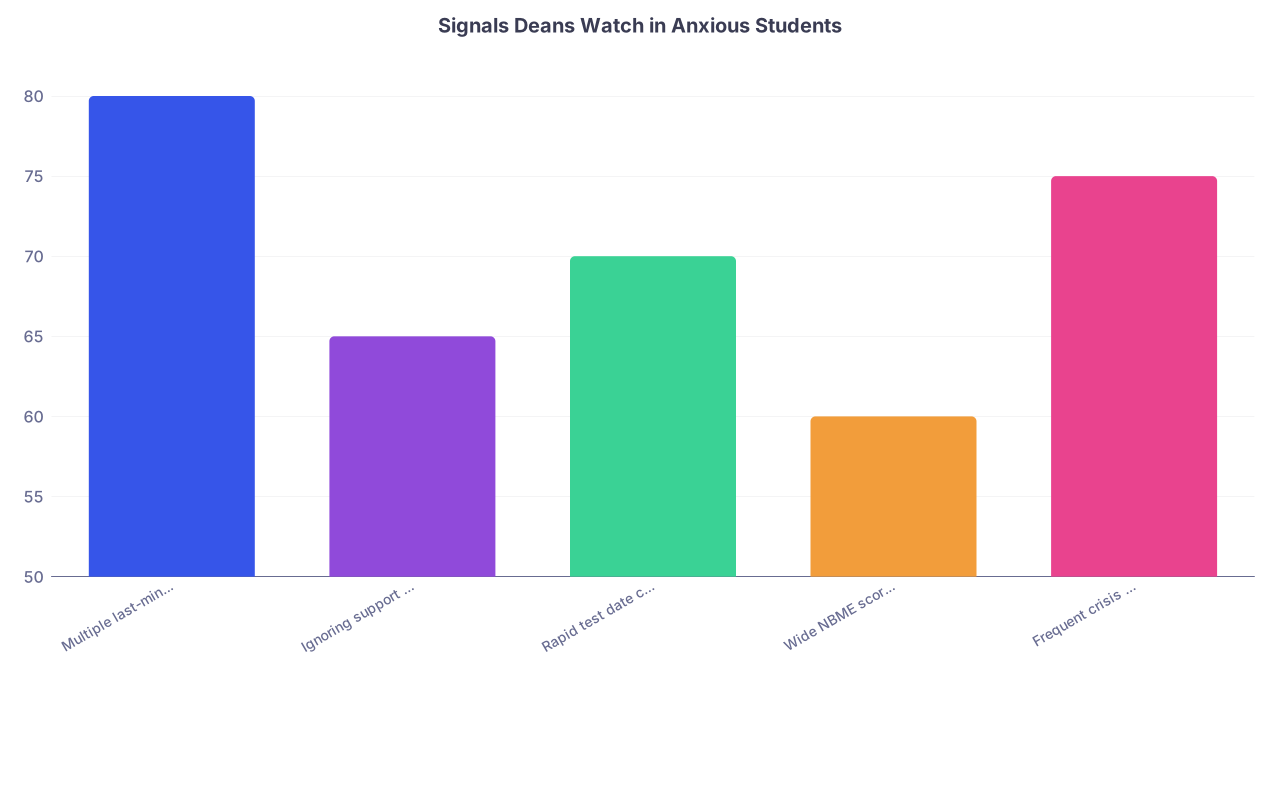
| Category | Value |
|---|---|
| Multiple last-minute cancellations | 80 |
| Ignoring support referrals | 65 |
| Rapid test date changes | 70 |
| Wide NBME score swings | 60 |
| Frequent crisis emails before exams | 75 |
- You cancel or reschedule exams repeatedly at the last minute “because of anxiety.”
- You’re referred to counseling or academic support and never actually go.
- Your NBME practice scores are wildly inconsistent: 220, then 185, then 210.
- You only reach out in full crisis mode, never early.
- You start asking for exceptions to every policy: extra attempts, extra time, extra leaves.
From the dean’s vantage point, this isn’t just anxiety. It looks like impaired professional functioning. That’s when they start talking about fitness for duty, reduced loads, leaves of absence.
If you want your anxiety taken seriously without being seen as unstable, you need to present as anxious but structured. Worried, but engaged. Upset, but willing to follow a plan.
How to Talk to a Dean About Your USMLE Anxiety (So They Take You Seriously)
Here’s the part most people never get coached on. How you present your anxiety to the dean changes everything about what they offer you.

| Step | Description |
|---|---|
| Step 1 | Schedule Meeting Early |
| Step 2 | Describe Specific Symptoms & Impact |
| Step 3 | Show Objective Data (NBMEs, shelves) |
| Step 4 | State What Youve Already Tried |
| Step 5 | Ask for 1-2 Concrete Supports |
| Step 6 | Agree on Follow-up Plan |
Walk in and word-vomit about “I’m freaking out, I’m going to fail, I can’t do this,” and you’ll get generic reassurance and a counseling referral.
Walk in with structure, and suddenly you look like a good investment.
Here’s what lands well with deans:
“I’ve been having intense physical anxiety symptoms specifically around timed, high-stakes exams. For Step 1, I’ve done X, Y, Z already: weekly therapy, practice exams, structured study schedule. My NBMEs have been 202, 208, 214 over the last six weeks. I’m worried I’ll underperform relative to my practice scores because on exam day my anxiety spikes and I blank on questions I know later.”
That framing tells the dean:
- This student has insight.
- This isn’t just avoidance.
- There’s data trending up.
- They’ve already used some resources.
Then, instead of saying “What should I do?” ask: “I’d like your help with two specific questions: timing of my test date, and whether I should connect with disability services now or wait. What do you recommend?”
Now you’re collaborating, not collapsing.
What Deans Actually Respect in Anxious Students
I’ve watched deans change their tone mid-meeting when they realize a student is anxious but organized.
They respect:
- Students who come in early, not the week before their test.
- Students who track their own scores and can show a trajectory.
- Students who follow through on the referrals given.
- Students who can say, “I’m not okay, but I’m working on it.”

They also remember who disappears. The student everyone scrambled to help, who then ghosted counseling, blew off meetings, and showed up three months later asking for an emergency extension.
That student burns capital fast.
What no one tells you: you’re not just building your record as a test-taker. You’re building your reputation as someone who can function under stress. Deans file that away mentally when they’re later asked for MSPE comments or quiet references.
How This Follows You Into Residency (Yes, It Does)
Test anxiety doesn’t magically evaporate after Step 2. Program directors ask deans, informally, about students who struggled.
No, they don’t get a file with your therapy notes. But they absolutely get impressions. Comments like:
“She really struggled with test anxiety around Step 1 but was very proactive and used support well.”
versus
“He had repeated crises around exams and needed a lot of hand-holding. Needed multiple leaves.”
Those phrases matter.
You want your story to be: “Had anxiety. Faced it. Managed it. Improved.”
Not: “Always in crisis around deadlines.”
Because in residency, board exams keep coming. In-service exams. Real-life high-stakes situations. If your dean signals that you crumble under pressure without heavy scaffolding, some PDs will think twice.
The Real Bottom Line
Deans don’t roll their eyes at USMLE test anxiety. They see so much of it that it’s baked into how they run the school.
But they’re not just your therapist in a suit. They’re stewards of pass rates, promotions, accreditation, and liability. They can be compassionate and still be calculating. Both are true.
So you have a choice in how you show up:
You can be the student who shows up late, only in disaster mode, asking to be rescued from a mess.
Or you can be the student who says, “I’m struggling, I’m scared… and here’s what I’ve already done, here’s my data, here’s where I need your help.”
Behind closed doors, those two students are talked about very differently. One is a risk. The other is a tough year with a good prognosis.
If you’re serious about managing your test anxiety in medical school, start acting like the second one. Track your scores. Seek help early. Use structure. Present yourself as anxious but functional, frightened but responsible.
The USMLEs are just one battleground. Next come in-training exams, specialty boards, and real clinical pressure where there’s no “pause” button. Master how you handle this now, and you’re not just surviving the boards—you’re building the version of yourself that can walk into residency and handle the next storm.
And that next storm—the way program directors really judge “resilience” when you’re an intern—that’s another set of conversations behind another set of closed doors. But that’s a story for another day.