
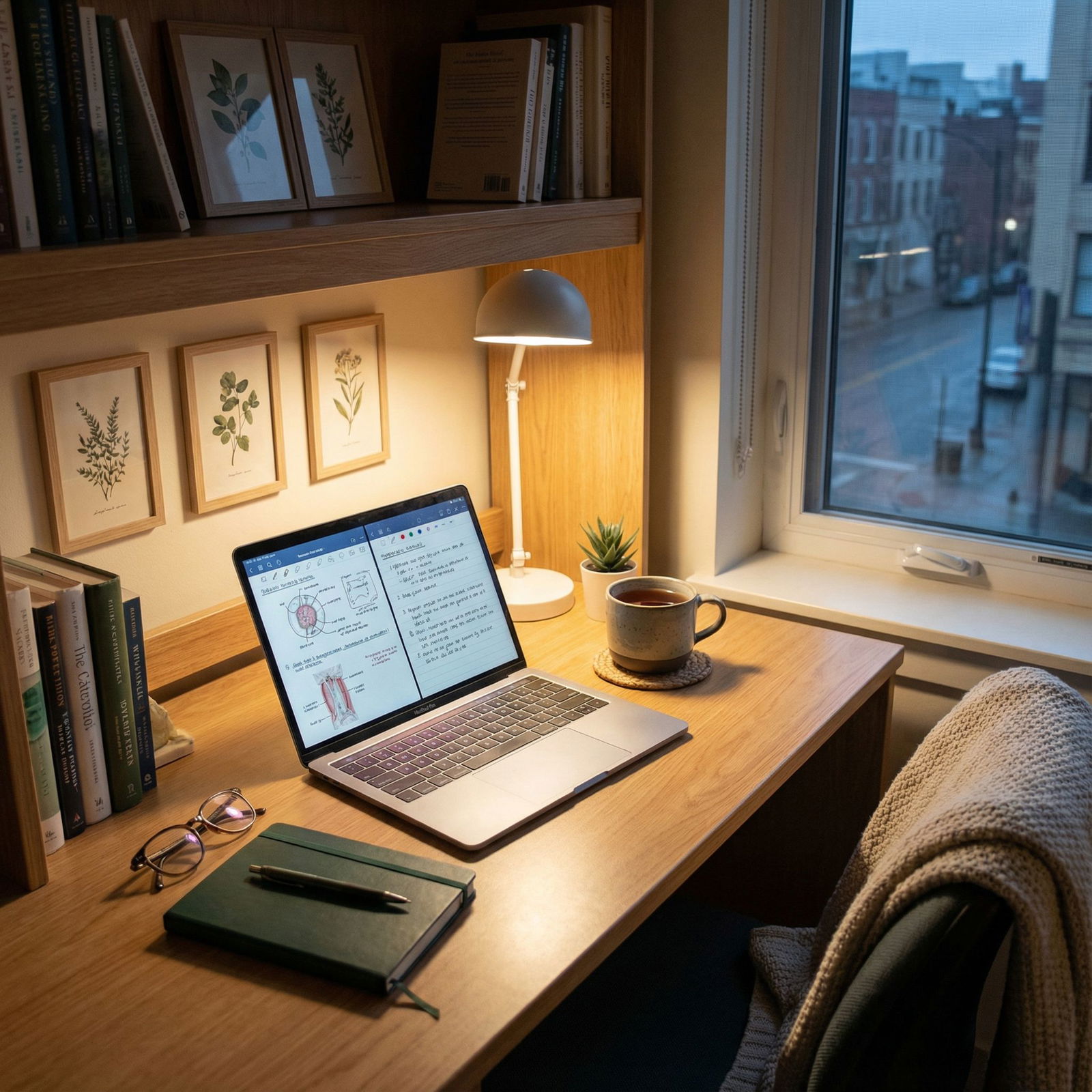
It’s 5:00 PM the night before a big exam. Maybe it’s your cardiology block, maybe it’s an NBME shelf, maybe it’s Step-style comprehensive. Your group chat is already buzzing:
- “Anyone else freaking out?”
- “Does anyone have a quick review of nephrotic vs nephritic?”
- “I’m so screwed lol.”
You’re sitting there with three equally bad options in front of you:
- Panic study until 2 AM.
- Pretend to study while actually scrolling Reddit.
- Shut everything down and risk feeling “unprepared.”
You do not need inspiration. You need a script. A timeline. “At this time, do this. Not that.”
This is that script: a night-before-exam, hour-by-hour schedule built around one goal only — controlling stress so your actual knowledge shows up tomorrow.
Big Picture: What Tonight Is Actually For
Before the clock starts, get this straight.
At this point you should stop pretending you can learn 50 new topics. You’re not building new knowledge anymore. You’re protecting:
- Sleep
- Recall
- Focus
- Emotional stability
If you blow those, it doesn’t matter how many extra facts you shoved in at midnight.
Here’s the rough structure we’re aiming for:
| Time Block | Primary Goal |
|---|---|
| 5:00–6:00 PM | Triage & light review |
| 6:00–7:00 PM | Active recall, no new |
| 7:00–8:00 PM | Dinner + real break |
| 8:00–9:30 PM | Calm, targeted review |
| 9:30–10:00 PM | Wind-down routine |
| 10:00–10:30 PM | In-bed decompression |
You can shift this whole thing earlier if your exam is early or your commute is long. The logic stays the same.
5:00–6:00 PM – Triage Hour: Decide What Not To Do
At this point you should stop the chaos. No more bouncing between Anki, slides, PDFs, group chat, and question banks.
5:00–5:10 PM – Quick Damage Assessment
Sit down with:
- A blank sheet of paper (or a fresh note page)
- Your exam coverage / syllabus / objectives
- A timer for 10 minutes
Write three lists:
- Must-glance topics – stuff you mostly know but want one more pass on
- Probable topics – high-yield, guaranteed-to-show concepts you want to solidify (e.g., heart murmurs, nephrotic/nephritic, metabolic acidoses)
- Let-it-go topics – low-yield rabbit holes you will not chase tonight
Be ruthless. If you’re “kinda fuzzy” on 50 things, that’s useless. Prioritize 5–8.
5:10–5:30 PM – Build Your Micro-Plan
Now you set your personal schedule for the rest of the evening.
On that same sheet, block out:
- A 60–90 min focused review window (8:00–9:30 typically)
- A real dinner break (minimum 30 minutes, away from screens)
- A hard stop time (for most, 9:30–10:00 PM)
Then assign your top 5–8 “must-glance” topics into those review slots.
Example:
- 8:00–8:20 – Cardiac murmurs
- 8:20–8:40 – Renal syndromes
- 8:40–9:00 – Acid-base interpretation
- 9:00–9:20 – Antibiotics basics
- 9:20–9:30 – Exam logistics checklist + pack bag
If you can’t fit a topic, it moves to “let-it-go.” Yes, that will feel uncomfortable. That’s the point.
5:30–6:00 PM – One Tight Active Recall Pass
Now you give your brain a controlled workout, not a torture session.
Pick one of:
- 20–30 curated Anki cards (your marked “important” ones)
- 10–15 self-made flash questions from your weak areas
- 10–15 questions from a completed question bank (only reviewing, not new ones)
Rules:
- No new topics.
- No diving into giant explanations.
- If you miss something, jot it on your paper under “Review at 8 PM” if it’s truly important; otherwise, skip.
You’re warming up your recall circuits, not trying to PR your question count.
6:00–7:00 PM – Contained Study & Shut the Laptop
At this point you should squeeze one last focused study window and then create distance from your study materials.
6:00–6:30 PM – Targeted Weak-Spot Review
Pick 1–2 critical weak spots from your list. Examples:
- “I always mix up restrictive vs obstructive lung disease patterns”
- “I confuse the leukemias”
- “I blank on bugs + drugs pairs”
Spend 30 minutes:
- Drawing simple tables from memory (then checking them)
- Sketching diagrams (e.g., cardiac cycle, renal handling)
- Explaining aloud to yourself as if you’re teaching a tired classmate
This is not passive re-reading slides. That’s anxiety cosplay. You’re doing compressed, active recall.
6:30–7:00 PM – Hard Tech Cut-Off (for now)
By 6:30, you should close all active study tabs and software. Yes, you will reopen some later, but you need a dopamine reset.
Do this:
- Close your laptop or move it to another room
- Put your phone on Do Not Disturb or Focus mode
- Turn off group chat notifications (especially that one panicky friend)
If you want, you can leave one slim resource out for later (e.g., a single page of murmur summaries printed).
You’re creating psychological space. You need your brain to stop constantly scanning for “more to do.”
7:00–8:00 PM – Dinner + Real Break (Not Fake “Study While Eating”)
At this point you should feed yourself and intentionally come down a notch. Starving + cramming is how you guarantee a 3 AM wakeup with heartburn.
7:00–7:30 PM – Eat Like You Have an Exam Tomorrow
Guidelines:
- Eat a normal, boring meal. No greasy takeout experiment.
- Include:
- Some protein (chicken, tofu, eggs, beans)
- Some complex carbs (rice, pasta, potatoes, whole grain bread)
- Some fluid (water, tea, electrolyte drink if you’ve been pounding coffee)
Avoid:
- New spicy orders you’ve never tried
- Huge sugar bombs
- A ton of caffeine this late
You want stable blood sugar and no GI surprises at 10 AM.
7:30–8:00 PM – Intentional Mental Break
No, not doomscrolling. That keeps your nervous system amped.
Pick one:
- A 20–30 min walk outside (this is underrated and actually helps anxiety come down)
- Light stretching or yoga with a short YouTube video
- Taking a shower and changing into clean, comfortable clothes
If you’re tempted to “just flip through” flashcards during this time, don’t. Your brain needs to separate rest from study.
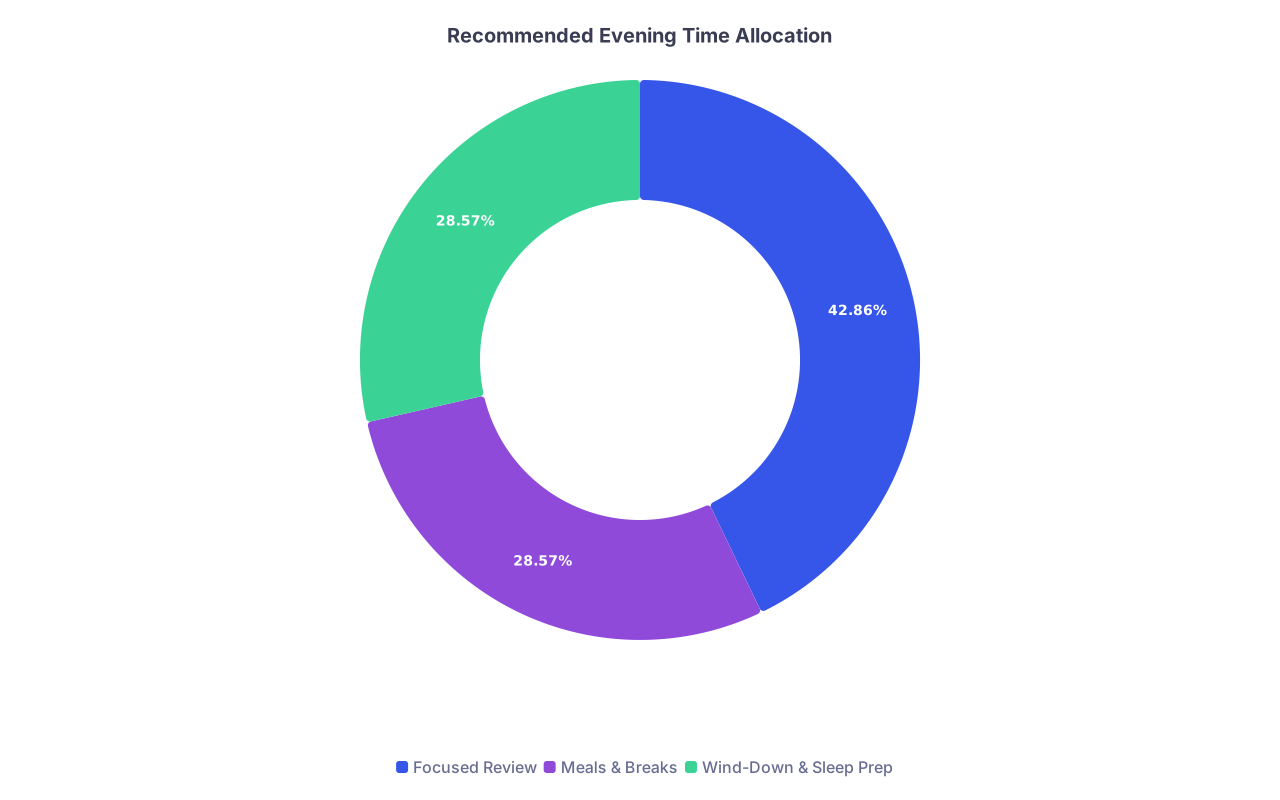
| Category | Value |
|---|---|
| Focused Review | 90 |
| Meals & Breaks | 60 |
| Wind-Down & Sleep Prep | 60 |
8:00–9:30 PM – Final Calm Review Block (The Only One That Matters)
This is where most students blow it. They panic and start flailing across 20 topics. You won’t.
At this point you should follow the micro-plan you wrote at 5:15. Exactly.
8:00–9:00 PM – High-Yield Only, No New Topics
You have about 60 minutes of usable mental energy left. Spend it like cash.
Structure:
- 8:00–8:20 – Topic 1 from your list
- 8:20–8:40 – Topic 2
- 8:40–9:00 – Topic 3
For each 20-minute mini-block:
- Start by writing what you remember on scratch paper before looking at notes. Even 2–3 key points.
- Then quickly skim your summary resource for that topic:
- Your own condensed notes
- A single-page review sheet
- A tight, trusted chart (not a 50-slide lecture)
Example for murmurs:
- Write from memory:
- “AS: systolic crescendo-decrescendo, radiates to carotids, louder with squatting”
- “MR: holosystolic at apex radiates to axilla, louder with hand grip”
- Then check mistakes and fill in missing pieces. That’s it.
Resist:
- Opening up full lecture decks
- Starting long videos
- Jumping into fresh question banks
This last hour is for consolidating what you already basically know and soothing your anxiety with structure.
9:00–9:20 PM – Logistics & Tomorrow-You Prep
At this point you should switch from content to operations. This is where a lot of exam-day stress really comes from: random logistics gone wrong.
Lay out:
- Clothes for tomorrow (boring, comfortable, layered)
- Bag with:
- ID
- Pens/pencils
- Snacks that won’t destroy your stomach (bananas, granola bar, nuts)
- Water bottle (if allowed)
- Earplugs (if permitted)
Confirm:
- Exam time and exact location
- Transportation plan (what time leaving, with whom, backup plan if Uber fails)
- What you’re doing for breakfast
Write a tiny morning checklist on a sticky note and put it where you’ll see it:
- Wake up 6:30
- Shower, light breakfast
- Quick 5–10 min flash of formulas only
- Leave by 7:30
This reduces middle-of-the-night “did I forget something?” spinning.
9:20–9:30 PM – Decide on the Morning Review (Once, Then Drop It)
If you absolutely need a short morning review, define it now:
- 5–10 Anki cards max
- Or one mini-table you’ll rewrite (e.g., heart blocks, or key equations)
Write down exactly what you’ll touch in the morning. Limit it to 10–15 minutes. Then you stop negotiating with yourself about it.
9:30–10:00 PM – Wind-Down Routine That Actually Lowers Anxiety
At this point you should switch out of “student” mode and into “person with a brain that needs sleep.”
9:30–9:40 PM – Physical Off-Ramp
Pick something gentle:
- Short, slow stretching routine
- 5–10 minutes of walking around your room/apt tidying up
- Brief self-massage (neck, shoulders, jaw)
Goal: tell your nervous system “we’re safe, we’re done.” You’re physically signaling that the emergency is over.
9:40–9:50 PM – Box Breathing + Mental Reset
Sit or lie down. Try this:
- Inhale through your nose for 4 seconds
- Hold for 4 seconds
- Exhale through your mouth for 4 seconds
- Pause for 4 seconds
Repeat for 4–6 cycles.
Then do a status check that’s not emotional, just factual:
- “The exam is tomorrow at X.”
- “I have studied for weeks/months.”
- “I will either pass comfortably, pass narrowly, or not pass.”
- “Staying up later does not change those probabilities much anymore.”
Brutally honest thought: At this point, another hour won’t turn a failing student into a star. But it can drag a solid student down with fatigue and panic. Do not be that student.
9:50–10:00 PM – Sleep Prep Like an Olympian, Not a Zombie
Basic but non-negotiable:
- Brush teeth, wash face
- Set two alarms (phone + a physical alarm if you have it)
- Plug your phone in across the room or in another room if possible
- Darken your room as much as you reasonably can
If you live with noisy roommates, warn them: “Big exam tomorrow. I’m going down early.”

| Step | Description |
|---|---|
| Step 1 | 5 PM Triage |
| Step 2 | 6 PM Contained Study |
| Step 3 | 7 PM Dinner & Break |
| Step 4 | 8 PM Final Review |
| Step 5 | 9:30 PM Wind-Down |
| Step 6 | 10 PM Sleep |
10:00–10:30 PM – In-Bed Thought Control (So You Actually Fall Asleep)
You’re lying in bed. Lights off. And your brain, of course, decides this is a great time to replay every question you ever got wrong.
At this point you should have a pre-planned mental script. Not random bargaining with your anxiety.
Option 1 – Containment Journal (If You’re Really Spinning)
Keep a small notebook by your bed. Lights dim, not bright.
If you can’t stop the mental noise, take 5–10 minutes to:
- List worries:
- “What if they ask about X and I don’t know it?”
- “What if I forget everything?”
- Underneath, write one realistic response to each:
- “If they ask about a rare zebra, I’ll make my best educated guess like everyone else.”
- “I’ve taken and passed exams before; memory doesn’t just vanish overnight.”
Then close the notebook. Physically. You’ve told your brain: “We handled this. Not now.”
Option 2 – Guided Audio
If you’re wired, use:
- A short 10–20 minute sleep meditation track
- A body scan relaxation audio
Headphones at low volume. Set it to stop automatically; don’t engage with your phone screen again.
Option 3 – Boring Story Technique
If your mind keeps drifting back to content panic, run a deliberately boring narrative in your head:
- “I’m walking through the grocery store, aisle by aisle…”
- “I’m describing my childhood bedroom, object by object…”
It occupies your mental space without activating anxiety.
What You Do Not Do in Bed
- No “just one more” video or question.
- No scrolling social media “to relax.”
- No group chat. Mute it.
Your bed is for sleep, not exam autopsy.
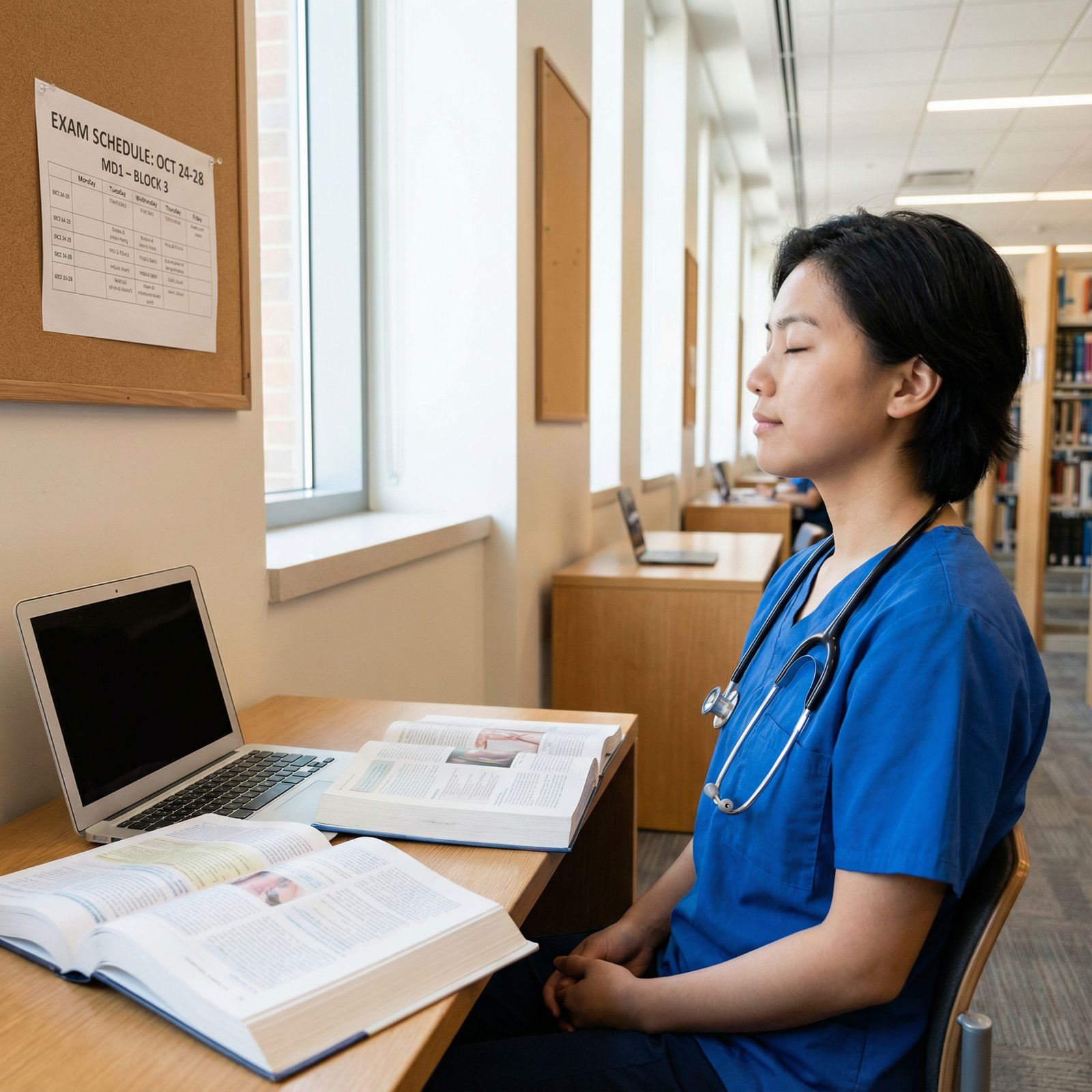
Morning-of Brief Timeline (So You Stop Planning It at Midnight)
You’re still the night before, but your brain keeps jumping to tomorrow morning. Fine. Let’s settle it.
Assuming a 9:00 AM exam and 30-minute commute:
- 6:30 AM – Wake up, quick shower, light breakfast
- 7:15–7:30 AM – 10–15 minutes of pre-chosen light review (no more than that)
- 7:30–8:00 AM – Commute, listening to calm music or nothing
- 8:00–8:45 AM – Arrive early, bathroom, find room, maybe 5–10 minutes of looking at your single-page formula sheet if you must
- 8:45–9:00 AM – Phone away, slow breathing, mentally walk through first 10 questions: read, pick best, move on
You already decided this tonight. Do not re-negotiate at 2 AM.
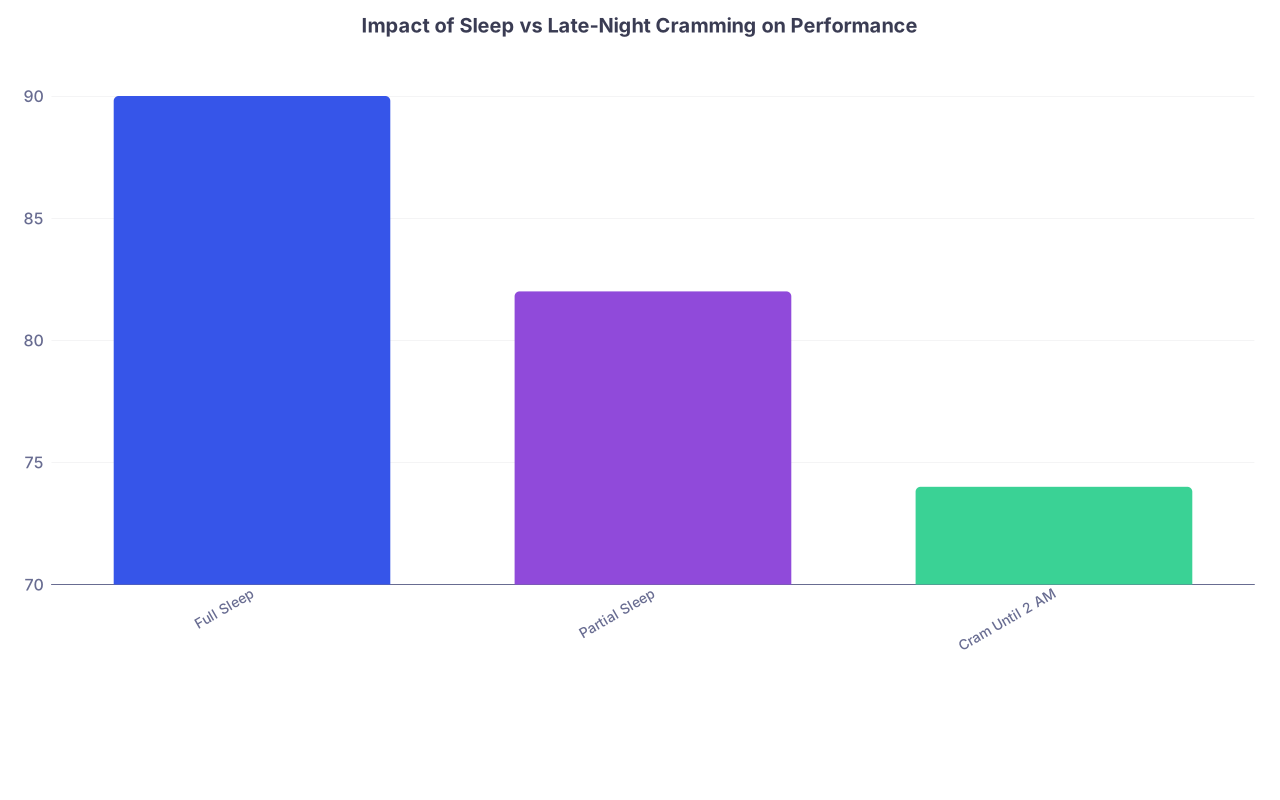
| Category | Value |
|---|---|
| Full Sleep | 90 |
| Partial Sleep | 82 |
| Cram Until 2 AM | 74 |
(Values are illustrative, but the pattern matches what I’ve seen again and again: sleep wins.)
If You’re Starting This Late (8 PM or Later)
Sometimes you’re reading this and it’s already 8:00 or 9:00 PM. Fine. You compress.
At this point you should cut out, not cram in. Example for starting at 8:00 PM:
- 8:00–8:15 – Micro-triage on paper (3–5 must-glance topics)
- 8:15–8:45 – One or two high-yield topics, max
- 8:45–9:00 – Logistics prep for morning
- 9:00–9:30 – Wind-down routine (stretching + breathing)
- By 10:00 – In bed, no devices
If you’re truly underprepared, your best move at this point is to protect tomorrow’s performance, not to martyr yourself in a 3 AM cramming session that wrecks your recall.
Your One Job Right Now
You’re not going to feel “done.” There’s always one more pathway, one more edge case, one more table.
Your job is not to annihilate uncertainty. Your job is to:
- Give your brain a clean handoff into sleep
- Show up tomorrow with access to what you already know
- Avoid self-sabotage by panic and exhaustion
So here’s your specific, actionable step right now:
Grab a piece of paper and write down a 5:00–10:00 PM timeline for tonight, in 20–30 minute blocks. List exactly:
- When you’ll stop studying
- What 3–5 topics you’ll touch
- When you’ll eat
- When you’ll start your wind-down
Then put that paper where you can see it. For the rest of the night, your job is simple: follow the timeline, not your anxiety.


