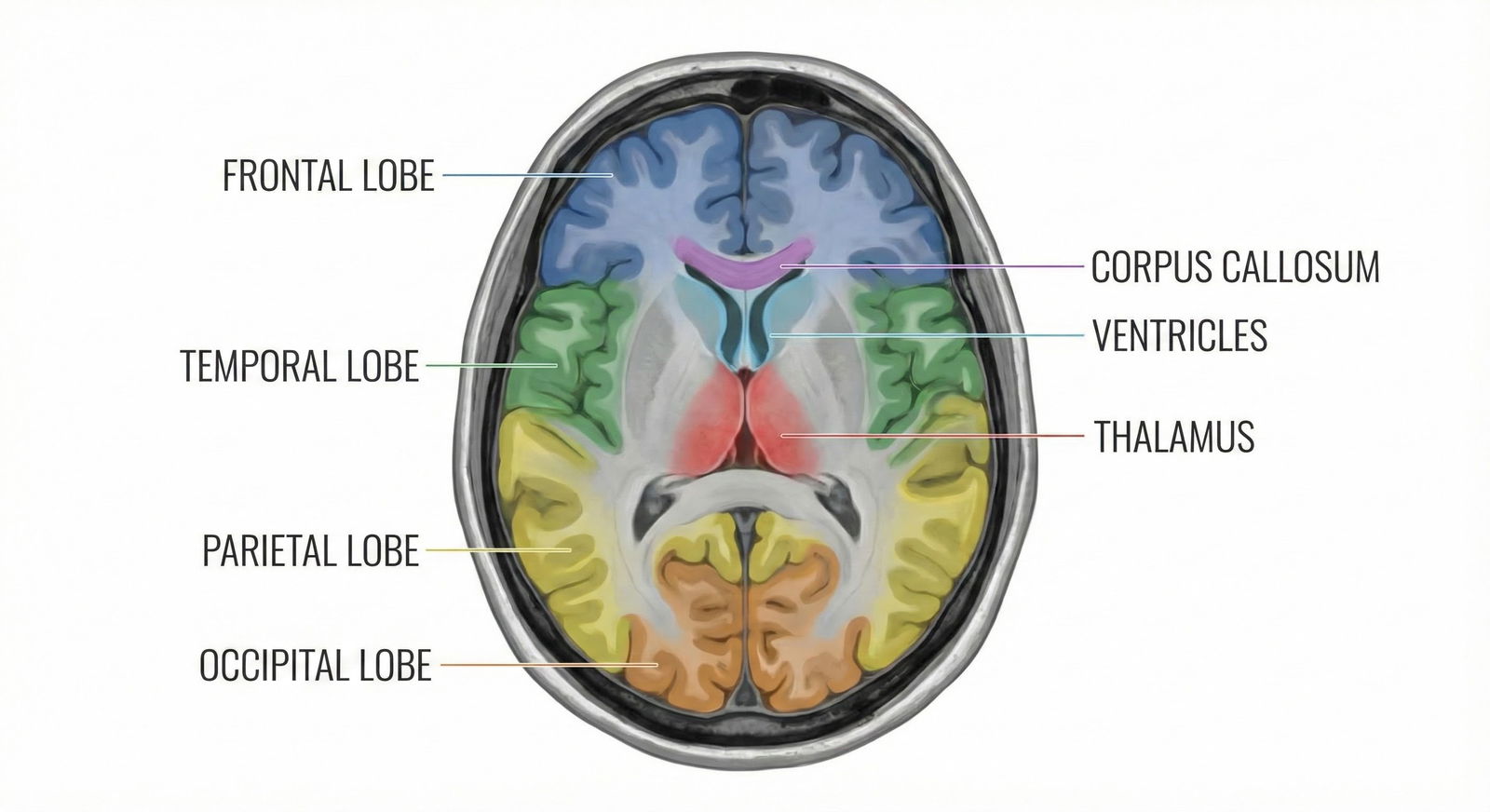
The way most students “manage” test anxiety during dedicated is backward. You stare at UWorld percentages, obsess over your NBMEs, and only react once you’re already spiraling. That’s too late.
You need daily checkpoints. Just like vitals on rounds.
What follows is a day-structured, time-specific system for anxiety during dedicated board study (Step 1, Step 2, COMLEX, shelf dedicated — it all fits). At each point in the day, you’ll know:
- What to check (mental, physical, study behavior)
- What “green/yellow/red” looks like
- Exactly what to do if you’re off track
Use this as your daily operating manual for your brain.
Big-Picture Timeline: Your Dedicated Period at a Glance
Before we go hour-by-hour in a single day, zoom out. Anxiety during dedicated follows a very predictable curve.
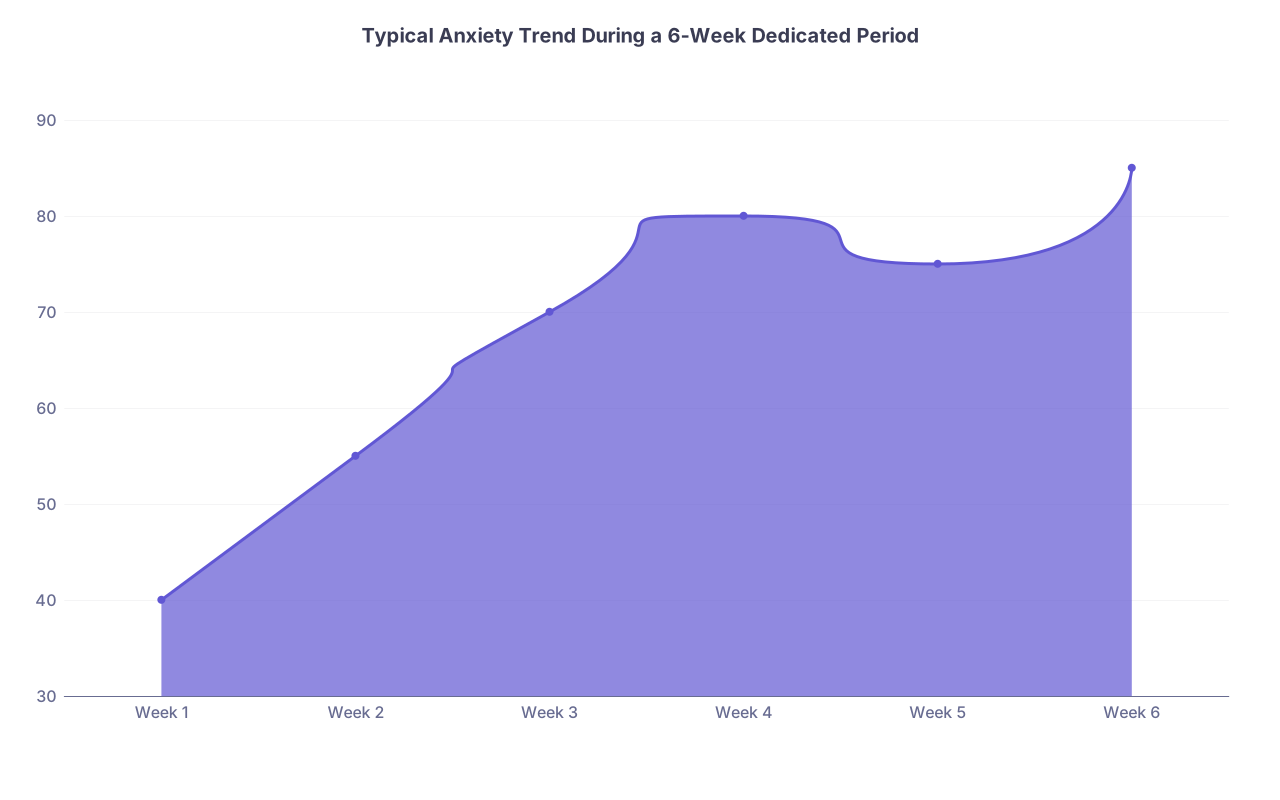
| Category | Value |
|---|---|
| Week 1 | 40 |
| Week 2 | 55 |
| Week 3 | 70 |
| Week 4 | 80 |
| Week 5 | 75 |
| Week 6 | 85 |
Here’s the reality I see over and over:
- Week 1–2: Excitement + mild fear. Anxiety is there but feels “motivating.”
- Week 3–4: Doubt and comparison hit hard. Peak meltdown risk.
- Week 5–6: Fatigue, catastrophizing, obsession over practice scores.
So at this point you should structure your days to anticipate that wave, not just respond to it.
We’ll build a Daily Anxiety Checkpoint System that you repeat every single day of dedicated. Then I’ll show you how to tweak it week by week.
Your Daily Skeleton: The 7 Core Checkpoints
Think of your day in dedicated as seven “vitals rounds” on yourself:
- Wake-Up Reset
- Pre-Block Grounding
- Mid-Block Micro-Check
- Post-Block Decompression
- Afternoon Productivity Check
- Evening Wind-Down
- Pre-Sleep Offload
We’ll go through each one chronologically, with specific actions.
To visualize the flow:

| Step | Description |
|---|---|
| Step 1 | Wake-Up Reset |
| Step 2 | Pre-Block Grounding |
| Step 3 | Mid-Block Micro-Check |
| Step 4 | Post-Block Decompression |
| Step 5 | Afternoon Productivity Check |
| Step 6 | Evening Wind-Down |
| Step 7 | Pre-Sleep Offload |
Checkpoint 1: Wake-Up Reset (0–30 Minutes After Waking)
This is where most people lose the day before it starts. They grab their phone, open Reddit/Discord, see someone post a 262, and their anxiety spikes before they’ve brushed their teeth.
At this point you should treat the first 30 minutes like pre-op: calm, controlled, no drama.
What to Check
Right after you wake up, assess three things:
Body state
- 0–10 tension scale (jaw, shoulders, stomach)
- Sleep quality: “rested / okay / garbage”
First thoughts
- Are you already catastrophizing? (“I’m behind,” “I’m going to fail”)
- Or are you in planning mode? (“Today I’ll hit cardio and biostats”)
Urgency level
- Calm/steady
- Mildly keyed up but functional
- Panicked / heart racing / dread
Daily Actions
- No phone or email for first 20 minutes. Non-negotiable.
- Sit up in bed or at your desk and do:
- 5 slow breaths: In 4 seconds → hold 2 → out 6–8
- One sentence out loud: “Today I am only responsible for the next block and review.” (Say it. Not think it.)
- Quick body scan:
- If you’re at anxiety 7–10/10 physically (racing heart, nausea):
- 3 minutes of box breathing: In 4 / hold 4 / out 4 / hold 4
- Light movement for 5 minutes: walk your room, stretch, air squats — not a workout, just movement
- If you’re at anxiety 7–10/10 physically (racing heart, nausea):
Write down (literally, pen and paper or Notes app):
- Wake-up time
- Sleep quality (good/ok/bad)
- One specific worry on your mind
That last one is key. Vague dread makes anxiety huge. Specific worry shrinks it.
Checkpoint 2: Pre-Block Grounding (10–15 Minutes Before Your First Question Block)
This is the “pre-procedure timeout” for your test day. Instead, you’re doing it for practice blocks.

At this point you should prevent two common mistakes:
- Starting a block in panic mode
- Starting a block totally unfocused and doomscrolling between questions
3-Minute Grounding Routine
Right before you open UWorld/NBME:
One-line intention
- “This block is practice, not judgment.”
- Or “My job is to practice process, not protect my ego.”
Set your metrics
- What are you actually tracking today?
- % correct is allowed, but secondary.
- Primary metric: Did I use my process? (reading stem, identifying key data, ruling out choices logically)
- Write: “Today I’m practicing: [e.g., cardio murmurs / reading every answer choice].”
- What are you actually tracking today?
10 breaths, eyes closed, both feet flat on the ground
- If that feels too “wellness-y,” call it a “pre-block loading bar.” You don’t start the program till the bar is full.
Red-Flag Signs Here
If, right before your block, you’re thinking:
- “If this % is bad I’m screwed.”
- “I have to hit X% or I’ll move my test date.”
- “Everyone else probably crushed more NBMEs by now.”
That’s anxiety running the show, not strategy. In that case:
- Add a 2-minute writing pause:
- Top of page: “If this block goes badly, then what?”
- Answer it. Usually it’s: “I review errors, adjust, and move on.” Your brain needs to see that written.
Checkpoint 3: Mid-Block Micro-Check (Halfway Through a Block)
This is the in-the-moment rescue. If anxiety spikes here and you ignore it, the whole block tanks.
At this point (question ~20 of 40, or ~30-minute mark) you should briefly step out of autopilot.
60-Second Scan
Pause for 60 seconds (yes, you have time):
- Body: Jaw clenched? Shoulders up? Holding breath?
- Thoughts: Any “I’m bombing this” / “I have no idea what I’m doing”?
- Behavior: Speeding up and clicking random? Re-reading stems 5+ times?
If yes to any of those:
- Take 3 slow breaths with a forced, long exhale.
- Tell yourself (quietly): “Next 5 questions only. Mini-reset.”
Shrink the horizon. Don’t “fix the block.” Just stabilize the next 5.
If you’re in simulation mode for a practice test, practice this without breaking the interface — brief eyes-close, hands-off-mouse, then resume. You’re training test-day behavior.
Checkpoint 4: Post-Block Decompression (15–30 Minutes After a Block)
Most students do this wrong. They slam “End Block,” see the percentage, and immediately:
- Spiral mentally
- Or bury the feeling and jump straight into review
Both are bad. At this point you should treat this like post-op sign-out: stabilize vitals, then dissect what happened.

3-Part Post-Block Protocol
Immediate physical reset (3–5 minutes)
- Stand up. Leave the desk.
- Walk, refill water, bathroom. No phone, no score analysis yet.
Emotional labeling (2 minutes)
- Sit back down, then look at the score.
- Immediately write:
- “Score: ___”
- “First reaction: [one word — angry / scared / numb / relieved]”
- Then write one line: “Story my brain is telling: ______”
- Example: “I’ll never reach my goal,” “I’m behind everyone,” etc.
Containment statement (1–2 minutes)
- Write this sentence and fill it in:
- “This is data about today, not a verdict about my test day.”
- If you’re furious or gutted, set a 5-minute timer and rant on paper. Then close it. Rant stays there; it doesn’t get to run the rest of your day.
- Write this sentence and fill it in:
Only after this do you move into question review. If you skip the decompression, your “review” is just weapons-grade self-criticism wearing a high-yield mask.
Checkpoint 5: Afternoon Productivity Check (Midday / Early Afternoon)
This is where dedicated days quietly fall apart. You finish a block, eat, sit down “for review,” and three hours later you’ve done:
- 12 half-hearted questions
- 45 minutes of Instagram
- 30 minutes of staring
At this point (usually between 1–3 PM) you should pause and re-evaluate the rest of your day.
| Symptom | More Likely Anxiety | More Likely Fatigue |
|---|---|---|
| Racing thoughts | Yes | No |
| Heavy eyelids | No | Yes |
| Doom-scrolling urge | Yes | Sometimes |
| Yawning constantly | No | Yes |
| Perfectionism in review | Yes | No |
5-Minute Midday Audit
- Set a 5-minute timer. No distractions.
- Answer these, fast:
- “Since 9 AM, what have I actually completed?” (Blocks, reviewed systems, Anki)
- “Right now my main feeling is: [tired / wired / numb / overwhelmed]”
- Choose your bucket:
- Bucket A: Mostly tired (physically)
- Plan: 20–30 min real break (lie down, walk outside, eat) → then one lighter task (e.g., low-stakes Anki, pathoma video).
- Bucket B: Mostly anxious (mentally)
- Plan: 5 min of breathing + 10 min of journaling:
- “What am I afraid will happen if I don’t study perfectly this afternoon?”
- Then commit to a single, small block (e.g., 10–15 questions). Not your whole afternoon. Just the next bit.
- Plan: 5 min of breathing + 10 min of journaling:
If you’re both exhausted and spiraling? You overcooked yourself earlier in the week. Dial down the rest of the day’s volume by 20–30%. Not to be “soft,” but to preserve the next 3–5 days.
Checkpoint 6: Evening Wind-Down (1–2 Hours Before Bed)
This is where test anxiety loves to ambush you. You close your laptop, and your brain opens the “What If” channel.
At this point you should get ahead of the 1 AM spiral by doing a structured shutdown.
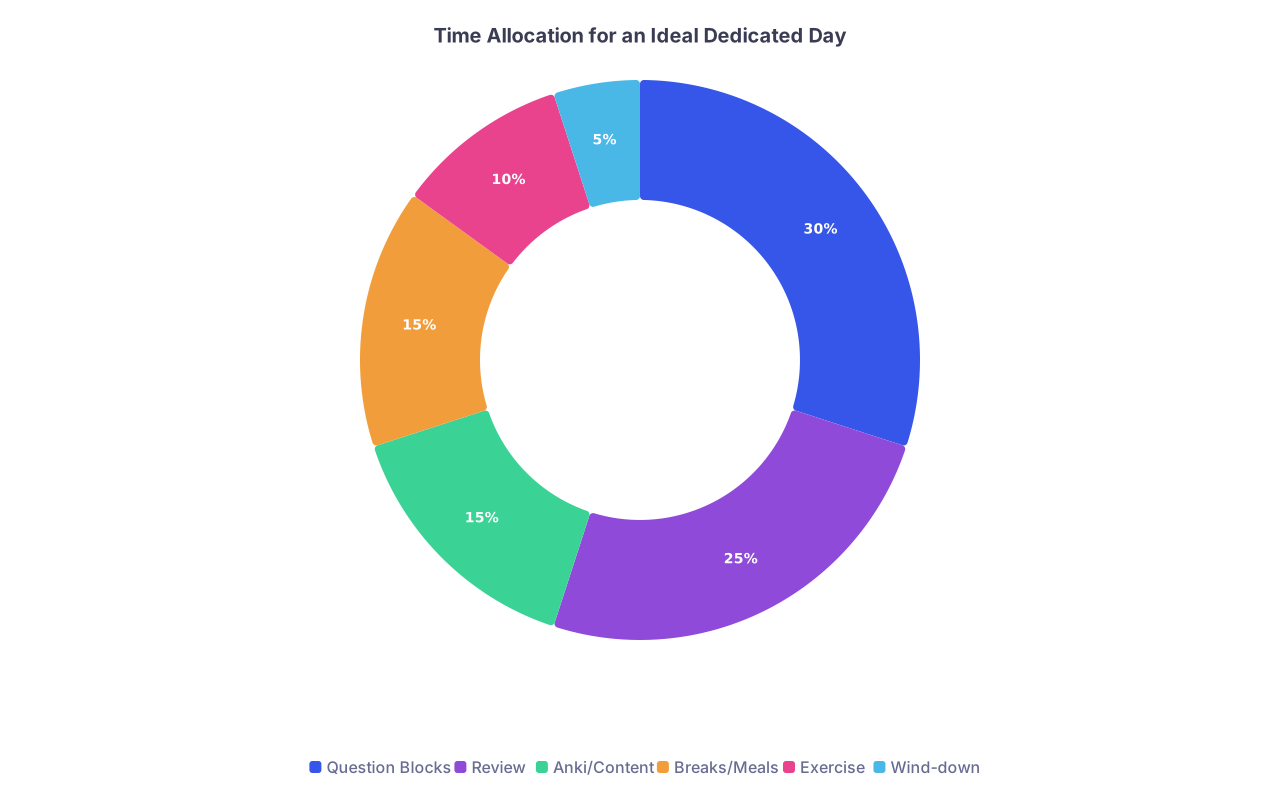
| Category | Value |
|---|---|
| Question Blocks | 30 |
| Review | 25 |
| Anki/Content | 15 |
| Breaks/Meals | 15 |
| Exercise | 10 |
| Wind-down | 5 |
Your evening checkpoint has three jobs:
- Turn off “study mode”
- Contain future worries
- Protect sleep (your best anti-anxiety tool, whether you like it or not)
30-Minute Evening Routine
Step 1: Hard academic stop
- Pick a time (e.g., 9 or 10 PM) where you stop new content.
- Last academic task: list what you accomplished:
- “2 blocks (40 Q each), reviewed cardio, 300 Anki.”
- Then list 2–3 concrete tasks for tomorrow. Not 10. Not your whole life. Just: “NBME 25, review incorrects, GI path.”
Step 2: Containment list (5–10 minutes)
New document or page titled: “Not Tomorrow’s Problem.”
Write:
- Every anxious thought trying to jump at tomorrow:
- “What if my score doesn’t go up.”
- “I’m weak in renal and neuro and cardio and everything.”
- “Everyone else is doing more.”
- Then respond to each with one line of “if-then”:
- “If my score plateaus next NBME, then I’ll talk with [advisor / upperclassman / tutor] and adjust.”
- “If I’m weak in renal, then I’ll swap one block tomorrow for a renal-focus block.”
This gives your brain a plan. Anxious brains calm down when they see contingencies, not empty reassurance.
Step 3: Non-study activity (20–40 minutes)
Yes, you’re allowed. Right here in the sacred “dedicated.” Something like:
- Light show
- Short walk
- Call a friend
- Stretching, yoga, or literally lying on the floor listening to music
If you feel guilty doing this, remind yourself: the goal is a functioning brain on test day, not bragging rights for suffering the most.
Checkpoint 7: Pre-Sleep Offload (Right Before Bed)
This is the last line of defense. If you crawl into bed with your mind racing about NBME curves and discord screenshots, you’re wrecking tomorrow before it starts.
At this point you should offload cognitive junk and force a physical slowdown.

10-Minute Pre-Sleep Protocol
2-minute brain dump
- New page: “Stuff my brain is yelling.”
- Write everything for 2 minutes, no structure.
Short reframe
- Under that, write:
- “Today I did: [3 bullets]”
- “Tomorrow I’ll do: [2 bullets, already planned earlier]”
- That’s it. Don’t add 10 more tasks.
- Under that, write:
Physiologic quieting (5 minutes)
- Box breathing, 4–4–4–4
- Or 4–7–8 breathing (in 4, hold 7, out 8)
- Lying in bed, lights off, no phone in your hand.
If you’re still wired after 10–15 minutes, get out of bed for 5–10 minutes, low light, and read something non-medical or continue slow breathing. Don’t stay in bed doom-thinking.
Adjusting Your Checkpoints Week-by-Week
These daily checkpoints stay the same, but how you use them shifts depending on where you are in dedicated.
Weeks 1–2: Build the System, Don’t Chase Perfection
At this point you should:
- Prioritize building consistency in Checkpoints 1, 2, and 4 (wake-up, pre-block, post-block)
- Expect some chaos; your routines will feel clunky at first
Focus:
- Learn what your anxiety actually looks like:
- Do you get body symptoms (racing heart) or more cognitive (intrusive “you’re behind” thoughts)?
- Start tracking a simple daily “Anxiety 0–10” at:
- Morning
- Post-block
- Before bed
You’re collecting data on yourself.
Weeks 3–4: High-Risk Period, Tighten the Screws
This is peak meltdown territory. Compare yourself to every other human who’s ever taken this exam. Question your whole career. You know the drill.
At this point you should:
- Guard Checkpoint 5 (Afternoon Check) and Checkpoint 6 (Evening Wind-Down) aggressively.
- Cap doom content. That means:
- No “score report” threads after dinner.
- No adding 3 extra “emergency” blocks every time a practice score dips.
Add one more layer:
- Once per week, review your anxiety notes:
- Look for patterns: “Always spike on NBME days,” “Always rough after bad sleep.”
- Then adjust your schedule:
- Example: If NBME always wrecks you, plan:
- NBME in morning
- Long walk
- Only light review of clear misses that day. No heavy new content.
- Example: If NBME always wrecks you, plan:
Weeks 5–6: Pre-Exam, Contain the Last-Minute Panic
At this point you should protect sleep, not stuff more into your brain. Anxiety will be screaming to do the opposite.
Tighten:
- Evening routine: make it boringly consistent.
- Pre-sleep offload: non-negotiable every night.
Add this nightly question (answer in 1–2 sentences):
- “If my real exam were tomorrow, what would I do tonight that would actually help me perform?”
It will never be “cram 4 more hours of micro.” It will be:- Sleep
- Light review
- Calm nervous system
Practice that now, not just the night before.
When Anxiety Crosses the Line: Emergency Rules
Daily checkpoints are for management, not crisis. If any of these happen, you’re in red-alert territory and need more than self-checkpoints:
- Panic attacks more days than not
- Can’t get through a block because of physical anxiety
- Sleeping <4–5 hours consistently from worry
- Persistent thoughts like “I’d rather disappear than take this exam”
At this point you should:
- Tell one person in your real life within 24 hours:
- School counselor
- Mental health services
- Trusted attending, dean, or mentor
- And strongly consider:
- Short-term therapy focused on test anxiety
- Temporary meds if recommended by a professional
White-knuckling through dedicated while your brain is on fire is not “grind culture.” It’s sabotage.
How to Start This System Today
Do not try to implement every checkpoint perfectly at once. You’ll turn anxiety management into another exam to fail.
Today, do this:
- Pick two checkpoints you’ll commit to for the next 3 days:
- I’d start with Wake-Up Reset and Post-Block Decompression.
- Write them on a sticky note at your desk.
- Before bed tonight, set out a notebook labeled: “Dedicated Checkpoints.”
Tomorrow morning, when you sit up in bed, open that notebook and rate your wake-up anxiety 0–10 and write one worry. That’s your first checkpoint done.