
The usual advice for test anxiety before Step 2 CK is soft and useless. You need a timeline, not platitudes. Step 2 is too high‑stakes to “just try to relax.”
You’re going to treat anxiety the same way you treat pneumonia: structured plan, clear time course, and actual interventions. Week by week.
Below is a 6‑week, week‑by‑week strategy to tame Step 2 CK anxiety. If you’ve got more than 6 weeks, even better—you’ll just have extra buffer. If you’ve got less, compress the plan but keep the order.
Overview: Your 6‑Week Anti‑Anxiety Timeline
At this point you need a bird’s‑eye view. Here’s the structure you’re working with:
| Week | Primary Focus | Key Output |
|---|---|---|
| Week 6 | Baseline + Systems Check | Written anxiety profile & study constraints |
| Week 5 | Routine + Sleep Lock-In | Daily schedule & sleep anchor time |
| Week 4 | Exposure without Meltdown | Simulation blocks & post‑test scripts |
| Week 3 | Pressure Practice | Full lengths & test‑day micro‑routines |
| Week 2 | Cut Noise, Build Confidence | Trim resources & structured review |
| Week 1 | Taper + Test Week Protocol | Final schedule & exam‑day script |
You’re not “working on anxiety in general.” Each week has one main job. Do that job first; everything else is extra.
Week 6: Baseline and Reality Check
If you’re 6 weeks out, this week is not about heroics. It’s about diagnosis—of your anxiety and your constraints.
At this point, you should:
1. Define your anxiety profile (30–45 minutes, one time).
Grab a sheet of paper or a blank note. Write down three headings:
- Triggers
- Thoughts
- Body symptoms
Then answer, in bullets, with specifics:
- Triggers:
- “Timing bar turning red on UWorld”
- “Score screen after a block”
- “People asking me how studying is going”
- Thoughts:
- “If I bomb this, I won’t match IM”
- “Everyone else is ahead of me”
- “I’m not a good test-taker”
- Body:
- “Heart racing before starting a block”
- “Jaw clenches during tough questions”
- “Can’t fall asleep after doing questions at night”
You’re not journaling for Instagram. You’re mapping what you’re actually fighting.
2. Set your non‑negotiable constraints (15–20 minutes).
List hard realities:
- Rotation hours or dedicated?
- Days you’re post‑call?
- Family obligations / childcare?
- Any treatment (therapy, meds) already in place?
This keeps you from building a fantasy schedule you’ll abandon in 3 days.
3. Take a structured baseline practice block.
- One timed 40‑question block in your main QBank (UWorld, AMBOSS).
- Treat it like a mini‑exam: quiet, no phone, no interruptions.
Right after, do a two‑column debrief:
Left column:
- “What made anxiety spike this block?”
Right column:
- “What I’ll do about it next time (behavioral, not wishful thinking).”
Example:
- “Panicked when I saw cardio questions back‑to‑back” → “When I notice this, I’ll force a slow exhale and say, ‘One stem at a time.’ Then continue.”
That small script is your first tool.
4. Start one simple physical routine you can actually keep.
Pick one:
- 10‑minute walk after your last study block
- 5 minutes of slow breathing before bed (4‑6 breaths/minute)
- 10 pushups + 10 squats between QBank blocks
Do not start a full fitness overhaul. You need a guaranteed win, not a fantasy you’ll abandon.
Week 5: Lock Down Routine and Sleep
At this point, you should stop improvising your days. Anxiety skyrockets when your schedule is chaos.
1. Build a realistic daily template
On a blank sheet:
- Block 1: ___ to ___ (e.g., 8–10 am) – Questions
- Block 2: ___ to ___ – Review
- Block 3: ___ to ___ – Content/flashcards
- Recovery: 30–45 min break somewhere non‑negotiable
Anchor the start time and sleep time.
If you’re on rotation:
- Protect at least 2 solid hours on workdays.
- Protect 4–6 hours on off‑days.
- Make a default plan for post‑call (hint: this is not “cram 200 questions”).
2. Fix your sleep anchor
Pick:
- Bedtime window (e.g., 11 pm–12 am)
- Wake time (e.g., 7 am)
Then structure screen use:
- No QBank blocks after 9:30–10 pm.
- Last 30 minutes: low‑stimulation (book, stretching, boring YouTube, whatever works but not med Twitter).
Your goal: consistent sleep. Not perfect. Consistent.
3. Introduce a pre‑study “start ritual” (5–7 minutes)
Something like:
- Put phone in another room or on Do Not Disturb.
- Open QBank + note app only.
- Do 3 slow breaths (4 seconds in, 6 seconds out).
- Say out loud: “I’m practicing performance, not perfection.”
You’re training your brain: “This sequence = we focus now.”
Week 4: Controlled Exposure Without Meltdown
Now we start deliberate exposure to the exam conditions that make you anxious. But controlled. Not reckless.
At this point, you should:
1. Run 3–4 simulated blocks this week.
- Goal: Three 40‑question timed blocks, on separate days.
- Environment:
- Desk
- No phone
- Single 5‑minute break midway if you must
During the block:
- When you notice anxiety rising:
- Hands off the mouse for 3 seconds
- One slow exhale
- Say (in your head or quietly): “Next best move.” Then answer the next question only.
You’re training behavior under stress, not trying to feel calm. Big difference.
2. Do a structured “cool‑down” after each block (10–15 minutes).
Your cool‑down template:
- 2 minutes: stand up, shake out arms, walk around.
- 5–8 minutes: write 3 lines:
- “What triggered anxiety this block?”
- “What kept me functional anyway?”
- “What I’ll do differently next block.”
Keep these in one running document or notebook. You’re building your own anxiety playbook.
3. Track your stress vs. performance
Use a crude 0–10 scale after each block:
- Stress (0 = chill, 10 = panicked)
- Focus (0 = scattered, 10 = locked in)
You’re looking for trends, not perfection. Many students realize: “My stress was 8 but I still scored fine.” That disconnect is powerful.
Week 3: High‑Pressure Practice and Mini Test‑Day Rituals
At this point, you should intentionally practice pressure. Not run from it.
This is the week you prove to yourself that you can function even when your brain is loud and annoying.
1. Schedule 1 full‑length or near full‑length simulation
Options:
- NBME practice exam
- UWorld self‑assessment
- 6–7 QBank blocks back‑to‑back if you’re desperate (not ideal, but workable)
Do it starting at the same time your real exam will start (or as close as possible).
Before exam day:
- Plan:
- Start time
- Breaks
- Snacks/water
- What you’ll do during breaks (not doom‑scrolling)
During the sim:
- Your only job is to execute the process, not to chase a certain score.
- Use the same brief interventions:
- Slow exhale when stuck
- “Next best move” phrase
- Hands off mouse for 3 seconds if you start spiraling
After the sim:
- 10–15 minutes: no reviewing yet.
- Walk, shower, or eat.
- Then write out:
- What went well
- Where anxiety hit hardest (time of day, content type, fatigue)
- What you’ll tweak for the real exam.
2. Build your test‑day micro‑routine
You’re assembling your exam‑day script in pieces this week. Draft:
- Morning:
- Wake time
- Breakfast plan (and backup if you’re too anxious to eat much)
- Commute timing
- At the center:
- “First 5 minutes” plan (sit, breathe, scan tutorial, stretch fingers)
- During breaks:
- 2–3 minute walk
- Bathroom
- Tiny snack + water
- One line you’ll repeat: “I’ve trained for this. Next block only.”
You’re not leaving test‑day behavior to future-panicked-you. They’re not reliable.
Week 2: Cut Noise and Build Confidence
Now you’re close enough that resource FOMO will explode if you let it. This week your anxiety management is mostly subtraction, not addition.
At this point, you should:
1. Decide what you’re NOT using anymore.
Pick your core tools:
- 1 main QBank
- Your chosen practice exams (NBMEs/UWSAs)
- 1 main reference (online notes, condensed book, Anki, whatever is already working)
Then explicitly cut:
- “Maybe I should also add these 2 other question banks I haven’t started”
- Random new YouTube series you discovered this week
- New decks or resources you’re too late to use meaningfully
Last‑minute resource chasing is anxiety in disguise.
2. Tighten your review loop
Focus your review on:
- Patterns of mistakes, not isolated questions
- Topics that reliably spike anxiety:
- OB emergency management
- Cardiology algorithms
- Vent settings
- Peds dosing, etc.
For these high‑anxiety topics:
- Spend 30–45 focused minutes:
- Re‑read your best summary
- Do 10–15 questions just from that topic
- Write a 3–5 line “cheat summary” in your own words
Example:
“Status epilepticus: benzo first (lorazepam IV), then fosphenytoin/levetiracetam, then phenobarb if refractory. Secure airway if needed. Don’t waste time on CT before treating.”
That tight summary beats re‑reading 5 pages while your mind spirals.
3. Stabilize your evenings
This week, your evenings should start feeling repetitive in a good way.
Template:
- Last QBank block: end by 8:30–9 pm
- 20–30 minutes: light review or flashcards only if you can handle it calmly
- 10–15 minutes: wind‑down routine:
- Stretching, shower, short walk, or mindless show
- 5 minutes: next‑day plan (3 clear tasks, max)
You’re teaching your brain: “We stop. We rest. We don’t grind until 2 am in panic.”
Week 1: Test Week Protocol and Final 72 Hours
This is where many people blow it. They cram in terror, demolish their sleep, and show up half‑alive. You’re not doing that.
At this point, you should:
1. Decide your last big practice day.
- Usually 3–5 days before the exam.
- No full‑length closer than 48 hours to the test.
- After that, only lighter blocks (or none, depending on how fragile your anxiety is).
Your last full exam or heavy‑QBank day should be:
- Simulation of timing and stamina
- Final check that your anxiety tools actually work
Not: “Let me prove I’m smart enough.”
2. Build your final 3‑day taper plan
Think in days, not hours.
3 days before (T‑3):
- 2–3 QBank blocks max, normal timing
- High‑yield topic review only
- 30–45 minutes: organize:
- Test permit printout
- ID
- Snacks
- Clothes
- Route to center and backup plan
Anxiety hates ambiguity. Remove as much as you can.
2 days before (T‑2):
- 1–2 lighter blocks or only review, depending on your mental state.
- Re‑read your:
- Anxiety playbook (things that helped across weeks)
- Personal “high‑yield panic” summaries (those 3–5 line cheat summaries)
- Hard stop: all work by 7–8 pm.
- Do something mildly enjoyable and stupid: movie, walk with a friend, cooking. Not a case report. Not a new question bank.
1 day before (T‑1):
- No new content.
- Optional:
- 10–20 flashcards
- Skim your own notes
- One short (20–30 minute) low‑stakes review block if that calms you
- Prep your bag:
- Snacks (something you actually eat when nervous)
- Water
- Simple lunch option
- Layers (testing centers can be freezing)
And then you stop. Anything you “cram” now will probably evaporate by morning and cost you sleep.
Test Day: Execution Mode
This is where all that week‑by‑week practice pays off. You’re not inventing anything new today.
Morning of exam
At this point, you should:
- Wake up as planned (even if you slept poorly—happens all the time, people still pass).
- Eat something small you’ve eaten before. Do not experiment with triple espresso and new breakfast burritos.
- Run your mini routine:
- 3–5 slow breaths
- “I’ve trained for this. One block at a time.”
On the way there, don’t dissect random zebra diseases. Your brain needs to be warmed up, not fried.
During the exam
Between blocks:
- Don’t autopsy the block you just did. That’s how you light yourself on fire.
- Simple loop each break:
- Bathroom
- Eat small snack, sip water
- 3 slow breaths
- One line: “Next block only.”
During moments of panic:
- Hands off mouse for 3 seconds.
- One slow exhale.
- Say: “Find the key detail. Best guess.”
Then move on. You’ve practiced this exact thing already.
After the Exam: Containment
You’re going to feel weird after. Everyone does.
At this point, you should:
- Decide in advance how long you’ll debrief with friends or family (e.g., 30 minutes).
- Then stop. No forum deep dives. No QBank necropsy of “that one question about endocarditis.”
Your anxiety management doesn’t end with the last question—it ends when you refuse to relive the exam endlessly.
Sample Weekly Layout (Condensed View)
To make this more concrete, here’s how stress and work should gradually rebalance across the 6 weeks:
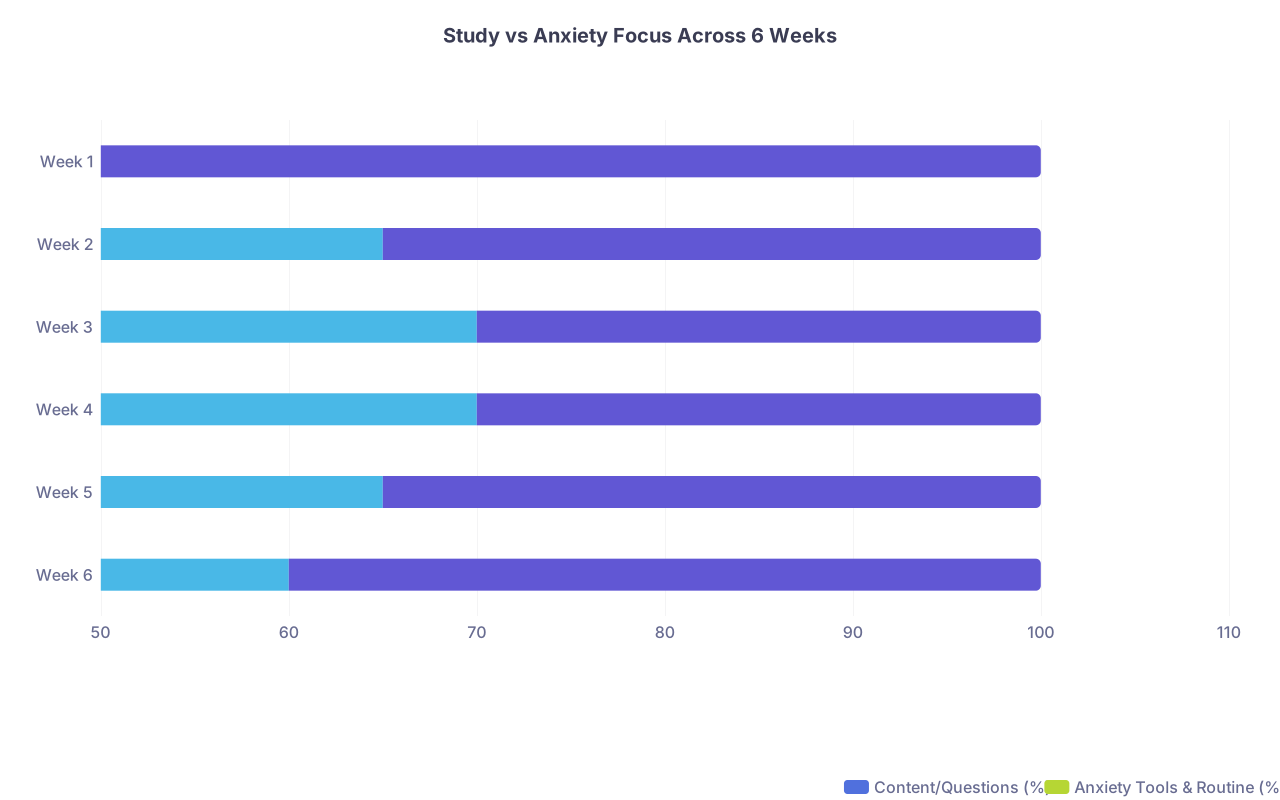
| Category | Content/Questions (%) | Anxiety Tools & Routine (%) |
|---|---|---|
| Week 6 | 60 | 40 |
| Week 5 | 65 | 35 |
| Week 4 | 70 | 30 |
| Week 3 | 70 | 30 |
| Week 2 | 65 | 35 |
| Week 1 | 50 | 50 |
Earlier weeks: more deliberate anxiety work. Later weeks: you lean on the systems you built.
Visualizing Your 6-Week Plan
Here’s how the full stretch looks if you map it chronologically:
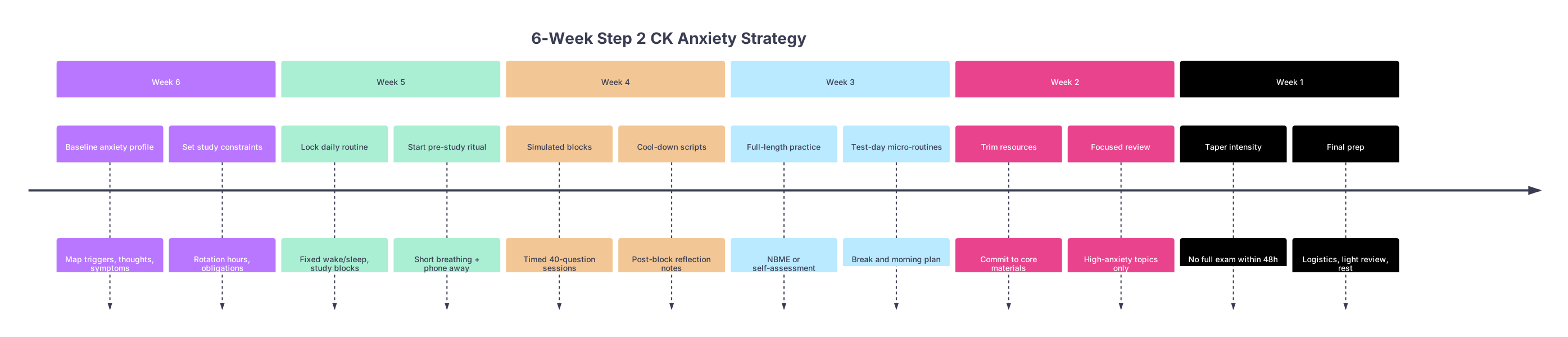
| Period | Event |
|---|---|
| Week 6 - Baseline anxiety profile | Map triggers, thoughts, symptoms |
| Week 6 - Set study constraints | Rotation hours, obligations |
| Week 5 - Lock daily routine | Fixed wake/sleep, study blocks |
| Week 5 - Start pre-study ritual | Short breathing + phone away |
| Week 4 - Simulated blocks | Timed 40-question sessions |
| Week 4 - Cool-down scripts | Post-block reflection notes |
| Week 3 - Full-length practice | NBME or self-assessment |
| Week 3 - Test-day micro-routines | Break and morning plan |
| Week 2 - Trim resources | Commit to core materials |
| Week 2 - Focused review | High-anxiety topics only |
| Week 1 - Taper intensity | No full exam within 48h |
| Week 1 - Final prep | Logistics, light review, rest |
And here’s how you might distribute practice tests:
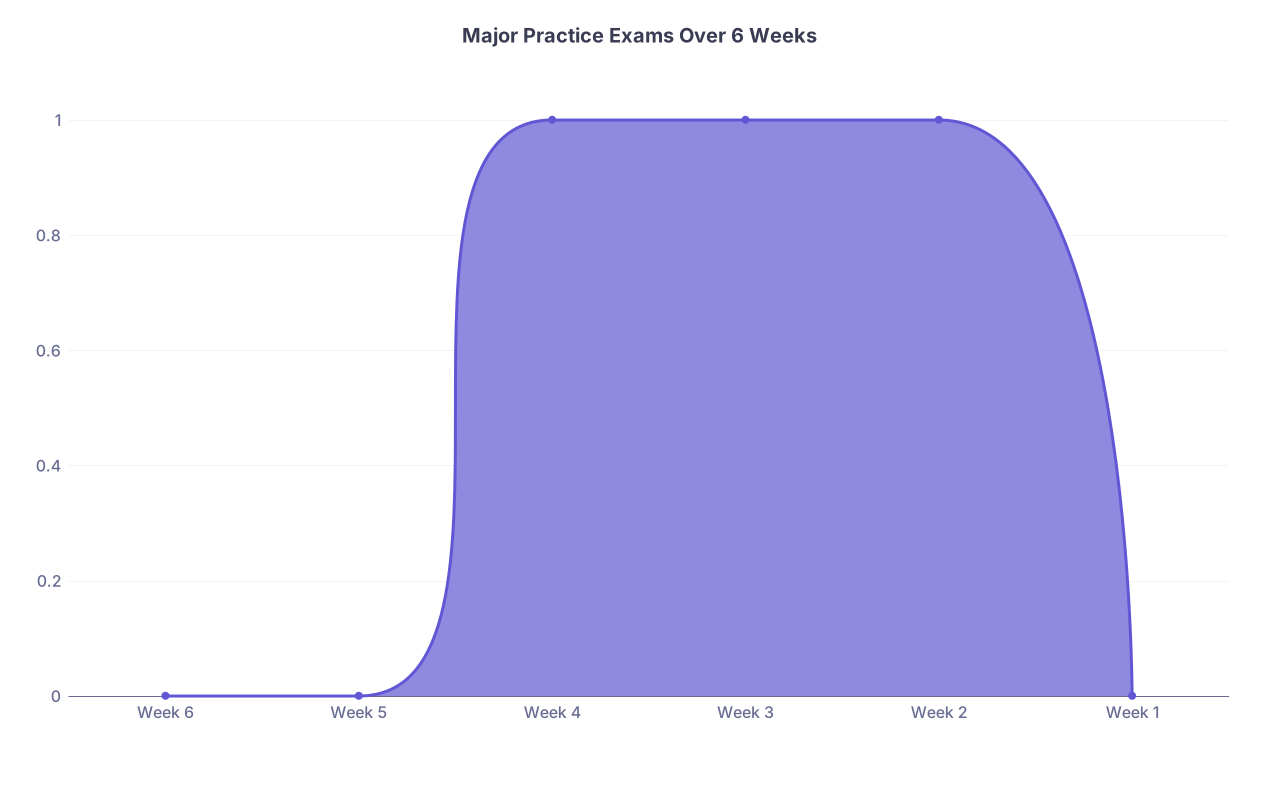
| Category | Value |
|---|---|
| Week 6 | 0 |
| Week 5 | 0 |
| Week 4 | 1 |
| Week 3 | 1 |
| Week 2 | 1 |
| Week 1 | 0 |
What To Do This Week (If You’re Starting Now)
To keep you from “saving this and never using it,” here’s your immediate checklist:

Within the next 24 hours:
- Write your 3‑column anxiety profile (triggers, thoughts, body).
- Do one timed 40‑question block in exam‑like conditions.
- Create tomorrow’s schedule with:
- Start time
- Sleep time
- 2–3 concrete tasks, not 10.
Within the next 3 days:
- Establish a pre‑study ritual (even if it’s 2 minutes).
- Pick your core resources and write them down.
- Do at least one post‑block cool‑down reflection.
If you actually follow this week‑by‑week, you won’t become “not anxious.” That’s not the goal. You’ll become anxious but operational—and that’s enough to crush Step 2.
Key Takeaways
- You do not eliminate test anxiety before Step 2 CK—you train around it with a timeline: baseline → routine → exposure → simulation → taper.
- The win is not feeling calm; the win is functioning predictably under stress using rehearsed scripts and routines.
- Random last‑minute resource chasing destroys more scores than anxiety itself; commit early, cut noise, and treat your exam prep like a protocol, not a vibe.