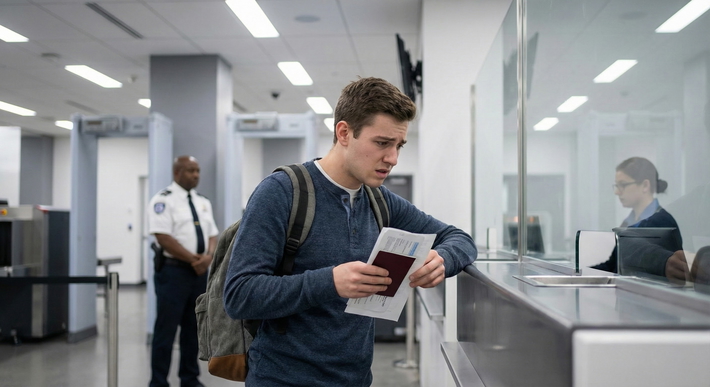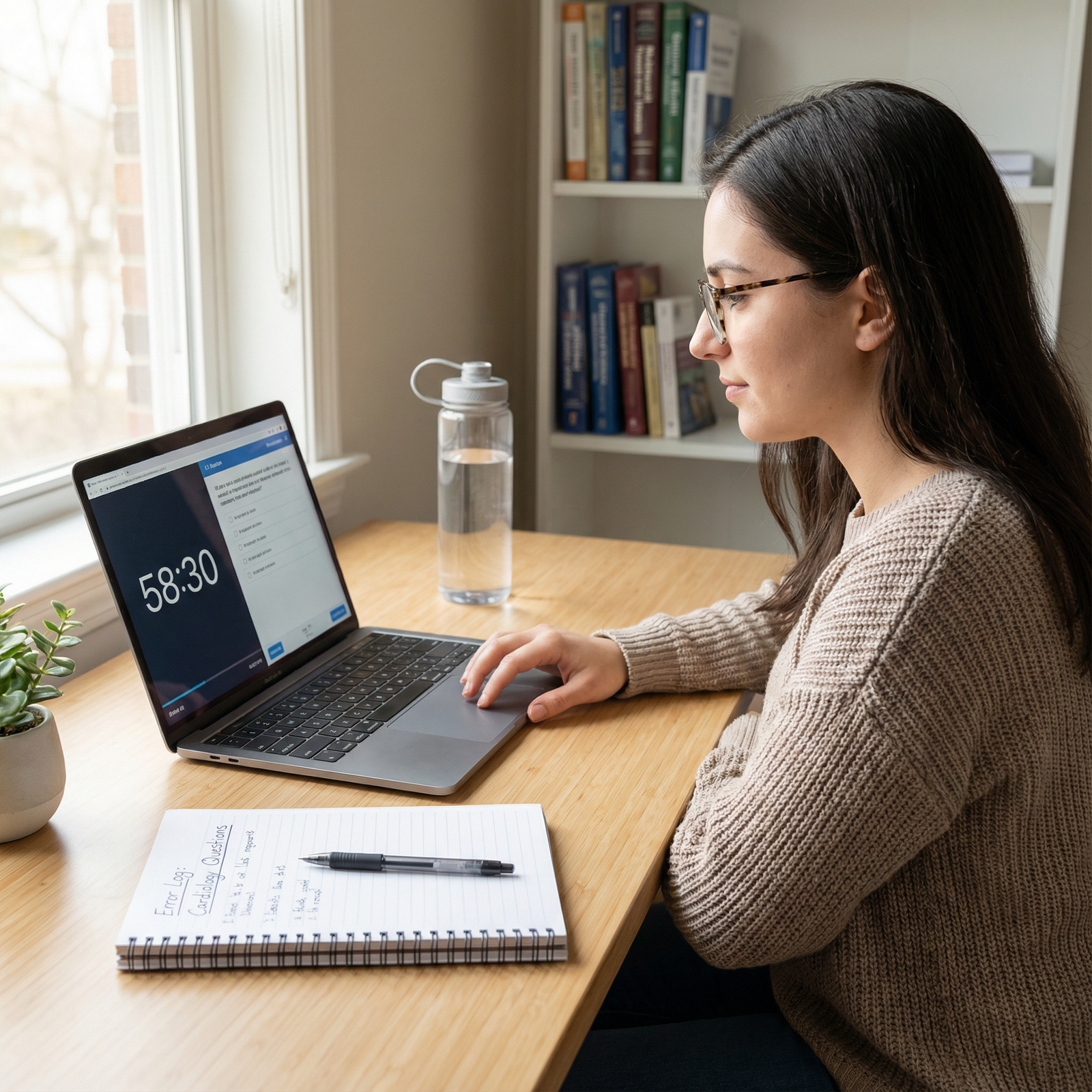
It is 5:45 a.m. Your Step 1 / shelf / block exam starts at 8:00 a.m. You slept, sort of. Your mind is already trying to run UWorld stems while you are still in bed. Heart a little fast. That familiar wave: What if I blank? What if this ruins my chances?
This is the moment that makes or breaks most students—not the last month of studying. The morning-of either keeps your brain online or lets anxiety hijack it.
You need a scripted, time-stamped routine that takes decisions out of your hands and keeps your physiology under control. Not vibes. Not “I’ll see how I feel.” A checklist.
Below is a chronological, practical morning-of-exam routine. You can modify the clock times, but keep the order and the guardrails.
The Night Before: Setting Up Tomorrow’s You (T‑12 to T‑8 hours)
You are not technically in “morning-of” yet, but if you do not set the stage now, tomorrow falls apart.
Between 6:00–9:00 p.m. (T‑12 to T‑11)
At this point you should:
Lock the logistics
- Confirm:
- Exam time and time zone
- Test center address or exam room location
- Route and backup route (parking, bus, train)
- Lay out:
- Clothes (comfortable layers, nothing scratchy or new)
- ID, permit, keys, wallet
- Earplugs (if allowed), glasses/contacts stuff
- Simple snack(s) and water bottle for breaks
- Confirm:
-
- Max 60–90 minutes of light review only:
- Skim your personal high-yield sheet
- Look at 10–15 flashcards you always forget
- No new question blocks. No new topics. That “one more block” at 9 p.m. is how people tank their sleep.
- Max 60–90 minutes of light review only:
Pre-write your morning script
- Take 5 minutes and literally write tomorrow’s sequence:
- “6:15 – Wake up, bathroom, stretch
6:25 – Breathing exercise x 2
6:35 – Shower, dress
6:50 – Breakfast
7:05 – Light review, 10 min cap
7:15 – Drive to center…”
- “6:15 – Wake up, bathroom, stretch
- Tape it to your desk or door. You want zero decisions tomorrow.
- Take 5 minutes and literally write tomorrow’s sequence:
9:30–11:00 p.m. (T‑10 to T‑9)
At this point you should:
- Shut screens down at least 45–60 minutes before intended sleep.
- Do something intentionally boring and predictable:
- Re-read a non-medical book
- Light stretching
- Short guided sleep meditation (not a 60-minute YouTube rabbit hole)
If you do not fall asleep quickly, fine. Lying in a dark room with eyes closed still helps. The disaster is doom-scrolling or opening UWorld at 11:45 p.m.
T‑2 Hours: Wake‑Up and Stabilize (Example: 6:00 a.m. for 8:00 a.m. Exam)
At this point you should protect the first 15 minutes from panic. You are not solving anything yet; you are convincing your nervous system you are not under attack.
0–5 minutes after waking
Stay in bed for one minute—but with structure.
Name the day
- Quietly label it:
“Exam day. I have prepared. My job now is to show up with a functional brain.”
- Quietly label it:
Quick body scan (60–90 seconds)
- Start at your feet, move upward:
- Notice where you are tense (jaw, shoulders, stomach)
- On each exhale, soften that area by ~5–10%
- You are not trying to get rid of anxiety. You are dialing it down from an 8 to a 5.
- Start at your feet, move upward:
No phone yet
- Do not open messages. Do not check group chats. If you must turn off an alarm, do not then check anything else. Group chats on exam mornings are almost always toxic.
5–15 minutes after waking
Get out of bed and immediately run a short breathing protocol. Not vibes—specific counts.
Use this:
- Cyclic sigh (x10 breaths)
- Inhale through nose normally
- At top of inhale, take a quick extra sip of air
- Long, slow exhale through the mouth
- 10 repetitions; total time ≈ 2–3 minutes
Then:
- Grounding check (30–60 seconds)
- Name:
- 5 things you see
- 4 things you feel physically (floor, clothes, air)
- 3 things you hear
- Name:
You are teaching your brain: “I am in a room. I am safe. I am not about to be eaten by a tiger. I am taking an exam.”
Only after this do you touch your phone—for practical reasons only (time, weather), not social.
T‑1.5 to T‑1 Hour: Move, Clean Up, and Eat (6:30–7:00 a.m.)
Here the routine is simple: light movement, light hygiene, light food. No heroics.
Movement: 5–10 minutes
At this point you should wake your body up without spiking adrenaline.
Options:
- 10 slow squats, 10 calf raises, 10 arm circles, repeated twice
- Short walk around your apartment / down the dorm hallway
- Gentle yoga flow if you already do that regularly
Nothing intense. No 30-minute run. High-intensity workouts right now will jack your heart rate and mimic panic.
Clean up: 10–15 minutes
- Quick shower if you normally shower in the morning. Lukewarm water, not scalding.
- Dress in layers:
- T‑shirt + light sweater or zip-up
- Comfortable pants, not tight waistbands
Dress like you expect the exam room to be 5°F too cold. Because it usually is.
Breakfast: 10–15 minutes (by ~6:45–7:00 a.m.)
This is non-negotiable. Low blood sugar is anxiety’s favorite weapon.
Rule set:
- Moderate protein
- Some complex carbs
- Limited sugar, limited caffeine (not none, but not triple what you usually drink)
Concrete examples:
| Option | Components |
|---|---|
| Simple oats | Oatmeal + peanut butter + banana |
| Toast combo | Whole-grain toast + eggs + small fruit |
| Yogurt bowl | Greek yogurt + granola + berries |
| On-the-go | Protein bar + banana + small coffee |
| Low-appetite | Half toast + cheese + small tea |
If you usually drink coffee, drink your normal amount. Do not suddenly double it “for performance.” I have watched more students crash from over-caffeination than from under-caffeination.
T‑1 Hour: Final Home Check and Micro‑Review (7:00–7:15 a.m.)
You are fed, clean, and minimally awake. Now you keep your brain in “steady cruise,” not “panic studying.”
7:00–7:05 – Logistics cross-check
At this point you should:
- Physically see your:
- ID
- Keys
- Wallet
- Exam confirmation email / permit (paper or digital)
- Put them into a single bag that does not leave your body.
Then glance at your pre-written schedule and confirm departure time and route.
7:05–7:15 – Micro-review only (hard cap)
This is optional. But if you review, cap it at 10 minutes and only:
- 1 small personal “formula / must-remember” page
- Or 5–10 flashcards of your worst, most volatile facts
No new questions. No opening a 300-page PDF. No “I’ll just do one more UWorld question block.” That is how you prime your brain to chase every ambiguity in the exam.
Set a literal timer for 10 minutes. When it rings, everything closes—physically move books out of reach.
T‑45 to T‑30 Minutes: Transit as Neutral Time (7:15–7:30 a.m.)
You are leaving now. The goal of travel: arrive with a slightly elevated but controlled level of arousal. Not exhausted. Not sedated.
At this point you should:
- Leave early enough that a 10–15 minute delay does not wreck you.
- Use no-stimulation transit:
- No group chat debates about the test
- No cramming videos
- Instrumental or calm playlist at low volume if you need noise
If you are driving:
- At red lights, practice box breathing:
- Inhale 4 counts
- Hold 4 counts
- Exhale 6–8 counts
- Repeat once per light
If you are walking or on public transit:
- Count 20 slow steps, matching your breath: step-step-inhale, step-step-exhale.
- Or re-run your cyclic sigh sequence 3–5 times.
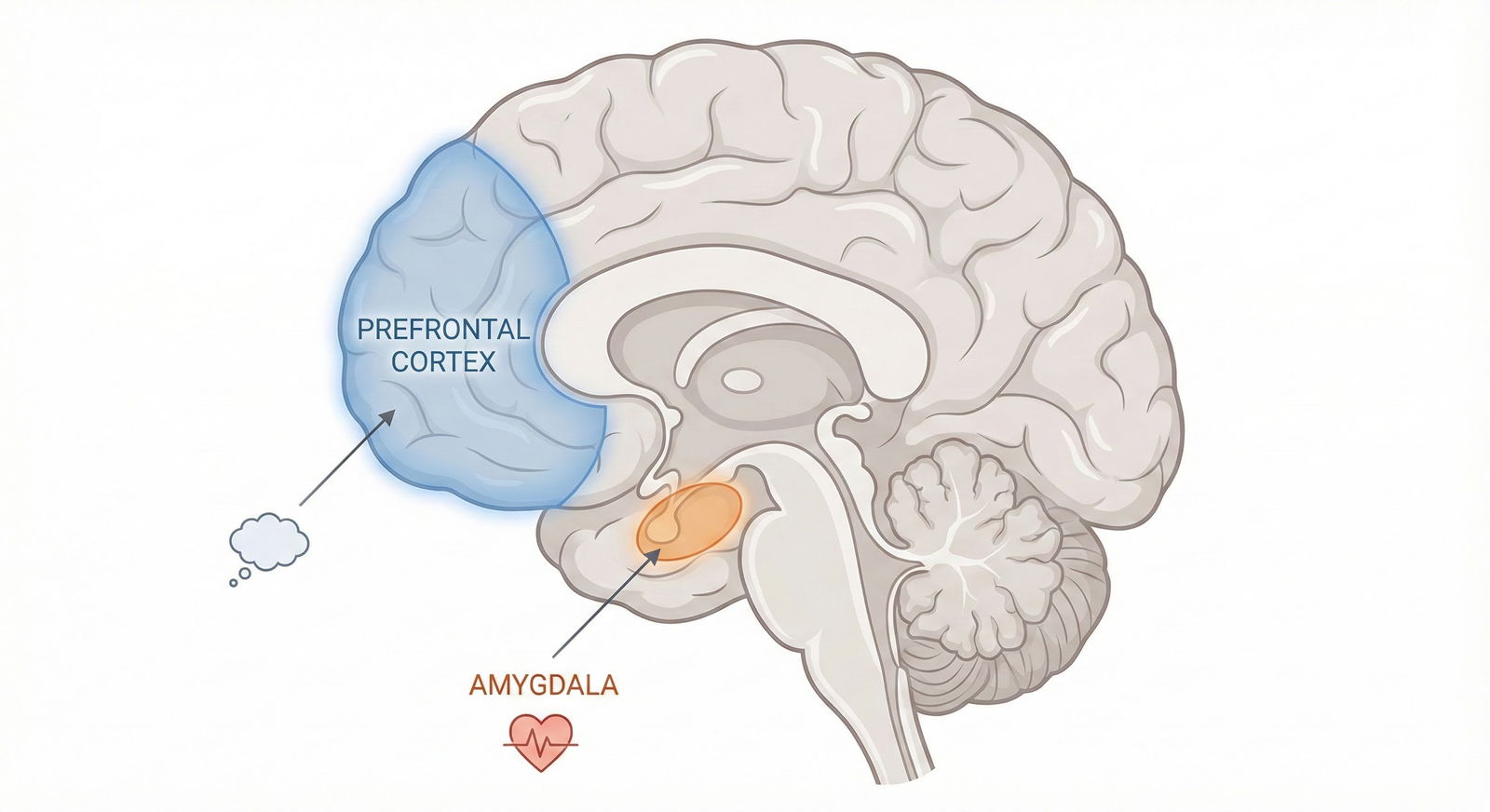
You are not meditating your way out of being nervous. You are keeping your physiology under the threshold where your prefrontal cortex shuts off.
T‑25 to T‑15 Minutes: Outside the Exam Site (7:35–7:45 a.m.)
This is the most dangerous psychological window. You see other students. Someone is loudly reciting the Krebs cycle or the side effects of some obscure chemo drug. You start to doubt your entire existence.
Here is the rule: Your test has effectively already started. Your job now is to protect your mental bandwidth.
At this point you should:
Avoid high-anxiety clusters
- Do not stand in the middle of the “Did you study X?” conversation circle.
- Politely nod, then step aside. It is not rude. It is self-preservation.
Micro-ground again (2–3 minutes)
- Stand or sit somewhere slightly apart.
- Run:
- 5 cyclic sighs
- Then identify:
- 3 colors you can see
- 2 sounds far away
- 1 thing that smells neutral (air, your sleeve, whatever)
Rehearse your first 10 minutes inside
- Mentally script:
- “I will check in calmly.
I will sit down.
I will read the first stem slowly, even if I feel pressure.
My only job for the first block is to get through it at a steady pace.”
- “I will check in calmly.
- Mentally script:
You are shifting your focus from outcome (“score”) to process (“what I do in the next hour”).
T‑15 to T‑5 Minutes: Check-In and Pre-Computer Ritual (7:45–7:55 a.m.)
You are going through security / sign-in. You probably feel a spike of adrenaline as they check your pockets.
Fine. Expected.
At this point you should:
Expect jitters as a neutral fact
- Label it: “My heart is fast, my palms are sweaty. This is the normal human body preparing for a challenge. It does not predict my score.”
Do a last 60-second breath reset before sitting
- Once you are assigned a seat, but before you actually start:
- Hands on thighs
- Inhale 4 counts
- Exhale 8 counts
- Repeat 5–8 times
- Once you are assigned a seat, but before you actually start:
Set two behavioral rules for the exam
- Rule 1: “I will not change an answer unless I see a specific reason I was wrong.”
- Rule 2: “If I get stuck >60 seconds, I will pick best option, flag, and move on.”
Think these explicitly, not vaguely. They save you during mini-panic in block 2 or 3.
T‑0: First 5 Minutes of the Exam
Most students rush these. Biggest mistake.
At this point you should:
Spend 30–60 seconds scanning the interface
- Glance at:
- Timer location
- Navigation buttons
- Highlight/strikeout tools
- You know most of this from practice exams but doing it again grounds you in “I have seen this before.”
- Glance at:
Start deliberately slow on Question 1–3
- You are not setting your overall pace yet. You are teaching your brain that it is safe to think.
- Read Q1 stem once.
- If you feel racing thoughts, do one extra slow exhale before answering. That is it. No full breathing protocol during the question.
Ignore difficulty judgments early
- If Q1 feels impossible, mentally say: “Not representative. Keep going.”
- Anchor your brain on:
“My score comes from hundreds of questions, not the first three.”
Once you are 5–10 questions deep, your cognitive machinery usually takes over, and anxiety drops to a tolerable level. Your job is just to keep going.
Break Strategy: Between Blocks
Test anxiety is not just a pre-exam phenomenon. It spikes between blocks when you start ruminating about what you just did.
At this point (every scheduled break) you should have a repeated, mechanical routine:
Leave the station and move
- Walk to bathroom or hallway at a normal pace.
- No phone. Do not open your messages, do not open question chats.
Reset body: 3-minute protocol
- 10–15 slow shoulder rolls
- 5 cyclic sighs
- 5–10 calf raises to get blood flowing
Reset mind: one-sentence script
- Choose one line and repeat it 5–10 times quietly:
- “Next block only.”
- “Steady pace, one question at a time.”
- “I do not need perfect. I need solid.”
- Choose one line and repeat it 5–10 times quietly:
Fuel and fluids
- Small sips of water, not chugging.
- Tiny snack pieces (half a bar, a few nuts, small fruit bite).
- Avoid large doses of sugar or extra caffeine mid-exam unless you already know from practice that you tolerate it well.
Then back to your seat with 1–2 minutes to spare. Not sprinting in on the last second, heart pounding.
Putting It All Together: A Sample Morning-of Timeline
To make this concrete, here is a compact, realistic schedule for an 8:00 a.m. exam.
| Time | Action |
|---|---|
| 6:00 | Wake up, brief body scan, cyclic sighs, no phone |
| 6:10 | Bathroom, light stretching / movement |
| 6:20 | Quick shower, dress in layers |
| 6:40 | Breakfast + normal coffee/tea |
| 7:00 | Logistics check, pack bag |
| 7:05 | 10-minute micro-review (hard stop at 7:15) |
| 7:15 | Leave for exam site |
| 7:30 | Arrive, brief grounding, avoid anxious groups |
| 7:45 | Check-in, last 60-second breath reset |
| 8:00 | Start exam with deliberate first 5 minutes |
Visually, think of your morning as a gantt-style sequence: no gaps big enough for spiraling.
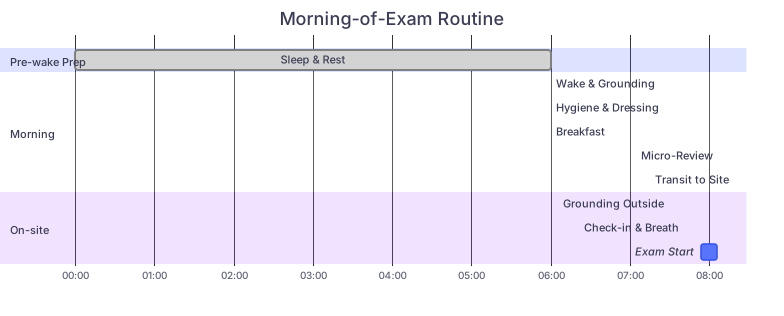
| Task | Details |
|---|---|
| dateFormat HH | mm |
| axisFormat %H | %M |
| Pre-wake Prep: Sleep & Rest | done, 00:00, 06:00 |
| Morning: Wake & Grounding | a1, 06:00, 0:15 |
| Morning: Hygiene & Dressing | a2, after a1, 0:20 |
| Morning: Breakfast | a3, after a2, 0:20 |
| Morning: Micro-Review | a4, 07:05, 0:10 |
| Morning: Transit to Site | a5, 07:15, 0:15 |
| On-site: Grounding Outside | a6, 07:30, 0:10 |
| On-site: Check-in & Breath | a7, 07:40, 0:15 |
| On-site: Exam Start | milestone, a8, 08:00, 0:00 |
Customizing for Different Exam Times
Not every exam starts at 8:00 a.m. The logic stays the same though:
- Wake up 2–2.5 hours before your start time.
- Budget:
- 15 minutes: wake + grounding
- 20–30 minutes: hygiene + dressing
- 15–20 minutes: breakfast
- 10 minutes: micro-review or quiet time
- Transit + on-site buffer: 30–45 minutes
You simply slide the whole block earlier or later.
For afternoon exams (e.g., OSCE after lunch):
- Shift your heavy meal to 2–3 hours before, not 30 minutes before.
- Do a shorter 5–10 minute grounding at T‑2 hours and again at T‑15 minutes.
- Avoid long naps within 3 hours of the start time; they can leave you groggy and more anxious.
The One Thing to Practice Before Exam Day
Just like you do practice NBME exams, you should practice your morning routine at least twice on regular study days.
Do a “mock morning”:
- Set an alarm.
- Run the breathing protocols.
- Eat the same breakfast.
- Leave at the same time you would for the real exam, even if you are just walking around the block.
Your body learns that this sequence leads to “serious test mode” but not “meltdown mode.” On the actual morning, it will feel familiar instead of like a brand-new performance.
Your Next Step Today
Do not wait for the night before an exam.
Right now, take 10 minutes and write your own morning-of script for your next big test:
- Exact wake time
- What you will eat
- Which 1-page sheet (max) you are allowed to look at
- Which breathing exercise you will use
- What time you will walk out the door
Put that script on paper and tape it near your desk. The next exam morning, you will not be “winging it.” You will just be following instructions you already trust.