
The worst advice about test anxiety is “everyone’s nervous, just push through it.” That line keeps a lot of medical students sick, stuck, and silently suffering.
You’re not asking, “Do I get nervous before exams?” You’re asking, “Has this crossed the line into something I should actually get help for?” Good. That’s the right question.
Here’s the answer you’re looking for.
The Core Test: Is Anxiety Running You, Or Are You Still In Charge?
You do not need zero anxiety. That’s fantasy. You need workable anxiety—uncomfortable but manageable, and not wrecking your life or performance.
I use four quick filters with med students:
- Function – Can you study, sleep, eat, and sit for the exam?
- Proportionality – Is your level of fear even remotely proportional to the actual stakes?
- Control – Can you bring your anxiety down with basic strategies?
- Duration & Pattern – Is this a one-off spike, or a recurring pattern that’s getting worse?
If your honest answer to any of these is “no, not really” or “it’s getting worse,” you are past “normal nerves” and into “this deserves professional help.”
Let’s break that down with real-life med school scenarios.
Red Flags That Your Test Anxiety Needs Professional Treatment
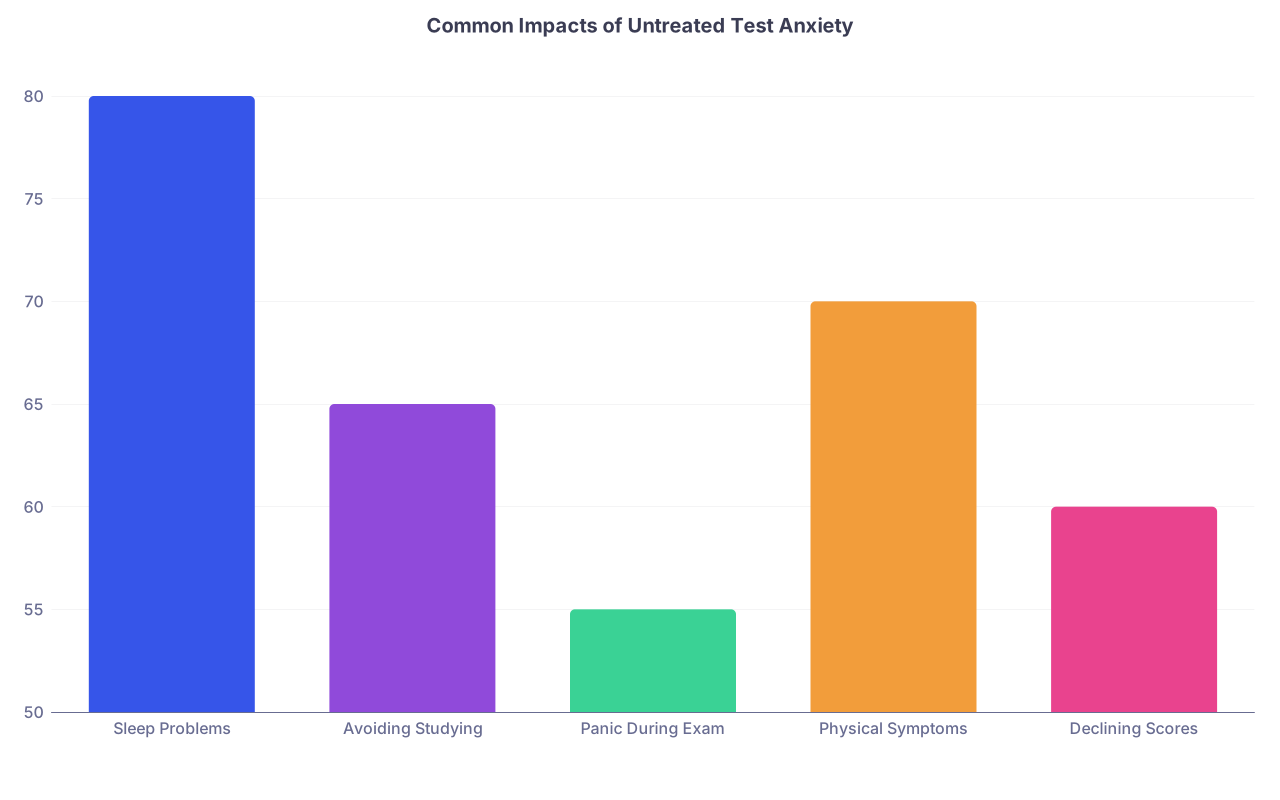
| Category | Value |
|---|---|
| Sleep Problems | 80 |
| Avoiding Studying | 65 |
| Panic During Exam | 55 |
| Physical Symptoms | 70 |
| Declining Scores | 60 |
1. Your body is screaming at you
Some physical symptoms are common: a bit of nausea, sweaty palms, heart rate up. Fine. Annoying, but functional.
You should start thinking “I need help” when you’re seeing things like:
- Full-on panic attacks: you feel like you might pass out, can’t catch your breath, chest pain, tingling, tunnel vision, or “I’m going to die or lose control.”
- Severe GI issues: vomiting, diarrhea, or intense abdominal pain routinely before exams.
- Sleep wrecked for days: you’re getting 2–4 hours a night for multiple nights before big tests and then crashing afterward.
- Needing substances: taking extra benzos, misusing stimulants, or heavy alcohol use “to calm down” before or after exams.
If your pre-exam experience looks more like a medical emergency than a mild adrenaline rush, that’s not “normal test stress.” That’s your body telling you loudly: get help.
2. Your grades do not match your knowledge
This one is huge in med school.
You might need professional treatment if any of this sounds like you:
- You know the content cold in UWorld, Anki, or practice questions, but on the real exam your mind goes blank.
- You consistently underperform on NBME/Step-style or shelf exams relative to your practice work, by a big margin.
- You leave the exam and then immediately recall the answers—your brain basically “wakes up” as soon as the test ends.
- Your clerkship evals and clinical performance are strong, but standardized tests keep tanking your overall grades.
At that point, anxiety isn’t just discomfort; it’s actively sabotaging your career trajectory. You don’t white-knuckle your way out of that. You treat it.
3. Your entire life rotates around the next exam
Some level of focus is expected. You’re in med school, not summer camp.
But watch for this pattern:
- You can’t relax at all—even when no exam is within 2–3 weeks.
- You cancel normal human things (meals with friends, exercise, family calls) for weeks because “I might fall behind” even when you’re already over-preparing.
- You wake up thinking about scores, spend the day catastrophizing about scores, fall asleep scrolling Reddit/SDN about scores.
- You check and re-check your calendar, test date, score release date obsessively.
If your entire identity and emotional state are chained to NBME curves, Step percentiles, or class ranks, you’re not just “motivated.” You’re trapped. That’s a sign to get objective help.
4. You’re doing everything “right” and it’s still not enough
This is where a lot of very conscientious students get stuck. They assume they just need more discipline.
Here’s the truth: if you have already tried and genuinely implemented things like:
- Structured study schedule with realistic hours
- Good sleep hygiene most nights
- Active learning methods (questions, teaching, spaced repetition)
- Basic anxiety tools (breathing exercises, planned breaks, exercise)
…and you’re still:
- Panicking during exams,
- Avoiding starting study blocks due to dread,
- Crying multiple times a week over tests,
- Or your anxiety spikes at the mere thought of the testing center,
then this is no longer a “study skills” issue. It’s a treatment issue.
You do not fix a severe anxiety pattern with more Anki cards.
5. You’re starting to avoid or sabotage exams
This is a clear clinical red flag.
You should seriously consider professional treatment if you’ve noticed:
- Repeatedly rescheduling exams (Step, shelf, OSCEs) not because you aren’t prepared, but because you’re terrified.
- Showing up late, missing practice tests, or “forgetting” important deadlines.
- Faking or exaggerating illness to avoid going to an exam.
- Strong urges to just “quit” med school right before big tests, even though you want this career.
Avoidance is anxiety’s favorite coping mechanism. It gives you short-term relief and long-term wreckage. Once avoidance becomes a habit, it’s extremely hard to reverse without therapy.
6. The anxiety is spreading beyond exams
Test anxiety rarely stays in its lane if it’s severe.
You’re moving into “needs treatment” territory if:
- You start dreading rounds, presentations, or pimping the same way you dread tests.
- You feel on edge all the time, not just during exam weeks.
- You’re anxious before simple quizzes, brief questions, or feedback sessions with attendings.
- Your mood is dropping—hopelessness, crying spells, irritability, loss of joy in anything outside medicine.
This is where we’re not just talking about “test anxiety” anymore; we’re talking about generalized anxiety or even depression layered on top. That’s therapist and/or psychiatrist territory.
A Simple Self-Check Framework (Use This Honestly)

| Step | Description |
|---|---|
| Step 1 | Worried about test anxiety? |
| Step 2 | Use basic self-help strategies |
| Step 3 | Try structured self-help for 2-4 weeks |
| Step 4 | Seek professional help now |
| Step 5 | Continue self-help, monitor |
| Step 6 | Can you study and take exams without major issues? |
| Step 7 | Symptoms severe or recurring? |
| Step 8 | Improving? |
Ask yourself these blunt questions:
How often do you feel intense anxiety about tests (7–10/10)?
- Rarely: probably fine.
- Before every major exam, for days: get assessed.
Do you ever seriously think: “If I fail this exam, my life is over / no point continuing”?
- If yes, that’s distorted thinking. Therapy is strongly indicated.
Have you had panic-attack-level symptoms related to exams?
- If yes, at least get a one-time evaluation.
Are your scores or clinical performance being significantly damaged by anxiety?
- If knowledge ≠ performance, you need support.
Has this been going on for more than one exam cycle (e.g., preclinical courses + Step, or multiple clerkships)?
- Chronic pattern = stop DIY-ing it. Get help.
If you’re hitting “yes” on more than two of these, stop self-blaming and start thinking: therapist, school counselor, or psychiatrist.
Who To See And What Treatment Actually Looks Like

Where to start as a med student
You have more options than you think:
- Your med school’s counseling/mental health service
- Student health center (often has therapists or can refer out)
- A psychologist or therapist with experience in performance/test anxiety
- A psychiatrist, especially if you suspect broader anxiety or depression
If you worry about confidentiality (everyone does), ask clearly:
- “Are my attendings/faculty notified?” (usually no)
- “Will this be in my dean’s letter/MSPE?” (usually no, unless you take leaves/major accommodations)
- “What shows up in my chart?” (you’re allowed to ask)
What therapy for test anxiety actually does
You’re not going to lie on a couch and talk about your childhood for 12 months. The most effective approach is usually CBT (Cognitive Behavioral Therapy) or a CBT-style mix.
Common elements:
- Identifying distorted thoughts: “If I don’t honor every shelf, I won’t match anywhere” → challenged with actual data and alternative thoughts.
- Exposure work: Gradual, intentional practice being in “test mode” without avoiding the anxiety—timed blocks, simulated exams, sometimes even walking through the testing center as homework.
- Skills training: Breathing, grounding, “if-then” plans for when your mind blanks or your heart starts racing.
- Study strategy integration: Aligning your study style with your anxiety profile—e.g., building more mock exams earlier so test day doesn’t feel alien.
For many students, 6–12 focused sessions make a real, visible dent in symptoms.
When medication makes sense
Medication is not a moral failure. It’s a tool.
Consider a psychiatry consult if:
- Your anxiety is severe and constant, not just before tests.
- You’re dealing with panic attacks or major insomnia.
- You suspect coexisting depression or ADHD.
- Therapy alone hasn’t moved the needle enough.
Typical options:
- SSRIs/SNRIs for baseline anxiety and mood. These are maintenance meds, not “as needed.”
- Hydroxyzine, propranolol, or others for situational relief (e.g., performance anxiety).
- Less commonly, short-acting benzodiazepines, but these are used cautiously with students because of dependence and cognitive effects.
You want a psychiatrist who understands licensing/Boards issues for physicians-in-training. Ask them directly about that.
What You Can Try On Your Own (While You Decide)
These are not a substitute for treatment if you’re in the red-flag zone. But they do help, and they also make therapy more effective if you go that route.
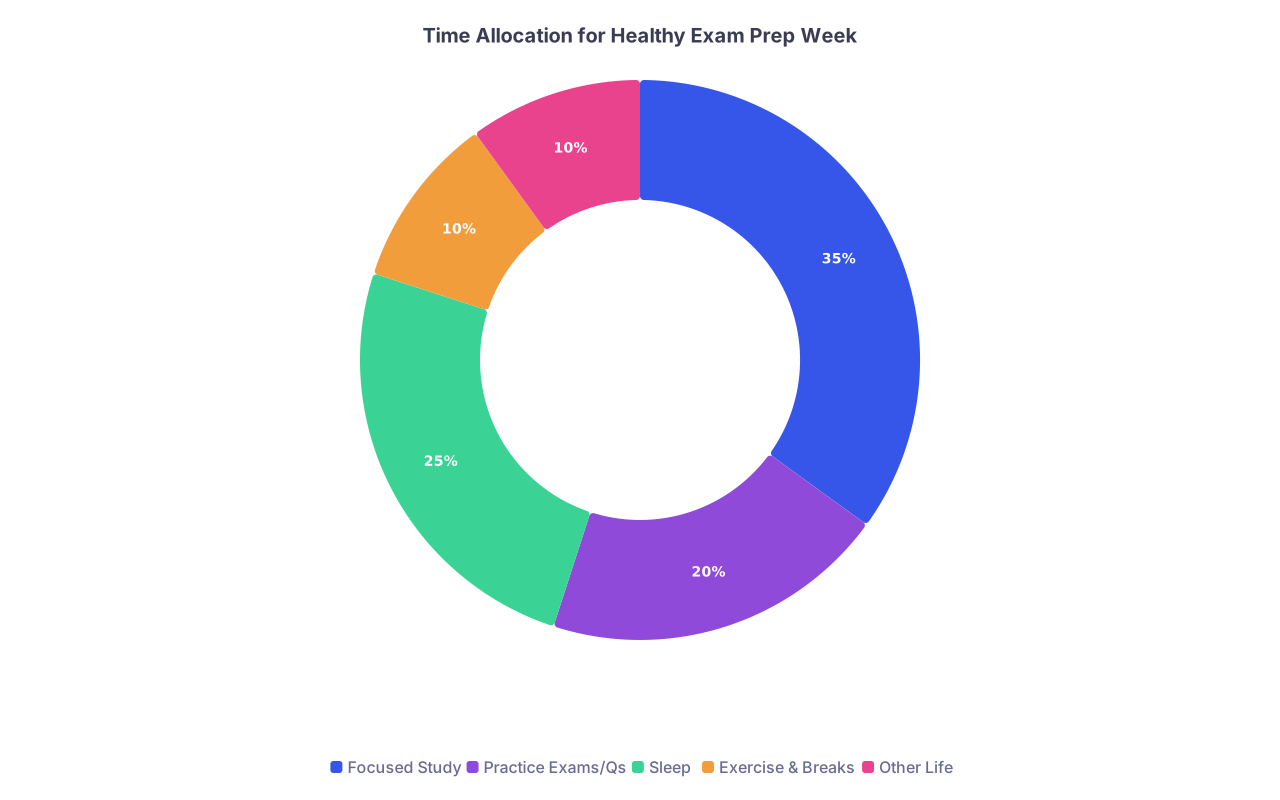
| Category | Value |
|---|---|
| Focused Study | 35 |
| Practice Exams/Qs | 20 |
| Sleep | 25 |
| Exercise & Breaks | 10 |
| Other Life | 10 |
Standardize your pre-exam routine
Same bedtime, same breakfast, same 10–15 minute calming routine (breathing, short walk, light review). Reduce novelty. Your nervous system likes predictability.Practice timed discomfort
Do blocks of questions under real timing, no pausing, no checking answers mid-block. Train your brain that anxiety + performance can coexist.Write out your worst-case thought—and argue with it
Example: “If I fail this shelf, I won’t match.”
Then literally write:
- Evidence for
- Evidence against
- More balanced statement (“This shelf matters, but I can recover from one weaker score with strong others + letters.”)
Move your body, non-negotiable
Even 15–20 minutes of brisk walking most days does more for anxiety than another passive re-read of First Aid.Stop doom-scrolling score reports and reddit threads
Set rules: only look at past scores when planning, not to torture yourself. Block toxic forums during exam periods if needed.
These are “good hygiene.” If good hygiene alone doesn’t fix the infection, that’s your cue for professional antibiotics—in this case, therapy and possibly meds.
How To Talk Yourself Into Getting Help (If You’re Stuck)
The most common blockers I hear:
“If I need therapy, I don’t belong here.”
Wrong. I’ve seen honors students, future surgeons, and chief residents in therapy for test anxiety. Quietly. Competence and anxiety are not mutually exclusive.“What if it shows up in my record?”
The bigger risk to your record is failing exams or taking an unplanned leave because you didn’t get help.“I should be able to handle this alone.”
That’s like saying you should treat your own pneumonia because you’ve read UpToDate.
Make a low-commitment move:
One appointment. With campus counseling or a recommended therapist. You’re not marrying them. You’re gathering data about whether this is fixable with some structured help (spoiler: it usually is).
Quick Comparison: Normal vs Problematic Test Anxiety
| Feature | Normal Nerves | Needs Professional Help |
|---|---|---|
| Timing | Day before / morning of exam | Weeks of intense anxiety before every exam |
| Function | Still studying, sleeping mostly ok | Can’t study, sleep, or even start the exam |
| Performance | Scores match prep level | Scores much lower than practice consistently |
| Physical Symptoms | Mild, brief | Panic attacks, severe GI/sleep problems |
| Pattern | Occasional spikes | Chronic, worsening, spreading to other areas |

FAQ: Test Anxiety & Professional Treatment (6 Questions)
Is it normal to feel like throwing up before a big exam like Step 1?
A bit of nausea or GI discomfort before Step 1, Step 2, or a high-stakes shelf is common. What’s not normal is vomiting repeatedly, being unable to eat or drink, or having panic-level symptoms that start days ahead and disrupt sleep and studying. If your physical symptoms are severe enough that you’re considering urgent care, or they happen every major exam, it’s time to talk to a professional.Won’t getting a diagnosis of anxiety hurt my residency chances?
Generally, no. Residency programs don’t see your full medical chart. What they see are: your scores, transcripts, MSPE, letters, and interview impressions. Untreated anxiety that tanks your scores or forces repeated leaves is far more damaging than a private diagnosis treated effectively. If you’re worried, ask your psychiatrist or therapist how documentation is handled and how to plan for disclosures (if any) down the line.How do I know if I should try self-help first or see someone right away?
If your anxiety is mild, recent, and not wrecking your performance or daily life, you can try structured self-help for 2–4 weeks: solid sleep, regular exercise, timed practice exams, and basic breathing/grounding techniques. If your symptoms are moderate to severe, long-standing (months to years), involve panic attacks, major avoidance, or clear performance drops, skip the trial-and-error phase and book a professional assessment now.Can I ask my school for testing accommodations for anxiety?
Possibly, but it’s not automatic. You usually need a documented diagnosis from a qualified professional and evidence that your anxiety significantly impairs your test-taking. Typical accommodations might include extra time, a reduced-distraction environment, or breaks. Start early—these processes can take weeks or months, especially for boards. Even if you’re unsure, a professional can tell you whether you’re likely to qualify.If I start meds for anxiety, will I have to stay on them forever?
Not necessarily. Many students use medication as a bridge during high-stress periods (e.g., board prep, early clinical years), combined with therapy and coping skills. Some stay on longer if their baseline anxiety is high. Others taper off after symptoms are under control for a good stretch. The key is: any taper or change is planned with your prescriber, not done abruptly before a major exam.What’s the first concrete step I should take if I think my test anxiety needs treatment?
Two options:
a) Email or call your school’s counseling/mental health service and say, “I’m a med student struggling with severe test anxiety that’s affecting my performance. I’d like an appointment for assessment.”
b) If you prefer external care, search for a psychologist or psychiatrist with “performance anxiety,” “test anxiety,” or “health professionals” in their profile, and book a consult. You don’t need the perfect provider on day one. You just need to start.
The bottom line
Two things to remember:
- If your test anxiety is hurting your ability to study, sit for exams, or live like a human being, it deserves treatment, not “toughness.”
- Getting professional help early is not a weakness; it’s the same clinical judgment you’ll be expected to use for your own patients.
You’re not trying to become someone who never feels anxious. You’re trying to become someone whose anxiety doesn’t get to run the show.