
Should I Tell My Attending or Clerkship Director About Exam Stress?
What do you do when your shelf is in 3 days, your brain is fried, and you’re wondering: “Do I tell my attending or clerkship director I’m barely holding it together—or just keep faking it?”
Let me be direct: hiding significant exam stress is how small problems turn into failed exams, professionalism flags, and “concerning” comments on your MSPE. But oversharing to the wrong person, at the wrong time, in the wrong way? That can backfire too.
You’re not choosing between “say nothing” and “trauma dump.” You’re choosing how strategically you want to protect your performance, your reputation, and your health.
Here’s the framework I’d use if you were my student.
Step 1: Be Honest About How Bad It Is
Before we even talk about telling anyone, figure out which bucket you’re in. Don’t sugarcoat it.
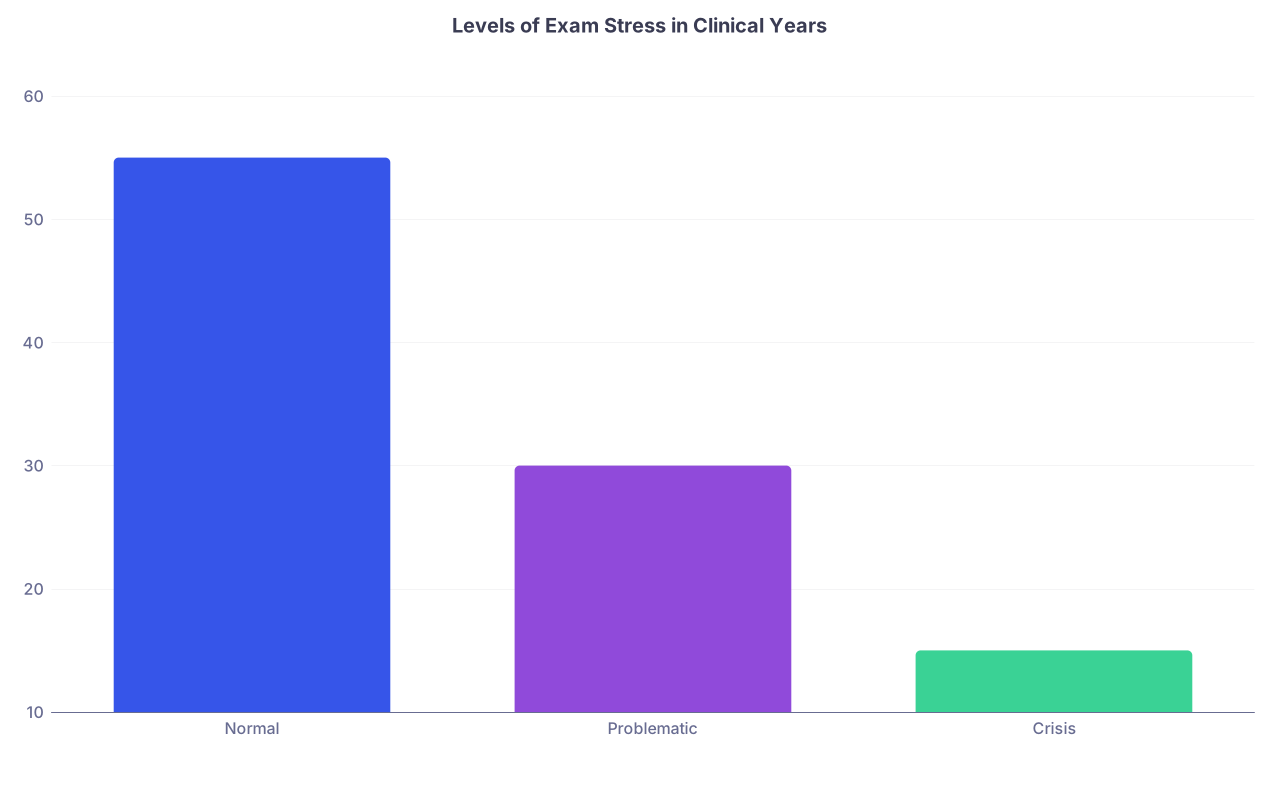
| Category | Value |
|---|---|
| Normal | 55 |
| Problematic | 30 |
| Crisis | 15 |
Rough categories:
Normal exam anxiety
- You care a lot, you’re nervous, sleep is a bit worse the week before
- Still functioning on the wards, still learning, still safe with patients
- You can study, you just feel stressed and pressured
Problem-level exam stress
- Constant intrusive worry about the exam while you’re with patients
- Performance dropping: forgetting basics, making simple mistakes, zoning out in rounds
- Somatic symptoms: can’t sleep for days, nausea, heart racing, crying frequently
- You’re studying many hours but retaining almost nothing
Crisis-level exam stress
- Panic attacks, can’t get through a shift, feel like you might walk out of the hospital
- Thoughts like “failing this exam will prove I’m not meant to be a doctor” on repeat
- Thoughts of self-harm, “everyone would be better off if I disappeared,” or similar
- You’re unsafe to yourself or your work is unsafe to patients
Here’s the rule:
- Normal anxiety → usually manage without looping your attending in
- Problem-level → you probably should tell someone in a position of authority
- Crisis-level → you must tell someone, immediately, and not just for your exam
If you’re reading this because you’re on the fence, you’re probably in the “problem-level” bucket. That’s the danger zone where silence hurts you.
Step 2: Who To Tell (And Who Not To)
This is where students screw it up. You don’t just shout “I’m anxious!” at the nearest attending mid-round and hope for the best.
Think in terms of tiers.

Safest and best first choices
Clerkship director
Pros:- Actually has authority over exam timing, accommodations, grading policies
- Used to hearing about student stress; it’s literally part of their job
- Can coordinate with other faculty quietly
Cons: - They sign off on your evaluation, so how you phrase things matters
Assistant clerkship director / site director
Similar to above, especially at large hospitals where the main director is remote.Dean of students / student affairs
Pros:- Can help coordinate across multiple clerkships
- Good if this is part of a bigger pattern (multiple exams, ongoing anxiety)
Cons: - Less power over day-to-day of a specific rotation, but great for the big picture
Mental health provider
Not optional if you’re at “problem” or “crisis” level and this isn’t a one-off. You want this documented by someone clinical who’s on your side and can write a note if needed.
When (and how) to involve your attending
Your day-to-day attending is hit-or-miss. Some are phenomenal and supportive. Some will quietly judge you. Some are just too busy.
Use this filter:
- If your stress is starting to affect:
- punctuality
- focus with patients
- your ability to present coherently
then your attending at least needs a light heads-up.
But often, you talk to the clerkship director first, then decide together whether and how to loop in the attending.
Who not to rely on as your primary “tell”
- Random resident you barely know, in a hallway, 5 minutes before rounds
- Classmates as your only support (good for emotional support, terrible as your only strategy)
- Program director of a specialty you might apply into (way too early for that)
You can vent to peers. You need to strategize with someone who can change things.
Step 3: What To Say (Script It)
Don’t show up and improvise. You’ll either undersell it (“I’m a little stressed”) or overshare and look unstable.
Here’s a clean template to adapt, aimed at a clerkship director:
“I wanted to talk with you about something that’s affecting my performance.
I’ve been experiencing significant exam-related anxiety for this shelf, to the point that it’s starting to interfere with sleep and with how focused I am during the day.
I’m working with [counseling / my PCP / campus mental health], but I wanted to be transparent because I don’t want this to compromise patient care or my learning.
I’m not asking for special treatment, but I’d appreciate your guidance on options—whether that’s scheduling, support resources, or anything else you’ve seen help students in this situation.”
For an attending, you dial it down and keep it more functional:
“I wanted to briefly share something that might explain if I seem a bit off. I’ve been dealing with some pretty strong exam-related anxiety around the upcoming shelf, and I’m working on it with [student health / counseling]. I’m committed to the rotation and to taking good care of patients, but if you notice me seeming a bit quieter or less sharp, that’s why. I’m open to any feedback if there are ways I can keep my performance up while I work through it.”
Notice what you’re doing here:
- You’re framing this as a performance and patient-care concern
- You’re showing you’re already taking action
- You’re asking for guidance, not demanding a specific accommodation
This is professional. It doesn’t read as “I can’t handle stress.” It reads as “I recognize when something’s affecting my work and I address it.”
Step 4: What Can Actually Change If You Speak Up?
Students often think, “Why bother? They can’t change the exam.” That’s wrong. They can’t always move the exam date, but a lot is adjustable.
| Option | Who Can Approve It |
|---|---|
| Formal testing accommodations | Disability office + Dean |
| Short exam delay/deferral | Clerkship director |
| Shift adjustments pre-exam | Clerkship / site director |
| Reduced non-essential tasks | Attending or senior resident |
| Referral to mental health | Clerkship director / Dean |
Common realistic outcomes:
- You get a small deferral (e.g., moving the shelf a week later) if there’s clear mental health documentation
- Your schedule before the exam is tweaked: fewer late-call days, no add-on clinic the afternoon before the shelf
- People stop interpreting every quiet moment as “disinterest” because they know you’re under strain
- If things go badly (you fail the exam), there’s context already in place, and remediation is handled with less suspicion and more support
Will you get everything you want? No. But you’ll get more than if you keep pretending everything is fine while melting down inside.
Step 5: When You Should Definitely Tell Someone
Let’s be blunt. There are situations where silence is irresponsible.
You should absolutely tell your clerkship director (and often also your attending, at least briefly) if:
- You’ve had a panic attack at the hospital, or nearly walked out of a shift
- You’re sleeping so poorly you’re making cognitive mistakes at the bedside
- You’re using alcohol, benzos, or someone else’s meds to “get through” the exam
- You’ve failed a shelf already and this pattern is repeating
- You’re having thoughts of self-harm, death, or “everyone would be better off if I weren’t here”
In those cases, exam stress isn’t just “your private issue.” It’s a safety and professionalism issue. Getting ahead of it and showing insight usually protects you far more than it harms you.
Step 6: How To Avoid Common Mistakes
I’ve watched students tank their own credibility trying to be honest. The goal is to be transparent and strategic, not chaotic.
Mistakes to avoid:
Dumping your entire life story
They don’t need the last 10 years of your mental health history. Stick to what’s affecting your current performance and exam.Making it sound like an excuse
Don’t say, “I’m really stressed, so that’s why I’ve been late and unprepared.”
Say, “I’ve noticed this stress is starting to impact my preparation and punctuality, and I’m working on fixing that.”Waiting until after you fail
Telling them after the bad grade looks like damage control. Telling them before looks like insight and professionalism.Being vague and minimizing
If it’s bad enough that you’re making this appointment, don’t frame it as “a little bit of stress.” That just confuses them.Not following up in writing
After a meeting, send a short email:- Thank them for their time
- Summarize next steps
- Confirm any agreed-upon changes
That way, if anything becomes an issue later, there’s a written record that you flagged the problem and sought help early.
Step 7: Parallel Track – Actually Treat The Anxiety
Telling your attending doesn’t magically fix your nervous system. It just buys you time and support. You still have to work the problem.

| Step | Description |
|---|---|
| Step 1 | Notice serious stress |
| Step 2 | Tell clerkship director |
| Step 3 | Adjust schedule/exam plan |
| Step 4 | See mental health provider |
| Step 5 | Start treatment/skills |
| Step 6 | Focused shelf prep plan |
| Step 7 | Reassess before next rotation |
Bare minimum moves you should make in parallel:
- Book with campus counseling or an outside therapist specializing in high-achieving / healthcare folks
- Tighten your study plan: short daily blocks, UWorld or AMBOSS, not endless passive reading
- Put your phone and email on do-not-disturb for focused sprints
- Non-negotiable: real sleep the 3 nights before the shelf
- One “reset” habit per day: walk outside, brief workout, or guided breathing (there’s plenty of free 5–10 min recordings)
You don’t get points in medicine for suffering in silence. You get points for functioning.
How To Decide, In One Minute
If you’re still unsure, use this:
- Is your stress causing you to:
- Sleep <4–5 hours most nights?
- Make mistakes with basic clinical tasks?
- Avoid eye contact or interaction on rounds because you’re so keyed up?
- Cry multiple times a week over this exam?
If yes to two or more? Tell your clerkship director.
If it’s more mild—nerves, extra worry, but you’re still solid on the wards—consider:
- Talking to a mental health provider
- Using peers and family for emotional support
- Only looping in leadership if it escalates or your performance dips
Quick Summary
You don’t tell your attending or clerkship director about every bit of exam stress. You tell them when:
- The stress is clearly affecting your performance or safety.
- You want specific changes (schedule, support, exam timing) that only they can authorize.
- You’re committed to addressing it and can communicate that professionally and briefly.
Handled well, disclosing exam stress usually helps you more than it hurts you.
FAQ (Exactly 5 Questions)
1. Will telling my clerkship director about exam stress hurt my grade or MSPE?
If you present it as “I’m struggling and I want to protect patient care and fix this,” it usually helps, not hurts. Most schools prefer a student who flags a problem early over one who implodes silently. Could a bad director misuse that info? Rarely, yes. But in most academic centers, there are checks and balances, and early documentation often protects you if grades or performance become an issue later.
2. Should I ask for a shelf exam delay because of anxiety?
Ask only if: (a) your symptoms are at problem or crisis level, and (b) you’re actively getting treatment or evaluation (counseling, PCP, psychiatry). Don’t ask for a delay just because you feel underprepared from poor time management. Directors are more willing to move an exam when there’s clear functional impairment and a treatment plan, not just “I don’t feel ready.”
3. Is it better to talk to my attending in person or email them about this?
For attendings: a brief in-person comment (before or after rounds) is best, followed by a short thank-you email if they offered anything concrete. For clerkship directors: usually email to request a meeting, then talk in person or via Zoom. Avoid long confessional emails. Use email to schedule, and use the meeting to explain.
4. What if my attending or director dismisses my stress or tells me to just ‘toughen up’?
That happens. When it does, you go up one level. Talk to the clerkship director (if it was the attending), or to student affairs / a dean (if it was the clerkship director). You’re not obligated to accept bad advice. Document the interaction for yourself (dates, what was said) in case you need to reference it later, especially if you’re worried it’ll affect evaluations.
5. How do I bring this up if I’ve already had performance issues on the rotation?
You own it directly: “I know I’ve had some issues with [lateness / organization / presentations]. I’ve realized a big driver has been exam-related anxiety that I haven’t addressed properly. I’m working with [counseling/PCP] now and wanted to loop you in so I can improve from here.” People respond better when you show insight and a plan, not defensiveness.
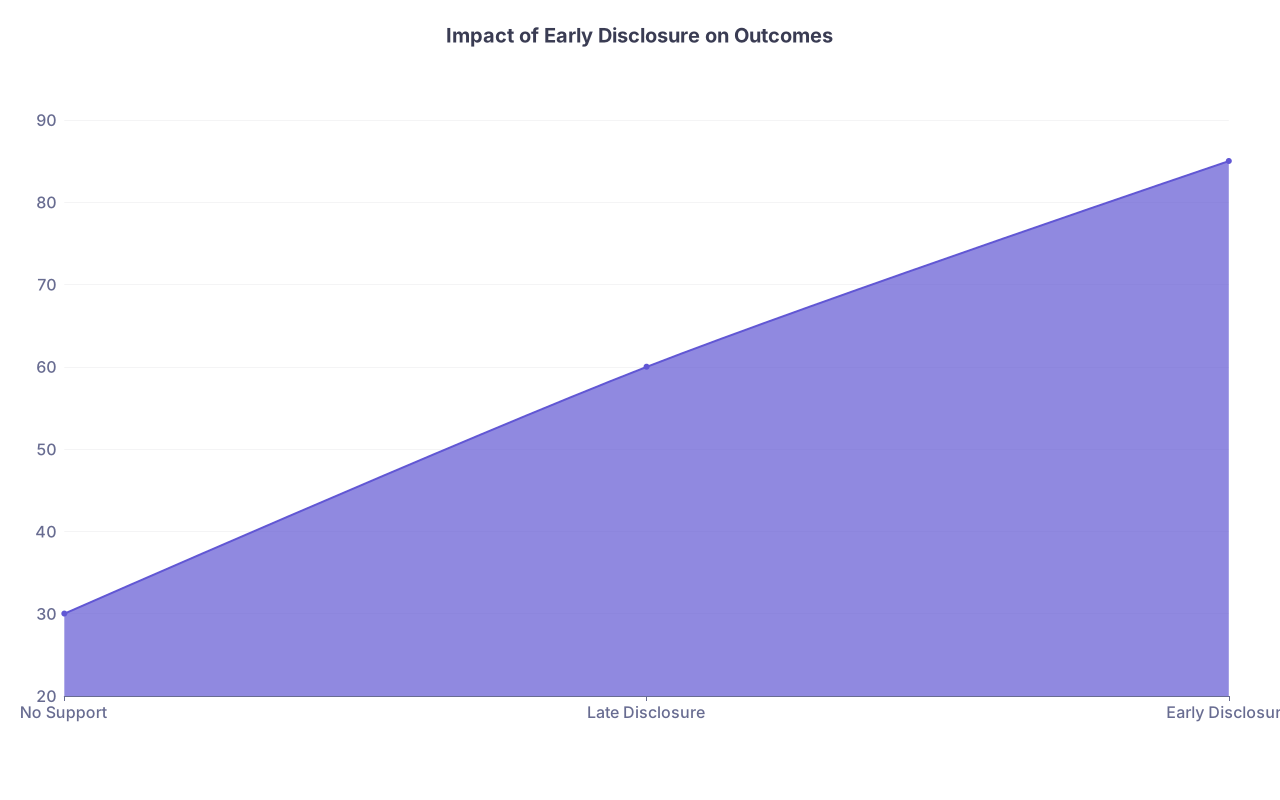
| Category | Value |
|---|---|
| No Support | 30 |
| Late Disclosure | 60 |
| Early Disclosure | 85 |