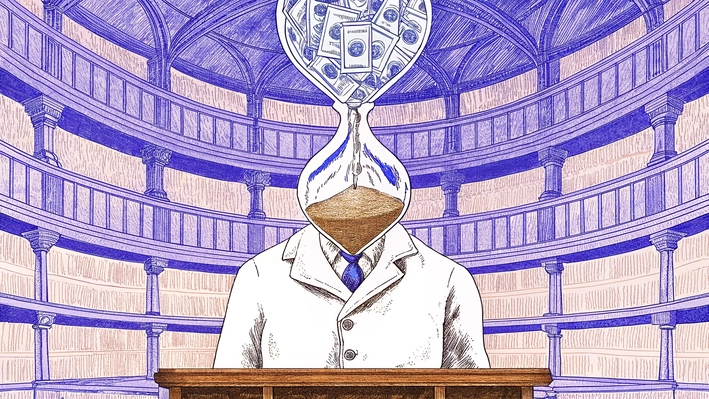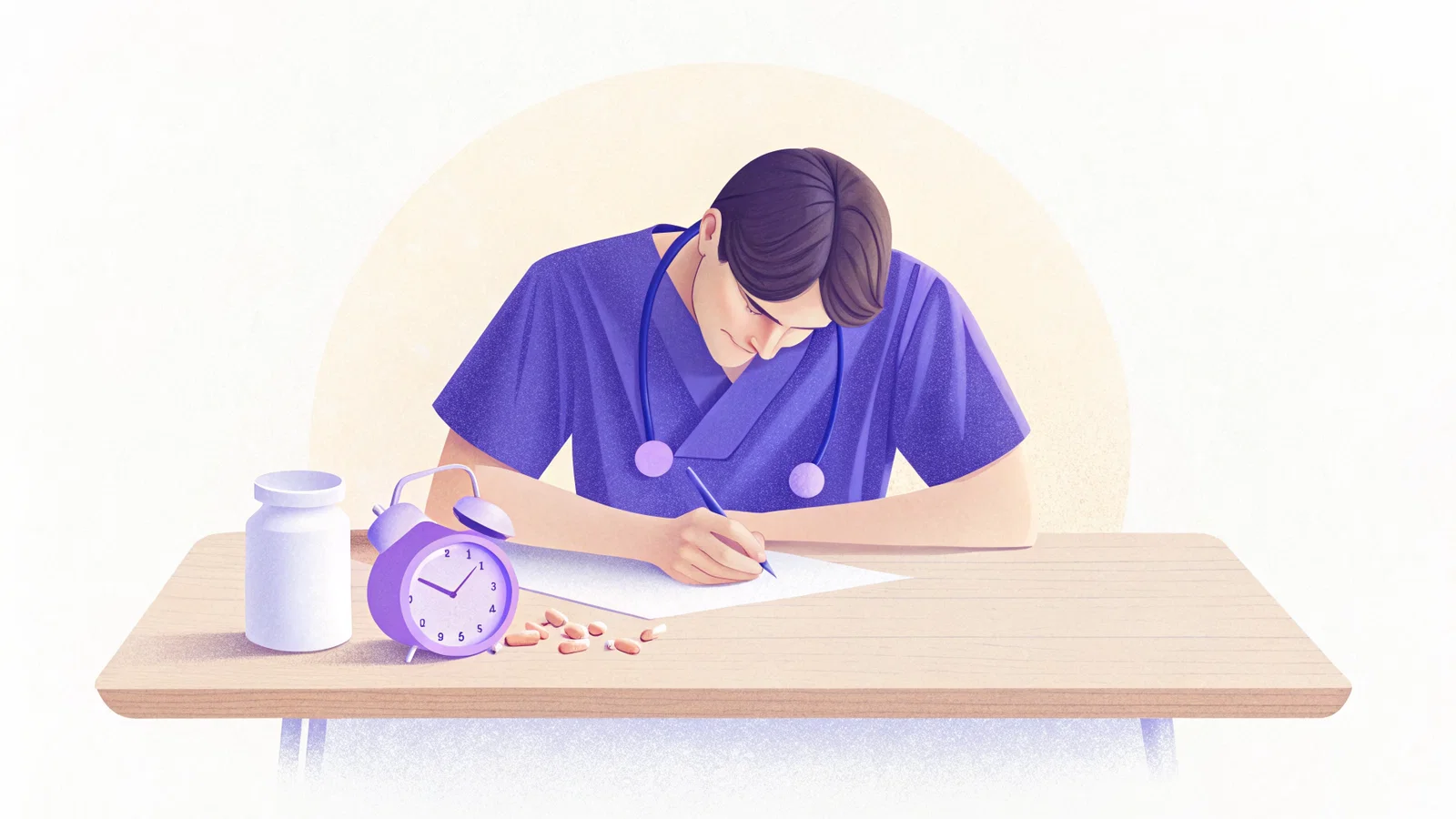
It's 8:17 AM. Block 1. You swallowed 20mg of your roommate's Adderall in the parking lot because you heard it would give you laser focus.
By question 6, your heart is hammering so loud you can hear it in your ears. By question 12, your hands are sweating through your shirt. By question 20, the stem about hyponatremia looks like it's written in another language and your mind is completely, utterly blank.
That's not focus. That's a panic attack you paid for. I've seen this exact disaster unfold more times than I can count.
This article is for educational purposes only. It is not financial advice, not legal advice, and not tax advice. Figures vary by individual circumstances, so consult a qualified professional before acting.
The Dangerous Illusion: Why You're Sabotaging Your Future With Adderall
Let's be blunt. The off-label trap.
You think you're borrowing an edge. Everyone's doing it, right? The kid in your Anki group brags about pulling 12-hour UWorld days on Adderall. So you assume it will make you sharper, faster, better on test day.
Wrong. That's the core mistake that tanks scores.
Confusing stimulation with focus is deadly for Step exams. Stimulants don't give you focus. They give you arousal. And your brain is incredibly bad at telling the difference between drug-induced arousal and life-threatening anxiety.
Here's the physiology of panic you're triggering: amphetamines flood your system with norepinephrine and dopamine. Heart rate up. Blood pressure up. Fine motor tremor. Dry mouth. That is literally the textbook definition of fight-or-flight. You sit down in a silent, high-stakes room where you need calm, sustained recall, and you've chemically told your amygdala that a tiger is chasing you.
Your brain then does what it's supposed to do. It misinterprets the signal. I'm sweating, shaking, my heart is racing, I must be having terrible anxiety, I must be failing. Once that loop starts, your prefrontal cortex, the part you need for complex reasoning, goes offline. You can't think your way out of a chemical anxiety response.
You wanted to remember the difference between SIADH and cerebral salt wasting. Instead you're noticing how loud your own pulse is.
The Mechanism of Failure: How Stimulants Hijack the Test-Taking Brain
This isn't just "feeling jittery." This is a predictable neurochemical failure cascade.
1. Cortisol Spike vs. Adrenaline You Need: On a normal, well-rested test day you have a healthy bump in cortisol and adrenaline. It keeps you alert. Adderall slams that system. It creates a massive catecholamine surge that mimics sheer terror. Calm clarity requires controlled arousal. You just gave yourself an overdose of alarm.
2. The Feedback Loop From Hell: Here's the pattern I see every dedicated period: You feel anxious about your practice scores -> You take Adderall + two energy drinks to study longer -> You sleep poorly and feel wired -> You feel MORE anxious the next day -> You take more to compensate.
On test day, this loop closes. The physical symptoms get worse, you interpret them as failure, your performance drops further, which makes you panic more. It's a death spiral in a 7-hour exam.
3. Neurochemical Interference With Working Memory: This is the part students don't understand. Low-to-moderate dopamine helps working memory. Too much dopamine and norepinephrine impairs it. That inverted-U curve is real. Pushing yourself past the peak doesn't make you smarter, it makes you cognitively brittle.
You will absolutely blow those two-step reasoning questions. The ones where you need to hold labs, vitals, and timeline in your head while eliminating distractors. UWorld and Step 2 CK live for those questions. Excessive stimulants trash your ability to retrieve and manipulate that information.
(See also: How Over-Scheduling Your Life Backfires on Exam Stress Control)
Look at that pattern. Restful focus stays steady. Stimulant anxiety starts okay, then craters right when endurance matters most. Blocks 3 and 4? Where you actually win or lose your score? Gone.
Red Flags: Recognizing When Your Study Strategy is Backfiring
If you are experiencing any of this during practice tests, your strategy is already failing. Stop. Don't double down.
(See also: Why Cramming With Question Banks Can Worsen Test Anxiety)
Physical Checklist, Your Body is Too Aroused to Test:
- Fine hand tremors that make it hard to click accurately
- Sweating through your shirt in a cold Prometric center
- Jaw clenching, teeth grinding, or constant fidgeting
- Dry mouth like cotton, needing water every 2 minutes
- Palpitations or feeling your heartbeat in your throat
Mental Checklist, Your Brain is Too Aroused to Think:
- Racing thoughts that jump between answer choices without analyzing
- Inability to commit to an answer. You hover, change, change back.
- Hyper-focusing on one brutal question for 6 minutes while easy points slip away
- Catastrophic thinking: "If I miss this, I fail."
The Crash Effect: Even if you survive the first two blocks, amphetamines wear off. And they wear off hard. Sections 3 and 4 are where I see off-label users collapse. Post-stimulant fatigue, irritability, profound brain fog. The exam is a marathon, not a sprint. You gassed yourself at mile 3.
And the most important warning: If you need a substance to feel "normal" just to open First Aid, your baseline habits are broken. That's not an energy problem. That's a sleep, anxiety, or study-design problem.

Evidence-Based Alternatives: Sustainable Focus Without the Crash
You don't need to be wired. You need to be clear. There's a huge difference.
1. Sleep Optimization. The Only Real Nootropic. I will die on this hill. Nothing you take is more powerful than 7.5-8.5 hours of consistent sleep in the two weeks before Step. Sleep consolidates memory. It clears metabolic waste from your prefrontal cortex. It literally builds the recall you need. One night of 4-hour Adderall-fueled cramming undoes three days of proper spaced repetition. Protect your sleep like it's your score. Because it is.
2. Strategic Caffeine, Not Nuclear Caffeine. Moderate, timed caffeine is fine. It's not the same beast. One small coffee or a single espresso shot 30-45 minutes before your block? Useful. Triple cold brew plus a 30mg Adderall XR plus a vape? That's how you trigger panic. Rules: No caffeine after 2 PM during dedicated. No energy drinks, ever. And never, ever increase your dose on test day.
3. Breathing Techniques for When Panic Starts. If your heart starts racing mid-block, you can downregulate your nervous system in 60 seconds. You just need to know how BEFORE it happens. Try the physiological sigh: Double inhale through the nose, short inhale, then one more quick sniff on top, then a long, slow exhale through the mouth. Do it twice. It directly lowers heart rate by activating your parasympathetic system. Box breathing works too: 4 counts in, 4 hold, 4 out, 4 hold.
Practice this during UWorld blocks so it's automatic.
See the two paths. One ends in panic. One ends in performance. Choose.
Building Resilience: Long-Term Strategies for High-Stakes Testing
You want to be bulletproof on test day? You build resilience when no one is watching.
Simulate Exam Conditions Sober. Do your full-length NBMEs exactly like test day. Same wake time, same snacks, same breaks, no enhancement substances. If you can hit your target score clean, you know your true capability. That confidence is worth more than any pill. If you only perform "well" on stimulants, you don't have a true baseline.
Reframe Anxiety as Readiness. This is a mindset shift that actually works. That buzzing energy before Block 1? Don't label it as "I'm anxious, I'm going to fail." Label it as "My body is ready, this is energy I can use." Harvard and Stanford research shows this reappraisal alone improves test performance. Same heart rate, different story you tell yourself. Anxiety isn't danger. It's fuel.
Get Legitimate Help, Don't Self-Medicate. If you genuinely think you have ADHD, go to student health. Get evaluated properly. If you have a legitimate diagnosis, get stable on a therapeutic dose months before Step, not during dedicated. Self-medicating with a friend's prescription is not treatment, it's malpractice on yourself. It's also an academic integrity violation that can end your career.
Final Warning: Never try anything new on test day. New supplement, new dose, new energy drink, new sleep schedule. Nothing. The cost of trial-and-error on a $600, 7-hour, career-defining exam is way too high. Test day is for execution, not experimentation.
You don't need to be superhuman to crush Step. You need to be steady. Rest, routine, and tested resilience will beat chemical chaos every single time.
Stop looking for a shortcut that makes you stumble.