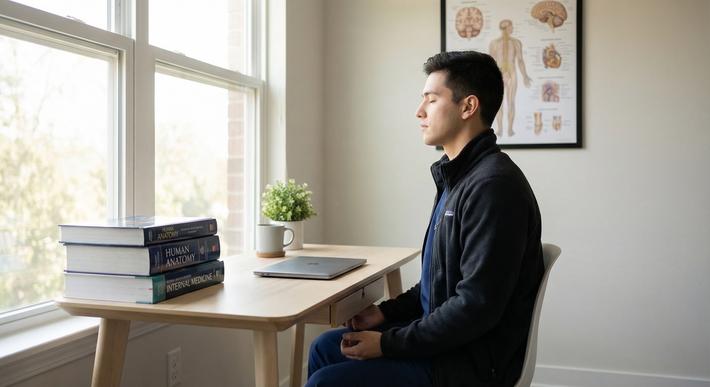
The big caffeine mistake on exam day is not "having caffeine." It's treating caffeine like a magic focus button and getting the timing wrong. I've seen students walk into major exams thinking they've "optimized" their performance, only to spend the first block shaky, overamped, nauseated, and weirdly unable to settle into a question stem. Then comes the second mistake: assuming that feeling activated means feeling prepared. It doesn't.
What backfires most often? Four things:
- jittery anxiety
- a delayed crash in the middle of the exam
- GI misery at exactly the wrong moment
- the rebound from poor sleep disguised by caffeine
Use caffeine only as a tool you already know you tolerate. Not as an experiment. Not as a rescue move. Definitely not as a panic-driven upgrade on the biggest testing day of your month.
The Common Mistake: Treating Caffeine Like a Guaranteed Focus Switch
Don't make this mistake: more caffeine does not equal more concentration.
That idea sounds efficient. It's also dumb in practice.
Caffeine works mainly by blocking adenosine, which helps you feel less sleepy. Fine. But blocking sleep pressure is not the same as creating calm, durable attention. On exam day, your body is often already running a stress response: adrenaline up, heart rate up, muscles tight, stomach touchy. Add too much caffeine, or take it at the wrong time, and you don't get "locked in." You get sympathetic overdrive.
That can look like:
- racing heart
- hand tremor
- sweating
- dry mouth
- stomach urgency
- nausea
- a weird inability to read one paragraph without rereading it three times
Students miss this all the time. They assume, "I'm energized, so I must be sharper." No. Sometimes you're just more activated. There's a difference, and your score can feel it.
Timing matters because the moment caffeine peaks is not always the moment you need the most help. If you slam a strong coffee right before check-in, the peak may hit while you're still trying to settle your breathing, read the first long vignette, or recover from the stress of signing in late, parking badly, or forgetting your snack bag. That's a terrible trade.
And don't ignore your own pattern. Red flags matter here. Be extra careful if you already know you have:
- high caffeine sensitivity
- prior panic symptoms
- caffeine-triggered diarrhea, reflux, or nausea
- palpitations after "normal" amounts
- a habit of getting mentally scattered when overstimulated
I'll say it plainly: if caffeine has burned you before, exam day is not the day it will magically become your friend.
Why Timing Backfires: Peak, Crash, and the Anxiety Loop
Here's where students get trapped. They think caffeine has one job: wake me up. But on exam day, caffeine affects timing, body sensations, confidence, and interpretation. That last one is the killer.
The peak problem
If your dose peaks during the most cognitively demanding stretch, you may not feel focused. You may feel unable to land. That's a miserable state for long vignettes, calculations, or questions that require working memory. You know the feeling: your eyes move, but your brain doesn't grip the stem.
Instead of "good energy," you get:
- internal buzzing
- urge to rush
- frustration with normal reading pace
- false sense that every hard question means you're underperforming
That's not a knowledge problem. It's an arousal problem.
The first exam block is especially vulnerable. You're already carrying check-in stress, time pressure, and anticipatory anxiety. If caffeine peaks on top of that, the body sensations can become the main event. I've seen students fixate on their heartbeat more than the question in front of them. Once that starts, performance gets sloppy fast.
The crash problem
Late dosing creates a second trap. If you delay caffeine too much, or rely on a sharp spike, the helpful phase may fade right when you need endurance. Mid-exam brain fog is brutal because it feels personal. Students think, "I'm suddenly less capable." Usually they're not less capable. They're running into a poorly planned stimulant curve.
The crash doesn't always look dramatic. It can show up as:
- slower recall
- irritability
- low frustration tolerance
- wandering attention
- heavy-eyed reading
- a strong urge to take more caffeine immediately
That urge is dangerous. Chasing a bad block with another stimulant hit is one of the fastest ways to turn a rough morning into a chaotic afternoon.
The anxiety loop
This is the part too many people ignore. Caffeine doesn't just change your body. It changes what you think your body means.
You feel your heart pound. Your hands feel light. Your stomach flips. Instead of saying, "That's caffeine plus stress," your brain says, "Something is wrong. I'm losing it. I can't do this." Now anxiety surges. Working memory drops. Reading comprehension gets less efficient. Hard questions feel harder. Then your physical symptoms feel even more threatening.
That loop looks like this:
This is why smart students suddenly feel "blank" despite knowing the material. The issue isn't intelligence. It's overload.
The sleep interaction nobody respects enough
Sleep debt makes all of this worse. If you slept badly, caffeine may keep your eyelids open while making your emotional control thinner. That's a bad bargain. You feel more awake, but also more irritable, more reactive, and less able to recover from one ugly question.
Don't confuse wakefulness with readiness.
If you're underslept, the risk isn't just fatigue. It's fatigue plus caffeine plus stress, which often produces:
- faster frustration
- poorer emotional regulation
- shakier confidence
- more catastrophic thinking
That combo is poison for test performance.
Timing Traps on Exam Day (and the Mistake-Avoidance Fixes)
Most exam-day caffeine failures are predictable. Which is good news, because predictable mistakes can be prevented.
Trap #1: Trying a new caffeinated product
Energy drink. Fancy cold brew. Double-shot canned espresso. Pre-workout. "Focus blend." Whatever the branding, don't do this on exam day.
New products create three problems:
- unknown dose
- unknown speed of onset
- unknown side effects
I've seen students switch from their normal home coffee to a gas-station energy drink because they "needed more." Then they spent the first block sweating through their shirt and looking for the bathroom. Bad plan.
Fix: Use only what you've already tested during a full-length practice exam. Same product class. Similar dose. Similar breakfast. Similar timing.
Trap #2: Taking caffeine too close to start time
This one is common because students are scared of feeling sleepy during the exam. So they wait until the last minute, thinking the effect will line up perfectly. It often doesn't. Instead, the most stimulating phase lands during check-in or the first block.
That's exactly when you need:
- steady breathing
- controlled pace
- clean reading
- emotional restraint
Not shaky hands and tunnel vision.
Fix: Build in settling time. If you know caffeine makes you feel "wired" before it feels "focused," don't schedule that wired phase for minute one of your exam.
Trap #3: Abruptly skipping your usual caffeine
This is the opposite mistake, and it's just as dumb. If you use caffeine every day, exam day is not the moment to go "clean" because you read one wellness post about overstimulation.
Withdrawal can bring:
- headache
- low mood
- sluggishness
- irritability
- poor concentration
So now, instead of controlled alertness, you're taking a high-stakes exam with a withdrawal headache behind your eyes. Why create a second problem?
Fix: If you use caffeine daily, stick close to your usual pattern unless you've already tested a better one. Don't make abrupt changes under pressure.
Trap #4: Ignoring GI effects
Students love to talk about focus and completely forget the gut. Huge mistake.
Caffeine can increase:
- stomach acid
- bowel motility
- nausea
- urgency
Pair that with exam nerves and an unfamiliar breakfast, and suddenly your main goal is not biochemistry recall. It's surviving the testing center bathroom line.
If you've ever had coffee-triggered reflux, loose stool, or that awful hollow-jittery stomach, believe your history. Don't romanticize coffee as "just part of my routine" if the routine includes suffering.
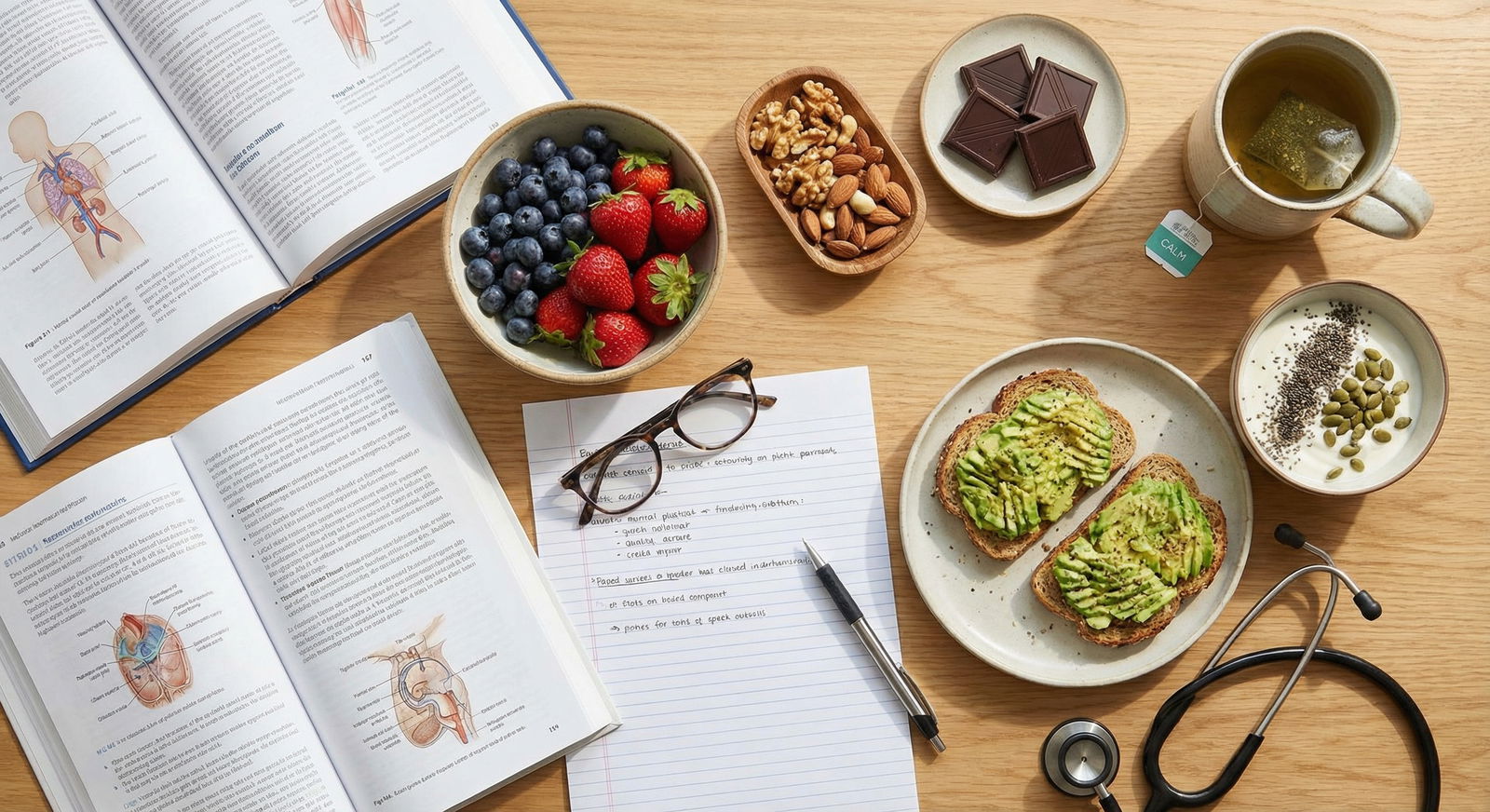
Fix: Take caffeine with a familiar, boring, safe breakfast. Boring is good here. Toast, oatmeal, yogurt if you tolerate it, whatever you've already used successfully. Exam morning is not brunch. It is not reward food. It is not the day for greasy sandwiches or giant pastries.
Trap #5: Chasing a bad first block with more caffeine
This is the panic move. You feel rough after the first section, so you assume the solution is chemical. Another coffee. An energy shot. A caffeinated gum you've never tried. That's how people turn mild anxiety into full-body static.
The first bad block often has many causes:
- normal difficulty
- warm-up lag
- overinterpretation of a few hard questions
- poor pacing
- tension from the commute
It is not automatically a caffeine deficiency.
Fix: Don't stack doses impulsively. Reset first:
- drink water
- breathe slowly for 60-90 seconds
- loosen your shoulders
- use a brief self-talk cue: "One block is not the whole exam"
- resume with strategy, not panic
Here's the conceptual shape of the risk:
The goal is not a dramatic peak. Peaks are seductive. Peaks also punish you later.
What to Do Instead: A Safer Caffeine Plan You Can Actually Trust
You need a plan boring enough to be reliable. That's the standard.
1) Start with your evidence, not wishful thinking
Use the caffeine routine that worked during your last full-length practice exam. Not your friend's plan. Not something from a productivity forum. Your own data matters most.
Ask:
- What dose did I take?
- What time did I take it?
- What did I eat with it?
- Did I feel calm enough to read carefully?
- Did I crash?
If your last successful practice day gave you stable attention, copy that. Don't get creative because the real exam feels important. That's exactly when creativity becomes self-sabotage.
2) Keep the dose small to moderate and consistent
A familiar moderate dose beats a heroic dose every time.
What you want:
- predictable alertness
- tolerable body sensations
- no urgent need for a second hit
What you do not want:
- stacking coffee + energy drink + pre-workout
- doubling your usual intake
- using caffeine to compensate for zero sleep
That stacking behavior is exam-day nonsense. It feels proactive. It's reckless.
3) Protect your stomach on purpose
Plan breakfast like a risk manager.
Good exam breakfasts are:
- familiar
- easy to digest
- not greasy
- not unusually large
- paired sensibly with your usual caffeine
Bad exam breakfasts are:
- "cheat day" food
- giant sugary drinks
- spicy leftovers
- anything you haven't tested before
This sounds obvious until exam morning when people start making weird decisions. Don't be that person.
4) Set a personal cutoff, not a fantasy one
Everyone metabolizes and feels caffeine differently. Some students get 20 minutes of edgy buzzing before they settle. Others are sensitive for hours. Respect your pattern.
Your cutoff should leave enough time for:
- absorption
- any early jitter phase to pass
- mental settling before the exam starts
That's the whole point. Don't arrive at your seat in the middle of your own stimulant spike.
5) Have a backup, but don't improvise
If caffeine usually helps you and exam rules allow it, bring a familiar backup option. Familiar matters more than clever.
That backup should be:
- something you've used before
- in a known amount
- reserved for a planned situation, not an emotional spiral
Do not add random products mid-exam because someone in the break room mentioned them. I've seen students get talked into caffeinated mints, concentrated shots, and "clean energy" powders. Regret follows.
6) Pair caffeine with non-caffeine anxiety tools
This is the part high performers often skip because it sounds too simple. Mistake.
Caffeine should support your plan, not carry it.
Use:
- Breathing reset: slow exhale longer than inhale for 4-6 cycles
- Self-talk cue: "Calm first, fast second"
- Question triage: if a stem is melting your brain, mark it and move
- Post-question reset: shoulders down, jaw unclench, next item cleanly
Those skills prevent the classic disaster where you interpret normal stress as proof that you're falling apart.

Red Flags Checklist: When Caffeine Timing Is a Liability
Don't make caffeine the hero if your history says it behaves more like a saboteur.
Be careful if you have any of these red flags:
- past panic attacks
- caffeine-induced palpitations
- marked jitteriness with routine doses
- IBS or stress-related diarrhea
- GERD or reflux flares after coffee
- migraine history worsened by caffeine withdrawal
- severe sleep debt that makes caffeine turn you irritable and emotionally brittle
If one or more of these applies, your safer move may be:
- a lower dose
- an earlier cutoff
- a different familiar caffeine source
- or no caffeine at all if it reliably destabilizes you
And yes, if symptoms are significant, talk with your clinician ahead of time. That's not overreacting. That's planning like an adult.
Reducing caffeine is not weakness. It's risk management.
Summary: Protect Focus by Planning, Not Guessing
Caffeine backfires on exam day when you treat it like a guarantee, a rescue drug, or a last-minute experiment. That's the mistake. The safer play is simple: use a practice-tested dose, avoid new products, don't create a late peak or a mid-exam crash, and support yourself with basic anxiety tools that actually work.
Your goal is not to feel turbocharged. It's to feel steady.
Steady beats hyped. Steady reads better. Steady thinks better. Steady finishes the exam without handing control to a coffee cup.