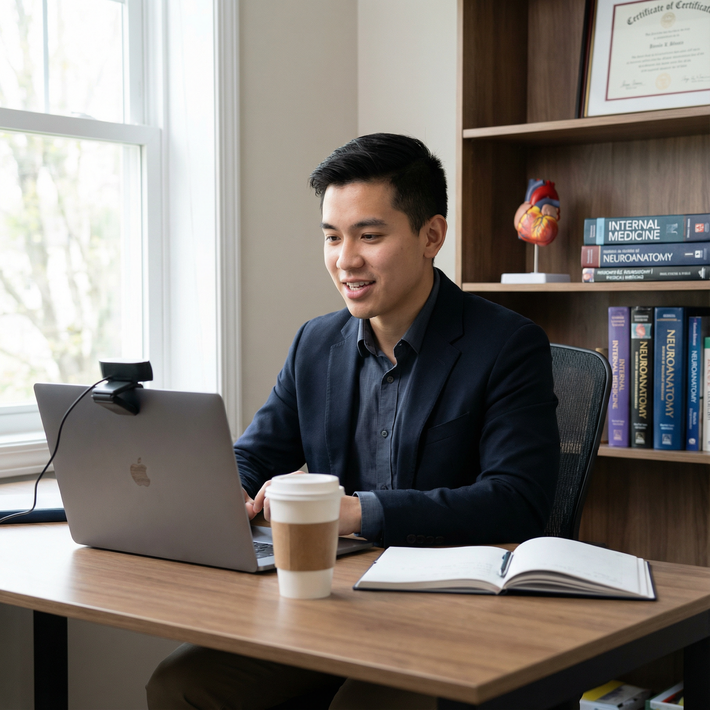
If a program director asks to see your room on Zoom, don’t panic and don’t get weird about it. Treat it like a quick professionalism check, not a home inspection. Your job is simple: protect your privacy, show that you’re prepared, and move on fast.
I’ve seen applicants blow this moment in two opposite ways. One freezes and starts apologizing for the mess, the barking dog, the laundry chair, the fact that they’re in their cousin’s apartment for the week. The other gets visibly irritated and answers like they’re being cross-examined. Both reactions hurt more than the actual room ever would.
The best move is calmer than that. Assume positive intent unless the interaction proves otherwise. A PD may just want to confirm that your setup is functional, your environment is reasonably professional, and you’re not interviewing from bed with SportsCenter running in the background. Fair enough.
That doesn’t mean they get unlimited access to your personal space. They don’t. You are allowed to set boundaries. Good applicants do this well: polite, brief, not defensive.
Come in with a plan before the interview starts. Use a short script. Know exactly what part of your space you’re willing to show. Face, desk, neutral wall. That’s usually plenty.
Before the interview: prepare a “privacy-forward” room setup so you’re never scrambling
The worst time to think about your background is when someone is already waiting on Zoom. Build a default setup that works every time. Then if someone asks to “see your room,” you’re not improvising under stress.
Start with the background. Pick one consistent interview angle and keep it boring. Boring is good here. A blank wall is excellent. A curtain is excellent. A neatly hung neutral sheet is completely acceptable if that’s what you’ve got. I’m serious. Nobody gives points for tasteful décor. They absolutely notice clutter, visible chaos, or personal details that shouldn’t be on display.
What you want behind you:
- Plain wall
- Neutral curtain
- Bookshelf with nothing distracting or identifying
- Small, tidy corner of a room that looks intentional
What you do not want visible:
- Family photos
- Roommate belongings
- Name tags, IDs, hospital paperwork
- Whiteboards with schedules or passwords
- Medication bottles
- Political posters
- Anything you’d have to explain
If you share space, this matters even more. I’ve seen applicants unknowingly pan across a roommate’s laundry pile, someone sleeping on a couch, or a stack of mail with full names and addresses showing. That’s not just awkward. It’s avoidable.
Now fix the technical side first. Lighting and audio matter more than fancy background tricks. Face a window if you can. If not, put a lamp behind your screen aimed toward your face, not over your shoulder like an interrogation scene. Raise the laptop so the camera is at eye level. Stack books under it if needed. Put the microphone close enough that you don’t sound like you’re calling in from a tunnel.
Then strip distractions out of the environment:
- Silence phone and computer notifications
- Close every tab you wouldn’t want accidentally screen-shared
- Turn off smart speakers nearby
- Put pets in another room if possible
- Tell other people in the home exactly when not to enter
A fallback option is smart, not paranoid. Have one ready.
Your backup plan can be:
- A Zoom virtual background that actually looks clean and believable
- A tighter camera crop that shows only your head and shoulders
- A second corner of the room with a blank wall
- A different room entirely, even if it’s less comfortable
And test it. Don’t assume your virtual background won’t eat half your hairline or blur your shoulders into the wall. Zoom loves making people look haunted when the lighting is bad.
The goal is simple: if someone says, “Can you show me your room?” you already know what they’re going to see. Not your life story. Just your interview setup.
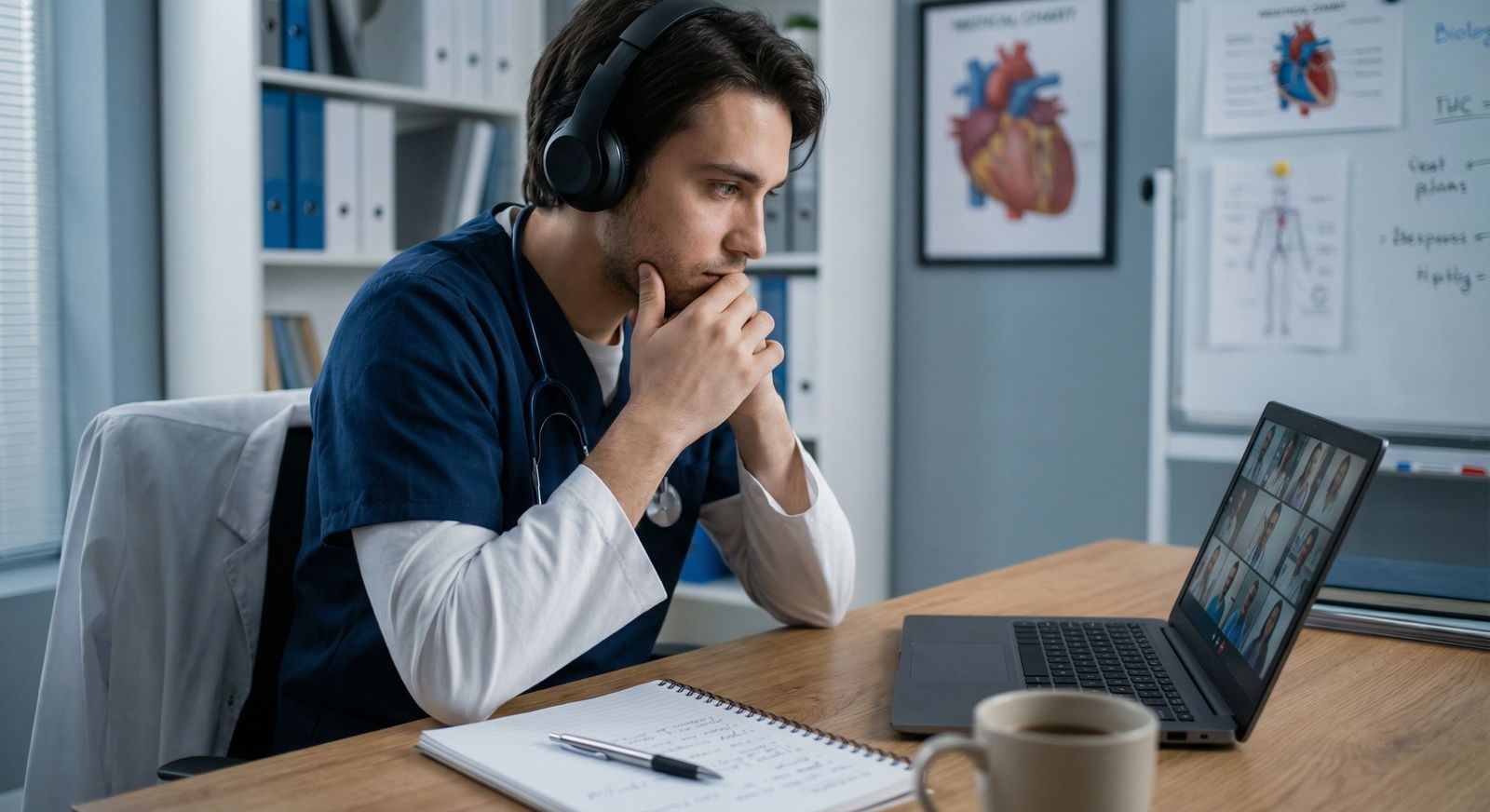
When they ask live: use a 10-second script that sets boundaries without sounding defensive
This is the moment people overtalk. Don’t.
If a PD says, “Can you show me your room?” your first move is to stay relaxed. Your expression matters. If you look startled or annoyed, you’ve already made the moment bigger than it needed to be.
Use a short response. Something like:
“Of course—I can show you my setup area.”
That line does two things. It sounds cooperative, and it quietly narrows the request. Setup area. Not full bedroom tour. Not 360-degree apartment reveal.
Then show the smallest professional slice possible:
- your desk
- your chair area
- a neutral wall or curtain
- maybe the lamp and laptop position
That’s it. A controlled angle. Slow movement. No wild spinning laptop cam like you’re filming a hostage proof-of-life video.
If you need a second to adjust, take it:
“One second—I’m just going to adjust the camera angle for privacy.”
That’s a strong line because it’s calm and normal. You are not asking permission to have boundaries. You are informing them how you’re handling the request professionally.
If you’re comfortable showing a little more, fine. But there’s no prize for generosity here. More room means more risk. More identifying details. More chances for something dumb to come into frame.
Your best live options
Option 1: You’re comfortable showing a neutral corner
“Sure—I can show you my desk area and background.”
Then tilt slightly. Show the prepared portion. Stop.
Option 2: You need a second because something sensitive is visible
“Absolutely—give me one second to adjust the camera for privacy.”
Mute if needed. Move papers. Change angle. Resume.
Option 3: You want to comply without showing your personal living space
“I keep my personal space fairly private, but I’m happy to show my interview setup here.”
That line is polished. Not hostile. Not flimsy. It answers the request while drawing a clear border.
Option 4: You’re not comfortable showing the room at all
“I prefer to keep my personal space private, but my setup is ready and working well. I can show you my desk area if helpful.”
That is a complete answer. You do not owe a three-paragraph explanation about why your space is private.
What not to do
Don’t say:
- “Sorry, it’s really messy.”
- “I wasn’t expecting that.”
- “My apartment is a disaster.”
- “My roommate is here and this is awkward.”
- “Why do you need to see that?”
Every one of those lines creates a problem where there might not have been one. You’re either broadcasting unpreparedness or picking a fight. Bad trade.
Also: don’t launch into autobiography. If you say, “I’m staying temporarily with family because my lease ended during audition season and my aunt’s dog is here and the lighting is bad because...” you’ve lost the room. Applicants do this all the time when nervous. Stop at one sentence.
One to two lines. Then action.
If the PD keeps pushing
This is where people need backbone.
If the request shifts from “show me your setup” into “show me the whole room” or starts feeling intrusive, tighten the boundary:
“I’m happy to show my desk and interview background, but I keep the rest of my living space private.”
Say it evenly. No edge in your voice. No apology.
If they still push, that’s no longer about setup quality. That’s about judgment. And frankly, it’s not great judgment. At that point, comply only to the extent you’re comfortable, or decline and redirect.
You are interviewing them too. Don’t forget that.
Decision tree: what to do depending on what your room would reveal
Different rooms create different problems. Here’s the practical playbook.
If it’s just clutter
This is the easiest fix. Don’t confess. Don’t apologize. Just reduce what’s visible.
Move the coffee mug, sweatshirt, and random cables out of frame. Shift to the neutral corner. Show that. Done.
You don’t need to narrate your tidying. Silence is your friend here.
If it would reveal sensitive materials
This one is non-negotiable. Do not pan across visible documents, ID badges, patient notes, prescription bottles, financial paperwork, or anything with names on it. Not even for two seconds.
Say:
“One second—I’m adjusting the camera angle for privacy.”
Then change angle or activate a virtual background. If needed, show only your face and top of desk. That is enough.
Protecting privacy is not being difficult. It’s being competent.
If other people or pets are in the room
This happens more than applicants admit. A sibling walks through. A roommate is studying six feet away. A cat chooses violence and jumps on the keyboard. Fine. Handle it cleanly.
Say:
“Give me one second to adjust my setup.”
Then reposition the camera, close the door, or move the pet out of frame. What you should not do is start volunteering chaos:
- “Sorry, my whole family is home.”
- “My roommate’s boyfriend is here.”
- “My dog has separation anxiety.”
None of that helps you. Solve the visual problem. Move on.
If you’re in a genuinely uncomfortable or non-private setting
Maybe you’re in temporary housing. Maybe you’re in a call room. Maybe you’re using a borrowed office. Maybe your living situation is unstable. In that case, I want to be very clear: you do not need to expose that to prove professionalism.
Say:
“I keep my personal space private, but I’m happy to show my desk setup and confirm my interview environment is ready.”
That is a fully appropriate response.
If needed, add:
“I’m in a temporary location today, so I’m keeping the camera framing tight.”
Again, brief. Clean. No shame.
If the request feels inappropriate
Trust your instincts. Most room requests are clumsy, not malicious. But if it starts to feel like someone is inspecting your lifestyle, not your setup, you can draw a hard line.
Use:
“I’d prefer to keep my living space private, but I’m glad to continue the interview.”
If they react badly, that tells you something useful. Programs reveal themselves in small moments. People love to pretend every awkward interaction should be explained away. No. Sometimes behavior is just bad behavior.
If the moment crosses a line, make a note after the interview and consider contacting the program coordinator. Keep it factual:
- who asked
- what was requested
- how you responded
- whether the request persisted
No drama. Just documentation.
What to say, word for word, and what to avoid
Here are scripts worth practicing out loud. Not reading silently. Out loud. The mouth needs reps too.
If you’re willing to show a neutral background
“Sure—I can show you my interview setup.”
If you need a second to protect privacy
“Absolutely. One moment while I adjust the camera angle for privacy.”
If you want to show only your desk/work area
“I’m happy to show my desk area and background.”
If you want to decline showing your room
“I prefer to keep my personal space private, but my setup is ready and working well.”
If you want to offer a compromise
“I keep the rest of my space private, but I can show you the area I use for interviews.”
That’s the tone you want: neutral, cooperative, unbothered.
And here’s what to avoid because it sounds bad:
- “It’s messy.”
- “I didn’t have time to clean.”
- “That’s private.” said sharply
- “Why?”
- “My place is terrible.”
- “Please ignore everything behind me.”
- “I’m embarrassed.”
Embarrassment reads louder than clutter. Remember that.
If you share your room, your order of operations matters:
- tidy fast
- frame the desk
- show the neutral background last
Do not start wide and hope for the best. That’s how you catch a pile of laundry, a second mattress, or your roommate’s skincare arsenal in frame.
After the moment: recover quickly and keep the interview moving
Once you’ve addressed the request, stop talking about it.
That’s the recovery move. Short transition. Steady posture. Back to the actual interview.
Use:
“Thanks—happy to continue.”
Or:
“Great, shall we keep going?”
If the PD looked concerned about your setup, reassure once:
“My setup is reliable, and I’m ready to answer your questions.”
Then drop it. Don’t circle back later with, “Sorry again about the room thing.” Don’t joke about it. Don’t make self-deprecating comments to seem likable. That usually backfires.
Professionalism after a weird moment is simple: act like an adult, not like someone still mentally replaying the awkwardness.
A lot of interview success is recovery. Not perfection. People remember composure.
FAQ for anxious applicants
Is this a red flag?
Not automatically. Sometimes it’s just a clunky way of checking whether your setup is professional. But if someone becomes persistent or invasive, that’s different. Asking to see your desk area is one thing. Acting entitled to your personal living space is another.
Can I decline?
Yes. Absolutely. Politely, briefly, confidently.
Try:
“I keep my personal space private, but I’m happy to show my interview setup.”
That is normal. You do not need permission to have boundaries.
What if my background is imperfect?
Almost everyone’s is a little imperfect. That’s life. Programs are not expecting a hotel conference room. They are expecting basic judgment. A plain wall with decent lighting beats a gorgeous apartment with distractions everywhere.
What if I get caught off guard mid-interview?
Use a reset line:
“One second—I’m going to adjust my camera framing.”
Then show the smallest safe area possible. Face, desk, neutral wall. Return to the interview immediately.
What if there’s something identifying in the background?
Fix that before moving the camera. Always. Shift the angle, blur the background, or use virtual background. Protect names, documents, photos, badges, and anything medical.
What if they keep asking after I’ve set a boundary?
Repeat yourself once, calmly:
“I’m happy to continue the interview, but I keep my personal space private.”
If they keep pushing, note it afterward. That behavior matters.
The bigger lesson here is simple: prepare once, then stop fearing the moment. A good interview setup gives you options. A good script gives you control. And a calm response tells a PD exactly what they need to know—that you can handle an awkward ask without losing your footing. That skill will serve you far beyond Zoom.