
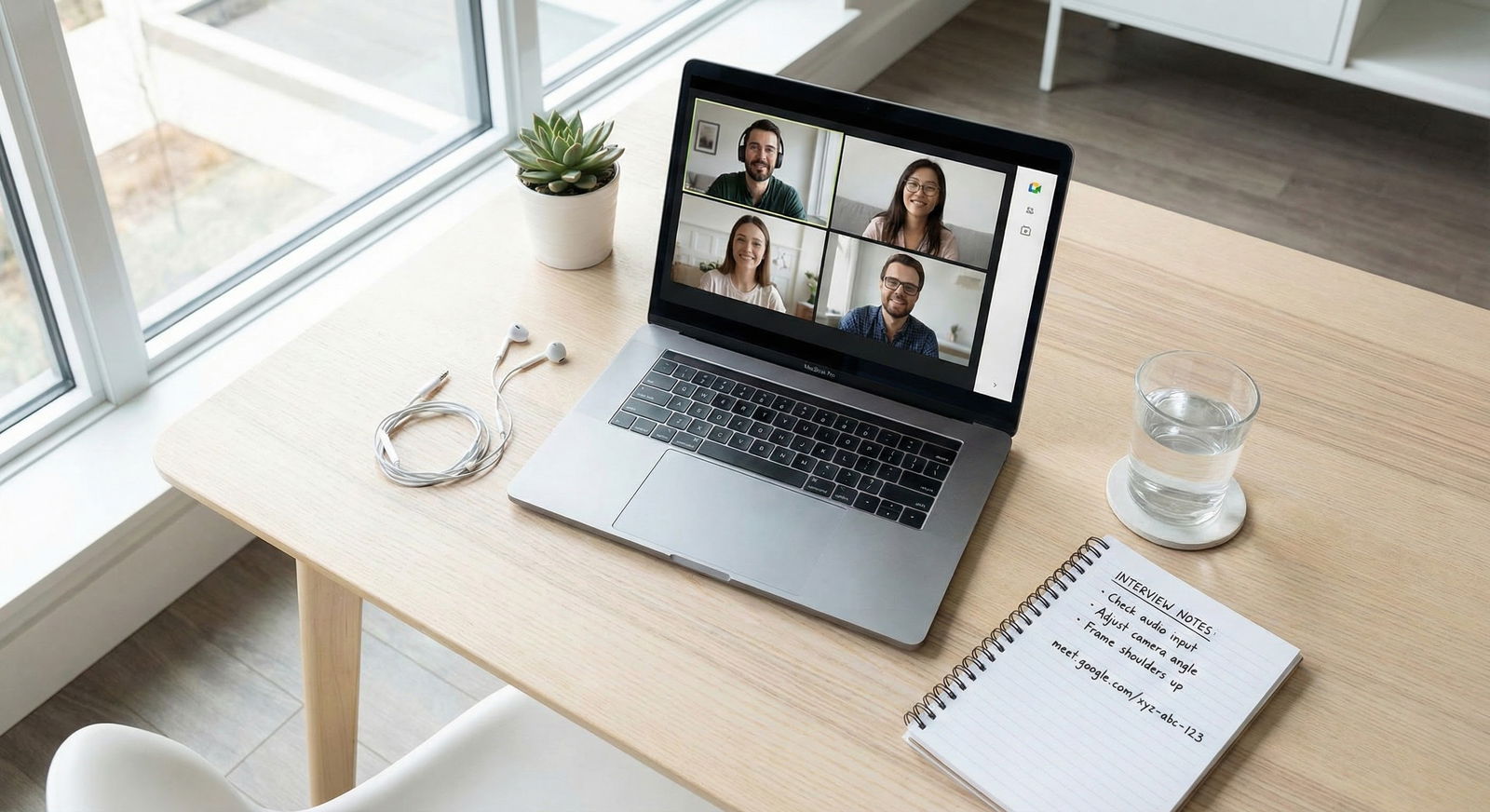
Turning notes off‑camera during a residency video interview is not cheating.
If that shocks you, you’ve been listening to anxious classmates, not program directors.
Let me be blunt: the culture around “integrity” in virtual interviews has veered into superstition. People are agonizing over whether a Post‑it on the wall is an “ethical violation” while ignoring the things that actually get them screened out—like sounding robotic, unprepared, or unable to talk about their own application without reading.
You’re not taking Step 2 with a camera on. You’re having a professional conversation. And in professional conversations, people use notes all the time.
Let’s walk through what programs truly care about, what crosses the line, and what’s just residency urban legend masquerading as ethics.
What Programs Actually Say vs What Applicants Fear
Here’s the big myth:
“If I have notes off-camera, it’s cheating, and if they find out I’ll be blacklisted.”
No. That is not how real programs think.
When programs adopted virtual interviews (especially 2020 onward), almost all of them worried about the same few things: equity, logistics, and professionalism. Not “Is someone glancing at a sticky note that says ‘ask about mentorship’?”
Look at what actual program and national bodies emphasized:
- AAMC guidance focused on fairness, technical stability, and minimizing bias.
- NRMP rules talk about match violations, coercion, post‑interview communication—not your scratch paper.
- Specialty organizations issued recommendations about structured interviews, zoom etiquette, and implicit bias training.
No one is sending out memos titled: “Thou shalt not have bullet points near the webcam.”
But let’s ground this a bit more. Programs care about:
- Authenticity: Do you sound like a real person, or like you’re reciting ChatGPT answers from a second screen?
- Professionalism: Do you show up on time, dressed reasonably, with a stable connection and baseline courtesy?
- Fit: Do your answers, questions, and demeanor match the culture and goals of the program?
- Red flags: Dishonesty, clear misrepresentation, obvious multitasking, or treating the interview like a low‑stakes Zoom lecture you half‑listen to while scrolling.
Notice what’s missing: “Applicant had a small notepad out of frame and occasionally glanced down.” That simply does not show up as a concern in real‑world PD discussions.
The Line Between Smart and Sketchy
Using notes isn’t the problem. Depending on notes is.
There’s a spectrum:
| Approach | How Programs Perceive It |
|---|---|
| No notes at all | Fine, if you’re coherent |
| Few bullet points off-camera | Normal and harmless |
| Full paragraphs on screen | Obvious, scripted, artificial |
| Reading answers word-for-word | Red flag for authenticity |
| Someone else feeding you answers | Dishonest, absolutely cheating |
Turning notes off‑camera? That’s squarely in “normal and harmless” territory—if you use them like a reasonable adult.
Where things cross into “this is bad, and yes, they’ll notice”:
You’re clearly reading full sentences. Monotone, fixed eye line, unnatural rhythm. Faculty have been watching patients read from Dr. Google for years; they know what reading-off-a-script looks like.
You keep looking away from the camera in long, predictable stretches, then recite a very polished multi‑sentence answer with no spontaneity. That screams “script,” not “outline.”
You can’t answer follow‑up questions once you’re off-script. You delivered a perfect canned answer to “Why this specialty?”, but when the interviewer asks, “Can you tell me more about that experience you mentioned?” you fall apart. That disconnect is a real concern.
Cheating is not “having notes.” Cheating is misrepresenting yourself—pretending spontaneous insight that’s actually prewritten, or having someone else feed answers, or using generative AI during the interview. Programs don’t have to catch you red‑handed. If it feels off, they just rank you lower or drop you. Quietly.
Why the Obsession With “Cheating” Is Misplaced
Let me go after another myth: that programs are sitting around trying to police your environment like a proctored exam.
They’re not.
They’ve got 400 applicants to screen, 12 faculty trying to squeeze Zooms between clinic, and a coordinator praying the breakout rooms don’t implode. Nobody is replaying Zoom recordings frame by frame to see if your eyes drifted slightly right at the same time you said “core values.”
What they are paying attention to:
- Are your answers consistent with your application?
- Do you seem to know what you’re talking about?
- Are you engaged, or do you look like you’re half‑checking your phone?
- Do you sound like the same person your LORs describe?
This is what people miss: notes actually reduce the risk of you looking unprepared or blanking on obvious things, which is what programs dislike far more than “they had some prompts.”
The disaster scenario PDs talk about isn’t “the one who had notes.” It’s:
- The applicant who could not explain their own research.
- The one who clearly didn’t know basic things about the program.
- The one reading painfully over‑rehearsed answers that didn’t match their CV or letter style.
If a couple of small off‑camera bullets help you avoid those failures, that’s not cheating. That’s professionalism.
What the Data and Experience Actually Show
There is no RCT of “notes vs no notes” in residency Zoom interviews. But there is a ton of related data and a lot of real‑world behavior we can extrapolate from.
Interview prep research (including from corporate and academic settings) shows:
- Structured preparation improves performance and lowers anxiety.
- Over‑scripted responses decrease perceived authenticity and likeability.
- Visual prompts help people remember key points without sounding memorized.
Residency programs unintentionally confirmed the same during the 2020–2023 virtual cycles. You had a ton of applicants leaning heavily on scripts initially. Faculty feedback? “They all started sounding the same.” “Some felt too rehearsed.” Translation: having prep is fine; sounding like a teleprompter is not.
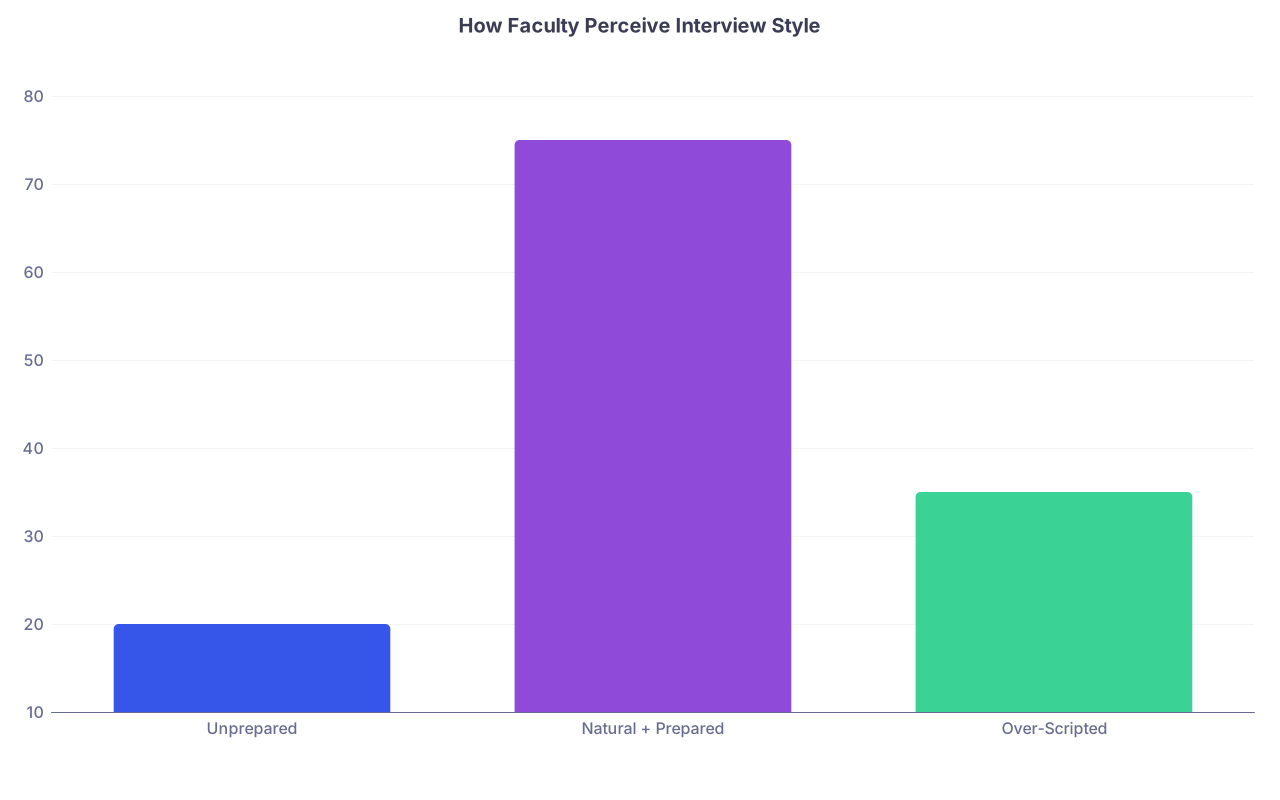
To put it visually:
| Category | Value |
|---|---|
| Unprepared | 20 |
| Natural + Prepared | 75 |
| Over-Scripted | 35 |
Those numbers aren’t from a specific study; they reflect the pattern I hear over and over in faculty debrief conversations: “We liked the people who were clearly prepared but could still talk like normal humans.”
Notes, used well, put you into that middle category: natural + prepared. Notes, abused, shove you into “over‑scripted.”
What Programs Actually Care About in Video Interviews
Let’s stop speculating and list what consistently matters across specialties and institutions. You’ll hear the same refrains in interview committee meetings from community IM to big‑name academic neurosurgery.
Can you talk about your own experiences?
If you did a QI project, they expect you to explain the problem, your role, and what happened—without reading from a methods section. Using a note like “QI – handoff project – outcomes: fewer errors” to jog your memory? Totally fine. Needing a paragraph on a second monitor? Bad sign.Do you seem genuinely interested in this program, not just “a” program?
Programs care about retention, not just recruitment. If your “Why our program?” answer could apply to 90% of places (“diverse patient population,” “strong research,” “supportive culture”), they’ll glaze over. A note saying “Ask about hospitalist vs fellowship support here” helps you tailor. That’s good.Can you think on your feet?
Not some puzzle question. Just basic conversational adaptability. If every answer sounds like something you could have rehearsed, they’ll doubt your flexibility. If you handle a follow‑up curveball smoothly, you gain points. Notes should support this, not replace it.Do you behave like a colleague they’d want on their team?
Respectful, engaged, not rude. If you’re obviously checking another screen, typing, or reading for extended periods, that’s a professionalism hit. Having a few bullet points near the camera doesn’t interfere with this at all.Is there any hint of dishonesty or misalignment?
If your application says you were “heavily involved” in a free clinic and under basic questioning you crumble, that’s a bigger integrity concern than any sticky note will ever be.
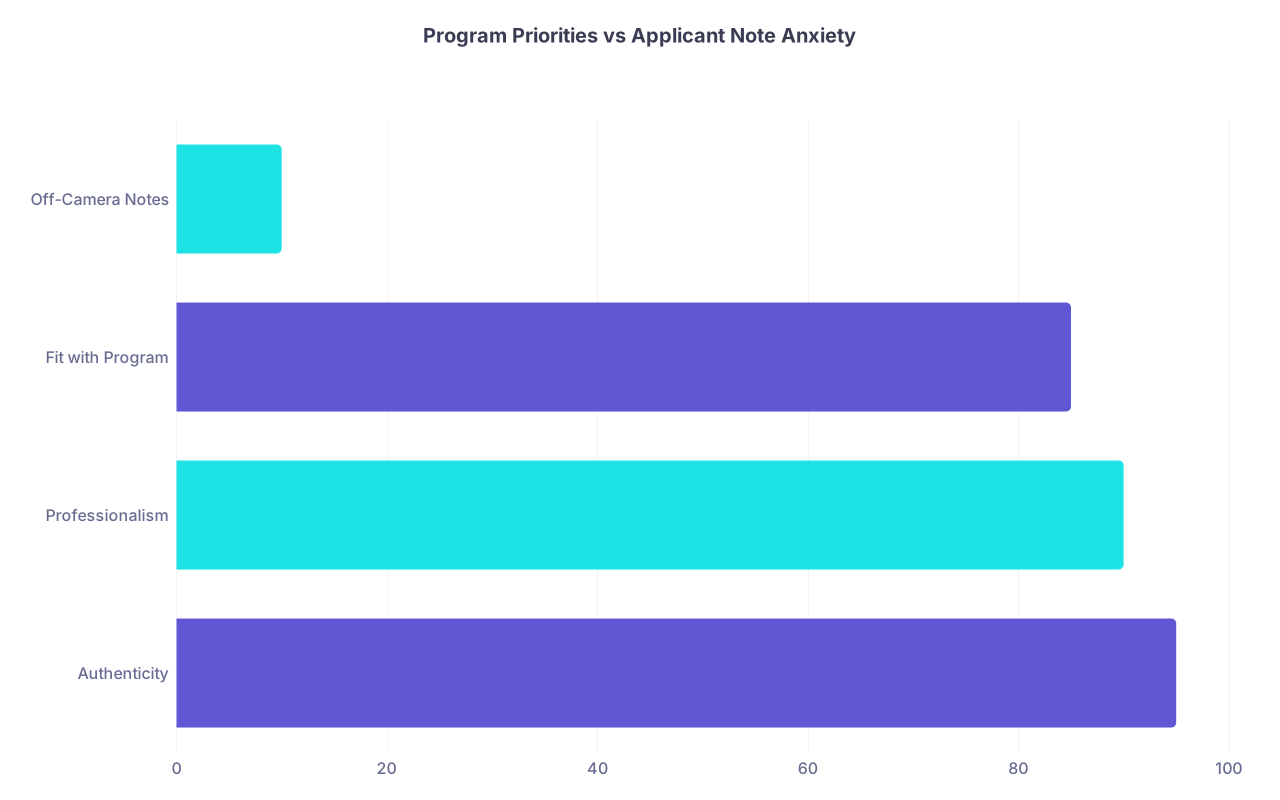
Here’s how that stacks in priority versus your little off‑camera notes:
| Category | Value |
|---|---|
| Authenticity | 95 |
| Professionalism | 90 |
| Fit with Program | 85 |
| Off-Camera Notes | 10 |
Off‑camera notes essentially don’t register as a serious issue—unless you make them the main show.
How to Use Notes the Right Way (Without Looking Scripted)
Since you are going to use notes—and you should—do it intelligently.
Think prompt, not script.
You want triggers like:- “3 reasons IM – continuity, complexity, teaching”
- “Research – sepsis project – my role: data, analysis”
- “Questions: mentorship, graduates’ paths”
No full sentences. No elegant phrasing. That’s how you avoid reading.
Place them near the camera.
If your notes are taped way off to the side or on another big screen, your eyes will obviously shift. Put a few small bullets right above or next to the webcam. Tiny glances up or down look like natural thinking, not teleprompter work.Practice until you barely need them.
By interview week, your notes should be a safety net, not a script you cling to. If you can’t give a coherent “Tell me about yourself” without looking at anything, you aren’t under‑prepared. You’re over‑scripted.Use notes more for them than for you.
Where notes really shine is in the questions you ask programs. Jot down:- People you want to mention (“Dr. X’s work on SLE clinic”)
- Specific things to ask about (resident autonomy, night float, fellowship match support)
That type of note makes you look thoughtful and prepared, not dependent.
What Is Actually Cheating in Video Interviews?
Since we’re myth‑busting, let’s draw the real red lines.
Things that clearly cross into unethical/cheating territory:
- Having another person in the room feeding you answers.
- Using live text or chat support to respond in real time.
- Using AI tools during the interview to craft responses.
- Misrepresenting your environment, identity, or application content.

| Step | Description |
|---|---|
| Step 1 | Use brief bullet notes |
| Step 2 | Looks prepared |
| Step 3 | No ethical issue |
| Step 4 | Read long scripts on screen |
| Step 5 | Looks inauthentic |
| Step 6 | Lower ranking |
| Step 7 | Get answers fed by someone/AI live |
| Step 8 | Dishonest |
| Step 9 | Ethical violation |
Notice: “Turning notes off‑camera” isn’t anywhere near the violation branch. It sits squarely in the normal‑professional‑adult behavior lane.
How Programs Spot Red Flags (Hint: It’s Not Your Index Cards)
Programs are not stupid, and they’re not powerless. They don’t need screenshots to know something’s off.
Here’s what they actually go on:
- Global impression across interviewers. If three people say “seemed robotic and over‑rehearsed,” that carries weight.
- Inconsistencies between what you wrote and what you say.
- How you handle unscripted follow‑ups and specific program questions.
- Whether your communication style matches what’s needed on the wards.
They aren't going to say, “We suspect this person had a notepad.” They’ll say, “They felt canned,” or “I couldn’t get a sense of who they actually are.”
Your job isn’t to hide your notes. It’s to make sure your preparation supports your authenticity instead of suffocating it.
Virtual vs In-Person: The Double Standard No One Mentions
Here’s the funniest part. Nobody calls this cheating in an in‑person interview:
- You walk into a conference room holding a padfolio.
- Inside it: a printed copy of your CV, a short list of questions, maybe a couple of reminders.
- You glance at it once or twice. Nobody flinches.
But the moment it’s virtual, everyone panics: “Is that allowed? Is this unethical?”
Virtual doesn’t magically turn normal professional behavior into misconduct. If it would be fine in a faculty office at 8 a.m. on a Tuesday, it’s fine on Zoom, as long as you’re not deceiving anyone about what you’re doing.
Programs care if you’re faking spontaneity, not if you’re occasionally checking a prompt.
What You Should Actually Worry About Instead
You want to channel your anxiety into something useful? Worry less about whether your note card is cheating and more about:
- Can you clearly and concisely explain why you chose this specialty?
- Can you walk through 1–2 key experiences (research, leadership, a tough patient) with enough detail to sound real?
- Do you have 3–5 specific things to ask each program that show you did some homework?
- Does your interview persona match who you are on paper and in real life?
Those are the things that move you up or down a rank list.
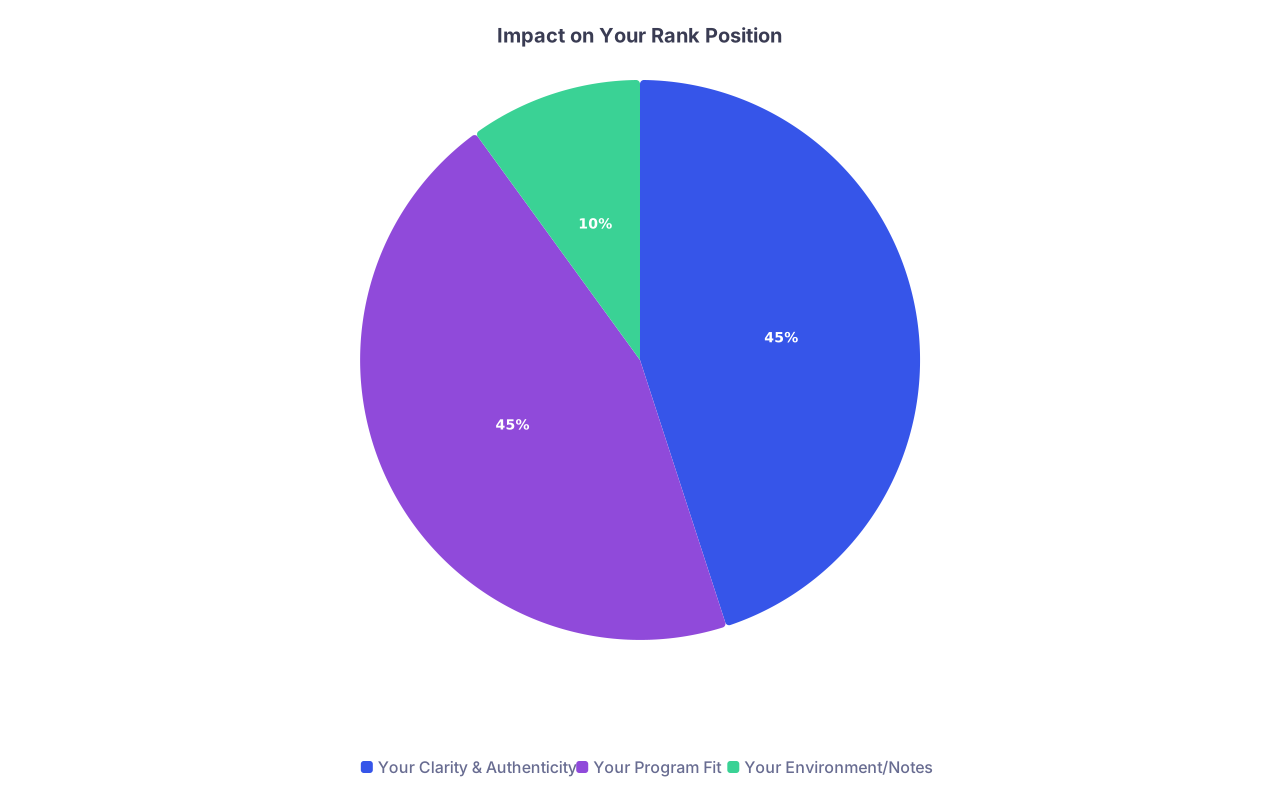
To keep perspective:
| Category | Value |
|---|---|
| Your Clarity & Authenticity | 45 |
| Your Program Fit | 45 |
| Your Environment/Notes | 10 |
Your physical or virtual setup, including notes, is maybe 10% of the game—and that 10% is mostly about not being a technical disaster.
The Bottom Line: Notes Aren’t the Test. You Are.
Turning notes off‑camera during a residency video interview is not cheating.
It’s not an ethical gray zone. It’s not the hill programs are dying on.
Programs care whether they’re seeing the real you—or a poorly disguised script. They care whether you’re someone they trust to show up at 3 a.m. and not crumble. If a few off‑camera bullet points help you express that version of yourself instead of the anxious, blanked‑out version, they’re an asset, not a liability.
Use notes like a professional: sparse, practical, there if you need them. Don’t turn them into a teleprompter. Don’t enlist AI or another human mid‑interview and pretend your words are spontaneous genius. That’s where the line actually is.
Years from now, you won’t remember whether your Post‑its were three inches left or right of the webcam. You’ll remember whether you showed up as the person you actually are—and whether that person was someone programs were excited to work with.


