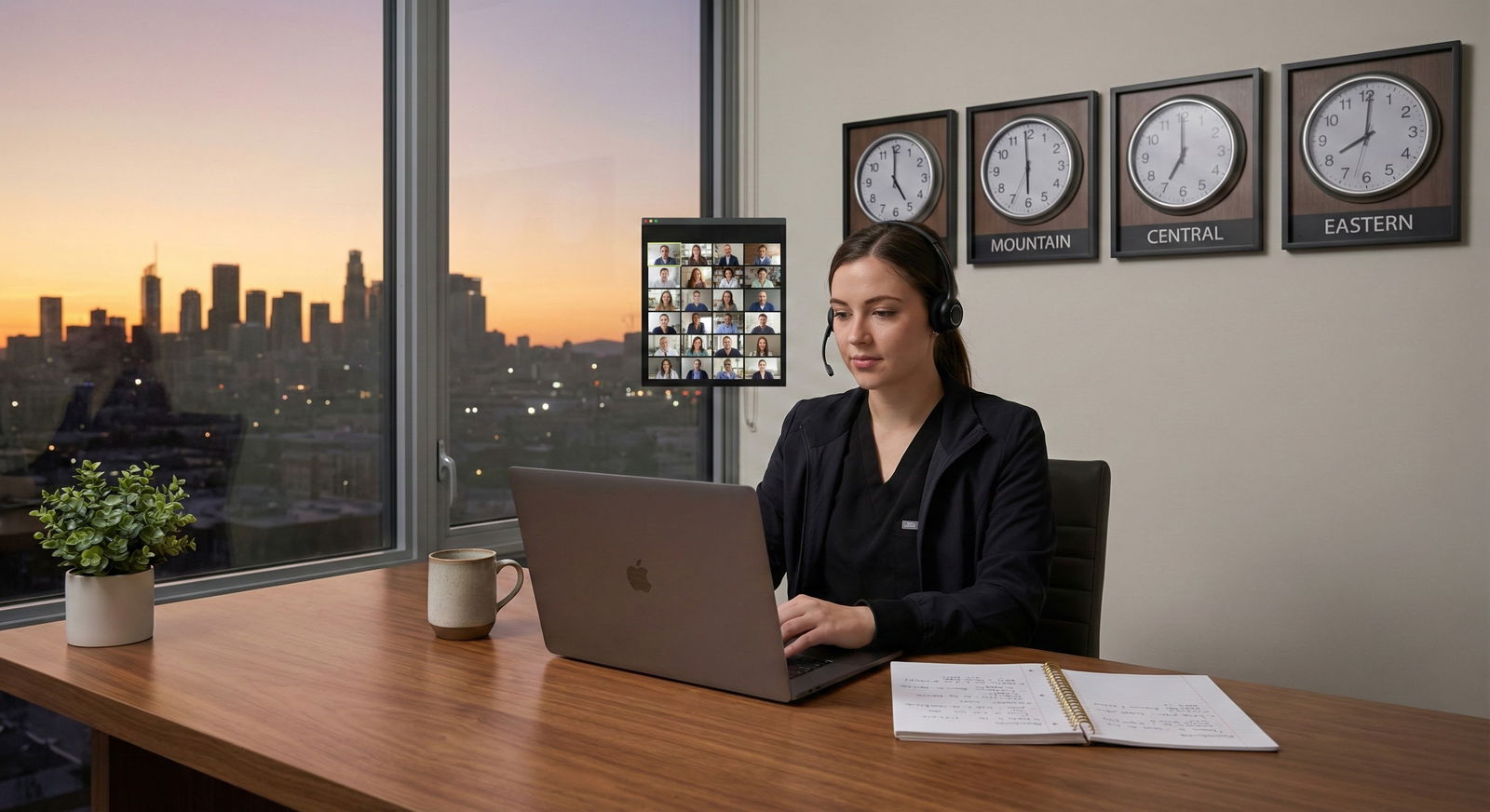
The way most people handle back-to-back cross‑country interviews is wrong. They treat it like a normal busy week instead of what it actually is: controlled jet lag without the plane.
You’re not just “a little tired.” You’re trying to sound sharp at 7 a.m. Pacific after falling asleep at 1 a.m. Eastern because you just finished thanking yesterday’s program coordinator and updating your rank list spreadsheet. That gap between what programs expect of you and what your body can deliver? That’s the danger zone.
Let’s walk through how to manage time zone whiplash when you’re doing video interviews across coasts, often on consecutive days.
1. Know Exactly What You’re Up Against (Not Just “An Early Morning”)
A 7 a.m. Pacific interview day is a 10 a.m. Eastern interview day. That sounds fine—until you realize your body and brain care about consistency, not labels.
| Category | Value |
|---|---|
| Sign-on | 30 |
| Welcome | 60 |
| Interviews | 180 |
| Social | 60 |
| Debrief | 30 |
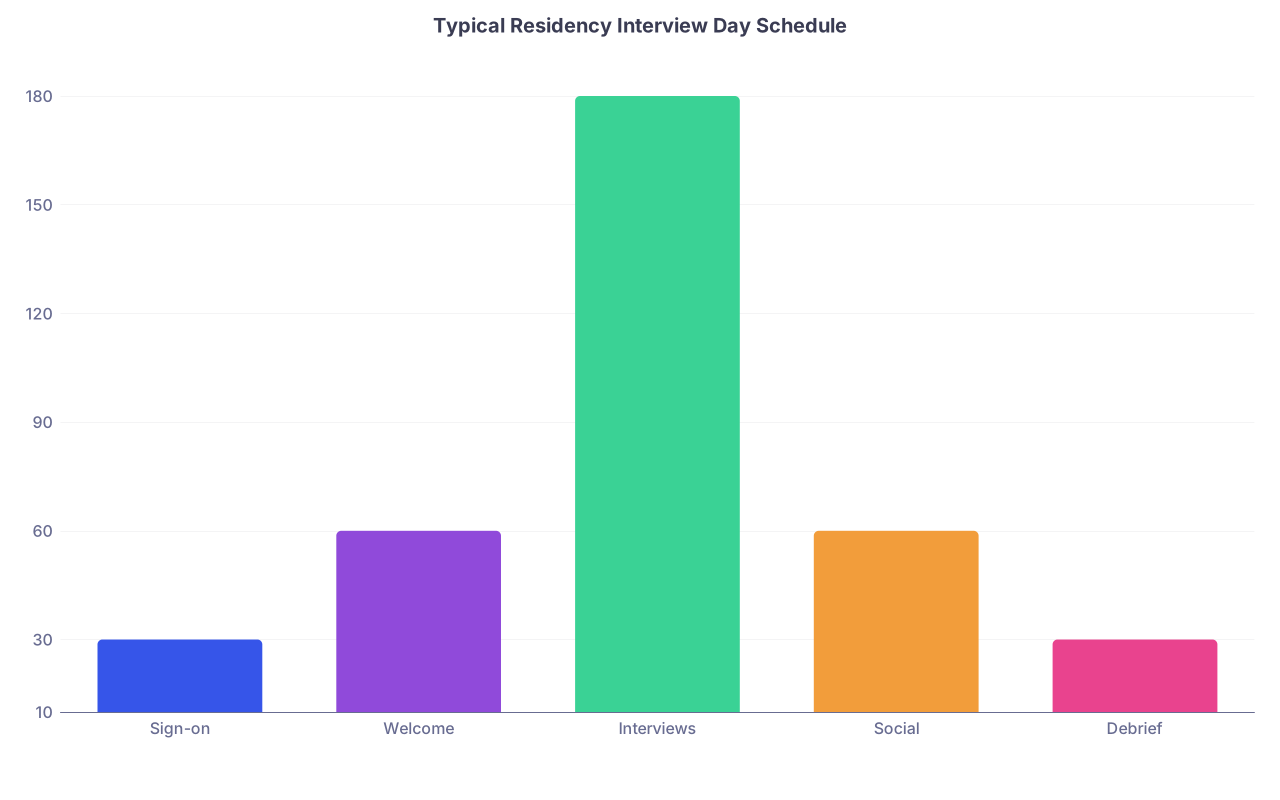
A fairly standard virtual interview day runs like this (all in program local time):
- 7:30–8:00 a.m. – Login, tech check, welcome
- 8:00–9:00 a.m. – Program overview
- 9:00–12:00 p.m. – Back‑to‑back interviews
- 12:00–1:00 p.m. – Virtual lunch/social
- 1:00–2:00 p.m. – Wrap‑up, Q&A, sign off
Now convert that across time zones:
| Program Time Zone | Local Start | Your Home in EST | Your Home in PST |
|---|---|---|---|
| Eastern | 8:00 a.m. | 8:00 a.m. | 5:00 a.m. |
| Central | 8:00 a.m. | 9:00 a.m. | 6:00 a.m. |
| Mountain | 8:00 a.m. | 10:00 a.m. | 7:00 a.m. |
| Pacific | 8:00 a.m. | 11:00 a.m. | 8:00 a.m. |
Here’s the “whiplash” scenario I see over and over:
- Tuesday: East Coast program, 8 a.m. Eastern start
- Wednesday: West Coast program, 8 a.m. Pacific start
- Thursday: Midwest program, 8 a.m. Central start
If you stay in one time zone behaviorally, one of those days will be brutal.
Your job is not just “show up and smile.” Your job is to engineer your sleep, light exposure, and routine so you hit peak function in their morning—even if it’s biologically your 4 or 5 a.m.
2. Build a Time Zone Strategy, Not Chaos
Stop thinking day‑by‑day. Think in blocks.
Step 1: Map your interviews by time zone, not date
Open your spreadsheet and add a “Program Time Zone” and “Local Start Time for Me” column. Then sort.
You’ll often see patterns like:
- Three East/Central programs
- Then two Pacific
- Then random mix
Your goal: align your schedule around the earliest start you have in any 3–4 day window. That’s your anchor.
If your earliest is a 7 a.m. local start (because you’re West Coast interviewing East Coast), then for that block of days:
- You treat 7 a.m. as “normal workday start”
- You shift your sleep/wake earlier for at least two days before that first early interview
Step 2: Decide your “home base” time zone
If all your interviews are virtual and you’re staying put physically, you need to pick an anchor time zone:
- If you live East and have a lot of West Coast interviews → generally keep Eastern as your base
- If you live West and have lots of East Coast interviews → consider shifting your whole life one hour earlier for a few weeks
What you do not want: bouncing your sleep by 2–3 hours every night depending on tomorrow’s program. That’s how you end up wide‑eyed at 3 a.m. the night before your dream interview.
3. The 72‑Hour Protocol Before a Brutal Time Shift
Let me give you a concrete plan. Say you’re in Boston, interviewing at UCSF on Wednesday with an 8 a.m. Pacific start (11 a.m. for you). That’s actually easy—your body’s happy.
The harder direction: you’re in LA, and you have an 8 a.m. Eastern interview on Wednesday (5 a.m. for you). Here’s what I’d tell you to do, starting three days out.

| Step | Description |
|---|---|
| Step 1 | 72 hours before |
| Step 2 | Shift bedtime 45-60 min earlier |
| Step 3 | Morning bright light right after waking |
| Step 4 | Cut caffeine after 1-2 p.m. |
| Step 5 | Night-before: tech + outfit ready by 6 p.m. |
| Step 6 | Wind down aggressively: no screens last 45-60 min |
| Step 7 | Wake 60-90 min before sign-on time |
72 hours before
- Shift bedtime 45–60 minutes earlier. Not 3 hours. That will fail.
- Set an alarm 8.5–9 hours before planned wake time as a “start winding down” alert.
48 hours before
- Repeat the 45–60 minute earlier bedtime shift.
- Cut caffeine after 1–2 p.m. local time.
- Get 10–20 minutes of bright morning light within an hour of waking (go outside if at all possible).
24 hours before
- Your bedtime should now be ~1.5–2 hours earlier than usual.
- No hard studying or essay writing late. Brain off‑ramp by 8–9 p.m.
- Prep everything: Zoom link, backup device, outfit, notes, water, breakfast plan. No “where’s my tie” chaos at 4:30 a.m.
Night before
- Set 2 alarms (phone + physical or smart speaker).
- Put phone across the room so you physically get out of bed.
- Last 45–60 minutes: no screens. Old‑school boring book. Stretching. Anything but doom‑scrolling residency Reddit.
Interview morning
If your sign‑on is “8 a.m. Eastern” and you’re on Pacific time:
- Sign‑on time for you: 5 a.m.
- Wake‑up time: 3:30–4:00 a.m.
You want 60–90 minutes to go from “groggy human” to “competent future colleague.”
Morning sequence:
- Get bright light (turn on lights everywhere; if it’s dark outside, use the brightest lamps you’ve got).
- Hydrate immediately; small snack with protein and carbs.
- 5–10 minutes of light movement—walk laps in your apartment, easy yoga, anything that gets blood moving.
- 1 cup of coffee or tea, not three. You have a full morning ahead.
This sounds excessive to some people. Those are usually the people yawning during the program director Q&A.
4. Scheduling Back‑to‑Back Across Coasts: What To Accept, What To Decline
You cannot control when invites come. But you have more control than you realize about how brutal your sequence is.
Here are combinations I’ve seen and how I rate them:
| Day 1 (Your Local) | Day 2 (Your Local) | Difficulty | My Take |
|---|---|---|---|
| East 8 a.m. | East 8 a.m. | Easy | Fine, no change |
| East 8 a.m. | Pacific 11 a.m. | Easy | Actually nice |
| Pacific 8 a.m. | East 5 a.m. | Brutal | Avoid if possible |
| Central 7 a.m. | Mountain 6 a.m. | Hard | Manageable with planning |
| Pacific 11 a.m. | Pacific 7 a.m. | Moderate | Shift earlier gradually |
If a scheduler offers you:
- Tuesday: East Coast, 8 a.m. Eastern
- Wednesday: East Coast, 8 a.m. Eastern
- Thursday: West Coast, 8 a.m. Pacific
That’s great. Accept. Your body stays in “early” mode; the Pacific day will feel slightly easier.
If they offer:
- Monday: West Coast, 8 a.m. Pacific
- Tuesday: East Coast, 8 a.m. Eastern
- Wednesday: West Coast, 8 a.m. Pacific
Try to move at least one of them. Say something like:
“I’m currently based on the West Coast and want to make sure I can be at my best for your interview day. Would there be any availability on X or Y instead? I have an East Coast interview currently slotted the day before and am trying to avoid a 5 a.m. start following a full interview day.”
Coordinators are human. Many have been seeing this exact problem for the last couple of cycles. You won’t always get what you want, but you’ll get it more often than if you say nothing.
5. The Day‑Before/Day‑Of Playbook (For When You’re Already Exhausted)
Sometimes you do everything right and still end up wrecked between days 2 and 3 of a five‑interview week. Here’s how you triage.
The day before: protect the back half of the day
Common mistake: using the post‑interview adrenaline to “be productive” until midnight. Writing thank‑you emails. Squeezing in chart review. Answering family texts about how it went.
If you’ve got another interview next morning—especially in an earlier time zone—you protect your evening like an ICU airway.
After you sign off:
- 30 minutes: decompress. Walk, shower, snack. No phone. Let your brain spin down.
- 20–30 minutes: jot down quick notes about the program while it’s fresh. Bullet points only: culture impressions, standout residents, any red flags. Then close the document.
- 20 minutes: send one short thank‑you email to the program coordinator (not each interviewer) if you have the energy. If not, schedule it for the weekend. Programs won’t reject you over 48 hours.
- Hard cutoff: 2–3 hours before your ideal bedtime, you stop all residency stuff. You’re done.
The morning of: controlled stimulation
When you’re tired, you’ll be tempted to slam coffee and sugar. That backfires around late morning when your energy crashes during the last interview.
Better pattern:
- 1 cup coffee/tea early
- 1 small snack about 30–45 minutes before interviews start (banana + peanut butter, yogurt + granola, toast + egg—something stable)
- Water bottle at your desk, sip between interviews
- Optional: half‑caffeine drink during the mid‑morning break if you’re flagging
Do not experiment with new supplements, extra Adderall doses, or weird energy drinks on interview week. I have watched someone visibly tremor on Zoom because they took a double‑hit of caffeine + pre‑workout “for focus.” Do not be that person.
6. Technical and Environmental Details That Matter More When You’re Sleep‑Deprived
When you’re perfectly rested, you can recover from a glitchy start. When you’re on 4.5 hours of sleep, small stressors snowball.
Smooth everything you can control:
Platform and links
- The day before, open every link: Zoom, Teams, Webex, whatever. Make sure it launches and you’re not stuck in a forced software update at 7:27 a.m.
- Save meeting IDs and call‑in numbers in one doc in case your app crashes and you need to phone in.
- If your internet is iffy, get an Ethernet cable and plug straight into your router. It makes a difference.
Camera, lighting, and sound
- Put your camera slightly above eye level, not looking up your nose from the laptop keyboard.
- Face a window if you can. If not, put a lamp behind your screen, tilted toward your face.
- Test your mic the day before during the actual interview time—your neighbor’s leaf blower might only run at 8 a.m.
When your brain is a bit dulled from time‑zone shifting, these environmental upgrades help you appear sharper than you feel.
7. What To Say if Time Zone Confusion Screws You
Despite all of this, people still mix up times. They log in 30 minutes late because they forgot the program is Central, not Eastern. Or they misread “8 a.m. PT” as their own 8 a.m.
If you realize your mistake before the interview day:
Send a direct, concise email to the coordinator:
“Hi [Name],
I realized I mis‑converted the interview start time and I’m currently scheduled for what would be 5 a.m. in my time zone. I absolutely want to interview with your program and want to make sure I’m at my best for the day.
If there is any flexibility to move me to a slightly later time slot or another interview day, I’d be very grateful. If not, I completely understand and will be ready at my assigned time.
Best,
[Your Name]”
If you show up late the day of:
You do not blame time zones. You own it.
“I’m very sorry for the late arrival—this was entirely my mistake with time conversion. I appreciate you still allowing me to join today, and I’ll make sure this does not happen again.”
Then stop apologizing and pivot into being the most engaged, present interviewee they see all day. I’ve seen people still match at places where they had a time‑zone hiccup. It’s not an automatic death sentence if you recover like a professional.
8. Recovery Between Interview Blocks (Stop Bleeding Into Next Week)
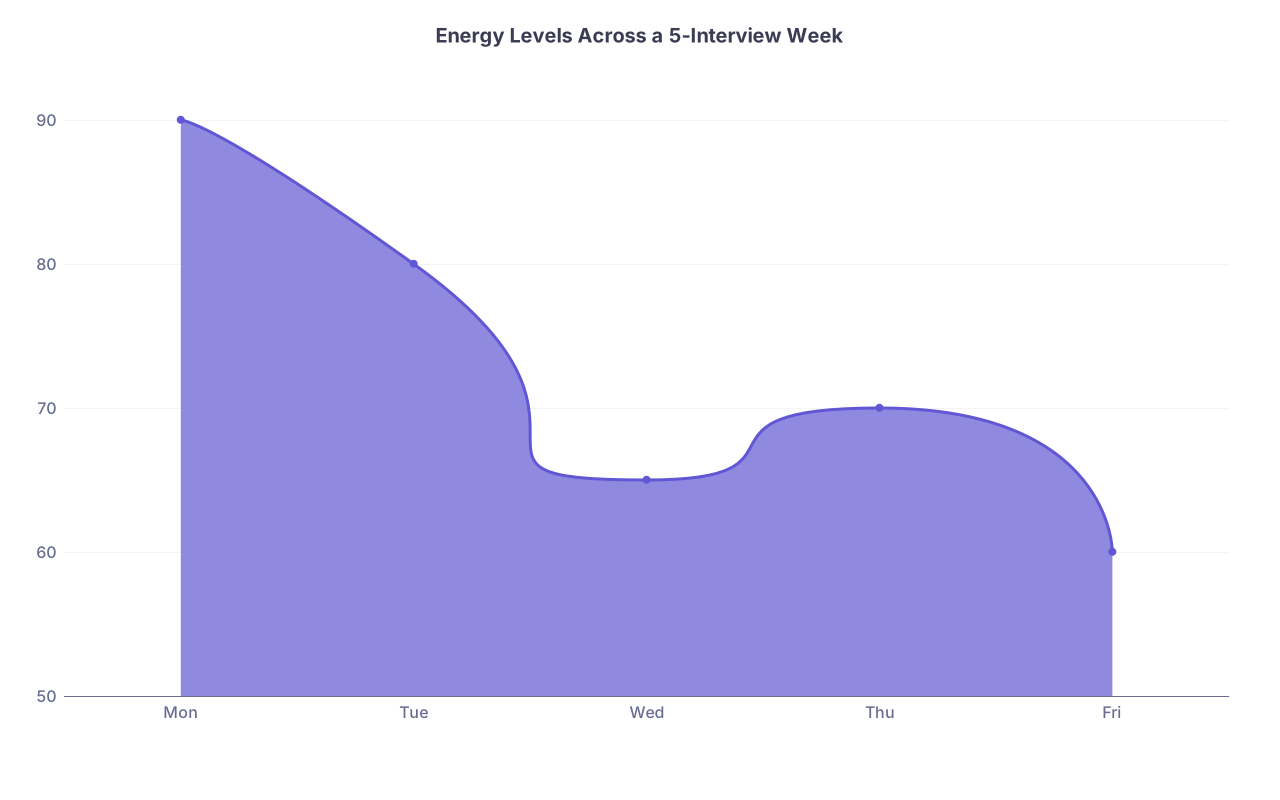
If you have, say, a Monday–Wednesday run of heavy interviews and then another big Thursday–Friday the week after, your mid‑interval recovery matters.
| Category | Value |
|---|---|
| Mon | 90 |
| Tue | 80 |
| Wed | 65 |
| Thu | 70 |
| Fri | 60 |
Here’s how I’d treat the 48–72 hours after a brutal block:
- The first evening: no obligations if you can help it. You’re off. Minimal socializing, no significant clinical work if your school allows that kind of flexibility.
- Next morning: sleep in 60–90 minutes later than usual if your schedule permits. Don’t “catch up” with a 12‑hour marathon. That just pushes your schedule later again.
- During the day: light exercise. Walk, easy jog, yoga. You’re not setting PRs; you’re clearing junk from your system.
- Admin time: batch thank‑you emails for that block, update your notes, and then ignore residency stuff for the rest of the day.
You’re trying to stop the cumulative sleep debt from rolling into the next cluster of time zones.
9. Mental Framing: You’re Not a Victim of the Time Zones
If you treat time zone chaos as something happening to you, you’ll just feel battered by it. The reality: this is part of the job now. Medicine is full of circadian abuse—nights on wards, 28‑hour calls as a resident, 3 a.m. pages as an attending.
I’m not saying it’s good. I’m saying this is your test run for managing your own physiology under shifting demands.
A few mindsets that actually help:
- “Interview time is my public performance window.” Your whole day orbits around protecting those hours, not squeezing interviews into an already overloaded schedule.
- “I can trade 2–3 weeks of strict routine for a much better shot at matching where I want.” That means saying no to some social events, some late‑night Netflix, some extra shift swaps.
- “I will look more composed than I feel.” Tired isn’t the problem; sloppy is. You’re aiming for competent, present, engaged. Not hyper.
10. Concrete Example: A Rough Week, Done Right
Let me put this together in a real schedule. Imagine you’re in Chicago (Central Time). Here’s your interview lineup:
- Monday: New York program, 8 a.m. Eastern (7 a.m. for you)
- Wednesday: Seattle program, 8 a.m. Pacific (10 a.m. for you)
- Thursday: Texas program, 8 a.m. Central (8 a.m. for you)
Here’s how I’d run that:
Friday–Sunday before
- Shift bedtime 30–45 minutes earlier each night.
- Target wake‑up around 5:30–6 a.m. by Sunday.
- Sunday night: everything ready for Monday.
Monday (NY program)
- Wake 5 a.m., same routine: light, hydration, small breakfast, single coffee.
- After interviews, decompress, jot notes, send coordinator thank‑you.
- Bedtime 9:30–10 p.m.
Tuesday (no interview)
- Wake around 6 a.m. (don’t oversleep; you need to be ready for Thursday’s 8 a.m.).
- Late morning or afternoon: 60–90 minutes to prep for Seattle program—review website, think through questions.
- Evening: low‑key, bedtime around 10–10:30 p.m.
Wednesday (Seattle)
- Interview start 10 a.m. your time. Luxury.
- Wake around 7 a.m. No need to shift.
- Afterward: notes + quick thank‑you; light evening, bed no later than 10:30–11 p.m.
Thursday (Texas)
- Back to an 8 a.m. start for you. Wake at 6 a.m.
- Because you didn’t wreck your schedule on Wednesday, this is fine.
Done correctly, that week feels intense but manageable instead of like you’re being hauled through three different circadian zones by your ankles.
If you remember nothing else:
- Treat time zone shifts like real jet lag and plan 48–72 hours ahead for early‑morning interviews.
- Anchor your sleep schedule to the earliest interview in any block of days and protect your evenings from post‑interview overactivity.
- Smooth every controllable variable—tech, light, food, caffeine—so even when your brain is a little fried, you still present like someone they’d be comfortable handing a pager to.