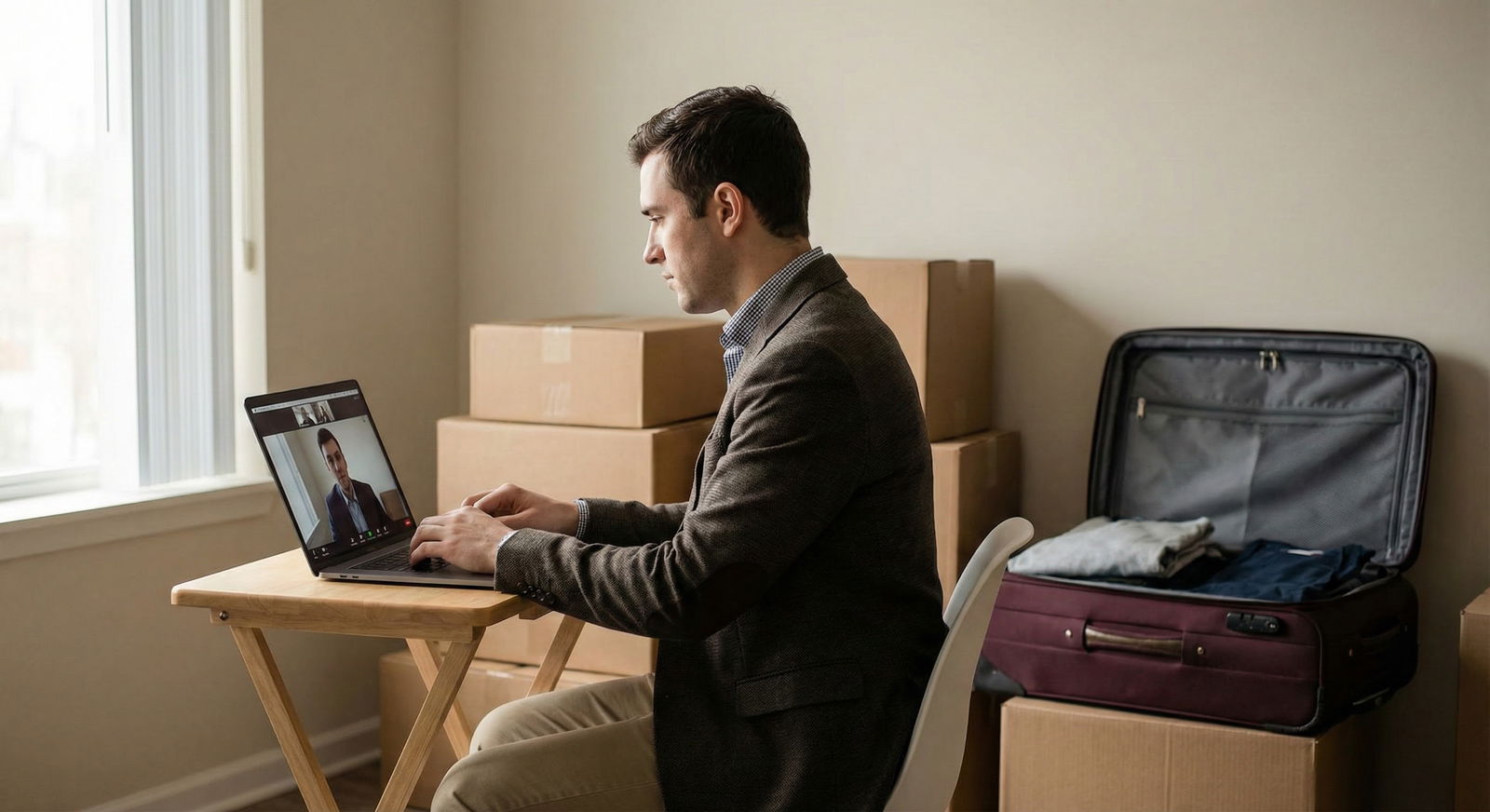
The worst interview you’ll ever give is the one you do at 3 a.m. on no sleep, pretending you’re “so excited to be here.” Let’s make sure that isn’t you.
If you’re interviewing across time zones for residency—especially internationally—you’re not dealing with “just a video interview.” You’re dealing with performance jet lag, logistics, and etiquette landmines. Most people wing this. And it shows.
You’re not going to wing it.
1. First, get clear on the time. Then triple-check it.
People get this wrong constantly. I’ve watched applicants miss or nearly miss interviews because they “thought it was 10 a.m. my time.”
Here’s your baseline rule:
Assume every time a program sends is THEIR local time unless explicitly stated otherwise.
So if an email says, “Your interview will be 8:00 a.m. – 1:00 p.m. PST,” and you’re in Boston or overseas, your job is to convert that correctly and verify it.
Do this every single time:
Identify the program’s city and time zone.
Example:- New York → Eastern Time (ET)
- Chicago → Central Time (CT)
- Denver → Mountain Time (MT)
- Los Angeles → Pacific Time (PT)
Use a world clock that accounts for daylight savings.
Use something like:- timeanddate.com “Meeting Planner”
- Google “8 a.m. Los Angeles time in Riyadh”
Do not trust mental math if you’re crossing multiple zones.
Confirm back in writing in THEIR time and YOUR time.
Send a short confirmation email:Thank you for the interview invitation. I confirm my interview on December 12 from 8:00 a.m. – 12:00 p.m. Pacific Time (which is 6:00 p.m. – 10:00 p.m. Central European Time).
This does three things:
- Shows you’re organized.
- Documents the time.
- Forces you to check your own conversion.
Put it on your calendar with the correct time zone field.
In Google/Outlook, set the event to the program’s time zone (e.g., PT), then let your calendar auto-convert. Don’t create a “local time” event by hand; that’s how mistakes happen.
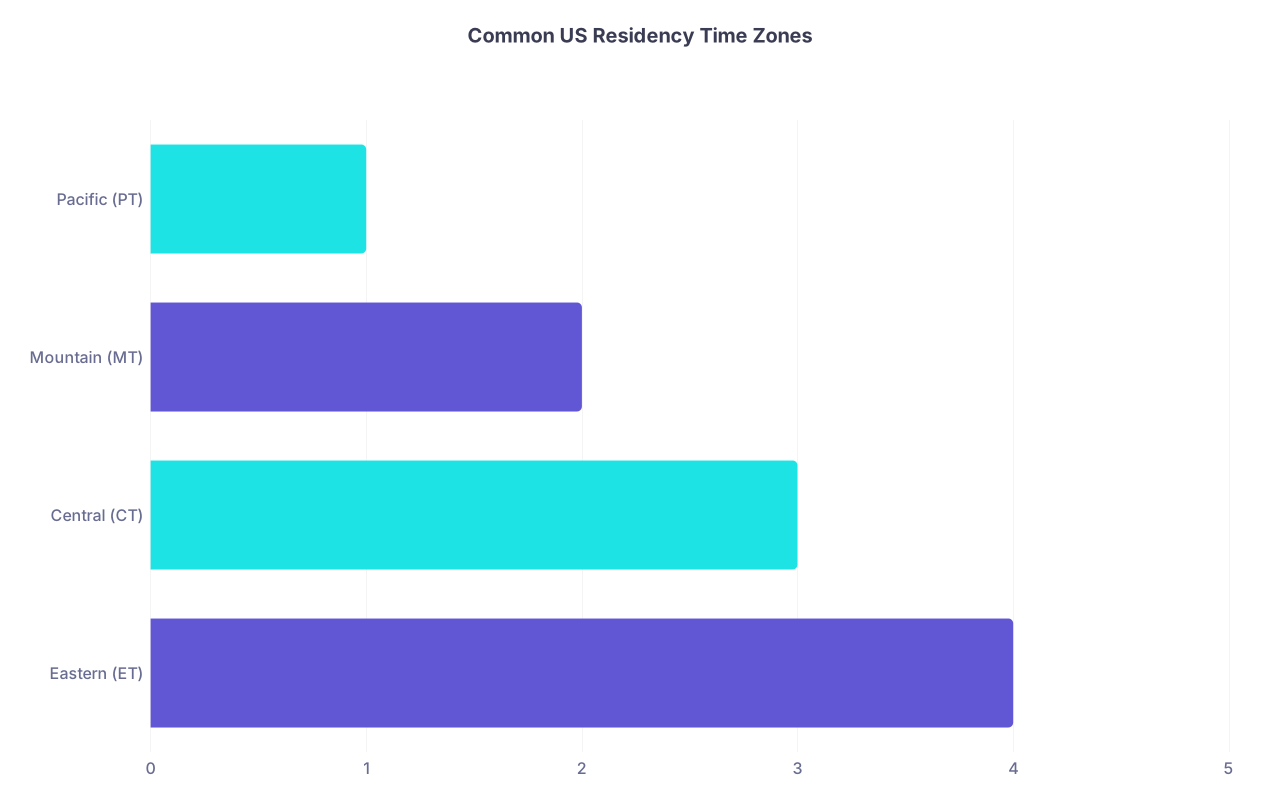
| Category | Value |
|---|---|
| Eastern (ET) | 4 |
| Central (CT) | 3 |
| Mountain (MT) | 2 |
| Pacific (PT) | 1 |
The numbers don’t matter here; the point is: US residency interviews are spread across these four. Know where your program sits.
If you’re unsure—ask:
Just to confirm, are the times listed in your email in Eastern or Central Time?
That one-line email can prevent a disaster.
2. Build a time-zone map for your season
If you’re interviewing across multiple zones (say, living in Europe and interviewing on the US coasts), you need a quick reference that you trust under stress.
Make a simple table for yourself:
| Program City | Program Time | Your Time (London) |
|---|---|---|
| New York (ET) | 8:00 a.m. | 1:00 p.m. |
| Chicago (CT) | 8:00 a.m. | 2:00 p.m. |
| Denver (MT) | 8:00 a.m. | 3:00 p.m. |
| Los Angeles (PT) | 8:00 a.m. | 4:00 p.m. |
You don’t want to be doing math at midnight before a big interview. Set this up once. Refer to it all season.
If you’re in Asia, the Middle East, or Australasia, do the same for your region vs. ET and PT. These are the two most common for US residencies.
3. Sleep strategy: decide which interviews you’ll “shift” for
Here’s the reality:
Some of you will have to interview at insane local times. 2–4 a.m. local. It’s brutal. But you can manage it intelligently.
There are three basic approaches:
Full shift (for a short stretch of days)
You move your sleep schedule by 4–8 hours for 3–5 days, essentially living in the program’s time zone temporarily.Partial shift
You nudge your bedtime/wake time by 2–3 hours to make a 3 a.m. or 4 a.m. local interview more survivable.Single-night hack
You keep your usual schedule but treat the night before like an overnight call: nap, then wake up to “start your day” at 1–2 a.m.
Which one should you use? Here’s a rule of thumb:
- If you have one awful-time interview: use a single-night hack or small partial shift.
- If you have 3+ interviews in similar bad windows over 5–7 days: do a full shift into that time zone for that week.
- If your interview is only 2–3 hours off your normal wake time: small adjustment only. Don’t overcomplicate it.
How to do a single-night hack (for a 3–4 a.m. interview)
Let’s say your interview is 3 a.m.–7 a.m. local.
Day before:
- Wake up at your normal time.
- Midday nap: 60–90 minutes around 1–3 p.m.
- Light activity in the afternoon; avoid long, exhausting workouts.
- Early “dinner,” hydrate, then go to bed 7–8 p.m.
- Use blackout curtains and a sleep mask. Your body will resist sleeping this early, so:
- Cut caffeine after 12–1 p.m.
- No screens for 30–60 minutes before bed.
- Use white noise if you’re easily disturbed.
Night of:
- Wake up ~1:30–2:00 a.m.
- Shower. Real clothes. Light snack.
- Have a small amount of caffeine (half your usual) about 60–90 minutes before the interview starts so you peak during interviews, not crash.
After the interview:
- Don’t immediately collapse into a 5-hour “nap” that wrecks your next night.
- Instead: short 60–90 minute sleep, then wake and stay up until a reasonably early night.
4. Full shift: treating interviews like a short overseas trip
If you have, for example, three US East Coast interviews in one week while living in India or the Middle East, it may be easier to fully shift your schedule.
You’d do this like preparing for night float.
Example: You’re in Dubai (8–9 hours ahead of ET), and you have interviews Monday–Wednesday, each starting at 9 a.m. ET (5–6 p.m. Dubai).
That’s not too bad; you might not need a full shift.
But if they’re at 7 a.m. ET (3 p.m. Dubai) and run 6–7 hours, you might prefer a partial shift of your daily rhythm so you’re alert later into your evening.
General approach to a bigger shift:
- 3–5 days before the cluster of interviews:
- Move bedtime and wake-up by 1–2 hours each day.
- Align meals and caffeine use with your future “time zone.”
- Spend your brightest light exposure in your new “morning,” dim lights in your new “evening.”
You’re gaming your circadian rhythm. Not perfect, but better than nothing.
5. Caffeine, food, and body timing
Do not treat this like a normal morning clinic day.
Here’s how to avoid the classic mistakes:
Caffeine
Bad pattern: First interview starts, applicant slams coffee number two, peaks in the middle, and crashes during the PD’s closing remarks.
Use a slow ramp instead:
- 90 minutes before interview:
- Small caffeine dose (half cup coffee / tea / 50–80 mg).
- Between sessions (if you have breaks and are still early in the day):
- Tiny top-ups if needed, not full cups.
- Stop all caffeine at least 4 hours before your planned “bedtime” after the interview. You need to recover.
Food
Do not do a heavy, greasy meal right before a high-stress Zoom marathon.
Your brain + a carb coma is not a good combo.
For weird-time interviews (middle of your night):
- Light “breakfast” about 60–90 minutes before you start:
- Protein + complex carbs: yogurt + granola, eggs + toast, or a protein bar + fruit.
- Keep water nearby.
- Have a small, easy snack ready for longer breaks (nuts, fruit, simple sandwich).
For normal-time interviews:
- Still eat light and predictable. Interview day is not the time to try new spicy takeout.
6. Environment: fake normal business hours, no matter what time it is
The program doesn’t need to know it’s 2:30 a.m. in your apartment. They just need you to look awake and competent.
You need three things: light, background, and sound control.
Light
You can’t rely on daylight if your interview is before sunrise or into the night.
- Buy or borrow a simple ring light or desk lamp with adjustable brightness.
- Place it behind your laptop, slightly above eye level.
- Avoid overhead-only light that gives you raccoon eyes or shadows.
Test this on video. If your face is dimmer than your background, adjust.
Background
Even if it’s 3 a.m., the scene behind you should look like “calm, ordinary morning,” not “dark, creepy bunker.”
- Choose a neutral background: wall, bookshelf, tidy corner.
- Avoid visible beds if you can. If you can’t, keep it very neat and non-distracting.
- No open closets, laundry piles, or people walking behind you.
If your space is chaotic or shared:
- Use a simple virtual background if and only if you’ve tested it and it doesn’t glitch.
- Plain color or subtle office-like image. Not beaches. Not outer space.
Sound
You don’t want your 4 a.m. interview disturbed by a roommate getting home or a call to prayer outside your window.
- Use wired or good wireless headphones with built-in mic. Better than laptop mic.
- Warn housemates/ family: “From 2:30–7:00 a.m., I need silence.”
- If your building is loud, position yourself in the quietest room you have—even if that’s a hallway or kitchen at night.
7. Do you tell them about your time zone?
This one’s touchy. People over-share or under-share.
Here’s the general rule:
- You do not lead with: “I’m so tired, it’s 3 a.m. here.”
- You do not complain about the timing.
- You can briefly acknowledge the timezone if relevant and framed positively.
Acceptable examples:
- If they ask where you’re located:
I’m currently in Singapore, so this is actually evening for me, but I’m very glad the timing worked out.
- If there’s a small technical hiccup and you feel compelled to explain the setup:
I’m interviewing from [country], so I arranged a quieter space given the time difference. Thank you for your patience.
What you don’t say:
- “Oh wow, I’m usually asleep at this hour.”
- “I had to wake up at 2 a.m. for this.”
- “I’m a bit off—I haven’t really slept.”
That turns your situation into their problem. You chose to apply; part of the job is handling weird schedules like a professional.
8. If you need to request a different time
Sometimes the time they give you is not just inconvenient; it’s impossible. You may be on call, in the OR, or in a setting where you literally cannot get coverage.
You are allowed to ask for alternatives, but do it once, politely, and with flexibility.
Bad approach:
That time doesn’t work for me because it’s 3 a.m. my time. Can I have something after 10 a.m. my time instead?
Good approach:
Thank you very much for the invitation. I’m currently located in [country], and the proposed time overlaps with a clinical obligation I can’t move. I would be very grateful if there’s any alternative slot available that still works for your schedule. I can make myself available at [provide a wide range in their time zone].
Key points:
- Emphasize clinical obligations, not your sleep.
- Speak in their time zone when offering alternatives.
- Be flexible. Don’t demand a narrow window.
If they can’t accommodate you, then you decide: is this program worth a brutal time for one day? Often the answer is yes.
9. Rehearse at your actual interview time
Most people practice at convenient times, then are shocked at how different they feel at 3:45 a.m. under real conditions.
Do at least one full mock under these constraints:
- At the exact time window you’ll interview (or close).
- In the same room, with the same light, clothes, headphones.
- Using the same platform (Zoom, Thalamus, Teams, whatever they specify).
Have a friend or mentor hop on and ask you questions. You’ll discover things like:
- Your ring light is too bright and makes you squint.
- Your neighbor’s dog loses its mind every day at 5 a.m.
- Your brain is slower to pull examples at that time—so you need to rely more on prepared bullet-point notes.
Fix those problems before the real thing.
10. Tech and back-up plans when you’re far away
Interviewing across time zones often means relying on flakier internet, shared spaces, or power issues.
Have redundancies.
Bare minimum:
- Primary device: Laptop with camera + microphone tested on the platform.
- Secondary device: Phone or tablet with the app installed and updated, in case your laptop crashes.
- Backup internet: If your home Wi-Fi is unreliable, have a backup:
- Phone hotspot.
- Co-working space with private rooms.
- Friend’s apartment that you’ve tested beforehand.
Also:
- Download any required software days before.
- Test the specific meeting link the day prior (sometimes it opens a browser pop-up or wants an extra plug-in).
- Keep your charger plugged in; you do not want 5% battery during the PD interview.
If you’re in a country with unstable power, consider:
- Laptop fully charged the night before.
- Interview from a place less likely to lose power (hospital office, hotel, co-working).
If the worst happens and you lose connection:
- Rejoin as fast as you can on your secondary device.
- Send a quick email afterward:
I apologize again for the brief technical interruption earlier. Thank you for your understanding; I’m very grateful we were able to continue the interview.
No long explanations. Just own it and move on.
11. Appearance and energy: how to not look half-dead on camera
You can’t fully fake being exhausted, but you can raise your baseline.
What actually helps:
- Cold water on your face right after waking.
- Short light movement: 5–10 minutes walking around the room, light stretching. Don’t just roll from bed to chair.
- Real clothes: dress as if walking into their conference room. It changes how you carry yourself.
- Limit heavy makeup that melts under bright light and tired skin; clean, professional, minimal is better.
On camera, you want:
- Shoulders back, head level with webcam (not tilted down).
- Slightly brighter light than you think is necessary.
- A visible, brief smile when each person logs on—first impression matters, especially when they’re meeting you as just another tile on a screen.
12. Mental framing: stop telling yourself “this is unfair”
This part matters more than you think.
If you walk into a 3 a.m. interview thinking, “This is ridiculous, I’m at such a disadvantage,” it leaks into your body language. You become resentful and passive.
Instead, frame it as:
“This is a weird schedule test—exactly like residency will be. I can handle one off-cycle day.”
You’ve already done night shifts, 24s, calls. This is just another configured version of that, except:
- Nobody’s going to crash if you’re tired.
- You can prep your environment more.
- You only need to look sharp on camera, not run a code.
That mindset makes you more resilient. You’re not the victim of the time zone. You’re the person who handled it like a professional.
13. After the interview: reset smart
Don’t trash the rest of your week to recover from one early interview.
Post-interview plan:
- Move. Walk, stretch, get some sunlight if it’s morning.
- Eat a real meal, not just caffeine and anxiety.
- Schedule a short nap, not half a second sleep cycle:
- 20–30 minutes for a quick refresh
- OR 60–90 minutes if you had almost no sleep
Then go to bed at a normal or slightly early local time. Push yourself to stay awake enough that your next night’s sleep is solid.
If you have more early/late interviews coming, adjust stepwise toward that pattern instead of bouncing around.
14. Quick scenario run-throughs
Scenario 1: You’re in California, interviewing at East Coast programs
- Their 8 a.m.–12 p.m. ET = your 5 a.m.–9 a.m. PT.
- This is manageable with a partial shift:
- Bedtime 9–10 p.m., wake 4 a.m.
- Treat it like an early OR day.
Scenario 2: You’re in Europe, interviewing in New York and L.A.
Let’s say you’re in Paris (CET).
- 9 a.m. ET (New York) = 3 p.m. Paris. Easy.
- 9 a.m. PT (L.A.) = 6 p.m. Paris. Still okay.
What kills you is when:
- They do 7 a.m.–3 p.m. Pacific = 4 p.m.–12 a.m. Paris.
- You finish near midnight, wired and exhausted.
Here:
- Shift your evening routine later for a few days.
- Plan a very light schedule the next morning.
- Don’t expect to be functional at 7 a.m. local the next day.
Scenario 3: You’re in India, interviewing on US East Coast
Roughly:
- 9 a.m. ET = 6:30 p.m. India.
- 7 a.m. ET = 4:30 p.m. India. Pretty ideal, frankly.
Your challenge isn’t sleep; it’s shared home environments at peak local time:
- Kids, traffic noise, family dinner, evening calls.
You:
- Stake out a quiet room well in advance.
- Tell your family: “From 4–10 p.m. these two days, this space is off-limits.”
- Emphasize that this is your future career, not a casual Zoom.
One concrete thing to do today
Open your interview invitation emails right now and write down each program’s date, program time zone, and your local equivalent in a simple table or calendar. Then schedule at least one full mock interview at the exact local time of your earliest or latest real interview. Test your setup, your lighting, and your brain at that hour—before it counts.