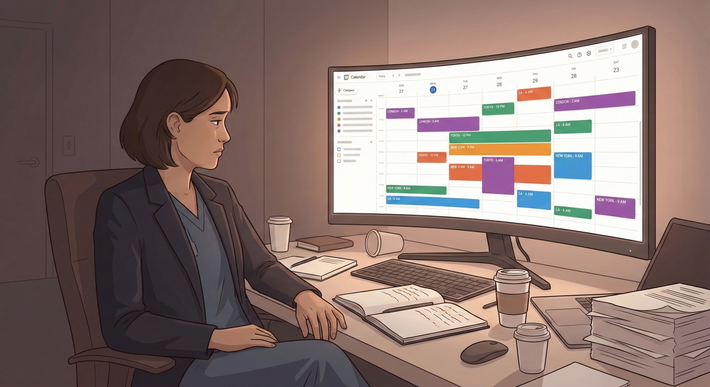
You’re at your parents’ dining table with your laptop open, ERAS dashboard on the screen, and three email notifications just popped up: interview invites. All virtual. All in the middle of the day.
Your heart jumps. Then immediately sinks.
Because your dad has phone calls on speaker. Your mom has the TV blaring all afternoon. Your younger sibling stomps like a rhinoceros and plays Valorant at max volume. And there is literally no door in this house that fully blocks sound.
You’re thinking: “There is no way I can do a serious residency interview in this chaos. But I also cannot afford an apartment or a coworking space every interview day. And my family ‘doesn’t see the big deal’ about a little noise.”
This is the article for that exact situation. You’re living with family during interview season and you need to set boundaries around noise without exploding your home life.
Let’s walk through what actually works, step by step.
Step 1: Get Clear on Your Non‑Negotiables Before You Talk to Them
Do not start with a vague “I need it to be quiet sometimes.” That is how you get half‑measures and resentment on both sides.
Get specific. Before you say a word to your family, answer these for yourself:
- What exact dates and times are your interviews?
- What windows around each interview do you need quiet? (Usually 30–45 min before, 15 min after.)
- Where in the house is realistically the best “studio” location? (Door > no door. Carpet > tile. Far from TV/kitchen > close.)
- What types of noise are dealbreakers?
- TV/music
- Loud phone calls
- Vacuum, blender, dishes
- Sibling gaming, yelling, or practicing instruments
Then decide your non‑negotiables versus nice‑to‑haves.
Non‑negotiable examples:
- No TV or loud phone calls in the adjacent room during the scheduled block.
- No vacuuming, blender, or banging pots during that block.
- No one entering your interview space unless there’s an emergency.
Nice‑to‑have examples:
- Whole house whisper‑quiet.
- No one walking past your door.
- Internet bandwidth all to yourself for 4 hours.
You are not building a monastery. You’re building a realistic “good enough” setup for residency interviews.
Write this down. Literally. You’ll use it.
Step 2: Have a Real Conversation, Not a Casual Ask in Passing
You do not casually mention this while your mom is stirring pasta and your dad is paying bills. You call a short family meeting. Yes, like you are 12 again. Do it anyway.
Here is a structure that works.
1. Frame what’s at stake (in their language)
You say something like:
“Match season is basically my job hunt for the next 3–7 years of my life. These video interviews decide where I work, train, and live. Programs rank me based on these conversations. If they hear loud TV or disruptions, it can hurt how I come across.”
People understand job interviews. Use that.
2. Show them it’s temporary and planned
Do not be vague. Bring a printed or shared schedule.
“Here are my confirmed interview dates and times so far. I’ll update this as I get more. On each of these days, I need the house quiet from [time] to [time]. It won’t be every day, just these specific days.”
This makes it finite and predictable instead of “we have to be quiet indefinitely.”
3. Explain what “quiet” actually means
Your family’s idea of quiet may be: TV at volume 20 instead of 40. That will still sound like a stadium on Zoom.
Spell it out:
“For these blocks, I need:
- No TV in the living room.
- No loud phone calls on speaker.
- No blender, vacuum, or loud kitchen work.
- [Sibling], no gaming with voice chat or yelling during those times.”
And yes, name people and behaviors. Otherwise no one feels responsible.
4. Give them a reason to care beyond “because I said so”
You can say:
“This is like my Step exam but on video. I’ve spent years working toward this. You helping me with noise on a few days literally affects where I match and how much support I’ll have as a resident.”
You’re not guilt‑tripping. You’re giving them a clear why.
Step 3: Turn It Into a Shared Plan, Not Just Demands
People handle rules better when they helped shape them.
Ask, “How can we make this work with everyone’s schedule?”
Concrete things to iron out:
- Where will your mom/dad take phone calls during those blocks?
- Is there a specific TV‑free room they can use instead?
- Can your sibling wear headphones / game in their room / visit a friend?
- Are there any recurring events (remote work, Bible study, online classes) that conflict?
Write the plan out and post it somewhere super visible: fridge, family WhatsApp, group text.
Something like:
| Time Block | Household Plan |
|---|---|
| 7:30–8:00 am | Applicant sets up, test AV |
| 8:00–10:00 am | Interview – TV off, low voices |
| 10:00–10:15 am | Debrief – still no loud appliances |
| 10:15 am onward | Normal house noise ok |
You’re not running a dictatorship. But you are the one with the job interview. It’s ok if the plan is partly “because this matters more than background Netflix.”
Step 4: Build a Physical Buffer, Not Just a Social One
You can get a long way with boundaries. You get even further when you also make your space more sound‑tolerant.
Pick the best possible room
Pick:
- The room with a door (even if it’s your parents’ bedroom for a morning).
- Farthest from kitchen/TV.
- Carpeted > tile/wood.
- No exterior noise if you live on a busy street.
If that means temporarily moving a folding table into a bedroom, do it. Interview backdrop can be a blank wall. No one on the program side cares that it’s not an office.
Cheap sound hacks that actually work
You’re not installing acoustic foam. You’re just dulling the chaos.
- Put a rolled towel at the bottom of the door.
- Hang a heavy blanket or extra curtain over the door (command hooks).
- Fill echo: open closet doors, hang clothes, add a rug or extra blanket on the floor.
- Put a bookcase or dresser between your chair and the door if possible.
And most importantly: good headphones.
Get a wired or USB headset with a built‑in mic if you can. Over‑ear headphones help you stay locked in even if your brother drops a fork outside.
Step 5: Control the Tech So Slight Noise Isn’t Fatal
Here’s the part most people overlook: on Zoom, Google Meet, or Thalamus, slight background noise isn’t the end of the world if your own audio is clean and your background is controlled.
- Use headphones with a mic or an external mic. Laptop mics pick up every plate clink.
- Turn on background noise suppression in Zoom/etc.
- Use a simple virtual background or blur if the room looks busy. But test this – some older laptops struggle.
- Position the camera so the door is not directly behind you, if possible. You don’t want surprise background appearances.
Do a full mock interview with a friend or classmate from your actual family home setup. Tell them to be brutally honest about sound.
Record yourself:
- Run a 5–10 minute fake interview.
- Have your family make their usual daytime noise (within reason).
- Play back the recording. If your friend says, “I barely hear anything,” you’re probably fine.
Step 6: Use Visual Cues So You’re Not Shouting Across the House
You cannot re‑negotiate boundaries five minutes before a program director logs on.
Use obvious signals.
- Print a big sign for your door: “INTERVIEW IN PROGRESS: Please keep noise low until [time].”
- Use a colored sticky note system:
- Green = studying, normal noise ok.
- Yellow = on Zoom but not interview (meeting, lecture), try to be a bit quieter.
- Red = actual interview, strict quiet.
If people are in and out all the time, consider texting the family group 10 minutes before: “Red zone starts now – interview 8:00–10:00.”
It feels overkill. It works.
Step 7: Manage the Chronic Offender Problem
Almost every family has one person who thinks rules are optional. The uncle who drops by unannounced. The sibling who thinks you’re “overreacting” about noise.
You handle them separately. Not in front of everyone.
For siblings / peers
Keep it simple and direct:
“Look, I know gaming is your way to unwind. But from 8–10 am Thursday, it can’t be in the next room. This actually affects where I match. Can you game with headphones in [other room] or just wait until after 10?”
If they blow you off:
“Then I’ll need to use your room for that morning and you can hang in the living room until 10. I can’t risk yelling in the background.”
You’re not asking permission. You’re stating what’s going to happen so you don’t tank your interviews.
For older relatives
With parents/grandparents/uncles, you aim for respect + clarity:
“On these specific mornings, I truly need the house like a library. Not permanently. Just those few hours. I know it’s inconvenient, but this directly affects my career.”
If they still dismiss it (“They’ll understand,” “A little noise is fine”):
“Honestly, programs have a lot of applicants. They may not say anything, but a chaotic interview does not help me. I’ve worked too hard to let something small like TV noise hurt my chances. I need your help on this.”
You may feel like you’re being dramatic. You’re not.
Step 8: Have a Backup Plan for When the Plan Fails
Something will go wrong. Someone will forget. The neighbor will decide it’s lawn‑mowing day. Your backup plan is what keeps your stress down.
Reasonable backup options:
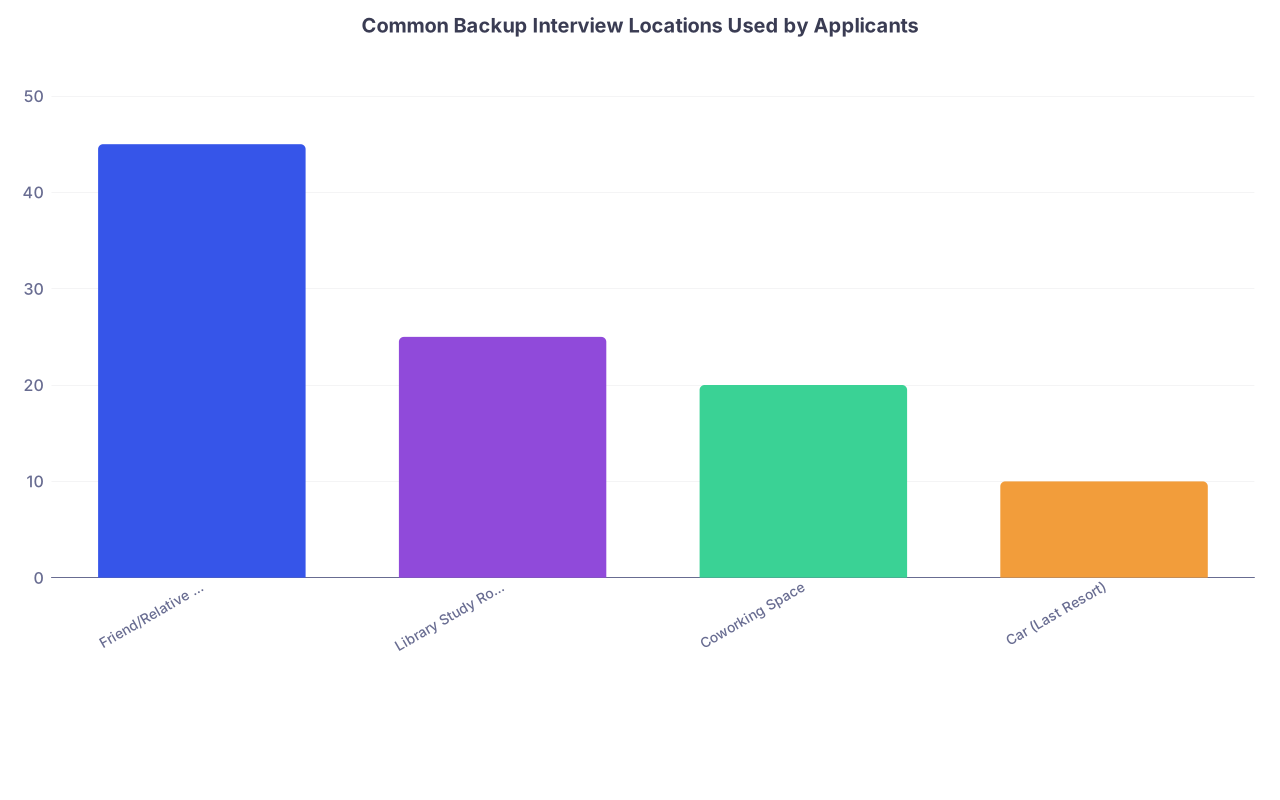
- Pre‑scout one alternative location: a friend’s quiet apartment, your cousin’s house, or a local library/private study room that allows video calls.
- Book one coworking space / private office for your absolute top‑choice or most high‑stakes interview if your home is truly unpredictable.
- Keep your phone hotspot ready in case home internet dies.
| Category | Value |
|---|---|
| Friend/Relative Home | 45 |
| Library Study Room | 25 |
| Coworking Space | 20 |
| Car (Last Resort) | 10 |
The car option: people do this. I’ve seen applicants do entire interviews from a parked car with a laptop tray and mobile hotspot. It’s not ideal, but it beats shouting family chaos.
If you have to, backseat, parked in a quiet lot, sunshade on windshield, laptop on a stable surface, phone as hotspot, and wired headphones. Not Plan A. But better than panic.
Step 9: Prepare Your Family for Small Interruptions So No One Melts Down
Even with perfect planning, someone may knock. A dog may bark. A delivery may show up.
Your goal is not zero noise. It’s: if something happens, it’s brief, you stay calm, and your family doesn’t freak out and start arguing mid‑interview.
Tell them:
“If anyone accidentally opens the door, just quietly close it and walk away. Please don’t say anything or apologize out loud. I’ll handle it with the interviewer.”
And for yourself, have one line ready:
“I apologize for the brief interruption – I’m currently living with family during interview season, but we’ve set up a quiet space for today. Thank you for your patience.”
Then move on. Program directors are human. They care more about whether you stay composed than whether your sibling existed for three seconds in the background.
Step 10: Lower the Emotional Temperature at Home
If your family already feels like you’re “never around,” interview season can stir up some resentment. All they see is you at the computer all day, then telling them to be quiet.
You do not have time for family drama in peak interview weeks.
Prevent some of it by doing three things:
Give them the whole arc. “Interviews run from roughly [month] to [month]. It will be more intense early on, then taper off.”
Build in visible availability. “On non‑interview days, I’m totally fine with normal noise. We can watch TV in the living room those nights, no issue.”
Say thank you. A lot. “Thank you for helping me out during that 8–10 block. I know it’s disruptive. It really does make a difference.”
Small acknowledgment goes a long way. People are more willing to cooperate for weeks if they feel seen.
Step 11: Your Own Stress Management in the Middle of Family Chaos
Even with perfect boundaries, living with family while trying to impress program directors is stressful.
Quick, realistic strategies that fit in 5–10 minutes:
- Before each interview: 3 minutes of box breathing (4‑second inhale, 4‑hold, 4‑exhale, 4‑hold). Headphones in. Door closed. Your nervous system will thank you.
- Have a “pre‑interview ritual” that signals your brain it’s showtime: same shirt/jacket, same water bottle, same pen/notepad, same 2–3 practice questions aloud.
- Don’t spend the 20 minutes before your interview arguing about the TV volume. If they forgot, remind once, then move out of the conflict. You need your brain for the interview, not family politics.

| Step | Description |
|---|---|
| Step 1 | 30 min before |
| Step 2 | Check tech & internet |
| Step 3 | Set up room & background |
| Step 4 | 3-5 min breathing |
| Step 5 | Review program notes |
| Step 6 | Join meeting 5-10 min early |
Your job that morning is not to fix your family dynamic. Your job is to show up sharp and collected on camera.
Step 12: When Boundaries Are Not Respected Repeatedly
Sometimes, despite all the planning, someone flatly refuses to accommodate. Or the house is just objectively too loud, too crowded, too unstable.
If that’s your reality, you shift from “make this house work” to “minimize days I rely on this house.”
Prioritize:
- Top‑choice / highly competitive interviews: do everything possible off‑site.
- Lower‑priority programs: do them from home if needed, with all your hacks in place.
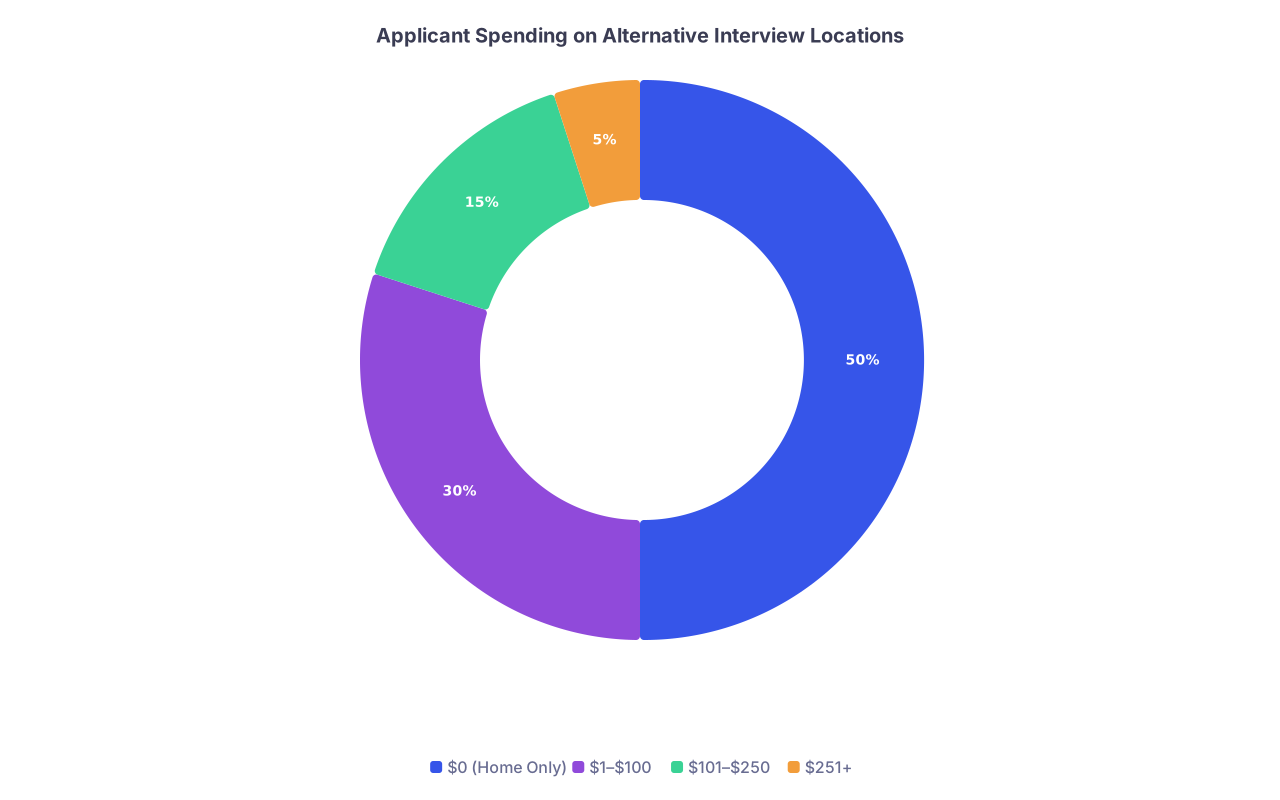
If you can swing even 2–3 off‑site days for your most important interviews, it’s worth the cost.
| Category | Value |
|---|---|
| $0 (Home Only) | 50 |
| $1–$100 | 30 |
| $101–$250 | 15 |
| $251+ | 5 |
For some applicants, a $40 coworking room for a single day is cheaper than years of “what if I’d taken that one program more seriously.”
If money is tight, ask:
- A local friend who works 9–5 and has a quiet apartment.
- An attending/mentor who might have an unused office for a morning.
- Your med school’s library or office space – many still let graduates use rooms.
You’re not being high maintenance. You’re protecting a high‑stakes opportunity.
Step 13: Put It All Together into a Realistic Weekly System
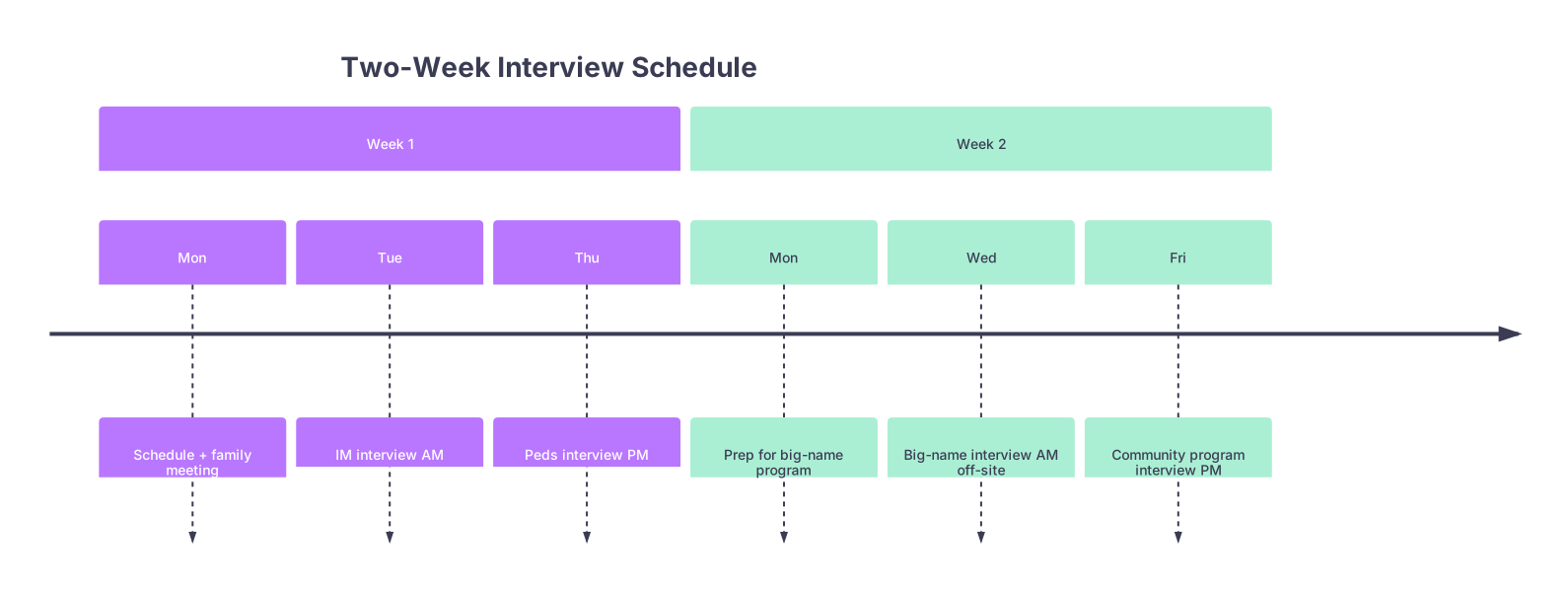
Let’s say it’s late October. You’ve got 4 upcoming interviews in the next two weeks. Here’s what your actual week might look like in this setup:
Sunday:
- Update master interview calendar.
- Text family group: “This week’s interview quiet times: Tue 8–11, Thu 1–4. Sign on door will be up.”
- Confirm any off‑site space if needed.
The night before an interview:
- Set up the room: desk, chair, backdrop, light.
- Put towel under door, tape blanket over it if needed.
- Lay out clothes, test headphones, test Zoom link with a friend if possible.
Interview morning:
- 30–45 minutes before: remind family once.
- Turn on visual “red zone” sign.
- Run your pre‑interview routine.
After interview:
- Take down sign.
- Thank whoever actually respected the quiet.
- Log notes about the program while it’s fresh.
| Period | Event |
|---|---|
| Week 1 - Mon | Schedule + family meeting |
| Week 1 - Tue | IM interview AM |
| Week 1 - Thu | Peds interview PM |
| Week 2 - Mon | Prep for big-name program |
| Week 2 - Wed | Big-name interview AM off-site |
| Week 2 - Fri | Community program interview PM |
This is how you keep things from feeling like random daily chaos.
Living with family during residency interview season isn’t ideal. You will hear noise. You will have at least one minor interruption. Someone will forget the rule and turn on the blender.
That does not mean you’re doomed.
What matters is that you:
- Set clear, specific expectations instead of vague pleas.
- Physically optimize your space as much as your budget and house allow.
- Have backup options for the truly important interviews.
- Stay composed when small things inevitably go wrong.
You’ll get through this stretch. Then, in a few months, you’ll have a Match result and a real move to plan, an actual apartment to set up, and call schedules to survive. With these boundaries and systems in place, you’ll be able to focus on what actually matters in an interview: showing programs the resident you’ll be.
The noise? That’s temporary. The career you’re building will last a lot longer.