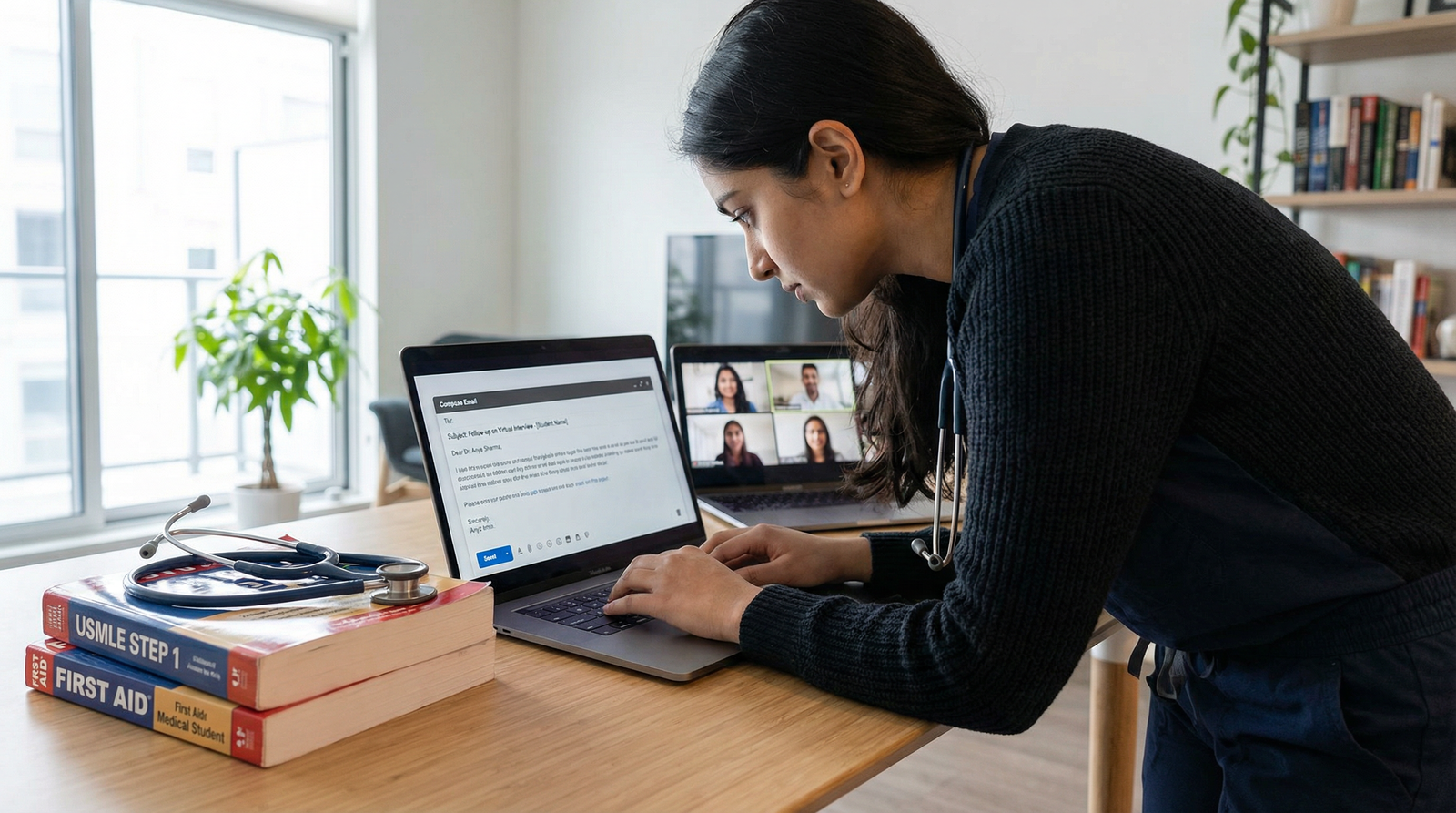
Follow-Up Strategies After Your Virtual Residency Interview
Completing a virtual Residency Interview is a major milestone in your medical career. By the time you reach this stage, you’ve already invested years in medical school, months in the Application Process, and countless hours refining your ERAS application, personal statement, and interview skills.
What happens after the interview, however, is often overlooked—and yet it can significantly influence how programs remember you. Strategic, professional Follow-Up Strategies can reinforce your interest, demonstrate maturity and communication skills, and help you stand out in a competitive pool.
This guide walks you through what to do after your virtual residency interview, with practical templates, timing advice, and etiquette considerations tailored to today’s virtual interview era.
Why Follow-Up Matters in the Residency Interview Process
Thoughtful follow-up is more than a courtesy; it’s part of your overall professional branding in medical careers.
Reinforcing Genuine Interest in the Program
Programs want residents who are truly invested in their training environment. A concise, specific thank-you message:
- Confirms that you remain enthusiastic after learning more about the program
- Shows that you paid attention to details during the interview
- Helps distinguish you from applicants who appear passive or disinterested
In a competitive Residency Interview season, a memorable, professional follow-up can be one of the last touches you leave on a program.
Demonstrating Professional Communication Skills
Residency (and all medical careers) demands clear, respectful, and timely communication—with patients, colleagues, and interprofessional teams. Your follow-up gives programs a real-world sample of:
- How you write professional emails
- How well you organize your thoughts
- How promptly you respond and close the loop
A polished follow-up message subtly signals: “I am the kind of resident who will communicate clearly on call, with consultants, and in patient documentation.”
Building Relationships and Networking
Residency is not just a job—it’s a close-knit community. Follow-up communication helps you:
- Maintain a connection with faculty, program directors, and chief residents
- Lay groundwork for future networking, research opportunities, or fellowship letters
- Express appreciation for their time during a busy recruitment season
You may work with some of these people again in the future, even if you don’t match at their program. Thoughtful communication is never wasted.
Timing Your Follow-Up: When to Reach Out
Timing can make your follow-up feel either polished and professional—or rushed and intrusive. Aim for a cadence that keeps you on the program’s radar without becoming overbearing.
The First 24–48 Hours: Thank-You Email
Aim to send your first follow-up within 24–48 hours of your virtual Residency Interview. This window strikes the right balance:
- You’re still fresh in the interviewer’s memory
- You have time to reflect on specifics you’d like to mention
- You avoid the impression of sending a generic, copy-paste email during the same hour as the interview
If you had a multi-interviewer day (e.g., PD, APD, faculty, chief resident), it’s ideal to send a brief individualized note to each person, tailoring 1–2 sentences to your conversation with them.
Around 1 Week Later: Optional Status or Clarification Inquiry
About one week after your interview (or after your last communication with the program), it may be appropriate to send a brief follow-up in specific scenarios:
- You were told to expect certain information (e.g., social event, second-look details) and haven’t received it
- You have a significant update (new publication, award, Step score, or leadership role) relevant to your application
- You need clarification on logistical issues (e.g., missing evaluation, supplemental form, or timeline)
This is not a weekly “check-in,” but a purpose-driven communication if there is a legitimate reason to reach out.
Later in the Season: Strategic Check-Ins (Within NRMP Rules)
As rank list deadlines approach, some applicants feel tempted to send multiple updates. Be careful:
- Review NRMP and program-specific policies: Some programs explicitly discourage or do not respond to post-interview communication influencing ranking decisions.
- If permitted, 1 concise message closer to the ranking deadline—reiterating sincere interest or, where appropriate and truthful, specifying a “top choice”—may be reasonable.
Always maintain honesty and integrity. Never tell multiple programs they are your “#1 choice.”
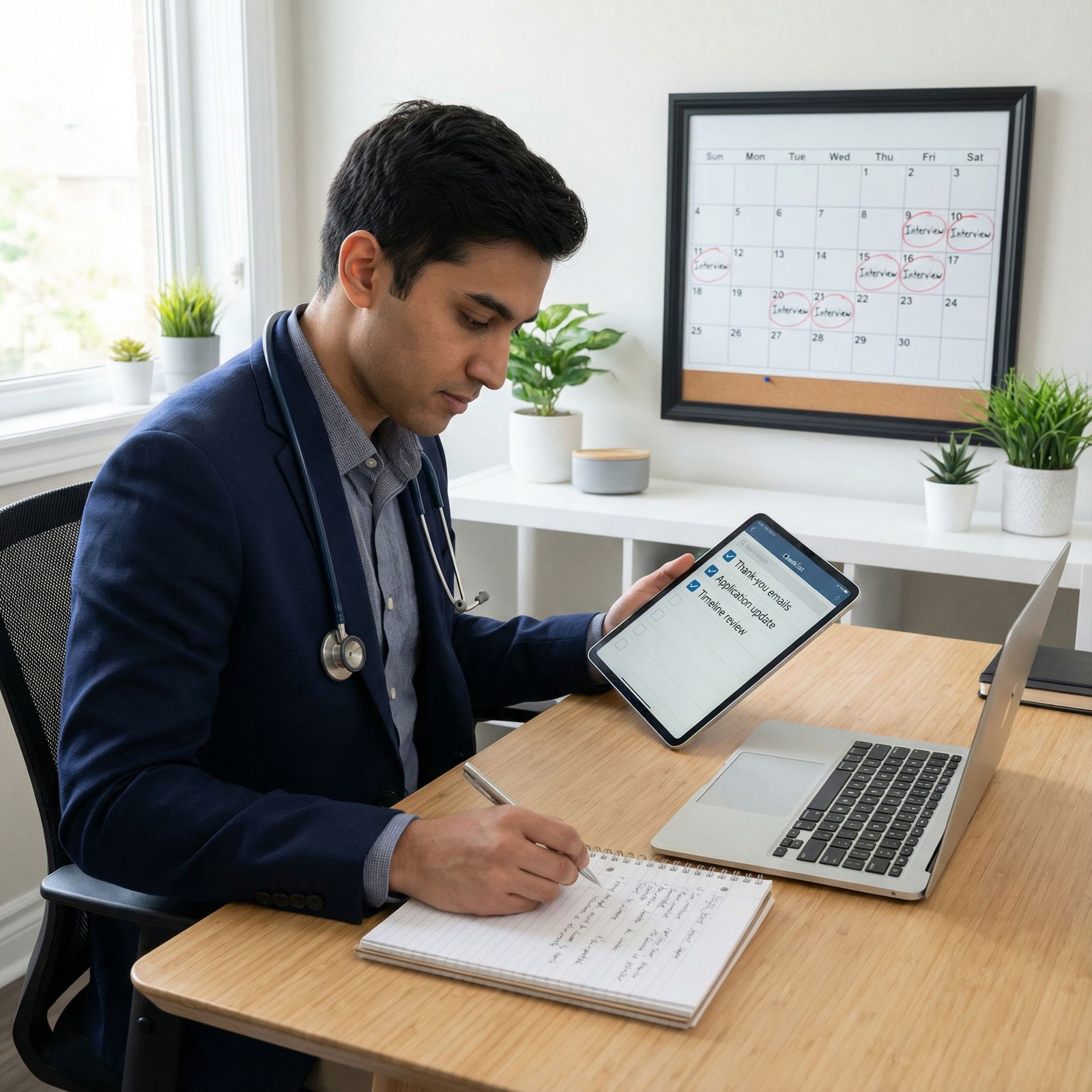
Crafting an Effective Thank-You Email After a Virtual Residency Interview
The thank-you email is your foundational post-interview communication. It doesn’t need to be long or elaborate, but it does need to be:
- Professional
- Specific
- Polite
- Error-free
Key Components of a Strong Thank-You Email
1. Professional Subject Line
Keep your subject line clear and easy to search in a busy inbox. For example:
Thank You – [Your Name], [Specialty] InterviewThank You for the Interview – [Program Name]Appreciation for Our Interview Conversation – [Your Name]
Avoid overly casual or vague lines like “Hey!” or “Quick thanks.”
2. Correct Salutation and Titles
Use the interviewers’ correct titles:
- “Dear Dr. Smith,”
- “Dear Dr. Johnson and the [Program Name] Team,” (if emailing a panel collectively, when appropriate)
Double-check spelling. Misspelling a name or using the wrong title can create an avoidable negative impression.
3. Clear Expression of Gratitude
Start by acknowledging their time and the opportunity to interview. For example:
Thank you for taking the time to speak with me on October 5th regarding the Internal Medicine residency position at XYZ Hospital.
Be specific about the date and the program to jog their memory.
4. Mention 1–2 Specific Details from the Interview
This is where you differentiate yourself from generic follow-ups. Reference something that:
- You discussed in depth
- Highlighted the program’s strengths
- Resonated with your own goals or values
For example:
I especially enjoyed learning about your program’s longitudinal continuity clinic and the emphasis on caring for an underserved urban population. Our conversation about how residents are supported in managing complex patients reinforced my interest in XYZ’s training environment.
This shows you were engaged, attentive, and genuinely interested in that specific program—not just mass-emailing everyone.
5. Reiterate Your Interest and Fit
Briefly restate why you’re excited about the program and what you hope to contribute:
I am very enthusiastic about the opportunity to train at XYZ Hospital, particularly given my interest in health equity and my prior work with free clinics. I believe my background in community outreach and quality improvement would allow me to contribute meaningfully to your resident cohort and patient care initiatives.
Stay sincere and grounded—no need for dramatic language.
6. Professional Closing and Signature
End respectfully and invite further communication if needed:
Thank you again for the opportunity to interview and for your time. Please let me know if I can provide any additional information.
Sincerely,
[Your Full Name]
[Preferred Email] | [Phone Number] | AAMC ID (optional)
Including your contact details makes it easy for programs to reach you without searching through ERAS.
Sample Thank-You Email (Virtual Residency Interview)
Subject: Thank You – John Doe, Radiology Interview
Dear Dr. Smith,
Thank you for taking the time to speak with me on October 5th regarding the Radiology residency position at XYZ Hospital.
I particularly appreciated our discussion about the department’s recent advancements in imaging technology and the integration of AI into diagnostic workflows. Hearing how residents are directly involved in these projects reinforced my enthusiasm for your program’s commitment to innovation and education.
I am very excited about the opportunity to join XYZ Hospital and contribute to your team, drawing on my background in imaging research and my interest in applying technology to improve patient care and workflow efficiency.
Thank you once again for this opportunity. Please feel free to reach out if you require any additional information from me.
Warm regards,
John Doe
johndoe@email.com | (555) 123-4567
Following Up on Application Status and Program Communication
Programs vary widely in how often they communicate post-interview. Some send periodic updates; others remain quiet until rank lists are finalized. Your goal is to stay appropriately engaged without crossing into pushy or unprofessional territory.
When Is It Reasonable to Inquire About Status?
A brief, polite status or clarification email may be appropriate if:
- The program told you to expect something specific (social invite, second-look information, supplemental questionnaire) by a certain time, and that time has passed.
- There are logistical or technical issues, such as a missing document, incomplete application component, or difficulty accessing a required portal.
- You have a major update (e.g., newly accepted publication, Step 2 CK score release, significant award) that legitimately strengthens your application.
It is generally not necessary—or helpful—to send repeated emails just to “check in” about ranking, which most programs do not discuss.
Structure of a Status/Update Email
1. Direct, Professional Subject Line
Application Update – [Your Name], [Specialty]Application Status Inquiry – [Your Name]
2. Concise Opening and Context
Remind them briefly where they know you from:
I hope this message finds you well. I interviewed with your program on October 5th for a position in the Radiology residency.
3. Specific Reason for Reaching Out
If asking about a missing communication:
I wanted to kindly follow up regarding the resident social event details that were mentioned during the interview day. I may have missed the email and wanted to ensure I stay informed about any upcoming opportunities to learn more about the program.
If providing an update:
Since our interview, I wanted to share a brief update: my recent research project on MRI-based tumor characterization was accepted for presentation at the RSNA annual meeting. I remain very interested in the XYZ Radiology Residency and believe this experience further aligns with your program’s strong focus on academic and cutting-edge imaging work.
4. Polite Closing
Thank you for your time and consideration. I appreciate all the effort your team invests in the residency Application Process, and I remain very interested in your program.
Best regards,
[Your Name]
How Often Is Too Often?
As a general rule:
- Thank-you note: Within 24–48 hours of interview
- One purpose-driven follow-up: ~1–2 weeks later, only if necessary
- Optional later-season message (if consistent with NRMP and program policies): Closer to rank deadline, at most once
If a program does not respond, do not continue sending reminders. Silence is not necessarily negative; many programs have strict policies about post-interview communication.
Additional Follow-Up Opportunities and Professional Touchpoints
Beyond emails about gratitude or status, there are other strategic ways to maintain a professional presence with a program while respecting boundaries.
Thoughtful Networking with Faculty and Residents
If you had especially meaningful conversations—about research interests, subspecialty plans, or shared values—you may:
- Send a brief note to a specific faculty member thanking them for their insights on a topic you discussed
- Later share a relevant article, resource, or question that genuinely builds on your previous conversation (but avoid over-communicating)
Example:
Dear Dr. Lee,
Thank you again for discussing your work in global surgery during my interview day with ABC General Surgery. I recently came across a publication on developing sustainable surgical capacity in low-resource settings and thought of our conversation. I have attached the citation below in case it might be of interest.
I appreciate the inspiration and insight you shared into combining academic surgery with global health efforts.
Sincerely,
[Your Name]
Keep these messages rare, meaningful, and clearly professional.
Professional Social Media and Online Presence
You can also engage with programs in subtle ways:
- Follow the residency or department on LinkedIn, X (Twitter), or Instagram (if you are comfortable with your professional presence).
- Like or thoughtfully comment on posts related to resident achievements, research, or community programs.
Tips:
- Keep comments professional and concise; avoid controversial topics in this context.
- Do not attempt to “DM” program directors or ask about ranking decisions on social media. Email remains the standard for formal program-related communication.
Update Letters and Statements of Interest
In some specialties or programs, applicants send:
- Update Letters: To convey significant new accomplishments (e.g., major publications, awards).
- Letters of Interest / Intent: To indicate particular enthusiasm or a program being your top choice.
If you choose to send these:
- Verify that the program and specialty culture are open to such letters.
- Be 100% honest—never tell multiple programs they are your #1.
- Keep the communication succinct, respectful, and focused on fit, not flattery.
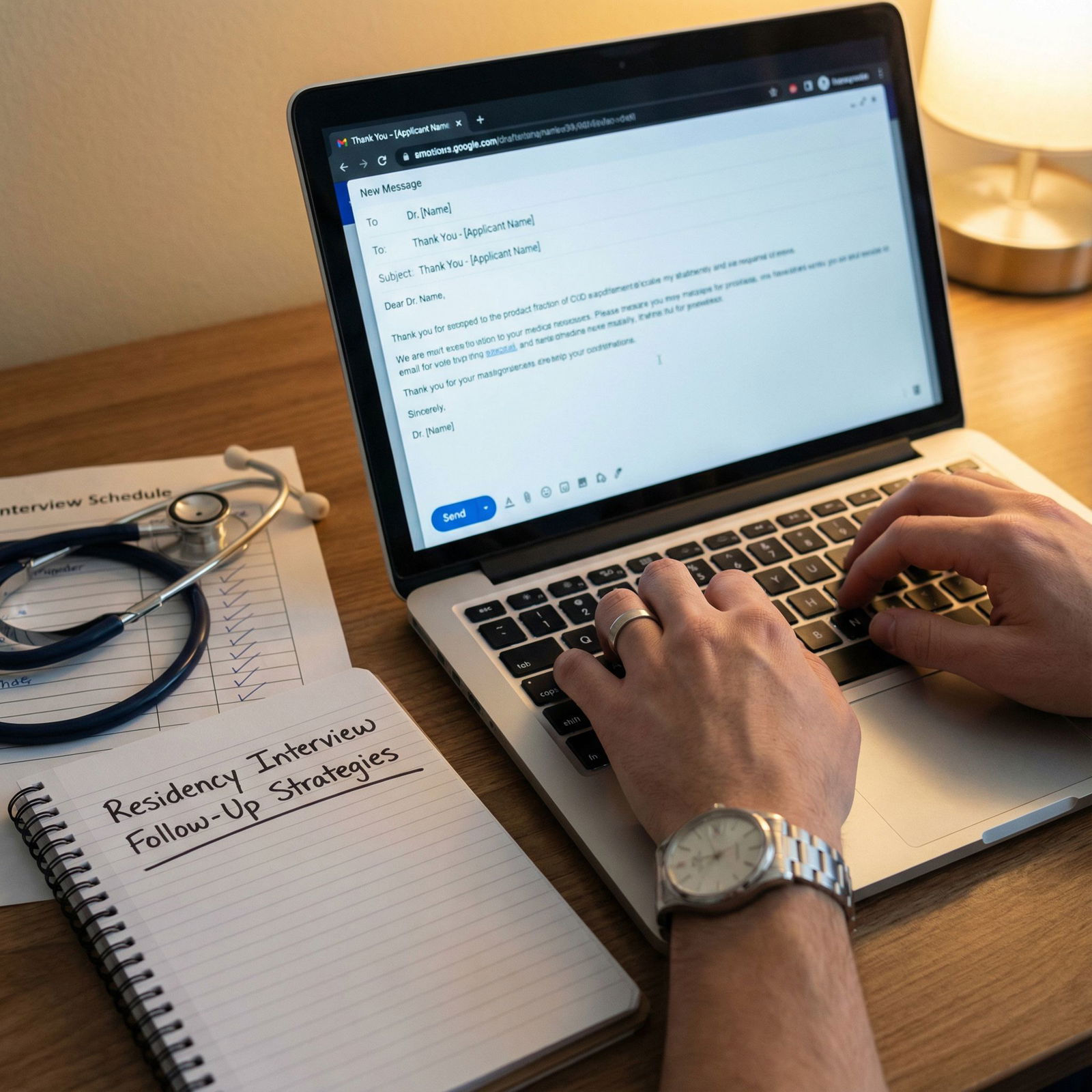
Professionalism, Pitfalls, and Common Questions About Follow-Up
Follow-up can help your candidacy—but it can also hurt it if done poorly. Be mindful of these common pitfalls.
Common Mistakes to Avoid
Copy-Paste Emails to Multiple Programs
Programs can often recognize generic language. Use at least 1–2 specific details per message.Overly Long or Emotional Messages
Keep it concise and professional. Avoid dramatic language, pressure tactics, or oversharing personal stress about the Match.Multiple “Just Checking In” Emails
Unless you have a new, concrete reason to reach out, additional check-ins can seem intrusive.Spelling and Grammar Errors
Proofread carefully. Consider drafting in a document first and rereading later with a clear head.Ignoring Program or NRMP Policies
Many programs state clearly whether post-interview contact affects ranking. Always respect these policies.
Cultural and International Applicant Considerations
If you are an IMG or international applicant, it is normal to wonder if expectations differ:
- In most U.S.-based programs, concise thank-you emails are welcome and seen as standard professional communication.
- Overly frequent contact or requests for feedback on your performance are generally discouraged.
- If you’re unsure, you can ask your mentors or advisors familiar with the U.S. residency culture to review your messages.
FAQs: Follow-Up Strategies After Your Virtual Residency Interview
1. Do programs expect a thank-you email after a virtual Residency Interview?
Many programs appreciate thank-you emails, but not all require or expect them, and very few will explicitly disadvantage you for not sending one. However, sending a brief, professional thank-you within 24–48 hours is considered standard good practice and is a low-effort way to reinforce your interest and professionalism.
2. Should I send separate thank-you emails to every interviewer?
If you have the contact information, it is ideal to:
- Send individualized emails to each interviewer, especially if you had meaningful one-on-one conversations.
- If you only have a general program email address, you can send one message addressed to the PD or program leadership and reference the entire interview team.
Each email can be short but should include at least one sentence unique to that interaction.
3. Can following up change how a program ranks me?
Programs differ:
- Some explicitly state that post-interview communication does not influence ranking decisions (to remain compliant with NRMP guidelines).
- Others may view professional follow-up as a positive reflection of your communication skills and interest, even if it’s not formally scored.
Regardless, follow-up is one of the few aspects you still control after your interview and contributes to your overall professional impression.
4. What if I receive an offer or strong interest from another program?
If another program communicates strong interest or offers a position (in non-NRMP processes or certain specialties), you may:
- Notify other programs that you remain very interested but have received time-sensitive information elsewhere.
- Politely ask, without pressure, if there is any additional information they can share about your status or timeline.
Always maintain integrity and avoid ultimatums. Your reputation in the small world of medical careers matters.
5. How do I express that a program is my top choice?
If a program’s policies and your specialty culture allow it, and if you truly mean it:
- Send a concise Letter of Intent stating that the program is your genuine top choice.
- Emphasize specific reasons (curriculum, patient population, mentorship, geography) that make the fit ideal.
- Reassure them of your sincere commitment without pressuring them to disclose rank decisions.
Always be truthful—misrepresenting your intentions can harm your professional reputation.
Thoughtful follow-up after your virtual Residency Interview is one of the final ways you can actively influence how programs perceive you within the Application Process. By timing your communication well, writing concise and specific messages, and respecting professional boundaries and NRMP rules, you demonstrate the same qualities—clarity, courtesy, reliability—that programs seek in future residents.
Use follow-up as a strategic, professional tool—not a source of extra anxiety. You’ve already done the work to earn the interview; now let your communication skills help reinforce the strong candidate you’ve shown yourself to be.